

Wireless Smart Speakers
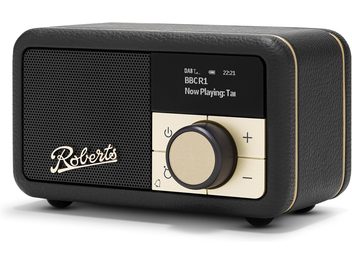
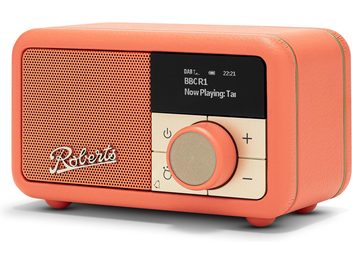
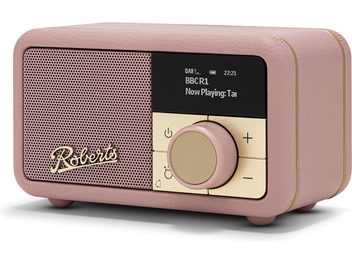
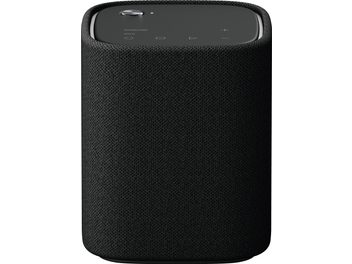
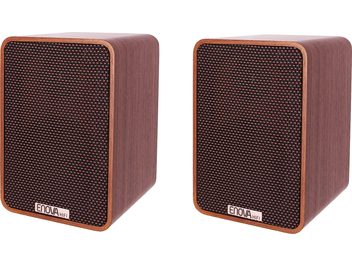
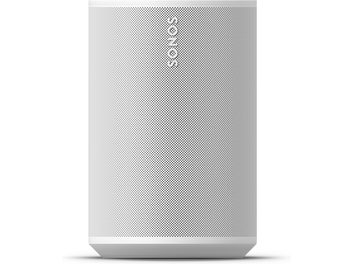
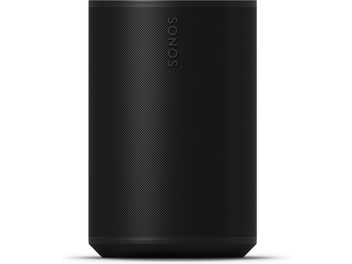
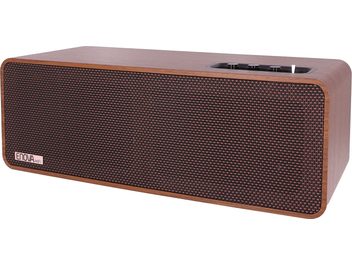
Smart speakers wirelessly play your music via Bluetooth, Wi‑Fi, or AirPlay from your smartphone, tablet, or computer. Equipped with a built-in amplifier and sometimes voice assistants like Alexa or Google Assistant, they access streaming services (Spotify, Deezer, Tidal) and web radios. Some models offer a multiroom function to synchronize several rooms. Learn more
How do smart speakers work?
A smart speaker combines several wireless transmission technologies. Bluetooth provides a direct connection with your devices within a range of about 10 meters. This simple solution is ideal for everyday home use, although quality varies depending on the codec used: basic SBC is limited to 350 kbit/s, while aptX approaches CD quality and Sony’s LDAC can reach 24-bit/96 kHz.
Speakers equipped with a Wi‑Fi or Ethernet controller deliver superior performance. Connected to your home network via your internet box, they support AirPlay, DLNA, or Chromecast protocols to stream high-resolution audio, up to 24-bit/192 kHz depending on the model. This setup also enables simultaneous multiroom playback.
Residential and portable speakers: two distinct categories
Residential smart speakers require a permanent mains power supply. They integrate multiple drivers and an amplifier to ensure sound quality close to traditional hi-fi systems, while keeping a compact footprint. Their design prioritizes power and sonic fidelity.
By contrast, portable speakers include a rechargeable battery so you can take them anywhere. Lighter and often waterproof, they focus on mobility rather than absolute audio performance, although some high-end models deliver remarkable sound for their size.
Voice assistants and the connected home
Some speakers integrate voice assistants that turn listening into an interactive experience. Google Assistant or Amazon Alexa respond to your voice commands to start a playlist, check the weather, set reminders, or control your smart home devices (lights, thermostats, cameras). This integration simplifies your daily routine without having to handle your phone.
The voice assistant improves with use by learning your habits and how you phrase requests. You can also handle phone calls hands-free thanks to the built-in microphone.
Streaming and audio sources
Smart speakers give you access to a near-limitless music library. All popular streaming services are compatible: Apple Music, Amazon Music, Deezer, Qobuz, Spotify, Tidal, YouTube Music. You can also listen to thousands of international web radios and access your own audio files stored on a computer or NAS server via the DLNA protocol.
Several models offer additional physical inputs: HDMI ARC to enhance your TV’s sound, a phono input to connect a turntable, a USB‑C port for a computer, or an analog mini‑jack for any source.
The multiroom system
The multiroom function synchronizes multiple smart speakers to create an audio setup throughout your home. You can play the same music everywhere or different tracks in different rooms, with independent volume control for each zone. Multiroom ecosystems (Sonos, BlueSound, Bose, etc.) use your home Wi‑Fi network to communicate between speakers and maintain perfect synchronization.
Choosing based on your needs
For on-the-go use, opt for a portable speaker with long battery life and an IP67 water and dust resistance rating. If sound quality is your top priority, choose a residential hi‑fi speaker with Wi‑Fi connectivity and high-resolution audio support. To control your smart home, check for a voice assistant compatible with your existing smart devices.
Specialist brands like Sonos, Bose, Devialet, KEF, Klipsch, or French manufacturers Triangle and Cabasse offer solutions for all budgets, from entry-level models to audiophile speakers.