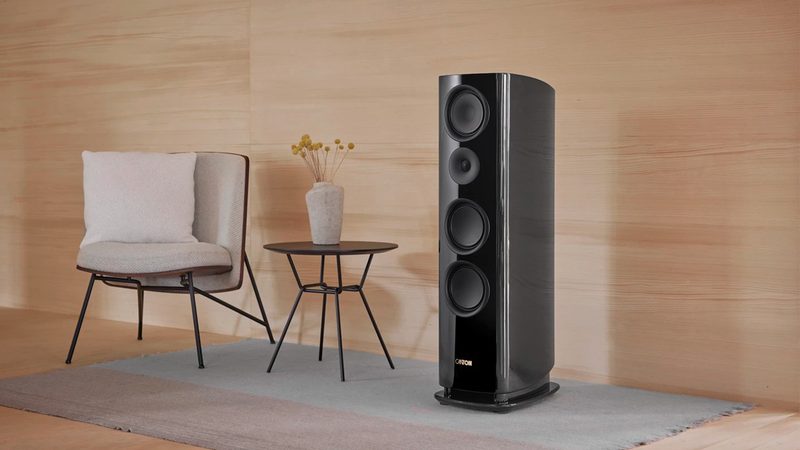

Canton Reference 9 GS matte white (pack of 2)


Overview
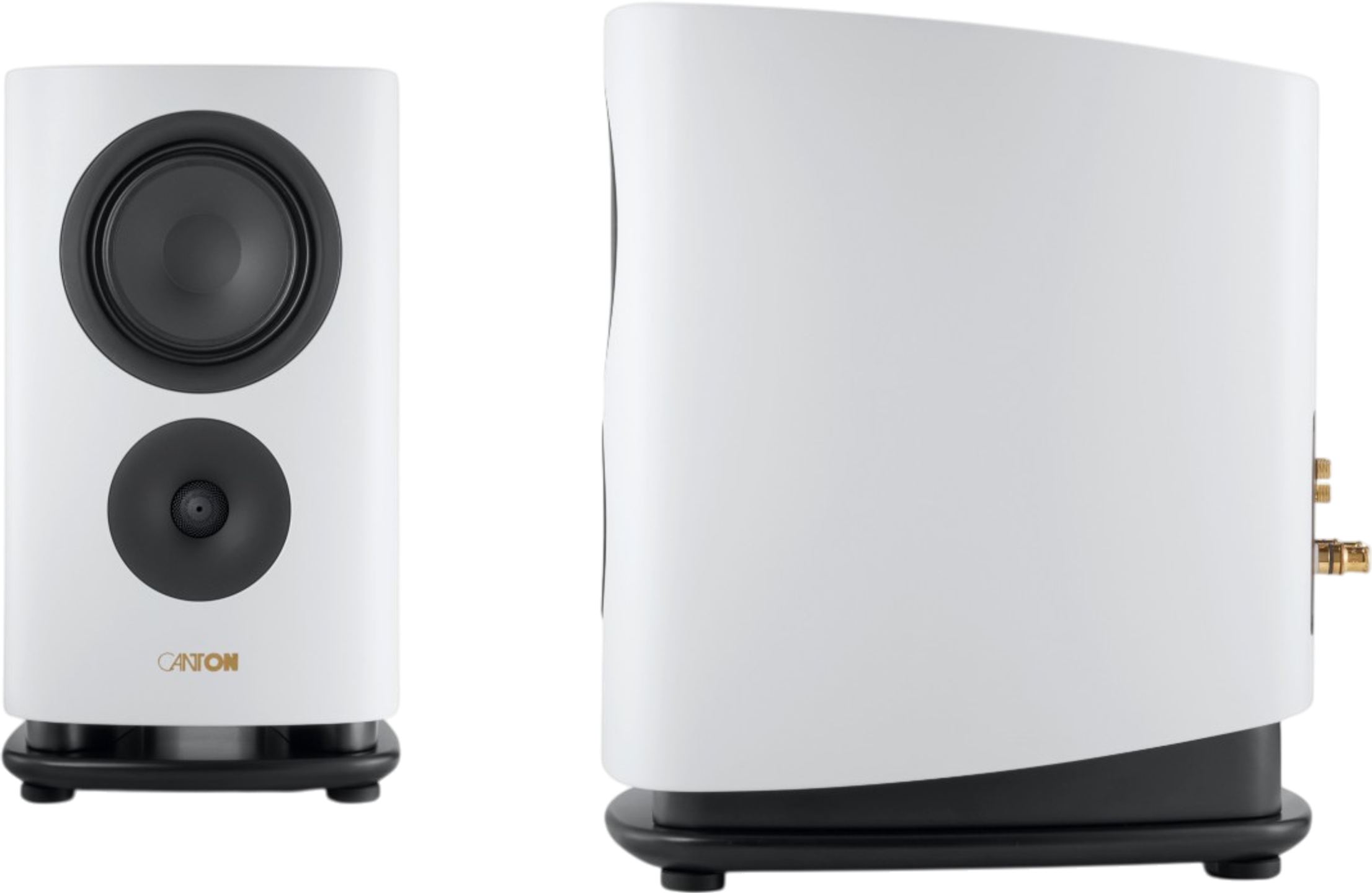
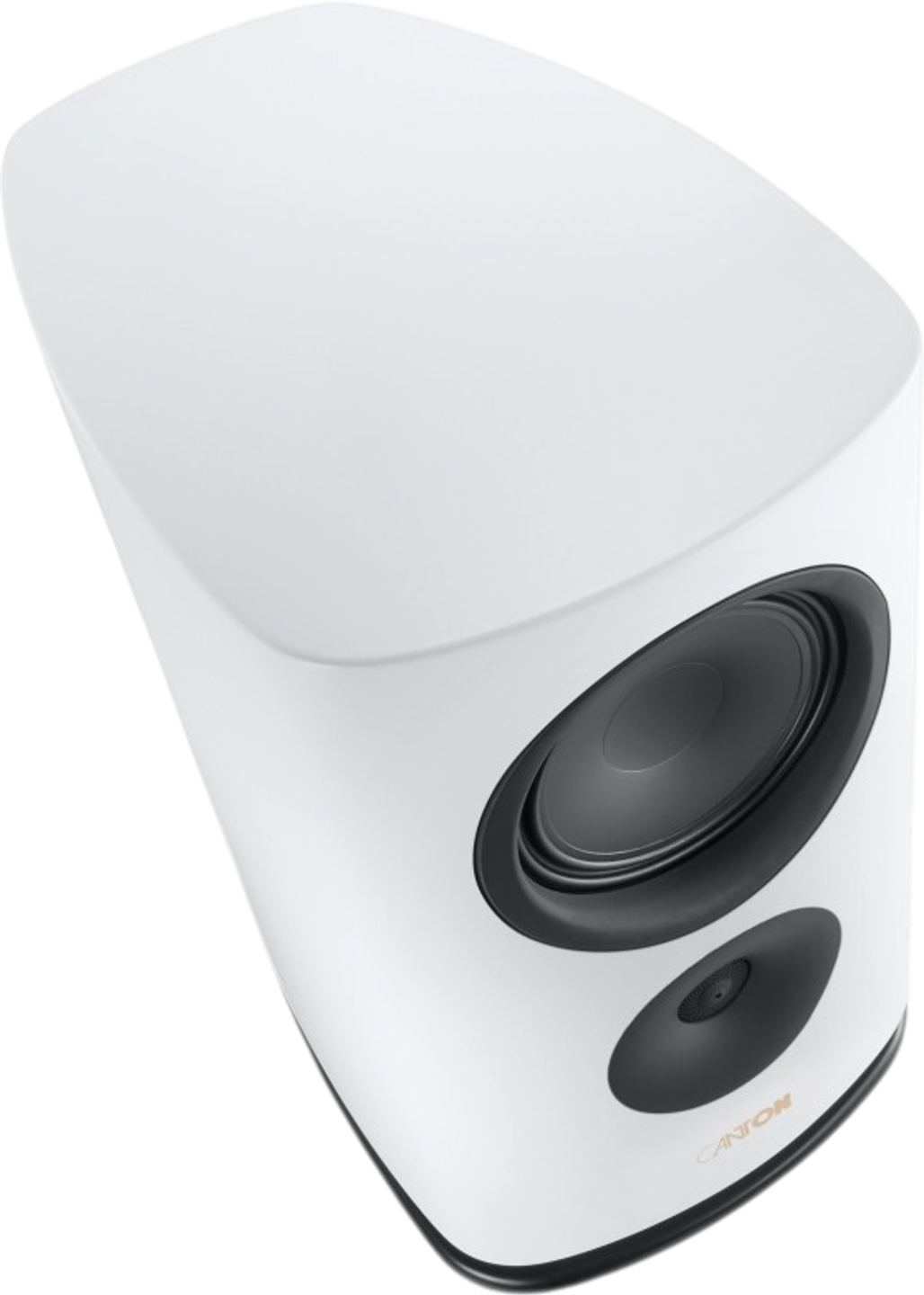
Slipping parts from a flagship series into a bookshelf speaker cabinet—that is the idea behind this special edition by Canton. Developed under the direction of the brand’s founder, Günther Seitz, the GS version takes elements from the Reference Alpha models to tighten the performance of this German two-way speaker. Three targeted changes set it apart from the standard Reference 9: a redesigned treble system, a revised crossover, and high-end binding posts.
Components drawn from the top of the range
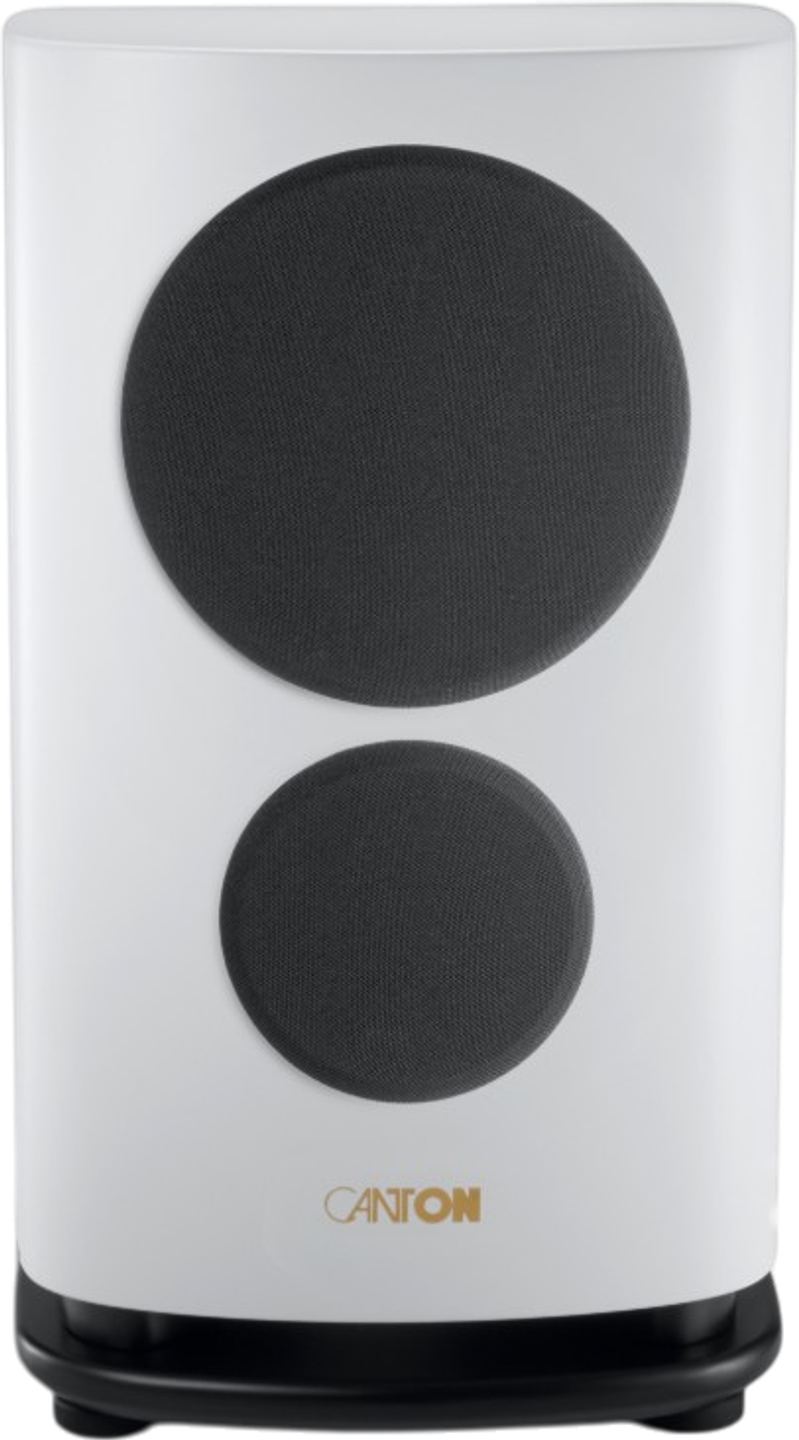
Canton’s Reference range comes in floorstanding and compact models, and the Reference 9 fills the bookshelf format. The GS version starts from this base and adds elements borrowed from the Reference Alpha series, the current pinnacle of the catalog: a new-generation treble system, a passive crossover redesigned around Mundorf MKP capacitors, and gold-plated WBT nextgen binding posts. The format remains unchanged—two-way bass-reflex design with a 174 mm BCT woofer-midrange driver—but the key components change. The intention can be summed up in one word: refine, not reinvent.
Treble handled by a DLC dome
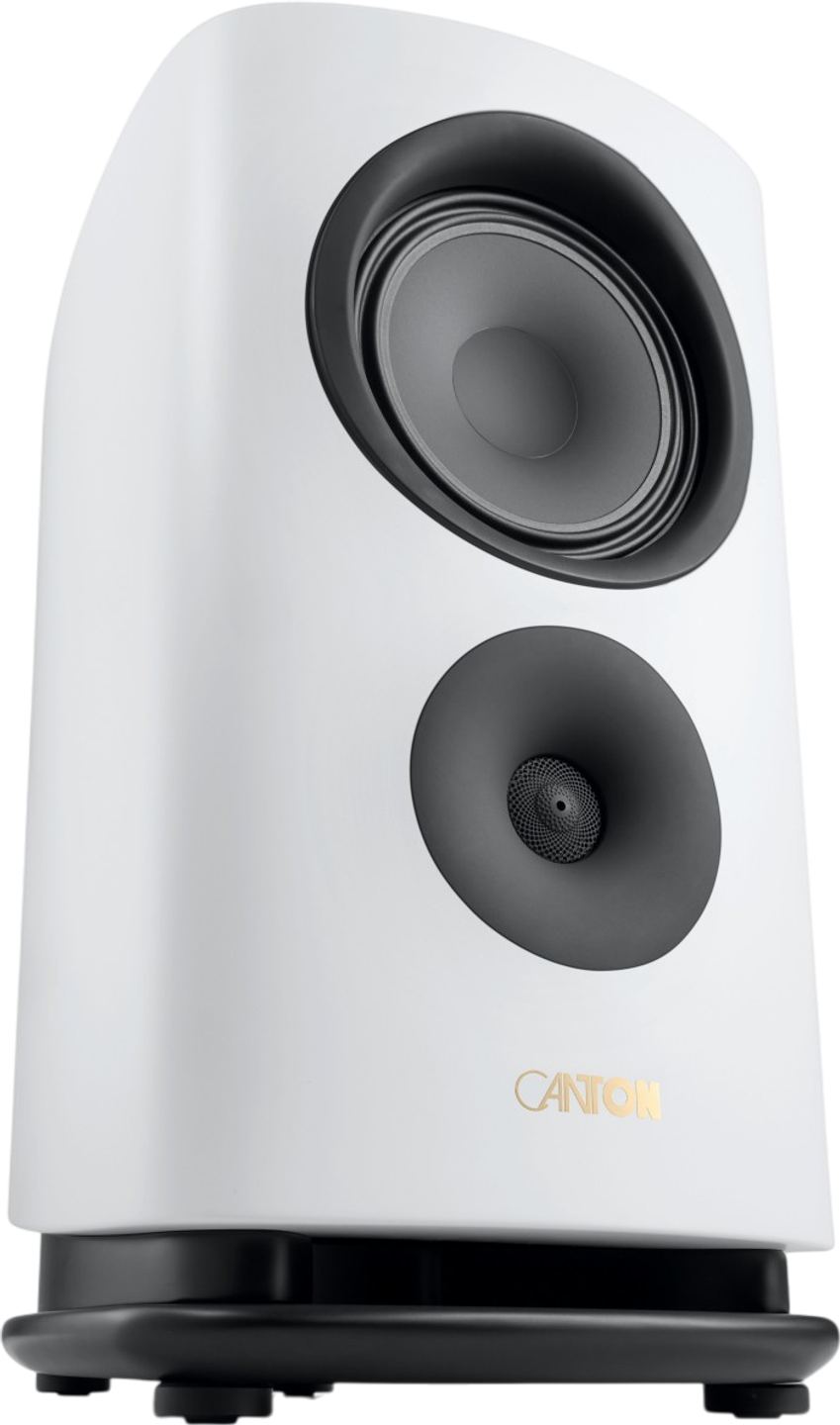
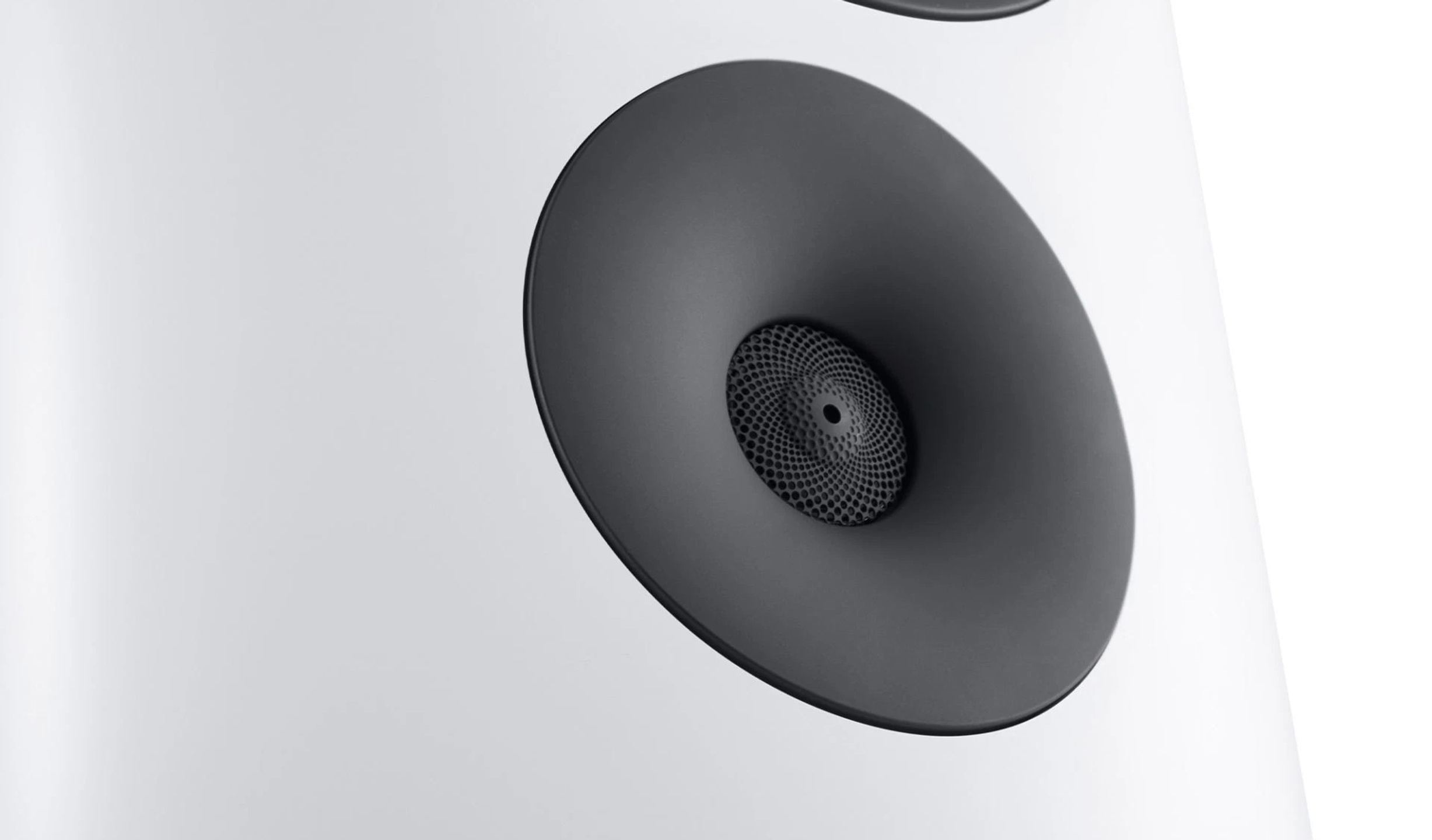
The 25 mm dome tweeter receives a DLC (Diamond Like Carbon) coating, a carbon layer similar to diamond that stiffens the diaphragm without adding weight. Being more rigid, the dome pushes its own deformations higher up the spectrum and keeps the treble clean. Canton adds an acoustic lens that serves as an additional waveguide, smooths dispersion, and extends the usable upper range to a claimed 40 kHz. On paper, the goal is to keep vocals and micro-details intelligible even in dense passages and at high levels.
Bass and midrange on a BCT diaphragm
For bass and midrange, the Reference 9 GS relies on a 174 mm driver with a BCT (Black Ceramic Tungsten) diaphragm. The principle: part of the aluminum structure is converted into ceramic and then enriched with tungsten particles, resulting in a cone that is both rigid and well damped—two qualities that limit distortion and handle power well. The enclosure is bass-reflex, but the port does not open on the front: it faces downward into the plinth and works with Bass Guide technology to distribute bass more evenly throughout the room. The practical advantage is that the speaker is less fussy about placement than a bookshelf model with a rear port. One physical limitation remains: a cabinet of this size will not go as low as a floorstanding speaker, and the downward-firing port requires stable support—dedicated stands or a firm shelf—to work as intended. At 39 cm deep and 18 kg per speaker, the compact format is relative, so plan on a deep shelf or suitable stands.
A revised crossover and WBT binding posts
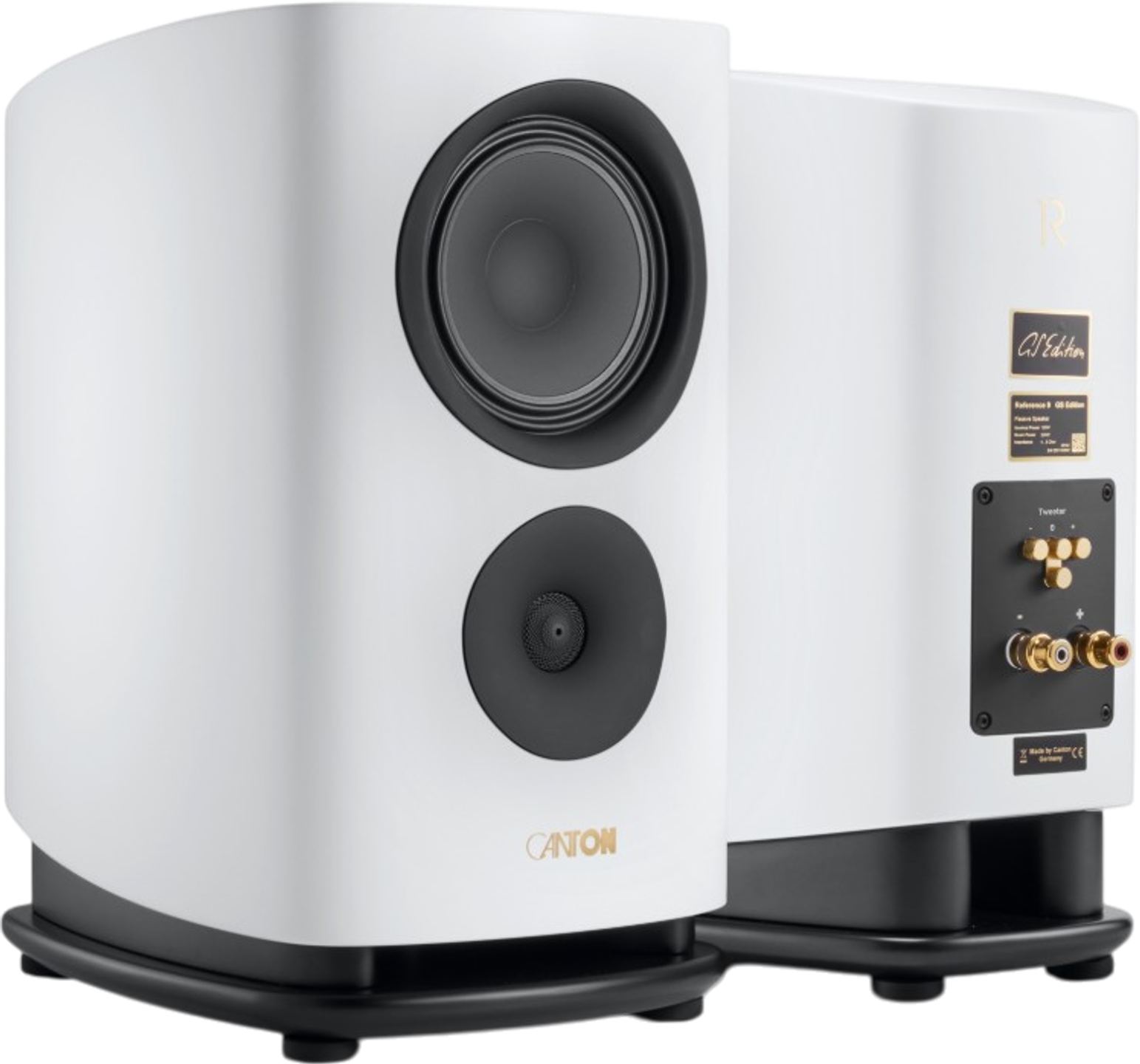
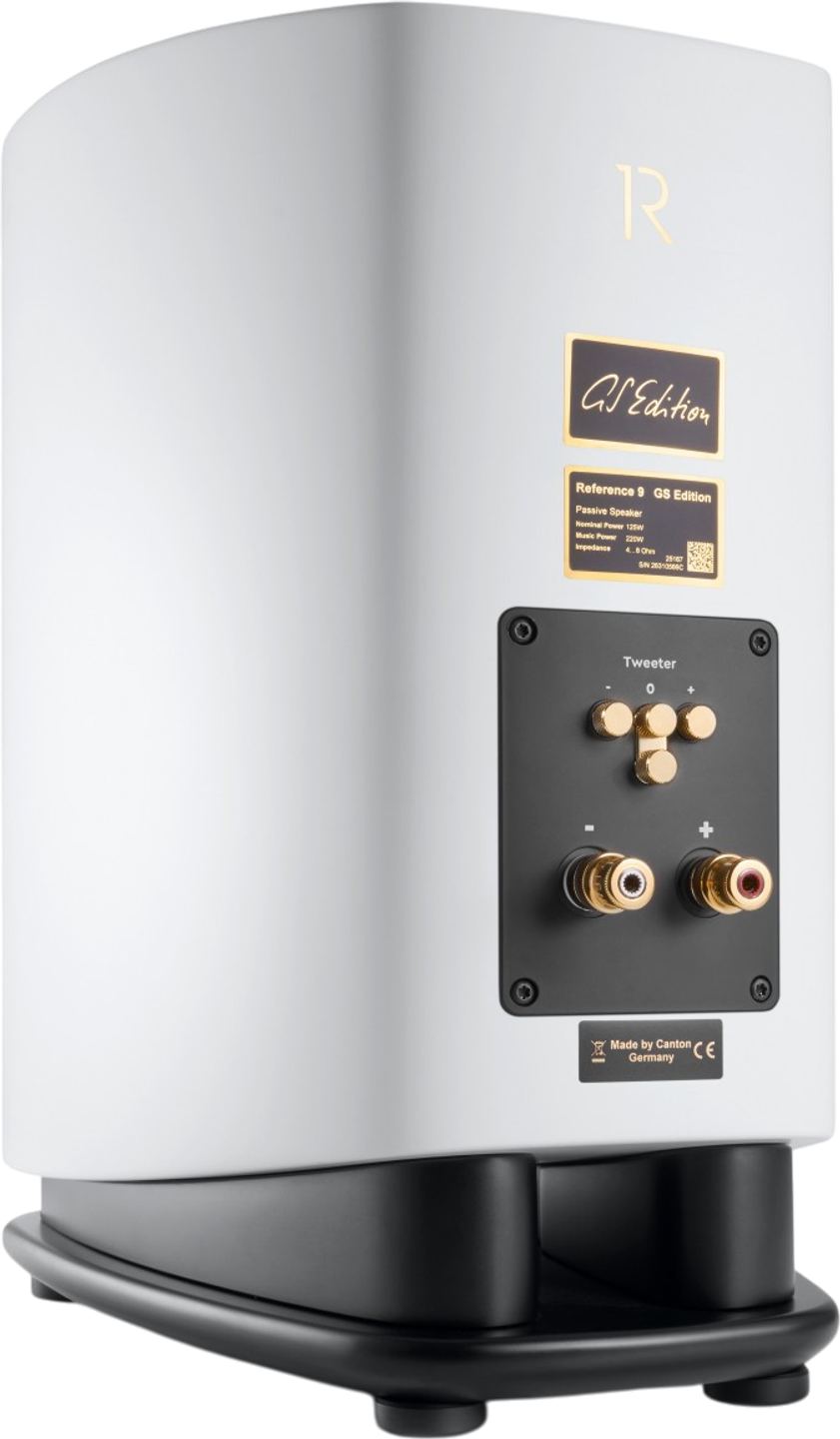
The passive crossover has been completely redesigned around MKP capacitors from Mundorf, a German manufacturer known for its high-end components. Canton aims for precise signal distribution and a balanced, phase-stable response. For connections, the speaker features low-loss, gold-plated WBT nextgen binding posts that readily accept banana plugs and generously sized cables. A treble level adjustment allows the high frequencies to be tuned by ±1.5 dB depending on room acoustics or personal taste, useful in both a lively living room and a heavily furnished room. One point not to overlook: with a sensitivity of 87 dB (2.83 V/1 m) and an impedance of 4 to 8 ohms, the Reference 9 GS is not the easiest speaker to drive. It handles 125 W nominally and 220 W at peak, and prefers an amplifier capable of handling the load over an entry-level unit.
Multilayer cabinet and careful finishes
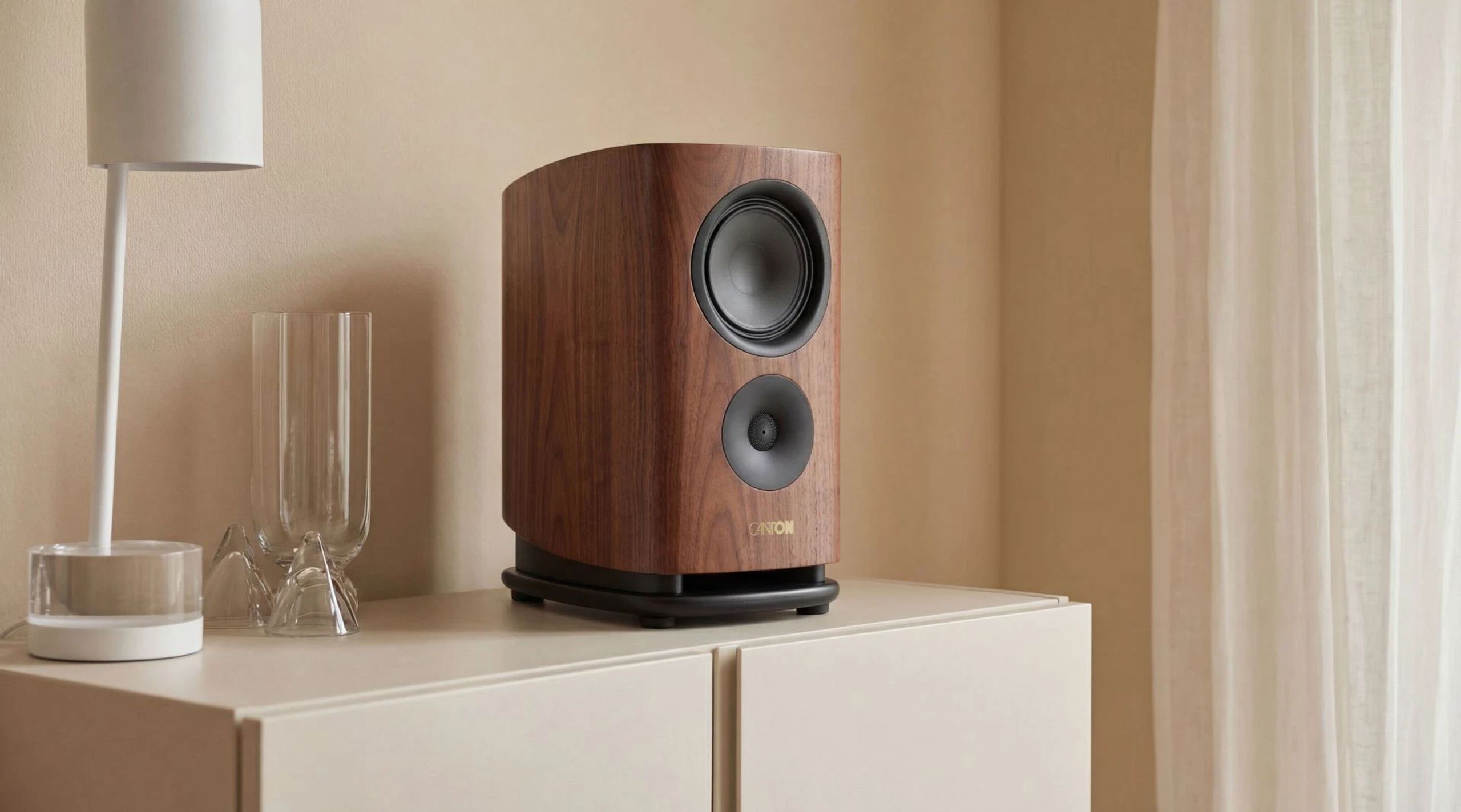
The cabinet is built on a multilayer assembly reinforced by computer-optimized internal bracing, whose role is to reduce parasitic vibrations and keep the bass clean. The curved sides limit internal reflections and contribute to more even dispersion. The plinth, with its floating look, rests on CNC-machined feet with a PVD finish, while an acoustically neutral magnetic grille attaches and removes without tools. Canton offers the speaker in four finishes: satin white, piano black lacquer, walnut, and a new warmer sand shade. The passive models in the Reference series are covered by a ten-year warranty.
Living-room stereo or multichannel integration
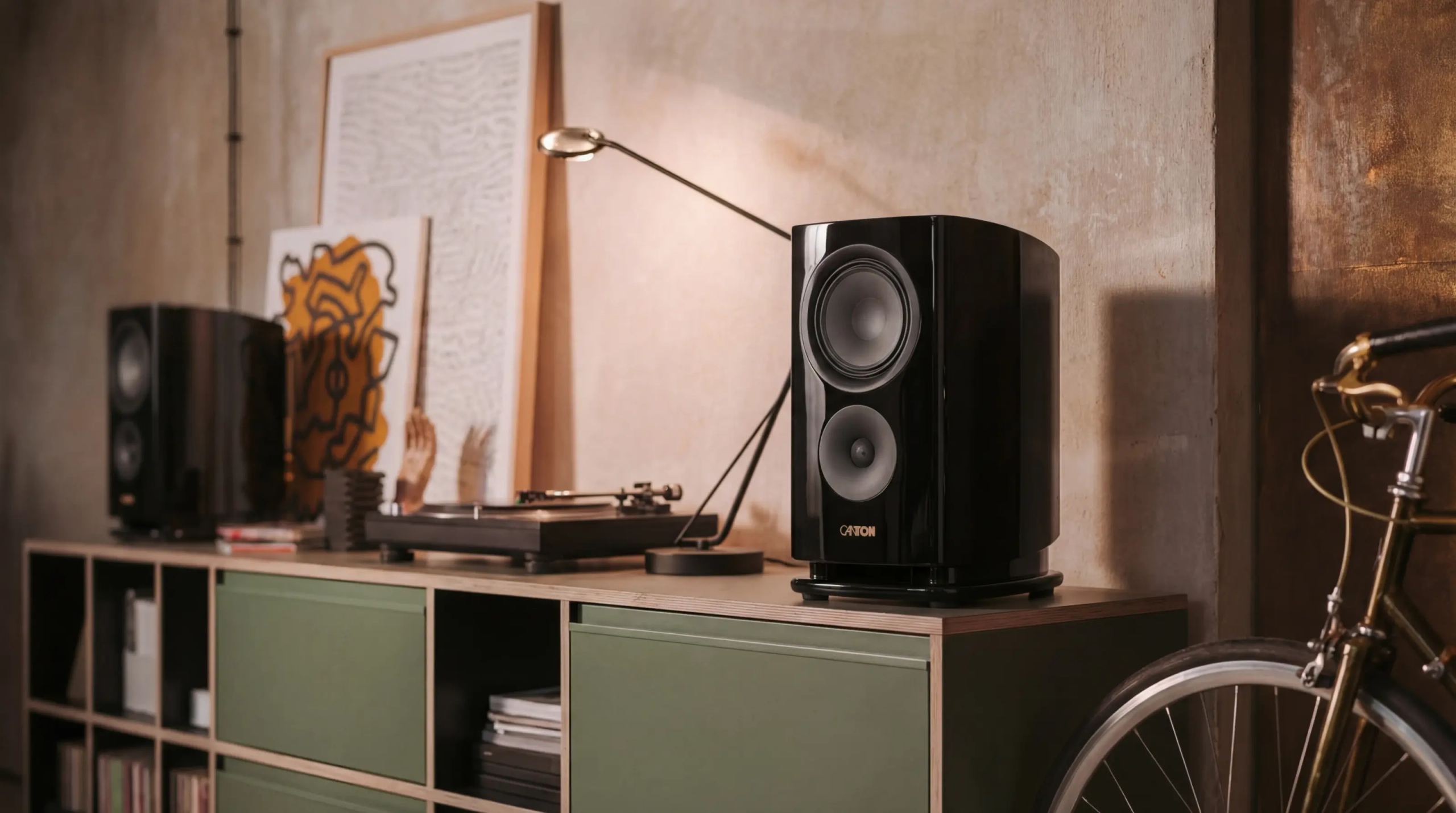
In stereo, the Reference 9 GS serves as the main pair, placed on stands or on a solid shelf, at a reasonable distance from the rear wall to let the bass breathe. It can also find a place in a Canton multichannel setup, as front speakers in a moderately sized living room or as rear speakers in a more ambitious system, alongside a Reference Center and a Reference Sub from the same series. For placement, Canton offers dedicated Reference LS stands with concealed cable management, which keep the speaker at the proper listening height and stabilize the downward-firing port.
Documentation
Technical specifications
General overview
- 2-way bass-reflex bookshelf speaker
- German manufacturing
Drivers
- Configuration: 2-way
- New-generation DLC (Diamond Like Carbon) dome tweeter with optimized waveguide
- Even dispersion of high frequencies
- 174 mm BCT (Black Ceramic Tungsten) midrange / woofer driver
- Low distortion and excellent power handling
Acoustic design
- Bass-reflex design
- Bass Guide technology for more even distribution of low frequencies and better room integration
- High-precision audiophile passive crossover with Mundorf MKP capacitors
- Treble level adjustment according to room acoustics: ±1.5 dB
- Precise and balanced response, even at high volume
Construction
- Reinforced low-resonance multilayer cabinet
- Computer-optimized internal bracing
- Effective reduction of unwanted vibrations and resonances
- Cabinetry with curved lines promoting better sound dispersion
- CNC-machined feet with PVD finish
- Removable magnetic protective grille, acoustically transparent and neutral
Connectivity
- Gold-plated WBT nextgen™ audiophile binding posts
- Compatible with high-end speaker cables
- Low-loss signal transmission
Power
- Admissible music power: 220 W
Dimensions and weight
- Dimensions (W x H x D): 26 x 46 x 39 cm
- Weight: 18 kg per speaker
Included accessories
- Magnetic protective grille
- Integrated spikes / feet depending on finish
- User documentation
Frequently Asked Questions
Does the Reference 9 GS support bi-wiring or bi-amping?
No. The speaker has a single pair of WBT nextgen binding posts, with no jumpers or dual terminals. Bi-wiring and bi-amping are therefore not supported. For connection, banana plugs remain the most practical choice with this type of binding post, which are less easy to tighten onto spades. A good pair of speaker cables with an adequate gauge is enough to take advantage of the low-loss transmission.
Is it suitable for a small room?
Yes, provided placement is handled properly. Its downward-firing port makes it less sensitive to proximity to a rear wall than a speaker with a rear port, which helps in tight spaces. In a small room, its bass remains sufficiently present without overwhelming the space. Still, keep a reasonable amount of clearance around the plinth and avoid wedging it into a closed cabinet, where the port would not be able to work properly.
Do you need the Reference LS stands, or is a shelf enough?
A solid, very rigid shelf will do the job, provided it can support 18 kg and leaves the plinth port room to breathe. Canton’s Reference LS stands bring two practical advantages: they place the tweeter at ear height when seated and provide stable, resonance-free support that benefits the bass. They also include concealed cable routing for a clean installation. The choice depends on your furniture and the kind of listening setup you want.
- Eco-contribution included in the sale price.
- Manufacturer reference: 04701
- GTIN / EAN: 4010243047010