

Floor-standing TV stands
A floor-standing TV stand lets you install your television without drilling into the wall. It holds the screen at the right height, angles it towards the sofa and, depending on the model, moves from one room to another. Whether you choose a fixed stand with a weighted base or a version with castors, the right choice depends on three measurements taken from your television: its screen diagonal, its weight and the VESA mounting hole spacing on the back of the screen. Learn more
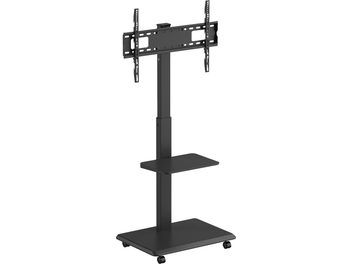
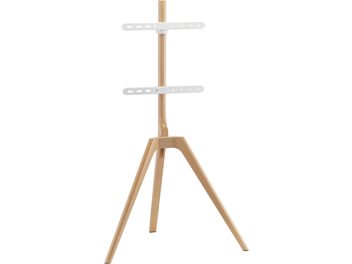
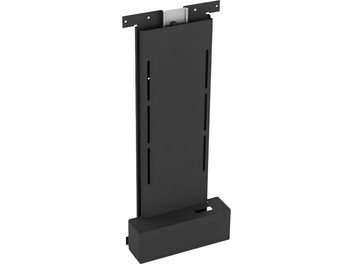
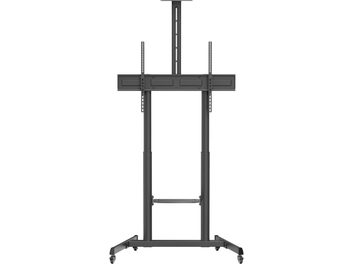
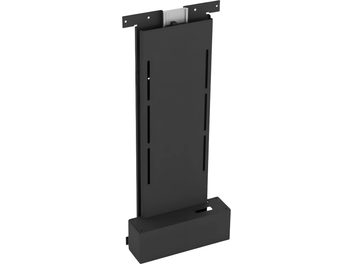
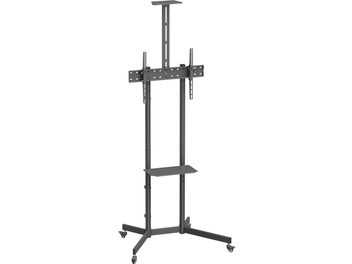
The different types of floor-standing TV stands
The fixed TV stand with a base is the most common type of floor stand: a heavy base made of black or white steel, or tempered glass, supports a height-adjustable column, often topped with a tilting and swivelling head. It remains discreet behind the screen and takes up little floor space. A tabletop stand replaces the television’s original feet on an existing piece of furniture when its widely spaced feet extend beyond the top.
A TV stand with castors, also called a mobile TV stand, moves the screen from the living room to the bedroom or from one meeting room to another, with locking castors and often one or two shelves for a set-top box, games console or video conferencing camera. Easel or tripod stands, generally made of wood, keep the stand’s design visible and contribute to the living room decor. Finally, a motorised stand adjusts the screen height by remote control.
Compatibility: VESA standard, screen diagonal and weight
The VESA standard defines the position of the four threaded holes on the back of most televisions. The hole spacing is expressed in millimetres (200 × 200, 400 × 400, 600 × 400) and must fall within the range specified for the stand. A universal TV stand accepts a wide range of hole spacings, and a VESA adapter bridges the gap when your screen falls outside that range. This adapter screws onto the back of the television before it is attached to the column.
The compatible screen diagonal is expressed in inches (a 55-inch screen measures around 140 cm diagonally) and indicates how balanced the setup will be. The maximum load, in kilograms, should be compared with the television’s weight without its original feet, allowing a few kilograms of leeway. On OLED televisions, the threaded inserts are often positioned low down: the screen sits higher on the column than expected, which needs to be taken into account.
Height, viewing angle and stability
The centre of the screen is best positioned at eye level when seated, roughly one metre above the floor when facing a sofa. In a bedroom, the screen is raised and tilted towards the bed. A tilting TV stand reduces reflections from a window, while a swivelling TV stand turns the picture towards the table or sofa without moving the stand.
Stability relies on a wide, heavy base and compliance with the specified load and screen diagonal limits. With children around, an anti-tip strap connecting the column to the wall adds valuable safety; on a stand with castors, lock the brakes once the screen has been adjusted. A cable channel inside the column keeps cables organised, running down to the floor in a single discreet bundle. Some stands also accommodate a soundbar beneath the screen, keeping all the equipment in one place.
TV stand or wall mounts
A fixed wall mount holds the screen flat against the wall, while an articulated arm lets you angle it: both free up floor space, but require a wall capable of supporting the load, precise drilling and cable routing inside the wall. A TV stand leaves the wall untouched, can be adjusted at any time and adapts to changes in the room layout. In rented accommodation, in front of a lightweight partition or in a room whose layout changes, it is the most sensible solution. For a permanent home cinema setup with concealed wiring, wall mounting retains the advantage.
Frequently asked questions about floor-standing TV stands
How do you choose a floor-standing TV stand?
Check your television’s VESA hole spacing, screen diagonal and weight, then compare them with the ranges specified for the stand. The type of stand (fixed, with castors, motorised or easel-style) is then chosen according to its use and the room.
Do you need to drill to install a TV stand?
No. The stand rests on the floor and requires no drilling. Only the optional anti-tip strap attaches to the wall with a small screw.
Is a floor-standing TV stand stable?
Yes, as long as the specified maximum load and screen diagonal limits are respected. A heavy base and a hard floor ensure lasting stability.