

Video Projectors
Video projection turns your living room into a true movie theater. Whether it’s 4K projectors for home cinema, short-throw laser models, or portable units for your presentations, today’s technologies (DLP, LCD, LED) deliver immersive images up to 300 inches. From affordable Full HD to professional Ultra HD solutions, there’s a projector for every use. Learn more
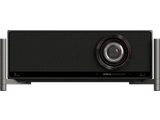
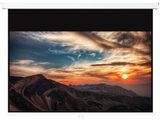
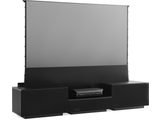


Best sellers

Technologies and resolutions
Three technologies dominate the market. DLP projectors use a micro-mirror array to produce excellent image sharpness and long-lasting color. LCD models leverage a triple liquid-crystal matrix for natural colorimetry and good light uniformity. Laser projectors stand out for their exceptional longevity (up to 20,000 hours) and impressive brightness.
As for resolution, Full HD (1920 x 1080 pixels) remains the standard for versatile use. 4K Ultra HD projectors (3840 x 2160 pixels) are gradually becoming the benchmark for high-end home cinema, offering image detail comparable to professional theaters.
Throw types and installation
Projection distance largely determines your device choice. Standard-throw projectors require a 3 to 5 meter setback for a 100-inch image. Short-throw models reduce this distance to 1–2 meters, while ultra-short-throw units can be placed just a few centimeters from the wall, eliminating the need for ceiling mounts and avoiding cast shadows.
Selection criteria
Brightness, expressed in ANSI lumens, directly affects projection quality depending on the environment. For a dark room dedicated to cinema, 1500 to 2500 lumens is sufficient. By contrast, use in a meeting room with ambient light requires 3000 lumens or more.
Native contrast affects black depth and image dynamics. LCOS technologies (SXRD from Sony, D-ILA from JVC) excel in this area for higher budgets.
Specific uses
Home cinema prioritizes color accuracy, high contrast, and at least Full HD resolution. Enthusiasts opt for models that can be calibrated, with HDR support and Dolby Vision compatibility.
For gaming, the key criterion is input lag (response time), ideally under 30 ms. Some recent projectors accept 1080p or 4K signals at 120 Hz, even 240 Hz, for optimal smoothness.
Office or educational use favors brightness (3000–5000 lumens), varied connectivity (HDMI, VGA, USB), and sometimes touch interactivity on whiteboards.
Mini projectors or pico projectors offer maximum portability with built-in batteries, at the cost of reduced brightness (300–800 lumens) suitable for small formats and frequent travel.
Modern connectivity
Wi‑Fi and Bluetooth are now built into most consumer models, enabling direct streaming from smartphones and tablets without cables. Embedded operating systems (Android TV, webOS) provide access to video-on-demand platforms directly from the projector.
Ecosystem and accessories
A projection screen significantly optimizes image quality. Tensioned or retractable 16:9 screens preserve geometry and improve gain. Articulated ceiling mounts simplify installation and adjustment. To fully exploit a 4K projector, a compatible source (Ultra HD Blu-ray player, latest-generation console) is essential.




