Vinyl Cleaning Fluids
Vinyl cleaning fluids remove embedded grime from the grooves that dry brushing can’t reach. Available as ready-to-use sprays or concentrates to dilute with distilled water, these solutions work deep down against dust, fingerprints, grease, and nicotine. Their antistatic formula neutralizes electrical charges and noticeably improves sound reproduction. Compatible with manual cleaning, vacuum record machines, or ultrasonic tanks. Learn more


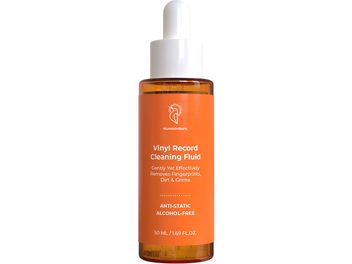
Why use a cleaning fluid
A vinyl record quickly accumulates various contaminants: dust, fingerprints, smoke residue, grease. These impurities gradually get lodged in the grooves and form a barrier between the stylus and the engraved relief. The result is an audible degradation of sound quality, with unwanted crackles, a muffled sound, and loss of detail. The antistatic brush removes surface dust but is powerless against stubborn grime. Cleaning fluid then becomes essential to restore a record’s acoustic clarity and give it a new lease of life.
The different formats available
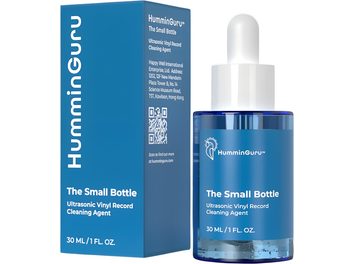
Ready-to-use sprays offer a convenient solution for quick, regular cleaning. Spray the product directly onto the record (avoiding the center label), then wipe with a microfiber cloth. These formulas generally include antistatic properties and leave no residue in the grooves. Their compact format is especially suited to medium-sized collections and routine maintenance.
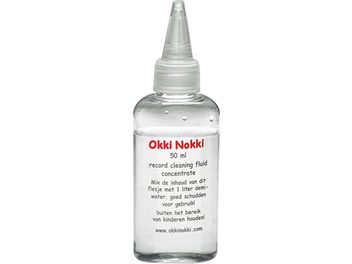
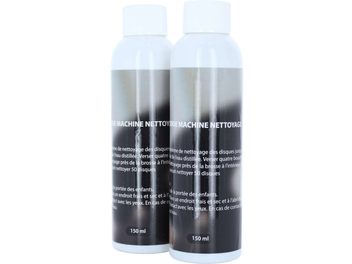
Dilutable concentrates are the most economical option for large collections. A 100 to 200 ml bottle makes between 5 and 6 liters of solution when mixed with distilled water. These professional products are aimed at users of record cleaning machines but also work for manual application. Their exceptional yield allows you to clean several hundred records.
Peel-off gels take a radically different approach. Spread the gel over the entire surface of the record, let it dry for about 4 hours, then remove the formed film, which lifts away all trapped impurities. This method suits heavily soiled records but requires patience and careful handling.
Composition and properties
Most professional cleaning fluids share a common base: purified water combined with specific surfactants. These wetting agents modify the liquid’s surface tension to allow it to penetrate deeply into the microgrooves. Without this property, the liquid would simply glide over the surface without reaching the bottom of the grooves where the dirt resides.
Alcohol-free formulas are suitable for all types of records, including solvent-sensitive shellac 78s. Solutions containing isopropyl alcohol (generally up to 20–25%) provide superior degreasing power and dry faster. The best products add long-lasting antistatic properties that limit future dust buildup.
Premium concentrates favor high-purity formulas, without unnecessary additives, to leave no residue in the groove or on the stylus tip. Some manufacturers use laboratory-grade surfactants, such as Tergitol, recognized by professional archivists for its effectiveness and safety.
Application method
For manual cleaning, always start with preliminary dust removal using an antistatic brush. This step removes surface particles that would otherwise be smeared during wet cleaning. Then apply a few drops or sprays of the liquid onto the record laid flat, carefully avoiding the center label.
Spread with a velvet brush or a microfiber cloth, following the grooves with gentle circular movements. Let it sit for a few seconds so the liquid can penetrate deeply, then wipe with a clean cloth. Depending on the product used, a rinse with distilled water may be recommended to remove any residue. The record should then dry vertically, preferably in a rack designed for this purpose.
Manual washing machines such as Knosti or Spin Clean use a solution bath in which the record rotates between two brushes. Automatic vacuum machines apply the liquid and immediately suction it off along with the dirt, delivering the most effective cleaning. Ultrasonic tanks require specific formulas compatible with the cavitation generated by this process.
Compatibility and precautions
Not all fluids are suitable for all records. Alcohol-containing formulas should be used exclusively on modern vinyl records and are prohibited for shellac 78s, a material soluble in alcohols. Products specifically developed for shellac use gentle, water-based formulas.
Pay attention to the liquid’s temperature. Slightly lukewarm water improves cleaning efficiency, but excessive heat can warp vinyl. Favor ambient to slightly warm temperatures, never hot. Store products away from light and heat, with the cap tightly closed to prevent alcohol evaporation.
Measurable sonic benefits
The improvement brought by deep cleaning often exceeds expectations. Before-and-after comparative tests consistently reveal clearer reproduction, with better bass response, a more defined soundstage, and restored dynamics. Noise and crackle are significantly reduced, though they never disappear completely on scratched or worn records.
New records also benefit from an initial cleaning. The pressing process can leave traces of mold-release agent in the grooves. Cleaning before the first play unlocks the record’s full sonic potential. This practice also protects the stylus, which accumulates dirt more slowly on clean records.