Vinyl Flatteners
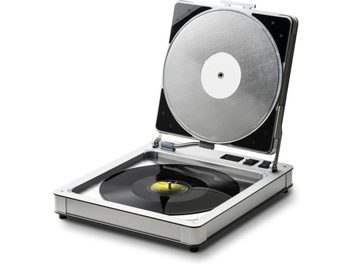
A warped record means unstable playback: the stylus skips, the sound crackles, listening becomes frustrating. Vinyl flatteners correct these deformations by combining heat and pressure with a precision that DIY methods cannot achieve. A technical solution that gives a second life to records damaged by time or poor storage. Learn more
Why vinyl records warp
The PVC used to make vinyl records reacts badly to two things: heat and prolonged pressure. Leaving a record in the sun, in a car during summer, or stacked horizontally under other records for months is enough to cause warping. The deformation may be slight, barely visible to the naked eye, or pronounced enough to make the record unplayable.
The problem is that even minor warping disrupts playback. The stylus follows the record’s undulations instead of staying stable in the groove, which creates pressure variations on the cartridge and degrades sound reproduction. Turntables equipped with lightweight tonearms are the most sensitive to this phenomenon.
How a flattener works
PVC has an interesting property: its shape memory can be reset. By heating the material to around 57°C (the critical temperature at which it becomes malleable without deteriorating), then applying even pressure during cooling, it can be made to regain its original flatness.
That is exactly what professional flatteners do. The record is placed between two flat surfaces, generally aluminum for even heat distribution. The temperature rises gradually, stabilizes in the optimal range, then slowly drops again. The complete cycle lasts between one and three hours depending on the device.
Thermal precision is what sets these machines apart from improvised DIY solutions. Where a household oven can fluctuate by 10 to 15°C around the set temperature, a flattener maintains the temperature within ±2°C. This consistency prevents the vinyl from softening excessively (which could crush the grooves) while ensuring effective treatment.
Compatibility and maintenance
Flatteners accept almost all records on the market: 33 rpm, 45 rpm, 78 rpm, from 7 to 12 inches, regardless of thickness or weight. The only notable exception concerns very old shellac records, whose chemical composition differs from PVC and which cannot withstand the same heat treatment.
Before placing a record in the machine, it must absolutely be cleaned. Dust or residue present in the grooves may become permanently embedded under the effect of heat and pressure. A pass through a record cleaning machine or careful manual cleaning is essential.