Acoustic Treatments
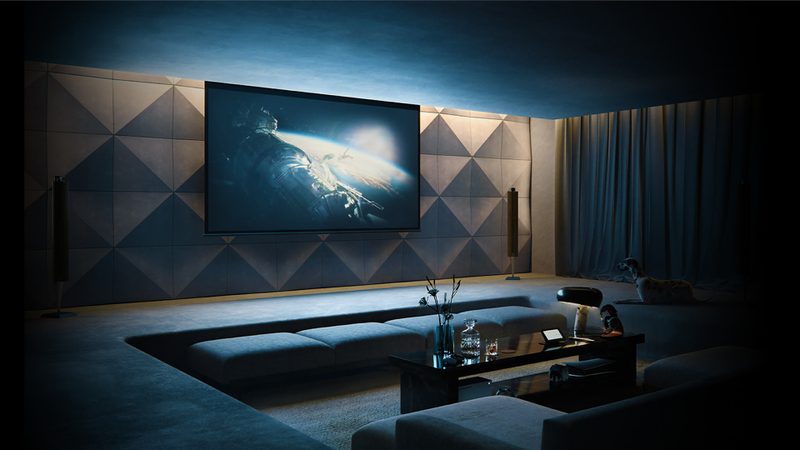
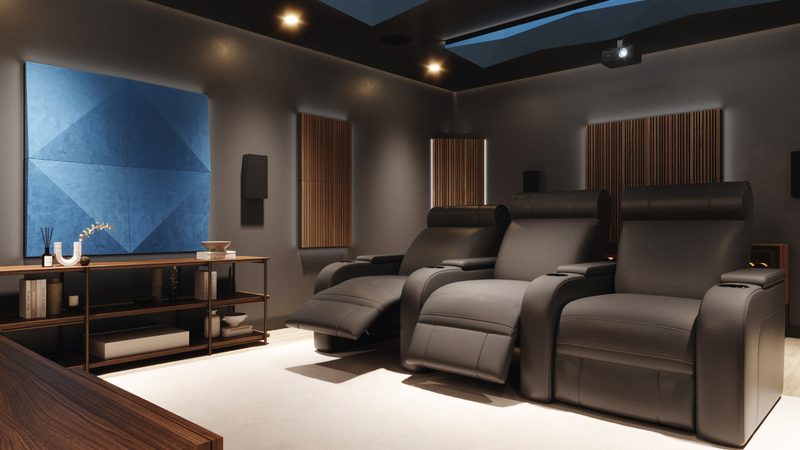
Acoustic treatment encompasses all solutions designed to improve sound quality inside a room. Absorbing panels, bass traps, and diffusers help control reverberation, echoes, and unwanted resonances. Unlike soundproofing, which aims to block sound between rooms, acoustic correction optimizes a space’s internal acoustics for more accurate listening and enhanced sonic comfort. Learn more
Understanding acoustic treatment
Acoustic treatment, also called acoustic correction, consists of modifying how sound behaves in a given space. Every room has acoustic characteristics that influence sound reproduction: excessive reverberation, echoes, modal resonances, or buildup of low frequencies. These phenomena degrade speech intelligibility and musical listening accuracy.
Acoustic correction acts on a room’s reverberation time by absorbing or scattering sound energy. It should not be confused with soundproofing, which prevents sound from traveling from one room to another. Effective acoustic treatment allows you to hear the direct sound from the speakers without disruptions caused by reflections off the surfaces.
The different treatment solutions
Absorbing acoustic panels are the basis of any treatment. Made of porous materials (acoustic foam, mineral wool, recycled PET felt), they convert sound energy into heat. Their effectiveness depends on thickness and density. Panels 3 to 5 cm thick treat mid and high frequencies, while greater thicknesses are required for bass.
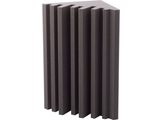
Bass traps specifically target low frequencies, the most difficult to control in an enclosed space. These absorbers are usually placed in the room’s corners, where low-frequency sound pressure is highest. They can be porous (thick), membrane-based, or tuned resonators, depending on needs.
Acoustic diffusers scatter sound waves in multiple directions rather than absorbing them. They preserve acoustic energy while avoiding localized echoes. Their design relies on precise mathematical sequences (QRD, PRD) that determine well depth. Diffusers create a sense of space and naturalness, particularly appreciated in hi-fi listening.
Applications and benefits
For home studios and recording studios, acoustic treatment is essential. It enables reliable monitoring for mixing and recording. Early reflections on side walls and ceiling are treated first, complemented by bass traps in the corners.
In home cinema, acoustic correction enhances immersion and dialogue clarity. An optimal reverberation time is around 0.5 seconds at 1 kHz, shorter than in hi-fi to prioritize precision and spatial effects.
For hi-fi listening, the goal is to reveal detail and soundstage. A balance between absorption and diffusion preserves musical liveliness while controlling room flaws. The recommended reverberation time is about 0.7 seconds at 1 kHz.
In commercial and office spaces (open-plan offices, restaurants, meeting rooms), acoustic treatment reduces background noise and improves intelligibility. Wall panels and suspended baffles lower sound levels and create a more comfortable working environment.
Implementation
The amount of treatment required depends on the room’s volume, construction materials, and intended use. As a rule of thumb, covering 10 to 20% of the wall surface is a good starting point for living spaces. Studios often require treatment on more than 50% of surfaces.
Placement follows acoustic principles: absorption at first reflection points, bass traps in corners, diffusers at the back of the room. A gradual approach allows you to adjust treatment according to measured results. Measurement software like REW helps identify frequency issues and verify the effectiveness of implemented solutions.
Passive acoustic treatment can be complemented by active correction via digital processors (Dirac Live, Audyssey), but these systems do not replace physical treatment, especially for managing early reflections and controlling decay time.