

ALR Screens for Long-Throw Projection
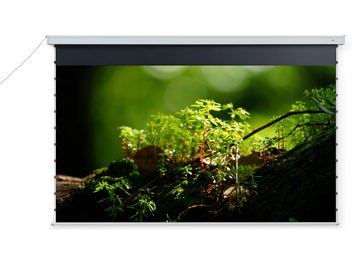
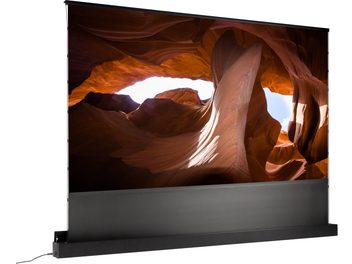
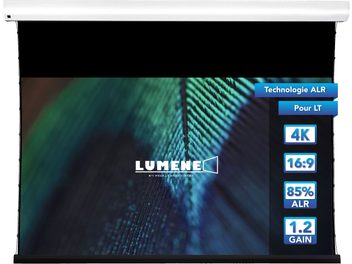
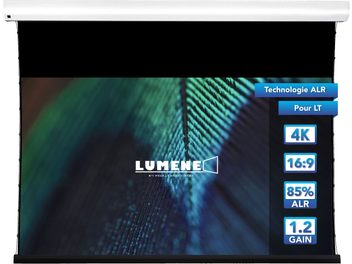
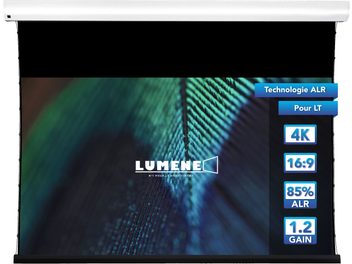
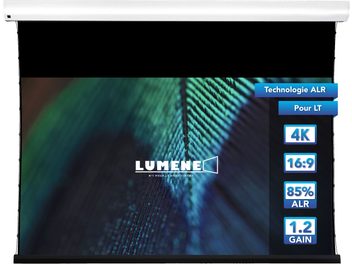
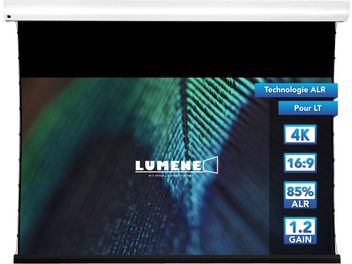
ALR (Ambient Light Rejecting) screens for long-throw projection use a grey technical fabric that rejects ambient light while reflecting the projector’s light. Compatible with standard long-throw projectors, they deliver enhanced contrast and deep blacks, even in a lit room. Available in fixed-frame or motorized formats, these screens turn your living room into a home theater without requiring complete darkness. Learn more
What is a long-throw ALR screen?
A long-throw ALR (Ambient Light Rejecting) screen is designed to improve image quality in bright environments. Unlike a conventional white screen that diffuses all light indiscriminately, ALR fabric distinguishes between the useful light from the projector and stray light coming from windows, ceiling lights, or light-colored walls.
The fabric is made up of several layers of grey PVC containing metallic elements and micro-optical structures. These structures precisely direct the projector’s light toward the viewer while absorbing or deflecting ambient light. The result: a sharp, high-contrast image without glare, even in daylight.
Difference from UST ALR screens
Long-throw ALR screens are specifically tailored to standard projectors placed several meters from the screen, typically ceiling-mounted or at the back of the room. They should not be confused with UST (ultra-short throw) ALR models, which use different technology for projectors placed just a few centimeters from the screen.
Benefits of long-throw ALR screens
Contrast and image quality
ALR technology significantly boosts perceived contrast. Blacks become deeper, colors more saturated, and the image retains its punch, even with moderate ambient light. No more washed-out look or grey haze typical of white screens in bright rooms.
Installation versatility
No need to build a dedicated room with black walls and blackout curtains. Your living space keeps its natural brightness while still enabling cinema-quality viewing. This flexibility matches modern home theater use in multipurpose spaces.
Wide viewing angle
Long-throw ALR screens generally offer a wide viewing angle (between 140° and 180° depending on the model), allowing multiple viewers to enjoy a uniform image from different positions in the room.
Gain: a key selection criterion
Screen gain determines the screen’s ability to absorb or reflect light. It’s a technical factor to consider based on your projector:
-
Gain below 1 (0.8): Reduces overall brightness but improves black depth. Recommended for very bright projectors (>2500 ANSI lumens) or rooms with partial light control.
-
Gain equal to 1: Balances brightness and contrast. Versatile for most setups.
-
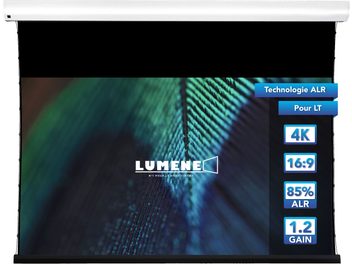
Gain above 1 (1.2–1.5): Increases perceived brightness. Suitable for less powerful projectors (<2000 lumens) or very large image sizes.
Recommended brightness
To get the most from a long-throw ALR screen, a projector of at least 1300 to 2500 ANSI lumens is generally recommended, depending on the chosen screen gain and your room’s lighting conditions. A projector that’s too dim on a screen with gain below 1 will produce a dark image.
Formats and installation types
Fixed-frame screens
Stretched on an aluminum frame, they ensure perfect flatness of the fabric. Ideal for permanent installations with impeccable visual results.
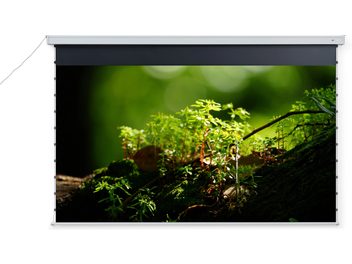
Wall- or ceiling-mounted motorized screens
Deploy and retract electrically. Perfect where the screen should disappear when not in use, preserving the room’s aesthetics.
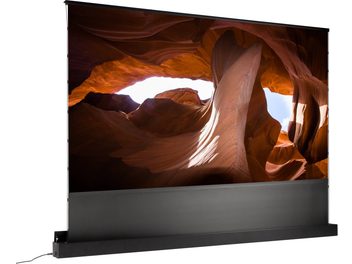
Floor-rising motorized screens
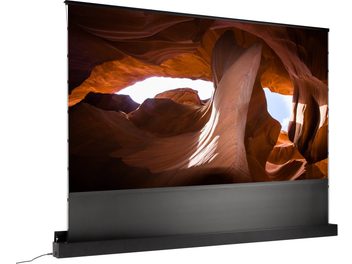
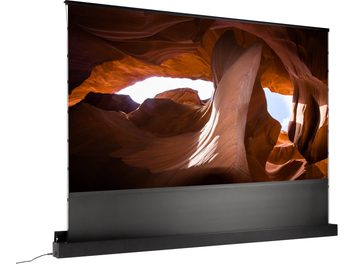
Deploy from a floor-mounted casing. Suitable where wall or ceiling installation isn’t possible, or for moving between rooms.
Recessed screens
Integrated into the ceiling, completely invisible when retracted. The most discreet option for clean architectural integration.
Compatibility and aspect ratios
Long-throw ALR screens are available primarily in 16:9, the current standard for home theater and 4K/8K content. Some models are also offered in 2.35:1 (CinemaScope) or 4:3 for specific uses.
These screens are compatible with 3D, 4K and 8K Ultra HD, as well as HDR, ensuring compatibility with current and future projectors.
Points to consider
A long-throw ALR screen does not completely replace light control. In an extremely bright environment (large windows in direct sunlight), even an ALR screen has its limits. Ideally, use a room with moderate ambient light.
ALR fabric should not be confused with a standard high-gain fabric: ALR technology combines optical gain with specific surface treatments for selective light rejection.
Main keywords naturally integrated: ALR screen, long-throw projection, ambient light rejection, long-throw projector, technical fabric, contrast, home theater, screen gain, motorized screen, fixed screen








