

Motorized Projection Screens
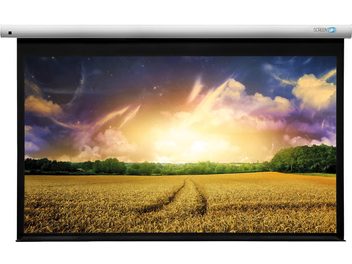
A motorized projection screen simplifies the use of a projector by allowing you to deploy and retract the screen automatically, via remote control or wall switch. Mounted on the wall or ceiling, it integrates seamlessly into a living room or dedicated theater room. Available in 16:9, 4:3, or 21:9 formats, it adapts to your home cinema or professional setup with a quiet motor and discreet installation. Learn more

Operation and advantages
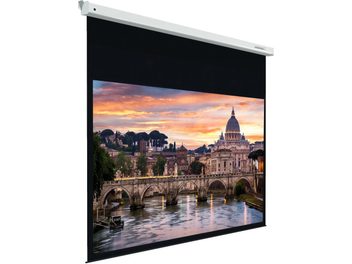
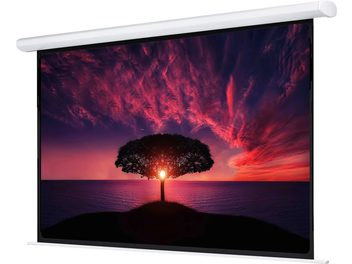
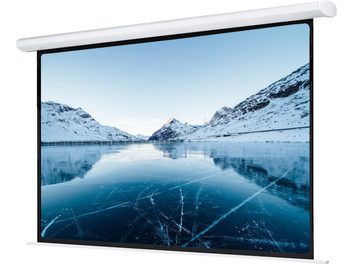
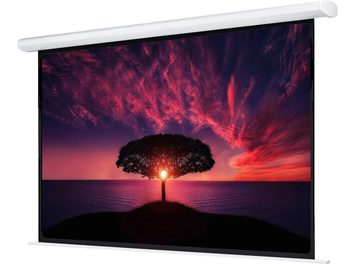
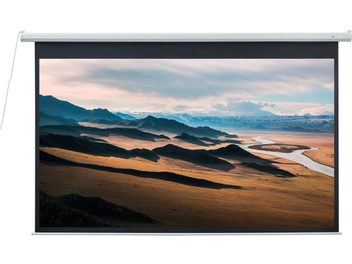
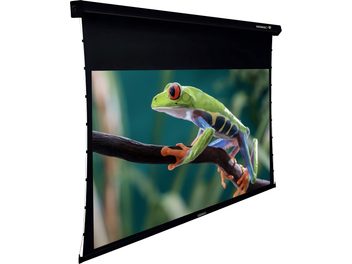
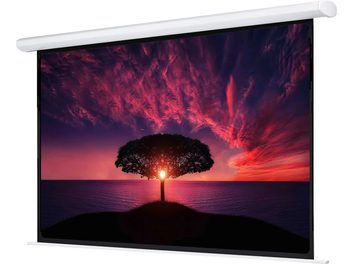
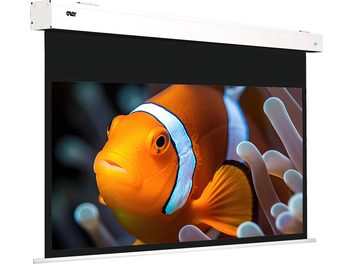
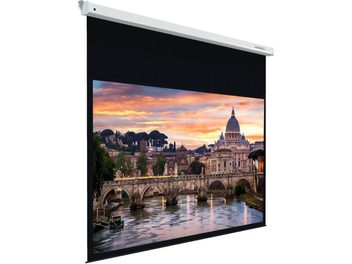
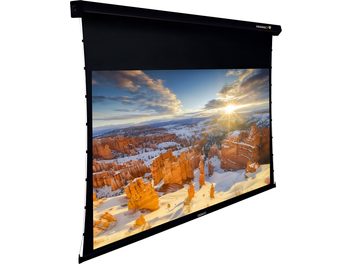
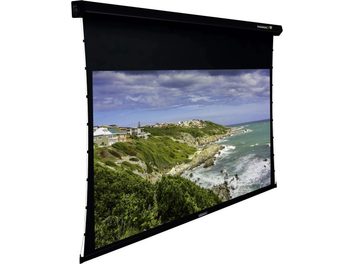
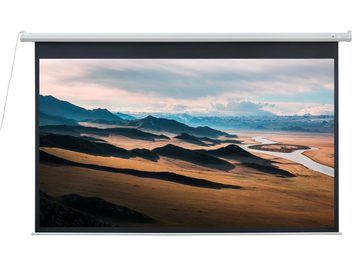
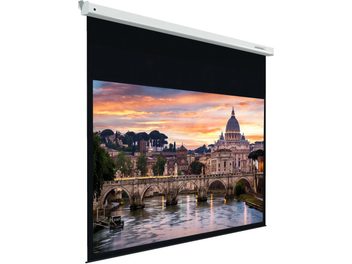
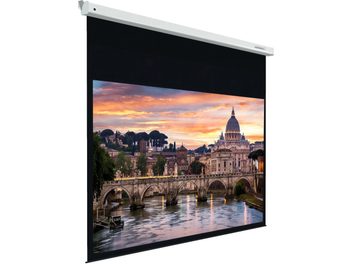
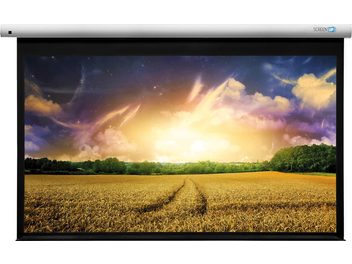
The electric projection screen consists of a rollable screen housed in a compact casing. The integrated motor ensures automatic deployment and retraction, without manual handling. Unlike spring-loaded screens, the motorized system guarantees consistently precise operation and eliminates the risk of screen drift.
The main advantage lies in ease of use: no need to move to operate the screen. Some models even offer automatic triggering via a trigger outlet connected to the projector or home cinema amplifier. The screen thus deploys when the system is powered on, and retracts when switched off.
Installation options
Motorized screens offer great placement flexibility. Wall mounting is suitable for living spaces where the screen can conceal a television or artwork during viewing sessions. Ceiling mounting allows the screen to be deployed in front of a bay window or in the center of a large room.
For even more discreet integration, recessed models fit into a false ceiling and protrude only a few millimeters. This solution typically requires a recessed depth of between 12 and 15 cm, compatible with plasterboard or wood ceilings. Installation requires a 220V power supply near the casing.
Formats and screens
The choice of format depends on the projector used and the content viewed. The 16:9 format corresponds to recent films and series as well as modern projectors. The 4:3 format is suitable for classic films and professional presentations. The 21:9 format is aimed at cinema enthusiasts wishing to watch cinemascope films without black bars.
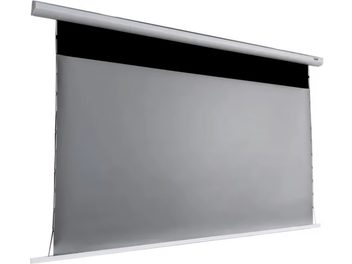
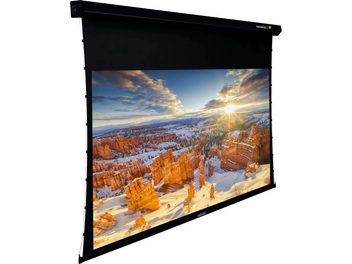
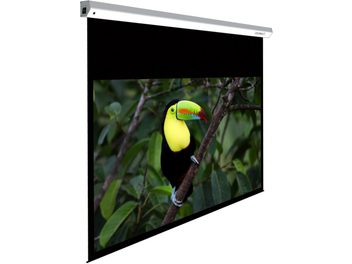
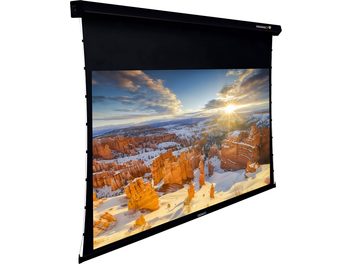
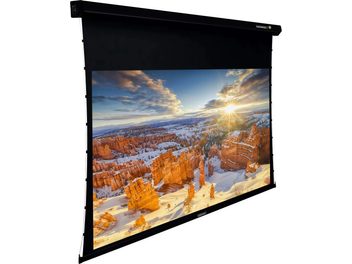
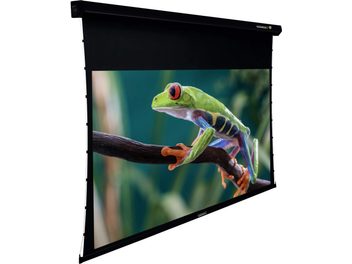
Screens come in several types. The classic matte white screen (1.0 gain) remains the most versatile for use in darkness or dimmed light. Blackout backing screens prevent light leakage when installed in front of a window. Tensioned models use a lateral cable system that keeps the screen perfectly flat over the long term, ensuring flatness comparable to fixed frame screens.
Motorization and control
Motor quality directly influences ease of use. High-end tubular motors, particularly those from recognized brands like Somfy, ensure quiet and reliable operation over time. Noise level becomes particularly important in home cinema to avoid disrupting the experience.
Control is generally performed by radio frequency (RF) or infrared (IR) remote control. Some screens also incorporate a wall switch and offer adjustable stop position memory. The most advanced models feature an RS232 interface for home automation integration, allowing the screen to be coordinated with the entire audiovisual installation.
Home cinema and professional use
In home cinema, the motorized screen allows you to maintain the room’s aesthetics when not in use. It retracts discreetly into its white or black casing depending on the model. The recommended viewing distance varies according to size: SMPTE and THX standards recommend that the screen width occupy 30 to 40° of the horizontal field of vision.
In professional environments, these screens equip meeting rooms and training spaces. Large formats (up to 4 meters wide) allow projection for a large audience. 1:1 format (square) models offer versatility for displaying different types of content without black bars.
Compatibility and technical considerations
The screen must match the type of projector used. Standard throw projectors require significant distance, while short or ultra-short throw models install closer to the screen. Certain specific screens, equipped with ALR (Ambient Light Rejection) technology, are designed for ultra-short throw projectors and reject ambient light to maintain contrast even in broad daylight.
The casing width, generally between 2.5 and 3.2 meters for large screens, must be taken into account when planning installation. Non-tensioned screens exhibit a slight natural curvature at the edges, with an accepted tolerance of 3% maximum of the total width on each side.




