

Power Cables by the Meter
Electric power cables sold by the meter let you buy exactly the length you need for your work, without waste or extra cost. Available in rigid or flexible versions, in copper or aluminum, these conductors adapt to every electrical installation project, from home connections to industrial circuits. Learn more
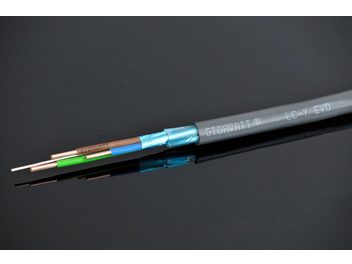
A solution tailored to every need
Selling electrical cables by the meter meets a genuine practical need. Whether you’re rewiring a room, connecting a panel, or pulling a run out to a garage, you order precisely the length you require. No more leftover cable lying around or buying entire reels for just three meters used.
Both professionals and DIYers benefit. In renovation work, distances are rarely standard. Being able to adjust to the exact meter avoids guesswork and optimizes the budget. Specialized sites generally offer cutting by the unit, but also reels (often 25, 50, or 100 meters) or drums for larger jobs.
Types of cables and their uses
R2V cable (formerly RO2V or U1000R2V depending on standards) remains the benchmark for rigid power supply. Made of solid copper conductors under a black PVC sheath, it is perfectly suited to fixed installations indoors and outdoors. It is commonly used to connect the meter to the electrical panel, supply high-power circuits, or bury a power line (with appropriate mechanical protection).
Flexible cables such as H07RNF, with their rubber or neoprene sheath, are preferred for mobile applications or demanding environments. Their flexibility makes it easier to route them through conduits and tight spaces. H07VU and H07VR wires, rigid or semi-rigid, are mainly used for internal panel wiring and connecting outlets and switches.
For specific installations, there are also armored cables for direct burial without conduit, UV-resistant cables for outdoor use, fire-resistant versions for public-access buildings, and submersible cables for pools and fountains.
Cross-sections and sizing
The choice of cross-section in mm² directly depends on the power to be carried and the circuit length. Common sizes range from 1.5 mm² (lighting, 10A circuits) to 25 mm² and above (meter-to-panel links, large appliances). In between, 2.5 mm² is typically used for 16A outlets, 4 mm² for certain heating circuits, and 6 mm² for cooktops or 32A circuits.
Standard NF C 15-100 governs these choices to ensure the safety of residential installations. In short: undersizing risks overheating and fire, oversizing is needlessly expensive. Power-to-cross-section lookup tables are widely available and help size correctly.
Color codes and identification
Standardized colors make it easy to identify conductors. Blue denotes neutral, green-yellow (or striped yellow-green) denotes earth, and all other colors (black, brown, red, gray, etc.) can be used for phases. In a multicore cable, these codes are followed to avoid wiring errors.
For rigid general supply cables like R2V, the outer sheath is typically black. Flexible domestic cables (H05VVF, for example) often come in white for a more discreet visible run. Some textile or decorative cables even offer an extended color palette for stylish exposed installations.
Copper or aluminum?
Copper remains the standard conductive material for its high conductivity, ease of handling, and long-term reliability. Aluminum cables, lighter and more economical, are mainly used for long, high-power runs (riser trunks in buildings, long-distance hookups). However, they require larger cross-sections than copper for the same power and need suitable connection accessories.
Aluminum also has constraints: it oxidizes on contact with air, which can create contact resistance. Connections must be carefully made and terminals must be compatible. For typical residential use, copper is the natural choice.
Installation and implementation
Cutting and stripping these cables is straightforward with basic tools: a cable cutter or cutting pliers for length, and a wire stripper or utility knife to remove sheaths. For large cables, a specialized tool like a Jokari helps avoid damaging internal conductors. The flexibility of stranded wires eases their routing in ICTA conduits, while rigid cables can also be surface-mounted in trunking or raceway.
Outdoors or underground, cables require appropriate protection: red TPC conduit for power networks, warning mesh, and compliant burial depth. Armored cables may be installed without a sleeve depending on type, but consulting a professional is recommended to validate the method.
Buy exactly what you need
Ordering by the meter offers an obvious economic advantage. Instead of buying a 50-meter reel to use only 12, you pay only for what goes into the job. Tiered pricing often applies from certain volumes, and professionals can request quotes for large quantities or specific references.
Delivery generally comes in a single piece. Cables arrive cut to the ordered dimensions, sometimes slightly stripped at the ends depending on the supplier, but more often cut clean. This purchasing flexibility suits both the occasional DIYer replacing an outlet and the tradesperson handling several small jobs without wanting to tie up inventory.
Power cables sold by the meter are therefore a pragmatic response to real-world needs. By choosing the right type, the right cross-section, and the right length, you optimize the safety, compliance, and budget of your electrical installations.




