Tube Stereo Integrated Amplifiers
Stereo integrated tube amplifiers use tubes to reproduce the audio signal with a distinctive sonic signature. This century-old technology remains prized by music lovers for its timbral fidelity and warm presentation. These amplifiers come in different amplification classes (A, B, A/B) with power ratings generally between 20 and 100 watts per channel. Learn more
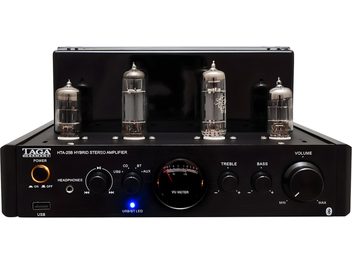
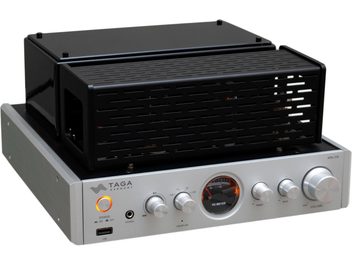
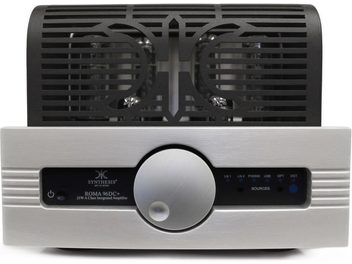
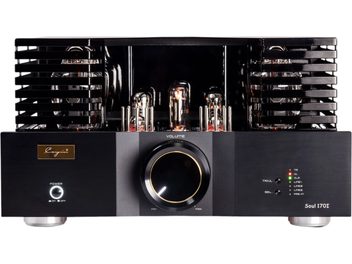
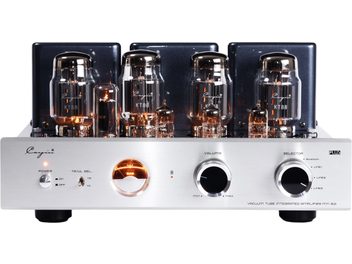
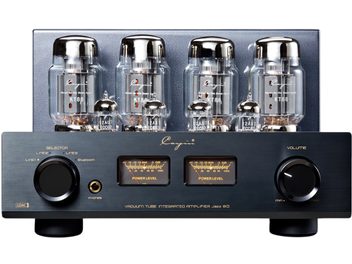
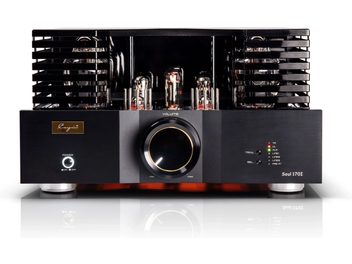
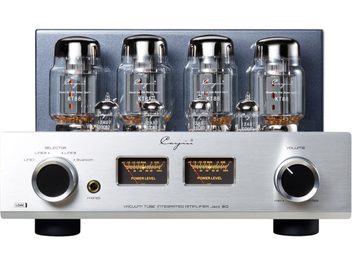
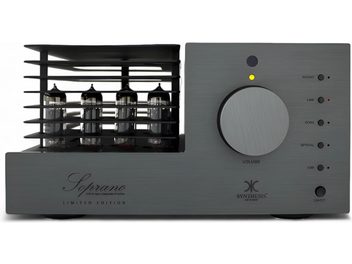

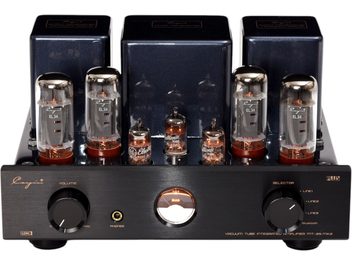


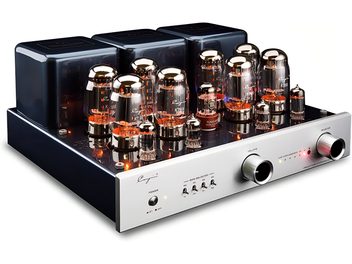
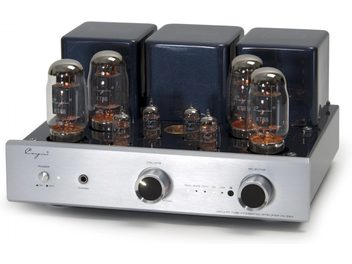


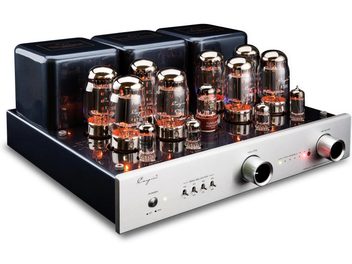

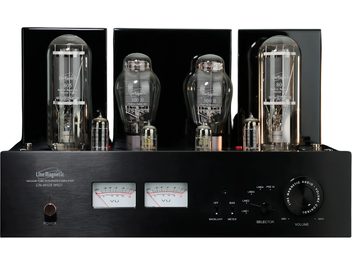
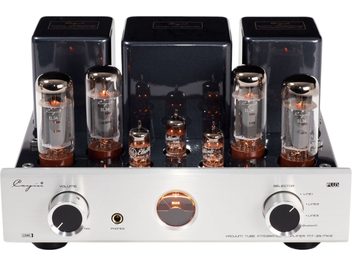

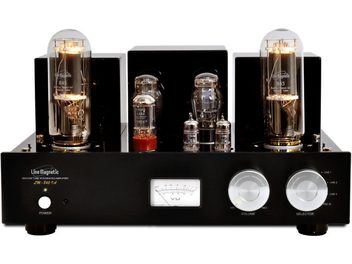
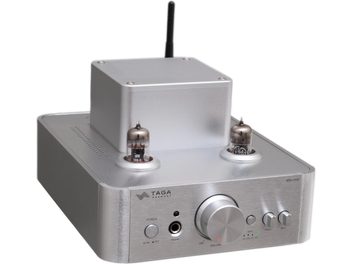
Principle and operation
An integrated tube amplifier combines preamplification and power amplification in a single chassis. Tubes—triodes, tetrodes, or pentodes—amplify the audio signal via the movement of electrons in a vacuum. The most common models use power tubes such as KT88, EL34, 6550, or 300B for the output stage, and small-signal tubes such as 12AX7, 12AU7, or 6SN7 for preamplification.
Amplification classes
Class A: Each power tube handles the entire audio signal, minimizing crossover distortion. This operating mode requires significant electrical consumption and necessitates high-sensitivity speakers (above 90 dB). The resulting musicality is optimal.
Class B: Only half of the signal is amplified by each tube, with the output transformer then reconstructing the complete signal. Efficiency is higher than Class A, but distortion characteristics are less favorable.
Class A/B: This configuration combines the advantages of the two previous classes by switching between modes depending on signal level. It offers a good balance between musicality and energy efficiency.
Sonic characteristics
Tube amplifiers reproduce musical nuances differently from transistors. The midrange is generally highlighted, with particular presence on voices and acoustic instruments. The soundstage offers notable relief and pronounced depth. Even-order harmonics generated by tubes contribute to this specific rendering.
Switching to triode mode (when the amplifier allows it) reduces the number of active electrodes and lowers power, but improves transparency, stereo image depth, and the naturalness of the treble—provided sufficiently sensitive speakers are used.
Power and compatibility
The power of integrated tube amplifiers generally ranges from 20 to 100 watts per channel. Unlike transistors, a tube watt offers a different perceived drive. Pairing with high-sensitivity speakers (above 90 dB) is often recommended, particularly for low-power Class A models.
Output transformers, often EI or toroidal types, ensure impedance matching between the tubes and the speakers. Most models provide 4 and 8 ohm outputs to suit different setups.
Maintenance and lifespan
Tubes have a limited lifespan that varies according to their role. Preamplifier tubes can operate for up to 10,000 hours, while power tubes last around 4,000 to 5,000 hours depending on the amplification class used. This represents several years of normal use.
Some amplifiers require periodic bias adjustment (tube polarization), a procedure that may require a professional. Automatic bias modules now equip certain recent models.
Tube amplifiers are sensitive to mechanical vibrations and temperature variations. A stable, well-ventilated location isolated from vibration sources (such as a turntable) helps preserve performance and tube longevity.
Modern features
Today’s integrated tube amplifiers often include contemporary features: Bluetooth connectivity, high-resolution DAC, USB playback, MM/MC phono input for turntables, pre-out for a subwoofer or external amplifier. Some models offer a remote control for volume adjustment, source selection, and triode/ultralinear switching.