

Speakers
Loudspeakers are the centerpiece of any hi-fi or home theater setup. Whether you choose floorstanding speakers for audiophile listening, compact bookshelf speakers, TV soundbars, or wireless connected speakers, the right choice depends on your listening room, your usage, and your system configuration. Passive or active, these speakers pair with an amplifier to reproduce music and movies with precision. Learn more
Must-haves

Best sellers
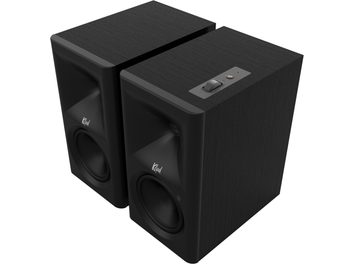
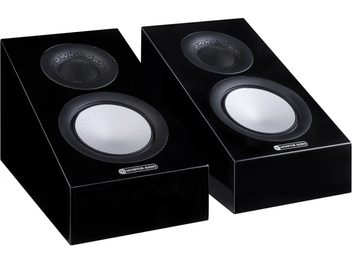
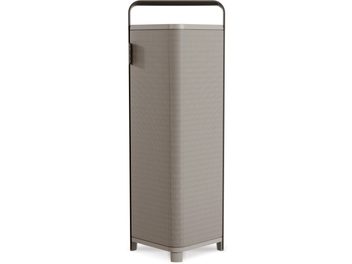
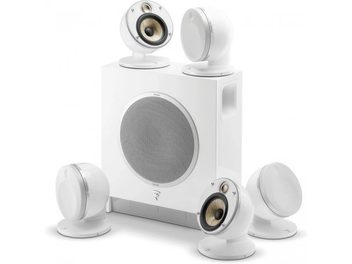
Choosing speakers based on use
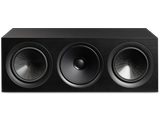
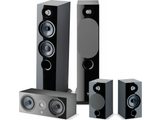
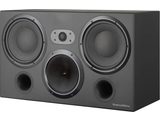
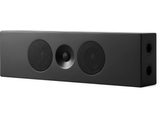
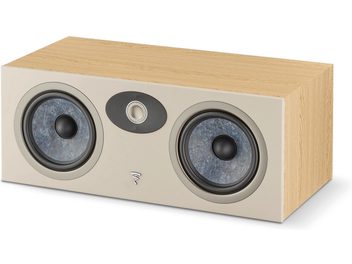
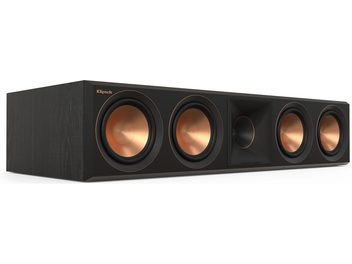
A high-fidelity stereo system requires two front speakers, typically floorstanders or bookshelf speakers depending on room size. For home theater, the setup expands with a dedicated center speaker for dialogue, lateral or rear surround speakers, and a subwoofer to reinforce the low frequencies. 5.1, 7.1, or Dolby Atmos formats include multiple specialized speakers to create an immersive soundstage.
The different types of speakers
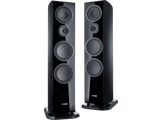
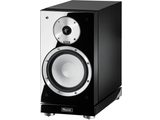
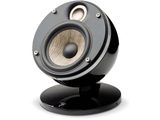
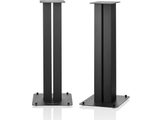
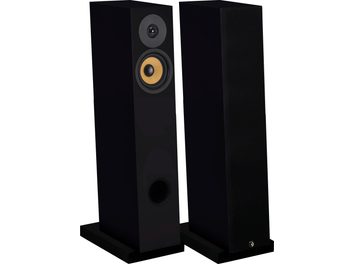
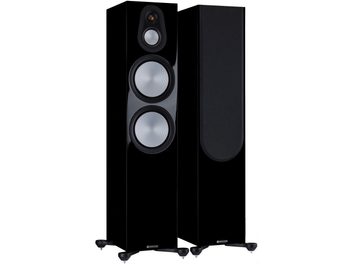
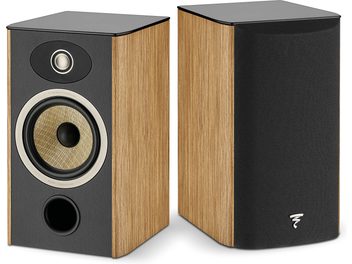
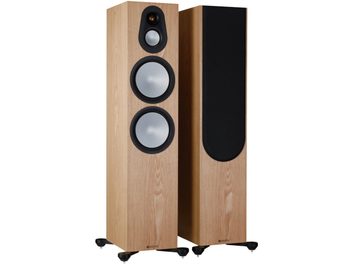
Floorstanding speakers offer an extended frequency response and large internal volume for deep bass. Their height allows optimal placement of the drivers at ear level. More compact, bookshelf speakers sit on furniture or dedicated stands and are suitable for rooms of 15 to 30 m². Their smaller cabinets help limit box coloration while ensuring accurate reproduction.
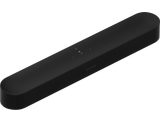
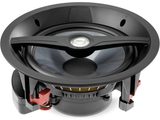
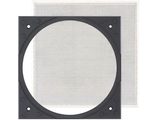
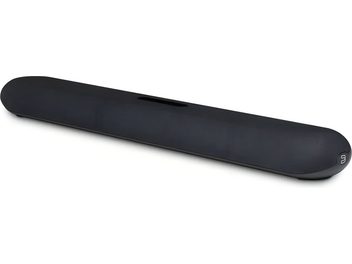
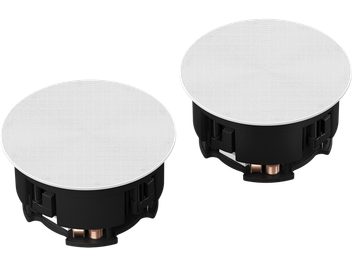
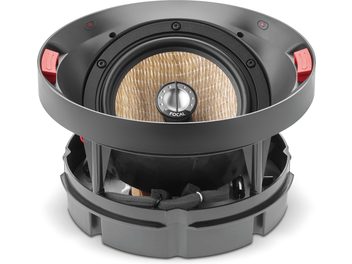
Soundbars are a compact alternative to improve a TV’s audio without multiplying speakers. In-wall or in-ceiling speakers integrate discreetly into interior architecture, particularly useful for surround or Atmos channels. Outdoor speakers are weather-resistant to provide sound on patios and in gardens.
Passive and active speakers
Passive speakers, which dominate in hi-fi, require an external amplifier. They include drivers and a passive crossover to split frequencies. Connected or studio monitor speakers feature built-in amplification, often with USB, optical digital inputs, or wireless Bluetooth and Wi‑Fi. These active speakers simplify setup by connecting directly to audio sources.
Technical criteria
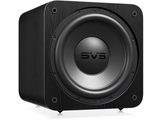
Sensitivity or efficiency, expressed in dB, indicates how effectively a speaker converts electrical power into sound pressure. Floorstanding speakers generally reach 40 to 60 Hz in the low end, while bookshelf models rarely go below 50–60 Hz. A subwoofer then completes the system for the lowest frequencies.
The number of ways defines the distribution of drivers: 2-way (tweeter + mid-bass), 3-way (tweeter + midrange + bass), or more. Enclosures can be sealed or bass-reflex with a port to optimize low-frequency reproduction. Impedance, generally 4, 6, or 8 ohms, must match the amplifier’s capabilities.
Building your system
For stereo listening, two floorstanding or bookshelf speakers are sufficient. Rooms up to 20 m² work well with compact speakers, while spaces from 20 to 40 m² call for floorstanders. In home theater, 5.1 or 5.1.2 speaker packs ensure consistent sound across all channels. The front and center speakers reproduce most of the audio content, surrounds build atmosphere, and Atmos speakers add the vertical dimension.
French brands like Focal, Triangle, Cabasse, and Elipson stand alongside international references such as B&W, KEF, Klipsch, Dali, Monitor Audio, and Yamaha. Each manufacturer develops its own sonic signature—some prioritizing neutrality for monitoring, others efficiency with high sensitivity, and still others the smoothness of the classic British sound.
Connectivity and new uses
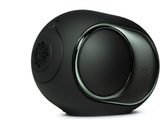
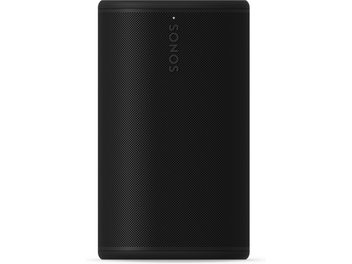
Connected speakers support Bluetooth, Wi‑Fi, Chromecast, or AirPlay 2 to stream music from a smartphone, tablet, or streaming services. Multiroom lets you synchronize multiple speakers in different rooms. Some models feature an HDMI ARC input to retrieve TV audio directly.
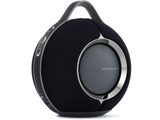
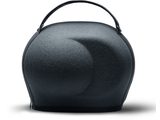
Portable Bluetooth speakers offer an on-the-go solution for listening to music with battery power. Studio monitor speakers, used in studios, deliver analytical, precise reproduction for audio mixing, also useful for producers and musicians in home studios.
Setup and placement
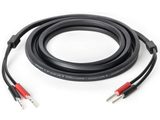
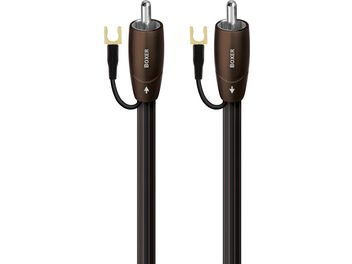
Speaker placement has a major impact on sound quality. In a stereo setup, the speakers and the listening position form an equilateral triangle. Distance from walls affects low-frequency response. Bookshelf speakers are ideally placed on stands at ear height or on wall mounts. Speaker cables, banana plugs, and accessories optimize connections to the amplifier.




