Cardas Headshell PCC (ER/EG)
Overview
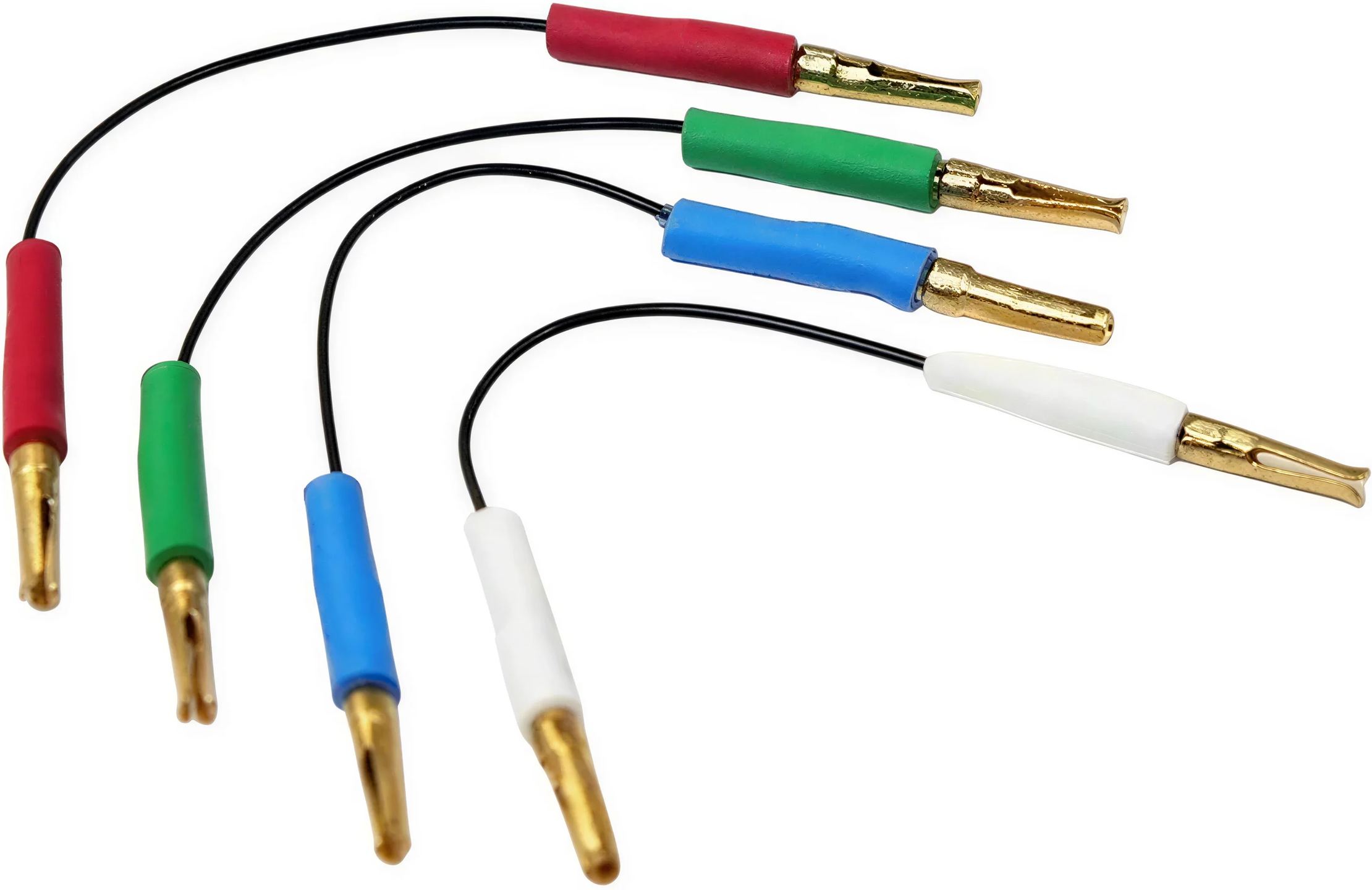
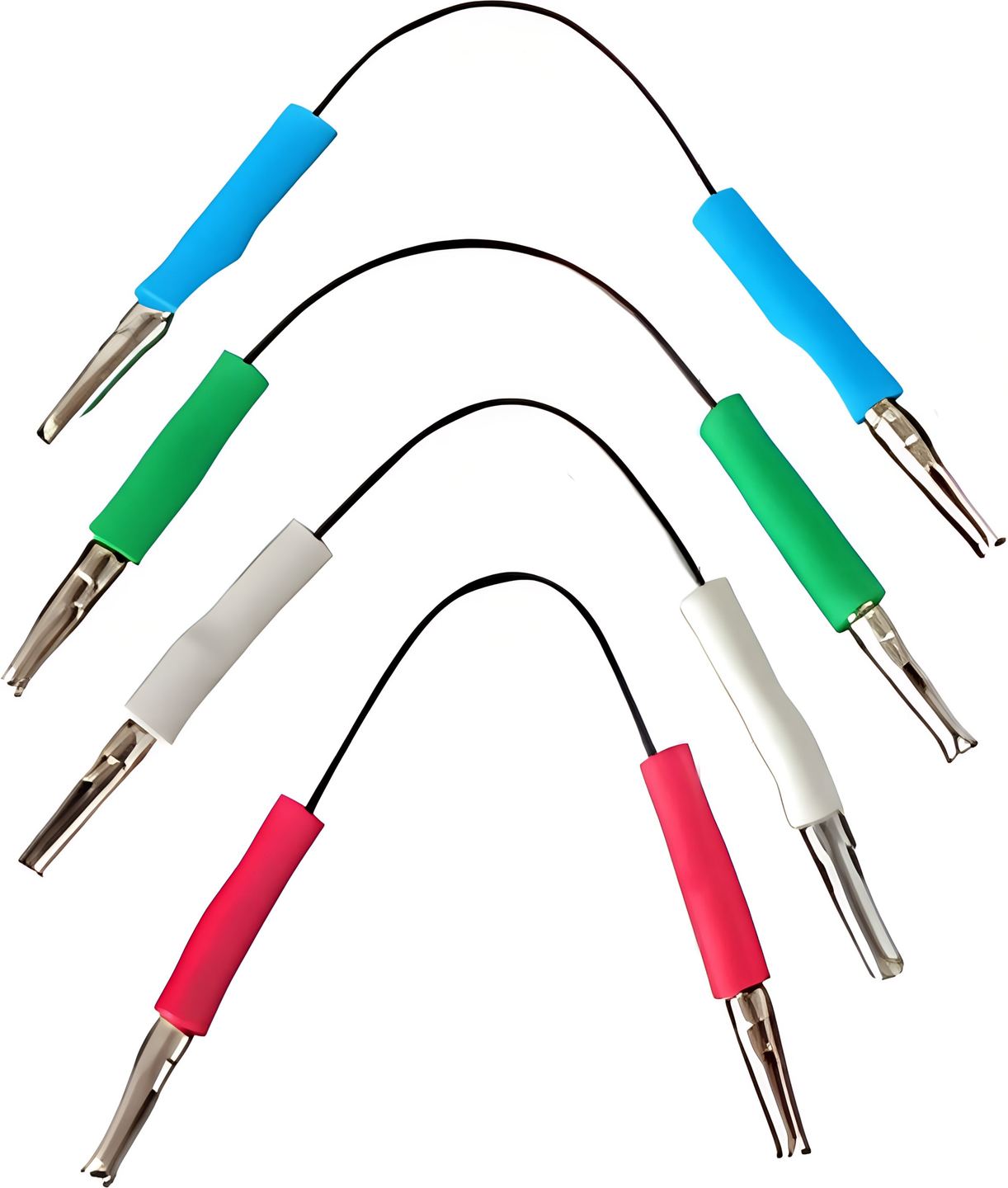
Between the cartridge and the tonearm wiring, a few centimeters of wire carry a signal in the millivolt range, sometimes even less with a moving coil cartridge. Over this tiny path, conductor purity and contact quality matter just as much as they do in the rest of the chain. Cardas offers here a set of four pre-terminated leads, made from its in-house tonearm wire and fitted with cartridge clips, available in rhodium or gold.
The shortest link in the chain
Four leads connect the cartridge pins to the tonearm’s internal wiring: two per channel, hot and ground. At this precise point, the signal has just come from the stylus and has not yet received any amplification. The slightest contact resistance, the slightest impurity in the copper, is audible at the end of the chain, in the bass as well as in the finesse of the highs. It is also the link that most turntables keep as standard, with wires and clips chosen for their cost rather than their durability. Replacing them remains one of the simplest upgrades for improving analog playback.
Litz copper tonearm wire
Each lead uses the 33 AWG tonearm wire that Cardas manufactures for its own tonearm wiring, made of grade 1 oxygen-free copper with a purity of 99.9999%. The construction is of the Litz type: the conductor combines several fine strands, each insulated with its own enamel coating, which limits skin effect and parasitic currents between strands. Cardas also adds its Golden Section Stranding, in which the strand diameter follows a progression designed to disperse resonances within the conductor rather than letting them concentrate at a single frequency.
This refinement comes at a cost. Litz wire is fragile and notoriously difficult to solder: the enamel on each strand must be removed by tinning before any connection is made, otherwise the contact remains faulty. That is precisely what the pre-terminated version saves the user from. Each lead measures 3.81 cm (1.5 inch), a length that corresponds to the distance between a cartridge and the end of a standard headshell.
Rhodium or gold, two finishes to choose from
The two references differ only in the treatment of the PCC E clips, which have a non-magnetic brass body. The PCC ER receives rhodium plating over silver, while the PCC EG receives gold plating. Rhodium is a hard metal, highly resistant to wear and corrosion, often associated with slightly more incisive contact in the upper part of the spectrum. Gold, being softer, offers exemplary protection against oxidation and a signature frequently described as rounder. These differences remain subtle and depend as much on the rest of the system as on the ear; neither finish is absolutely superior. A beryllium copper spring provides clamping force on the pin, with tension that maintains contact without putting stress on the cartridge’s fragile pins.
Compatibility with cartridges and tonearms
The clips accept the majority of cartridge and tonearm pins, in the two common diameters of 1 mm and 1.2 mm. This covers the vast majority of moving magnet and moving coil cartridges on the market, as well as removable headshells with a standard connector. The cartridge-side end features a flexible lip that conforms to the pin and retains its grip over time.
Installation without a soldering iron
All four leads arrive factory-terminated at both ends. Installation is limited to disconnecting the old leads and plugging the new ones onto the cartridge and headshell pins, without touching a soldering iron or risking damage to the Litz wire. The operation is reversible: the leads can be reused when changing cartridges. The conductors follow the universal color code, red and green for the right channel, white and blue for the left channel, which guides the connection of each hot and each ground.
Technical Specifications
Designation
- Set of 4 Cardas headshell lead wires with cartridge connectors
Description
- Set of four headshell lead wires with a length of 1.5 inches (3.81 cm)
- Manufactured from tonearm wire: Standard 33 AWG
- Factory terminations with Cardas cartridge connectors:
- PCC ER (silver / rhodium)
- PCC EG (gold-plated)
Frequently asked questions
What is the difference between the PCC ER and PCC EG versions?
Only the plating of the connectors differs. The PCC ER is rhodium-plated over silver, while the PCC EG is gold-plated. The cable, its length, and the internal construction are identical. The choice comes down mainly to listening preference and matching with the rest of the system, as both treatments provide lasting contact protection.
How do I connect each connection to the correct pin?
The color code serves as a guide: red goes to the right pin (R), green to the right ground (RG), white to the left pin (L), blue to the left ground (LG). These letters are engraved on the back of most cartridges.
Are these leads suitable for a fixed headshell integrated into the tonearm?
Yes, provided that the cartridge connects via pins and clips, which is the case for nearly all cartridges with a standard body. On a tonearm with a fixed headshell as on a removable model, the connection principle remains the same.
Does the 3.81 cm length cause a problem on some arms?
This is the standard length for this type of connection and it suits the vast majority of cartridge holders. A wire slightly longer than necessary fits without any strain; the main thing to avoid is a connection that is too short, which would pull on the pins.
Do the clamps maintain good contact over time?
Rhodium and gold both offer excellent resistance to oxidation, which maintains contact quality over time. The beryllium copper spring retains its tension and grip, whereas low-end clips loosen over time and end up crackling.
Can these connections be reused when changing cells?
Yes. They disconnect without tools and can be remounted on another cell, as long as its pins match the 1 mm or 1.2 mm diameters. Since nothing is soldered on the user side, the operation does not wear out the connection.
- Eco-contribution included in the sale price.