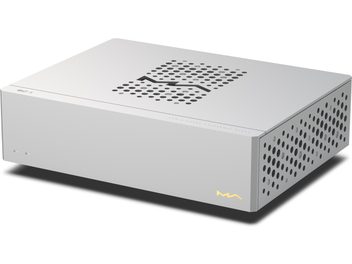

Audio Reference Clocks
An audio reference clock, or master clock, supplies a digital chain with an exceptionally stable synchronization signal. Its purpose is to address jitter, the timing fluctuation that slightly shifts the moment each digital sample is read. When this timing wavers, conversion loses precision: the soundstage becomes blurred, layers compress, and definition drops. An external clock generates a more accurate time base than that of the chips integrated into the devices, then imposes it on the entire setup. The connection is made via a dedicated output, often a 10 MHz signal or a word clock, picked up by devices equipped with a clock input: a converter, a digital transport, a network player. They all then lock onto the same reference, aligning their timing. The benefit increases with system complexity: multiple digital sources and a single synchronization point prevent drift between devices. In a simple system with a single converter that is already well clocked, the improvement is reduced. Two considerations frame the purchase. The receiving device must have a clock input, otherwise the external reference remains unusable, and the quality of the original internal clock determines the extent of the improvement. This is a high-end system refinement, to be assessed on an already fully developed setup. This clock synchronizes a converter or network player equipped with a dedicated input, and the synchronization connection is made via a low-jitter digital coaxial cable.