Matrix Audio SC-1


Overview
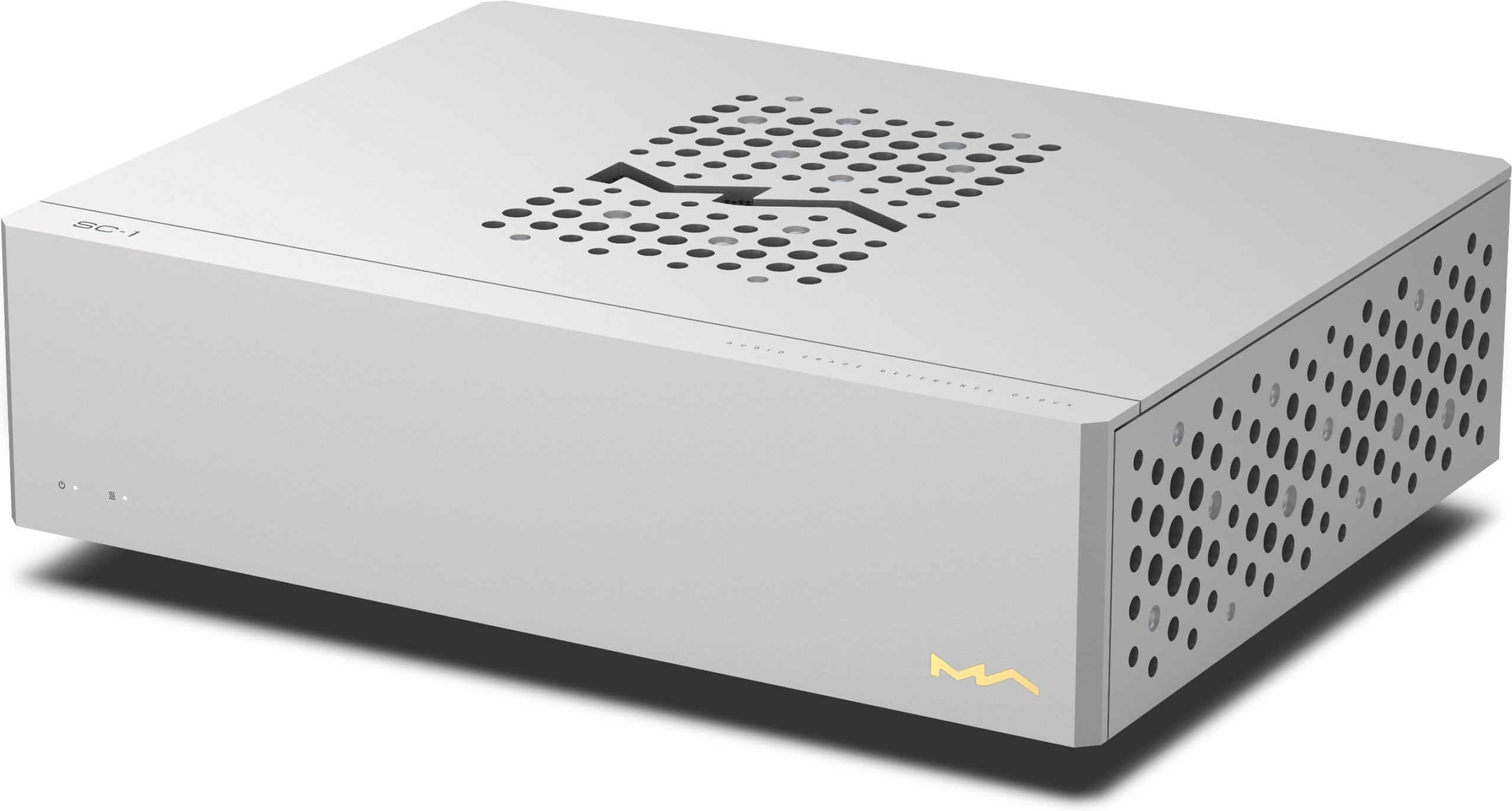
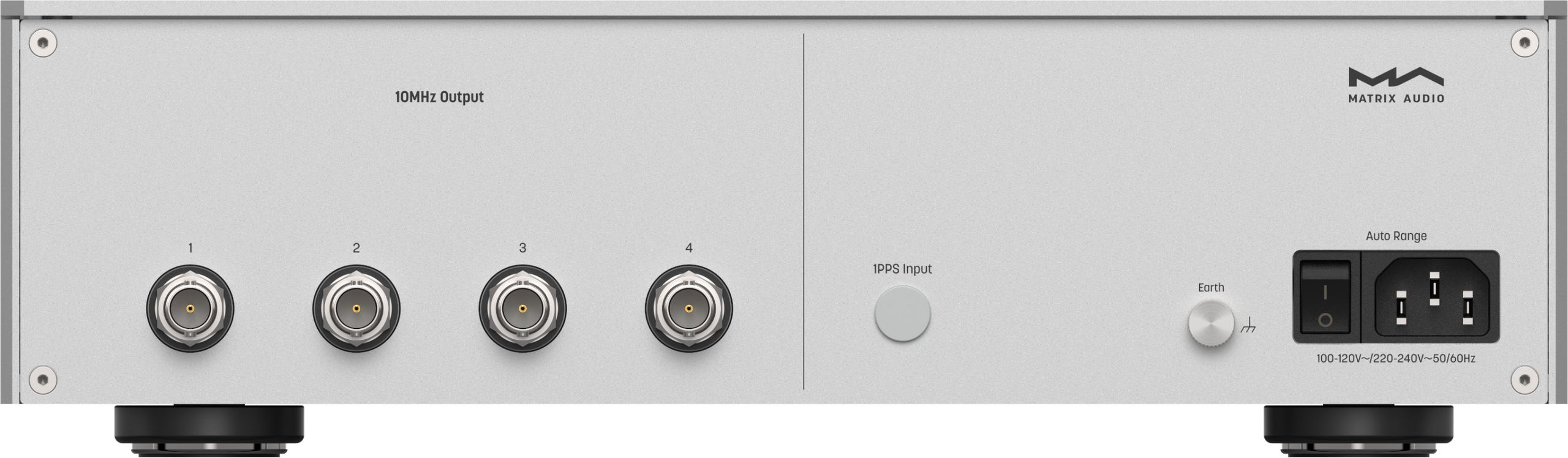
With the SC-1, Matrix Audio enters the field of external clocks for the first time. The device targets high-end digital systems where streamers, DACs, and CD players can be synchronized to the same time reference. Four independent outputs allow multiple sources to be clocked simultaneously, an approach less common than single-output clocks.
An SC-cut crystal OCXO oscillator
At the heart of the SC-1 is an OCXO oscillator designed by Matrix Audio, using an SC-cut (Stress Compensated) crystal. This cut, more complex to machine than the standard AT cut, reduces sensitivity to mechanical and thermal stress. The crystal operates in a temperature-controlled chamber (“oven”) that maintains a constant temperature, isolating the quartz from ambient variations.
The stated thermal stability is less than 0.003 ppm over a range of -40°C to +70°C. Output accuracy remains within ±0.01 ppm. In practice, this means that even in a room where the temperature fluctuates by several degrees between summer and winter, the reference frequency hardly drifts at all.
Short-term stability, measured at 5×10⁻¹³ over one second, places the SC-1 in a category close to the references used in metrology or telecommunications. For an audio oscillator, this level of timing consistency is unusual.
Phase noise measured at the output ports
Matrix Audio publishes its phase noise values not at the output of the OCXO itself, but at the BNC connectors on the rear panel, after the buffer circuits. This measurement more accurately reflects what connected devices actually receive.
The stated values are: ≤ -118 dBc/Hz at 1 Hz, ≤ -140 dBc/Hz at 10 Hz, ≤ -150 dBc/Hz at 100 Hz, and ≤ -160 dBc/Hz at 1 kHz, with a noise floor at -170 dBc/Hz. The corresponding time jitter is 20 femtoseconds between 1 and 100 Hz. These figures place the SC-1 among the quietest audio clocks currently available.
Four independent outputs with dedicated buffers
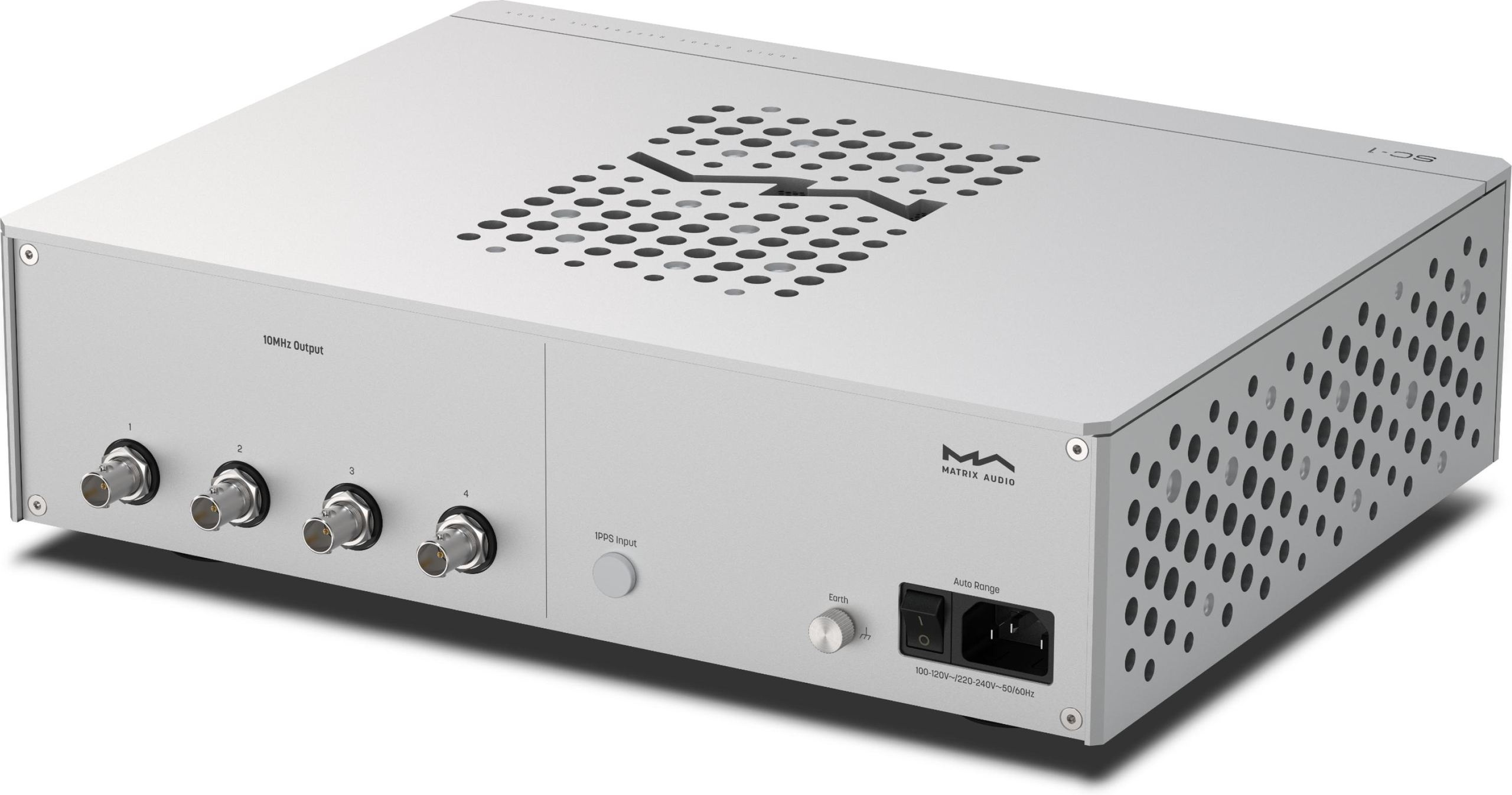
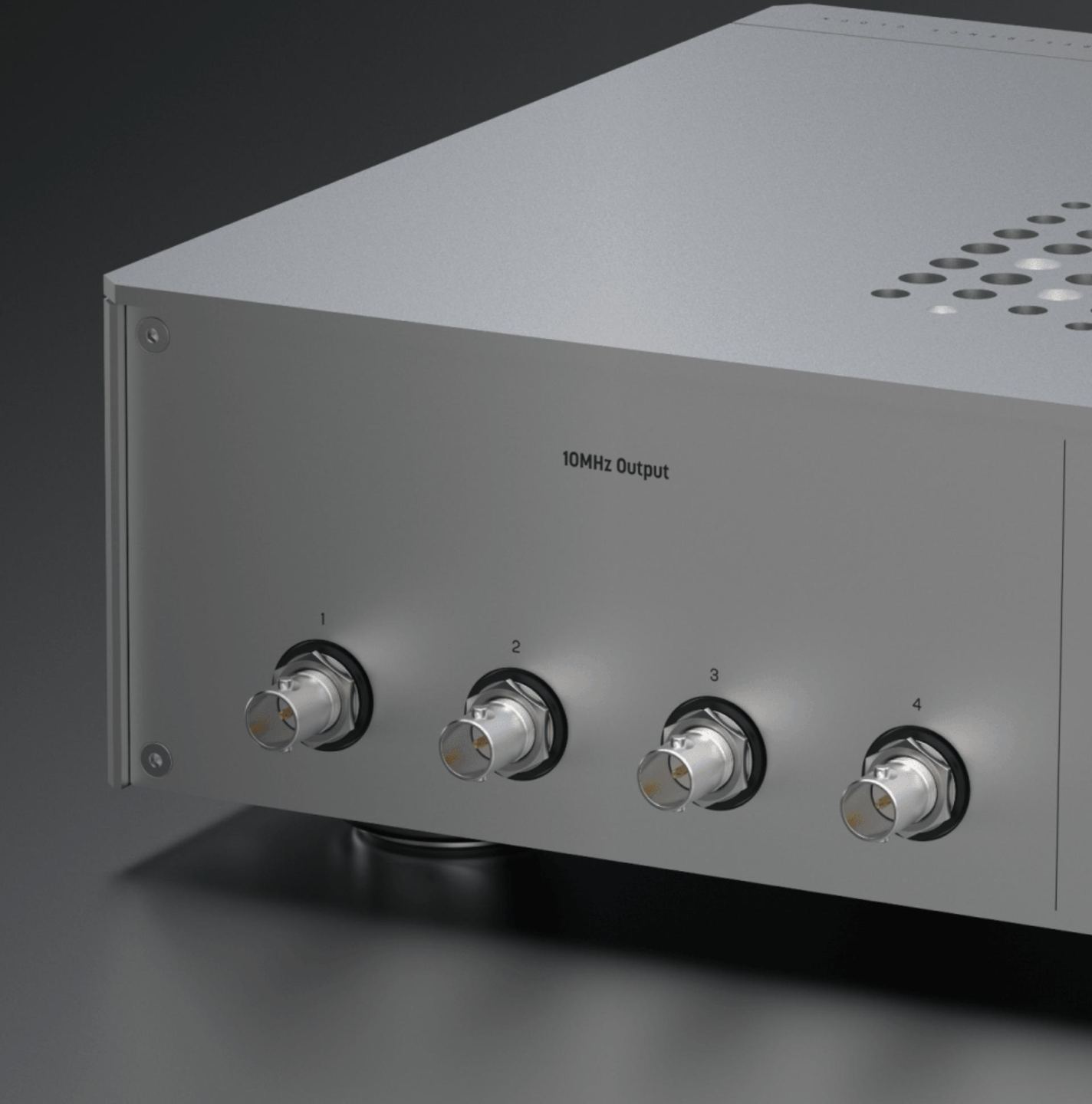
Each of the four BNC outputs has its own buffer circuit. The benefit is twofold: maintaining stable output impedance (50 Ω) regardless of the number of connected devices, and preventing one component from disturbing the others through reverse coupling. Whether one connects a single DAC or four different devices, each output delivers an identical signal.
The output frequency is fixed at 10 MHz, the dominant standard for external audio clocks. The waveform, sine or square, is defined at the factory according to the order. The square-wave signal (1 Vrms) generally provides firmer PLL lock than the sine wave (0.5 Vrms), but some devices prefer a softer waveform. It is therefore necessary to know the preferences of your digital sources before placing an order.
Linear power supply with dual regulation
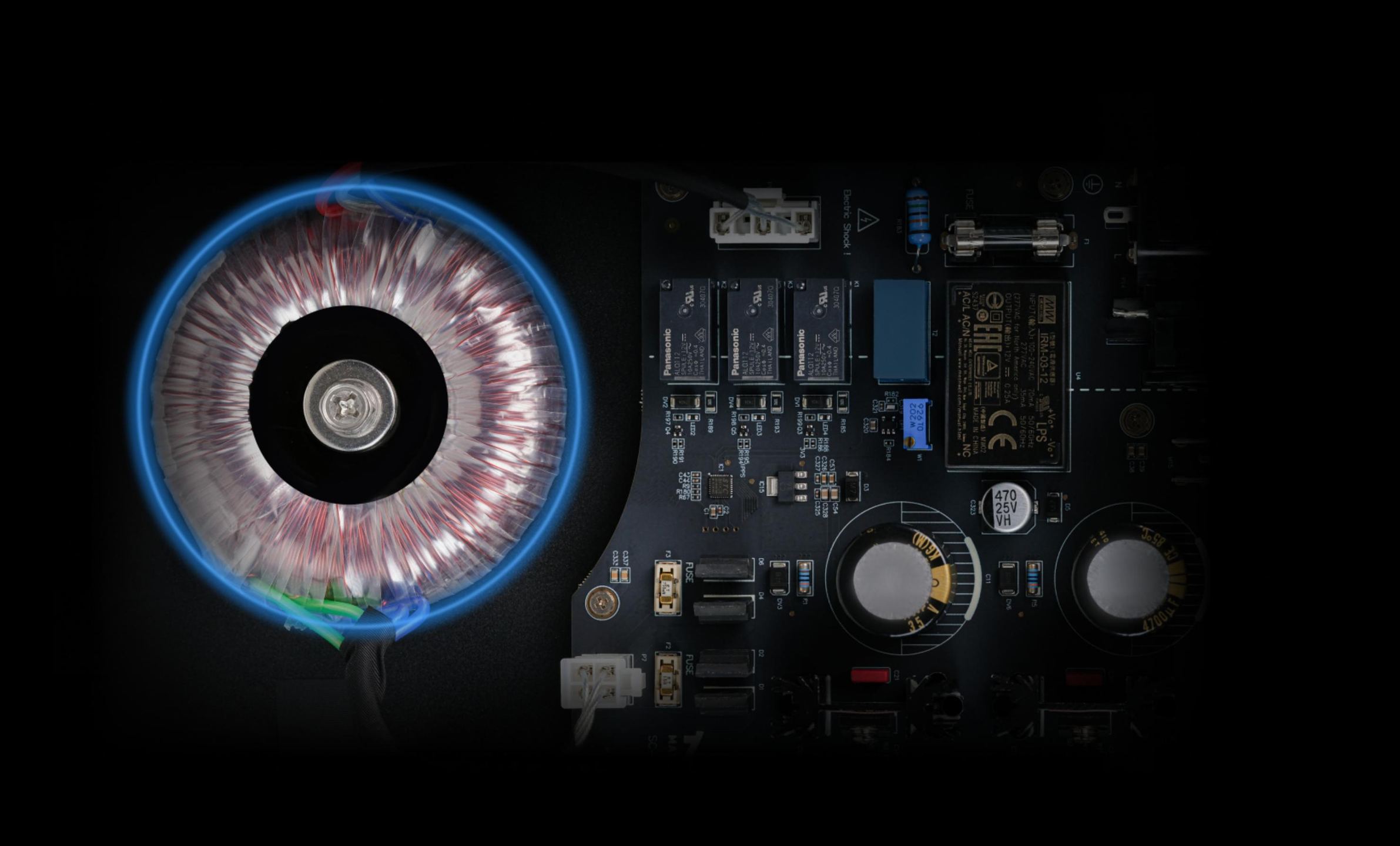
The SC-1 uses a linear power supply with a 60 W toroidal transformer and automatic voltage detection (100-120 V or 220-240 V, 50/60 Hz). Power consumption remains modest, below 20 W.
One notable architectural choice: the OCXO and its thermal enclosure are powered by a regulated circuit separate from the one that powers the clock stages. This isolation prevents the oven’s heating cycles, which draw significant current during warm-up, from disturbing the clock signal. Overvoltage and undervoltage protection complete the design.
Preheating and stabilization
After power-on, the temperature-controlled chamber gradually rises in temperature. The front-panel LED flashes during this phase, then remains steady once stabilization is reached. Warm-up time is specified at less than 5 minutes at 25°C, longer if the device starts cold in a cool room.
The clock signal is available as soon as the unit is switched on, but optimal performance is only reached after thermal stabilization. Matrix Audio recommends leaving the device powered on continuously to avoid this delay during listening sessions. Since continuous power consumption is low, this remains a reasonable practice.
1PPS reference input for calibration
The rear panel includes a BNC input for a 1PPS signal (one pulse per second). Connected to an external reference source, for example a disciplined GPS receiver, it allows automatic calibration of the internal oscillator. This function is optional: the clock operates without it at its native accuracy.
Matrix Audio offers a free recalibration service for users wishing to check or adjust long-term drift. In practice, the drift of an OCXO oscillator of this quality remains negligible over several years of use.
Mechanical isolation and chassis
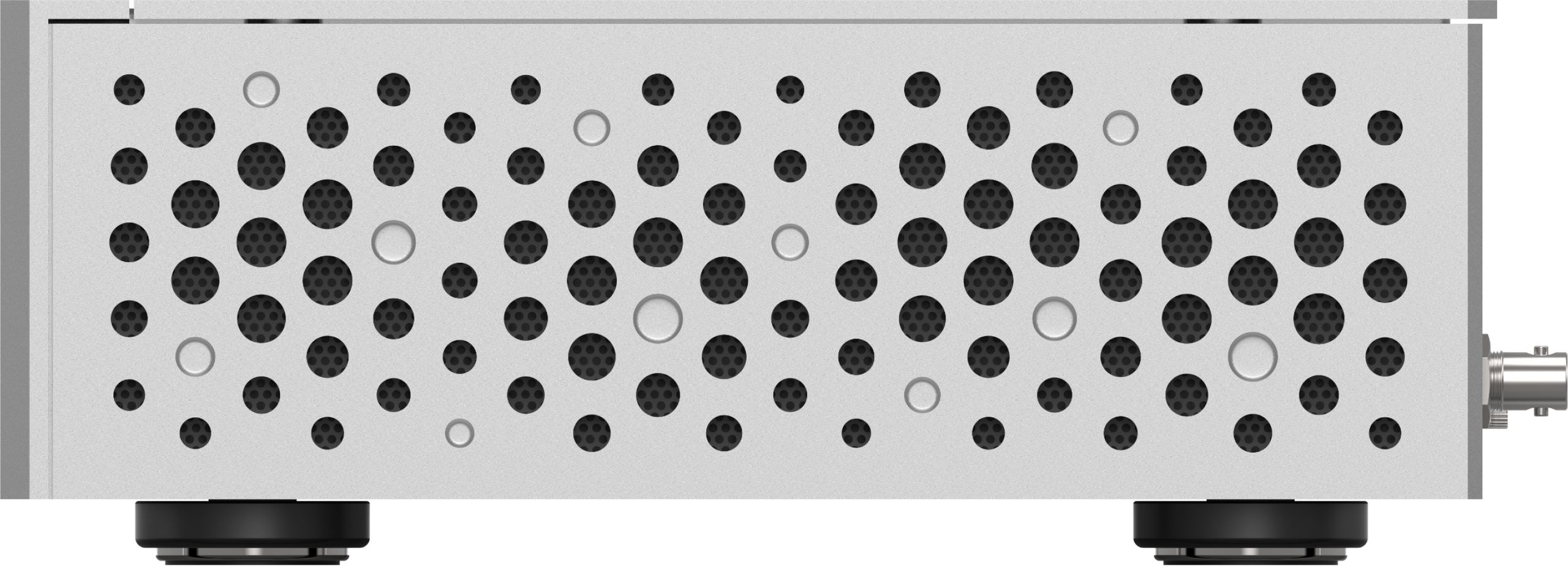
The CBVB (Ceramic Ball Vibration Buffer) feet decouple the chassis from surface vibrations. For a crystal oscillator, micro-vibrations can translate into undesirable frequency modulation. Mechanical isolation complements the thermal isolation work of the OCXO enclosure.
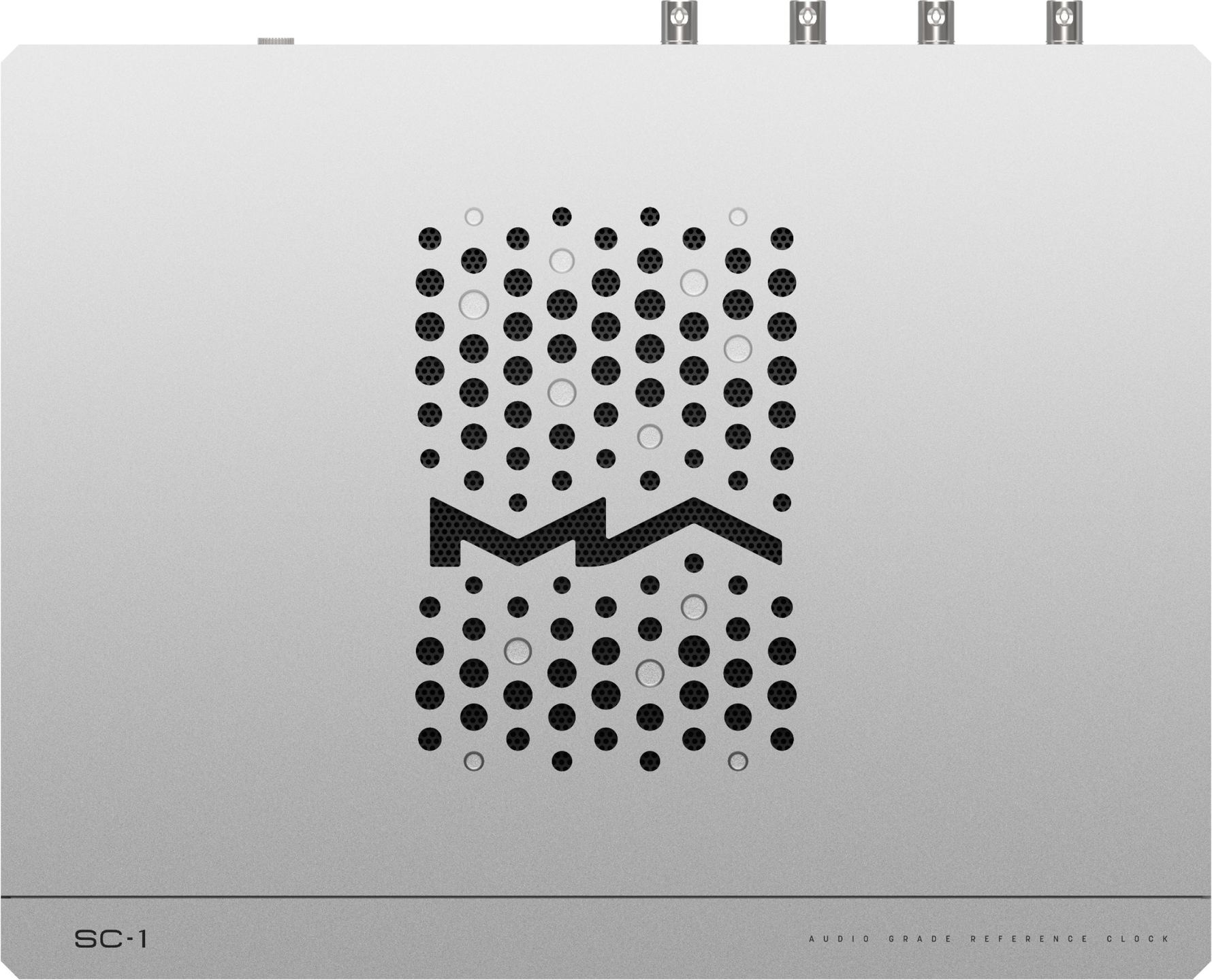
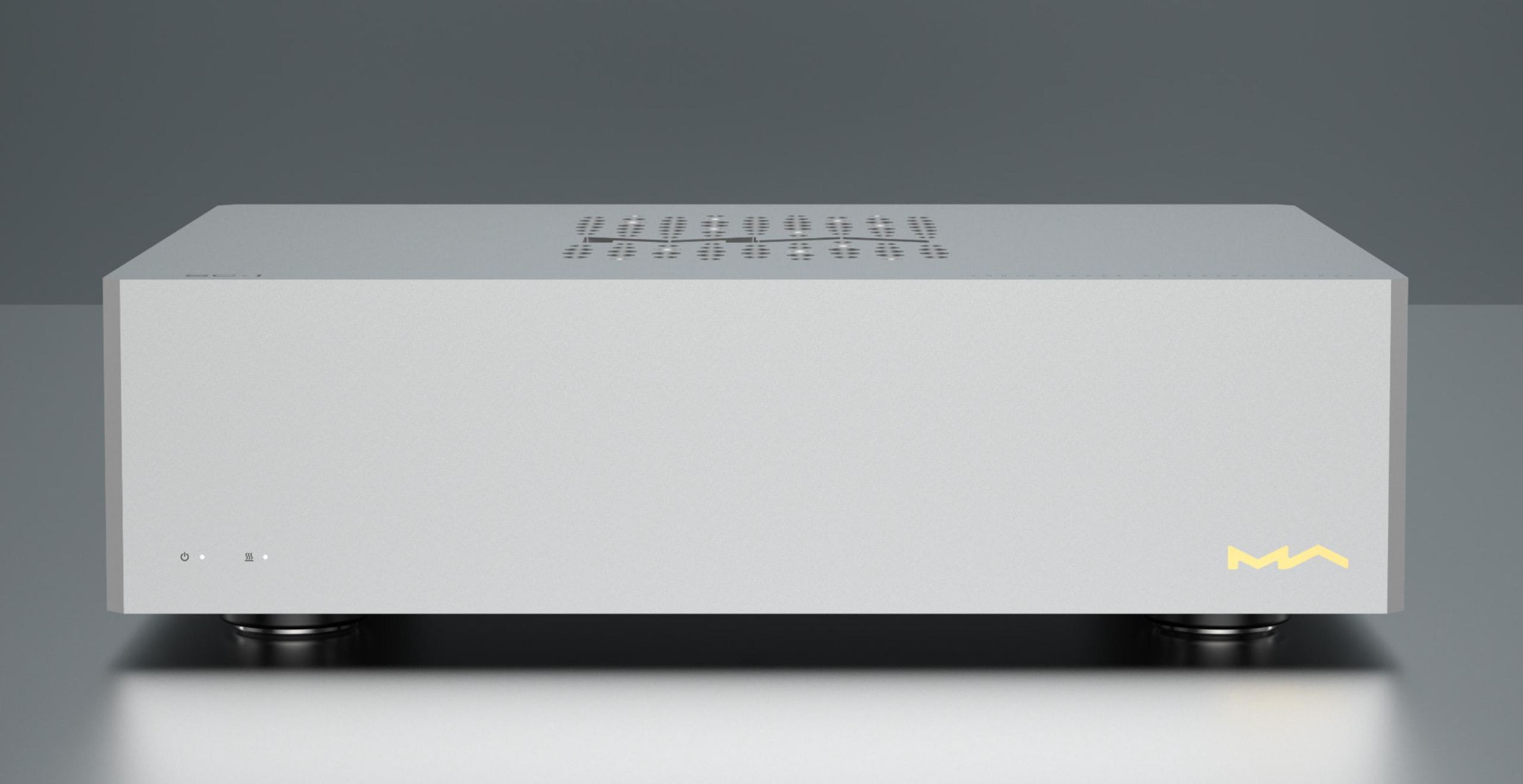
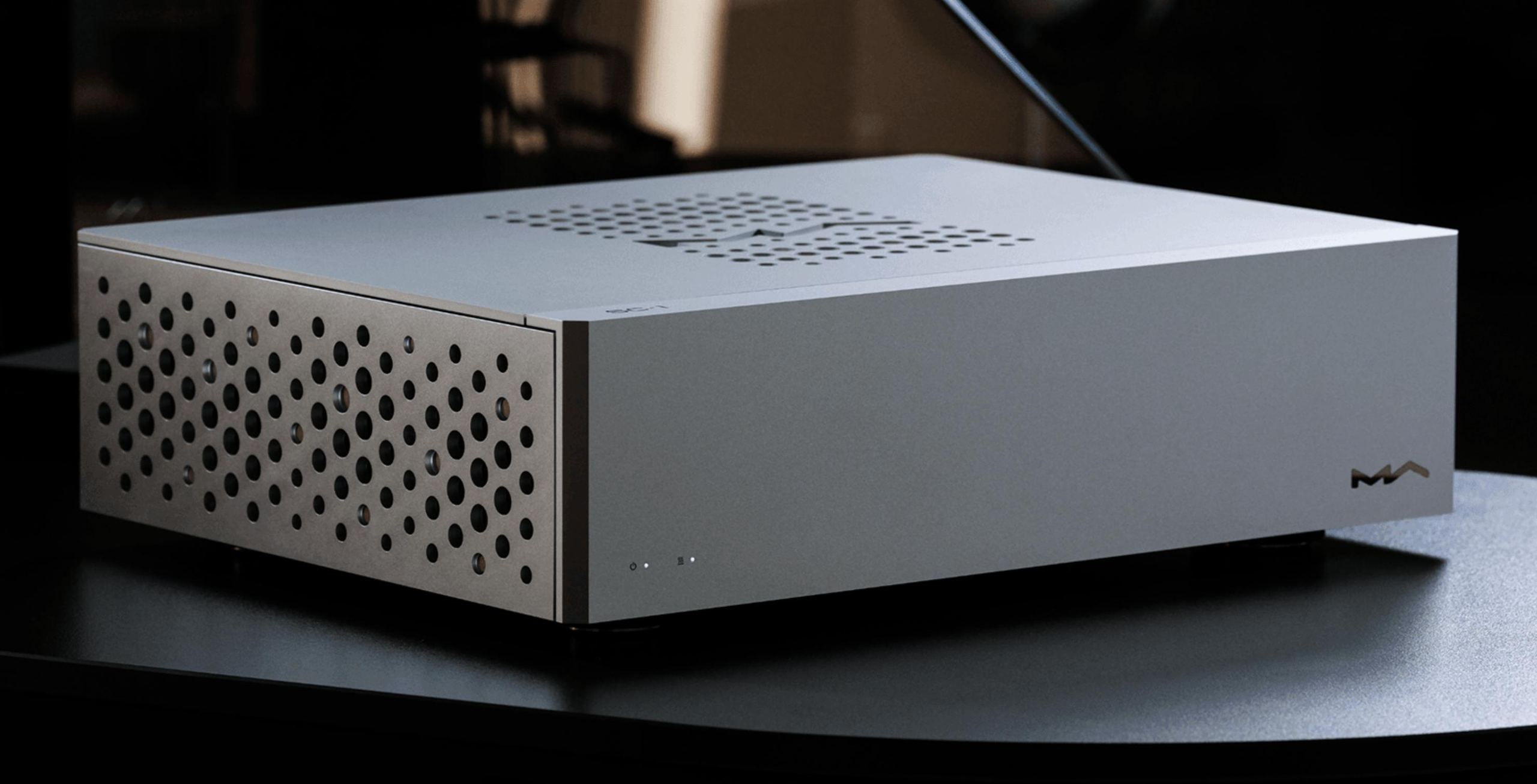
The aluminum enclosure uses the aesthetic language of Matrix Audio’s “1” series, with its decorative perforations and beveled edges. The dimensions (330 × 267 × 97 mm) and finish match the NT-1 and TT-1 streamers, as well as the SS-1 and SS-1 Pro switches. The weight of 4.4 kg reflects the density of the transformer and the robustness of the chassis.
Compatibility and use cases
The SC-1 works with any device equipped with a 10 MHz BNC clock input: network streamers, DACs, CD players, but also audiophile network switches featuring such an input. The benefit increases with the number of synchronized devices: a digital chain where streamer, DAC, and CD player share the same time reference eliminates phase offsets between components.
The main limitation lies in source compatibility: not all DACs and streamers have an external clock input. Before investing in a reference clock, it is advisable to verify that your devices can benefit from it.
Documentation
Technical Specifications
Clock Generator
- Oven-controlled SC crystal oscillator (OCXO), 10 MHz, ultra-low phase noise
- Output accuracy: < ±0.01 ppm
- Temperature stability: < 0.003 ppm from -40 °C to +70 °C
- Short-term stability: < 5E-13 @ τ = 1 s
- Warm-up time: < 5 min at 25 °C
Outputs
- 4 independent BNC ports with dedicated buffer circuits for stable impedance and excellent driving capability
- Output frequency: 10 MHz
- Waveform: sine or square (factory-set according to requirements)
- The square wave signal offers superior lock precision
- Output level: 0.5 Vrms (sine) / 1 Vrms (square)
- Output impedance: 50 Ω
Phase Noise
- Measured at SC-1 output ports
- 1 Hz: ≤ -118 dBc / Hz
- 10 Hz: ≤ -140 dBc / Hz
- 100 Hz: ≤ -150 dBc / Hz
- 1000 Hz: ≤ -160 dBc / Hz
- Noise floor: ≤ -170 dBc / Hz
Timing Jitter
- Jitter measured at output ports: 20 fs @ 1–100 Hz
Reference Input
- 1PPS input for automatic calibration with an external reference source, ensuring maximum accuracy
Power Supply
- Linear power supply with automatic voltage detection
- AC 100–120 V 50 / 60 Hz or AC 220–240 V 50 / 60 Hz
- Maximum power consumption: < 20 W
- Overvoltage and undervoltage protection
- Separate power supply for the oscillator and the clock circuit to eliminate any interference
Status Indicator
- Front-panel warm-up LED indicating operating status
Anti-Vibration System
- CBVB system: vibration-absorbing feet to stabilize the clock and minimize interference
Design
- Aesthetic perforations and bevels in harmony with the Matrix Audio industrial design language
Dimensions and Weight
- Width: 330 mm
- Depth: 267 mm
- Height: 97 mm
- Weight: 4.4 kg
Included Accessories
- Power cable × 1
- Printed documentation × 1
Frequently asked questions
Does the 1PPS input require GPS equipment?
The 1PPS input is optional. It allows the oscillator to lock to an external ultra-high-precision reference (a disciplined GPS receiver, for example), but the SC-1 works perfectly without it. This input is mainly used for periodic recalibration or installations requiring absolute synchronization.
Should the SC-1 be turned off between listening sessions?
Matrix Audio recommends leaving it powered on continuously. Power consumption is low (< 20 W), and this avoids the warm-up delay before each session. The OCXO oscillator achieves its best performance under stable thermal conditions.
Does the SC-1 work with devices from other brands?
Yes, it is compatible with any component accepting a 10 MHz clock input on a 50 Ω BNC connector. This includes many high-end DACs, streamers, and CD players from other manufacturers.
What cable should be used to connect the SC-1 to its sources?
A good-quality 50 Ω coaxial cable with BNC connectors. The length may vary, but short cables (less than one meter) are generally preferable to minimize losses and reflections.
Is the recalibration service paid?
Matrix Audio offers a free recalibration service. The recalibration frequency depends on the user’s requirements, but the drift of an SC-cut OCXO oscillator remains minimal over several years under normal operating conditions.
Can the four outputs be connected to different devices without loss of quality?
Yes, each output has its own independent buffer circuit. Whether one, two, or four outputs are used, each delivers an identical signal with the same stable 50 Ω impedance.
- Eco-contribution included in the sale price.
- GTIN / EAN: 6971844970597