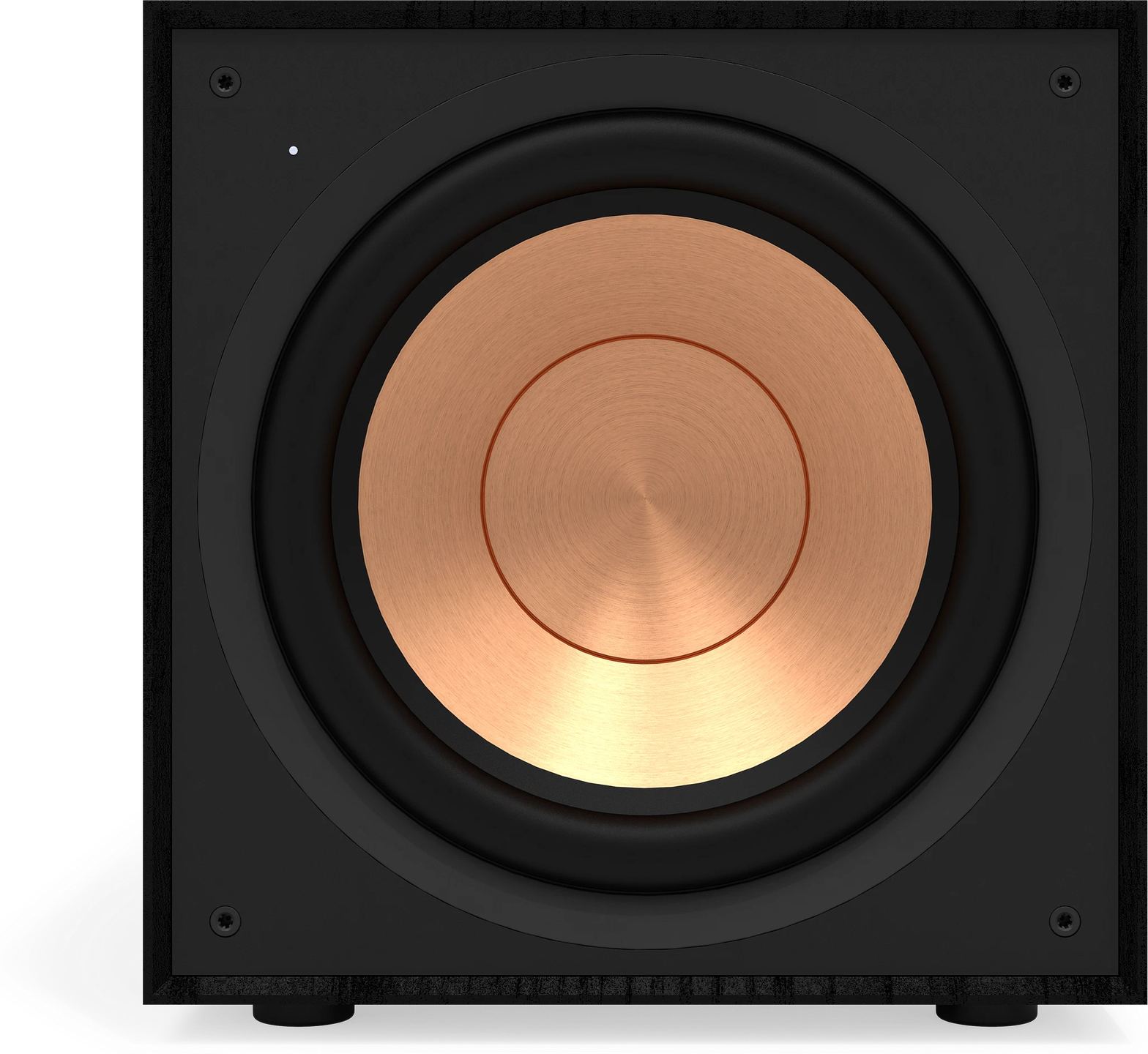
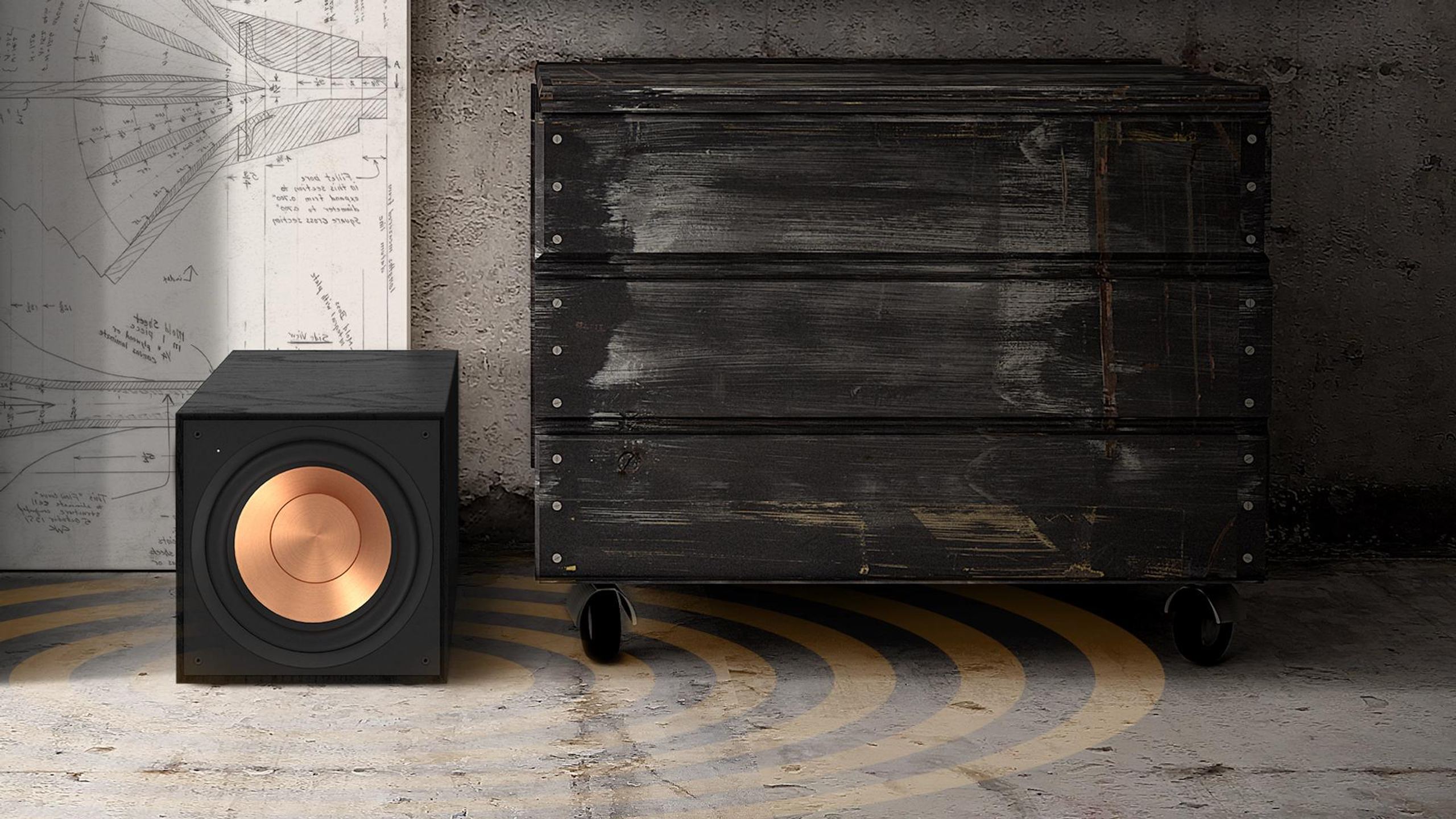
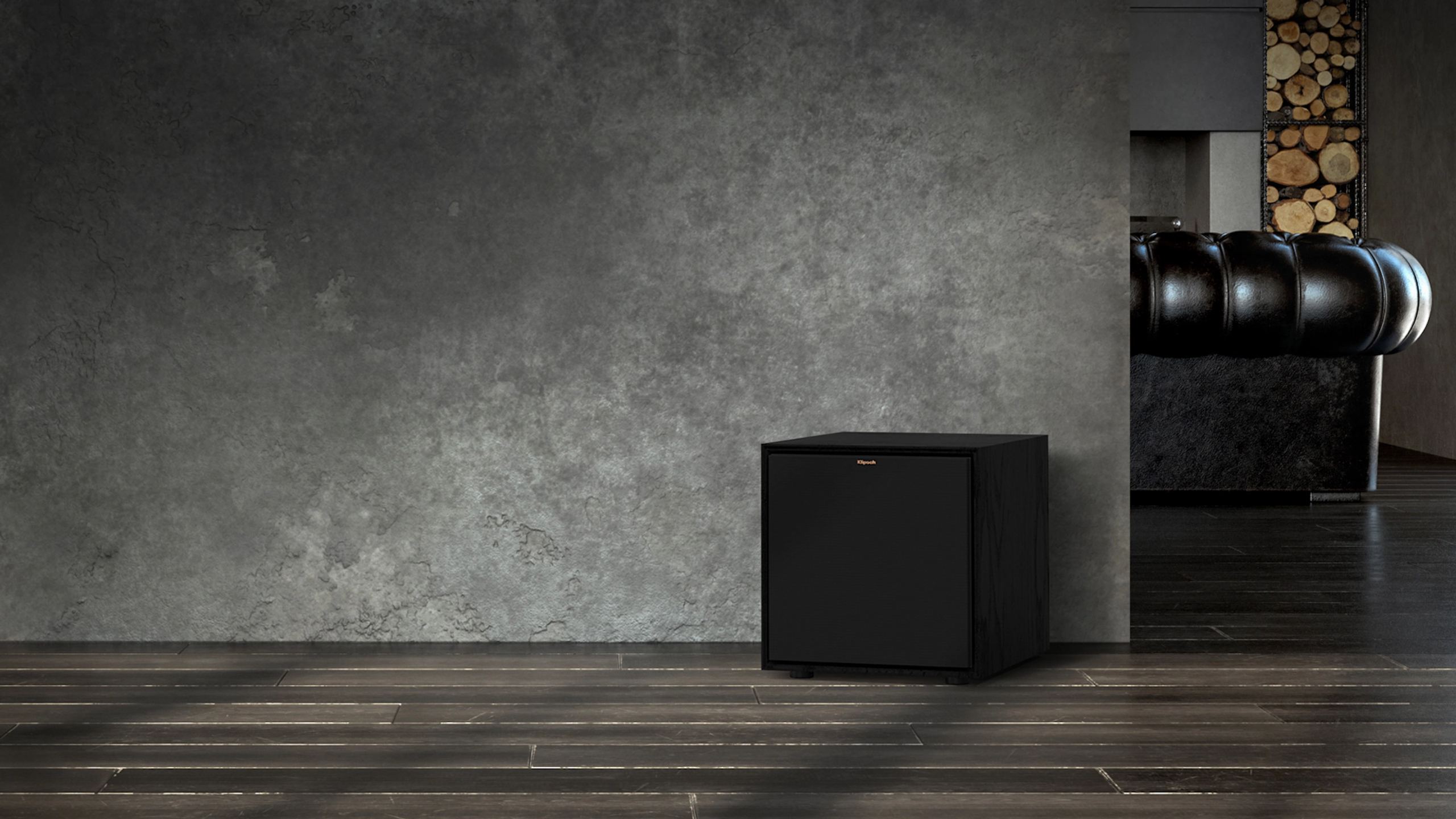
The Klipsch R-101SW is an active subwoofer from the Reference series, equipped with a 25.4 cm (10”) copper-spun TCP polymer cone driver and a 150 W RMS (300 W peak) digital amplifier. It offers an extended frequency response down to 29.5 Hz and a maximum sound pressure level of 115 dB. Designed for rooms of 20 to 30 m², it features increased internal volume and an optimized bass-reflex port compared to the previous model, enhancing bass depth while maintaining a discreet form factor.
Acoustic Design and Optimized Enclosure Volume
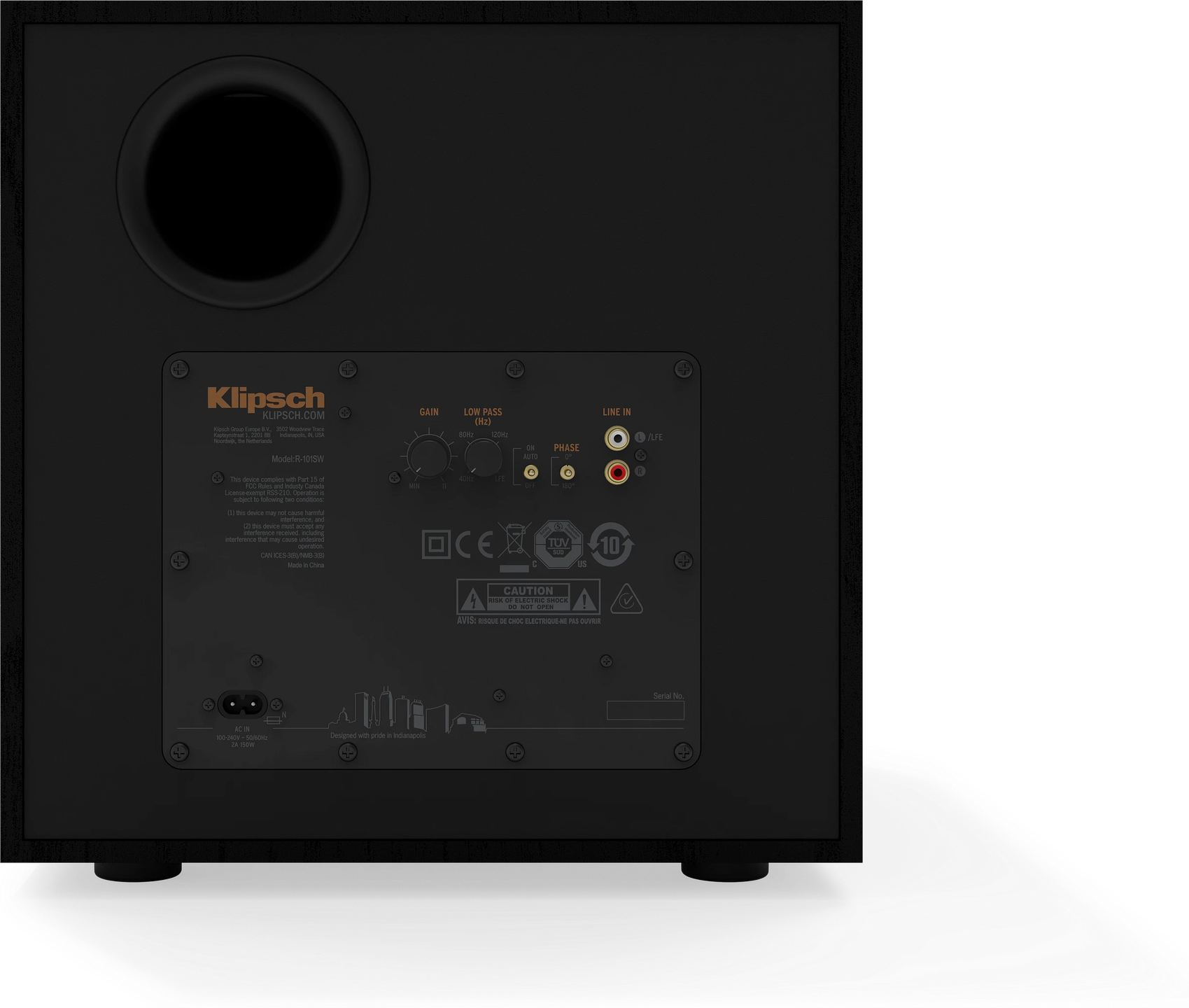
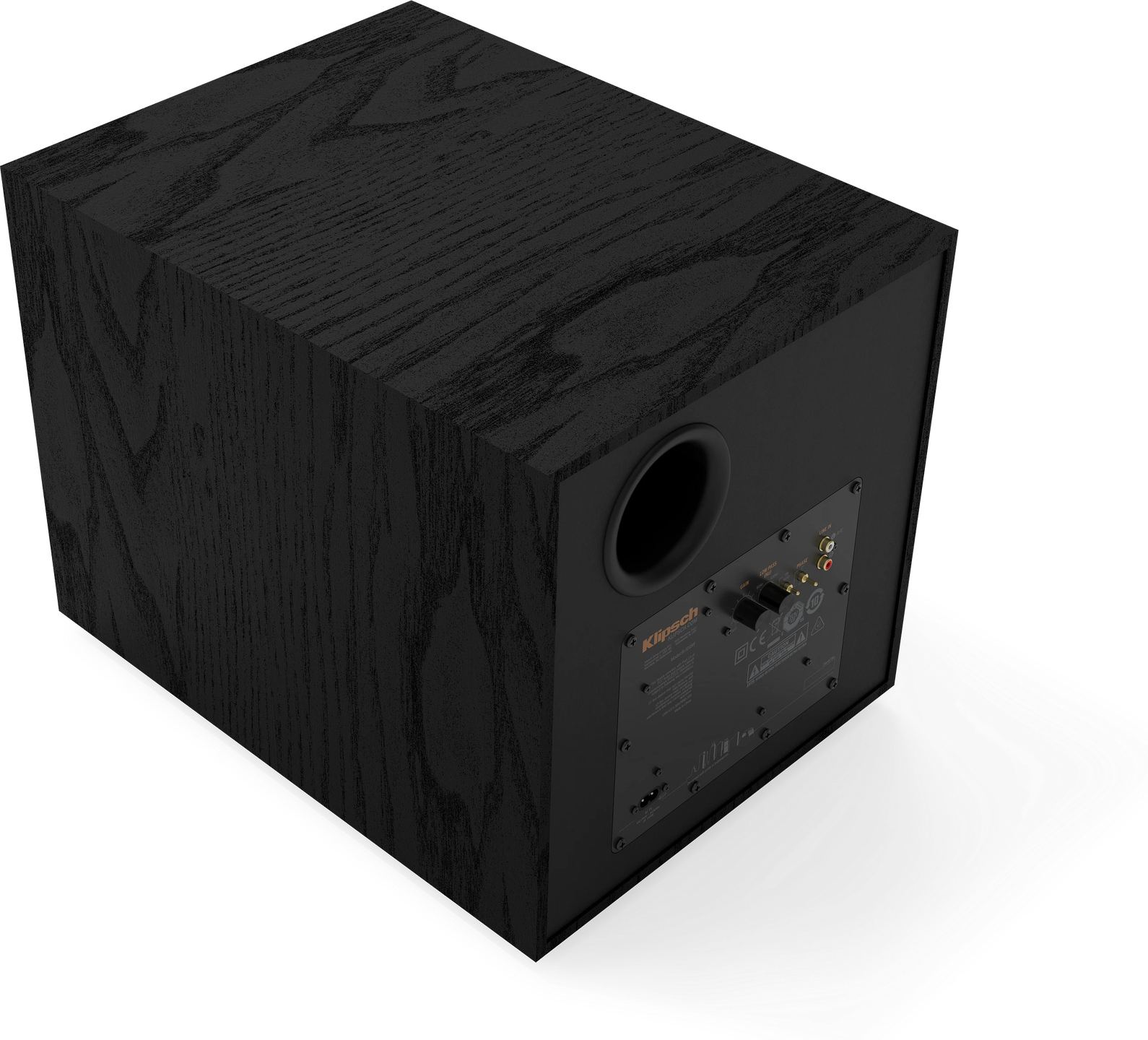
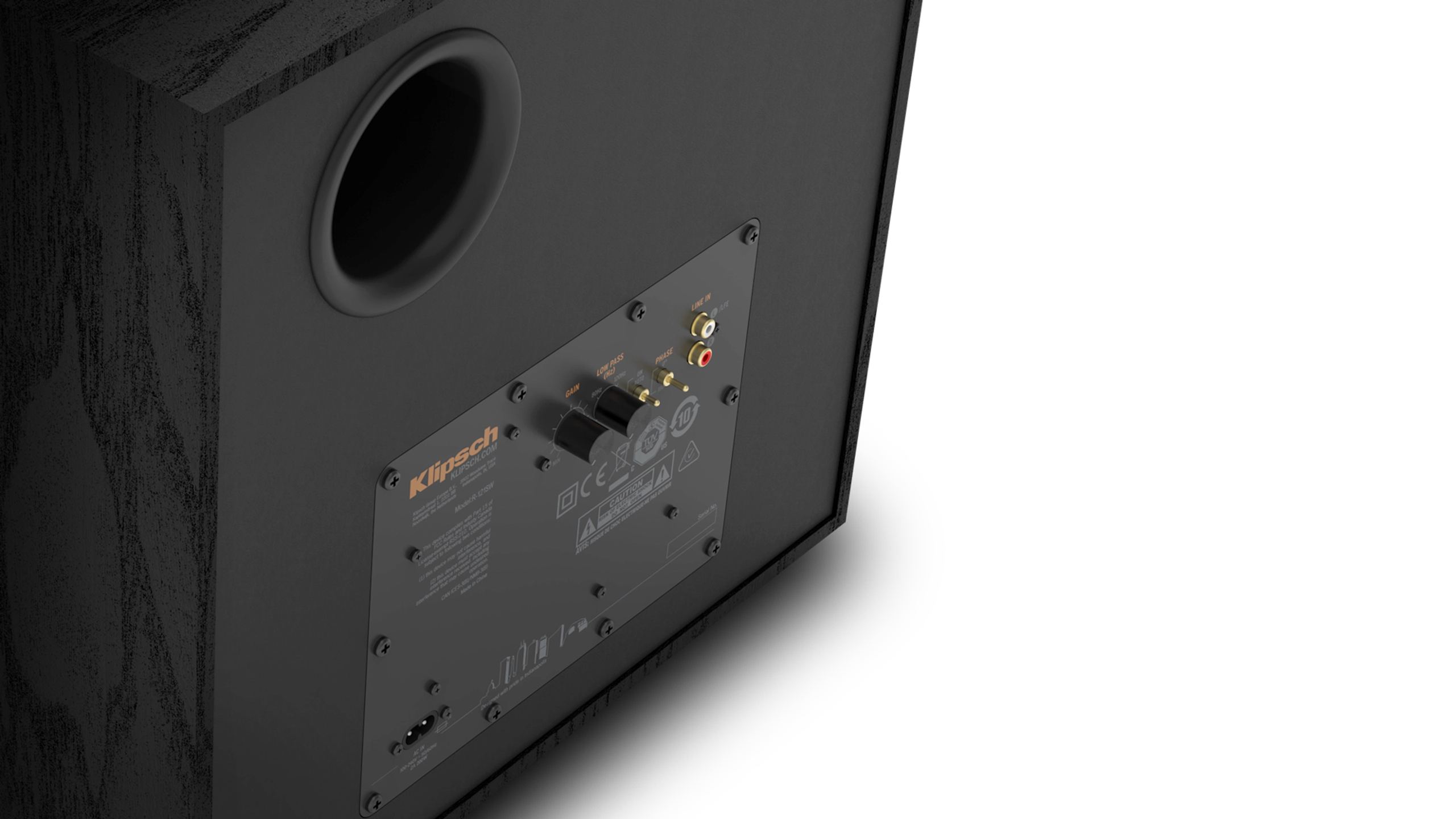
The R-101SW uses a bass-reflex design with a circular port positioned at the rear of the cabinet. Compared to the R-100SW it replaces, the port has been lengthened and its diameter optimized to reduce unwanted air noise during high-output playback. The 19 mm thick MDF cabinet measures 365 × 370 × 500 mm, offering an extra 70 mm in depth over its predecessor. This increase in internal volume, combined with the new port profile, allows the lower cutoff frequency to drop from 32 Hz to 29.5 Hz.
The construction incorporates a new internal bracing system that limits unwanted cabinet vibrations. The panels are covered with a textured black wood-effect vinyl, resistant to scratches and everyday impacts. Four rubber feet isolate the subwoofer from the floor, reducing the transmission of vibrations into the building structure. The removable front grille, held in place by magnets, protects the driver while remaining acoustically transparent thanks to its wide-mesh fabric and slim frame.
An interesting detail: the weight remains at a manageable 13.9 kg despite the increased volume, thanks to the optimized internal structure that uses targeted bracing rather than simply thickening all the panels.
Digital Amplification and Integrated Thermal Management
The built-in amplifier delivers 150 watts RMS (300 watts peak) in class D, a technology that offers high efficiency while limiting heat dissipation. The amplifier module is mounted on an extruded aluminum heatsink visible at the rear of the cabinet, ensuring passive heat dissipation without the need for a fan, which could otherwise introduce unwanted noise.
The driver’s voice coil features Klipsch’s power thermal control technology. This system monitors the coil temperature and dynamically adjusts the delivered power to prevent overheating during demanding passages. This user-transparent protection allows for high sound levels without risk of damage, even during extended listening sessions.
The auto power-on circuit has been refined: it now detects incoming signals more quickly, avoiding the typical delay where subwoofers “miss” the first seconds of an explosion in a movie. A three-position switch lets you choose between auto, always-on, or off modes. The front LED indicator is discreet yet visible, showing the system status without being intrusive in a darkened room.
Connectivity and Integration into Your Audio System
The rear panel houses all connections and controls. Two RCA inputs are available: a stereo input (left/right) for amplifiers without a dedicated subwoofer output, and a mono LFE input for direct connection to a modern home theater amplifier. Both can be used simultaneously if needed, for example to feed the subwoofer from two different sources.
The crossover frequency adjustment ranges from 40 Hz to 160 Hz, with an LFE position that disables the internal filter when frequency management is handled by the main amplifier. The volume knob allows for precise level adjustment, while the phase switch (0° or 180°) makes it easier to acoustically integrate with your main speakers. While these controls are basic compared to the digital processors found in high-end subwoofers, they are sufficient for most home setups.
One point to note: the lack of a filtered line output prevents daisy-chaining multiple subwoofers with cascading filtering, limiting system expansion options. For a multi-subwoofer setup, you’ll need an external processor or an amplifier with multiple outputs.
25.4 cm TCP polymer cone woofer with copper coating
Built-in digital amplifier: 150 W RMS / 300 W peak
Deep bass from 29.5 Hz and maximum sound pressure of 115 dB
Optimized design with extended rear bass-reflex port
Ideal for home theater systems in rooms of 20 to 30 m²
Construction and Design
Bass-reflex design with circular rear port
Enclosure made of MDF (medium-density fiberboard)
Black textured vinyl finish with wood grain effect
Front-mounted power LED indicator
Speaker
25.4 cm front-firing woofer
TCP (thermoformed crystalline polymer) cone with copper coating
High-excursion copper voice coil
Power thermal control technology
Amplification
Built-in digital amplifier
Power: 150 W RMS, 300 W peak
Automatic or manual standby and power-on
Settings and Controls
Variable crossover frequency: 40 Hz to 160 Hz
Phase: 0° or 180°
Adjustable volume
Acoustic Performance
Frequency response: 29.5 Hz – 120 Hz (±3 dB)
Maximum sound pressure level: 115 dB at 1 m
Connectivity
1 stereo RCA line-level input
1 mono RCA LFE input
Dimensions and Weight
Dimensions (W × H × D): 365 × 370 × 500 mm
Weight: 13.9 kg
Frequently asked questions
What is the difference between the stereo RCA and LFE inputs?
+
The LFE (Low Frequency Effects) input bypasses the subwoofer’s internal filter and receives the bass signal managed directly by your home theater amplifier. The stereo inputs allow you to connect the subwoofer to a standard stereo amplifier, with the R-101SW’s internal filter ensuring only low frequencies are reproduced according to your chosen setting.
Is the subwoofer suitable for music use or just movies?
+
With its response down to 29.5 Hz and 150-watt amplification, the R-101SW is suitable for both. For music, set the crossover frequency between 60 and 80 Hz depending on your main speakers. For movies, use the LFE input and let your amplifier handle the filtering.
Can the front LED be turned off?
+
No, the LED remains on as long as the subwoofer is powered. However, its brightness is moderate and should not be distracting in a dark room. Some users apply a subtle smoked filter over the LED to reduce its intensity.
How far from the wall should the subwoofer be placed?
+
The rear port requires at least 10 to 15 cm of clearance from the wall to function properly. Placing it too close can cause turbulence and degrade bass response. For optimal performance, allow 30 cm of space.
Is the R-101SW compatible with older Klipsch ranges?
+
Yes, the subwoofer integrates perfectly with all Klipsch ranges, both old and new. The phase and frequency controls allow you to match its response with different types of speakers, whether they are Klipsch or not.
User reviews
Review highlights
All 13 reviews give it 5/5: enthusiasm is unanimous, and several buyers say they are very satisfied or recommend this subwoofer.
Just under half of the reviews praise its performance: powerful bass and sound quality that leaves nothing to criticize, including in home theater use.
Several reviews also emphasize that it lives up to the usual quality of the Klipsch brand.
Based on reviews from customers who purchased this product, summarised by AI
Bernd
Very solid subwoofer, I'm really happy with it, and the value for money is excellent. My listening experience is much better.
Comment from 9 October 2026 — Experience from 27 September 2026
Automatically translated — Show original (Dutch)
Zeer degelijke subwoofer, ben echt blij ermee, en de prijs kwaliteit is uitstekend.
Men geluidsbeleving is stukken beter.
Ludovic
Adaptable even in a small room. Present without being overpowering, it fits perfectly with the Klipsch R605 kit. I recommend it
Comment from 7 October 2026 — Experience from 24 September 2026
Automatically translated — Show original (French)
Adaptabilité même dans une petite pièce. Présent sans être étouffant, il s'adapte parfaitement au kit Klipsch R605. Je recommande
UAB "ALKOS projektai"
Good and fast delivery, good product quality
Comment from 21 August 2026 — Experience from 3 August 2026
Automatically translated — Show original (Lithuanian)
To better understand our visitors, measure marketing effectiveness and personalise ads, we and our partners use cookies and mobile advertising identifiers on your device. This data makes it possible to display personalised and non-personalised ads and measure their performance. Some cookies, which are technically necessary, are exempt from consent. You can accept those that require your consent, refuse them by clicking “Reject”, or customise your choices via “More options”.
To find out how Google uses the data collected once you have given your consent, see Google’s Business Data Responsibility site (opens in a new window).
You can change or withdraw your consent at any time via the “Cookies” link. Your choices will apply on our site for 12 months.