

Wireless vs. wired speakers: which is the better choice?

Contents
A “wireless” speaker sitting on a sideboard almost always has a cable running to the wall socket. This detail sums up the misunderstanding surrounding the comparison between wireless and wired speakers: in everyday use, “wireless” means “without an audio cable,” not “without any cable at all.” Every connected speaker has its own amplifier, which needs power, except for portable battery-powered models. The real choice concerns how the signal reaches the drivers (by radio or cable) and where the amplification is located, inside the speaker or in a separate device. These two factors determine the sound, latency relative to the picture, and the lifespan of the setup.
To make a quick decision, here are the key points:
- Bluetooth: compressed sound and latency that can be distracting when watching a film.
- Wi-Fi (AirPlay 2, Google Cast, Sonos, BluOS): ideal for lossless music and multiroom audio, but depends on an app.
- Wired active speakers: built-in amplifiers, simple setup, no network or updates.
- Passive speakers + amplifier: more wiring and space, but each component can be replaced separately.
What “wireless” means for a speaker
A passive speaker contains only drivers and a crossover: it receives an already amplified signal through a speaker cable. Once that cable is removed, the amplification has to move inside the cabinet, along with a mains power supply. Every wireless speaker is an active speaker with an added radio receiver and, in most cases, a complete network player.
The missing cable is the one that connected the speaker to the source or amplifier. In a connected stereo pair, there is generally still a link between the two speakers (wired or wireless depending on the model) and two mains leads, one per speaker. For a setup at the front of a TV, the difference in wiring compared with a passive pair often amounts to just one fewer speaker cable.
The case of portable speakers
Only battery-powered portable speakers fully deserve the term “wireless.” Almost all rely on Bluetooth, because Wi-Fi requires a home network and consumes more power. They are designed for mobility: battery life ranging from a few hours to a full day, a waterproof enclosure on some models, and sound determined by cabinet size. They meet a different need from a pair installed in the living room.
Bluetooth or Wi-Fi: transmission quality is not the same
Lumping all wireless speakers together is a common mistake. Bluetooth and Wi-Fi do not carry music in the same way, and the difference is audible on a good pair of speakers.
Bluetooth: a codec means compression
Bluetooth has limited bandwidth. Audio must pass through a codec (compression algorithm), selected from those supported by both the transmitter and the speaker. SBC, mandatory on all devices, tops out at 328 kbit/s. aptX reaches 352 kbit/s, aptX HD reaches 576 kbit/s at 24-bit/48 kHz, and Sony’s LDAC reaches 990 kbit/s in its quality mode, or 660 or 330 kbit/s when the connection becomes unstable. For reference, a CD represents 1,411 kbit/s (16 bits × 44,100 Hz × 2 channels): even LDAC at its maximum uses lossy compression.
The codec actually used depends on both devices. An iPhone supports neither aptX nor LDAC and sends AAC, which Bluetooth platforms cap at around 256 kbit/s. An aptX HD-compatible speaker such as the Bluesound Pulse Flex (2025) only benefits from it with a smartphone that supports it. On a small speaker, these differences remain subtle; on a pair capable of reproducing treble in fine detail, the compression starts to become audible.
Wi-Fi and multiroom audio: lossless playback
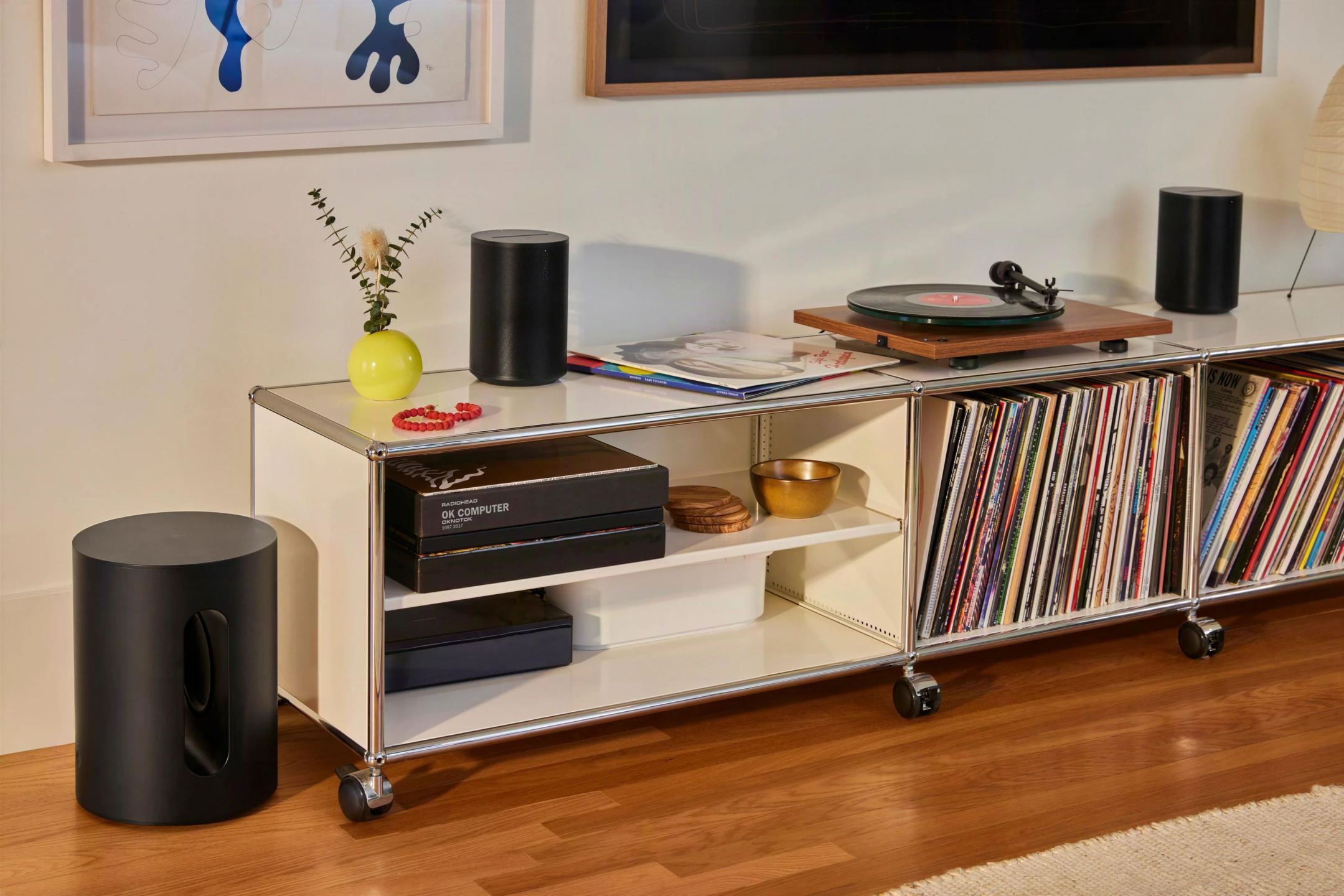
Wi-Fi offers vastly higher data rates. The speaker plays the stream directly from the Internet or local network, with the smartphone acting only as a remote control, leaving the phone free for calls. The Sonos Five specifications make this clear: Sonos favours Wi-Fi over Bluetooth for connection stability and the absence of compression. The Five also accepts an Ethernet cable and an analogue mini-jack line input.
Each protocol still has its limits. AirPlay 2 transmits in lossless ALAC, but at 16-bit/44.1 kHz from an iPhone or Mac. Google Cast can carry high-resolution streams, provided the receiving speaker supports them. Sonos tops out at 24-bit/48 kHz. Proprietary multiroom ecosystems (Sonos, BluOS from Bluesound) bring their speakers together in a single app, while AirPlay 2 and Google Cast allow brands to be mixed.
This choice of protocol matters more than the specifications. The WiiM Sound Lite delivers 100 W (50 W for bass and 2 × 25 W for treble), plays 24-bit/192 kHz over Wi-Fi 6E and supports Google Cast and Alexa, but not AirPlay: in a household equipped with iPhones, it will be controlled through the WiiM app rather than the iOS Control Centre. The Audio Pro A10 MkII W takes the opposite approach by combining AirPlay and Google Cast, with dual-band Wi-Fi, 24-bit playback, Bluetooth and an analogue input, for a total of 52 W (15 W for treble, 37 W for bass and midrange).
→ Connected and multiroom speakers
Latency: why Bluetooth puts sound out of sync with the picture
Bluetooth’s second drawback is visible on screen. Encoding and buffering delay the sound: measurements show roughly 170 ms with SBC and around 160 ms with standard aptX. Only the aptX Low Latency variant drops to around 35 to 40 ms, and it is rare on speakers. Meanwhile, recommendation ITU-R BT.1359 places the detection threshold for a delay at around 125 ms when sound arrives after the picture. Film dialogue played over Bluetooth therefore often exceeds this threshold, unless the TV or app compensates for the delay.
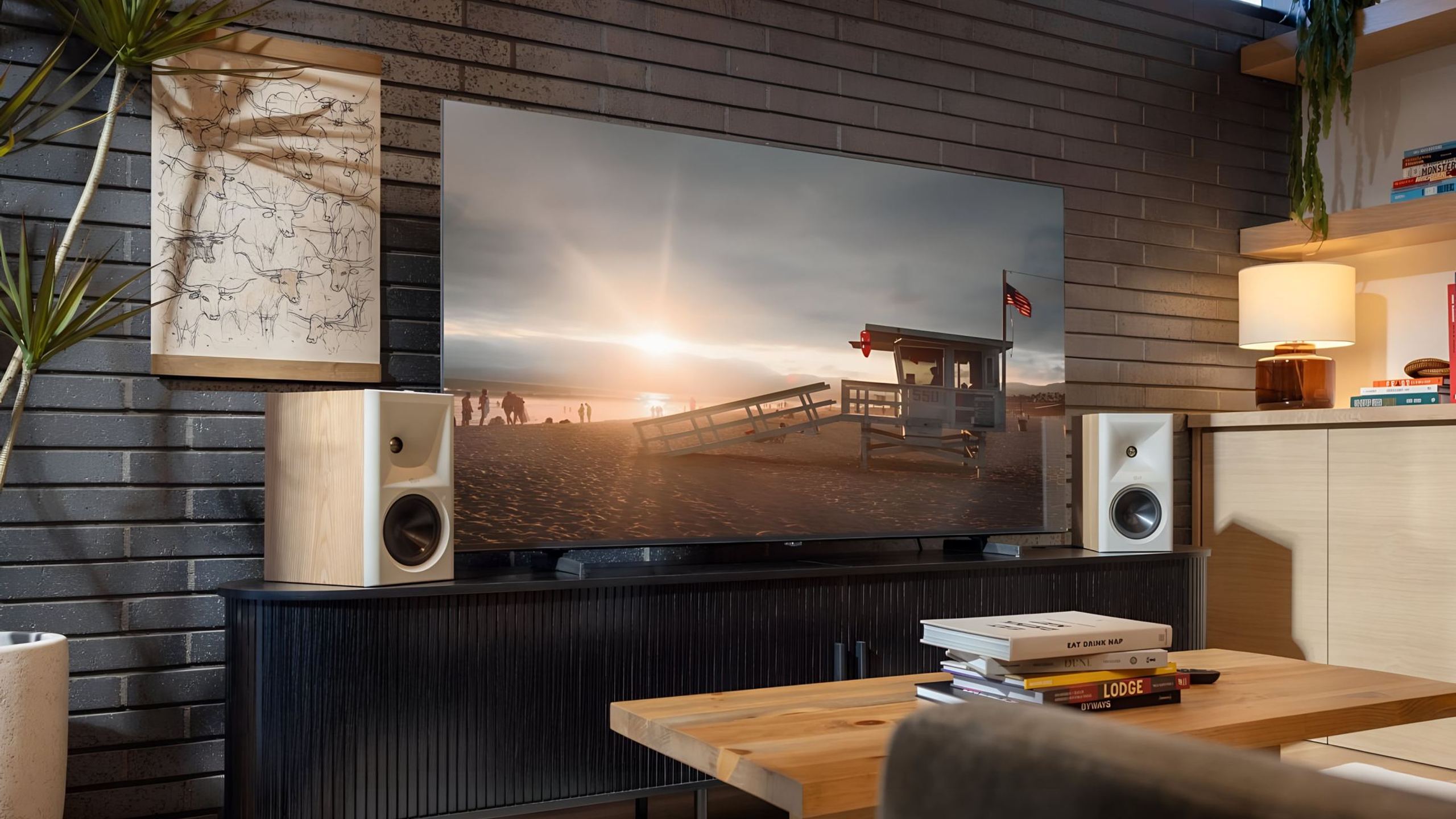
Wi-Fi multiroom protocols also use buffering, with an even longer delay, which compatible video apps can compensate for. For a TV, a wired connection remains the safest option. The Klipsch The Fives II connect to the TV through an HDMI ARC input, in addition to their Wi-Fi (AirPlay 2, Spotify Connect, Tidal Connect), Bluetooth 5 and phono input, with 24-bit processing on all digital inputs. The Sonos Era 300 pair offers a wired input through USB-C (3.5 mm jack via an adapter), alongside Wi-Fi 6, Bluetooth 5 and AirPlay 2.
Wireless home cinema: rear speakers and subwoofer
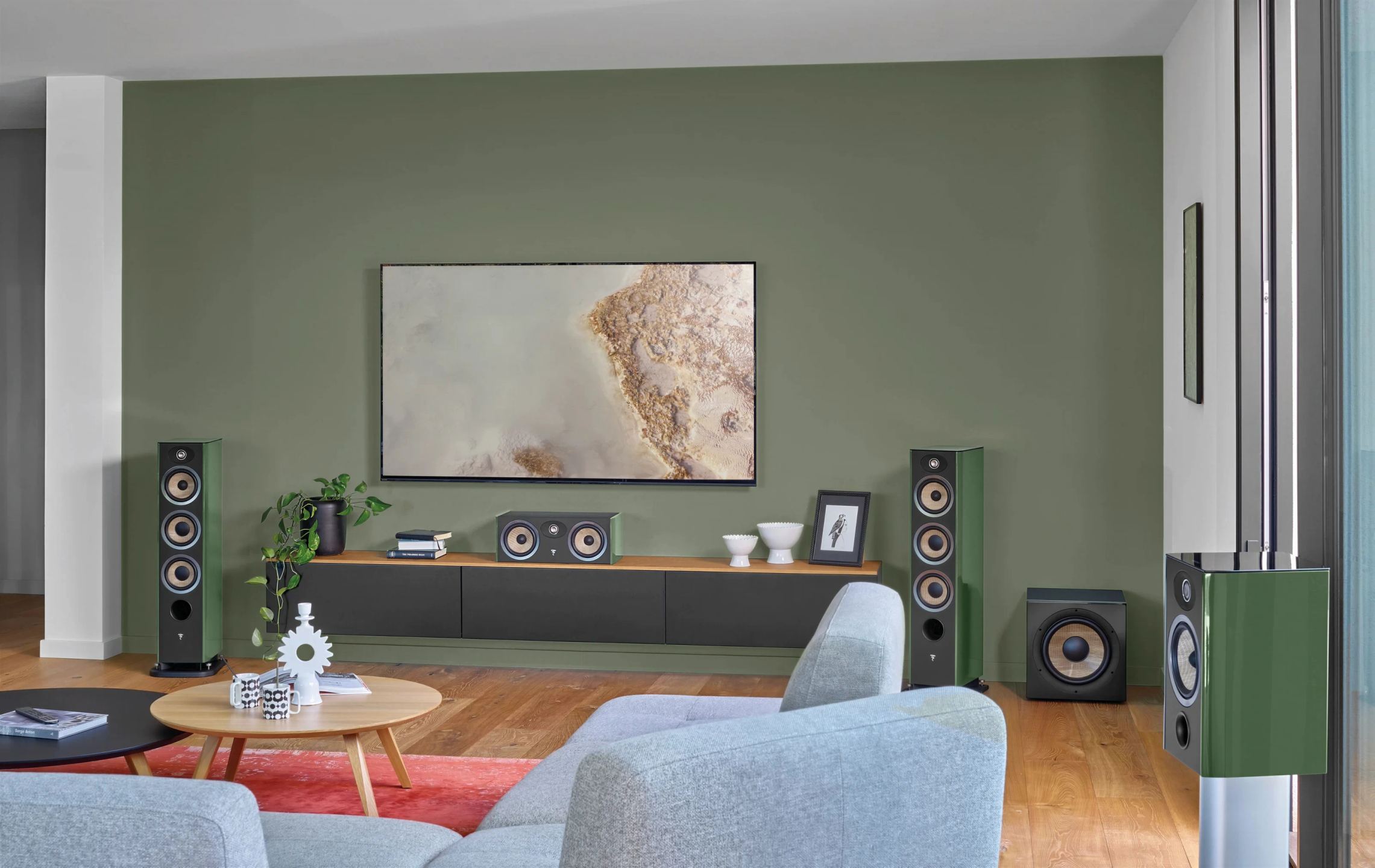
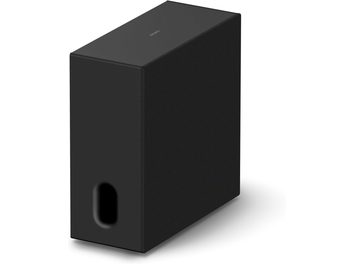
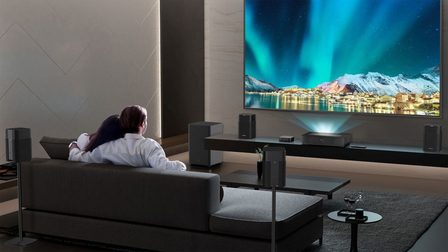
Wireless technology finds its most convincing use in home cinema: surround speakers and the subwoofer are precisely the components that are awkward to wire, since they sit far from the TV or on the other side of the room. Soundbars and some connected systems link them through a proprietary radio connection, synchronised by the manufacturer, which avoids Bluetooth’s latency issues.
These systems come with two constraints. Each rear speaker and the subwoofer require a nearby mains socket, which shifts the cable problem rather than eliminating it. And compatibility is limited to models from the same brand, often from the same generation: a rear speaker kit cannot be reused with another manufacturer’s soundbar. The picture, meanwhile, remains connected via HDMI, and it is the TV’s HDMI eARC or ARC input that sends the sound back to the system.
→ Discover Sonos home cinema packages
Wired active speakers: built-in amplification without the network
Between a connected pair and a passive pair lies a third option, often overlooked: the wired active speaker. It contains its own amplifiers but receives the signal through a cable from a source, preamplifier or sound card. Its advantage is active crossover filtering: instead of dividing an already amplified signal between bass and treble using coils and capacitors, the speaker separates frequencies at line level, often using a DSP (digital signal processor), then assigns an amplifier to each driver. The crossover slopes are more precise, the crossover no longer dissipates power as heat, and the manufacturer sizes each amplifier for the driver it powers.
The Canton AM 5 provides an example: built-in amplification rated at 80 W continuous (100 W peak), a 24-bit DSP, RCA and balanced XLR inputs. No app, no account to create, no network updates: simply connect a turntable equipped with a phono preamplifier, a network player or a computer. Connected speakers use the same amplification principle, with the addition of network functionality.
Passive speakers and amplifier: what cables offer in the long term
A passive pair with a separate amplifier requires more space, a cabinet for the electronics and speaker cables to run. In return, each component has its own lifespan. Drivers and a well-built cabinet can last several decades; the amplifier can be replaced without touching the speakers; a fault can be repaired by a technician without sending back the entire system.
A connected speaker, by contrast, combines in a single enclosure the components that age most slowly (drivers, cabinet) and those that age fastest (Wi-Fi module, processor, software). Sonos illustrated this in 2020 by classifying several products as “legacy,” including the first Play:5 and the first-generation Connect and Connect:Amp: they were restricted to the S1 app, deprived of new features and unable to operate in the same group as S2 products. In 2024, the redesign of the Sonos app temporarily removed features such as alarms and the volume display. A connected speaker is only as good as its manufacturer’s software support.
A middle-ground solution is to keep passive speakers and leave networking to the electronics: a connected amplifier receives AirPlay, Google Cast or a multiroom ecosystem, and when its network module grows old, only the amplifier needs replacing.
Frequently asked questions
Does a Wi-Fi speaker work without an Internet connection?
The local network is sufficient to play files stored on a computer or server, and to stream via AirPlay from a device in the home. Streaming services obviously require Internet access. Bluetooth and wired inputs remain usable without any network, but initial setup almost always requires the manufacturer’s app.
Is home Wi-Fi sufficient for multiple speakers?
Bandwidth is almost never the problem: a CD-quality stream uses 1.4 Mbit/s, a tiny fraction of what a modern router offers. Dropouts are more likely to stem from coverage when a speaker is several walls away. A model equipped with an Ethernet port, such as the Sonos Five or Bluesound Pulse Flex, can then connect directly to the router or a range extender.
What range can you expect from a Bluetooth speaker?
Most consumer devices specify a range of around ten metres in an open area. A wall, a piece of furniture or the user’s body between the phone and the speaker reduces this distance and causes dropouts. With Wi-Fi, the range is that of the home network, since the speaker no longer depends on the phone.
Can you connect a turntable to a wireless speaker?
Yes, via an analog input if the speaker has one, provided you use a phono preamp, either built into the turntable or separate. Some speakers, such as the Klipsch The Fives II, have a built-in phono input. The analog signal is then digitized by the speaker before amplification.
Popular products



You may also like to read
 Yamaha NX-70A: Yamaha's return to the world of wireless speakersHi-fi and home cinema news
 Sony Bravia Theatre Trio: the wireless Dolby Atmos system designed for large screensHi-fi and home cinema news
 Bluetooth 5.0 to 5.4: Wireless Connectivity Reaches the Next LevelConcepts and technologies
 Hisense HT Saturn vs Sony Theatre Quad Comparison: Which Wireless Home Theater System Should You Choose?Comparisons and buying guides
 Sonos Beam Ultra review: everything has been rethought, and you can hear it from the very first listenProduct reviews
 Sonos Ray, Beam or Arc Ultra: which soundbar for your living roomComparisons and buying guides
 Sonos Era 100 SL vs Era 100: what are the differences between the two speakers?Hi-fi and home cinema news
 Sonos Play, Move 2 or Roam 2: which portable Sonos speaker should you choose?Comparisons and buying guides


