

Franc Audio Accessories Cable stand


Overview
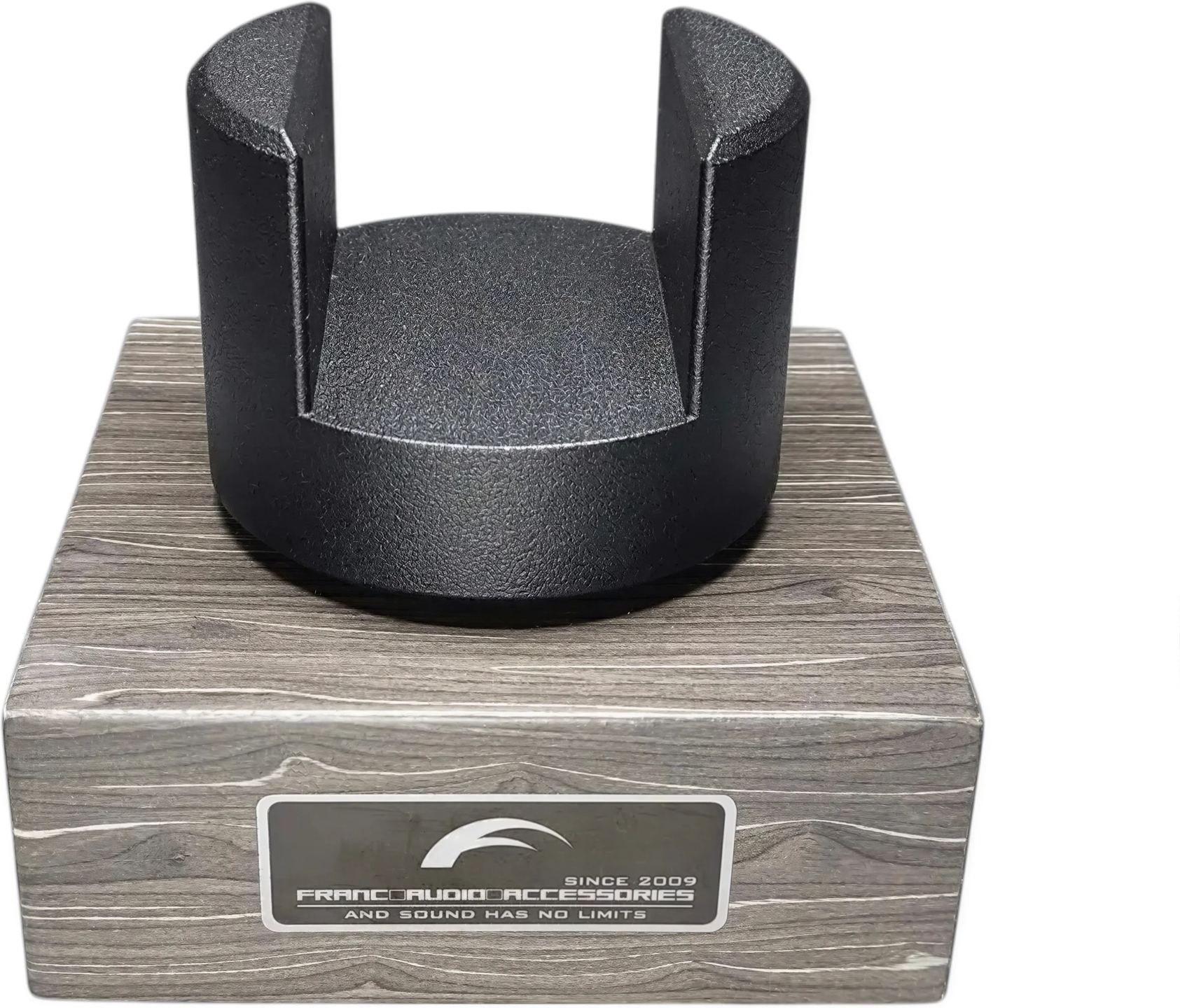
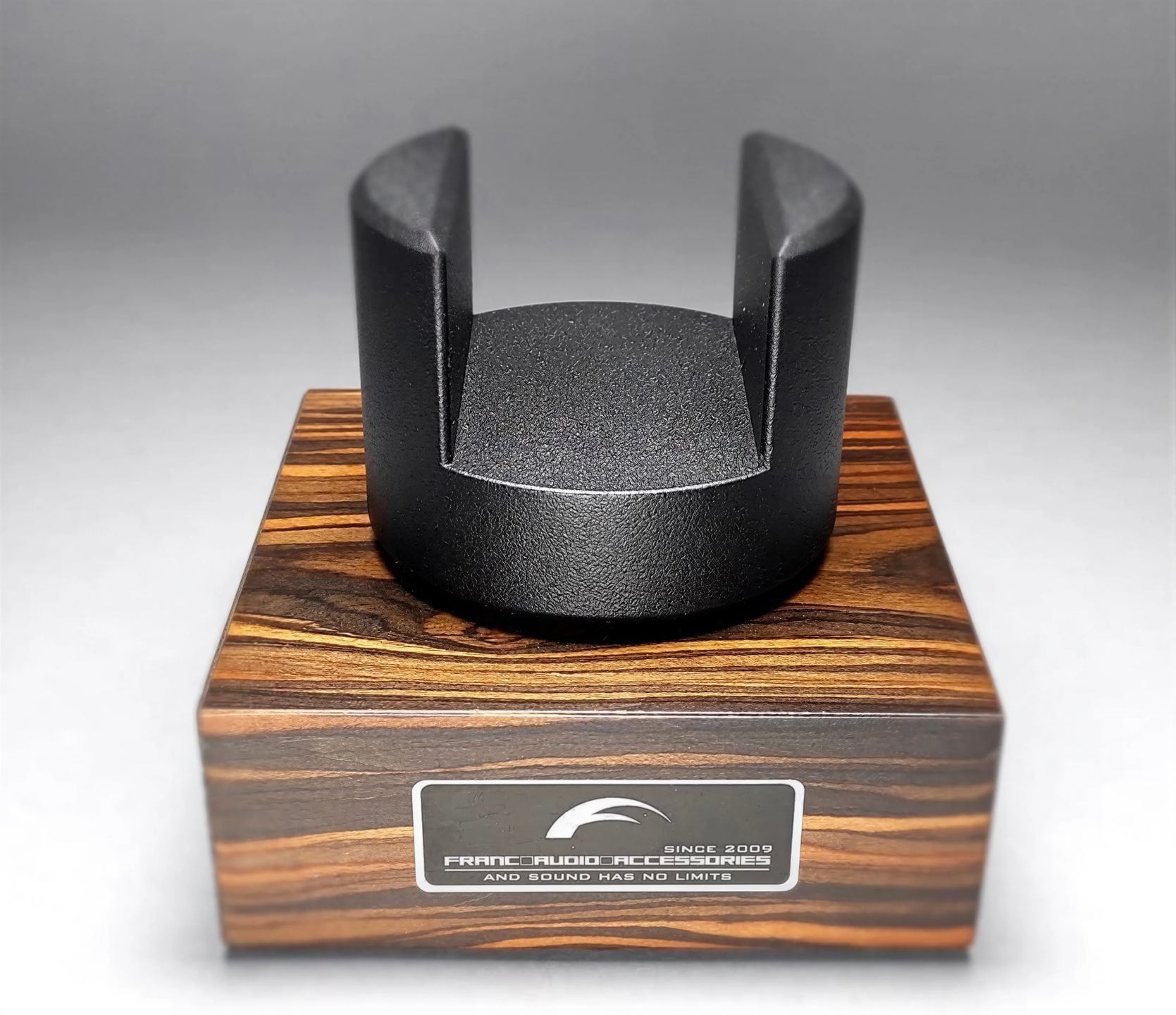
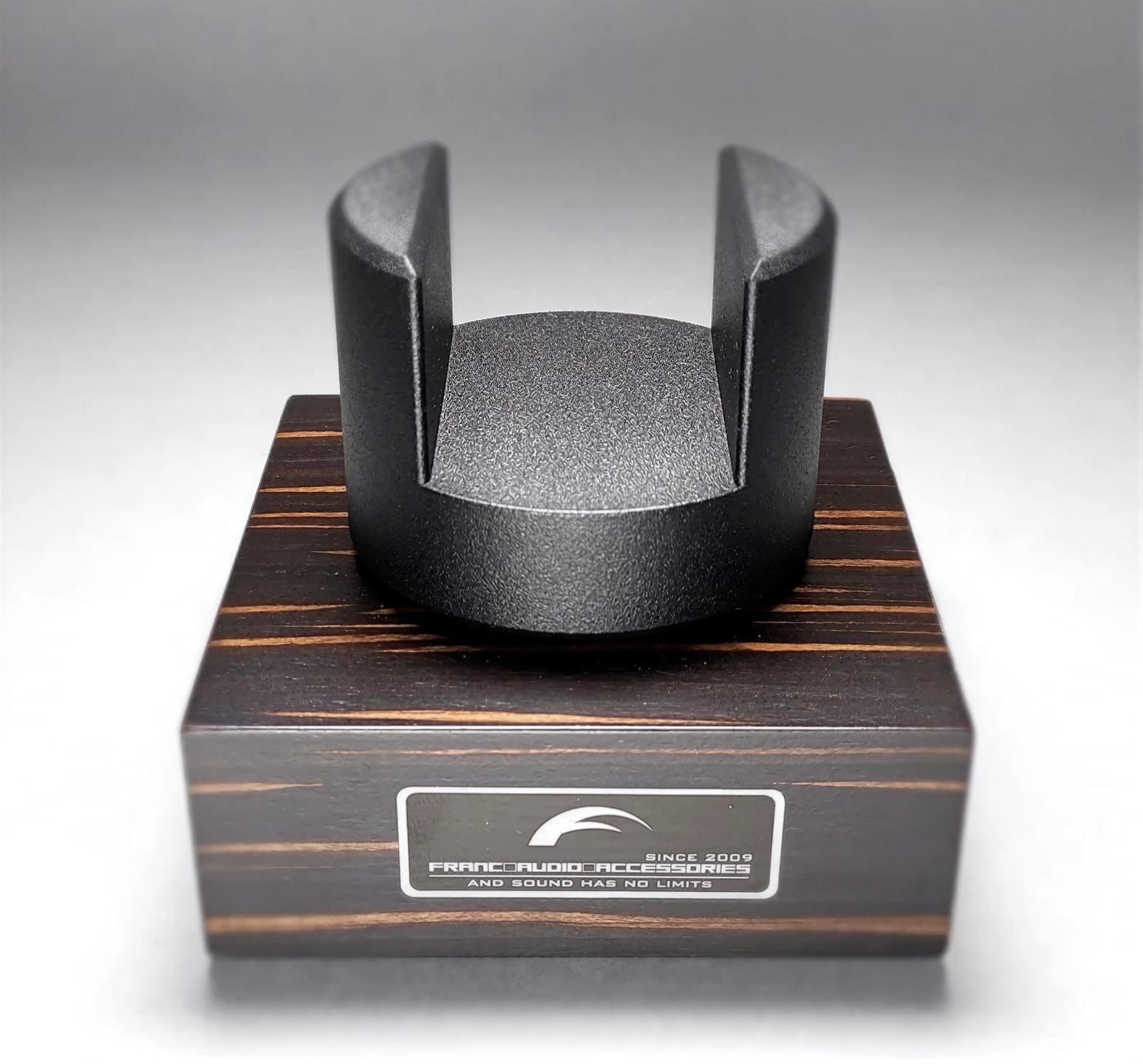
Behind a hi-fi cabinet, cables almost always end up on the floor: they get tangled, put strain on connectors and lie against the parquet or carpet. This support raises them by around ten centimetres and keeps them off the floor. It consists of a machined aluminium piece mounted on a wooden base, and accommodates a mains cable, an interconnect or a speaker cable equally well.
Machined aluminium mounted on a wooden base
The upper section, which holds the cable, is cut from aluminium using computer numerical control. CNC machining delivers precise dimensions, clean edges and a piece that is identical from one unit to the next. This aluminium does not touch the wood directly: a layer of damping material separates the two elements, making it harder for vibrations from the floor (footsteps in the room, bass from the speakers that sets the floor vibrating) to reach the cable. This follows the principle behind the isolation feet that made Franc Audio Accessories known, a Polish brand founded in 2008 by Paweł Skulimowski, a mechanical design engineer trained at the technical university in Gdańsk: combining materials of different stiffness to slow the transmission of vibrations.
The support measures 100 mm long, 100 mm high and 38 mm deep. Its shallow depth allows it to fit between two components, along a wall or behind a rack without protruding. Three finishes are available: matt RAL grey, matt light wood and matt dark wood. The two wood versions complement a hi-fi cabinet in natural wood, while the grey blends more easily with a dark floor or tiles.
All cables up to 50 mm in diameter
The opening accommodates cables with round, flat or rectangular cross-sections up to 50 mm in diameter. This covers almost everything found in a system: thin RCA interconnect cables, XLR interconnects, high-end mains cables with braided sleeving, thick speaker cables and even flat models that will not stay on a V-shaped support. The cable rests between the two uprights, which hold it at the sides without clamping it. It can therefore be moved or removed at any time, without disconnecting anything.
This simple resting support has a trade-off: a very stiff or thick cable retains its own curvature. The support must therefore be placed where the cable naturally drops, rather than trying to force it into a path it will not follow.
Why keep a cable off the floor
The first benefit is mechanical and immediately noticeable. A heavy cable hanging between a component and the floor constantly pulls on its plug. Over time, it can strain an RCA socket or pull a mains plug out of its socket. Placing a support near the component takes this weight and leaves the connection free of strain.
The second relates to the cable’s surroundings. Flooring materials (wood, synthetic carpet, tiles) have different electrical properties from air, and carpet readily accumulates static electricity. A cable resting on it also picks up floor vibrations. Suspending it provides a more neutral environment: air all around, and a single isolated contact point. The effect on sound remains subtle. It depends on the cable shielding, the type of flooring and the rest of the system, and is judged by listening rather than promised.
The third concerns organisation, and matters more than one might think. A mains cable running parallel to an unshielded interconnect can induce a slight hum. Raising the cables makes it easier to separate them and allows them to cross at right angles rather than run side by side. The space beneath the cabinet stays clear, which also makes cleaning easier.
How many supports to use and where to place them
The number depends on the length and flexibility of the cables. A one-metre interconnect between two neighbouring components often needs only one support. A three-metre speaker cable generally requires two or three, spaced so that the cable does not drop back to the floor between supports. The first is ideally placed where the cable leaves the component, where it puts the most weight on its plug. The others are then positioned at regular intervals along the route.
It is better to use separate supports for mains cables and signal cables, even if this means spacing them a few centimetres apart. This is the stage that brings the greatest gains in tidiness and background quietness, before even discussing subtle listening differences.
Technical Specifications
Composition
- CNC-machined aluminum support
- Wooden base
Compatibility
- Compatible with cables up to 50 mm in diameter
Dimensions
- Length: 100 mm
- Height: 100 mm
- Depth: 38 mm
Frequently asked questions
Is the holder suitable for HDMI, USB or network cables?
Yes, any cable less than 50 mm in diameter will fit. For a digital cable, the main benefit is reducing strain on the connectors, which are often fragile on HDMI and USB cables, and keeping it separate from power cords.
Can two cables be placed on the same support?
The 50 mm opening easily accommodates two thin cables. However, it is best not to place a power cord and an audio interconnect on the same support, to maintain enough distance between them to limit interference.
Does the stand remain stable on thick carpet?
On a hard floor or low-pile carpet, the 100 × 38 mm wooden base provides firm footing. On a deep-pile carpet, the stand may sink slightly or tilt under a heavy cable: a small rigid plate slipped underneath restores it to an upright position.
Is the cable attached to the stand?
No, it rests between the two uprights, which guide it laterally. This design allows you to readjust the position of the cables or add one without tools, but relies on the cable’s own weight to hold it in place.
Does a shielded cable benefit from the support?
Shielding protects the conductor from electromagnetic interference, but it does not change the weight placed on the plugs or the vibrations transmitted through the floor. Mechanical strain relief and cable management therefore remain beneficial, while the electrical effect of raising the cable is even subtler than with an unshielded cable.
How do you care for aluminium and wood?
A soft, dry cloth is enough for dusting. For both materials, it is best to avoid abrasive products, solvents and household sprays, which could dull the matte finish.
Which finish should I choose?
The light wood and dark wood finishes match a hi-fi cabinet or wood flooring in a similar shade. Matte RAL grey is more neutral and less noticeable on dark flooring, carpet or tiles.
- Eco-contribution included in the sale price.


