

Cayin Pearl 30D

Specifications and features


Overview
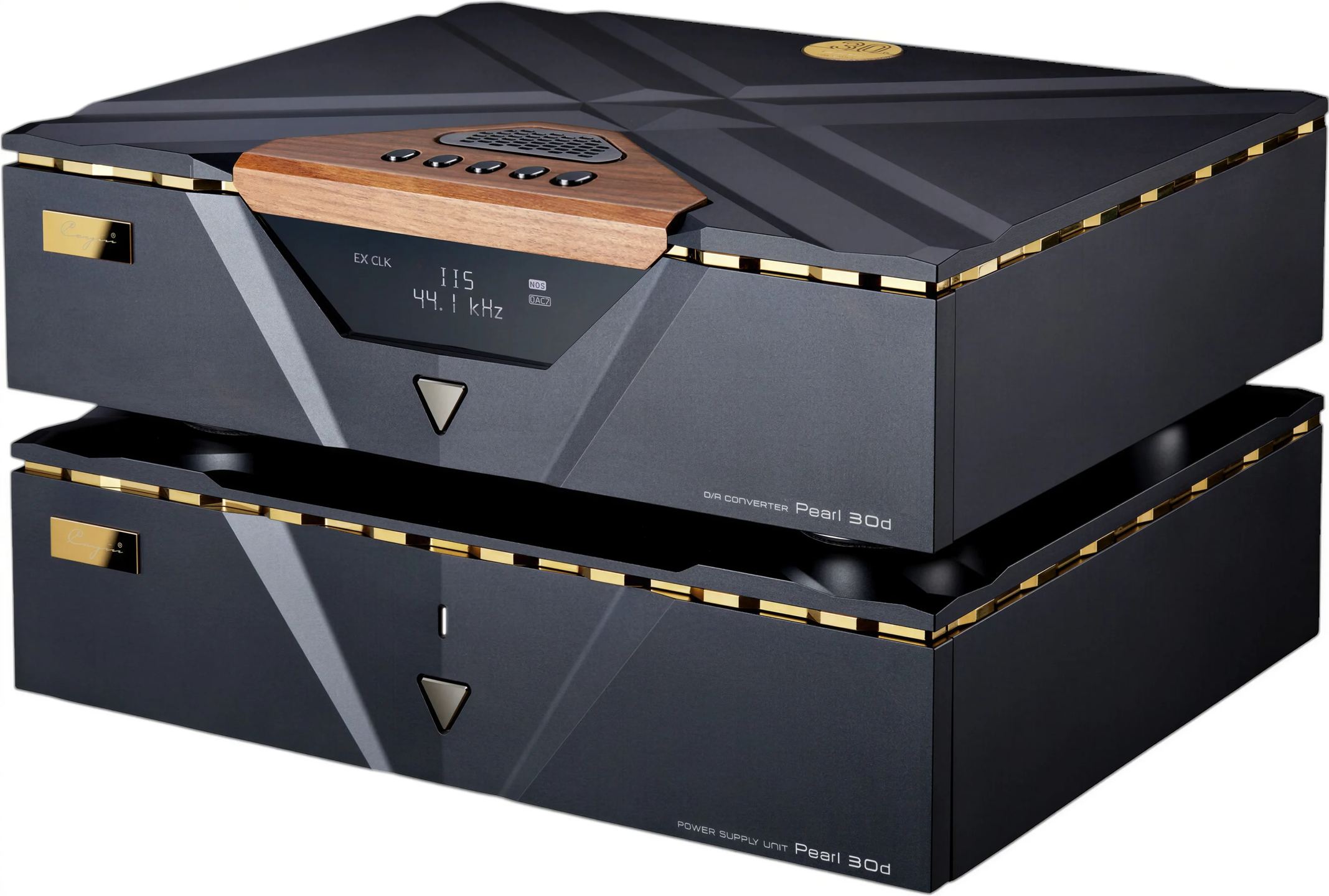
The Cayin Pearl 30D stands out for its unique dual conversion architecture, offering music lovers the choice between a classic sound signature and ultra-precise modern reproduction. With its two-chassis design separating the power supply from sensitive circuits, extensive compatibility with high-resolution formats, and comprehensive connectivity, the Pearl 30D establishes itself as a benchmark in the world of high-fidelity audio.
Unprecedented Technological Duality
The Pearl 30D distinguishes itself with an innovative approach, integrating two completely distinct hardware architectures within a single device. The first system, known as “classic mode,” is based on a TDA1307 chip paired with two TDA1547 converters configured in mono mode, forming a fully balanced differential circuit. This configuration was specifically chosen to reproduce the warmth and character of vintage audio equipment, delivering a retro sound signature that is especially appreciated on certain recordings.
The second system, the “modern mode,” utilizes eight ES9039SPRO DACs from ESS Technology, configured in multi-channel mono mode with four chips per channel. This matrix architecture generates a powerful output current, resulting in superior dynamics, reduced background noise, and increased drive. These components operate in pure Class A to maximize signal purity after conversion.
The intelligence of the Pearl 30D also lies in its “automatic mode,” which selects the optimal decoding system based on the format of the incoming digital signal. For example, PCM files at 44.1 kHz, 88.2 kHz, or 176.4 kHz will automatically be processed by the classic mode, while those at 96 kHz, 192 kHz, or 384 kHz will switch to modern mode. This flexibility optimizes the playback quality of each music track without manual intervention.
A Dual-Chassis Design for Absolute Acoustic Purity
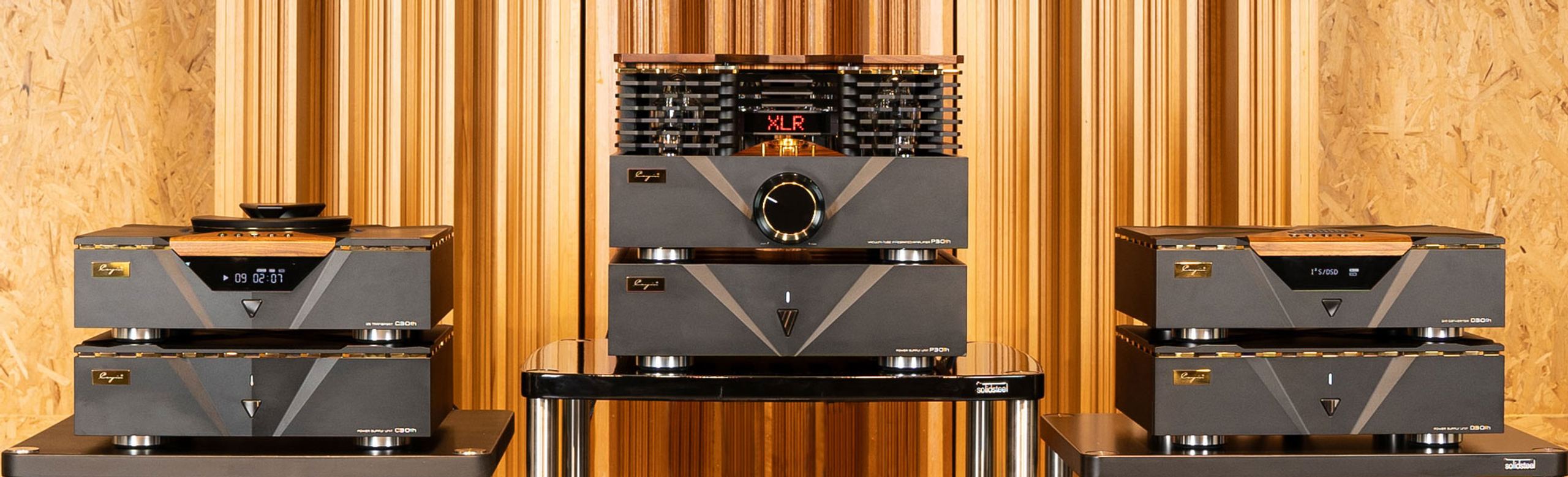
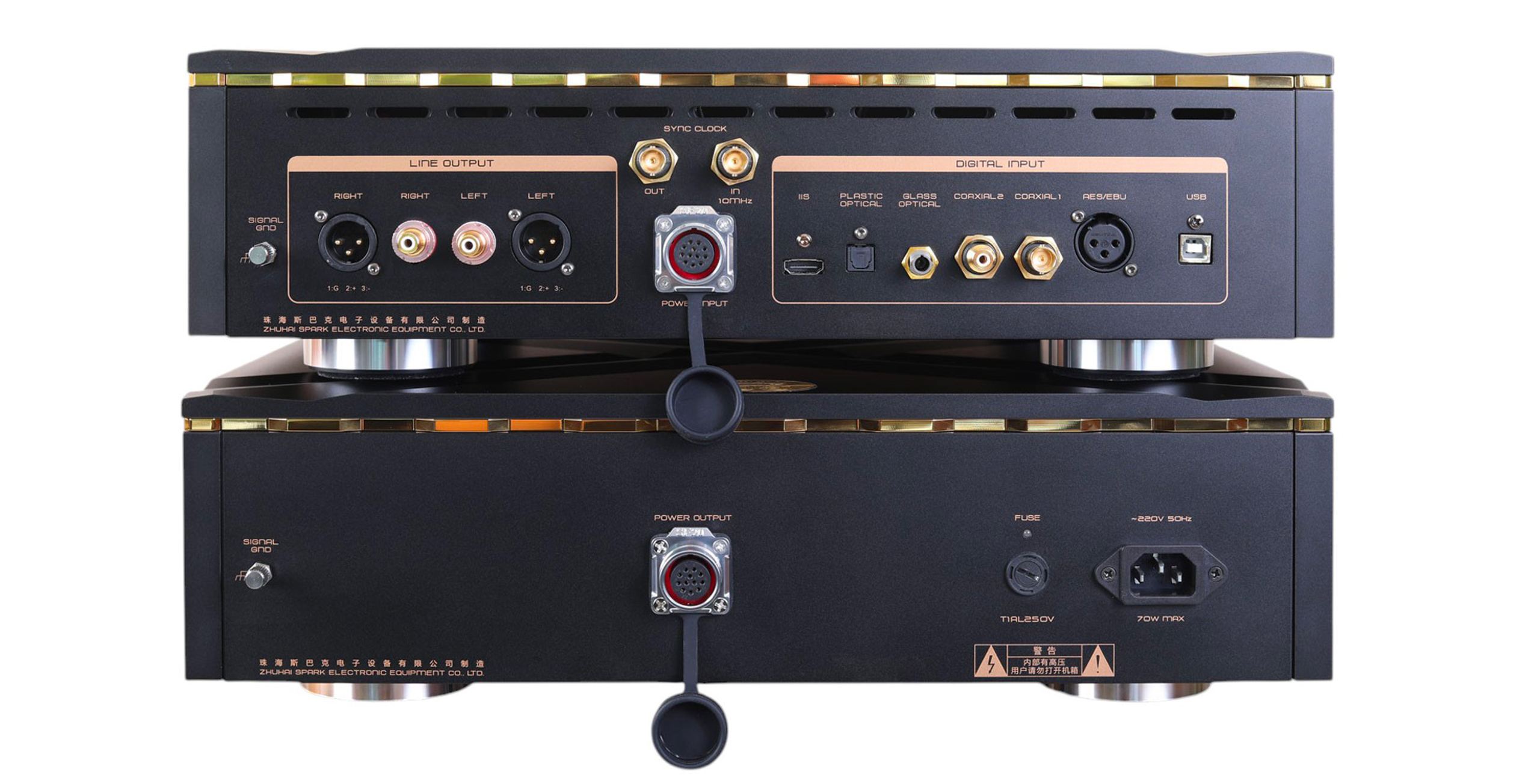
The Pearl 30D adopts a two-part architecture, physically separating the main conversion unit from the power supply block. This radical approach aims to eliminate any electromagnetic interference between the power circuits and the sensitive components of the converter. The power supply block uses Dual C-type transformers dedicated to each circuit, complemented by sophisticated rectification, filtering, and stabilization stages.
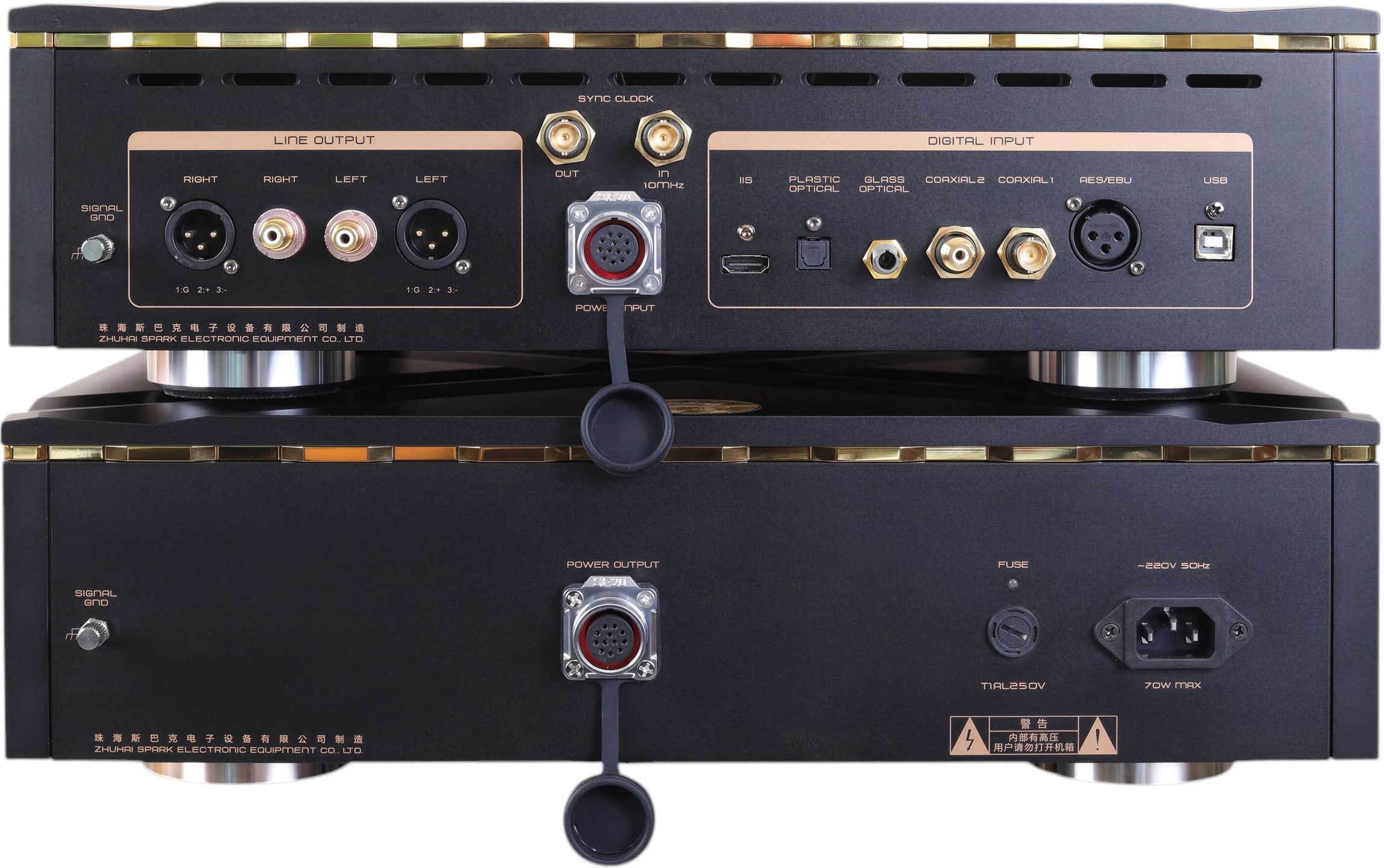
The connection between the two chassis is made via a special 12-pin aerospace-grade cable manufactured in Germany. This connector uses conductors with low internal resistance and benefits from enhanced insulation against electromagnetic interference, ensuring lossless power transmission. The nylon fiber sleeve provides additional protection by dampening mechanical resonances that could affect signal purity.
This meticulous power supply design translates into a significant gain in transparency, total absence of background noise, and a finer rendering of the micro-details that make up the texture of recordings.
Unmatched Temporal Precision
The quality of a digital-to-analog converter depends heavily on its temporal precision. The Pearl 30D features a multi-channel 10 MHz clock generator with exceptional stability, drastically reducing synchronization errors known as “jitter.” This oven-controlled crystal oscillator (OCXO) system has extremely low phase noise, ensuring perfect synchronization between the various circuits.
For clock signal transmission between the different stages, Cayin uses low-loss RF coaxial cables with a perfectly matched 50-ohm impedance. This attention to detail minimizes signal loss and waveform distortion, preserving optimal clock quality.
The Pearl 30D also offers both clock input and output, allowing it to be connected to an even more precise external master clock or to serve as a timing reference for other digital devices in the audio system.
Comprehensive Connectivity for Seamless Integration
To integrate smoothly into any high-end audio system, the Pearl 30D features particularly comprehensive connectivity. On the digital input side, there is an HDMI i2s port, an AES/EBU input on XLR, two coaxial inputs (RCA and BNC), as well as two optical inputs (standard Toslink and ST Glass). This variety allows you to connect virtually any modern or vintage digital source.
The USB-B input transforms the Pearl 30D into a high-performance USB DAC compatible with Windows and Mac computers, ideal for playing digital music libraries. For analog outputs, Cayin offers a pair of unbalanced RCA connectors and a pair of balanced XLR connectors, providing maximum flexibility for pairing with any type of amplifier.
The dedicated clock inputs and outputs complete this exhaustive connectivity, allowing the Pearl 30D to be integrated into a sophisticated digital ecosystem where timing synchronization is shared among multiple devices.
Full Compatibility with High-Resolution Formats
The Pearl 30D stands out for its ability to handle the most advanced digital audio formats. In modern mode, it supports PCM files up to 32 bits and 768 kHz, as well as DSD streams up to DSD512, meeting the demands of the most discerning audiophiles.
The classic mode, although using older chips, is still perfectly capable of decoding conventional PCM formats with exceptional quality, delivering that sought-after analog warmth for certain music lovers. The conversion system automatically adapts its processing based on the detected format, thus optimizing the quality of each recording.
This versatility allows you to fully exploit the capabilities of high-resolution streaming platforms and studio master files without any technical limitations, revealing sonic nuances usually masked by less sophisticated converters.
Perfect Integration into the Pearl Anniversary Series
The Pearl 30D is part of a trilogy of commemorative devices developed to celebrate Cayin’s 30th anniversary. This series also includes the Pearl 30i integrated amplifier and the Pearl 30c CD transport, all sharing the same design philosophy with separate power supplies and the same refined aesthetics.
The Pearl 30c CD transport, equipped with the Philips VAU1255/31LF CD-PRO2 drive and a sophisticated jitter reduction system, forms a particularly harmonious duo with the Pearl 30D. Synchronization between these two devices can be achieved via their dedicated clock connections, maximizing the playback quality of compact discs.
This technical and aesthetic coherence among the different elements of the Pearl series allows you to build a complete, exceptional audio system, where each component is designed to work in synergy with the others.
Technical Specifications
Design and Technology
- High-end audio digital-to-analog converter
- Dual conversion modes:
- Classic mode: TDA1307 + 2x TDA1547 (mono)
- Modern mode: 8 ESS Sabre ES9039SPRO DACs (4 per channel)
- Automatic or manual mode selection based on format and resolution
- PCM compatible up to 32-bit / 768 kHz
- DSD512 compatible
- Ultra-precise OCXO clock: 10 MHz
Audio Performance
Modern Mode
- Frequency response: 20 Hz – 50 kHz (±0.2 dB)
- THD+N:
- 0.0007% (unbalanced)
- 0.0005% (balanced)
- Signal-to-noise ratio:
- 126 dB (unbalanced)
- 127 dB (balanced)
- Dynamic range:
- 125 dB (unbalanced)
- 126 dB (balanced)
- Output level:
- RCA: 2.3 Vrms (standard) / 4.6 Vrms (high gain)
- XLR: 4.6 Vrms (standard) / 9.2 Vrms (high gain)
Classic Mode
- Frequency response: 20 Hz – 20 kHz (±0.2 dB)
- THD+N:
- 0.001% (unbalanced)
- 0.0007% (balanced)
- Signal-to-noise ratio: 110 dB (unbalanced & balanced)
- Dynamic range: 107 dB (unbalanced & balanced)
- Output level:
- RCA: 2.3 Vrms (standard) / 4.6 Vrms (high gain)
- XLR: 4.6 Vrms (standard) / 9.2 Vrms (high gain)
Supported Formats and Resolutions
- USB: PCM up to 32-bit / 768 kHz, DSD512
- Coaxial: PCM up to 24-bit / 192 kHz
- Optical: PCM up to 24-bit / 192 kHz
- HDMI i2s: PCM up to 32-bit / 768 kHz, DSD512
Connectivity
- Inputs:
- 1x RCA Coaxial
- 1x BNC Coaxial
- 1x Toslink Optical
- 1x ST Glass Optical
- 1x USB-B
- 1x HDMI i2s
- 1x XLR AES/EBU
- 1x Clock input
- Outputs:
- 1x RCA
- 1x XLR
- 1x Clock output
Frequently Asked Questions
What is the sonic difference between the two conversion modes?
The classic mode offers a warmer sound, with richer texture and a musical presentation reminiscent of analog devices. The modern mode emphasizes transparency, precision, and dynamics, with extremely low background noise and superior channel separation. The former excels at reproducing vocals and acoustic instruments, while the latter reveals more micro-details and ambiance.
Is it better to use automatic mode or manually select the conversion system?
The automatic mode is perfectly calibrated to select the optimal system according to the signal characteristics. However, advanced users may prefer manual mode to tailor the sound signature to their personal preferences or to the specifics of certain recordings, regardless of their resolution.
Does this DAC require a particular amplifier to perform optimally?
The Pearl 30D offers adjustable output levels and works perfectly with any quality amplifier. To fully exploit its capabilities, an amplifier with balanced XLR inputs and excellent transparency is recommended. Pairing it with the Pearl 30i amplifier from the same series naturally ensures perfect synergy.
How does this DAC compare to other high-end models on the market?
The uniqueness of the Pearl 30D lies in its dual conversion architecture, a rare feature even in this price range. While some competitors may match its pure technical specifications, few offer this versatility, allowing users to adapt the sound signature to their preferences and to the characteristics of the recordings.
- Eco-contribution included in the sale price.
- Manufacturer reference: CAYPEARL30D
- GTIN / EAN: 695791491016




