

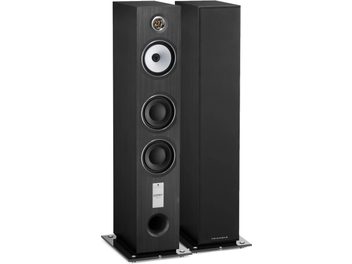
Triangle Thetis 340 ash black
This product is no longer available for sale!
Similar products from Triangle
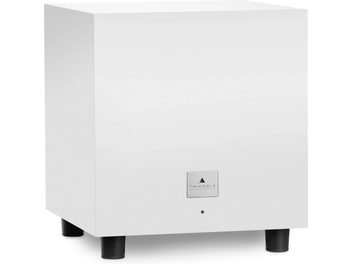
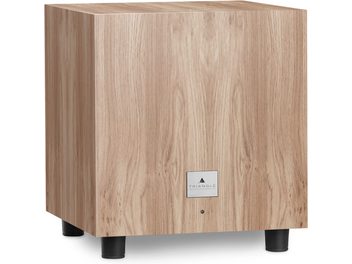
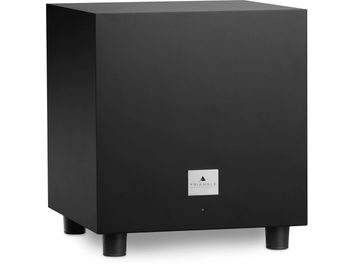
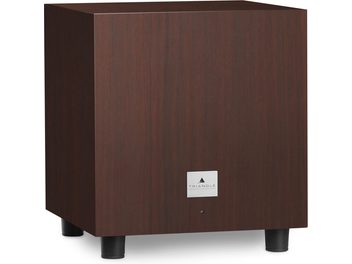
Overview
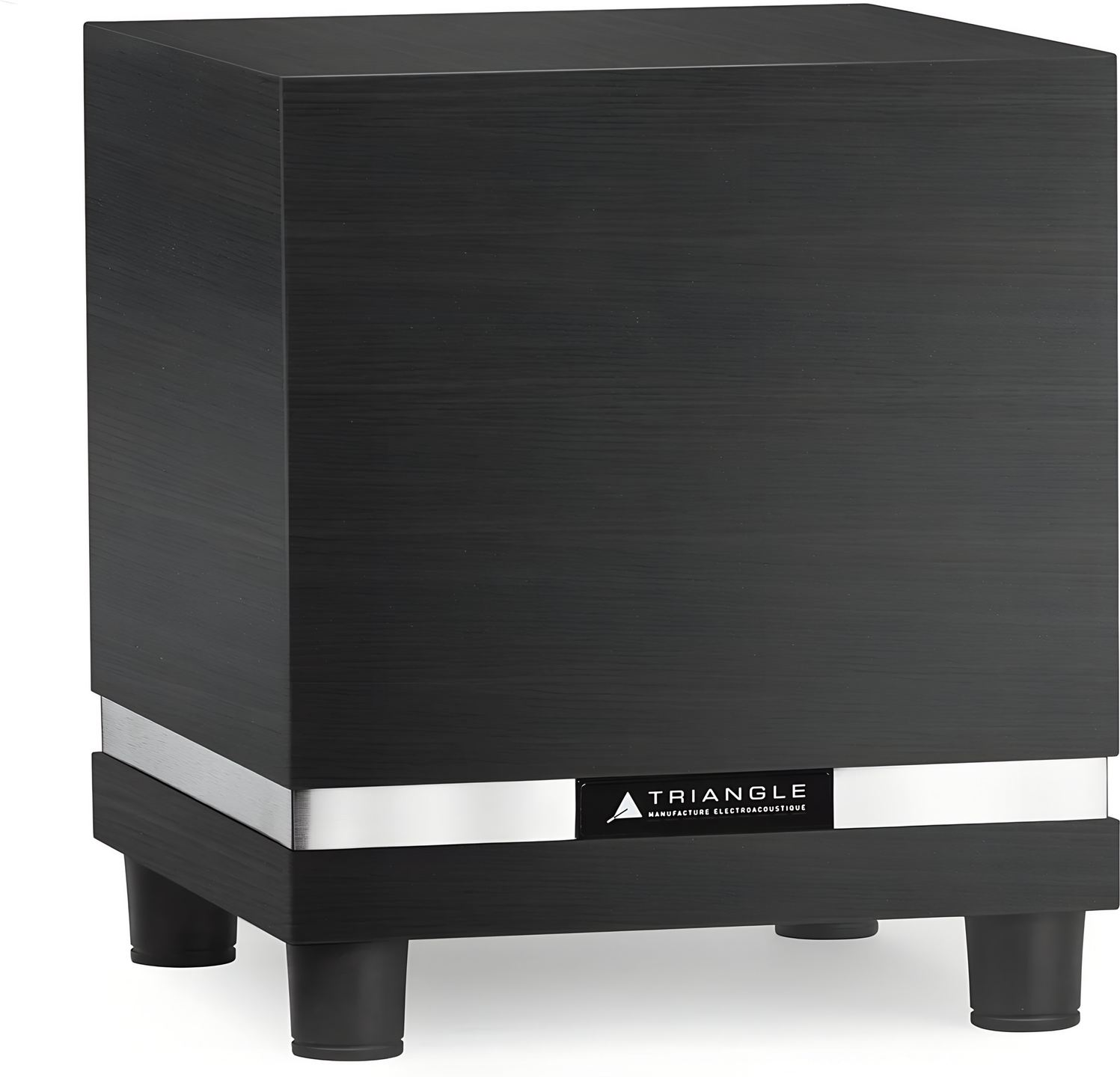
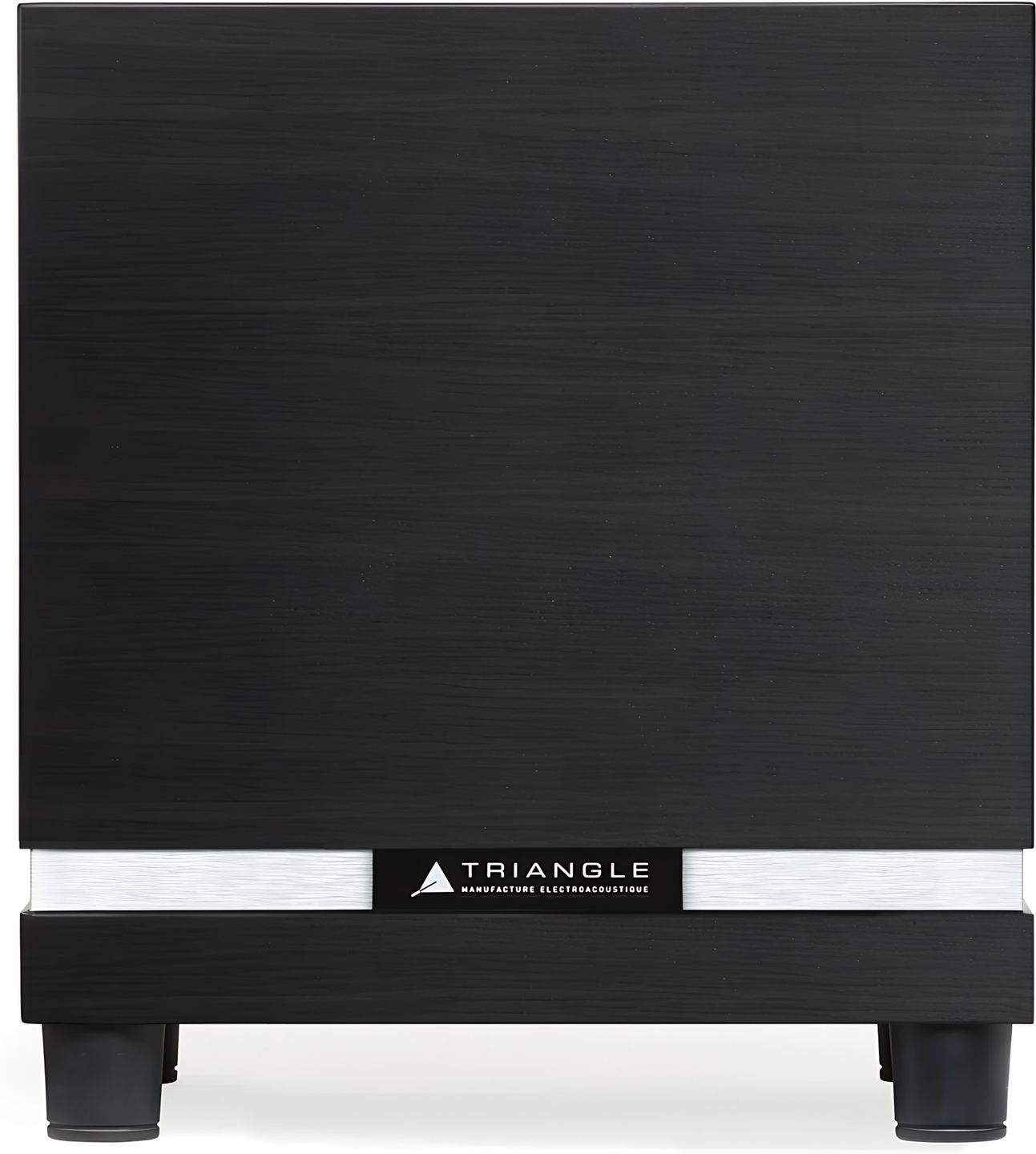
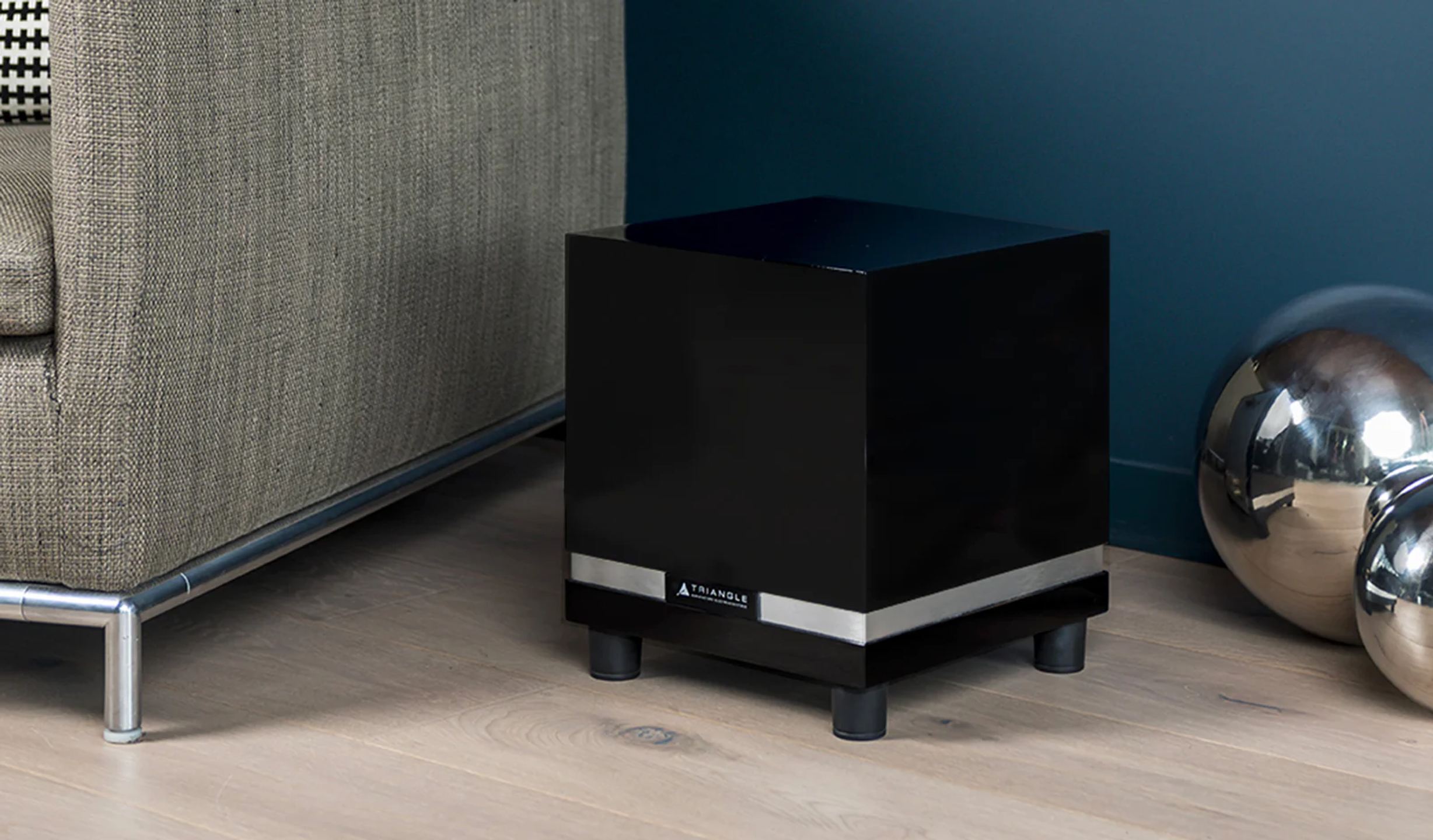
The Thetis 340 is a compact subwoofer measuring 34 centimeters per side. It features a 25 cm composite diaphragm driver paired with 250-watt digital amplification, all housed in a cabinet available in several finishes. Its bass-reflex design with a downward-firing laminar port makes it suitable for both stereo setups and multichannel home theater systems.
Acoustic Architecture and Mechanical Design of the Thetis 340
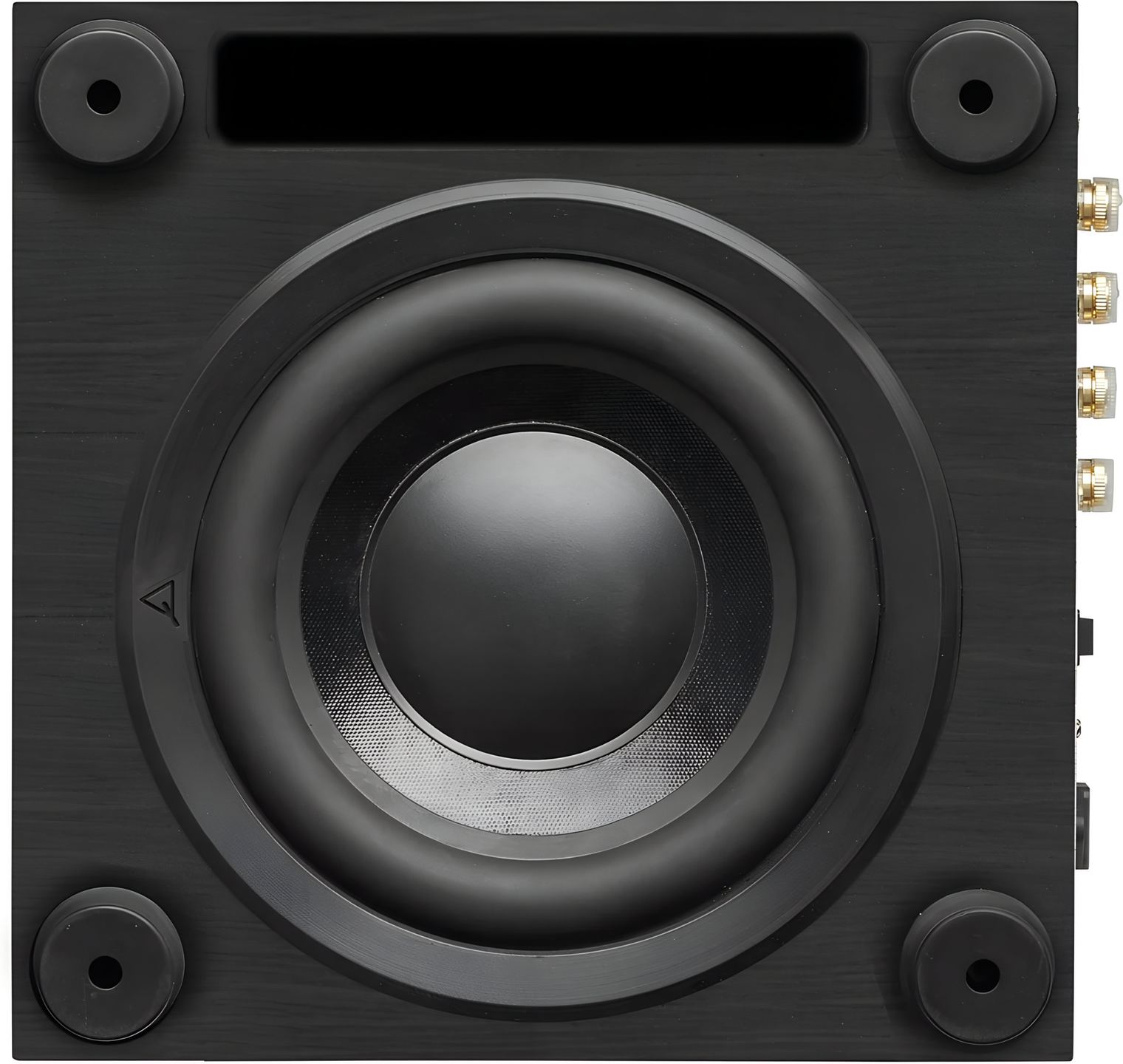
The Thetis 340 adopts a unique configuration with its 25-centimeter driver facing downward. This arrangement allows for omnidirectional dispersion of low frequencies while minimizing interactions with side walls. The speaker cone combines cellulose and carbon fibers—a proprietary composite that offers both lightness and rigidity. This structure enables the cone to move precisely, even during the large excursions required to reproduce the lowest frequencies.
The cubic cabinet, 34 centimeters per side and 38 centimeters high, incorporates an internal bracing system that limits unwanted vibrations. The bass-reflex enclosure features a laminar port, a notable improvement over traditional tubular ports. This specific geometry significantly reduces air flow noise that can occur during large speaker movements. The oversized magnetic motor and controlled suspension allow the driver to reach down to 25 Hz with controlled distortion.
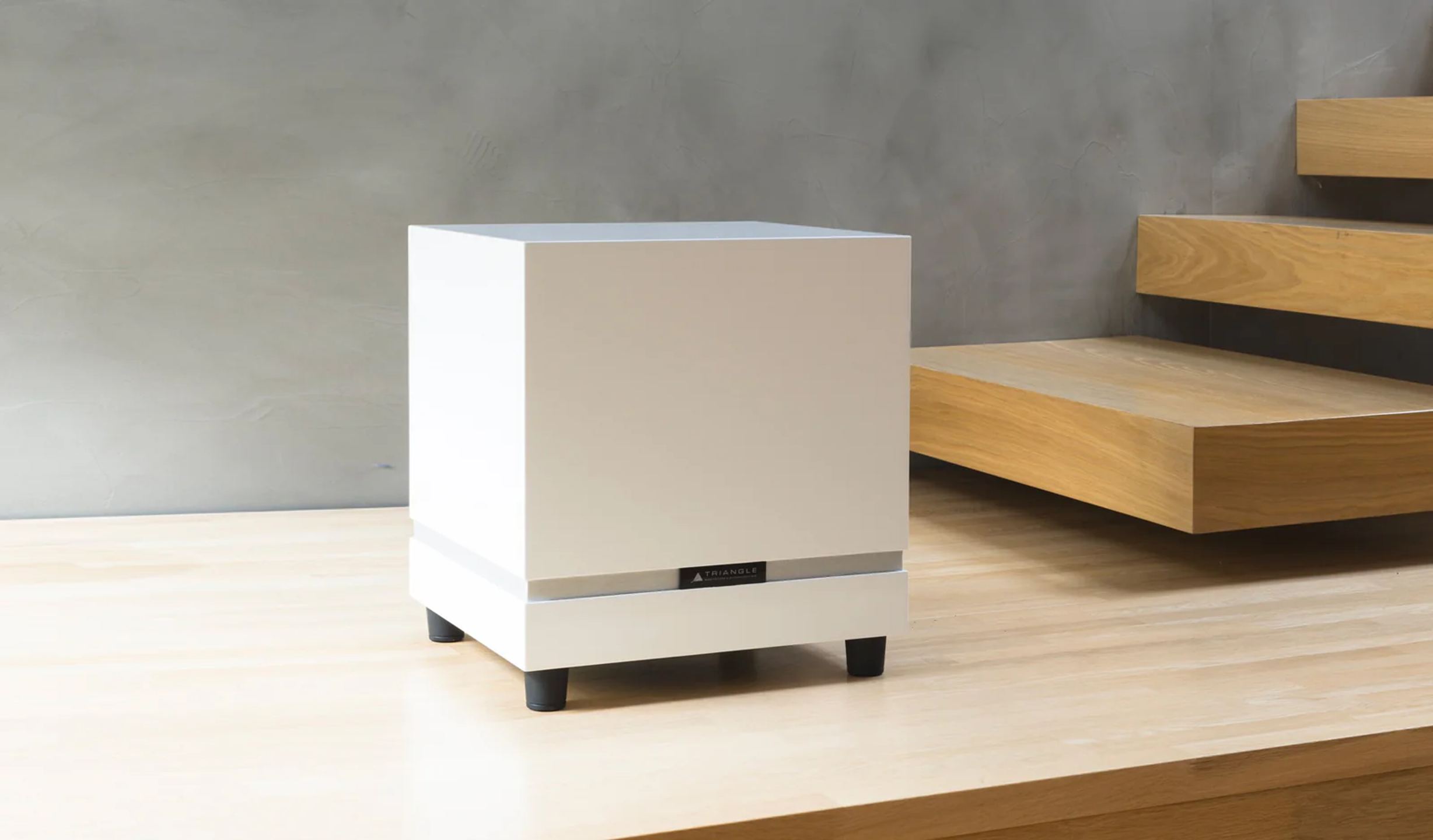
The cabinet’s finish reflects the care taken in manufacturing. Available in light oak, black lacquer, white lacquer, or black ash, each unit benefits from anti-vibration panel treatment. The discreet LED display beneath the Triangle logo and the supplied infrared remote control add a modern touch without detracting from the product’s understated aesthetic.
Digital Amplification and Signal Processing
The built-in Class D amplifier delivers 250 watts RMS, with peaks up to 400 watts. This digital technology offers several advantages: high efficiency that limits heat generation, compactness for easy integration into the cabinet, and preserved dynamic response even at high power. Protection circuits continuously monitor temperature and speaker excursion to prevent any damage.
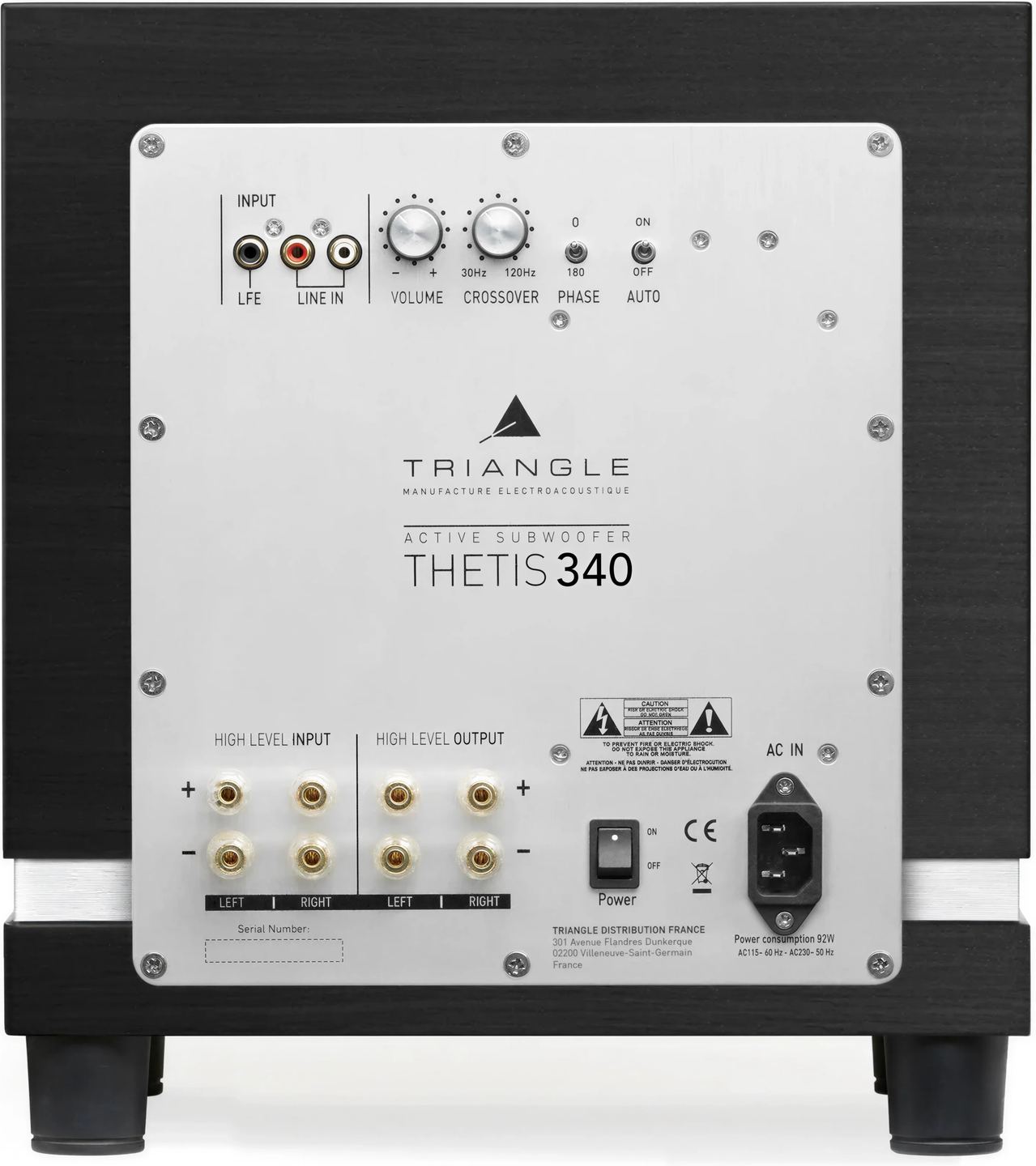
The steep-slope active filters are a key element of the design. These circuits allow for precise integration with main speakers, avoiding frequency overlaps that can compromise clarity. The crossover frequency, adjustable from 30 to 120 Hz, is set via a rear-panel potentiometer. A second potentiometer adjusts the volume level, while a switch inverts the signal phase if needed to compensate for certain acoustic setups.
The automatic standby function, activated by a dedicated switch, turns off the amplifier after twenty minutes without a signal. As soon as an audio signal is detected, the subwoofer instantly powers back on. This feature reduces power consumption without manual intervention, especially appreciated in home theater setups where the subwoofer may remain inactive for long periods.
Connectivity Designed for Versatility
The rear panel of the Thetis 340 offers a comprehensive set of connections, reflecting its universal purpose. The unfiltered LFE (Low Frequency Effects) input allows direct connection to home theater amplifiers, with filtering then managed by the AV processor. The stereo RCA inputs are suitable for traditional hi-fi setups, with the signal summed to mono before processing.
The high-level input terminals provide an elegant solution for amplifiers without a dedicated subwoofer output. This connection, made in parallel with the main speakers, taps the amplified signal without altering it. Output terminals then allow the signal to be sent back to the speakers, avoiding the need for multiple cables from the amplifier. This configuration, inherited from professional installations, ensures optimal tonal coherence between the subwoofer and satellite speakers.
The supplied infrared remote controls volume and standby. Its simple two-button design avoids complex operations. The front LED display, made up of light bars, indicates the selected volume level. This display remains readable from a distance while staying discreet when the subwoofer is in use.
Technical Specifications
Amplification
- Type: Class D
- Power: 250 W RMS (400 W peak)
- Automatic power on / standby
- Steep-slope active filters for precise speaker integration
Speaker
- Type: 1 × 25 cm woofer
- Cone: cellulose and carbon fiber composite
- Orientation: downward-firing
Connectivity
- LFE input (unfiltered)
- Stereo RCA line input
- High-level input (for amplifiers without subwoofer output)
- Available settings: volume, crossover frequency, phase adjustment
- Supplied infrared remote control
- Front LED display for volume
Construction
- Enclosure type: bass-reflex
- Laminar port for optimal reduction of air noise
- Cabinet with anti-vibration treatment
- Light oak finish
Dimensions and Weight
- Dimensions (W × H × D): 340 × 380 × 340 mm
- Packaged dimensions: 445 × 462 × 435 mm
- Net weight: 16.1 kg
- Weight with packaging: 17.8 kg
Supplied Accessories
- Power cable
- Infrared remote control
- User manual
Usage Recommendations
- Ideal use: 5.1 / 7.1 home theater, hi-fi stereo with bookshelf or floorstanding speakers
- Recommended for: medium to large rooms
- Designed for users seeking both power and finesse in low frequencies
Frequently Asked Questions
What is the difference between the Thetis 340 and the Thetis 300 model?
The Thetis 340 features a 25 cm driver versus 20 cm for the 300, 250 watts of amplification versus 150 watts, and slightly larger dimensions (34 cm per side versus 30 cm). These differences result in deeper bass extension and greater dynamic capacity, especially noticeable in larger listening rooms.
How should this subwoofer be ideally positioned in a room?
The downward-firing orientation of the driver allows for some placement flexibility. However, avoid room corners, which can accentuate certain frequencies. A distance of 20 to 30 centimeters from the walls allows the laminar port to function properly. Testing different locations is recommended, as each room has its own acoustic modes.
Can two Thetis 340 units be used in stereo?
Using two subwoofers improves bass distribution in the room and reduces areas of excessive or canceled bass. Each subwoofer is then connected to a dedicated output from the amplifier or processor. Phase adjustment becomes especially important to ensure proper summing of the two sources.
Is the subwoofer suitable for a small living room?
Despite its power, the Thetis 340 adapts to smaller spaces thanks to its precise controls. The volume potentiometer allows for fine-tuning of bass levels, while the adjustable crossover frequency makes integration with compact speakers easier. The automatic standby function also helps avoid disturbances in apartment settings.
What is the difference between the LFE and RCA inputs?
The LFE input bypasses the subwoofer’s internal filter, leaving signal management entirely to the home theater processor. The RCA inputs apply the subwoofer’s adjustable filtering, suitable for stereo systems without dedicated bass management. The choice depends on your associated electronics.
How do you set the phase correctly?
Start by listening to a music passage rich in mid-bass with the phase in the normal position, then invert it. The setting that provides the fullest and most even bass is the correct one. This adjustment compensates for time delays related to the distance between the subwoofer and the main speakers.
- Eco-contribution of €2.10 included in the sale price.




