Elac Debut 3.0 DB63 black (pack of 2)
This product is no longer available for sale!
Other products in the “Bookshelf Speakers” category
Overview
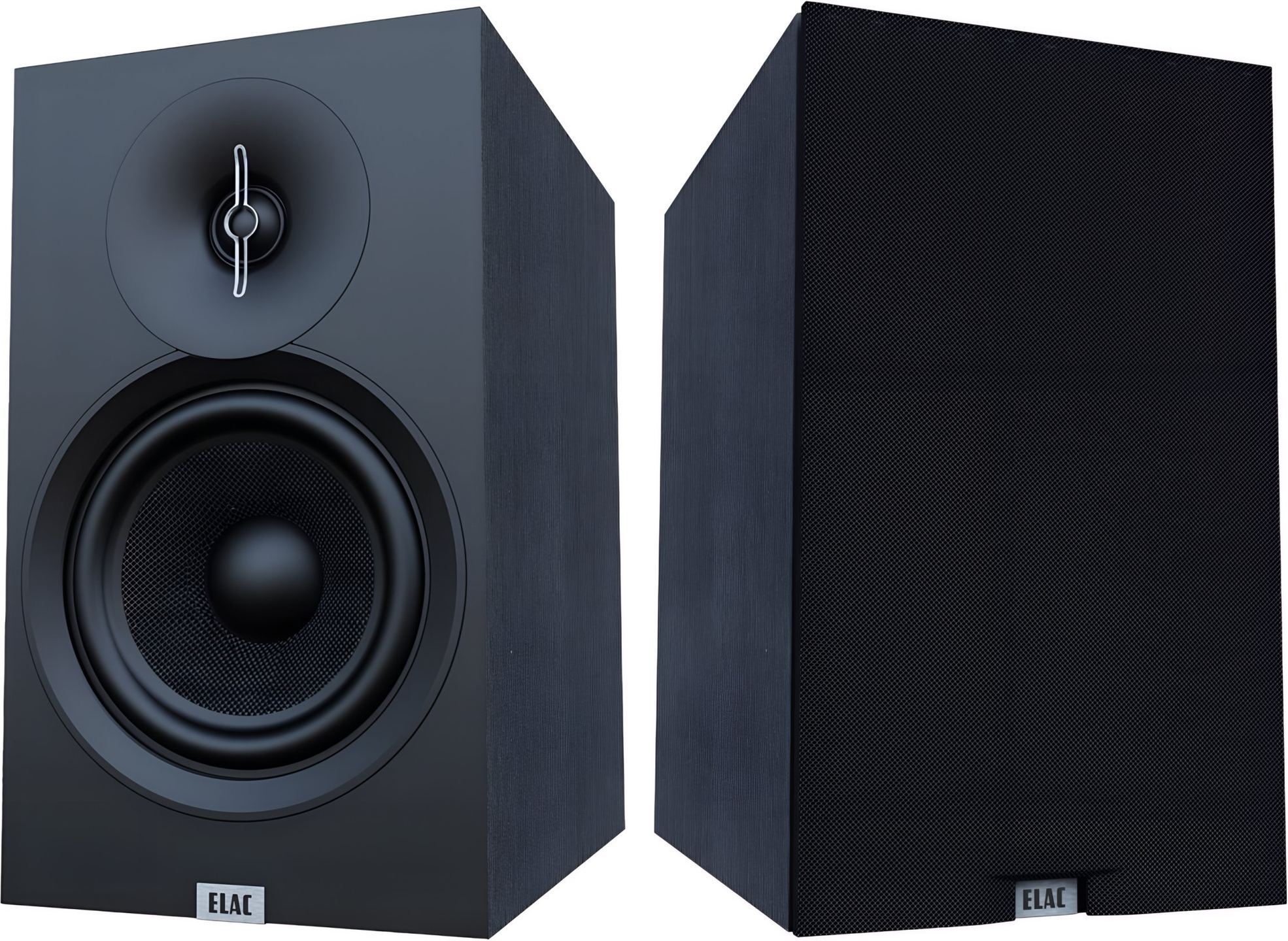
The Elac Debut 3.0 DB63 mark a turning point in the design of affordable bookshelf speakers, bringing materials and technologies usually reserved for much pricier models. Their 16 cm driver combines aramid fiber and aluminum in a rethought acoustic architecture, prioritizing musicality without sacrificing precision.
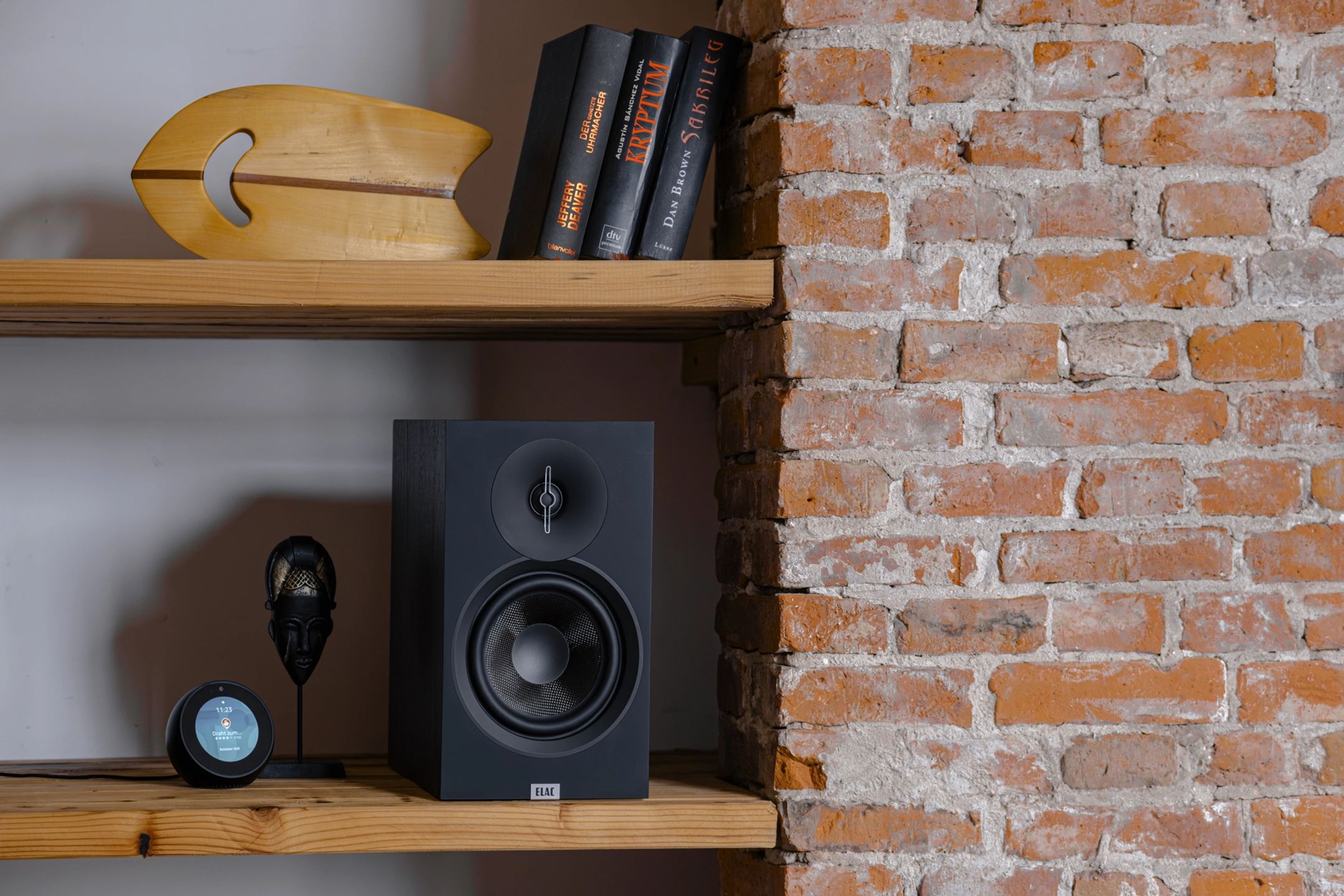
Two-way architecture with cutting-edge materials
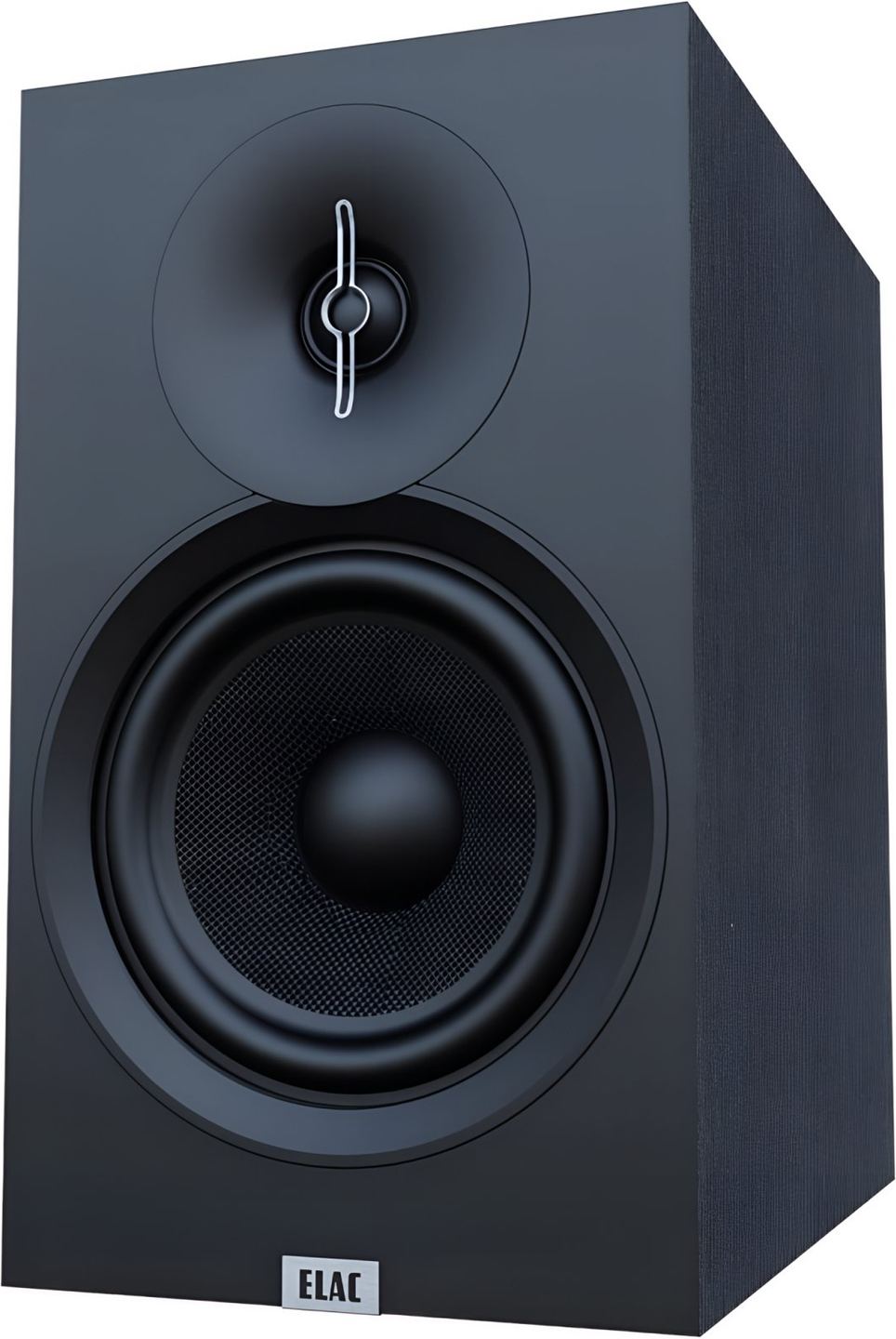
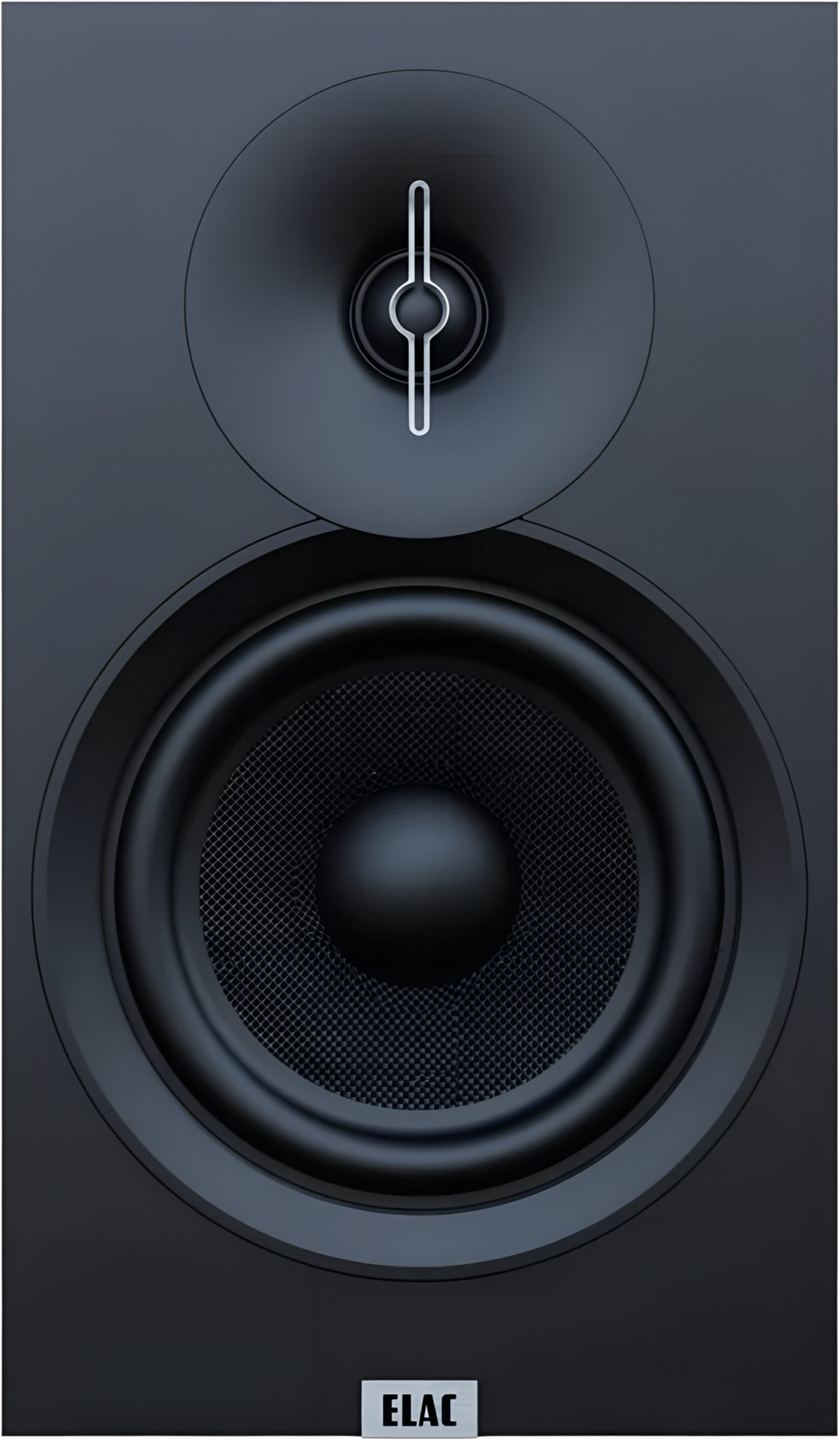
The 6.5-inch woofer uses a woven aramid-fiber cone, a material related to Kevlar that offers an outstanding stiffness-to-weight ratio. Initially developed for the aerospace and ballistic industries, this synthetic fiber exhibits remarkable acoustic properties: natural damping superior to polypropylene or paper, distinctive thermal conductivity enabling better dissipation of the heat generated by the voice coil, and mechanical strength allowing large excursions without deformation. The oversized magnetic motor paired with a 1.5-inch voice coil ensures precise cone control even during demanding dynamic passages. The inverted dust cap, inherited from the first-generation Debut, optimizes dispersion in the upper midrange and treble.
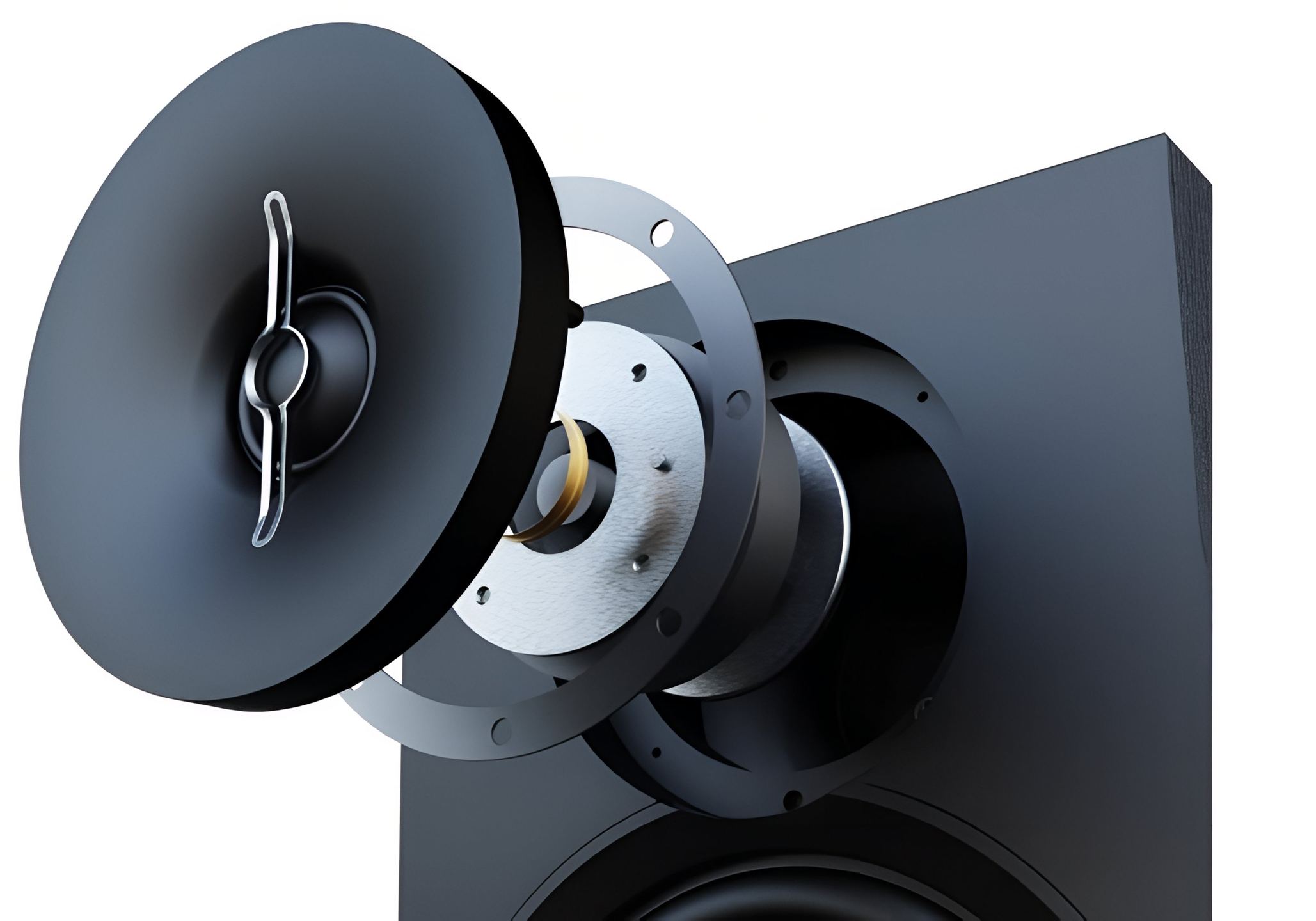
The 25 mm aluminum dome tweeter represents a break from previous generations that used a fabric dome. Aluminum delivers greater speed thanks to its light weight combined with high rigidity, enabling frequency extension up to 38 kHz. This extended bandwidth, well beyond the threshold of human hearing, ensures a linear response in the audible range up to 20 kHz. The integrated waveguide and central phase plug—this small metal protrusion at the center of the dome—improve horizontal dispersion and minimize destructive interference. This configuration provides a wider sweet spot without requiring millimeter-precise toe-in toward the listening position.
Cabinet construction optimized against resonances
The 16 mm MDF cabinet, CARB2-certified (a California standard limiting formaldehyde emissions), incorporates strategically positioned internal bracing. These braces aren’t placed at random but are calculated to break up standing waves that naturally form between parallel walls. This architecture significantly reduces sonic coloration by preventing the cabinet from “singing” at certain frequencies. The substantial weight of 7.85 kg per speaker attests to the density of the material and the overall robustness.
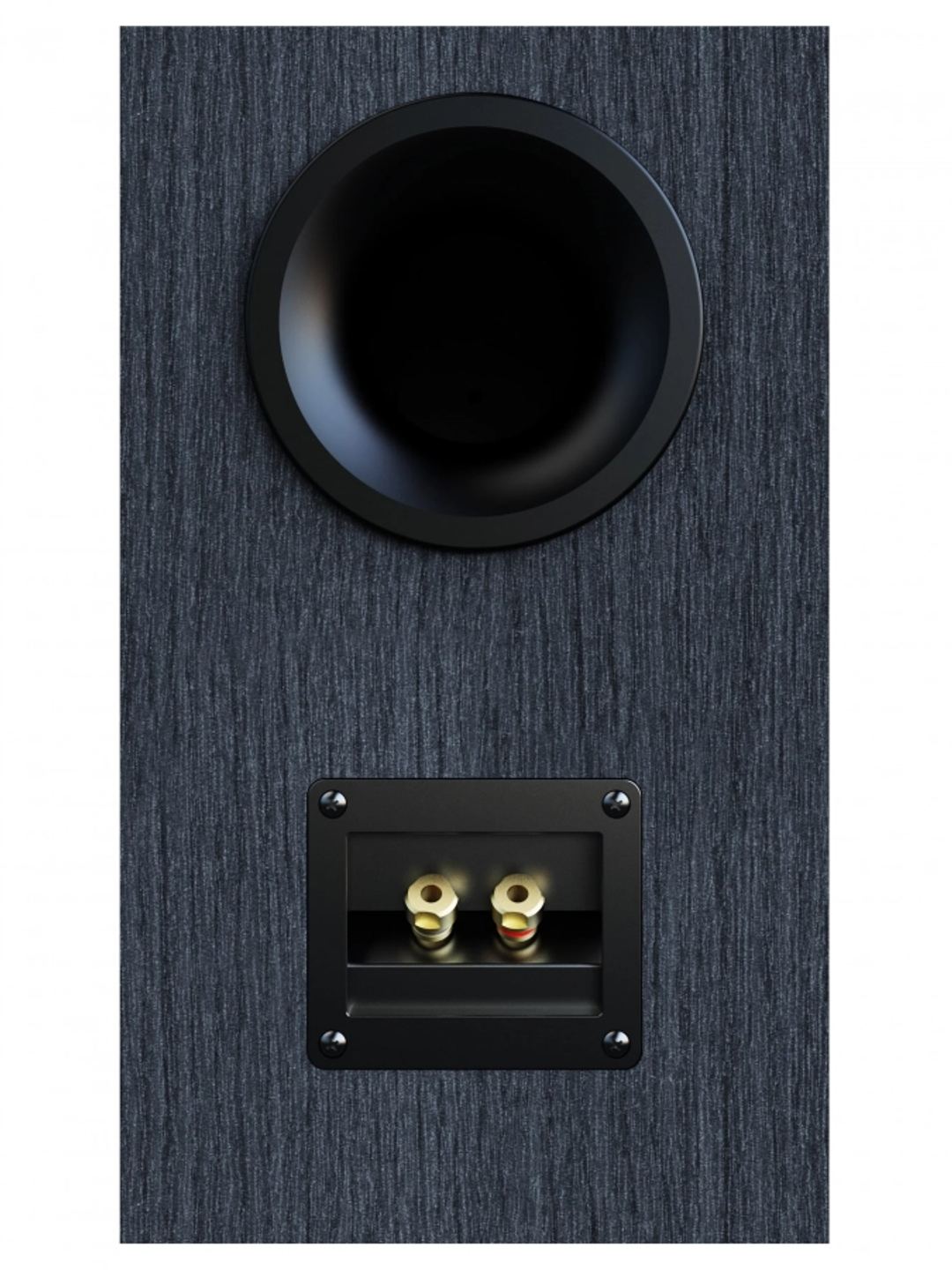
The rear-firing bass-reflex port features a dual-flare profile, a sophisticated geometry that minimizes air turbulence at the ends of the tube. This design drastically reduces “chuffing,” the unwanted huffing noise audible on poorly designed speakers at high bass levels. The rear placement, unlike the front port on the previous DB62 generation, achieves better low-frequency extension while reducing the visual footprint of the front baffle. However, this configuration requires at least 20 to 30 cm of space behind the speaker for optimal operation.
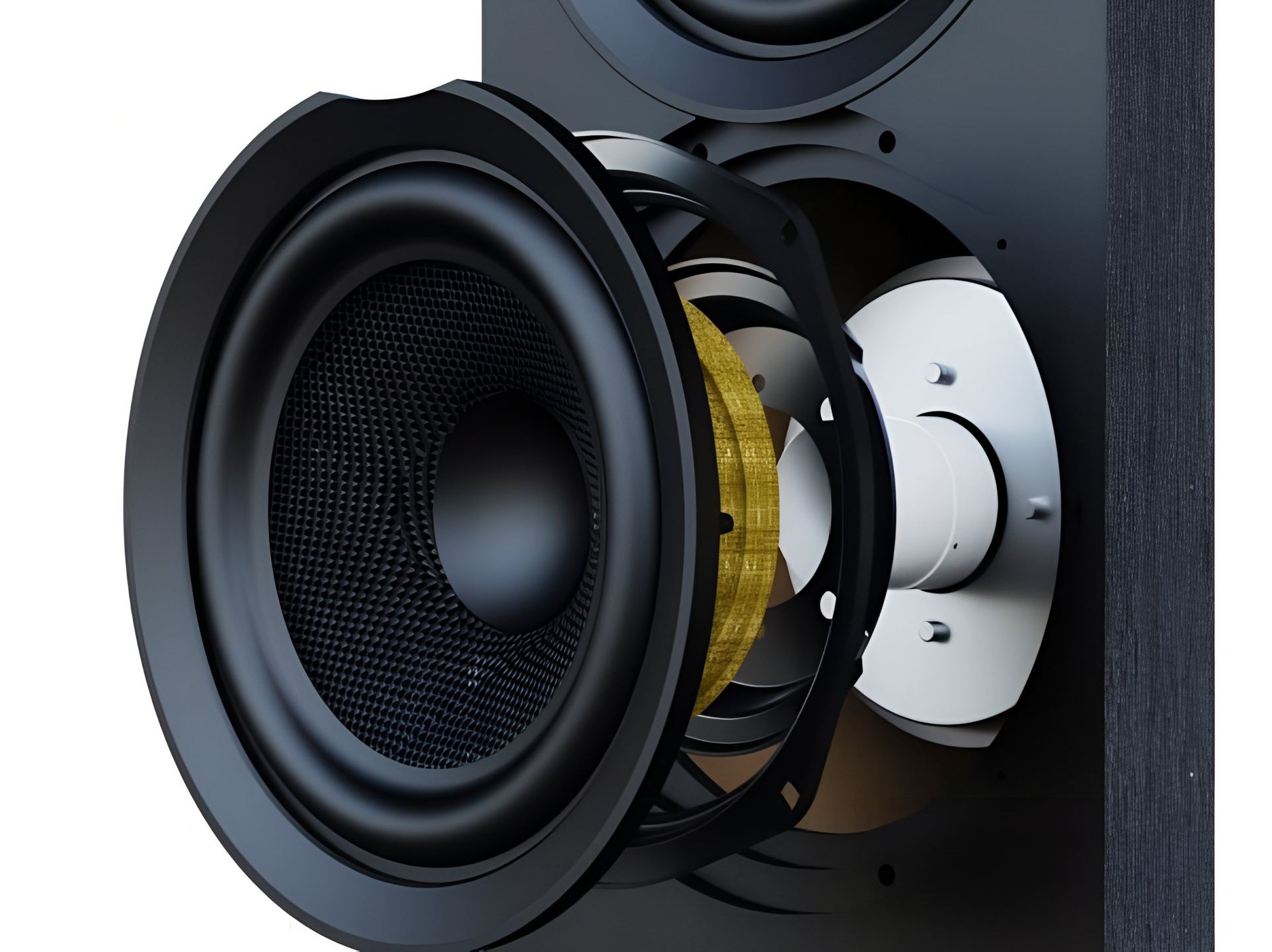
Evolution from previous generations
The transition from the Debut 2.0 to 3.0 series is far more than a cosmetic refresh. The most radical change concerns the tweeter: the 25 mm fabric dome has been replaced by an aluminum dome with an enlarged waveguide and a phase plug. This modification fundamentally reshapes the sonic signature, delivering more clarity and definition in the highs without introducing the harshness often associated with metal domes. The return to a rear port, after the front-port experiment on the DB62, reflects a continued pursuit of optimization. Measurements show an especially linear frequency response with ripple contained within +/- 1 dB and a gentle 5 dB downward tilt from bass to treble—an attribute prized for long, fatigue-free listening.
The woofer retains aramid fiber but benefits from substantial improvements: an oversized magnet, a voice coil expanded to 1.5 inches, and a new suspension profile allowing greater linear excursions. These changes translate into better power handling and reduced distortion in the bass-midrange, the critical zone where the fundamentals of most instruments and voices reside.
Documentation
Technical Specifications
Acoustic Specifications
- Type: 2-way, Bass Reflex
- Frequency response (-6 dB): 42 Hz – 38 kHz
- Nominal impedance: 6 Ω
- Sensitivity @2.83 V/1 m: 87 dB
- Crossover frequency: 2000 Hz
- Recommended power: 20 – 140 W
- Peak power: 120 W
Drivers
- Tweeter: 25 mm aluminum dome, custom-tuned
- Woofer: 165 mm aramid fiber
- Midrange: aramid fiber
Construction
- Enclosure: 16 mm MDF, CARB2 certified, with internal bracing to reduce resonances
- Port: dual-flared for deep, accurate bass
- Binding posts: 5-way metal
- Design: elegant and minimalist, easy to integrate into any interior
Dimensions and Weight
- Width: 195 mm
- Height: 339 mm
- Depth: 298 mm
- Net weight: 7.85 kg
Highlights
- Calibrated aluminum tweeter: optimized clarity and precision
- Aramid-fiber woofer: powerful, accurate bass
- Internal bracing: reduces resonances for pure sound
- Easy to drive: compatible with most amplifiers and AV receivers
- Superior performance: excellent price-to-performance ratio in its class
Frequently asked questions
What minimum distance should I keep between the DB63 and the rear wall?
A minimum of 20 to 30 centimeters is recommended to allow the rear port to function properly. Placing the speakers too close to the wall will artificially boost the bass, creating an unpleasant “boomy” sound. If your setup forces placement close to walls, toe the speakers in slightly to partially compensate.
Do the DB63 absolutely require a subwoofer for home theater?
For music, the DB63 reach sufficiently low (42 Hz at -6 dB) to reproduce most of the spectrum unaided. However, to fully leverage LFE effects in movie soundtracks that extend down to 20 Hz, adding a subwoofer will provide that missing octave and relieve the DB63 of the most excursion-demanding frequencies.
My amplifier is set to 8 ohms—can I use the DB63 safely?
Absolutely. With their nominal 6-ohm impedance, the DB63 will work perfectly with an amplifier configured for 8 ohms. The amplifier will simply deliver slightly less power than with 8-ohm speakers, but this remains within the safe operating margins of any properly designed amplifier. Just avoid cranking the volume if you notice distortion.
How do the DB63 compare to the cheaper DB53 in the same series?
The DB53 use a 5.25-inch woofer instead of 6.5 inches, limiting low-frequency extension to 48 Hz. In rooms under 20 m², the difference will be marginal, especially if you use a subwoofer. The DB63 really make sense in larger spaces where their higher dynamic capacity and deeper bass can be exploited.
Does the aluminum tweeter make the sound harsh on average-quality recordings?
Contrary to common beliefs about metal domes, the DB63 tweeter has been specifically tuned to avoid resonance peaks in the sensitive 2–4 kHz region where sibilance occurs. The waveguide also helps smooth the off-axis response, creating a coherent tonal balance even on compressed or variable-quality recordings.
What is the ideal room size for the DB63?
The DB63 excel in rooms of 15 to 35 m². Below that, their dynamic potential may be constrained; above that, they might lack authority without substantial amplification. Room geometry and acoustic treatment matter as much as raw size: a very reverberant 25 m² room will be harder to energize than a properly damped 35 m² space.
- Eco-contribution included in the sale price.
- Manufacturer reference: DEBUT B6.3 BLACK
- GTIN / EAN: 4011822890676