Bryston 28B³

Awards

Diapason d'Or
The number 1 in classical music and hi-fi. It is a benchmark in the field of classical music and hi-fi, as well as the distinction it awards to the best devices each year
Overview
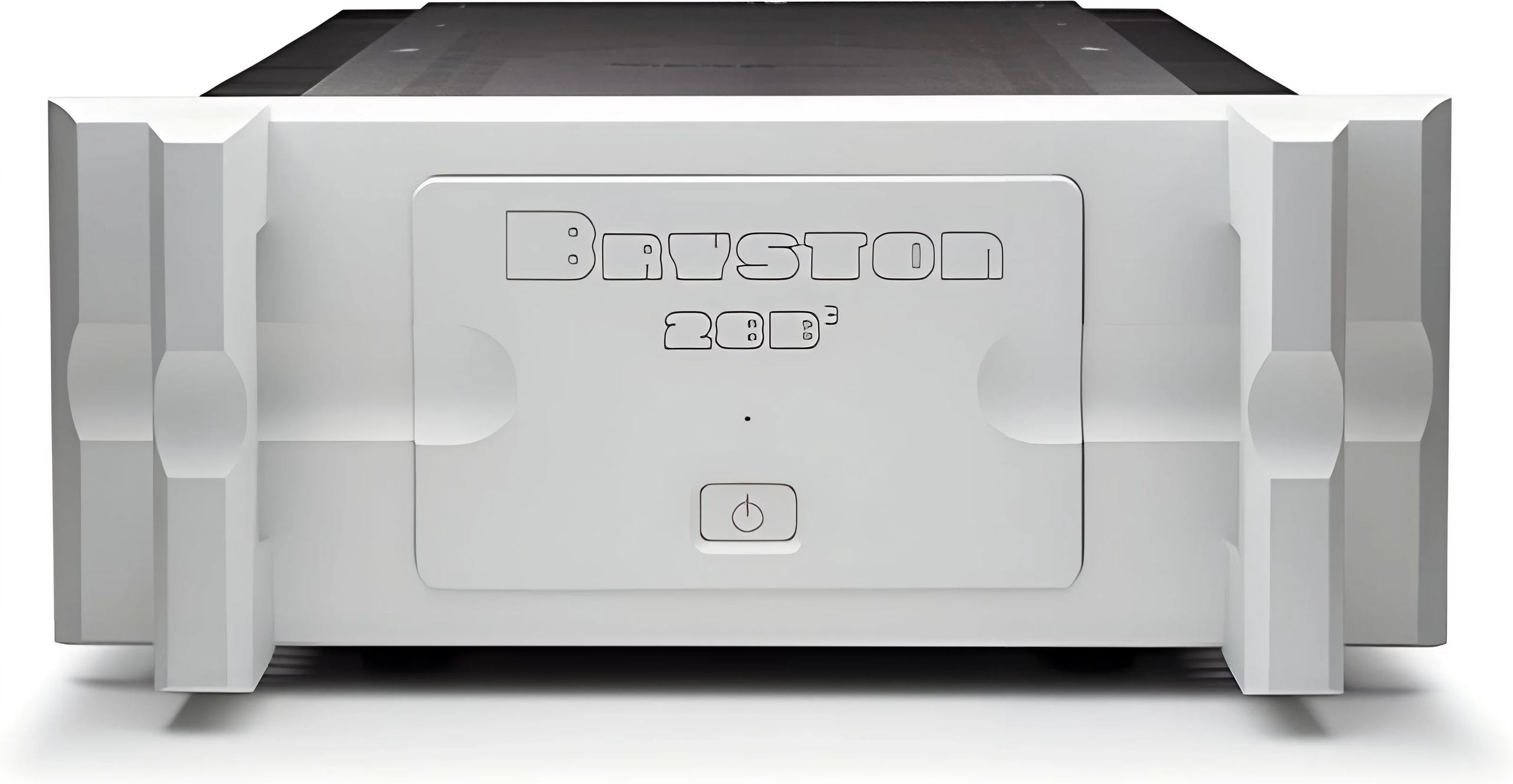
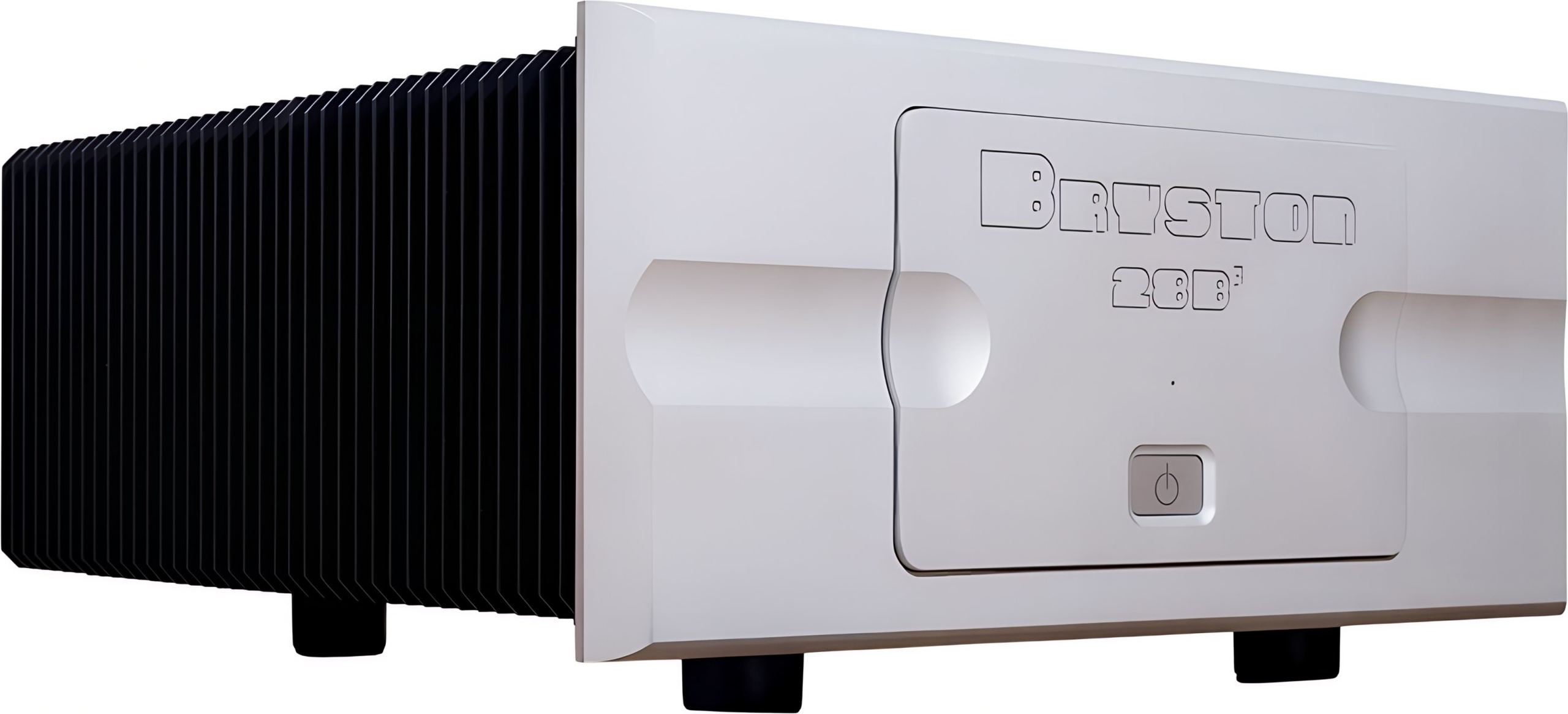
With its 42 kg of metal and components carefully assembled in Peterborough, Ontario, the 28B³ embodies the culmination of five decades of Bryston expertise in audio amplification. This 1000-watt monoblock amplifier into 8 ohms represents the flagship of the Cubed series, heir to the ST, SST, and SST² lines that built the brand’s reputation among recording studios and music enthusiasts.
The Salomie circuit and the legacy of the Cubed series
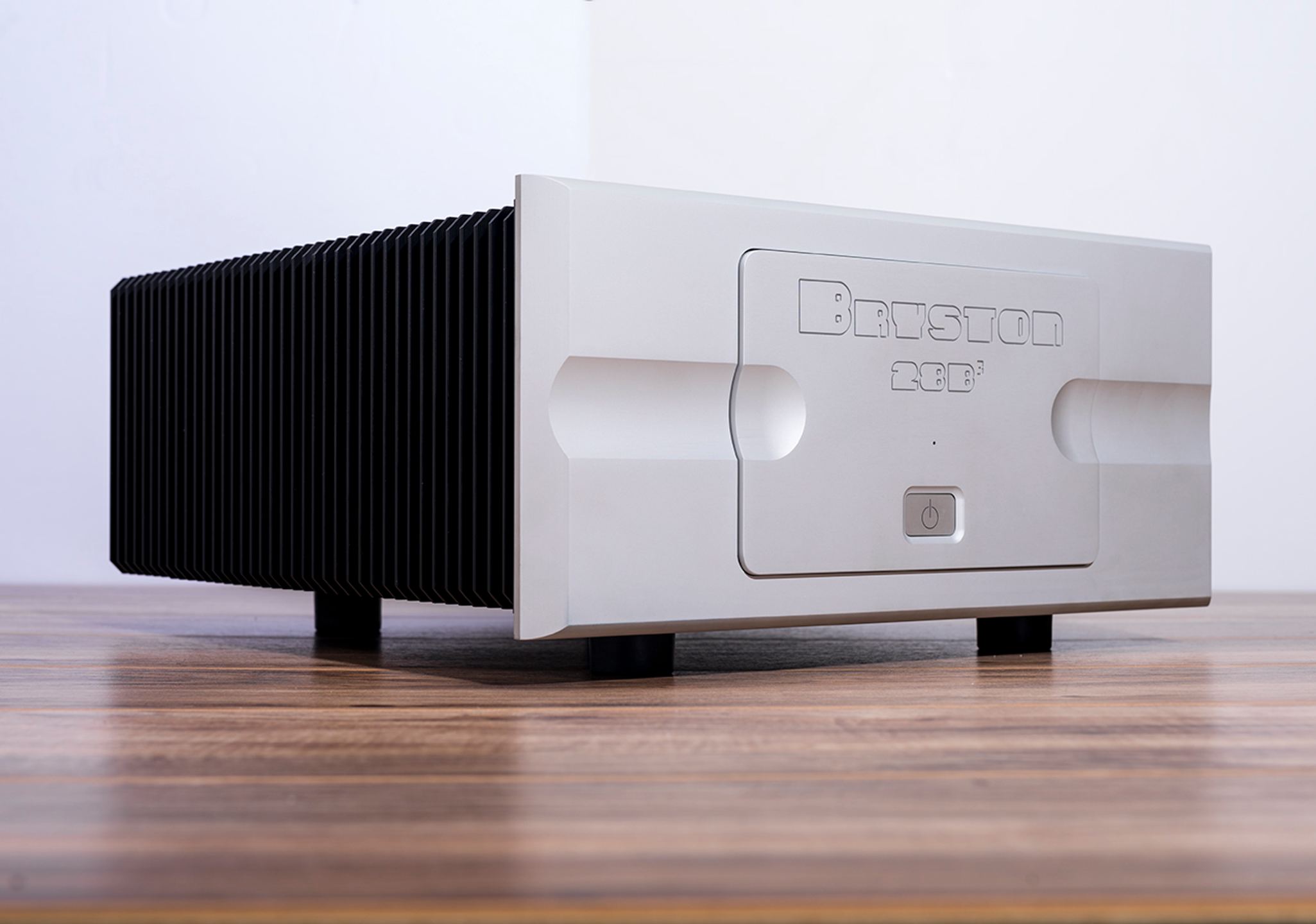
Launched in 2016, the Cubed series is based on a major technical breakthrough: the patented input circuit developed jointly by Bryston and Dr. Ioan Alexandru Salomie, engineer and physicist. This circuit, made up of twelve active devices in an unprecedented configuration, delivers distortion below one-thousandth of a percent — a tenfold reduction compared with the SST² generation. The input stage provides the first six decibels of gain while matching the amplifier to any preamplifier.
The design also incorporates Quad-Complementary topology in the output stage. This architecture improves linearity by reducing by a factor of four the capacitance seen by the driver transistors, thereby eliminating storage delays that typically generate non-linearities when crossing zero. The result: a harmonic distribution close to that of a class A amplifier, but with significantly lower overall distortion.
Thermal design and power supply
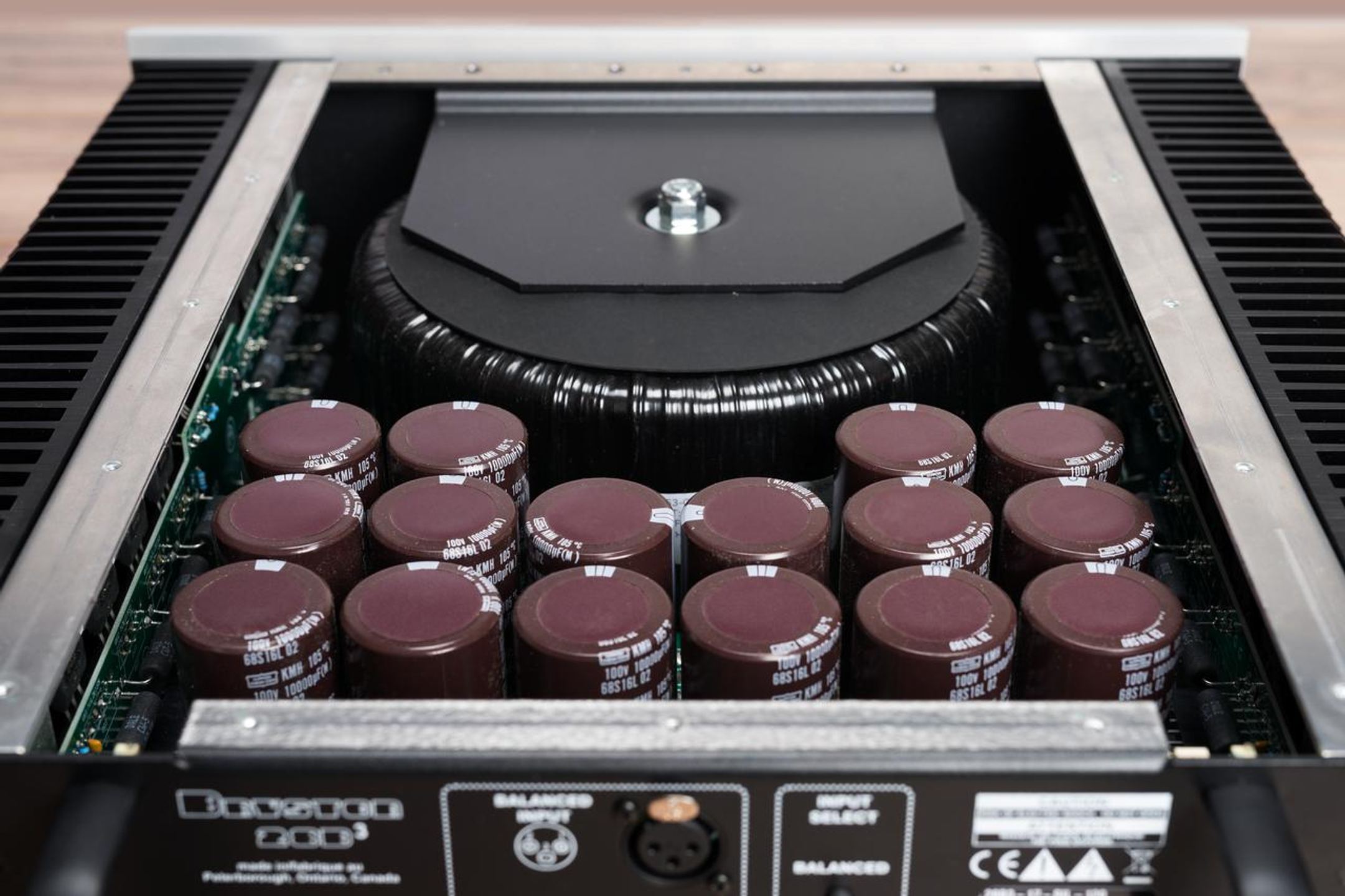
The 28B³ relies on fully passive cooling. Massive aluminum heatsinks, which can reach 85°C during sustained operation, dissipate heat without any mechanical ventilation. This approach guarantees completely silent operation, even during demanding musical passages.
The power supply is built around an oversized toroidal transformer and 160,000 µF of filter capacitance, sized to handle the most brutal current demands. Into 4 ohms, the amplifier can deliver up to 1800 watts before clipping — a power reserve that explains why Bryston integrated the SoftStart system. This microprocessor-controlled device staggers power-up in order to avoid overstressing the electrical circuit breaker.
Connectivity and system integration
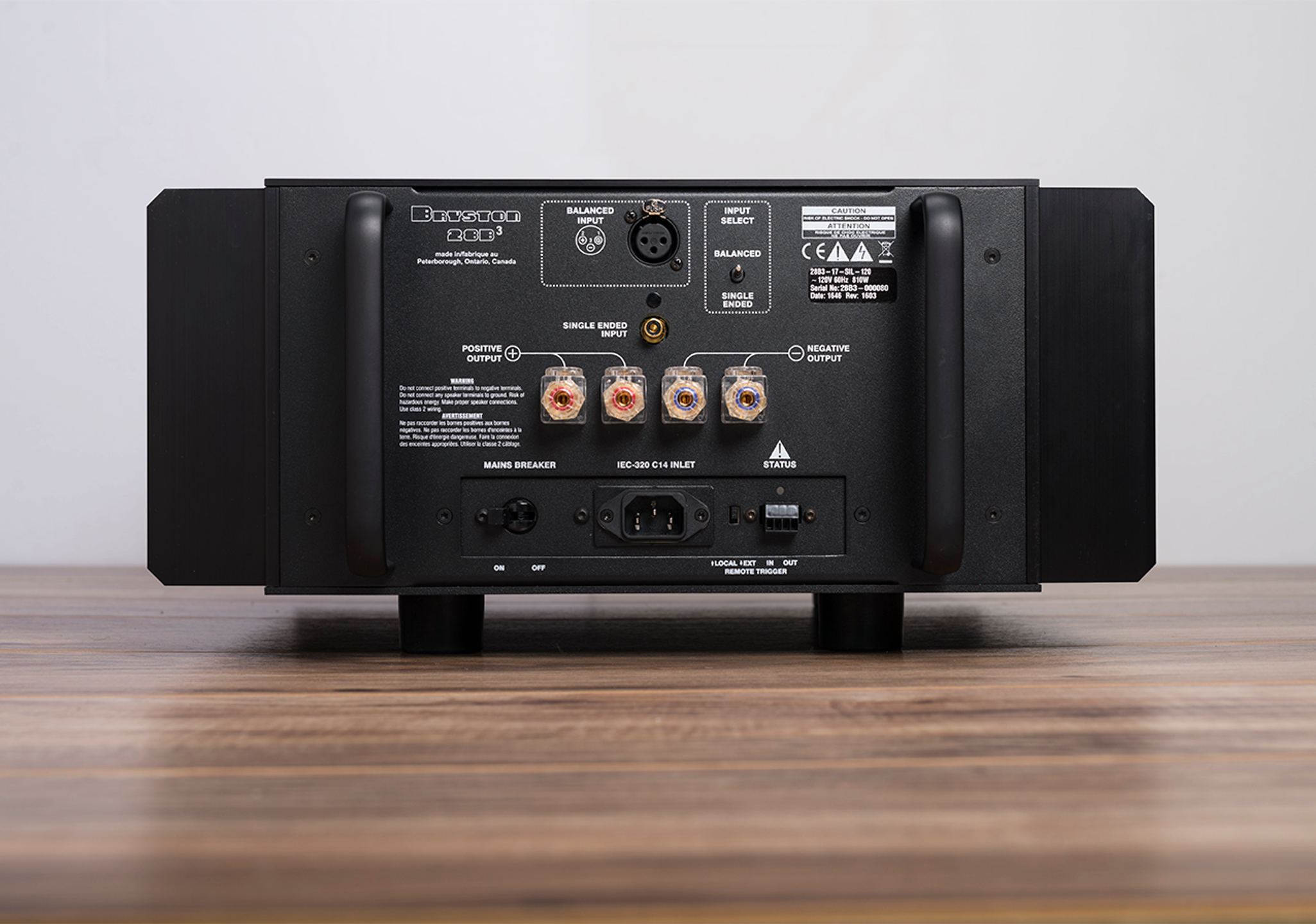
The rear panel provides two inputs: a balanced XLR (pin 2 hot, per AES convention) and an unbalanced RCA, selectable via a switch. The two pairs of speaker binding posts allow for bi-wiring or the use of cables fitted with banana plugs or spades.
The DC Trigger input allows automated power-on from a Bryston preamplifier or any other compatible device. This function simplifies the management of a multichannel system in which several 28B³ units operate together.
Documentation
Technical specifications
Performance
- Output power
- 1000 W into 8 Ω
- 1800 W into 4 Ω
- Frequency response: < 1 Hz – 100 kHz (–3 dB)
- Total harmonic distortion: < 0.005% from 20 Hz to 20 kHz at rated power into 8 Ω
- Signal-to-noise ratio
- RCA input: –116 dB
- XLR input: –117 dB
Connectivity
- Balanced XLR inputs and unbalanced RCA inputs
- Dual speaker output binding posts
- DC trigger for automated power on / off
Electrical characteristics
- Input impedance
- Unbalanced: 5 kΩ
- Balanced: 5 kΩ per phase
- Standby consumption: < 500 mW
- Microprocessor-controlled soft start system preventing circuit breaker tripping
Design and cooling
- Patented Salomie circuit from the Cubed series
- 100% passive cooling by natural convection, completely silent
- Machined and anodized aluminum chassis
- Absolute control of loudspeakers regardless of their complexity
Dimensions and weight
- Dimensions: 43.2 cm or 48.3 cm × 20.6 cm × 42.7 cm or 46.7 cm with front handles
- Weight: 42 kg
Available options
- Front panel width 43.2 cm or 48.3 cm in non-rackmount version
Frequently asked questions
What is the difference between the XLR and RCA inputs?
The balanced XLR input offers better rejection of interference, particularly over long cable runs. The signal-to-noise ratio reaches –117 dB in balanced mode versus –116 dB in unbalanced mode. For short cables in a low-noise environment, the difference remains marginal.
How does the SoftStart system work?
The microprocessor sequences the power-up process by limiting the initial inrush current. Without this device, the filter capacitors (160,000 µF) would cause a current spike capable of tripping a standard 15-amp household circuit breaker.
Is it necessary to leave the amplifier on standby?
The amplifier reaches optimal performance after a few minutes of operation. Standby mode, with power consumption below 500 mW, keeps the circuits at a stable temperature while minimizing energy use. Users who prefer to switch the unit off completely can do so without risk thanks to the SoftStart system.
What are the actual measured power ratings?
Bryston’s specifications are conservative. Independent measurements have found effective power levels roughly 25% higher than the stated values — almost 1235 W into 8 ohms for one example unit.
- Eco-contribution included in the sale price.