Astell&Kern Clarus
Overview
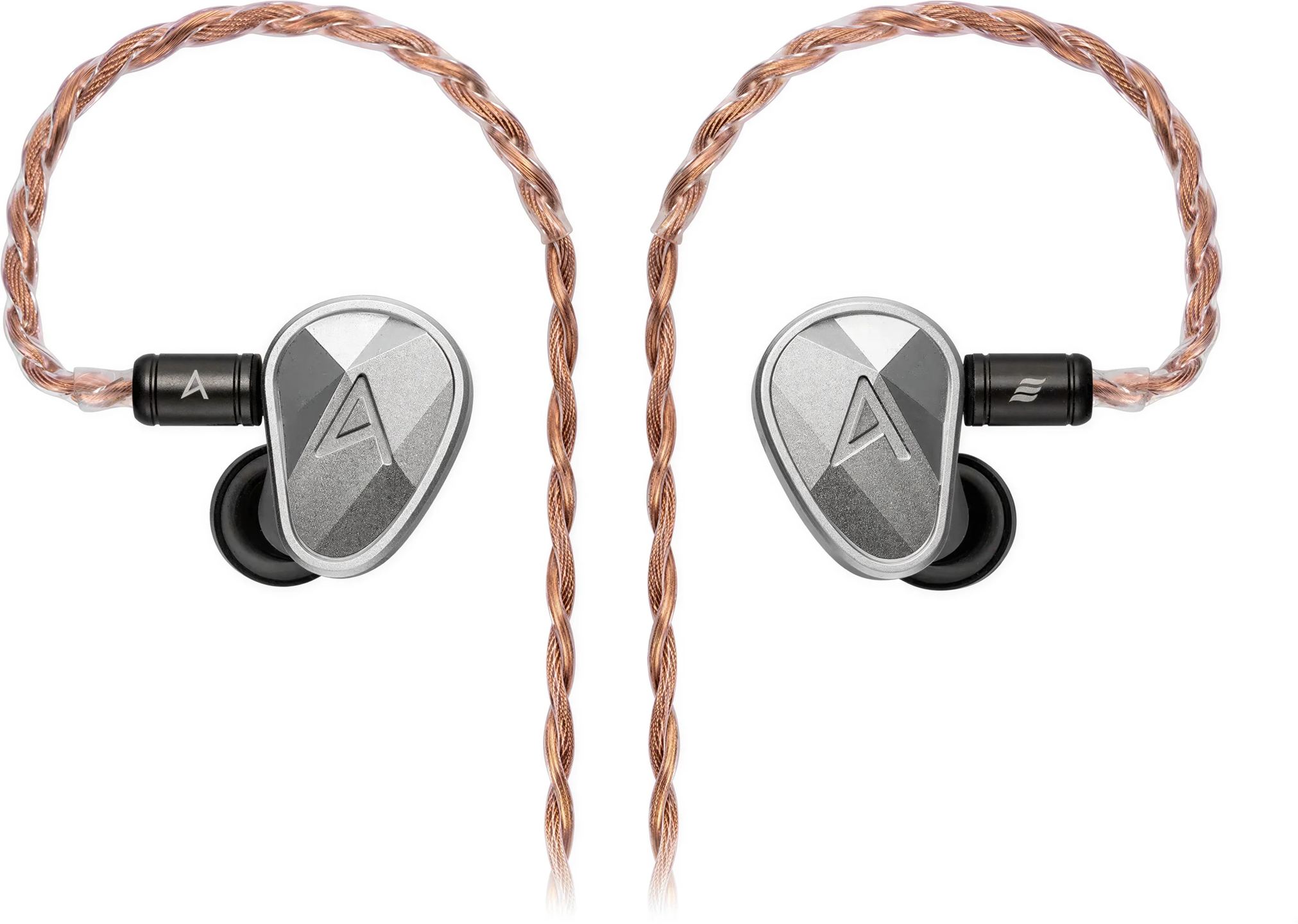
Housing three driver families within an in-ear monitor shell, each confined to the portion of the spectrum it reproduces best: this is the logic behind the tri-brid configuration chosen for the Clarus, the fourth high-end model in Astell&Kern’s A&ultima series. One dynamic driver for bass, seven Sonion balanced armatures for the midrange and upper spectrum, a silicon MEMS tweeter for the extreme highs, all coordinated by a six-way crossover.
A driver for every frequency
The tri-brid approach distributes the workload rather than piling it onto a single driver. The proprietary 9 mm dynamic driver handles the bass, from the lowest frequencies up to around 500 Hz, supported by two Sonion armatures for upper bass and lower mids. Three other Sonion armatures cover the midrange, from 500 Hz to 7 kHz, where vocals and the body of instruments reside. Above 7 kHz, two additional armatures and the MEMS tweeter share the highs.
Multiplying drivers guarantees nothing in itself: the more there are, the more delicate their integration becomes. That is the role of the proprietary six-way crossover, which assigns each group its band and manages overlap to preserve phase coherence and tonal continuity. The tuning aims for neutrality: no boosted bass or forward highs, but reproduction that seeks to remain faithful to the recording. The model’s name, from the Latin “clarus,” sets the tone, or rather its absence.
The silicon MEMS tweeter
The Clarus’s real point of interest lies in the highs. The MEMS (microelectromechanical system) tweeter is based on a micro-machined diaphragm in a silicon chip, manufactured using semiconductor industry processes. This has two practical consequences: manufacturing consistency from one unit to another that is difficult to achieve with hand-assembled drivers, and a very low moving mass that enables fast transients in the top octave.
Until now, the extreme highs of high-end in-ear monitors often relied on electrostatic drivers, effective but voltage-hungry and dependent on a dedicated power supply. MEMS is driven like the rest of the chain, without a dedicated stage. In the Clarus, it does not work alone: two Sonion armatures accompany it in the upper spectrum, ensuring a clean transition between the highs and midrange.
A machined aluminum shell
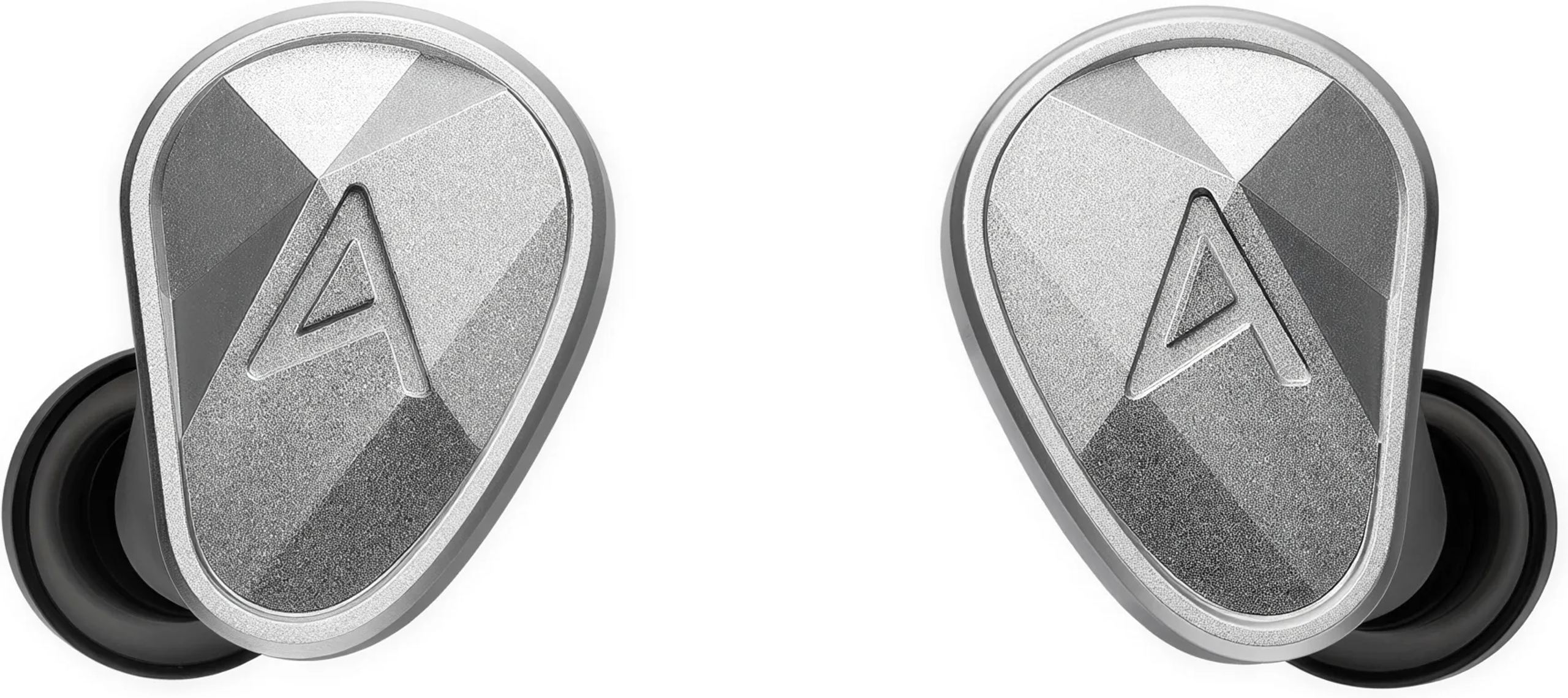
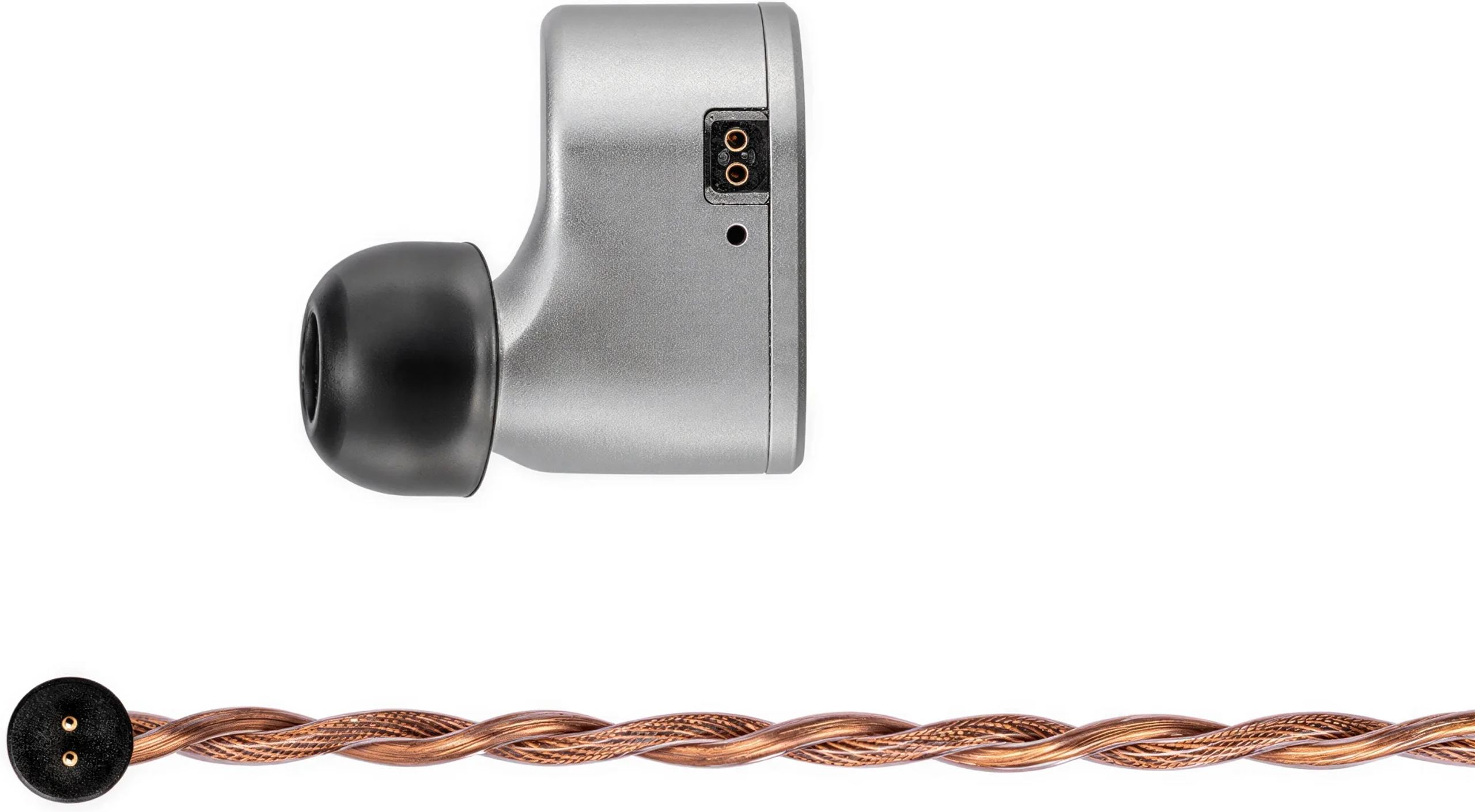
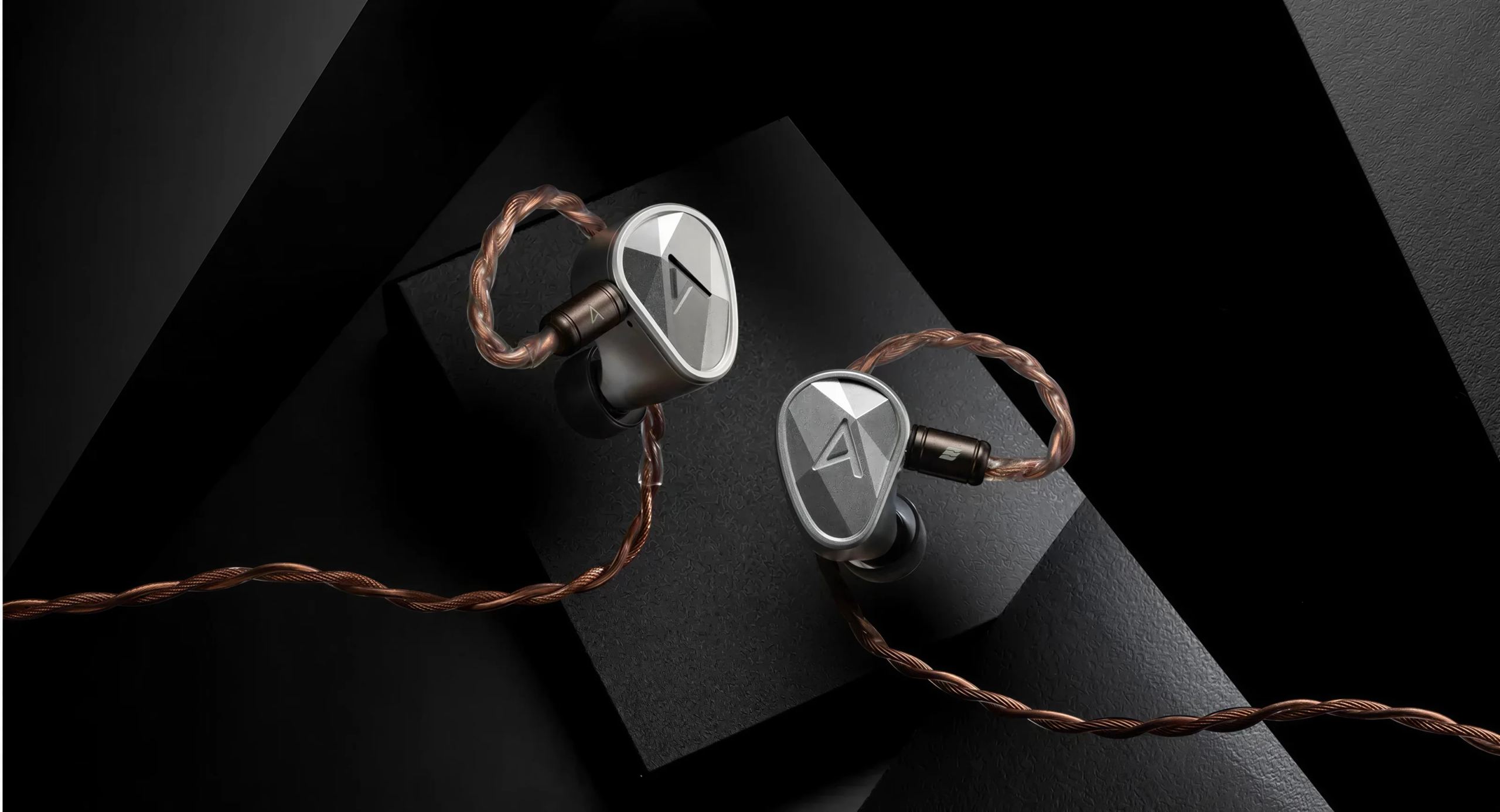
The shell is machined from 6061-T6 aluminum, an aerospace alloy selected for its rigidity and mechanical stability, then silver anodized. The faceplate features Astell&Kern’s angular design, with a multifaceted finish that catches the light. This choice is not merely stylistic: a rigid enclosure contains unwanted resonances that could blur the drivers’ performance. The cable connection uses the 0.78 mm 2-pin standard, leaving the option of replacement open.
The Effect Audio cable and eartips
The supplied cable is not a generic accessory. Astell&Kern had it developed by Effect Audio, a Taiwanese specialist in in-ear monitor cables, based on its Ares S Lite: four 24 AWG pure UP-OCC copper conductors in a Litz configuration, terminated with 0.78 mm 2-pin connectors.
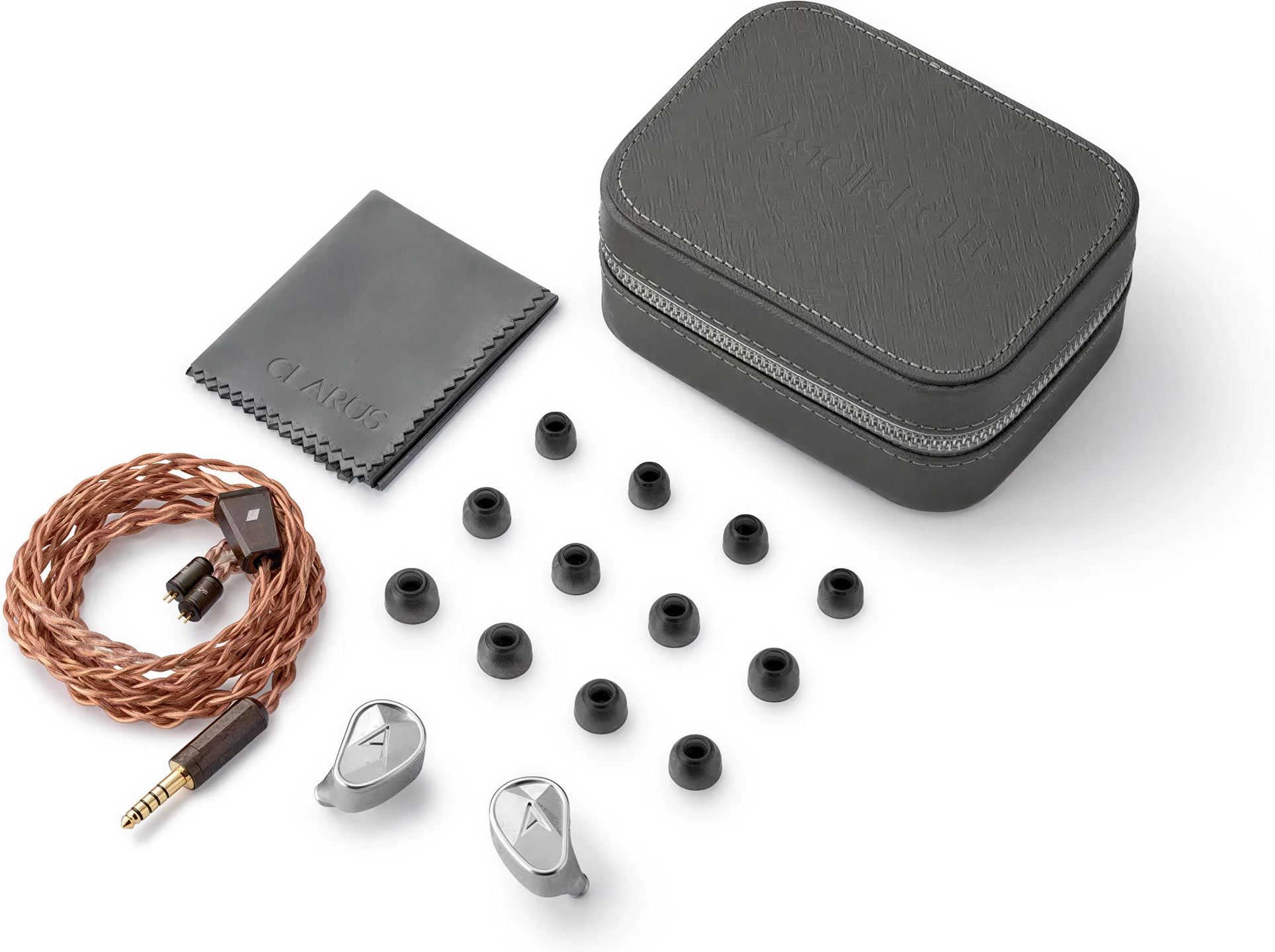
Contact with the ear is provided by AK × AZLA SednaEarfit SE2000 eartips, supplied in six sizes, from SS to L, in medical-grade silicone. On an in-ear monitor, the eartip is not a minor detail: it ensures the seal in the ear canal, which directly determines bass performance and isolation from outside noise. Six sizes leave room to find the right fit. Everything is stored in a Saffiano leather case, complemented by a pouch and cable holder.
Connecting and powering the Clarus
On paper, the Clarus requires very little: its 9.7-ohm impedance and 103.9 dB sensitivity at 1 kHz make it an easy load, which a portable player or small portable DAC can drive effortlessly. Its low impedance has a trade-off: it makes the earphone sensitive to both the source’s output impedance and its noise floor, and audible hiss quickly reveals a poor headphone output. A source with low output impedance and a low noise floor puts the Clarus in better conditions.
It is no coincidence that Astell&Kern tuned it using its own reference systems and matched it with the SP4000T player. The Clarus remains a strictly wired in-ear monitor: no wireless connection, no microphone or controls, just a pair of drivers awaiting a clean analog signal. It extends the A&ultima series opened by the Zero1 and Zero2, then Luna, and takes the driver count further than its predecessors.
Technical specifications
Overview
- Type: high-end in-ear monitors (IEMs)
- Architecture: 9-driver tribrid
- Acoustic systems: 3 coordinated acoustic systems
- Crossover: proprietary 6-way crossover network
Audio performance
- Frequency response: 20 Hz – 20 kHz
- Sensitivity: 103.9 dB SPL at 1 kHz
- Impedance: 9.7 Ω at 1 kHz
Driver architecture
- Overall configuration: 1 9 mm dynamic driver, 7 Sonion balanced armatures, 1 silicon MEMS tweeter
- Bass (20 Hz to 500 Hz)
- 1 proprietary 9 mm dynamic driver
- 2 Sonion balanced armatures
- Midrange (500 Hz to 7 kHz)
- 3 Sonion balanced armatures
- Treble (7 kHz to 20 kHz)
- 1 silicon MEMS tweeter
- 2 Sonion balanced armatures
- Crossover: proprietary 6-way network
Shell and finish
- Shell: CNC-machined 6061-T6 aluminum
- Finish: silver anodized aluminum
- Faceplate: CNC-machined 6061-T6 aluminum, silver anodized multifaceted finish
- Earphone connector: 0.78 mm 2-pin
Cable
- Model: custom AK × Effect Audio Ares S Lite
- Conductors: UP-OCC Litz pure copper
- Configuration: 4 conductors, 24 AWG, dual geometry
- Connectivity: 0.78 mm 2-pin
Eartips
- Model: AK × AZLA SednaEarfit SE2000
- Available sizes: SS, S, MS, M, ML, L
- Material: KCC medical-grade silicone
- Outer diameter: depending on size
- Height: 8.8 mm
- Nozzle diameter: 7.0 mm
- Inner diameter (bore): 3.0 mm
Included accessories
- Left and right CLARUS earphones
- Custom AK × Effect Audio Ares S Lite cable
- Set of AK × AZLA SednaEarfit SE2000 eartips in 6 sizes
- Saffiano leather case
- IEM pouch
- Cable holder
Frequently asked questions
Can Clarus operate wirelessly?
No. It is a wired in-ear monitor, with no Bluetooth, microphone or controls. It requires a source with a headphone output: a digital music player, or a portable DAC connected to a phone or computer. As the 2-pin connector is standard, a wireless adapter module available on the market remains technically possible, at the expense of the quality imposed by the Bluetooth format.
How does a MEMS transducer differ from an electrostatic tweeter?
Both aim for the same goal—a fast, extended treble—through different approaches. Electrostatic technology stretches an ultra-thin film between two electrodes and requires a high voltage, often supplied by a separate unit. MEMS technology etches its diaphragm into silicon and is driven directly, without a dedicated power supply, with manufacturing consistency typical of components derived from microelectronics.
Can the original cable be replaced?
Yes. The 0.78 mm 2-pin connector is one of the most widely used standards for high-end in-ear monitors. The supplied Effect Audio cable can therefore be replaced with another model, for example to change the source-side termination (3.5 mm jack, 4.4 mm balanced plug) depending on the portable player used.
What are the six ear tip sizes for?
How the ear tip fits in the ear canal determines the seal, and therefore both the amount of bass perceived and the level of sound isolation. An ear tip that is too small lets bass escape, making the treble seem dominant; one that is too large becomes uncomfortable. The six AZLA SE2000 sizes, from SS to L, are designed to adjust this contact as closely as possible to each person’s ear shape.
Do you need an expensive portable player to get anything out of it?
Its high sensitivity and low impedance allow Clarus to play loudly from almost any headphone output. Source quality is heard elsewhere: in the silence between notes, bass cleanliness, and soundstage stability. Electronics with low noise and low output impedance serve the earphones better than a noisy source, regardless of the available power.
Is the Clarus suitable for on-stage monitoring?
Its in-ear design, detachable cable, and passive isolation are what you would expect from a stage monitor. Its tuning, however, leans more toward reference listening than foldback monitoring: it reproduces the recording as-is, without the midrange boost some musicians seek in order to hear themselves in a busy mix.
- Eco-contribution included in the sale price.
- GTIN / EAN: 8800309901334