

Nuprime Pure AC-4E
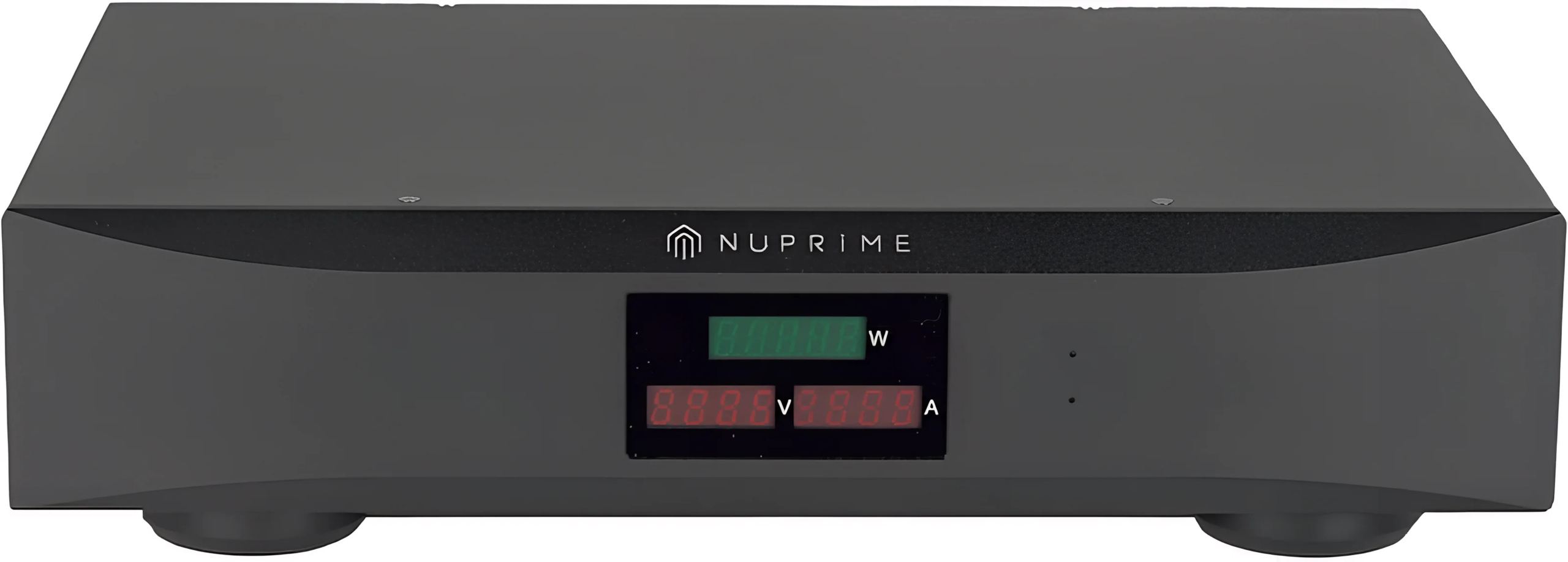
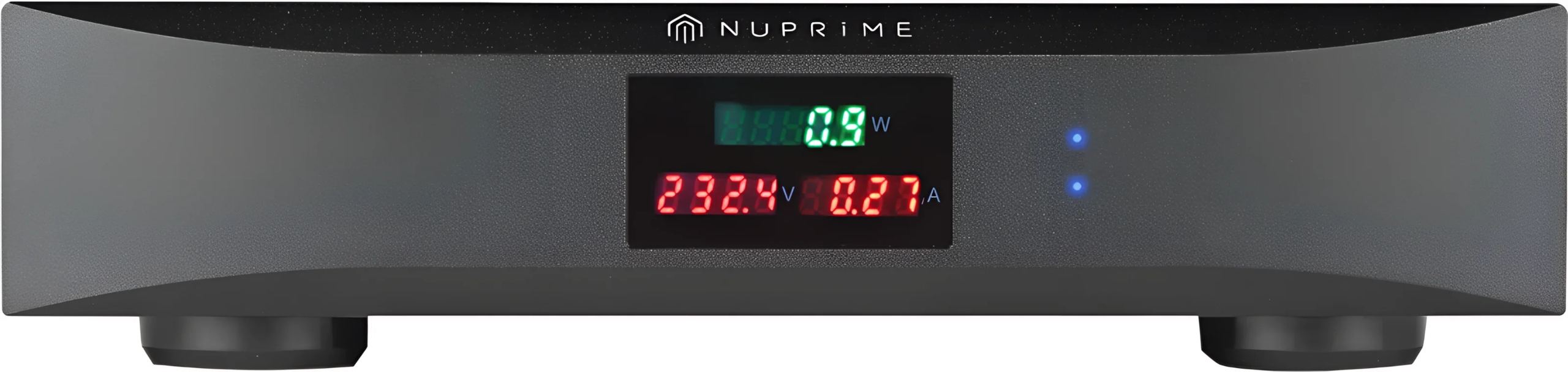
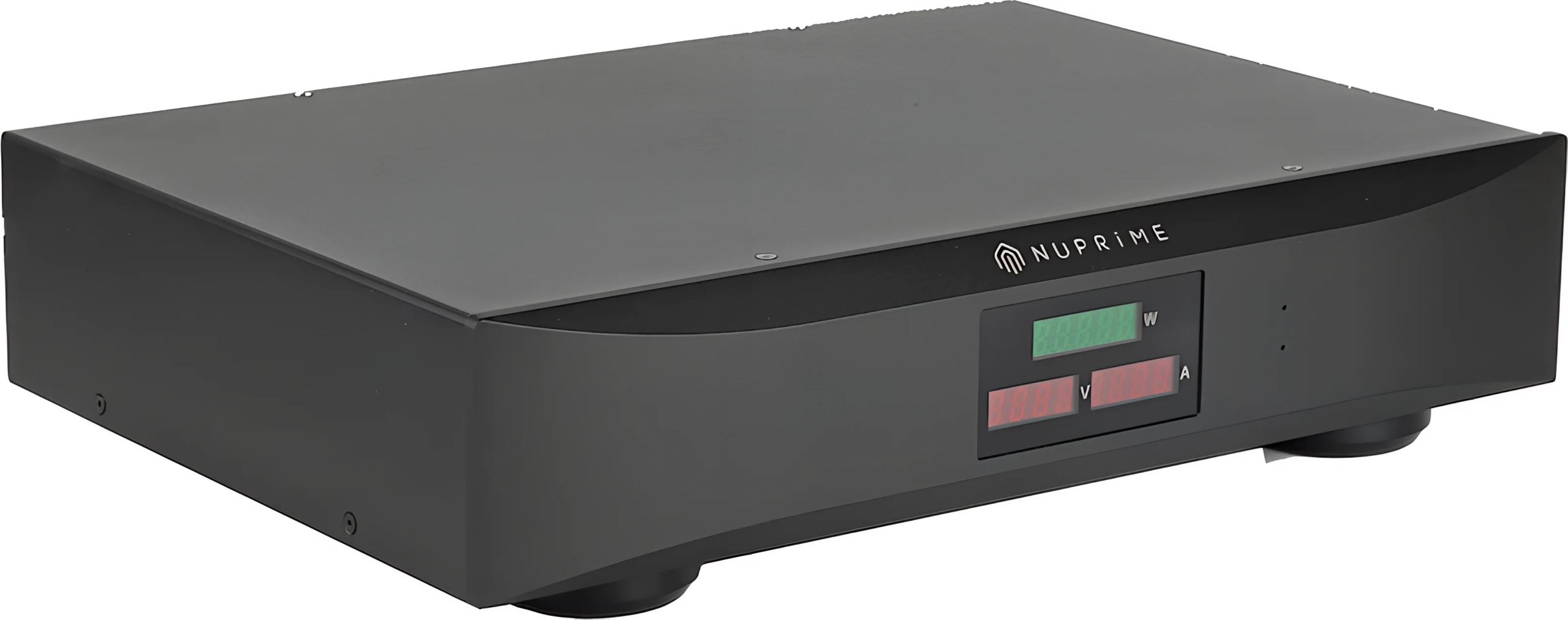
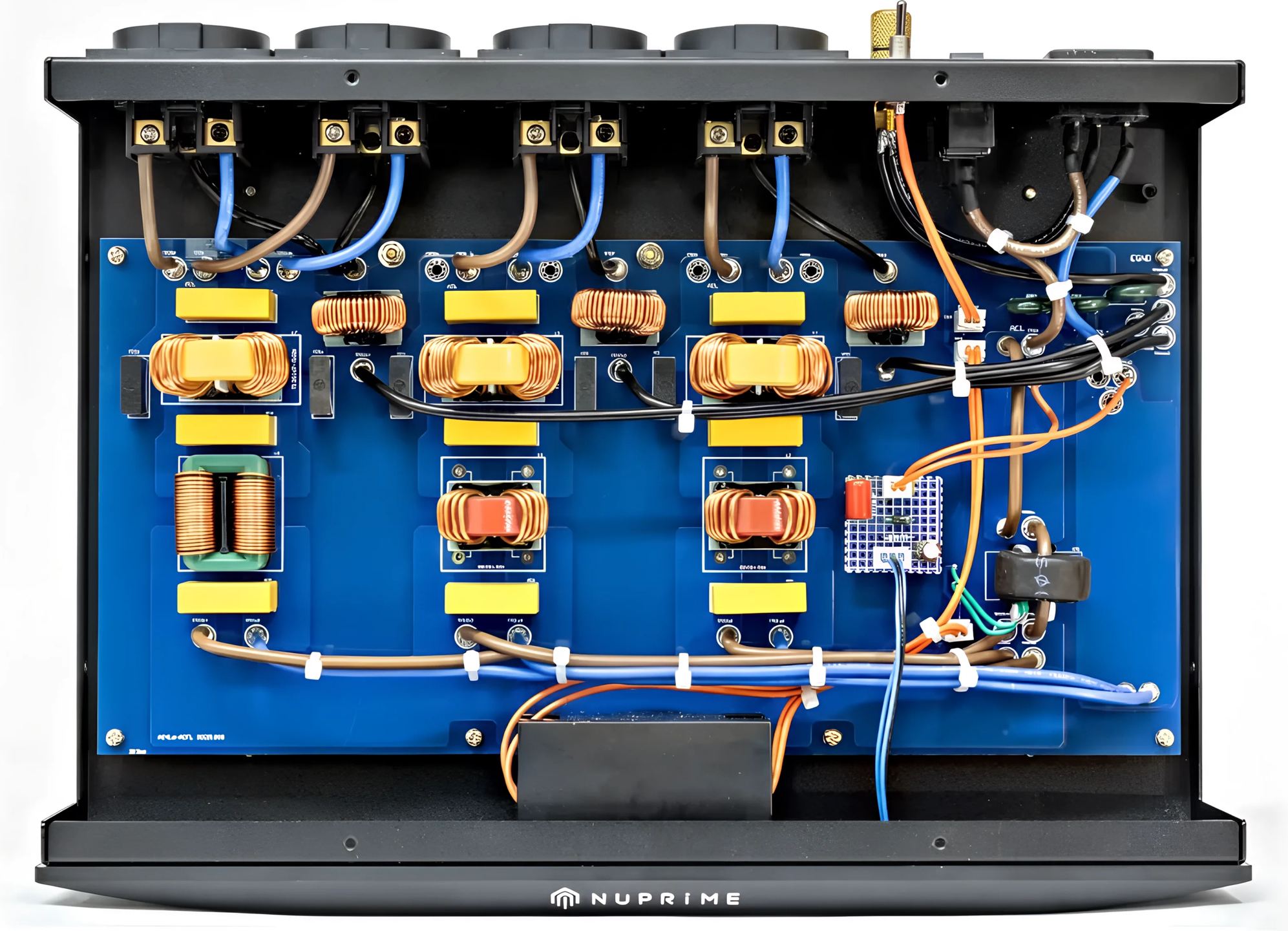
NuPrime Pure AC-4E, dual-filter power conditioner
Refrigerator, LED lighting, chargers, small household appliances: everything running in the home feeds electrical noise back onto the line that also powers the hi-fi system. On an already quiet system, this residual noise eventually becomes audible. The Pure AC-4E sits between the wall outlet and the devices to reduce it, with two separate filtering stages: one for sensitive sources, one for power-hungry amplifiers.
Two filters for two types of devices
A preamplifier and a power amplifier do not draw from the mains in the same way. The former consumes little but reacts to the slightest interference on its power supply. The latter draws high current peaks during musical transients and dislikes anything that might restrict this flow. Filtering both with the same circuit means serving one or the other poorly.
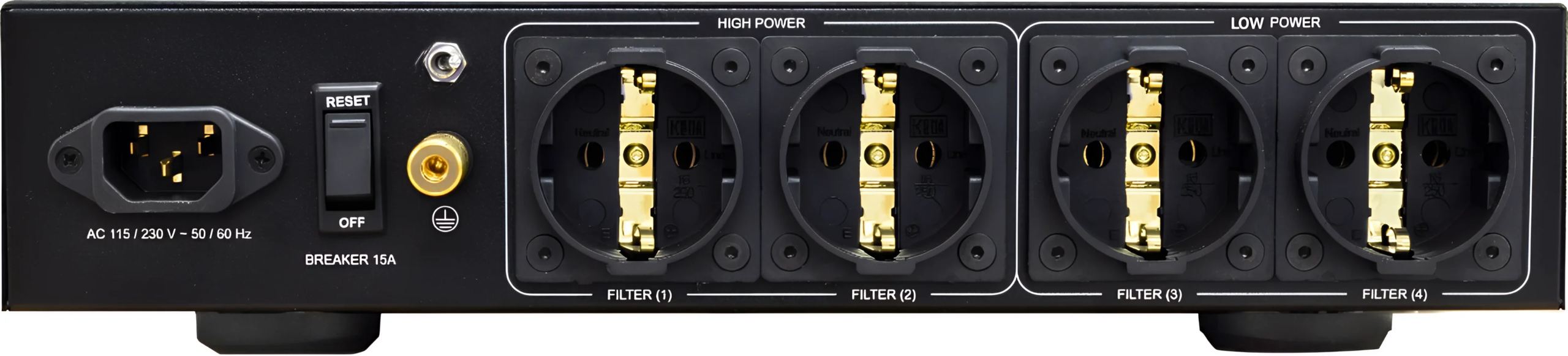
The Pure AC-4E addresses this with two fifth-order LC filtering stages, each wired to its own pair of outlets. One set receives low-signal sources: converters, preamplifiers, players. The other receives amplifiers. The fifth-order filter is a steep-slope design, capable of significantly attenuating interference rather than merely softening it.
Strong isolation without restricting current
This split is reflected in the isolation rating, meaning the factor by which incoming noise is attenuated. The source outlets provide up to 1000 times isolation: as these devices consume little, the filter can be highly selective without affecting their power supply. The amplifier outlets are limited to a factor of 10 to 50. This lower figure is deliberate. Overly tight filtering would add series impedance to a line that must deliver dozens of amps at peak, and would reduce dynamics just when the amplifier needs them most. Overall mains noise attenuation exceeds 20 dB.
The principle remains that of a passive filter. The Pure AC-4E attenuates high-frequency noise travelling on the line; it does not regulate mains voltage or reshape the waveform. On a system whose signal-to-noise ratio already exceeds 90 dB and whose distortion falls below 0.1%, it is this residual noise, often inaudible in isolation, that masks the finest details of a recording.
Four outlets now open to amplifiers
The Pure AC-4E succeeds the Pure AC-4, now discontinued, and addresses its main limitation. On the previous model, the two filtered outlets for sources were limited to moderate current: they only accepted low-consumption devices. The high-performance stage has been reinforced, with seven power inductors, to handle high loads as well. All four outlets can now power four high-power devices, or be split between two amplifiers and two sources depending on the system configuration.
Each outlet accepts up to 15 A. The high-power section delivers up to 27 A; its inductors are wound with 1.6 mm copper wire to carry this current without overheating. In practice, power amplifiers and power-hungry stereo amplifiers connect to this section, while sources connect to the other, each benefiting from filtering suited to its consumption.
12 V trigger and universal voltage
Two remote-control ports complete the package. The trigger input accepts a DC voltage from 3 to 30 V, while the output provides 12 V. Connected to a system that supports this protocol, they can switch the system on and off in a single action, or propagate power-on from one component to another.
The mains input ranges from 100 to 240 V, at both 50 and 60 Hz, making the device compatible with any electrical grid. The aluminium enclosure remains compact: 74 mm high, 330 mm wide, 253 mm deep, weighing 3.5 kg. It fits beneath a piece of furniture or next to the rack without taking up space.
Technical Specifications
Overview
- High-fidelity power conditioner designed for high-end audio systems
- Improved soundstage, resolution, and detail reproduction
- Enhanced perception of harmonics and musical micro-details
Filtering and Noise Reduction
- Mains noise reduction exceeding 20 dB
- 5th-order LC filtering for effective isolation from interference
- Two types of dedicated filters
- High-performance filter for sensitive devices: digital-to-analog converters, preamplifiers, players
- High-power filter for amplifiers
- Isolation ratio
- Up to 1000× for low-power devices
- From 10 to 50× for high-power devices
Connectivity and Capacity
- Up to 4 devices can be connected simultaneously
- Mixed configuration supported: 2 high-power devices and 2 low-power devices
- Output current: 15 A × 4
- Maximum current for the high-power section: 27 A
Internal Design
- High-power inductors
- 1.6 mm copper wire
Electrical Specifications
- Mains input: 100–240 V AC / 50–60 Hz
- Trigger In: DC 3–30 V / 2 mA
- Trigger Out: DC 12 V / 50 mA
Dimensions and Weight
- Dimensions (H × W × D): 74 × 330 × 253 mm
- Weight: 3.5 kg
Frequently Asked Questions
Which sockets should each device be connected to?
Low-signal sources (DAC, network player, preamplifier, CD player) go on the high-performance section, which achieves 1,000 times the isolation. Amplifiers and power blocks go on the high-power section, which is less filtered but designed for high current delivery. As this high-performance section can now also handle heavy loads, nothing prevents you from filling all four outlets with power devices if the system requires it.
Can filtering limit an amplifier's dynamics?
This is precisely to avoid this that the amplifier outlets receive lighter filtering, from 10 to 50 times, rather than the 1000 times reserved for source components. More moderate isolation allows high current peaks to pass through without adding impedance to the line, with up to 27 A available on this section. Bass and transients are not compressed by the filter.
How can I power more than four devices?
The chassis is deliberately limited to four outlets: multiplying outputs on a single unit would increase internal interference and degrade filtering. For a more extensive system, the solution is to add a second power conditioner rather than overload a single device.
What are trigger sockets actually used for?
They integrate the power conditioner into the power-on sequence of a compatible system. Connected to an amplifier or preamplifier that controls its components via a 12 V trigger, the system switches on and off together, in the desired order, without having to touch each device. The input receives the command, and the output passes it on to the next component.
Can it be installed on a foreign electrical network?
The electronics operate from 100 to 240 V and 50 to 60 Hz, so on any household voltage. The sockets use the European Schuko format: connected devices must have a compatible plug, and connection to a wall outlet in a country outside the Schuko zone requires the appropriate adapter.
Is it better to connect it directly to a wall outlet?
Yes. A power conditioner delivers its full effect when plugged into a wall outlet, preferably on the circuit dedicated to the hi-fi installation. Routing it through another power strip or a second upstream filter adds contacts and stray resistances that counteract the work done to reduce noise.
- Eco-contribution included in the sale price.
- Manufacturer reference: NP-PURE-AC4E
- GTIN / EAN: 840761144007




