Sonoro Faller Oskar
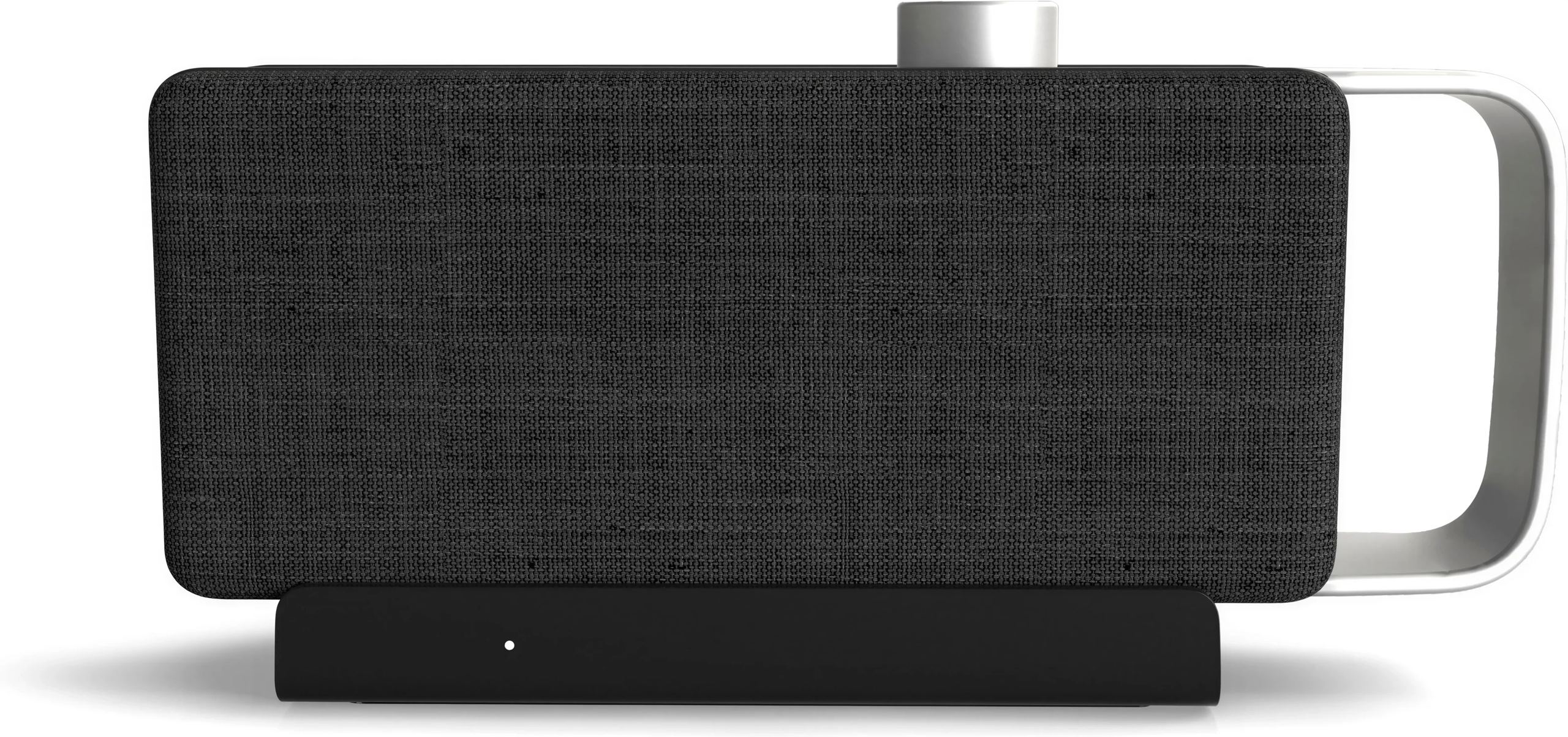

Overview
Turning up the volume to catch a line, then hastily turning it down when an explosion hits: when hearing declines, a TV evening becomes an effort, and rarely for the person concerned alone. The idea behind this small speaker can be summed up in one sentence. Bring the TV sound right next to the listener, in their usual seat, and separate voices from the rest of the soundtrack. Comfort returns without headphones on the head or volume that carries through the walls.
Bringing voices out from the rest of the sound
A film soundtrack mixes dialogue, music and effects. Turning up the volume amplifies them all at once, so the din grows just as much as the voices. OSKAR approaches the problem from the other end. An algorithm developed by Sonoro with the support of research institutes analyses the TV sound, identifies the frequency bands where voices are found and boosts them, while reducing the background noise that masks them. Three filtering levels are offered: everyone can choose the intensity that suits them, with a simple adjustment. Processing continuously adapts, including when the source level changes suddenly, for example when an advert comes on, so clarity remains stable.
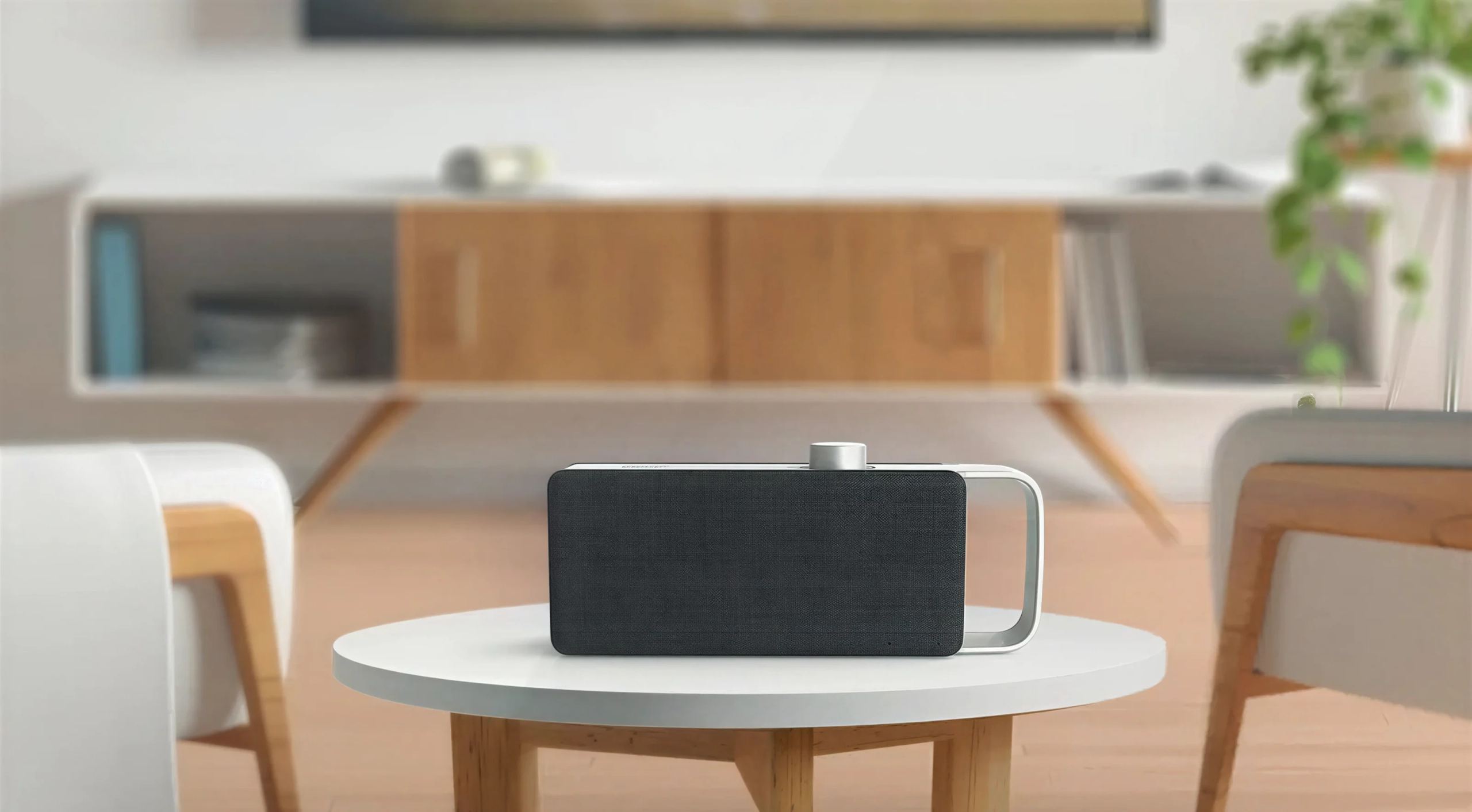
An aluminium enclosure to keep close at hand
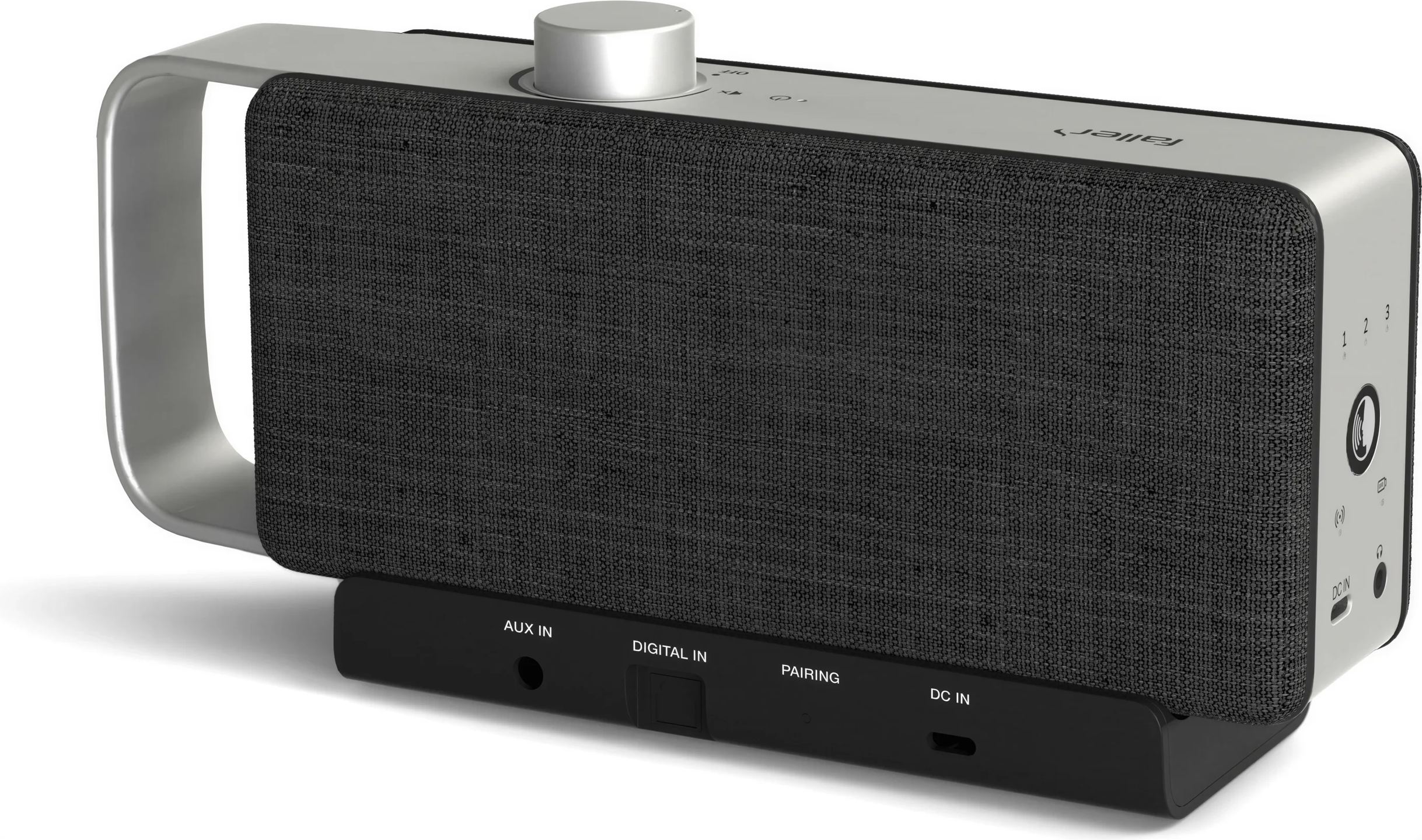
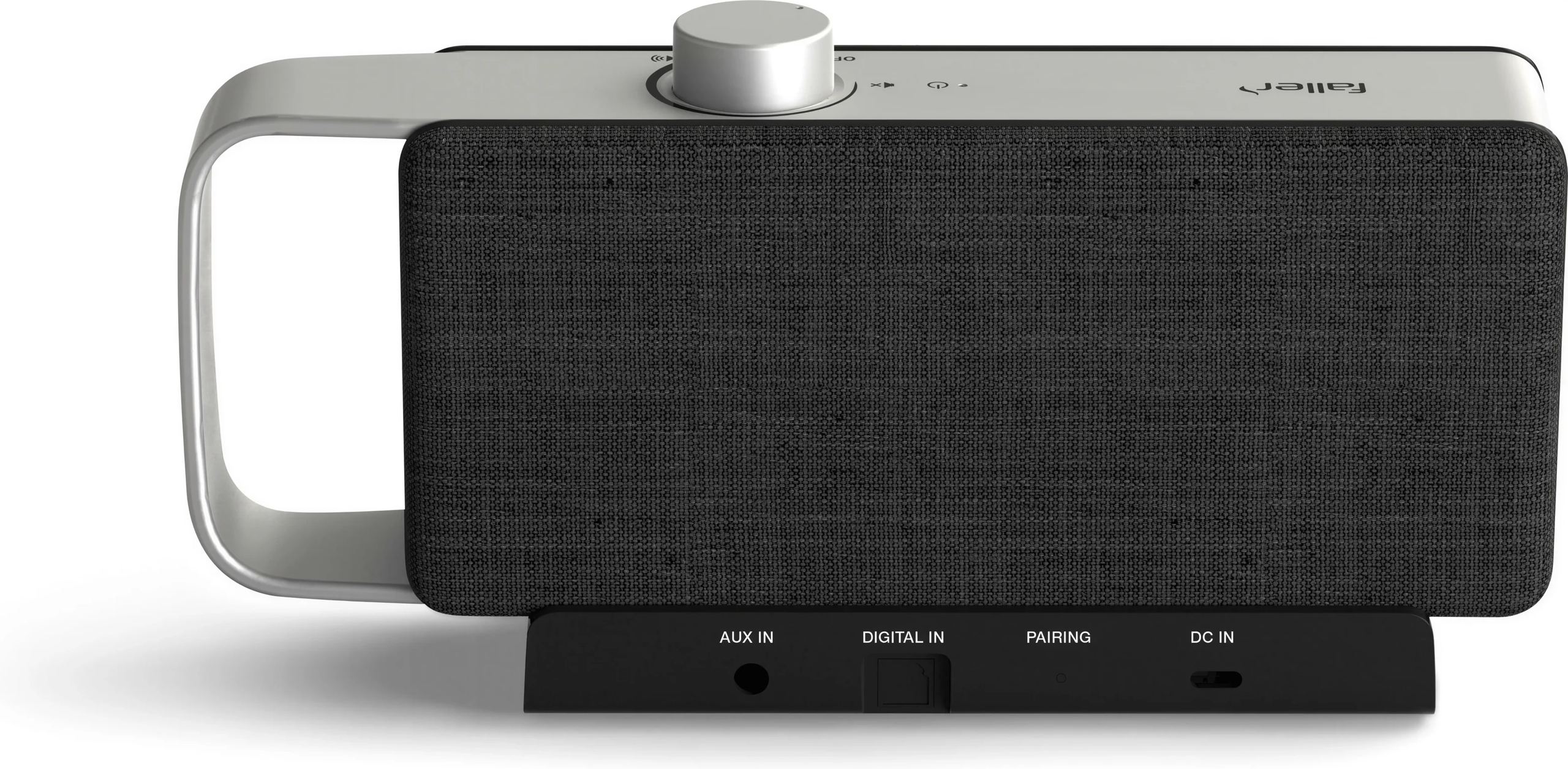
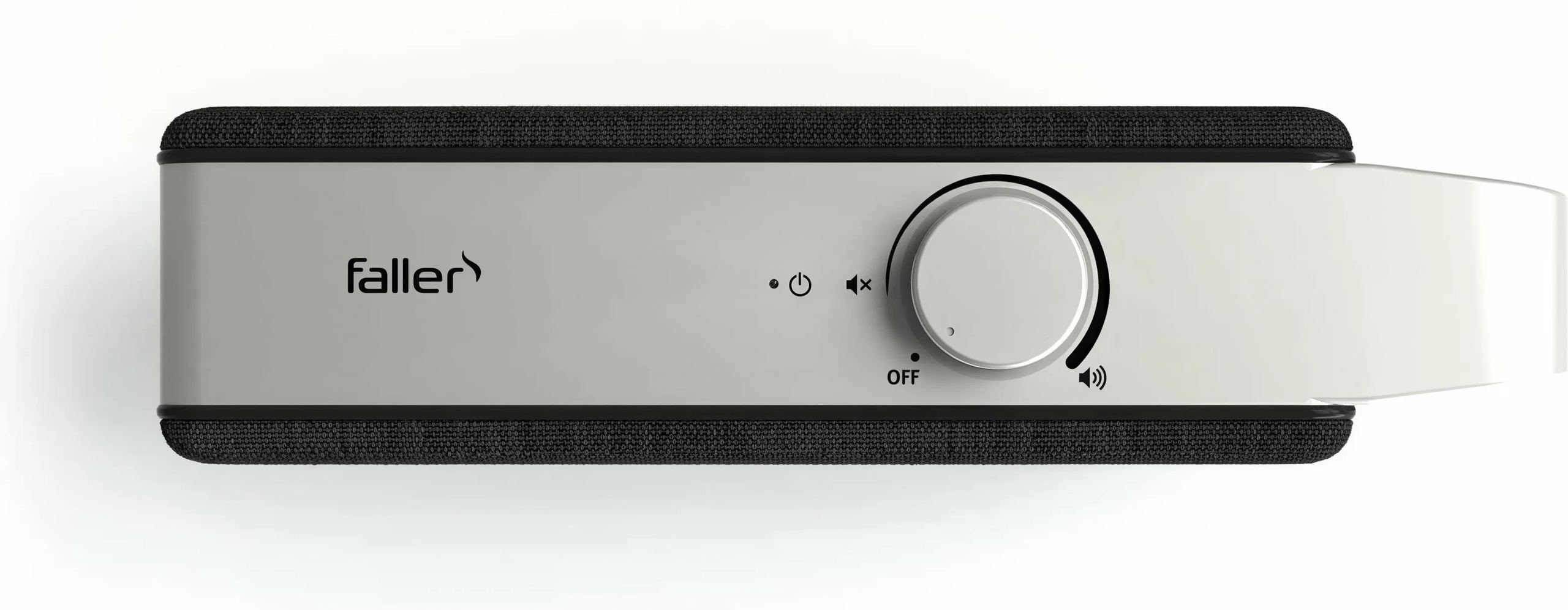
The speaker features an aluminium body covered in fine stain-resistant fabric, with a rubber strip around the edge for stability and a handle for moving it from one room to another. OSKAR measures approximately 24 cm wide, 10 cm high and 6 cm deep, weighing around 770 grams: the size of a large book that can be placed on an armchair armrest or bedside table. Inside, two 35 mm full-range speakers cover most of the spectrum, while a passive radiator—a driverless diaphragm moved by the internal air—adds body to the low midrange to prevent the sound from being too thin. Power is limited to 2 watts per channel: that may seem low on paper, but it plays at a short distance from the ears, where a few watts are more than enough. Controls focus on the essentials, with no menus or unnecessary functions, so it remains usable by everyone.
Wireless TV sound transmission
The base station connects the system to the TV via an optical cable (Toslink) for a digital signal, or via a 3.5 mm jack cable on TVs without an optical output. It then transmits the sound wirelessly to the speaker on the 2.4 GHz band, using the LC3 codec in low-latency mode. This last point matters for television: low latency keeps the sound in sync with the image, without any distracting mismatch between lips and speech. Range reaches around thirty metres, enough to move away into the kitchen or a neighbouring room without losing track. The station also serves as a charging dock: OSKAR sits on it between viewing sessions.
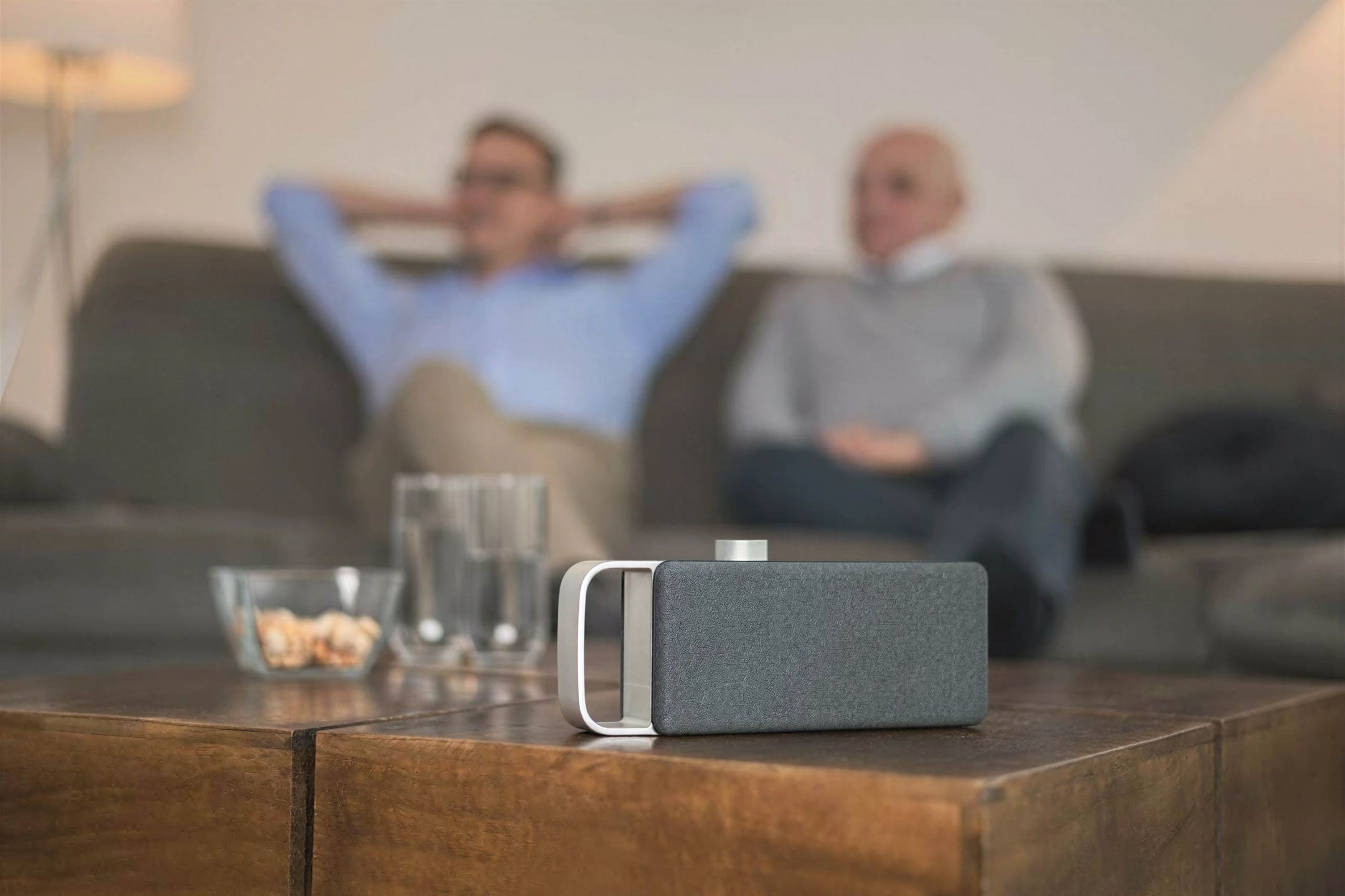
Listening with headphones without isolating yourself
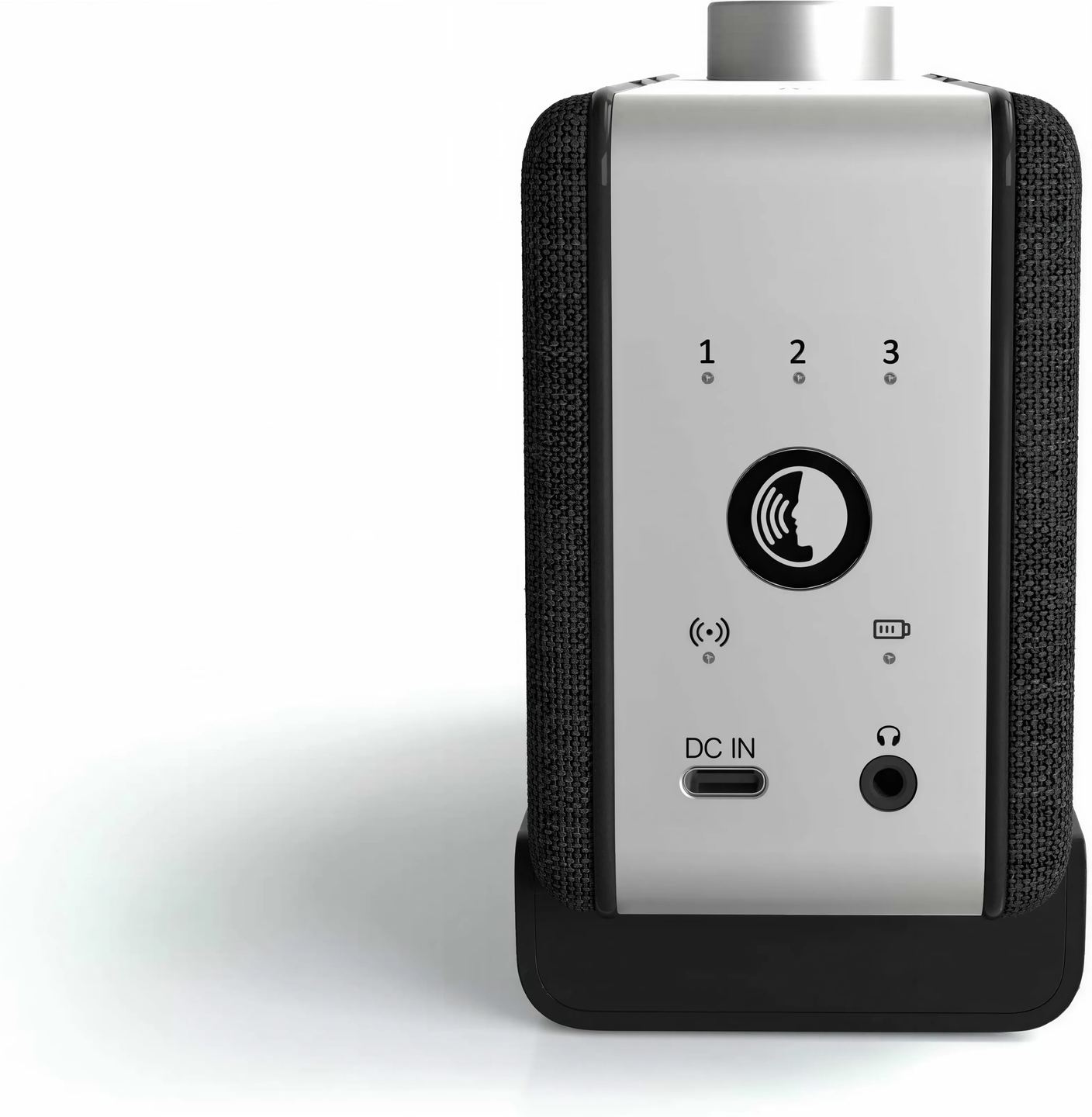
As the sound comes from a speaker placed beside you, it does not enclose the head in headphones or exert any pressure on the ears, a welcome difference for anyone wearing a hearing aid. A 3.5 mm jack headphone socket is nevertheless included on OSKAR: connecting headphones or earphones switches listening to private mode, with the same emphasis on voices, useful late at night or when the household is asleep.
Everyday battery life and charging
OSKAR runs on a battery, a 3,350 mAh 18650 lithium-ion cell that lasts around 16 hours, more than enough to cover several evenings between charges. Allow approximately 4 hours for a full charge, either by placing the speaker back on its station or via its USB-C port, convenient for recharging it with a phone charger. A USB power adapter is supplied (100 to 240 volt input, 5 volt output).
Documentation
French
Technical specifications
General description
- Type: portable TV voice amplifier
- Construction: aluminum housing with carrying handle
- Control: single button
Audio
- Speakers: 2 × 35 mm, full-range
- Output power: 2 × 2 W at 1% THD, 1 kHz, 4 Ω
- Passive radiator: 1 × passive radiator for bass enhancement
- Speech optimization: 3 levels
Wireless connectivity
- Technology: low-latency LC3
- Frequency band: 2.402 – 2.480 GHz
- Wireless range: up to approximately 30 m
Wired connectivity
- Audio output: AUX-Out / 3.5 mm headphone jack
- Audio input: AUX-In / 3.5 mm jack
- Digital input: Toslink / optical input
- USB port: USB-C, DC input 5 V / 2 A
Power supply and battery
- Battery: rechargeable lithium-ion, INR 18650, 3350 mAh, 3.63 V
- Battery life: approximately 16 h
- Charging time: approximately 4 h
- Power supply: separate USB power adapter
- Supply voltage: 100 – 240 V AC, 50 / 60 Hz
- Power output: 5 V DC / 2 A
- Power: 10 W
Dimensions and weight
- OSKAR dimensions: 160 × 66 × 25 mm (W × D × H)
- OSKAR weight: 107 g
Frequently Asked Questions
Does OSKAR work with all TVs?
It requires an audio output, either optical (Toslink) or analogue via a 3.5 mm jack. One or the other is found on almost all recent televisions, including smart models. The base station connects to this output; the rest is wireless.
Do I need an Internet connection or an app?
No. Everything is controlled directly on the speaker, with no account, no app and no subscription. Once the station is connected to the TV, OSKAR is ready to use.
Can other people continue watching TV normally?
Yes, in most cases. Connected to the TV’s optical output or line output, the station allows the TV speakers to continue operating: each person adjusts their own volume, one on the OSKAR placed nearby, the others on the TV. However, the TV’s headphone jack often disables the internal speakers.
Can it be used with something other than a television?
Yes. Any source with an optical or 3.5 mm jack output can feed the station, such as a computer or radio. Its compact size and battery also make it easy to take along when travelling, to a second home or a hotel room.
Optical or jack input, which should you choose?
If the TV has an optical output, it carries a clean digital signal and remains the preferred connection. The 3.5 mm jack input takes over on TVs that do not have one. Both cables are included.
Should the station be left plugged in at all times?
Yes, because it serves two purposes: capturing the TV’s sound to transmit it wirelessly, and recharging OSKAR when it is placed on it. The speaker itself can be moved freely on its battery as long as it remains within range.
- Eco-contribution included in the sale price.