

FiiO FX17
Specifications and features


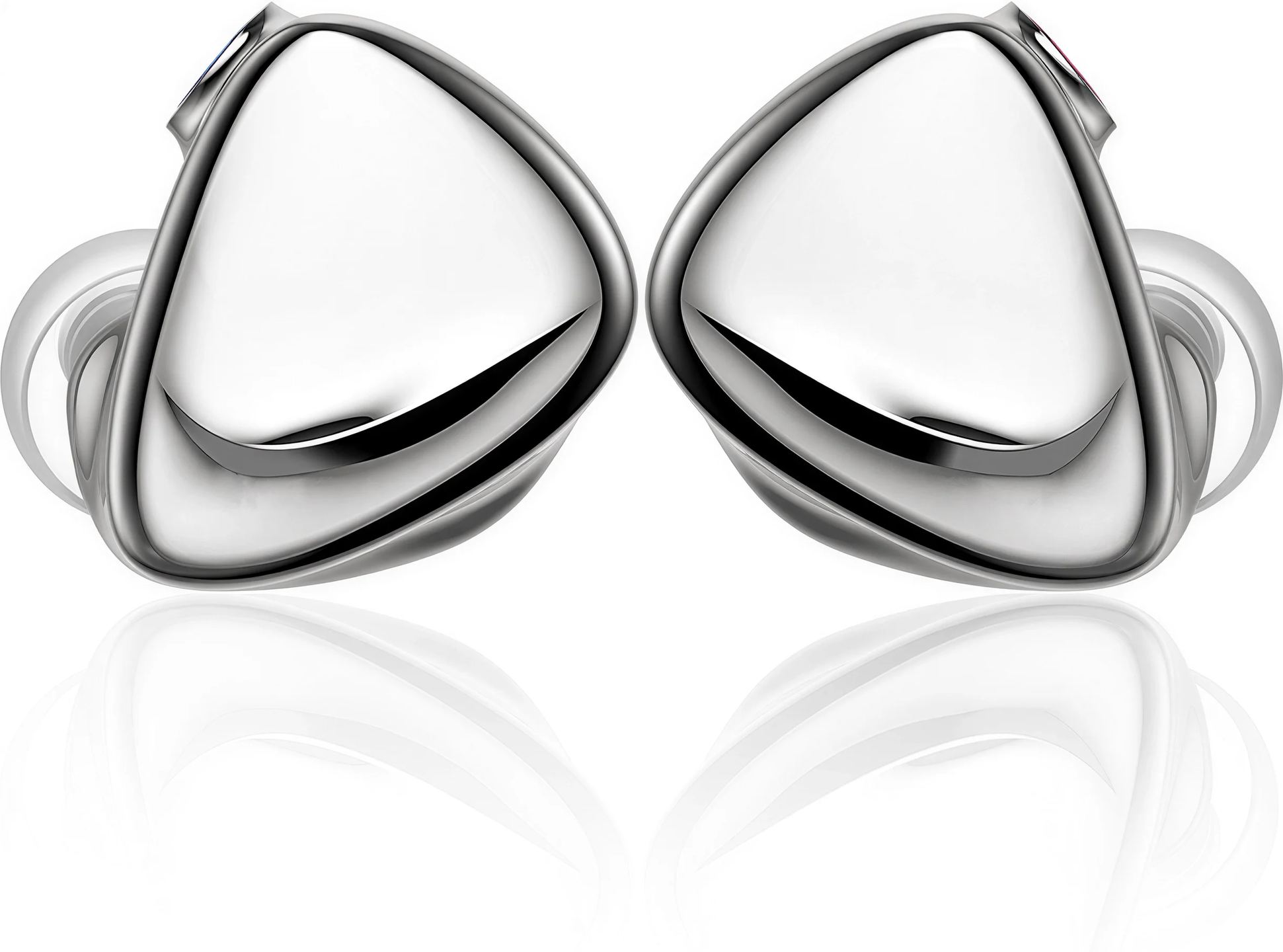
FiiO FX17: thirteen drivers in a titanium shell
Bringing three types of driver together in an earphone that fits inside the ear is almost like watchmaking: a dynamic driver for bass, balanced armatures for the midrange, and electrostatic units for treble, each confined to the range where it performs best. The most advanced of the FiiO in-ear earphones takes this approach to thirteen drivers per side, housed in a titanium shell, with three plugs for switching from a portable player to a smartphone without an adapter.
Thirteen drivers across five ways
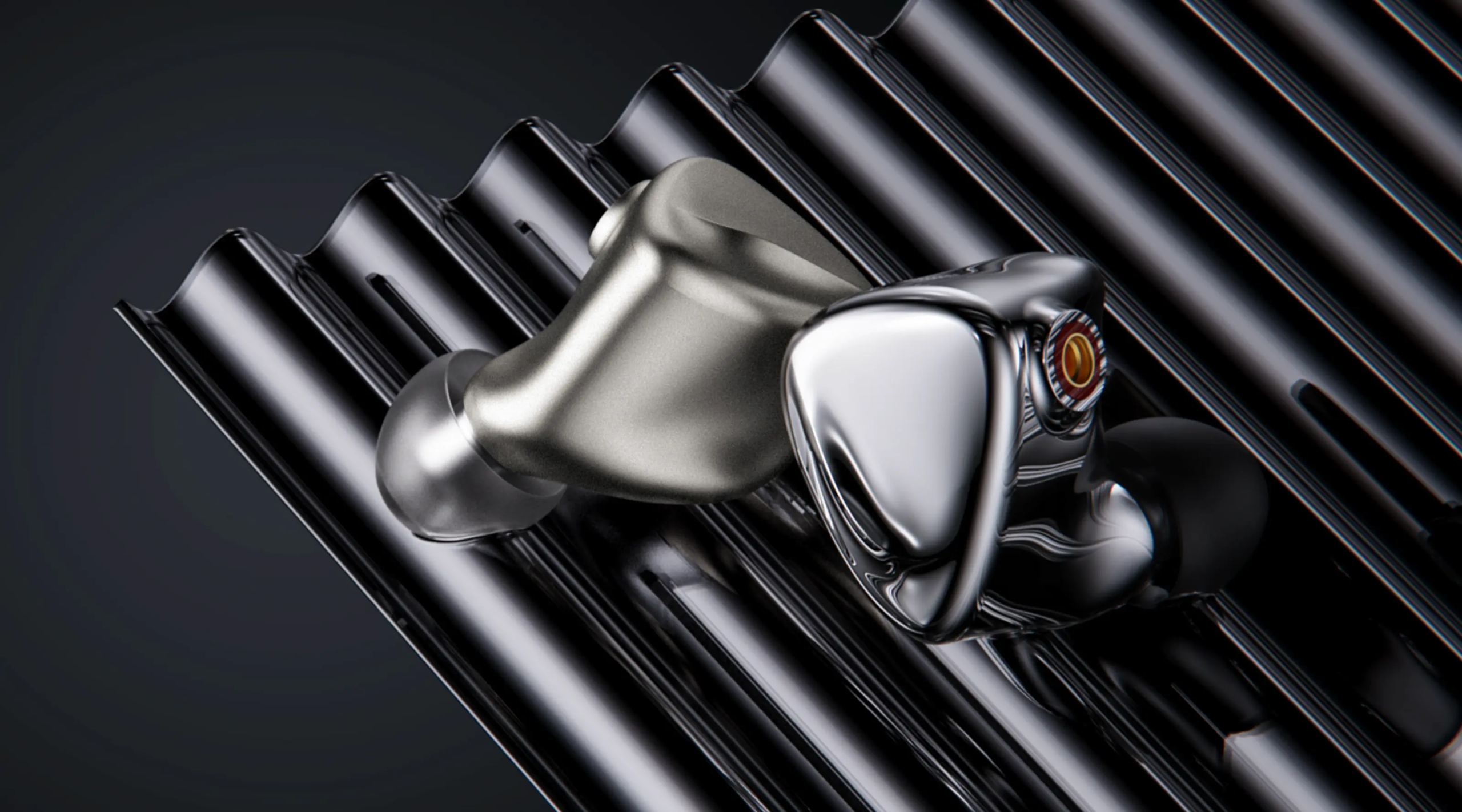
Each earphone combines a 10 mm dynamic driver, four Knowles balanced armatures and eight Sonion electrostatic drivers—twenty-six for the pair. This mix of three technologies is known as a “tribrid” in-ear design. Fitting so many sound sources into a few cubic centimeters presents a crossover challenge: each type has its preferred range, and a poorly managed transition between two of them is audible. The five-way crossover combines electronic components and acoustic elements (tubes, vents and damping) to assign each group its portion of the spectrum and smooth the transition between them.
The crossover has another, less visible but very practical effect: the impedance curve remains flat. In a typical multiway in-ear earphone, impedance varies sharply with frequency, and tonal balance becomes dependent on the source’s output impedance, so a portable player and a small USB converter do not sound the same. A flatter curve reduces that difference, which matters for an earphone likely to be used with different devices.
The midrange is handled by the four Knowles armatures, grouped into two composite units. In each, one armature handles the midrange and the other the upper midrange, up to the point where the electrostatic drivers take over. The midrange armature was developed with Knowles: vents drilled into its rear chamber give it additional air volume, with the aim of producing fuller, richer vocals.
Eight electrostatic units for treble
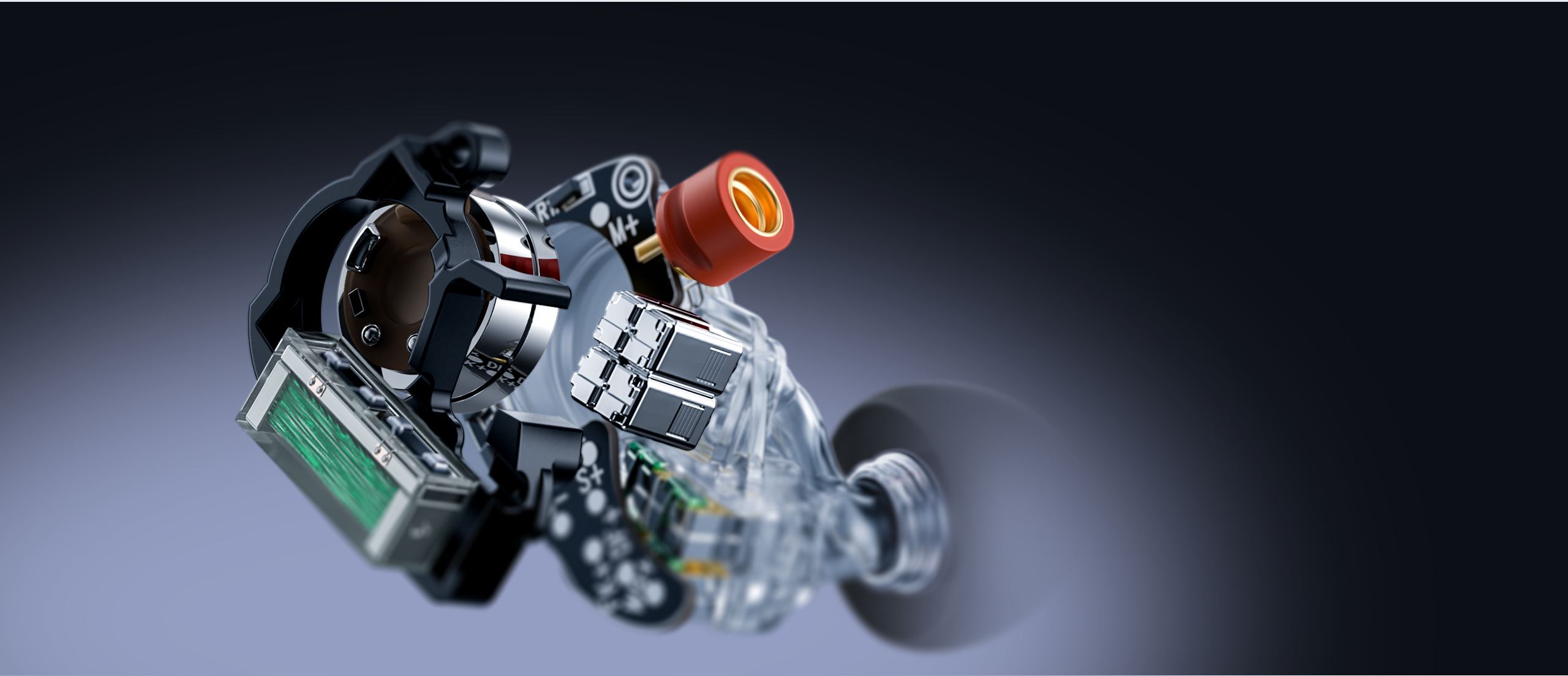
An electrostatic driver has neither a coil nor a magnet. Its very thin, electrically charged diaphragm is stretched between two perforated plates and moves in response to the field they create. Its near-zero mass allows it to follow very rapid changes, and its treble extension reaches 50 kHz. Its weakness is efficiency: around 99 dB/mW, compared with 110 dB/mW for a balanced armature or dynamic driver.
Paired with those two more efficient types, a single electrostatic unit risks being drowned out, because the ear perceives treble less readily in the presence of powerful bass: this is the masking effect. Eight units per side raise the level of this range, which covers everything above 6 kHz, and spread the workload across several units rather than pushing one to its limits.
Dynamic bass channeled through the S.Turbo tube
Bass comes from a 10 mm dynamic driver with a lithium-magnesium alloy diaphragm. This lightweight metal, with a density of 1.6 g/cm³, is both rigid and internally well damped, two properties that limit diaphragm resonances and keep distortion below 0.2%. The sound it produces travels through the S.Turbo tube, an acoustic design patented by FiiO: its turbine shape reinforces bass and filters out the midrange and treble that this driver also produces, preventing it from encroaching on the armatures’ work.
At the rear, the chamber is damped by vents 0.2 mm in diameter that balance air pressure on either side of the diaphragm. Bass gains extension and the midrange gains clarity. The frequency range spans 8 Hz to 40 kHz, and the earphone carries Hi-Res Audio certification.
Titanium shells machined from solid metal
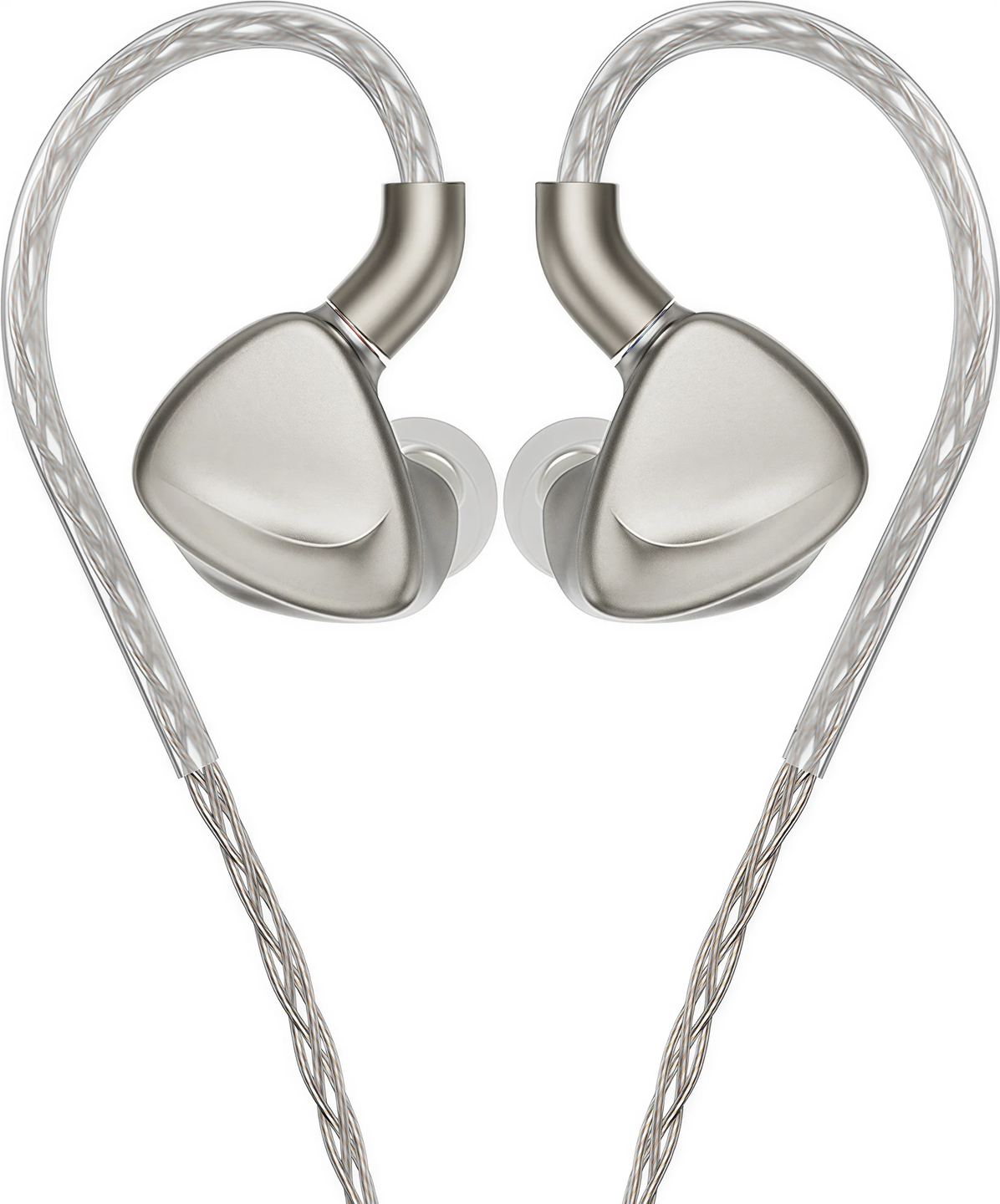
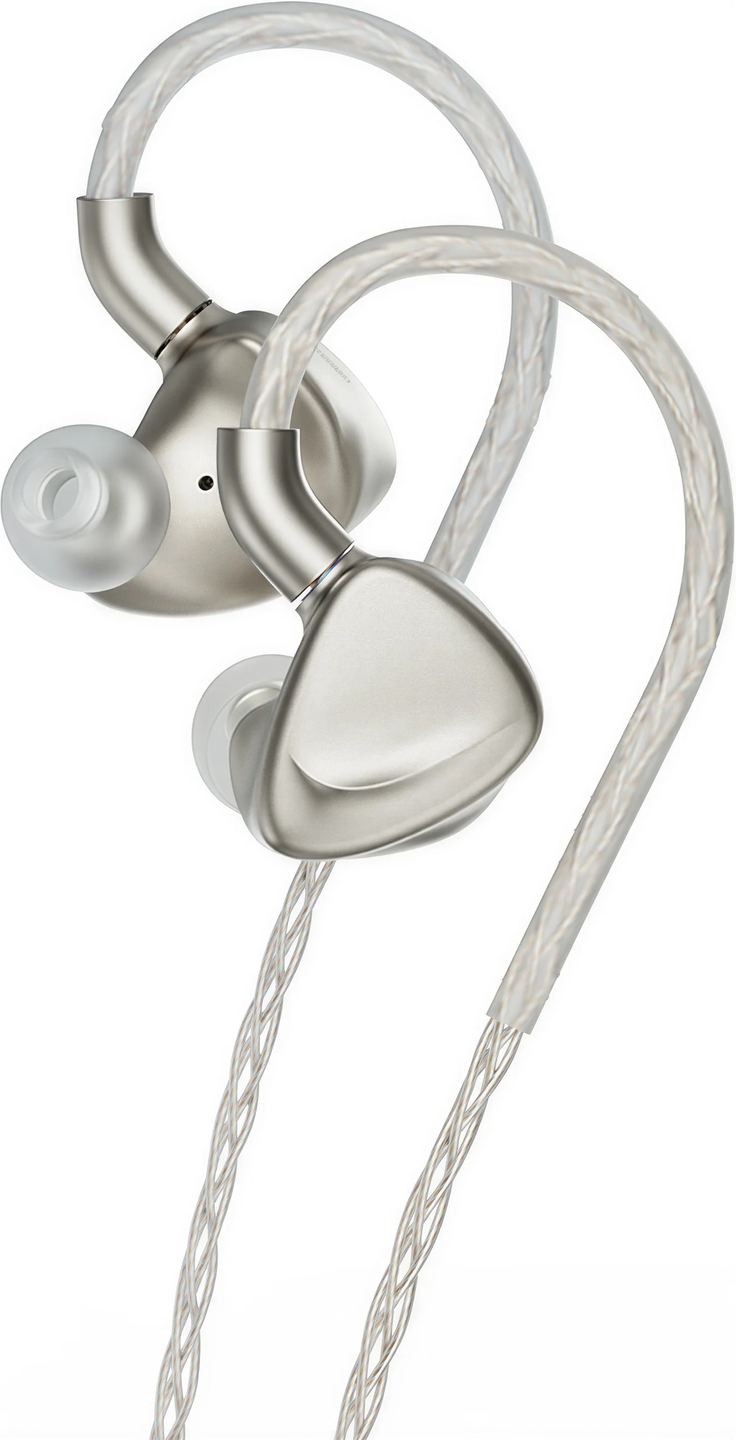
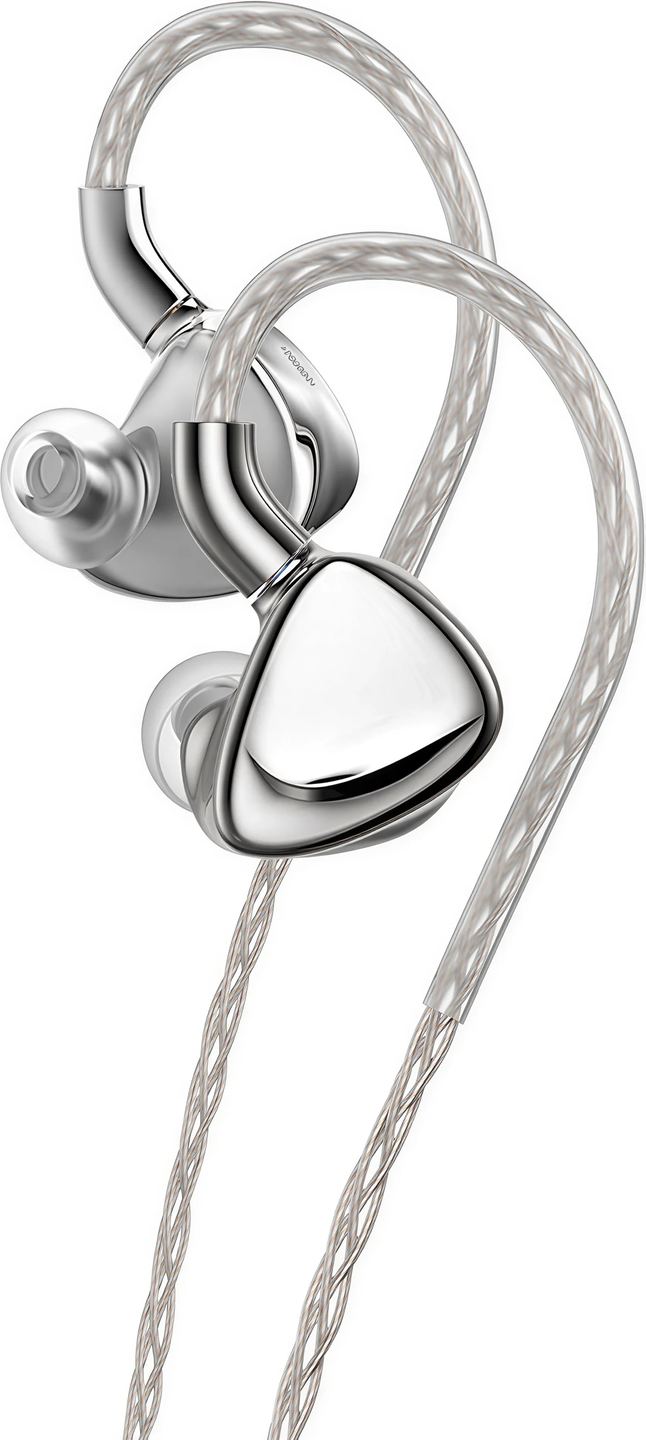
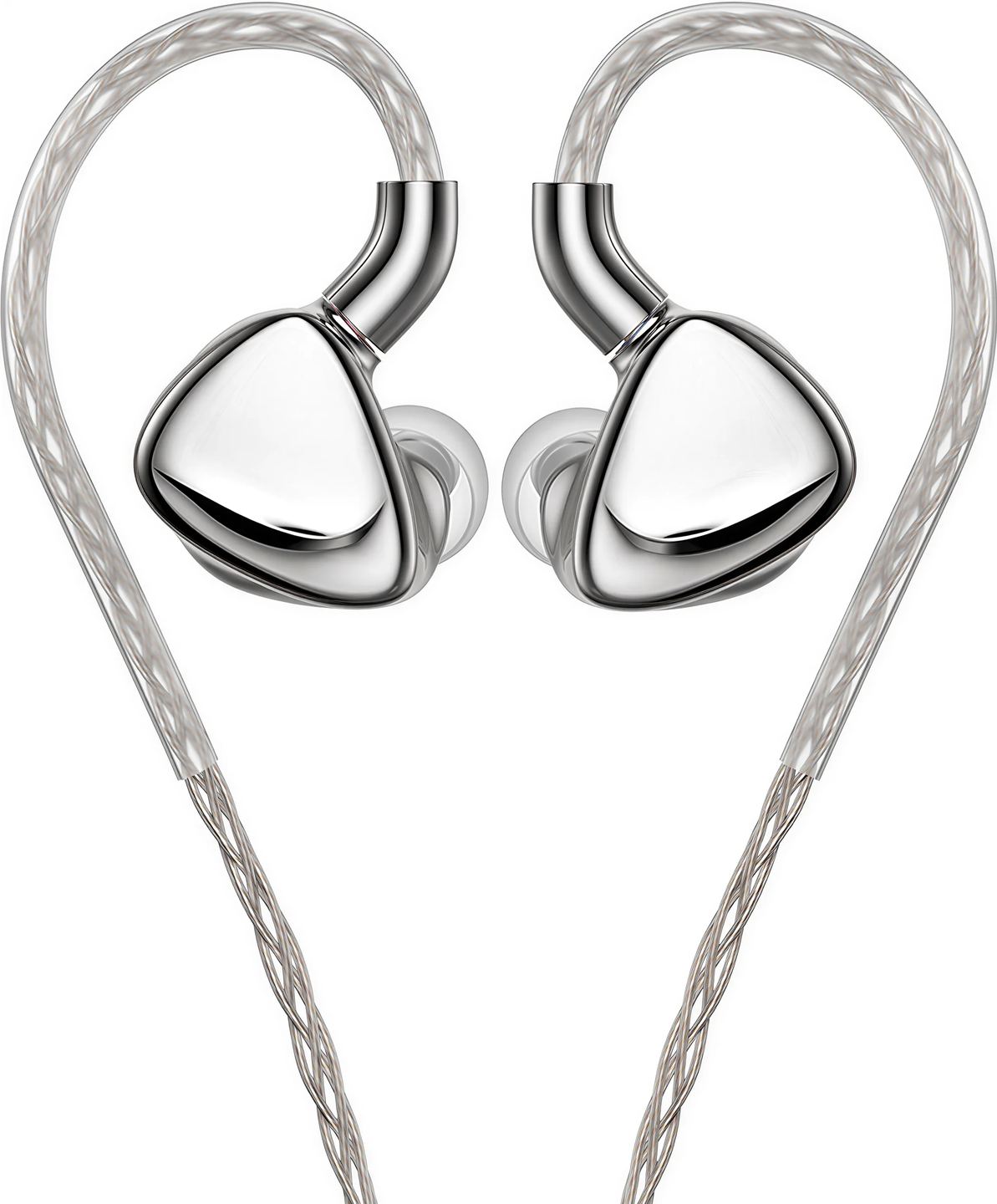
The shells are machined from a block of high-density titanium, polished by hand, then surface-hardened by vapor deposition. Two finishes are available, with identical acoustics: Titanium, sandblasted and matte, which resists fingerprints and scratches, and Silver, mirror-polished. An engraved plate bearing a unique serial number accompanies each unit.
The metal adds weight: around 12.2 g per earphone without the cable, more than most resin in-ear earphones, and the shell must accommodate thirteen drivers. The cable runs behind the ear, stabilizing the earphone and relieving some of the pull from the wire. The 22 included pairs of ear tips, including HS18, liquid-silicone HS20 and SpinFit models, cover many shapes and sizes. The seal directly determines how much bass is perceived, so it is worth trying several pairs before judging the tonal balance.
Three plugs for switching from a portable player to a smartphone
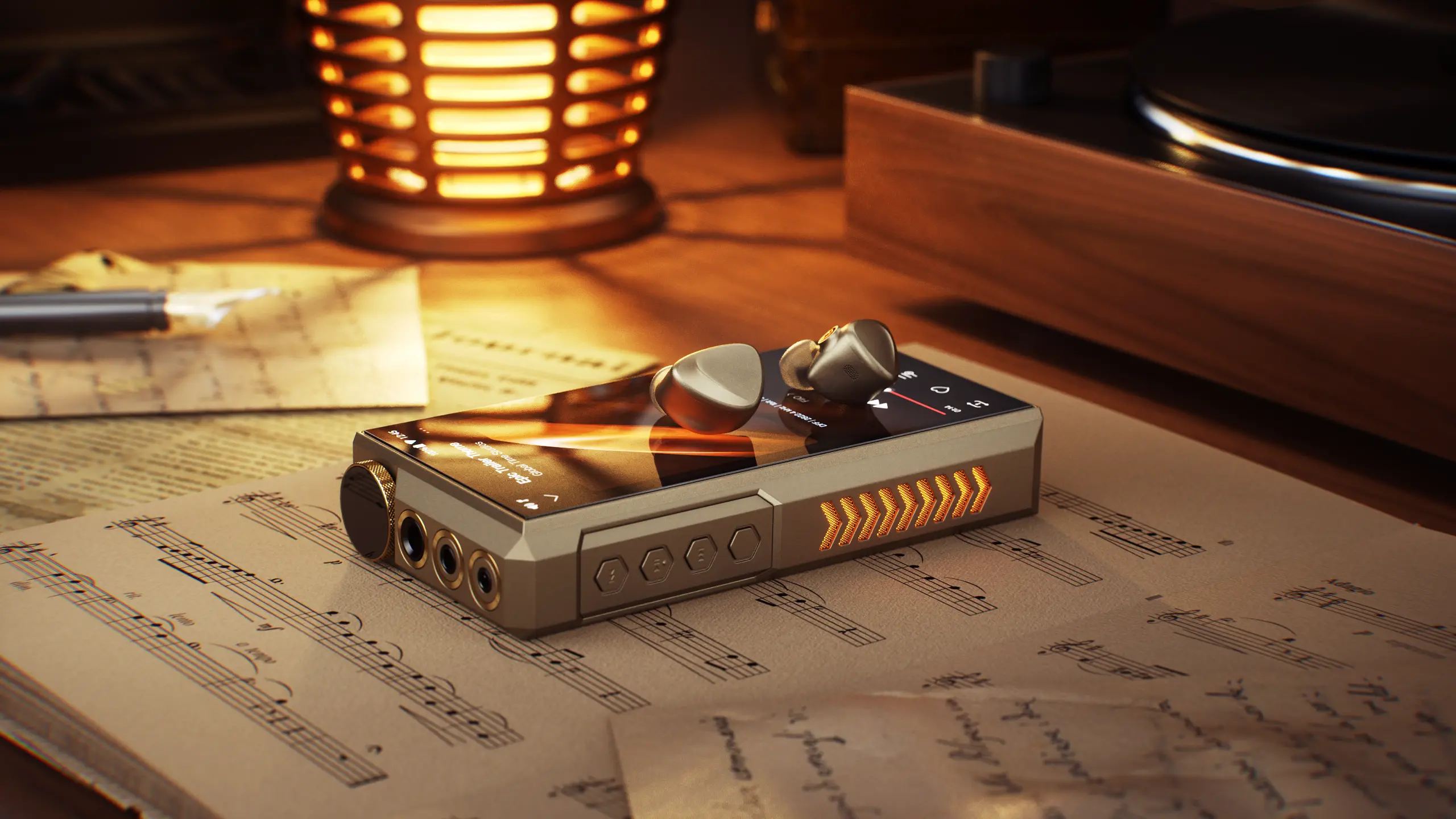
The approximately 1.2 m cable consists of eight strands containing 360 conductors made from gold, silver and copper. These metals are forged at over 1,000 °C, then refined into a single-crystal structure, a process that reduces impurities and the boundaries between crystals that the signal must cross. It attaches to the earphones via enlarged MMCX connectors, while the source-end plug can be changed in seconds using a twist-lock mechanism. Three plugs are included: an unbalanced 3.5 mm mini-jack for most portable players and amplifiers, a balanced 4.4 mm jack for balanced outputs, and a USB-C plug containing its own converter.
The USB-C plug turns the FX17 into a digital earphone for a smartphone, tablet or computer. A digital signal processor (DSP) decoding chip handles PCM up to 32-bit / 384 kHz and drives the earphones through a balanced output. The DSP provides access to an 8-band parametric equalizer: each band adjusts a selected frequency, level and width, allowing a specific range to be corrected or the sound to be brought closer to a target curve. Settings are made through the FiiO Control app, on Android only, or through FiiO’s web interface, and curves can be saved, exported, imported and shared. The plug does not support the USB Audio Class 1.0 standard: Xbox, Switch and PlayStation consoles do not recognize it.
A step above the FX15, FiiO’s first electrostatic model
The FX15, FiiO’s first in-ear earphone to use electrostatic drivers, combined a dynamic driver, a single Knowles armature and four Sonion units in a 3D-printed resin shell, with a switch to turn off the electrostatic drivers. The FX17 doubles the number of electrostatic units, increases the armature count from one to four, replaces resin with titanium and dispenses with the switch, as the electrostatic drivers are integral to the five-way crossover. Impedance drops from 24 to 16 Ω, sensitivity rises from 103 to 104 dB/mW, and the frequency range extends further down (8 Hz versus 20 Hz). The DSP-equipped USB-C plug, absent from the FX15, which was limited to 3.5 and 4.4 mm plugs, completes the package.
Technical specifications
Driver configuration
- Premium FX17 hybrid in-ear monitors: 13 drivers per earpiece, 26 in total.
- Per earpiece:
- 1 dynamic driver with a 10 mm lithium-magnesium alloy diaphragm for bass.
- 4 custom Knowles balanced armatures, arranged in two units for the midrange and upper midrange. The midrange armature, developed with Knowles, has vents in its rear chamber.
- 8 Sonion electrostatic drivers for frequencies above 6 kHz.
- Dynamic diaphragm distortion: less than 0.2%.
Acoustic design
- Five-way electronic and acoustic crossover.
- Flattened impedance curve for easier pairing with sources.
- Patented S.Turbo acoustic design: a turbine-shaped duct that boosts bass and filters midrange and treble from the dynamic driver.
- Rear chamber damped by 0.2 mm diameter vents.
Performance
- Frequency response: 8 Hz to 40 kHz.
- Impedance: 16 Ω at 1 kHz.
- Sensitivity: 104 dB/mW at 1 kHz.
- Hi-Res Audio certification.
Shells and fit
- High-density titanium shells machined from a solid block, hand-polished and hardened by vapor deposition.
- Finishes: Titanium, matte sandblasted and resistant to fingerprints and scratches, Silver, mirror-polished.
- Over-ear cable fit.
- Weight without cable: approximately 12.2 g per earpiece.
Cable and connectors
- Approximately 1.2 m cable, comprising 8 strands with a total of 360 gold, silver and copper conductors.
- Metals forged at over 1000 °C, then refined into a single-crystal structure.
- Earpiece connectors: expanded MMCX (Expanded MMCX).
- Interchangeable straight plugs with a twist-lock mechanism.
USB-C plug
- Integrated digital signal processor (DSP) decoding chip and balanced output.
- Supports PCM up to 32-bit / 384 kHz.
- 8-band parametric equalizer accessible through the FiiO Control app, on Android only, or the FiiO web interface.
- EQ curves can be saved, exported, imported and shared.
- USB Audio Class 1.0 not supported: the plug is not recognized by Xbox, Switch and PlayStation consoles.
Included accessories
- 22 pairs of ear tips in different sizes and designs, including HS18, HS20 in liquid silicone and SpinFit.
- 3 interchangeable plugs: 3.5 mm unbalanced mini-jack, 4.4 mm balanced jack, USB-C.
- Nameplate engraved with a unique serial number.
Frequently Asked Questions
Do electrostatic transducers require a dedicated amplifier?
No. Full-size electrostatic headphones require a dedicated high-voltage amplifier, but the miniature drivers in an in-ear monitor work with a standard headphone output: the required voltage is generated inside the earphone. At 16 Ω and 104 dB/mW, the FX17 can be driven easily by a smartphone, a small USB DAC, or a portable music player. The downside of this sensitivity: a source with a high noise floor may produce a faint hiss between tracks. A quieter output or setting the gain to its lowest level solves the problem.
What is the benefit of a 4.4 mm balanced plug?
With a balanced connection, each channel has its own return path instead of sharing a common ground with the other channel, improving left-right separation. Many portable players and amplifiers give more attention to their balanced circuitry than to their 3.5 mm output. The extra power usually associated with balanced connections matters little here, as the FX17 is easy to drive.
Can the FX17 be used with a game console?
Not via the USB-C connector, which Xbox, Switch and PlayStation consoles do not recognize. The 3.5 mm mini-jack plug, however, connects to the headphone jack on the controller or handheld console.
How do I adjust the equalizer from an iPhone?
The FiiO Control app only supports the USB-C connector on Android. With an iPhone, equalizer settings are adjusted through FiiO’s web interface, accessible from a computer via the Support section of the brand’s website.
Does the Titanium or Silver finish affect the sound?
No. Both versions share the same housing, drivers, and crossover. Only the appearance differs: the sandblasted Titanium finish resists fingerprints and conceals minor scratches, while the mirror-polished Silver finish reflects light but shows handling marks more readily.
Does the FX17 reduce outside noise?
It does not have active noise cancellation. Its noise isolation is passive and depends mainly on the ear tips: a well-fitting pair that seals the ear canal blocks out much of the ambient noise, whether on public transport or in the office.
- Eco-contribution included in the sale price.




