

Sivga Lyrebird

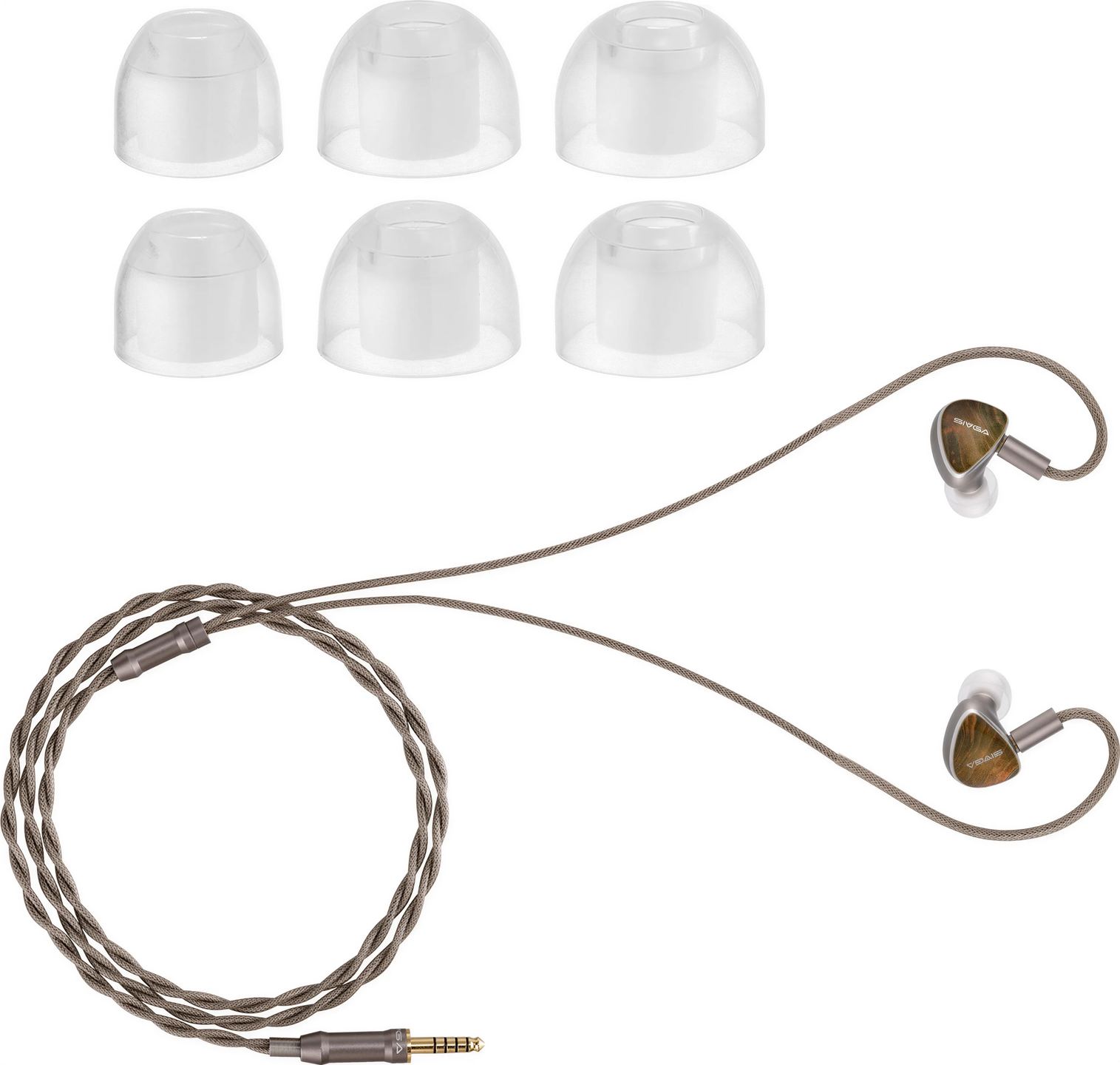
Sivga Lyrebird: hybrid in-ear monitors with four drivers
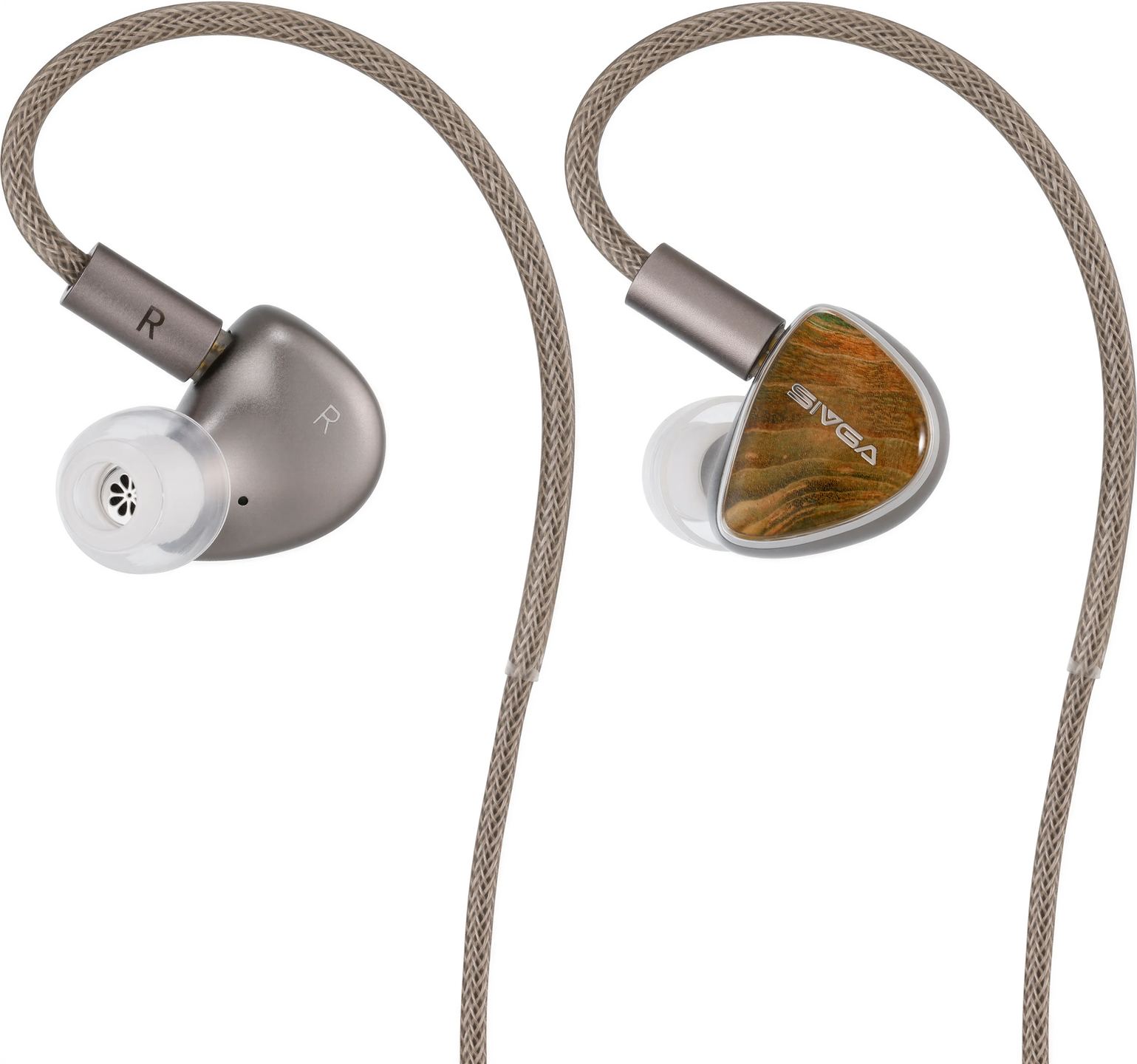
One driver for each part of the spectrum, and four different technologies to make them work together: this is the approach chosen by Sivga, a Dongguan-based manufacturer that has combined wood and metal since its beginnings. Each earphone brings together a dynamic driver for the bass, a balanced armature for vocals and two drivers dedicated to the treble. Everything fits inside a compact aluminum shell with a stabilized wood faceplate, with a detachable cable included.
Four driver technologies, each covering its own range
Bass is handled by a 10 mm dynamic driver with a polymer composite diaphragm. This follows the principle of a conventional speaker, with a diaphragm driven by a coil immersed in a magnetic field, and is the technology best suited to moving the air required by low frequencies. The midrange and vocals are handled by a balanced armature, a miniature motor in which a thin metal reed vibrates between two magnets, delivering precision within a space of just a few millimeters.
Treble is shared between two drivers. The first is a micro-planar driver: its very thin diaphragm is driven across its entire surface rather than at a central point, giving it a fast, even response. The second is a 9.2 mm multilayer ceramic piezoelectric driver, a material that deforms when an electrical voltage is applied and handles the upper treble, the region that reproduces the air around instruments and the decay of cymbal notes. The micro-planar driver opens up the treble, while the piezoelectric driver refines its upper range.
Combining four technologies with such different behaviors requires careful integration, as each driver has its own speed and sensitivity. The Lyrebird’s frequency allocation aims for coherent reproduction from 20 Hz to 20 kHz, with a wide soundstage and clear separation between vocals and instruments, even in busy passages.
Stabilized wood faceplates on machined aluminum shells
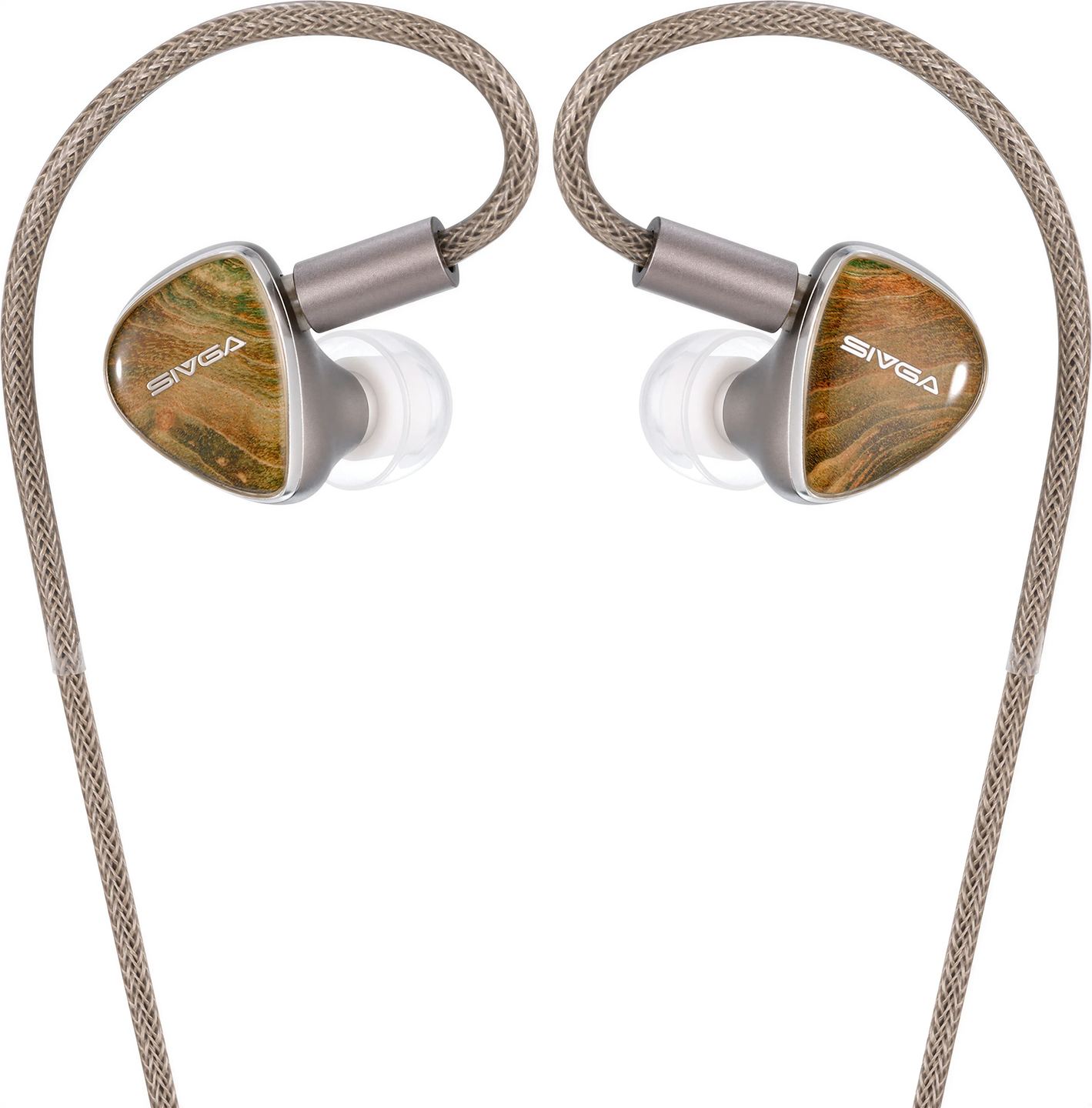
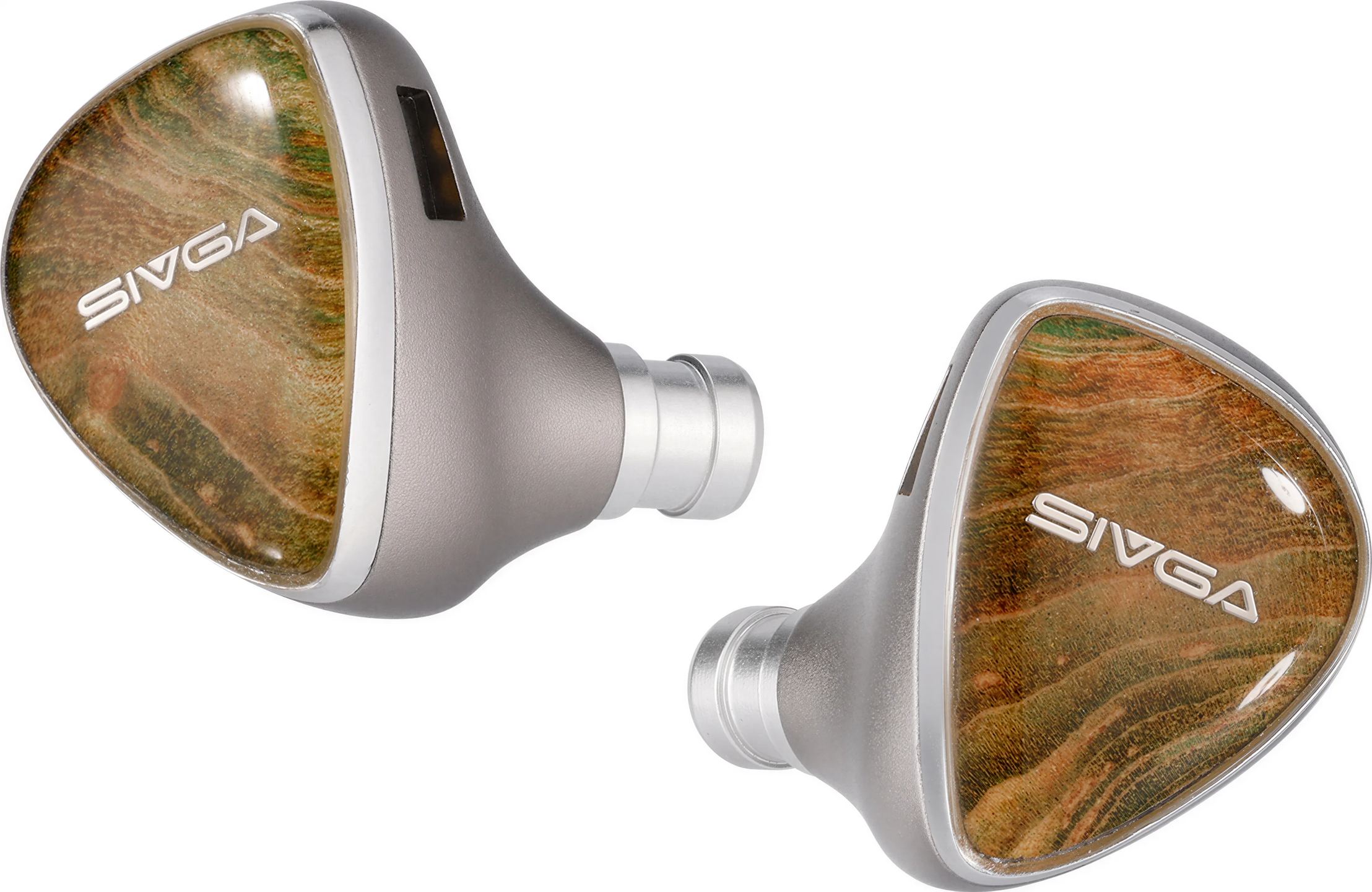
The faceplates are handcrafted from stabilized wood, meaning wood impregnated with resin deep into its fibers. This treatment hardens the wood, protects it from moisture and limits unwanted resonances. As the grain varies from one piece to another, no two pairs look exactly alike.
These faceplates sit on CNC-machined aircraft-grade aluminum alloy shells. The metal keeps the assembly lightweight, and the shell remains compact despite the four drivers housed inside. The earphones are worn with the cable routed behind the ear: this wearing style keeps them stable and reduces cable rubbing noise when moving.
Isolation is passive and depends on the seal between the ear tip and the ear canal. Seven pairs of ear tips are included, four wide-bore and three liquid silicone, providing a choice of sizes and textures to achieve a good seal. An in-ear monitor’s bass depends directly on this seal: an ear tip that is too small lets low frequencies escape. A Crazy Horse leather case, made from oiled leather that develops a patina over time, holds the earphones, cable and ear tips.
A hybrid cable with a balanced 4.4 mm termination
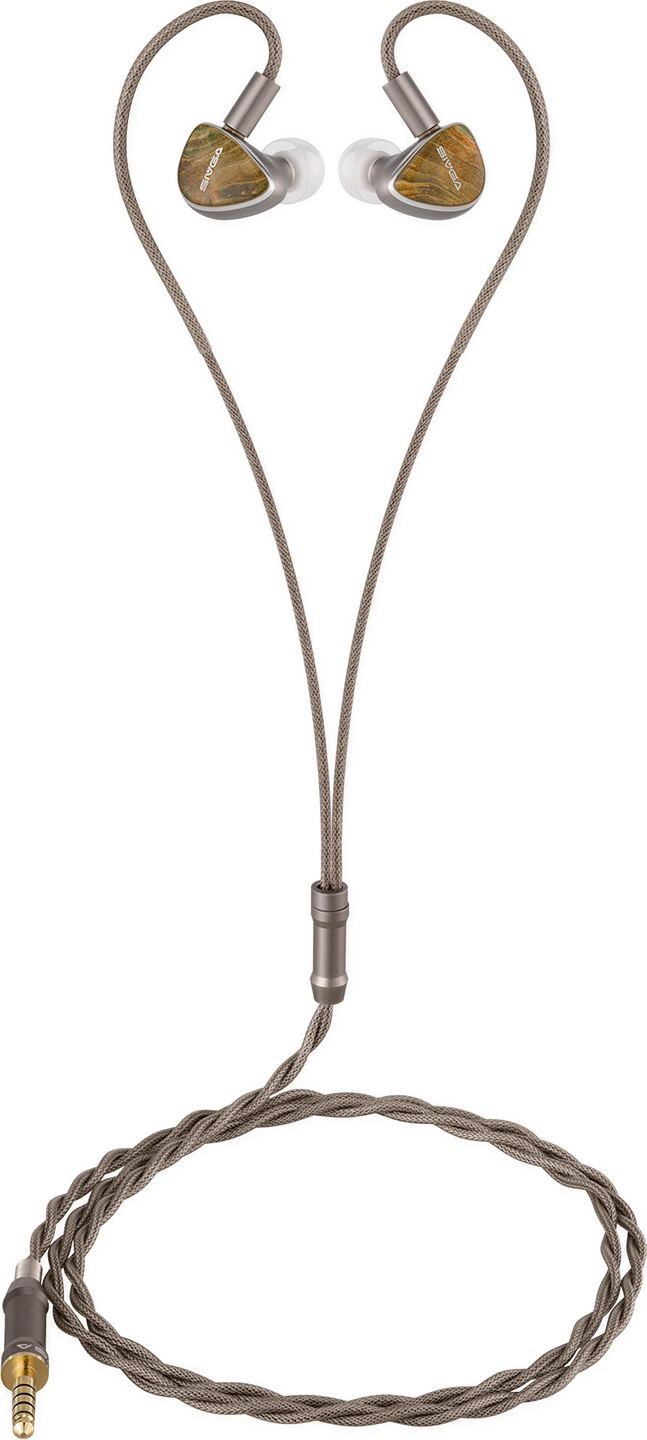
The 1.20 m cable combines three types of conductors: 30 strands of Furukawa oxygen-free copper, 10 strands of silver-plated copper and 10 strands of enameled gold-plated silver-copper alloy. At the earphone end, it connects via 0.78 mm 2-pin plugs, a widely used standard on hi-fi in-ear monitors. The cable is therefore easy to replace if worn, or to change the termination.
At the other end, the balanced 4.4 mm jack plug gives each earphone its own return conductor. The source then drives both channels separately, with more voltage available and better separation between left and right. This socket is found on most recent portable audio players and portable digital-to-analog converters (DACs). However, no 3.5 mm cable is included: a source equipped only with a conventional headphone output requires an adapter or a second cable.
Easy to drive, sensitive to source quality
With an impedance of 14 Ω and a sensitivity of 108 dB at 1 kHz, the Lyrebird quickly reach high volume levels. A small pocket-sized USB-C converter with a 4.4 mm output, connected to a smartphone, is enough to drive them without an additional amplifier. A dedicated portable audio player is equally suitable.
This ease of use has a downside. Such high sensitivity makes hiss from noisier sources audible, noticeable during silences at low volume. In addition, the impedance of a balanced-armature in-ear monitor varies with frequency, making it sensitive to the source’s output impedance. A low-impedance output, as found on most current portable audio players and portable DACs, preserves the tonal balance intended by Sivga.
Technical specifications
Acoustic design
- Type: hybrid wired in-ear earphones, over-ear cable
- Drivers: 4 per side
- Bass: 10 mm dynamic driver with polymer composite diaphragm
- Midrange: balanced armature driver
- Treble: miniature planar driver
- Ultra-high treble: 9.2 mm multilayer ceramic piezoelectric driver
- Magnet: not found
Audio performance
- Impedance: 14 Ω ± 15% at 1 kHz
- Sensitivity: 108 dB ± 3 dB at 1 kHz
- Frequency response: 20 Hz to 20 kHz
- Total harmonic distortion: ≤ 1% at 1 kHz
Connectivity and cable
- Earphone-side connectors: 0.78 mm 2-pin
- Detachable braided hybrid cable, included
- Composition according to retailer listings citing SIVGA: 30 strands of 0.05 mm Furukawa OCC copper, 10 strands of silver-plated copper, 10 strands of gold- and silver-plated enamelled copper
- Length: 120 cm ± 10 cm
- Termination: 4.4 mm balanced plug only
Materials and finish
- Shell: CNC-machined aircraft-grade aluminium
- Faceplate: resin-impregnated stabilised wood
- Colour: stabilised wood, unique finish, appearance varies from pair to pair
Box contents
- Lyrebird earphones
- Ear tips in two styles: 7 pairs
- “Crazy horse” leather case
- Instructions
- Product certificate
Frequently asked questions
Do the Lyrebird work wirelessly?
No, these are wired earphones, with no Bluetooth or active noise cancellation. For wireless listening, you need a portable Bluetooth receiver with a headphone output. The receiver then handles conversion and amplification, and its codec limits the transmitted audio quality.
How do I connect them to a 3.5 mm jack output?
There are two solutions. The simplest is a 4.4 mm female to 3.5 mm male jack adapter. The neatest is a 0.78 mm 2-pin cable terminated with a 3.5 mm plug, which avoids adding a rigid connector at the end of the cable. In both cases, the output operates in unbalanced mode and loses the benefit of a balanced connection.
What is the difference between the two types of ear tips provided?
Wide-bore ear tips let treble pass through more freely and deliver a more open sound. Softer liquid silicone ear tips conform better to the ear canal and improve the seal, providing a stronger bass foundation. The right choice depends on the shape of your ear: it is worth trying several sizes, as the right size may even differ between your left and right ears.
Are they suitable for gaming and video?
Yes. The wired connection introduces no delay between picture and sound, unlike Bluetooth. On a handheld console or computer, you simply need a 4.4 mm output or an adapter, depending on the device.
Do the earphones block out external noise?
Isolation is purely passive: it relies on a good fit from the ear tips. When properly fitted, the Lyrebird reduce conversation and background noise on public transport or in the office, without matching active noise cancellation against low-frequency, continuous noise such as the rumble of an aircraft.
How do I care for wooden front panels and earphones?
Stabilized wood resists moisture well, but a soft, dry cloth is all you need to care for it. It is best to avoid solvents and household cleaners on the faceplates. Once removed, the ear tips can be washed in warm, soapy water, then dried completely before being put back in place. The sound nozzles can be cleaned with a small, dry brush to prevent earwax buildup.
Can I use a cable other than the one supplied?
Yes, any cable with 0.78 mm 2-pin plugs will work, regardless of its termination (3.5 mm, 4.4 mm or 2.5 mm). Make sure the pins are inserted in the correct orientation to maintain polarity, and choose a cable with connectors that match the shape of the earphones’ sockets.
- Eco-contribution included in the sale price.
- Manufacturer reference: SIVGA-LYRE-AMBER
- GTIN / EAN: 6973869471141


