

Sivga Que UTG


Sivga Que UTG: earphones with an ultra-thin glass diaphragm
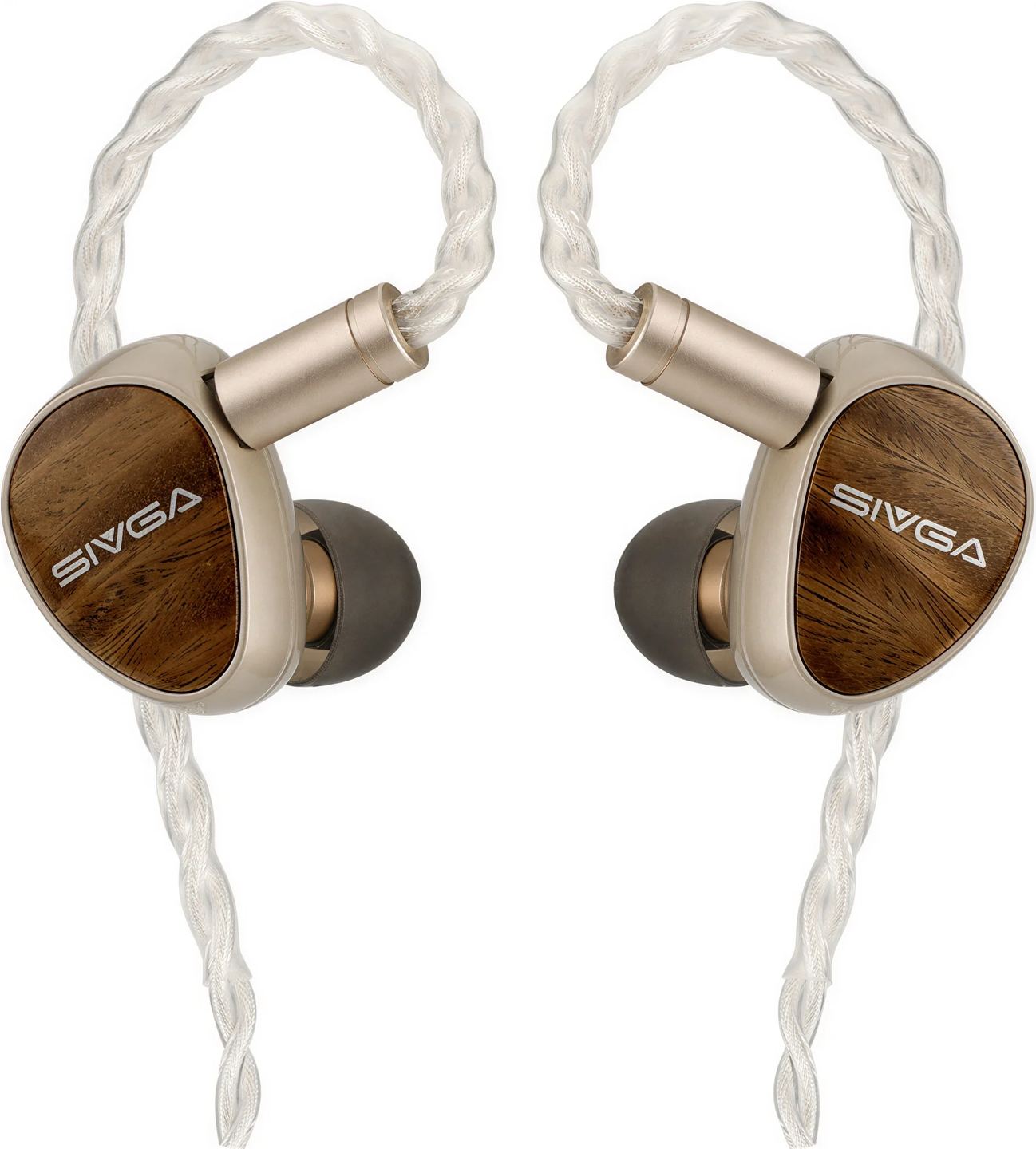
These wired in-ear earphones replace the plastic film in their driver with a sheet of glass just a few microns thick. The Que UTG retains the zinc housing of the original Que and changes the component that produces sound. It is complemented by handcrafted green sandalwood faceplates, a detachable cable and 3.5 or 4.4 mm plugs that can be swapped without tools. It connects to a phone just as easily as to a portable music player.
An ultra-thin glass diaphragm in a dynamic driver
A dynamic driver works like a small loudspeaker. A coil positioned in a magnet’s field moves a diaphragm back and forth, and this movement produces sound. In most earphones, this diaphragm is a plastic film, often PET, sometimes coated with a thin layer of metal. The Que UTG instead uses ultra-thin glass (UTG for Ultra Thin Glass), produced by Japanese glassmaker NEG and reduced to a thickness of just a few microns. The driver diameter is 10 mm.
Glass is much more rigid than PET. As frequency increases, a flexible diaphragm eventually starts to deform rather than moving as a single unit: this is breakup, a source of distortion in the treble. A more rigid diaphragm delays this phenomenon and follows the signal more faithfully. Its thinness keeps it light, helping it start and stop quickly on attacks, such as a plucked string or a snare drum hit. Its flat rather than domed shape makes the entire surface vibrate uniformly.
On its own, glass would produce a dry sound. Sivga surrounds it with a flexible polyurethane (PU) suspension, which provides the excursion needed for bass and damps the midrange to soften vocals. The magnetic circuit relies on a single magnet, paired with a dual-cavity structure. The original Que used a 10 mm beryllium-plated diaphragm. The Que UTG retains its housing but changes the diaphragm material and the associated tuning.
A zinc housing topped with green sandalwood
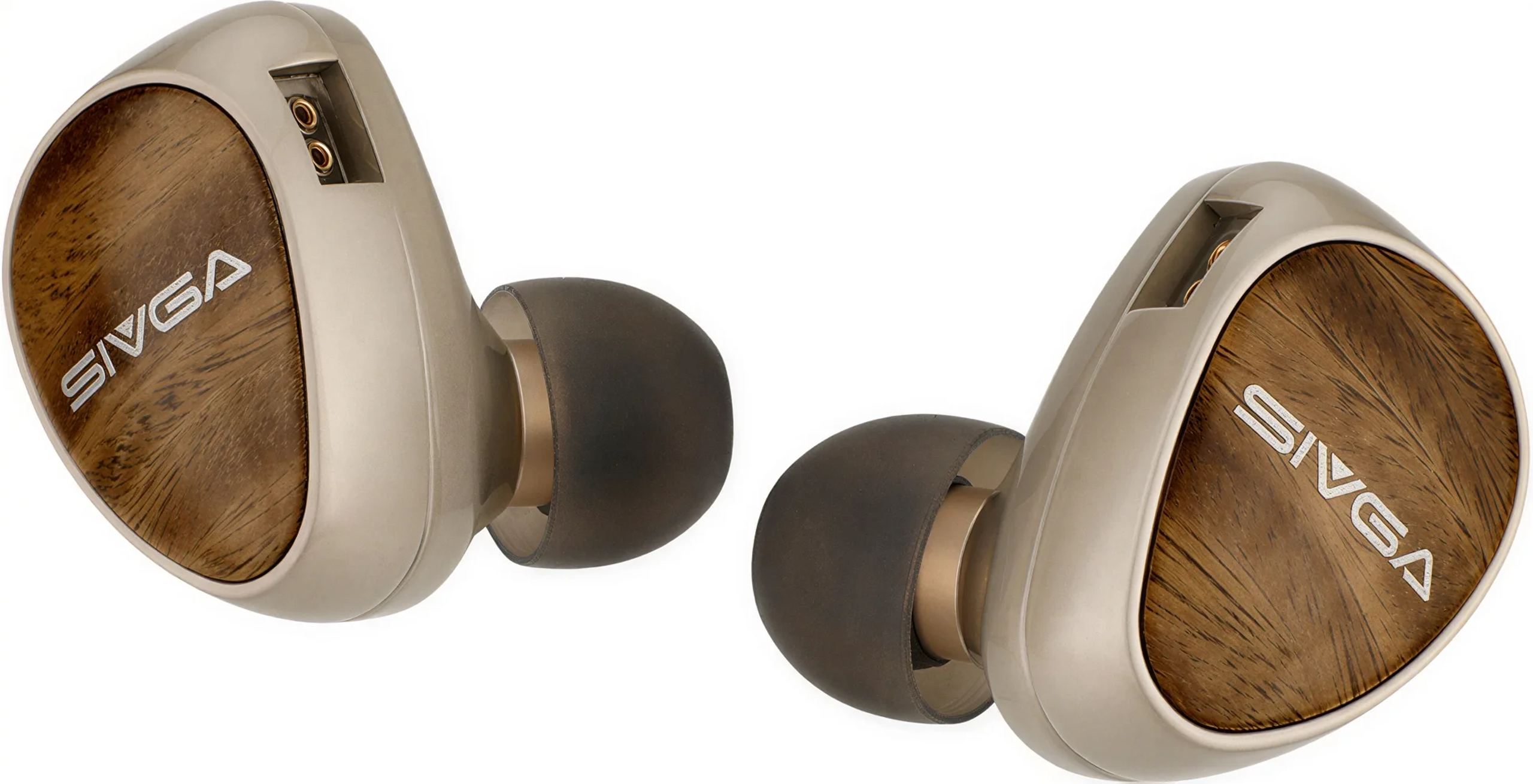
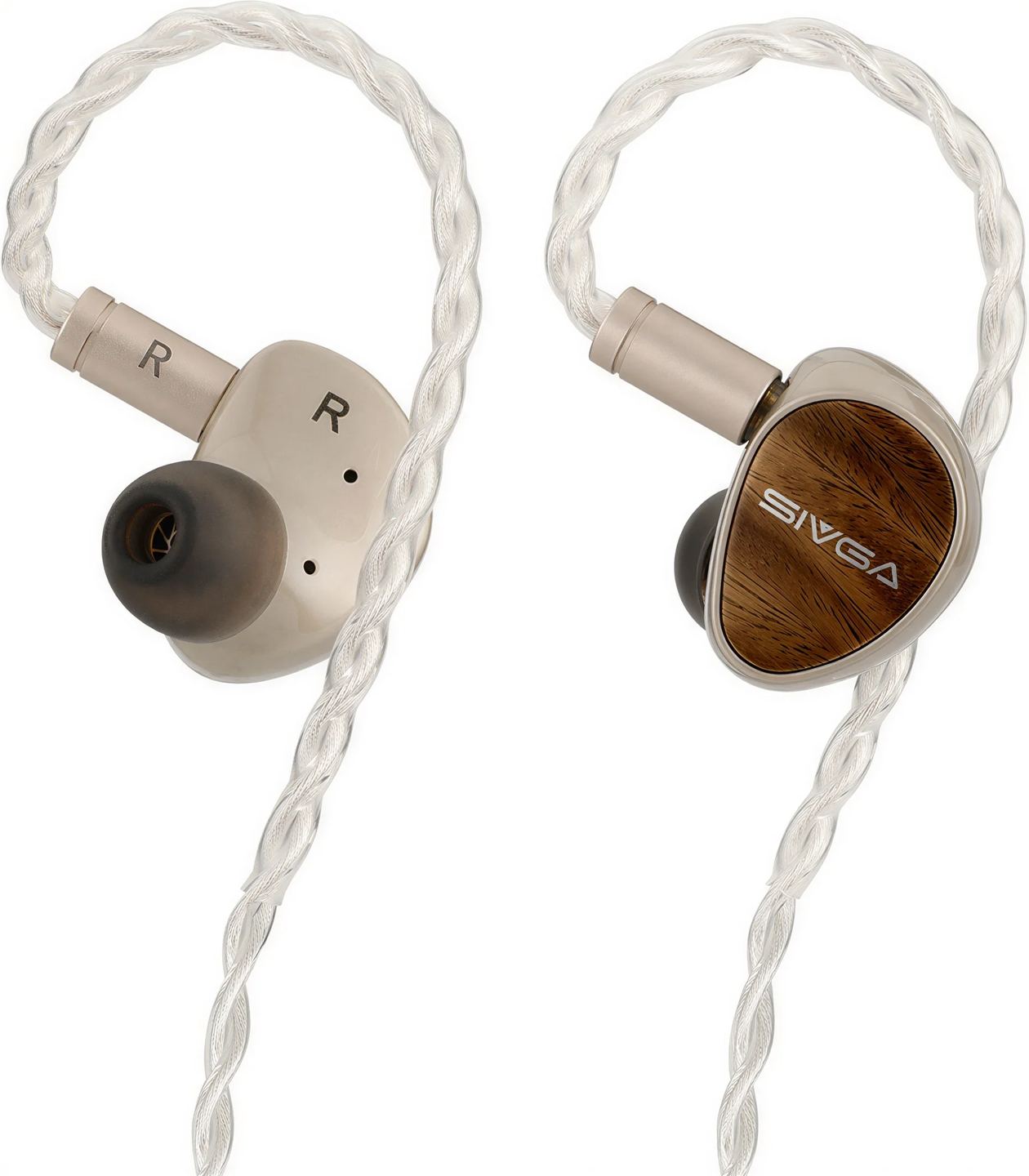
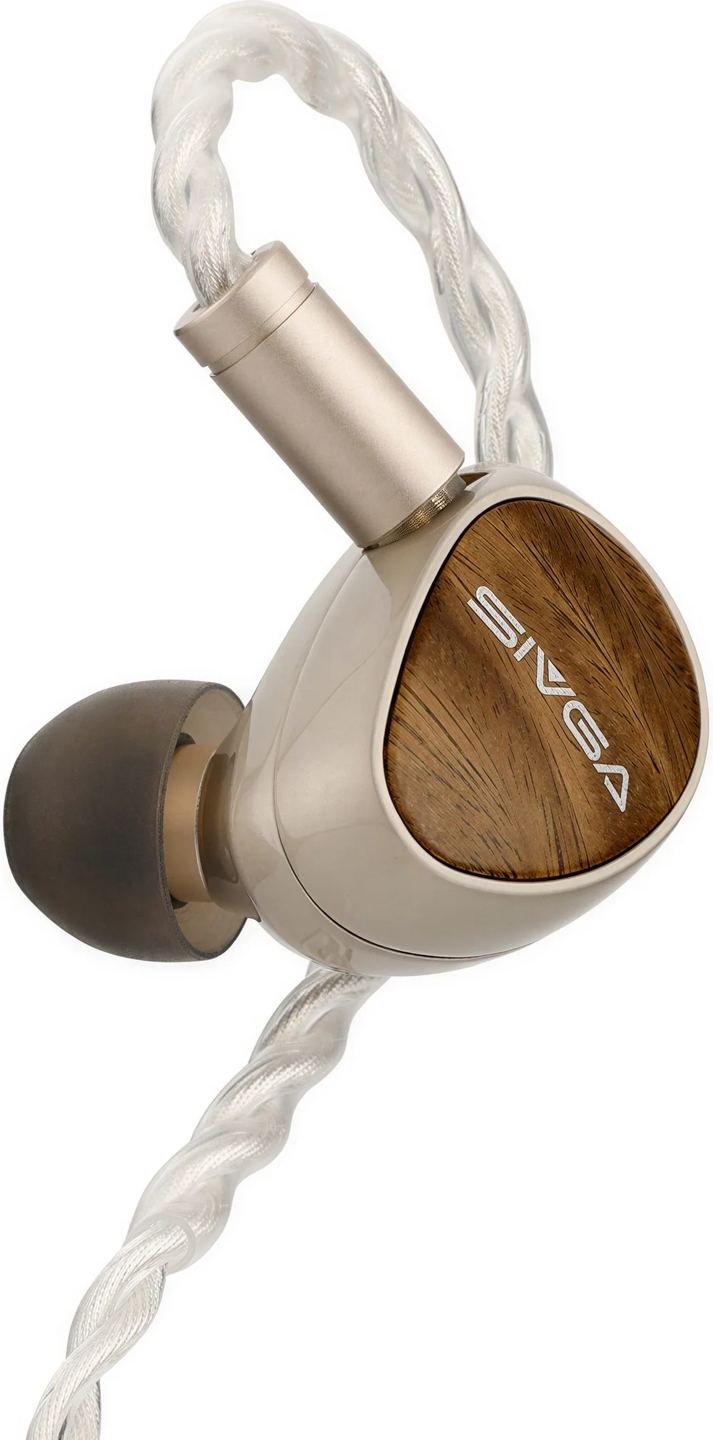
The shell is made from die-cast zinc alloy. Its vents regulate airflow behind the driver, limit housing resonances and prevent a feeling of pressure in the ear canal. This choice of metal results in a 10 g earpiece, heavier than a resin shell but more stable once in place.
The faceplate is carved from South American green sandalwood, a dense, tight-grained wood that damps unwanted vibrations. Before shaping, the wood ages for three months through oxidation, giving it its deep blue-green hue. It is then shaped by hand. The grain therefore differs from one pair to another.
The shell’s shape follows the hollow of the ear, and the cable runs behind the ear. This wearing style reduces the stethoscope effect, meaning the noise of the cable rubbing against a collar or shoulder and travelling up to the ear.
A detachable cable with interchangeable plugs
The cable connects to the earphones via 0.78 mm two-pin connectors, a very common standard on hi-fi in-ear earphones. It can therefore be replaced if worn out or swapped for another model. The supplied cable is approximately 1.2 m long. It is made from silver-plated oxygen-free copper with a Litz construction: each bundle contains 49 insulated, twisted strands, making it flexible and resistant to kinking.
At the source end, the plug detaches using a quick-lock rotating system. The unbalanced 3.5 mm jack plug fits the standard headphone output on a phone, computer or amplifier. The balanced 4.4 mm plug connects to the balanced output on portable music players and portable converters equipped with one. In this mode, each earpiece has its own return circuit, generally providing more available power and better channel separation. Both plugs are supplied along with a leather case and two types of silicone ear tips, each in three sizes.
An easy load for portable sources
With an impedance of 32 Ω and a sensitivity of 103 dB, the Que UTG requires little power to reach a comfortable volume. A phone’s headphone output, a small USB-C converter or a portable music player is more than sufficient. A desktop headphone amplifier is also suitable, preferably set to its lowest gain to maintain a comfortable volume range. This type of earphone reveals differences between sources: a quality converter or high-resolution files are more noticeable than with more forgiving earphones.
Technical specifications
Acoustic design
- Type: wired in-ear earphones, over-ear cable routing
- Drivers: dynamic, 1 per side
- Diameter: 10 mm
- Diaphragm: ultra-thin flat glass (UTG, ultra-thin glass; designated “glass diaphragm” by SIVGA)
- Magnetic circuit: single magnet, dual chamber
- Impedance: 32 Ω
- Sensitivity: 103 dB ± 3 dB
- Frequency response: 20 Hz to 20 kHz
Connectivity
- Earphone-side connectors: 0.78 mm 2-pin, detachable cable
Materials and finish
- Materials: zinc alloy, South American green sandalwood faceplate
- Finish: green sandalwood, dark brown grain, only finish listed by SIVGA
Box contents
- Que UTG earphones
- Supplied cable:
- Composition according to the technical specifications: silver-plated high-purity oxygen-free copper
- Composition according to the SIVGA description: silver-plated OCC copper Litz cable, 49 strands
- Length: 1.25 m
- Interchangeable plugs: 3.5 mm unbalanced jack, 4.4 mm balanced jack
- Leather case
- Ear tips: two types, translucent and black
- Size S: 2 pairs
- Size M: 2 pairs
- Size L: 2 pairs
- Instruction manual
Weight
- Weight per earphone: 10 g
Frequently asked questions
Do you need a headphone amplifier to enjoy it?
No. Its sensitivity and 32 Ω impedance allow it to work with a standard phone output or a small USB-C DAC. A higher-quality DAC or portable music player improves sound reproduction, but it’s not a matter of power.
How do I connect it to a smartphone without a headphone jack?
You need a USB-C adapter (or Lightning for older iPhones) with a built-in converter, often called a dongle. Models with a 4.4 mm output allow you to use the supplied balanced plug.
Can the cable be replaced with a different model?
Yes. Any cable with 0.78 mm two-pin connectors will work, provided you observe the polarity indicated by the markings on the plugs. This allows you to switch to a shorter cable, a different conductor type, or a cable with a microphone for calls.
How do I choose between the supplied ear tips?
The right size seals the ear canal without forcing it. An imperfect seal causes a significant loss of bass and lets in outside noise. The two types of ear tips have different shapes: try both, in the right size, before forming an opinion on the sound.
Does the wood on the front panel look the same on every pair?
No. Each front panel is hand-carved from green sandalwood, and the grain varies from one piece to another. The blue-green hue comes from oxidative aging carried out before shaping. A soft, dry cloth is all that is needed for care.
Do they block out external noise?
Isolation is purely passive: it depends on the ear tip and how well it seals the ear canal. There is no active noise cancellation. On the subway or on a plane, a well-fitting ear tip remains the best way to listen without turning up the volume.
- Eco-contribution included in the sale price.
- Manufacturer reference: SIVGA-QUE-UTG
- GTIN / EAN: 6973869470878


