

Cabasse Alizé 03 black (pack of 2)
Complementary product
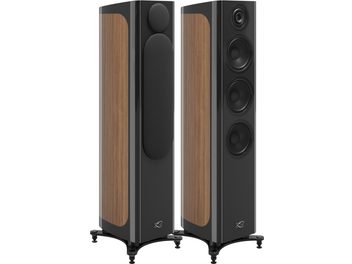
Overview
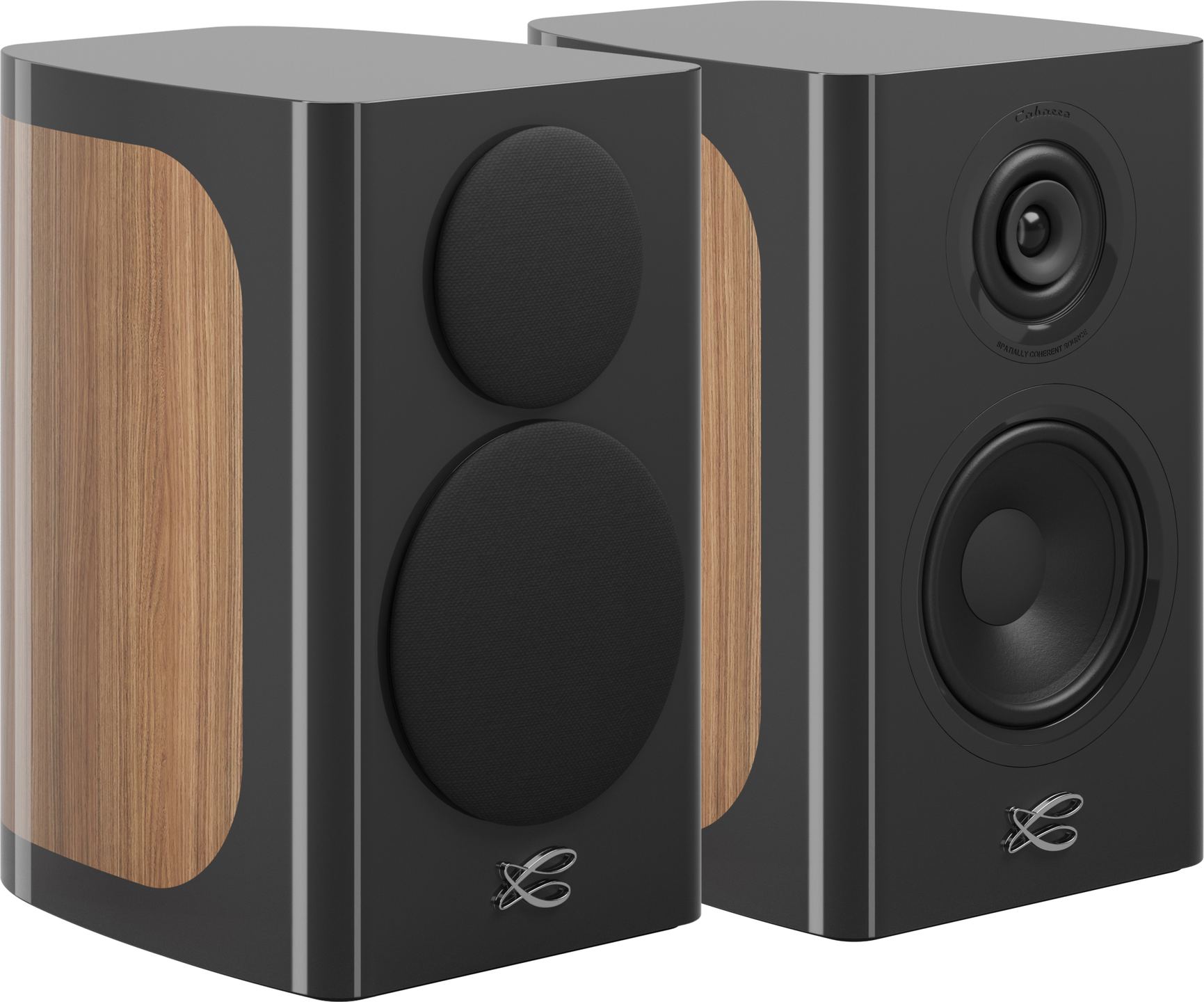
The midrange and treble emerge from the same point on the front baffle. Cabasse has applied this principle for decades, and the Alizé 03 brings it to a three-way bookshelf speaker. A coaxial driver reproduces voices and instruments, while a 16.5 cm woofer handles the bass below 700 Hz. At 40 cm tall and weighing 11 kg, it belongs on a stand or a stable piece of furniture, not on a narrow shelf.
Midrange and treble on a single axis
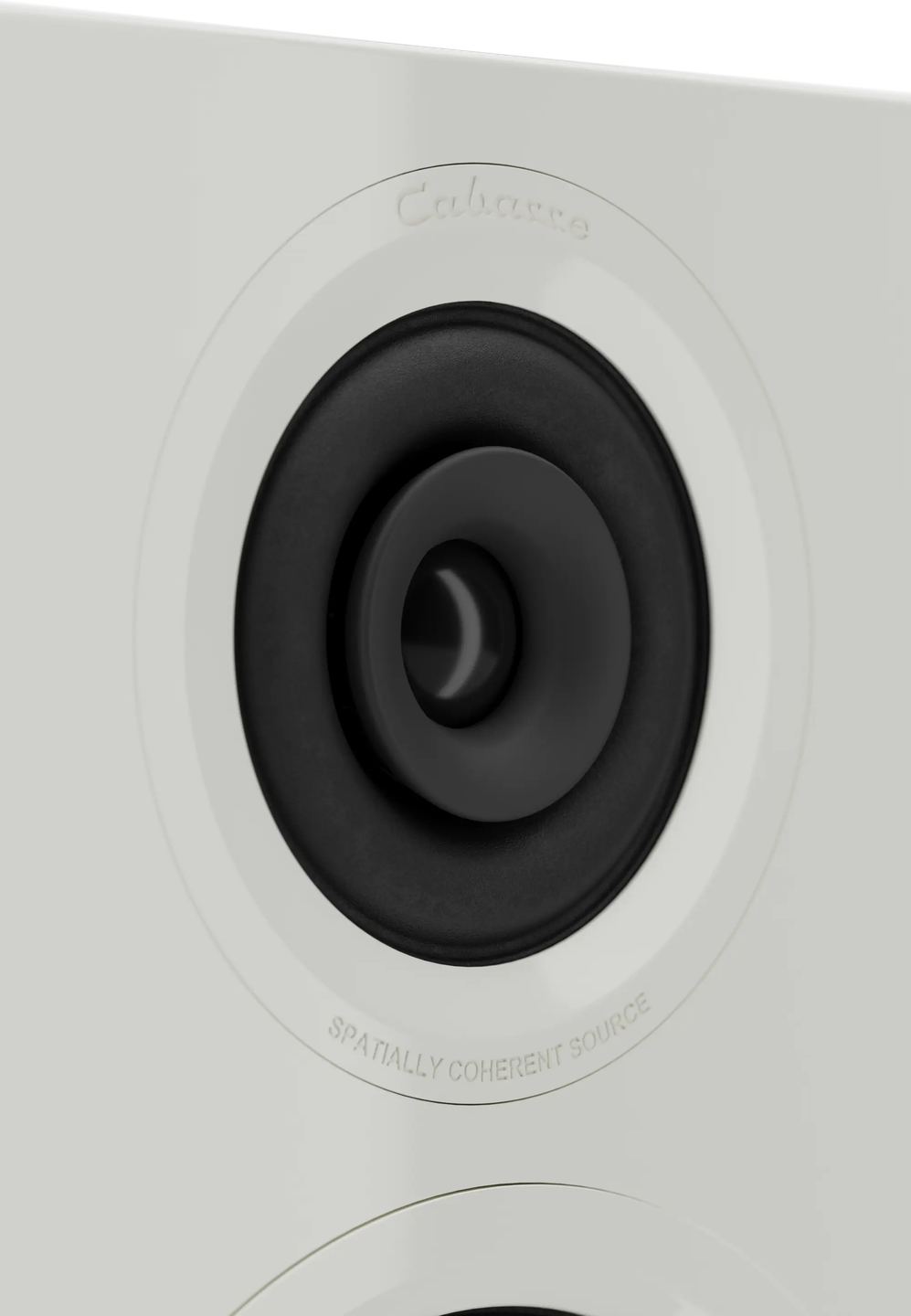
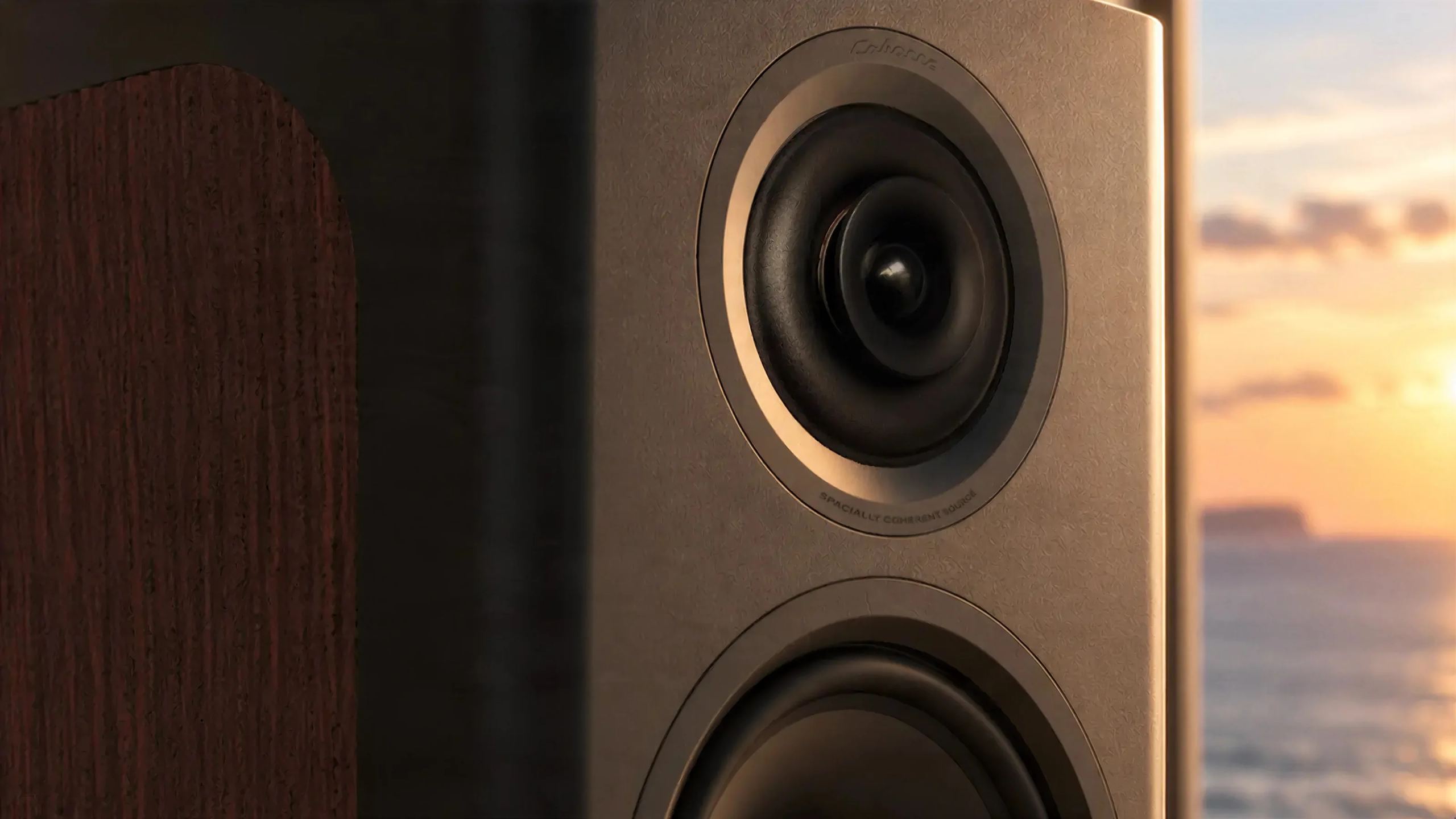
On a conventional speaker, the tweeter and midrange driver are two separate sources a few centimetres apart. As soon as listeners shift to one side, stand up or sink into their sofa, they are no longer the same distance from each one. Their sound waves no longer arrive quite together, and the positioning of instruments becomes a little blurred. The BC10 places the tweeter dome at the centre of a ring-shaped midrange diaphragm. The two frequency ranges then share the same axis and the same point of origin, keeping the stereo image stable across a wider listening area.
The crossover assigns everything above 700 Hz to the BC10. The annular diaphragm covers the range from 700 to 4,000 Hz, then the central dome takes over up to 22 kHz. Such a low crossover point routes much of the range of voices, piano, strings and brass through this single source. The woofer handles only the bass and lower midrange.
A 16.5 cm woofer with a Rohacell diaphragm
The 17MD18 uses a Rohacell diaphragm. This material is a rigid foam used in aerospace composite structures, which remains lightweight despite its stiffness. In a bass driver, this rigidity allows the diaphragm to move as a single unit, without deforming when the signal becomes complex. That matters here, because the woofer operates up to 700 Hz and therefore reproduces the lower range of male voices and the body of cellos.
The driver’s motor has been reworked. The voice coil is wound in three layers, placing more wire within the magnet’s field. A Faraday ring also surrounds the magnetic pole. This conductive ring stabilises the coil’s electrical behaviour as it moves, reducing distortion during large diaphragm excursions. The bass-reflex enclosure extends the response down to 59 Hz. The lowest note of a four-string electric bass (41 Hz) remains below this: the final octave therefore depends on the room, or on a subwoofer if you want to hear it in full.
Listening height and amplifier choice
The BC10 is at the top of the front baffle, and it is this driver that should be at ear level. For a seated listener, a 60 to 70 cm stand generally gives the right result. With a sensitivity of 87.5 dB, the Alizé 03 needs a little power: Cabasse recommends a 50 to 200 W amplifier. Around fifty watts is enough in an average-sized living room at normal listening levels. The nominal impedance of 8 Ω is misleading: the curve drops to 3.4 Ω at certain frequencies. The amplifier must therefore deliver current without struggling into a low-impedance load, something most solid-state integrated amplifiers do without difficulty.
Wood, lacquer and rounded edges
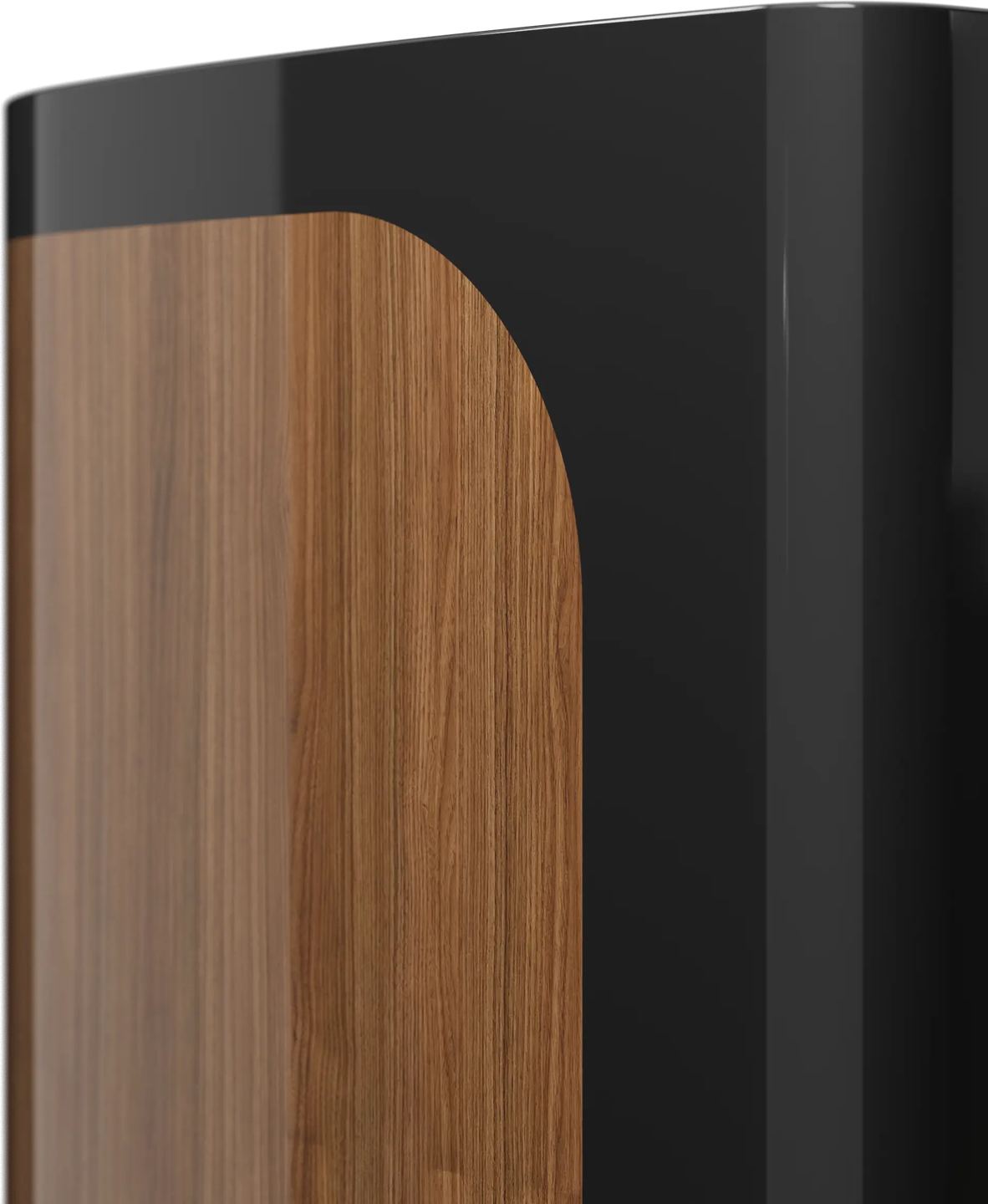
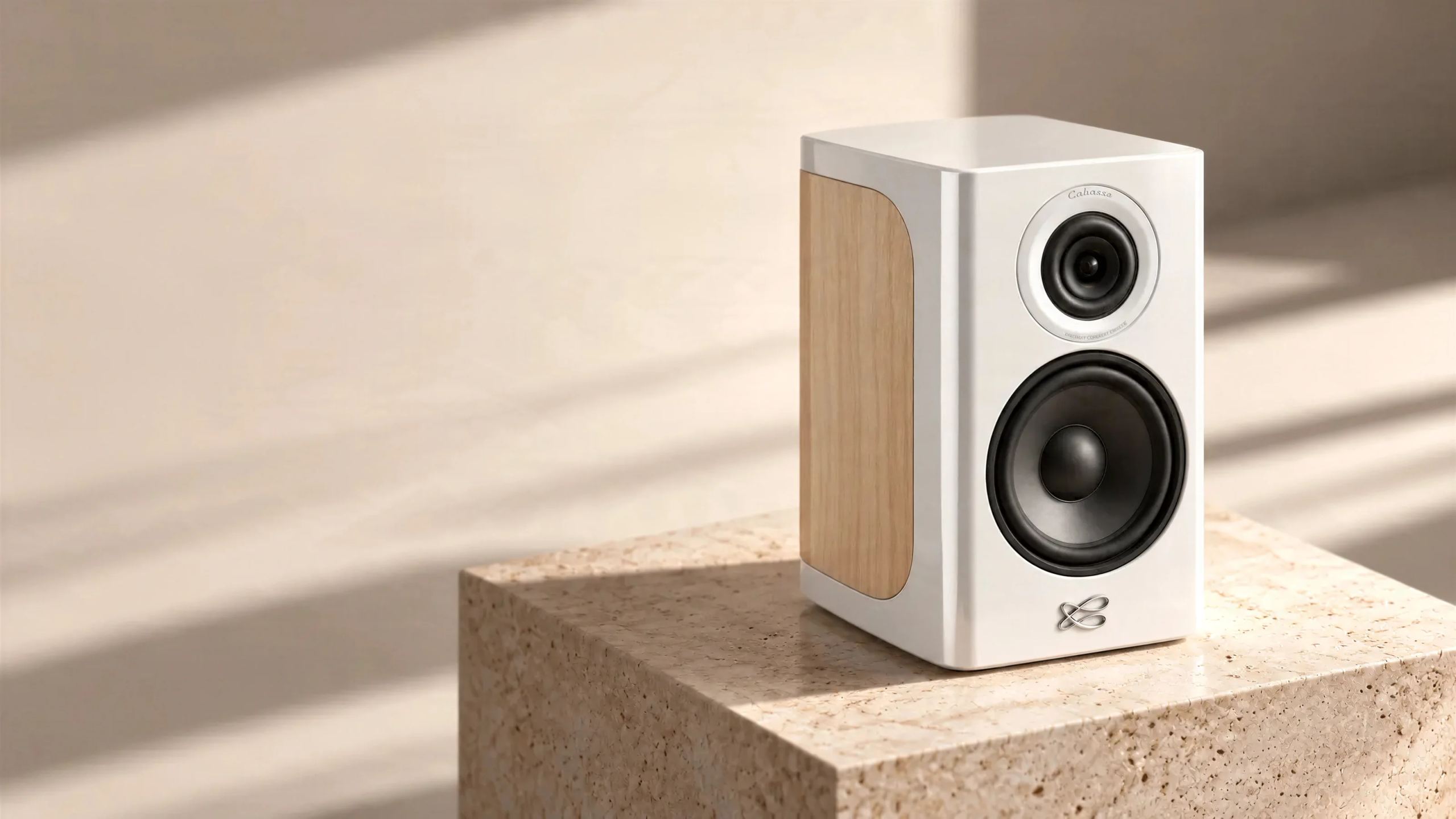
The cabinet measures 399 × 249 × 300 mm. It combines wood veneers and lacquered surfaces, in ivory white or deep black. Its edges are rounded, limiting treble reflections at the edges of the front baffle while also softening its outline. An acoustic grille is supplied for those who prefer to hide the drivers. The Alizé 03 is the compact model in the new passive Alizé range, which also includes a floorstanding speaker.
Documentation
French
Technical specifications
Acoustic design
- Type: bookshelf speaker
- Configuration: 3-way
- Enclosure type: bass-reflex
Drivers
- Midrange / treble: Cabasse BC10 coaxial driver
- Bass: 16.5 cm 17MD18 driver
- Cone material: Rohacell
- Voice coil: three layers
- Magnetic system: Faraday ring
Acoustic performance
- Frequency response: 59 Hz to 22 kHz
- Crossover frequencies: 700 Hz, 4000 Hz
- Sensitivity: 87.5 dB
- Nominal impedance: 8 Ω
- Minimum impedance: 3.4 Ω
- Recommended amplifier power: 50 to 200 W
Dimensions and weight
- Dimensions (H × W × D): 399 × 249 × 300 mm
- Weight: 11 kg
Frequently asked questions
What is the difference between the Alizé 03 and the Alizé 06 floorstanding speaker?
Both speakers use the same BC10 coaxial driver and the same 17MD18 woofer, but the Alizé 06 has three of the latter. It therefore extends down to 39 Hz instead of 59 Hz, and its sensitivity rises to 91 dB versus 87.5 dB. Its crossover frequencies are slightly lower (670 Hz and 3,700 Hz). It handles up to 400 W, stands 1,149 mm tall and weighs 27 kg. In a large room, or for bass without a subwoofer, the floorstanding speaker has the advantage. In a medium-sized room, the Alizé 03 retains the same midrange and treble.
Is the BC10 the same driver as the one in the Minorca MC40?
The Minorca MC40 also uses a BC10 coaxial driver, but with crossover frequencies of 900 Hz and 3,200 Hz. On the Alizé 03, the coaxial driver starts lower (700 Hz) and the dome takes over higher (4,000 Hz). The annular diaphragm therefore covers a wider band. The woofer also differs: a Rohacell diaphragm on the Alizé 03, a Duocell diaphragm on the Minorca.
Should you add a subwoofer?
For music listening, it is not essential: most recordings have little energy below 60 Hz. For organ music, electronic music or movies, a subwoofer fills out the lower end of the spectrum. On a home theater amplifier, a crossover around 80 Hz takes the load off the woofer, giving it more headroom at high volumes. The Alizé 03 can then serve as the front pair in a multichannel system.
Would a tube amplifier be suitable?
A push-pull amp rated at 40 W or more, with a 4 Ω output tap, can drive it properly. A small single-ended amp delivering just a few watts will lack headroom given the 87.5 dB sensitivity. Impedance dips to 3.4 Ω may also alter the tonal balance with an amp that has high output impedance.
Can the Alizé 03 be placed near a wall?
A bass-reflex enclosure reacts to the proximity of walls: the closer the speaker is to the wall, the more pronounced the bass becomes, to the point of sounding bloated. It is best to start about thirty centimetres from the rear wall, then move it forwards or backwards in small steps while listening to a familiar bass line. Room corners reinforce the bass even more and should be avoided.
Should speakers be angled toward the listening position?
The coaxial design maintains a consistent sound off-axis, so a slight toe-in is enough. You can start with the speakers almost parallel, then gradually turn them towards the sofa until the central vocal is clearly focused between the two. Turning them in too far narrows the soundstage without improving precision.
- Eco-contribution included in the sale price.


