

MartinLogan Renaissance ESL 15A (pack of 2)

Hybrid electrostatic floorstanding speaker with powered bass
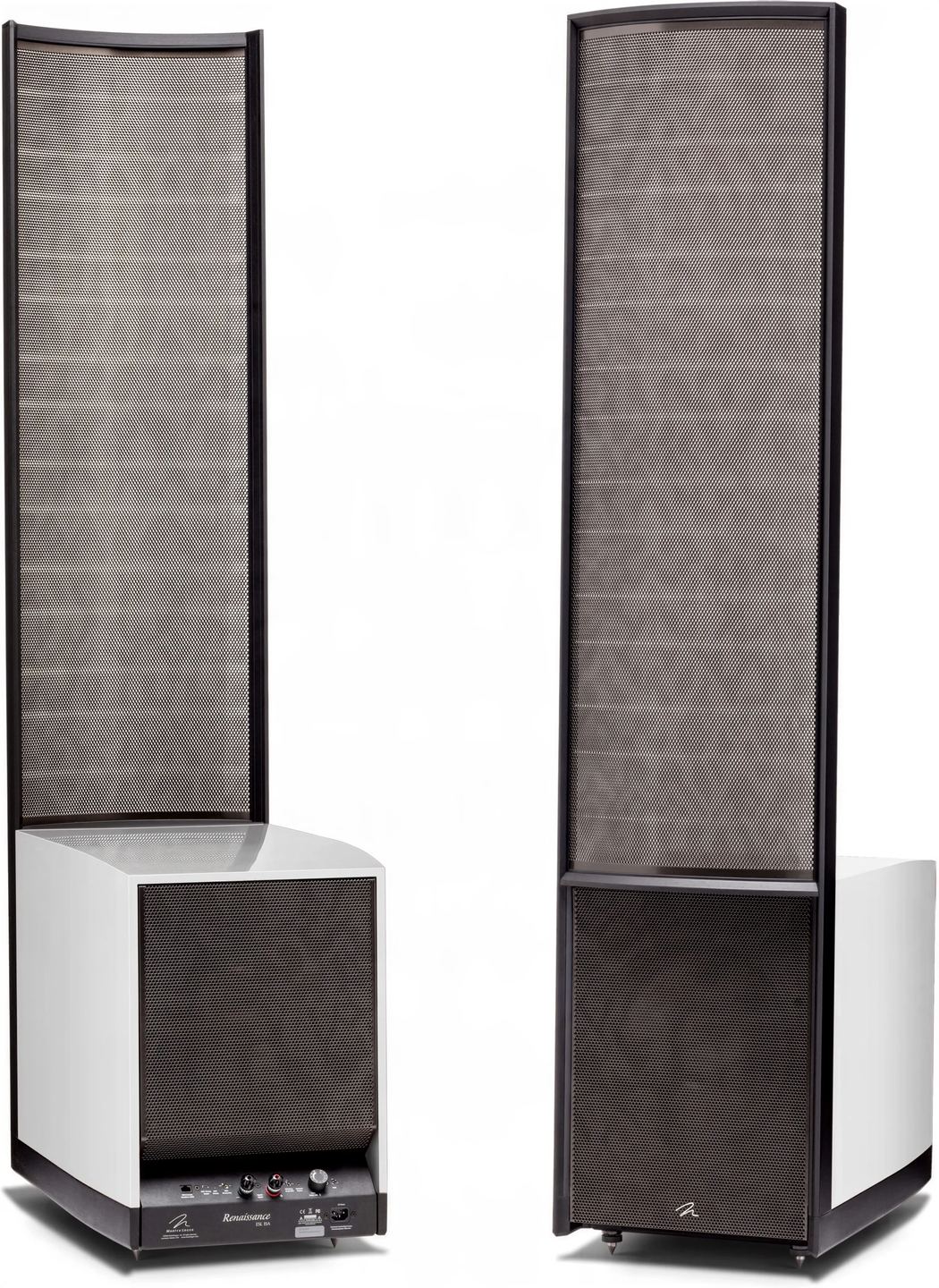
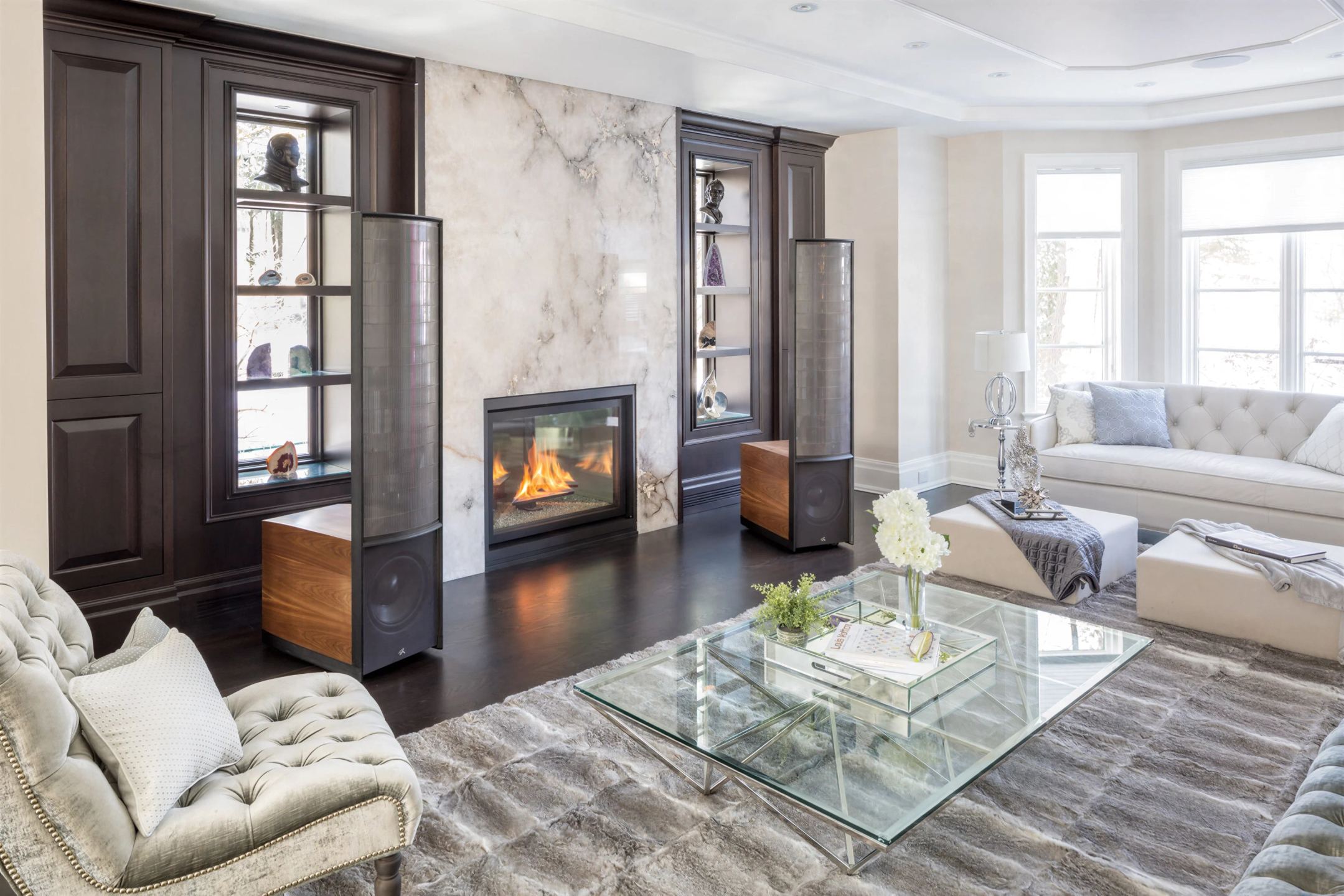
A 117 cm-tall electrostatic panel reproduces everything above 300 Hz. In the bass range, two 30.5 cm drivers take over, each with its own 500 W amplifier. This hybrid floorstanding speaker stands 177 cm tall and weighs 63.5 kg. It remains the largest in the Masterpiece series with a powered bass section. Its bass can be adjusted manually or through an acoustic measurement of the room.
A single diaphragm for the midrange and treble
In an electrostatic panel, nothing resembles a conventional driver. A diaphragm just a few microns thick is stretched between two perforated metal grilles, the stators. The music signal first passes through a transformer that raises its voltage, then attracts and repels the diaphragm across its entire surface at once. A cone, by contrast, is driven by a coil positioned at its center. The moving element is extremely light, allowing it to follow rapid signal changes with very little inertia.
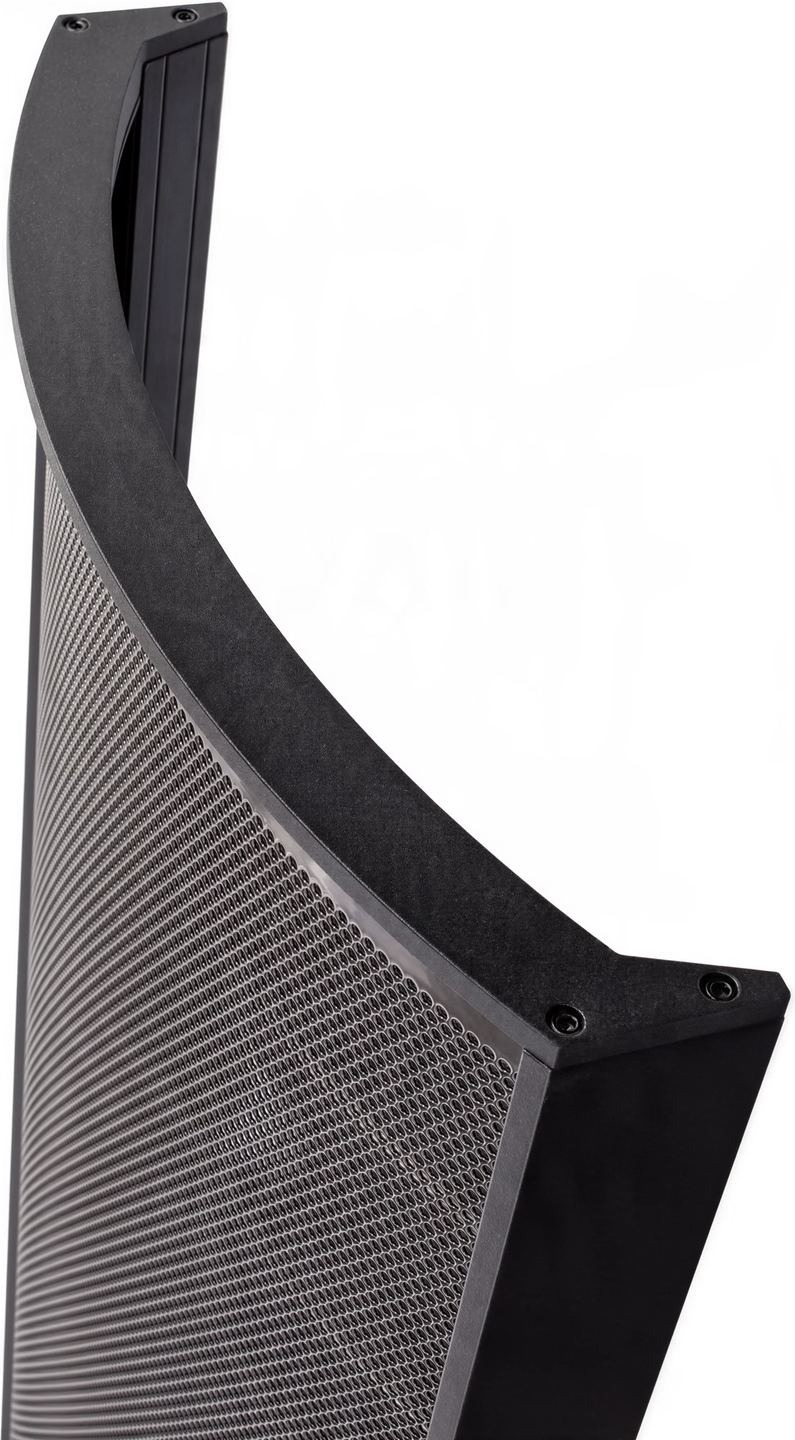
The Renaissance ESL 15A’s XStat CLS transducer measures 117 x 38 cm, providing 4446 cm² of radiating area. Its MicroPerf stators are perforated with smaller, more numerous holes. According to MartinLogan, they expose almost twice as much diaphragm as a conventional panel of the same size. Rigid ClearSpar spacers maintain constant tension on the vacuum-bonded diaphragm. The panel sits in an AirFrame Blade frame made from aircraft-grade extruded aluminum alloy, which stiffens it and isolates it electrically and mechanically from the cabinet.
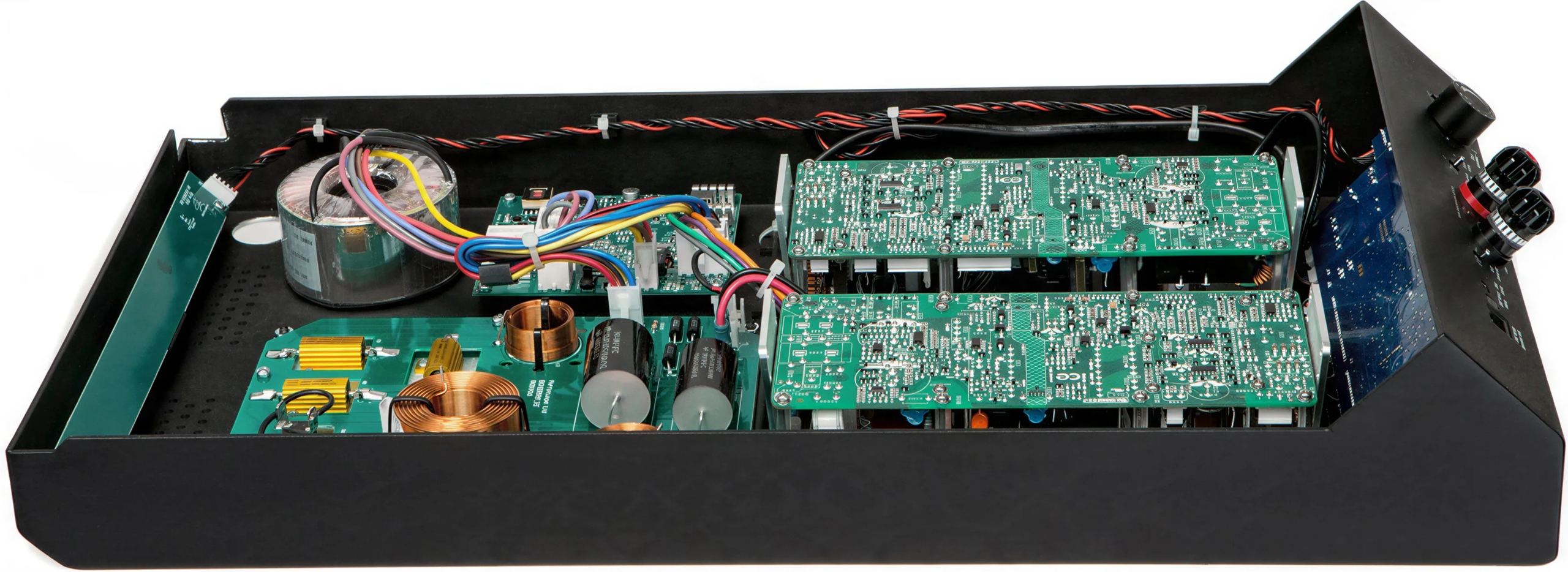
The crossover is set at 300 Hz. Above this frequency, the midrange and treble come from the same surface, with no crossover between two drivers in the range where the ear is most sensitive. MartinLogan assembles this Vojtko-topology crossover by hand, using polypropylene capacitors, air-core inductors and a custom-wound audio transformer.
Sound radiated forward and backward
The panel is a dipole: it radiates as much backward as forward, but almost nothing to the sides. Reflections from the side walls are therefore minimal. The rear wave bounces off the wall behind the speaker and returns to the listener with a slight delay, adding ambience and space to the soundstage. For this delay to be useful, MartinLogan recommends positioning the panel at least 75 cm from the rear wall and leaving at least 30 cm between the back of the cabinet and the wall.
A flat panel would project treble in a very narrow beam. Here, a slight horizontal curve, the brand’s Curvilinear Line Source principle, widens dispersion to 30°. This angle remains narrow: the speakers are angled toward the listening position, and the stereo image is most accurate in the center. Vertically, the panel behaves like a 116.9 cm-tall line source. The tonal balance therefore changes little between seated and standing listening.
Two bass drivers with their own amplification
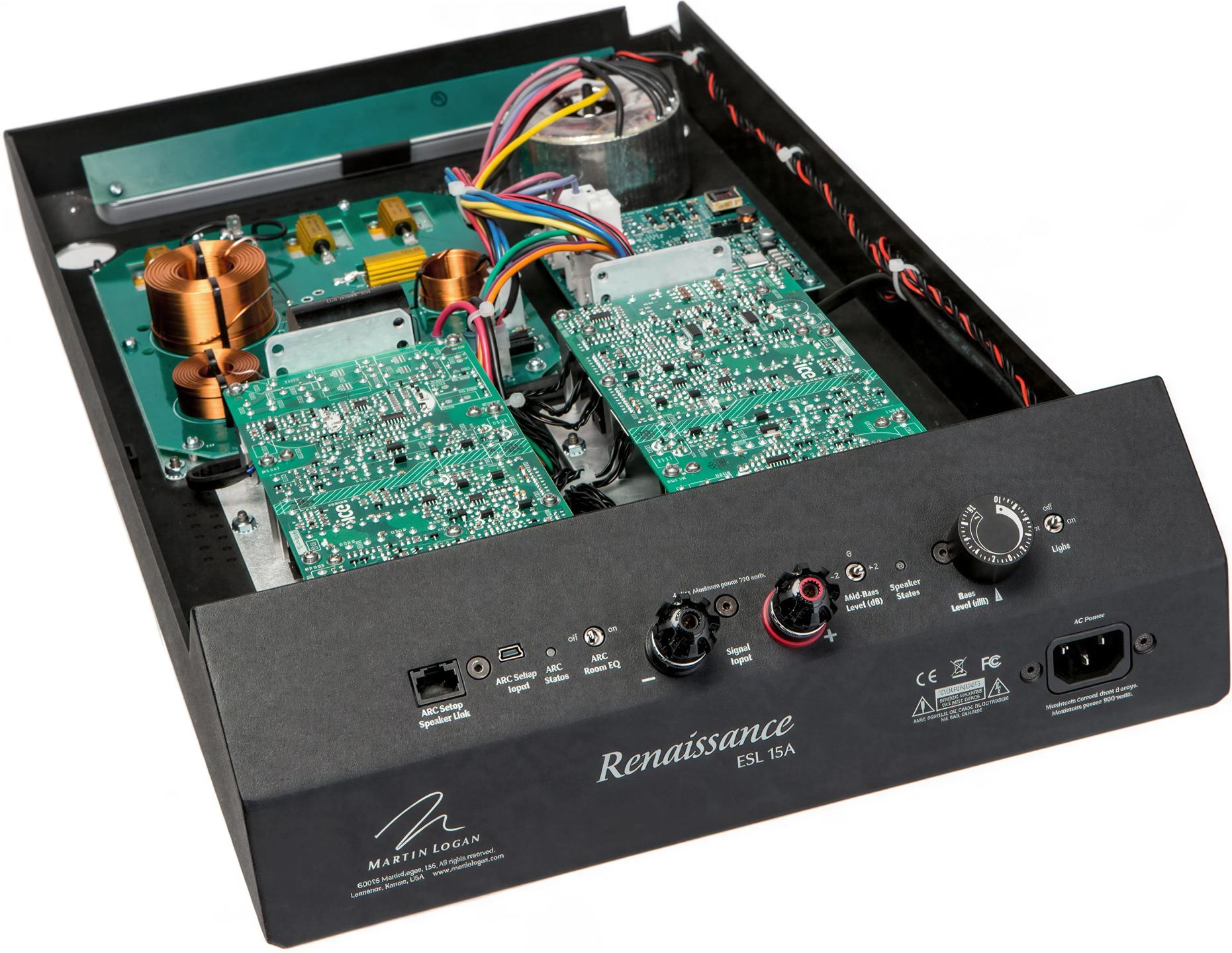
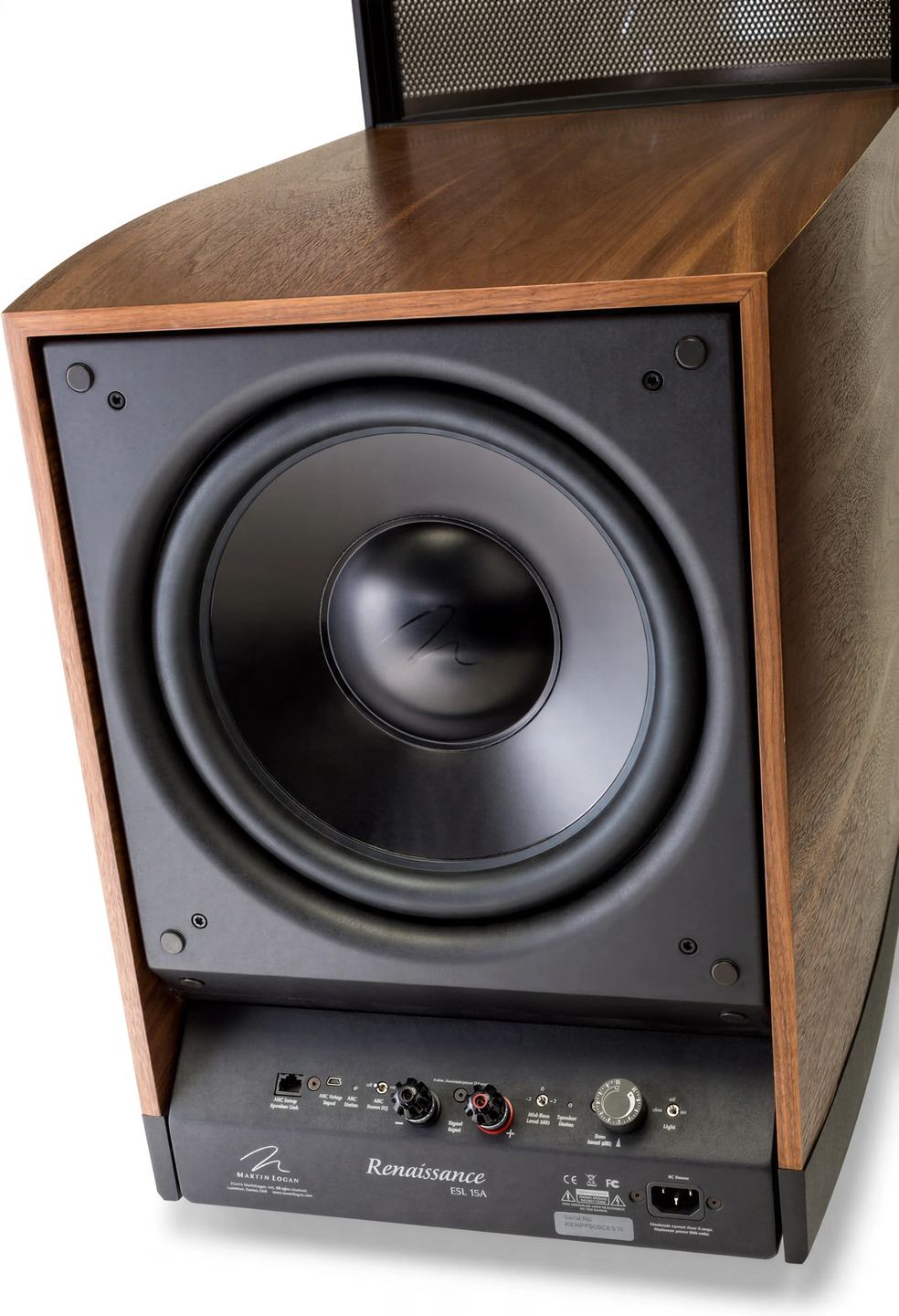
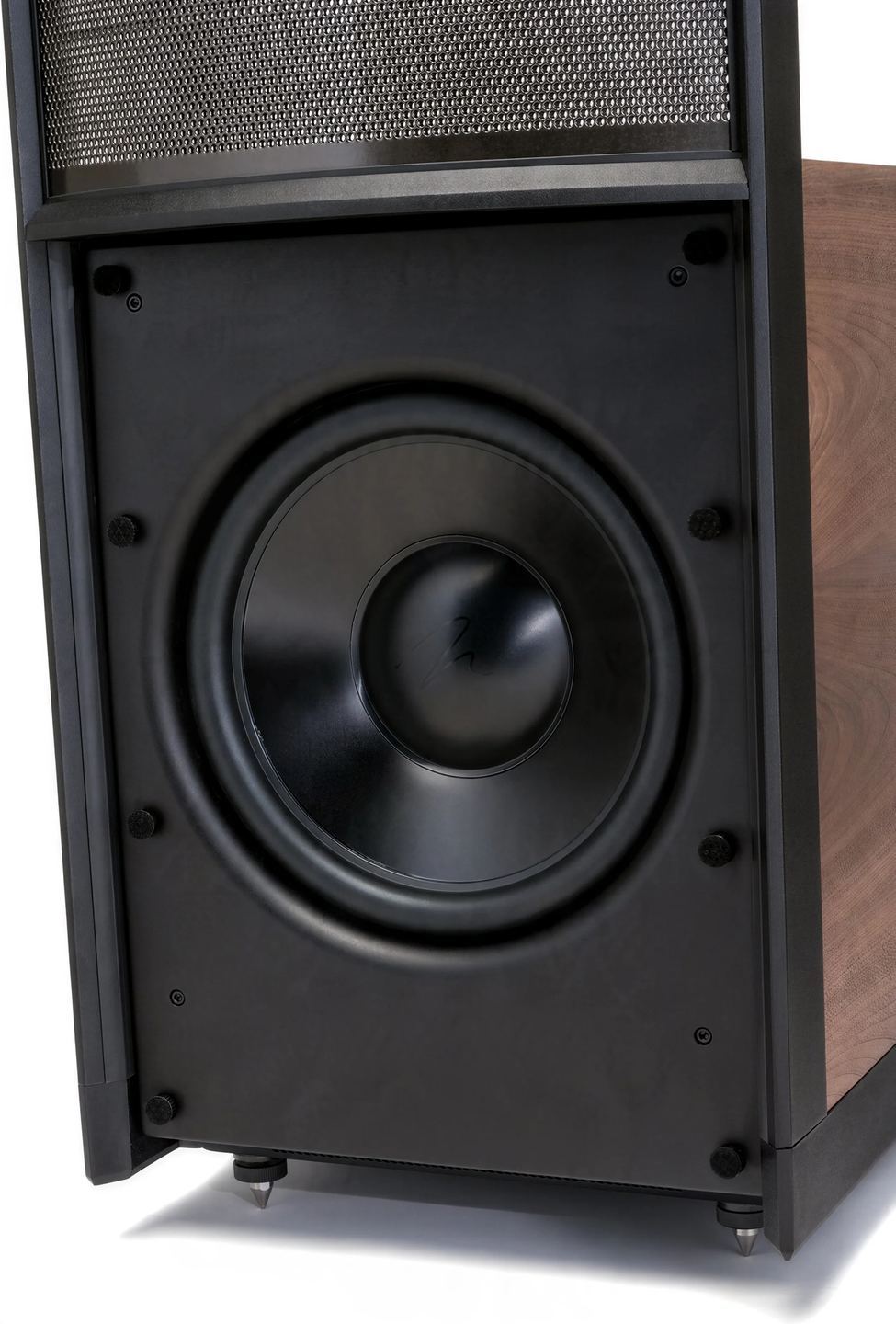
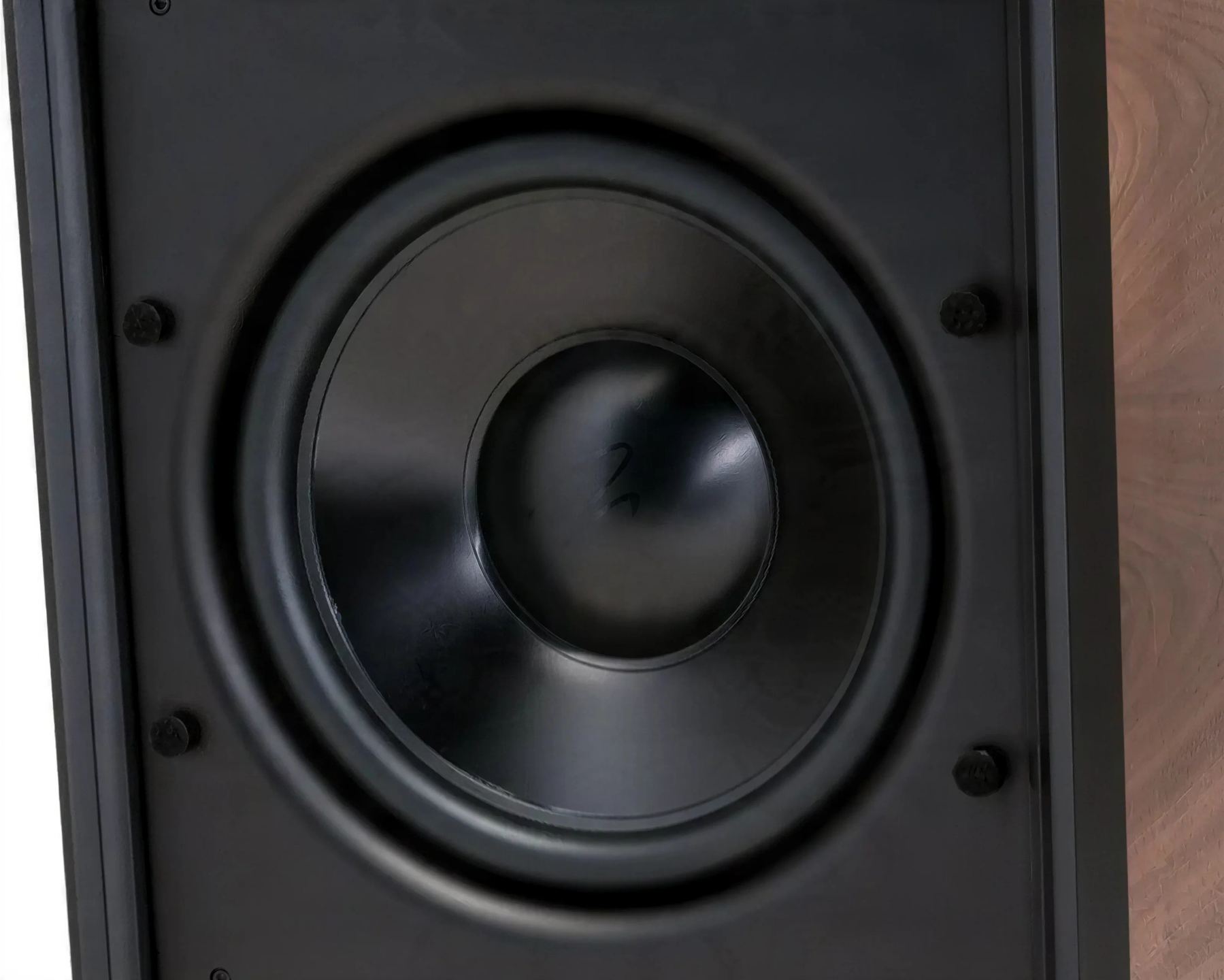
The lower section houses two 30.5 cm drivers with rigid aluminum cones, mounted on cast baskets. Each operates in a separate sealed chamber, with a long-excursion motor. A Class D amplifier delivering 2 x 500 W into 4 Ω (2 x 1000 W peak) powers them directly in each speaker. Your system’s amplifier therefore does not have to supply the energy for the bass.
MartinLogan calls this arrangement PoweredForce Forward. It combines a compact powered cabinet with driver phase alignment that limits bass reflected by the rear wall. A 24-bit Vojtko digital processor handles the low-pass crossover, bass equalization and a limiter that protects the drivers. The response extends down to 22 Hz (± 3 dB), without an additional subwoofer.
Bass adjustments and ARC room correction
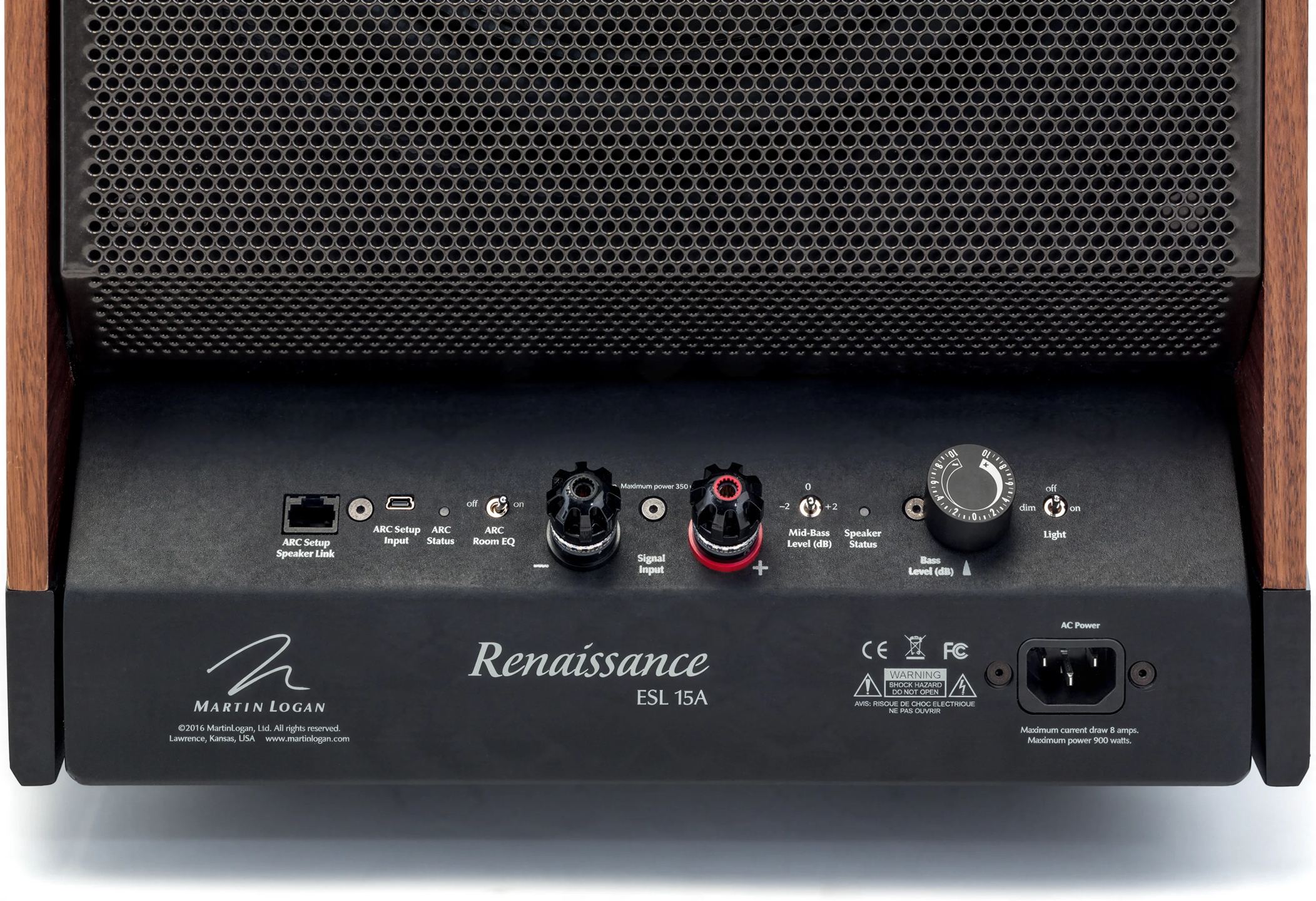
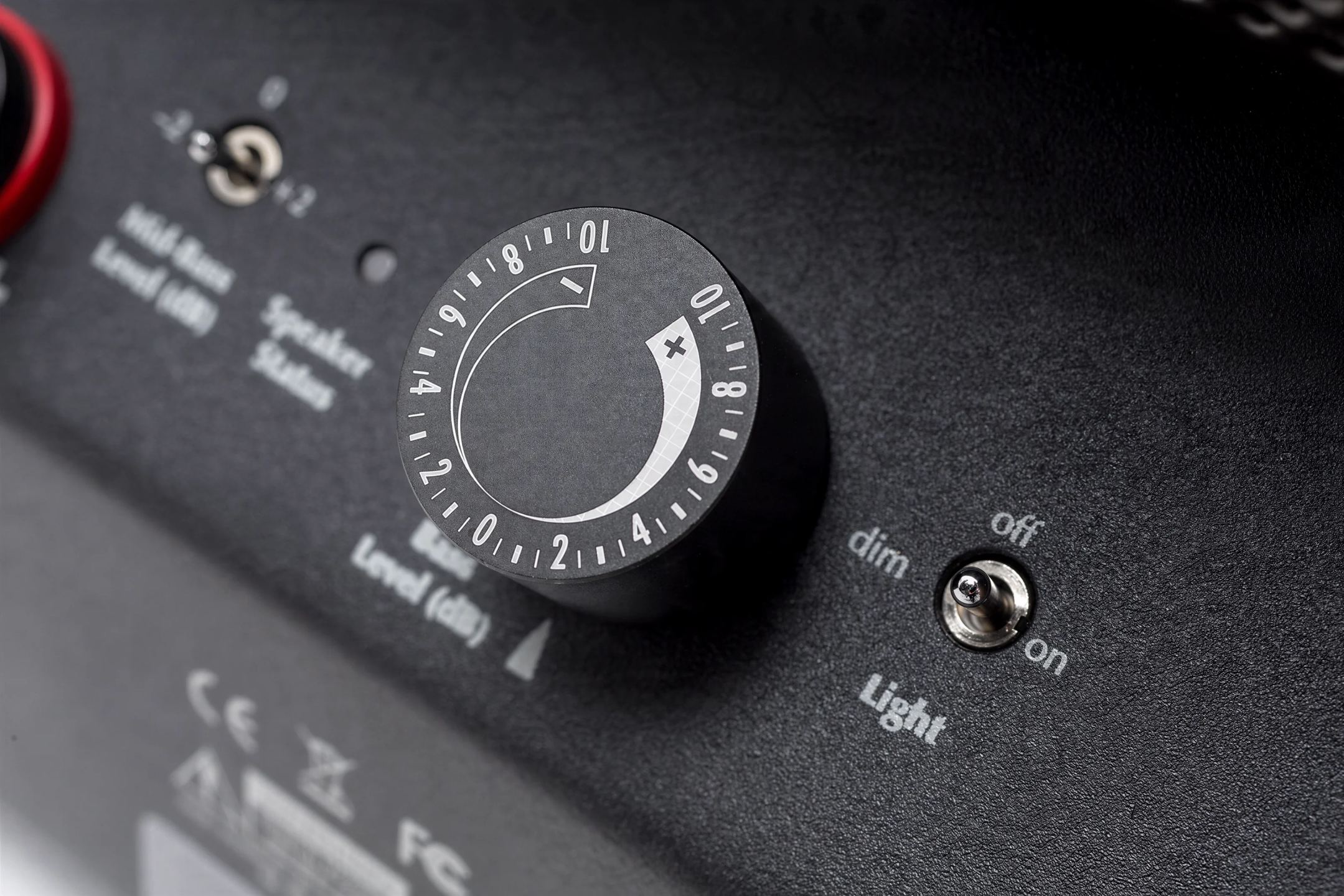
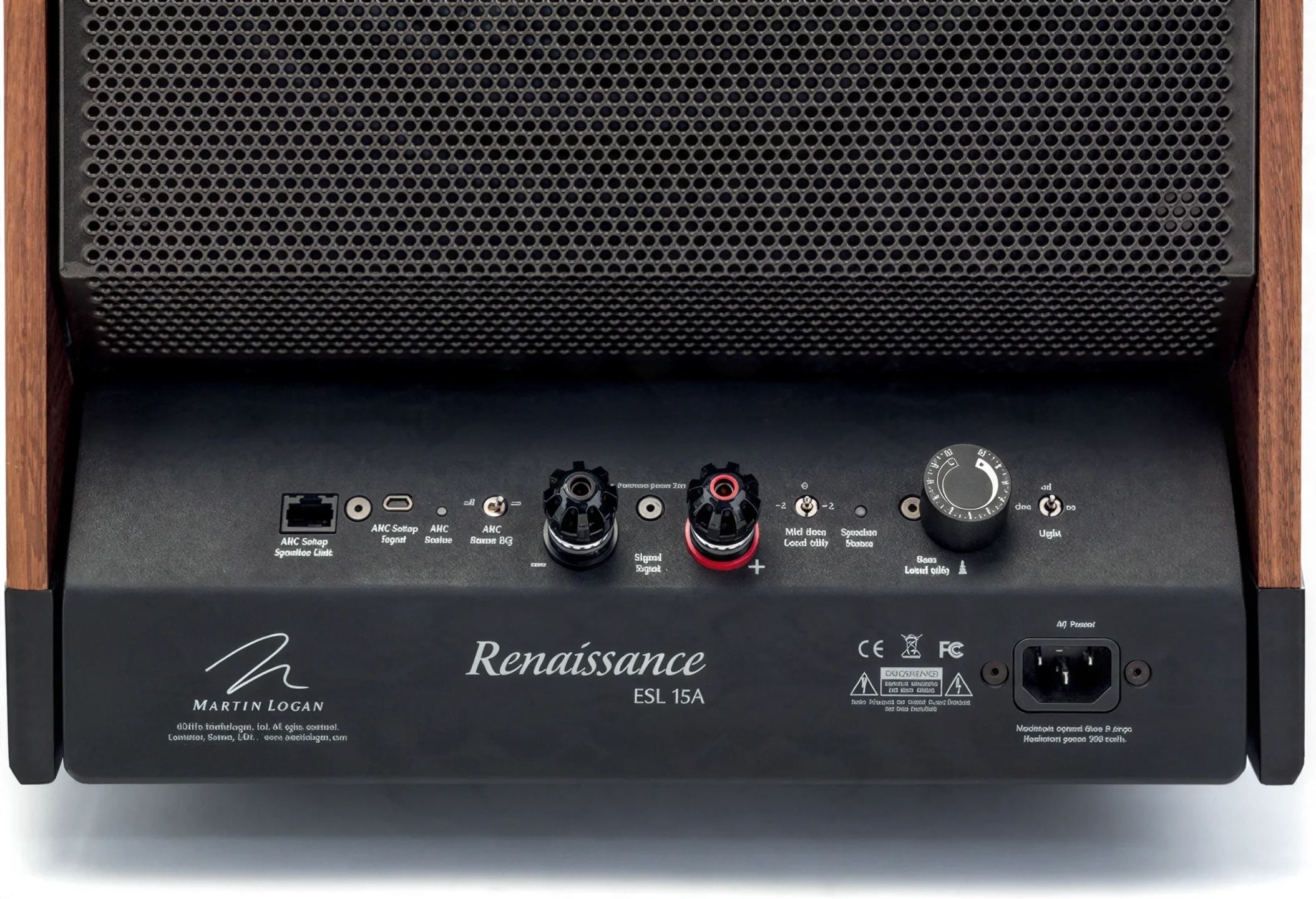
On the rear, a bass control provides ± 10 dB of adjustment below 75 Hz. A second, three-position control (−2, 0 and +2 dB) adjusts the lower midrange. These two controls adapt the speaker to the room: a speaker close to a wall or installed in a small room often needs less bass than one in the middle of a large living room.
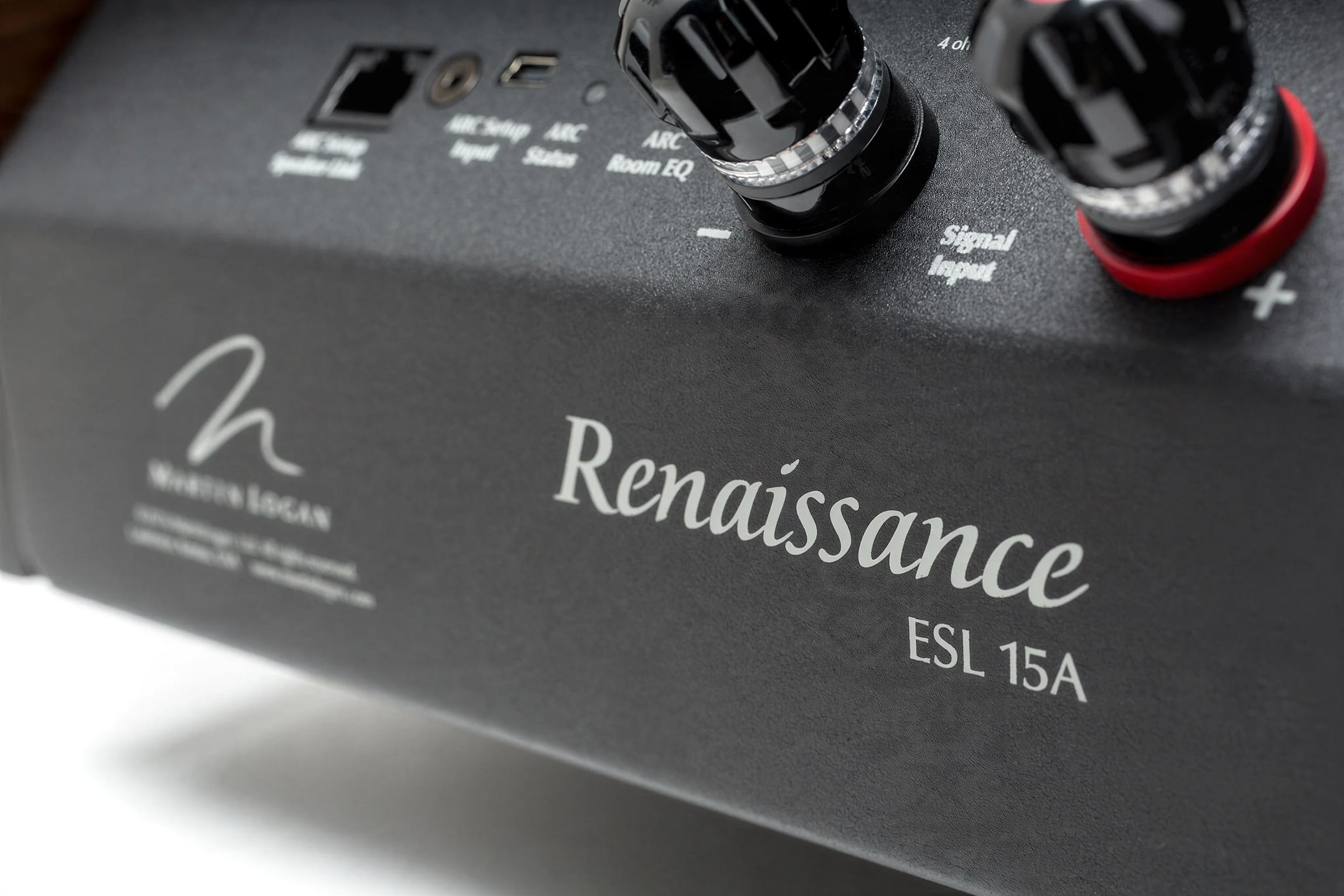
For further adjustment, the Renaissance ESL 15A supports Anthem Room Correction (ARC). A microphone measures the bass in the room, then the software calculates a correction for the peaks and dips caused by the room’s resonant modes. Only the bass section is corrected: the electrostatic panel is left untouched. Calibration takes place through the speaker’s RJ45 and mini USB ports, and a switch enables or disables the correction. A final control turns the front LED on, dims it or turns it off.
Pairing the Renaissance ESL 15A with an amplifier
With 92 dB at 2.83 V at 1 m, the Renaissance ESL 15A has good sensitivity, and MartinLogan specifies an amplification range of 20 to 700 W per channel. Impedance deserves more attention than power. It is nominally 4 Ω, but drops to 0.5 Ω at 20 kHz, because an electrostatic panel is a capacitive load whose impedance decreases as frequency rises. An amplifier that remains stable into very low loads is therefore required. The brand states that the speaker is compatible with amplifiers designed for 4, 6 or 8 Ω.
Connection is via a pair of WBT-0703Cu nextgen binding posts, which accept heavy-gauge cables. Their conductor is made from gold-plated pure copper, with no nickel or ferromagnetic metal, and is fully insulated to prevent eddy currents.
Each speaker must also be connected to mains power to supply the bass amplification and bias the panel. It consumes less than 0.5 W per channel in standby and up to 900 W at peak. At 40 cm wide, 63.3 cm deep and 63.5 kg, it requires floor space and two people to position it.
Technical specifications
Acoustic performance
- Frequency response: 22 to 21000 Hz ± 3 dB
- Sensitivity: 92 dB / 2.83 V / m
- Impedance: 4 Ω, 0.5 to 20 kHz
- Compatible with 4, 6 or 8 Ω amplifiers
- Dispersion
- Horizontal: 30°
- Vertical: 116.9 cm line source
- Crossover frequency: 300 Hz
- Recommended amplifier power: 20 to 700 W per channel
Transducers
- High-frequency transducer: XStat CLS electrostatic transducer
- Panel dimensions: 117 x 38 cm
- Radiating area: 4446 cm²
- Low-frequency transducer: two 30.5 cm PoweredForce Forward woofers
- Cast basket, high excursion
- Rigid aluminum cone
- Extended-throw motor
- Resonance-free asymmetrical enclosure
Amplification and electronics
- Woofer amplifier: 2 x 500 W / channel (4 Ω), 2 x 1000 W peak
- Components: custom-wound audio transformer, air-core inductors, polypropylene capacitors
- 24-bit DSP preamplifier (paired with the woofer amplifier)
- Room acoustic correction (bass section): compatible with Anthem Room Correction (ARC), sold separately
Adjustments
- Bass: ± 10 dB below 75 Hz
- Lower midrange: −2 dB, 0 dB, +2 dB
- ARC room equalization: on, off
- Lighting (LED intensity): on, dimmed, off
Connections
- Signal inputs: nextgen WBT-0703Cu binding posts
- Gold-plated pure copper filigree signal conductor
- Nickel-free, non-ferromagnetic, high conductivity, fully insulated
- No eddy current effects
- Other inputs: AC power, RJ45 (for ARC), mini USB (for ARC)
Power consumption
- Idle: < 0.5 W / channel
- Maximum: 900 W / channel
Dimensions and weight
- Dimensions: 177.3 x 40 x 63.3 cm
- Weight: 63.5 kg
Frequently asked questions
Is the ARC measurement kit included with the speakers?
No. The Renaissance ESL 15A is compatible with ARC correction, but the microphone kit (ARC or Perfect Bass Kit) is sold separately. The software runs on a computer running macOS 10.12 or later, or Windows 7 through 11, with an available USB port.
Can the speaker be used without ARC correction?
Yes. The correction can be disabled on the speaker, and manual bass and lower midrange adjustments are sufficient in many rooms. ARC is especially useful when the room creates pronounced bass peaks at certain frequencies.
Can it be bi-wired or bi-amped?
No. It only has one pair of binding posts. The bass is already amplified internally, and the external amplifier only needs to drive one cable per speaker.
Which feet are included for floor placement?
The speaker comes with two sets of feet: spikes, suitable for carpets or rugs, and flat pads, better suited to wooden or tiled floors.
What finishes are available?
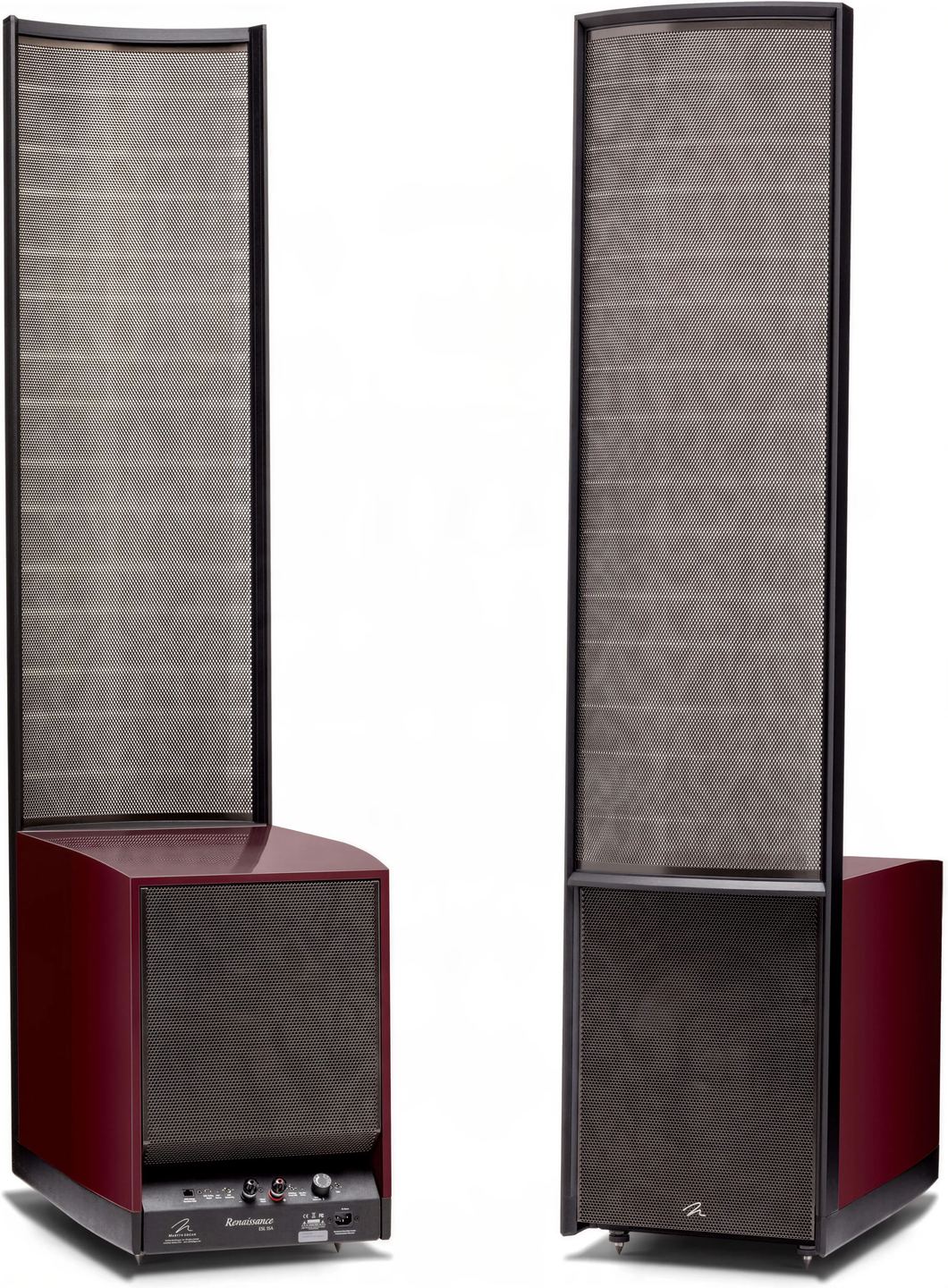
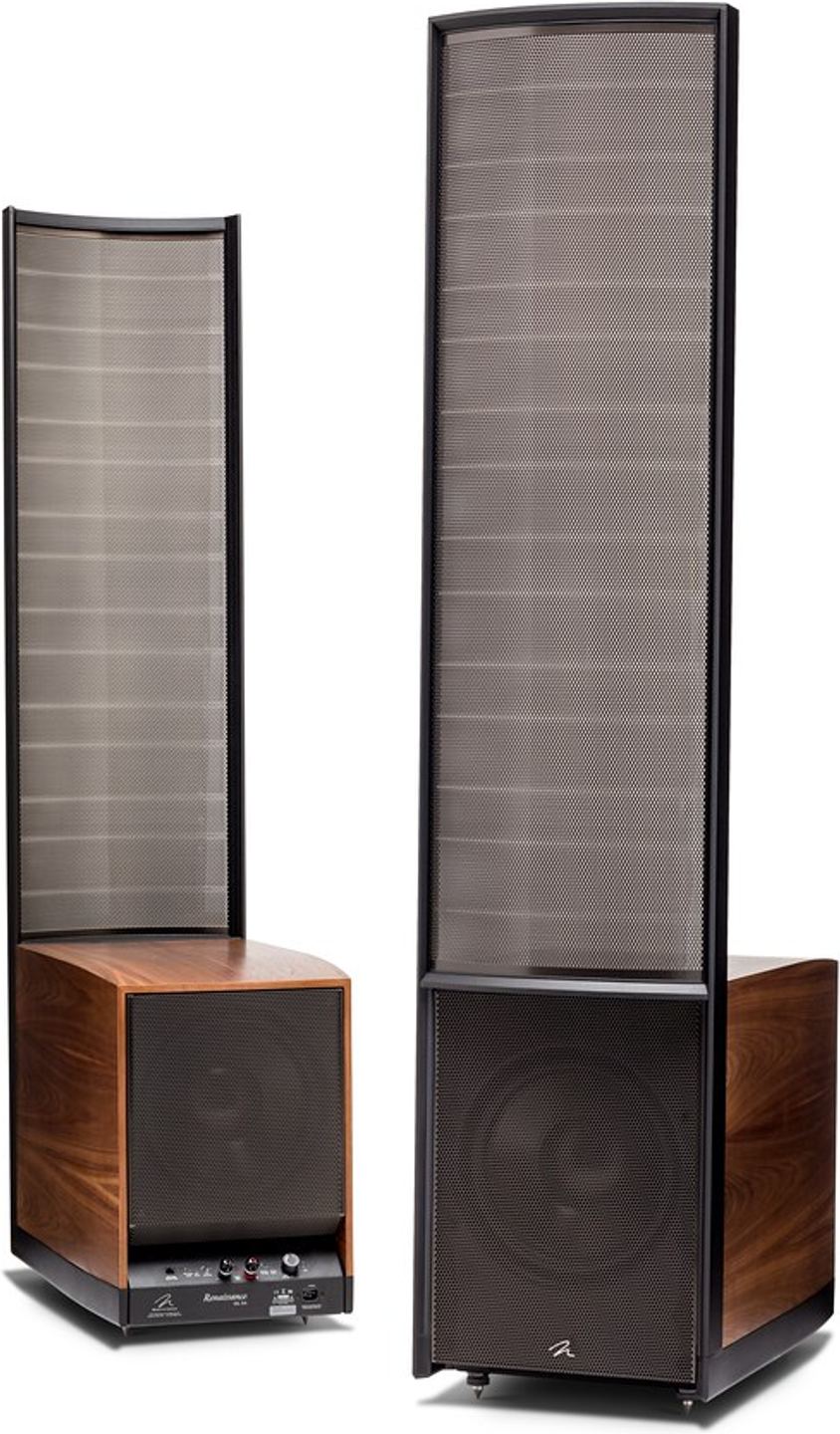
The MartinLogan brochure lists the subwoofer in walnut, gloss black or cherry.
Where does the Renaissance ESL 15A fit in the Masterpiece series?
It is the largest model in the series with a powered bass section. Only the Neolith ranks above it. The Expression ESL 13A, Impression ESL 11A and Classic ESL 9 sit below it, with smaller panels and 25 cm or 20 cm woofers.
Does the speaker work if it isn't plugged into the mains?
No. Without power, neither the electrostatic panel nor the bass amplification will work. A power outlet is required near each speaker. When idle, it enters standby mode and consumes less than 0.5 W per channel.
- Eco-contribution included in the sale price.