

MartinLogan Classic ESL 9 (pack of 2)
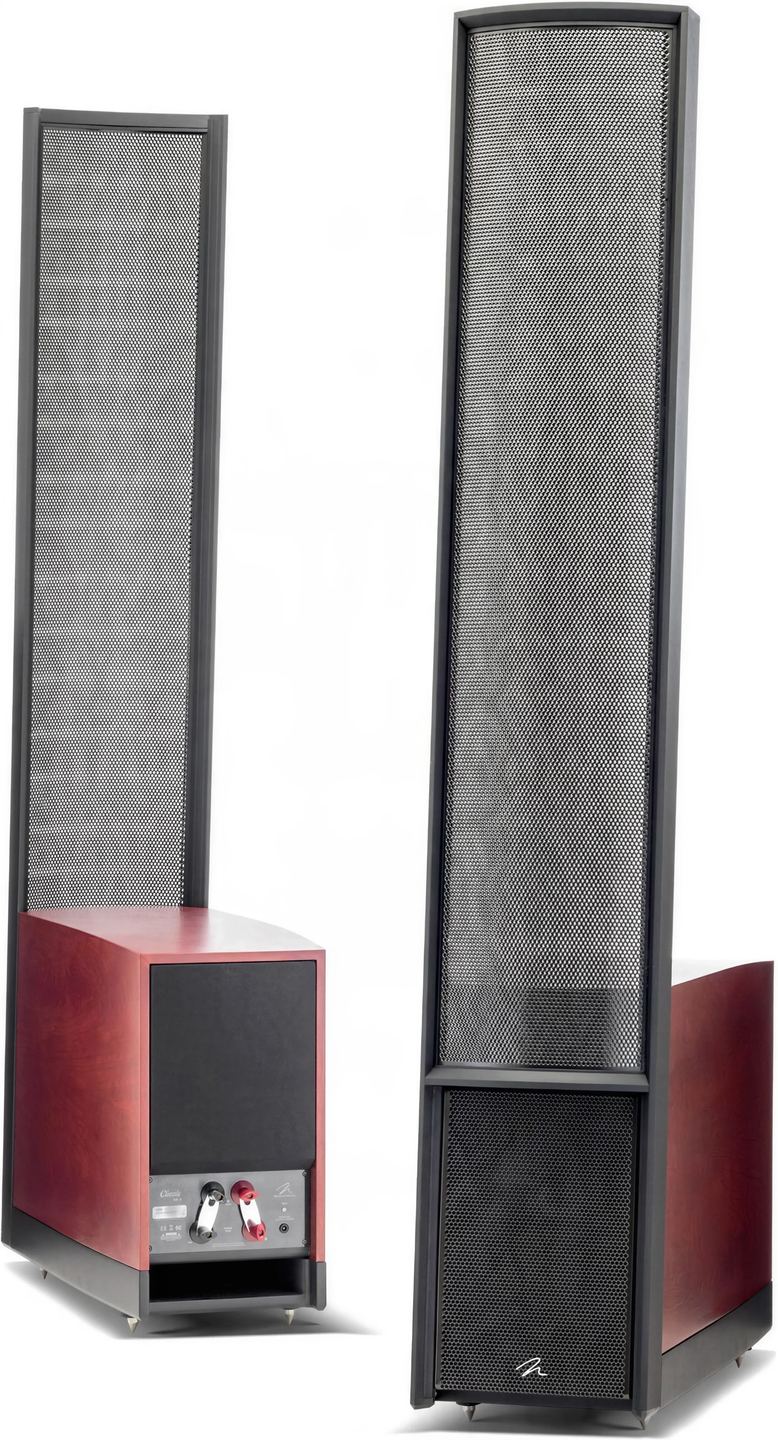
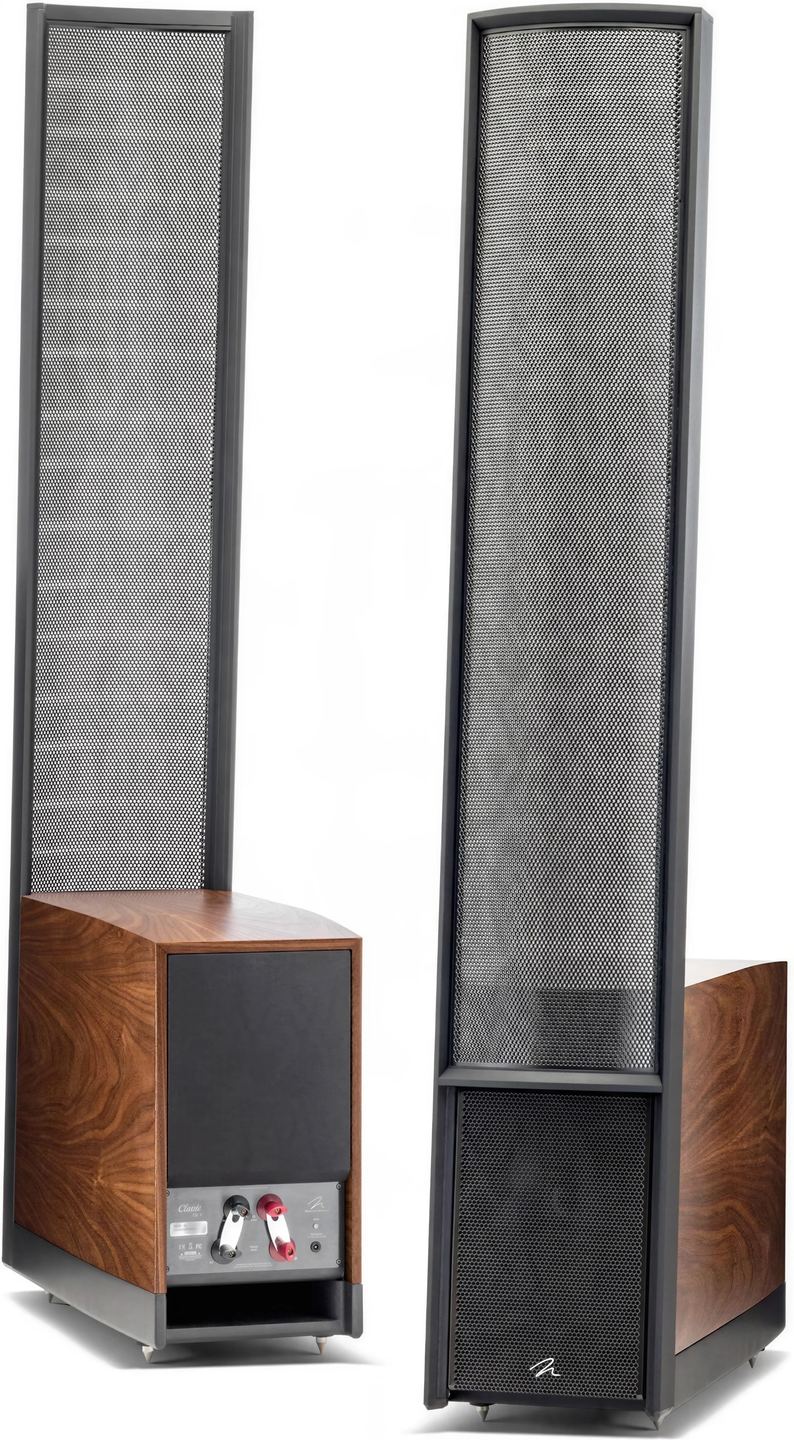
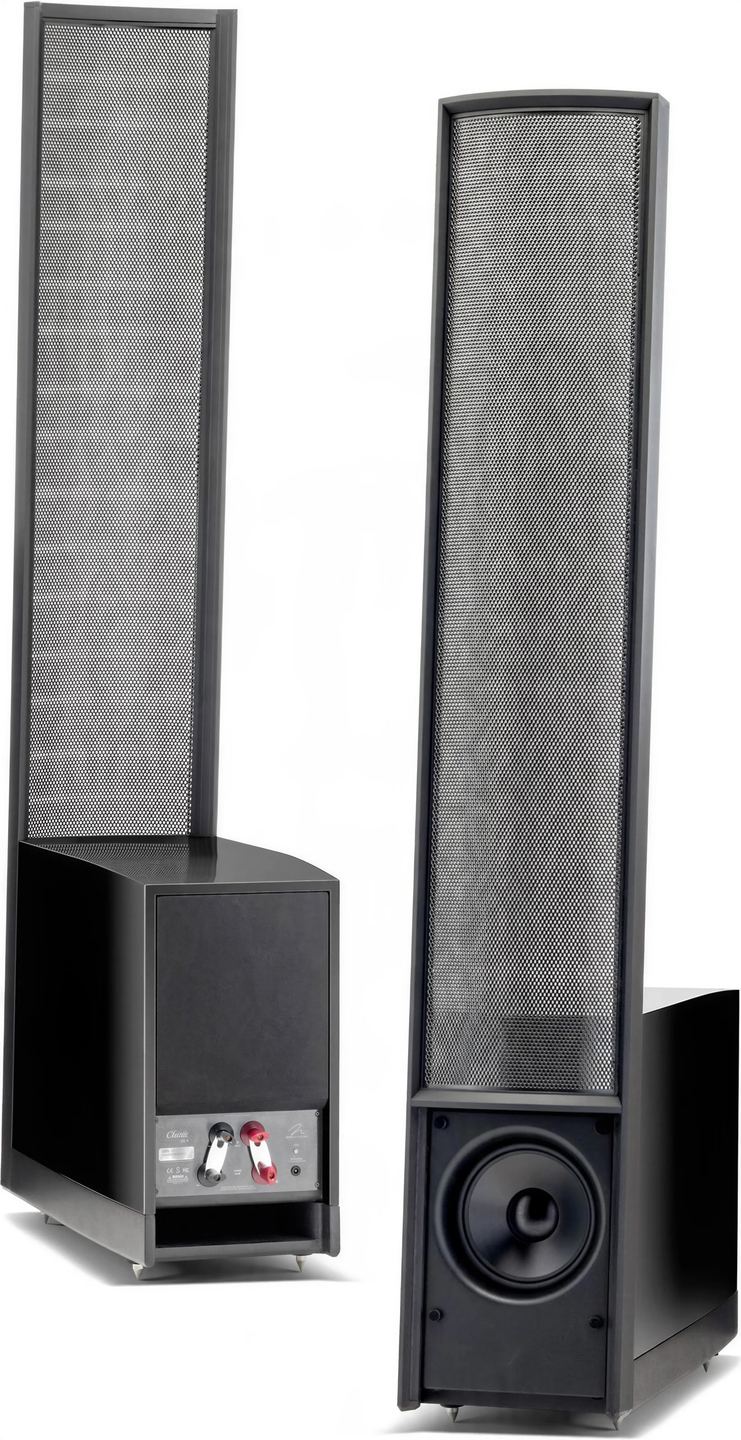


Hybrid electrostatic floorstanding speaker with no onboard electronics
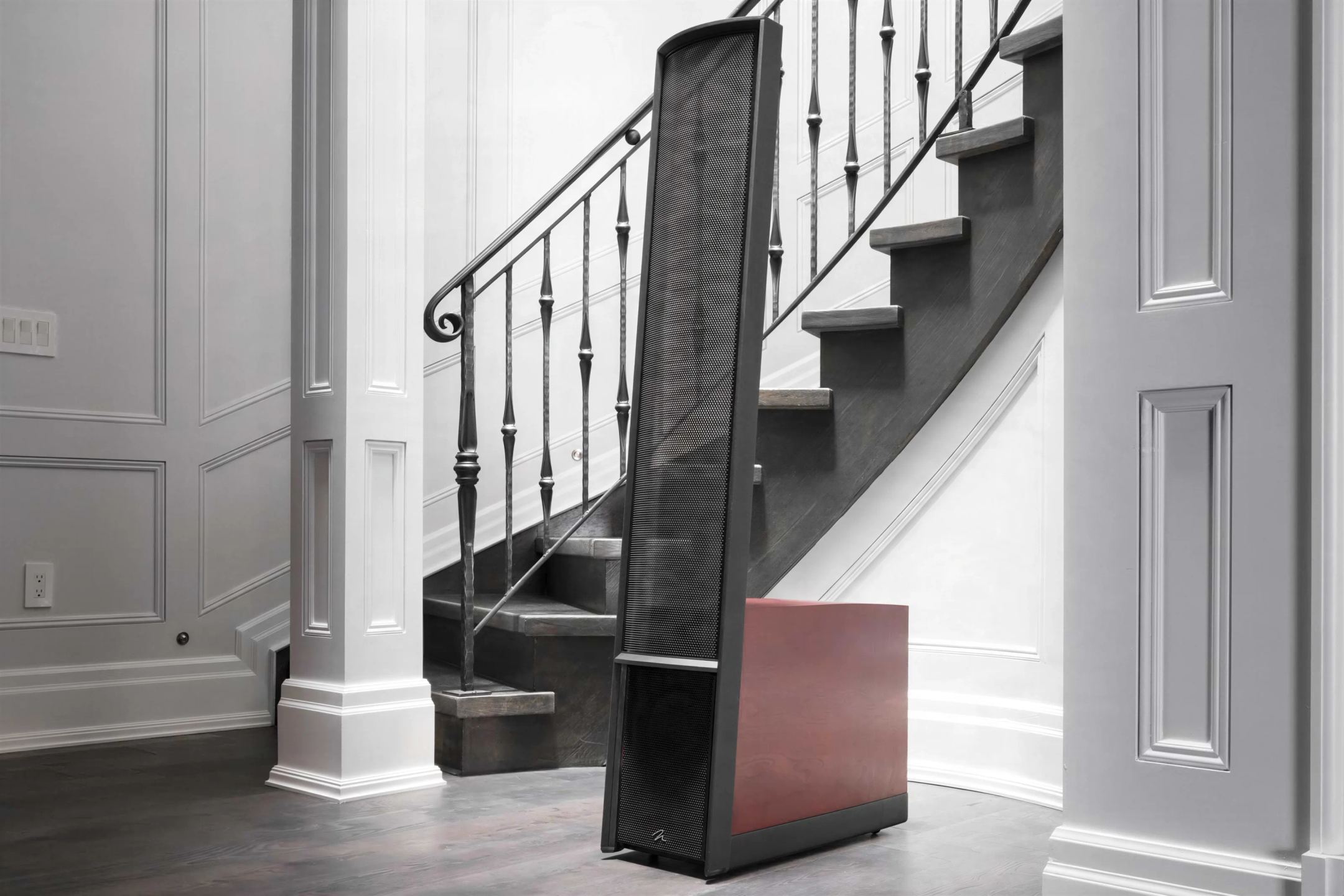
A 112 cm-tall electrostatic panel reproduces everything above 380 Hz, while a compact base housing two 20 cm drivers handles the bass. This floorstanding speaker adopts MartinLogan’s hybrid formula in its simplest form. It has neither a built-in amplifier nor room correction, and connects to an amplifier like a conventional passive speaker. It still comes with a few requirements specific to electrostatic technology.
A 112 cm panel for the midrange and treble
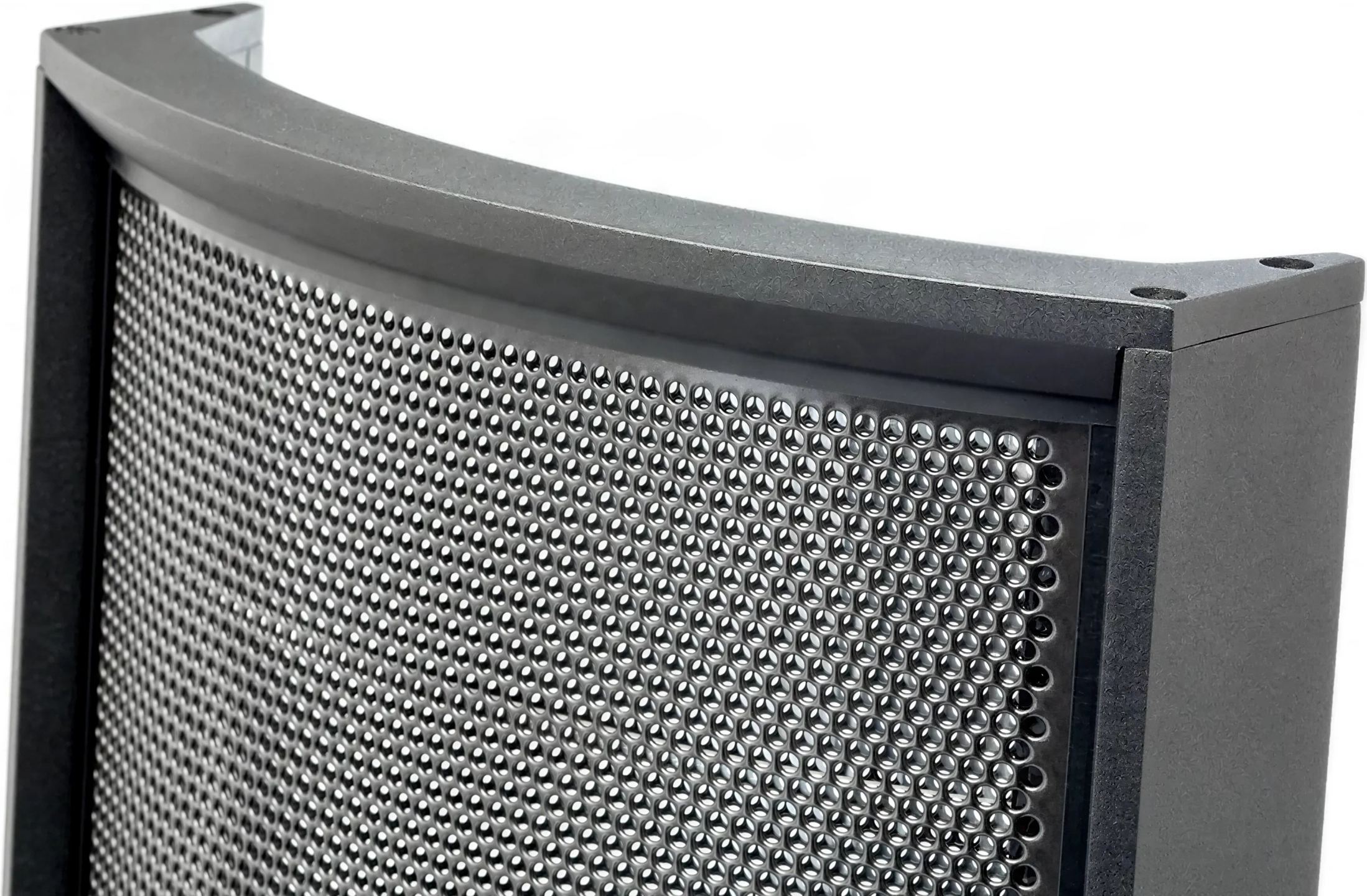
The XStat panel measures 112 × 23 cm and does not work like a cone driver. A very thin, electrically conductive and charged diaphragm is stretched between two perforated metal grilles, known as stators. The musical signal applied to the stators alternately attracts and repels the entire surface of the diaphragm at once, with no voice coil or magnet to drive. The moving mass is tiny, far lower than that of a cone and its voice coil, and this is what gives this technology its fast response to transients and fine details.
On this model, the diaphragm is vacuum-bonded to the stators. The MicroPerf stators expose almost twice as much diaphragm surface as a conventional electrostatic panel of the same size. On a panel just 23 cm wide, this increase in radiating area translates directly into higher sound output.
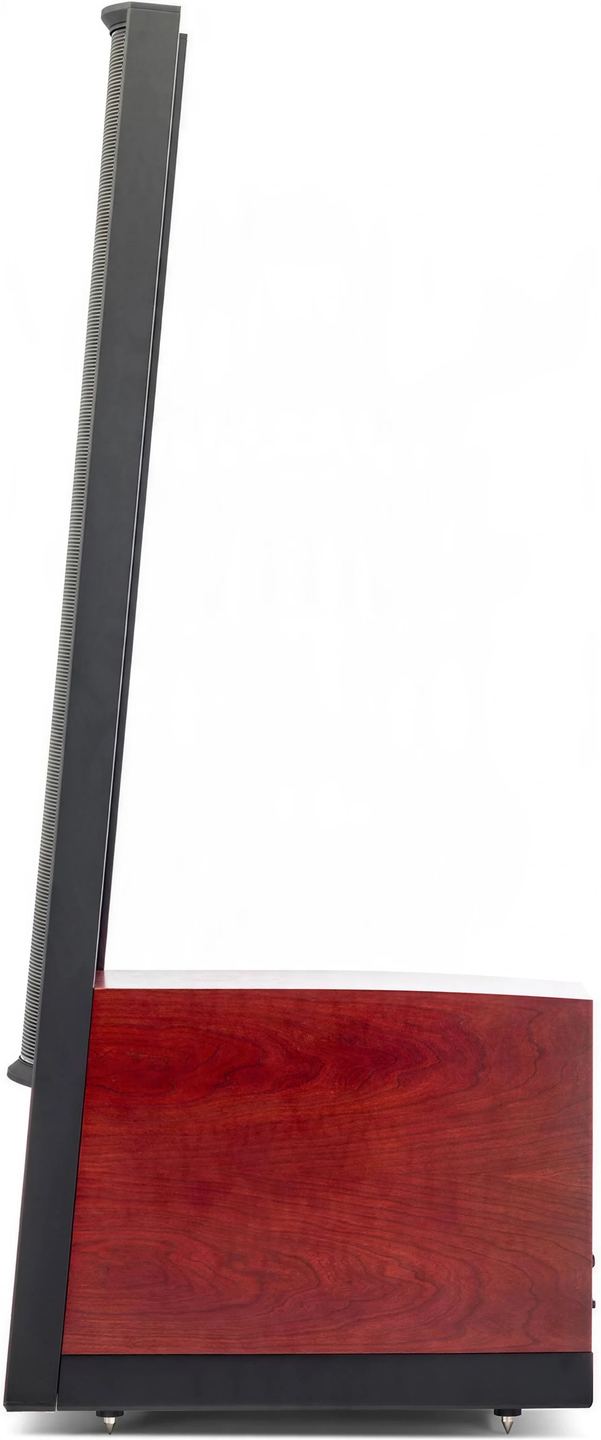
The panel is not flat. It is given a slight horizontal curve during manufacturing (CLS, for Curvilinear Line Source), which spreads sound over a 30° angle. Vertically, its 112 cm height makes it a line source that sends little energy towards the floor and ceiling. Those 30° come with a trade-off: the listening area is narrower than with a speaker using a dome tweeter. The stereo soundstage forms best from a central seat, and a listener sitting far to one side hears less treble.
Dipole radiation that puts the room to work
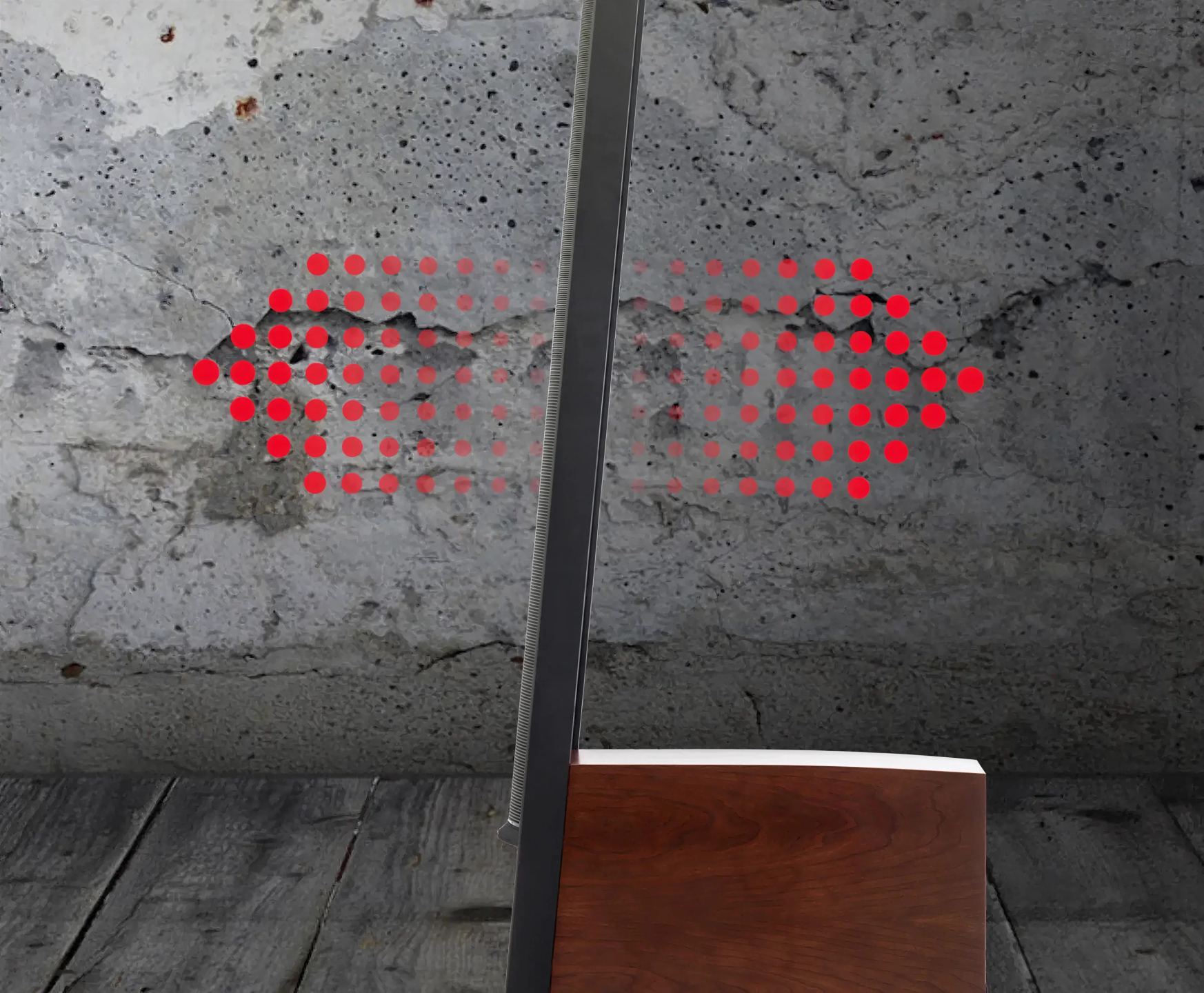
The panel radiates as much sound backwards as forwards, with the rear wave out of phase, and almost none to the sides. The side walls therefore return few of the early reflections that blur instrument placement. The rear wave bounces off the wall behind the speakers, then returns with enough delay to be heard as ambience around the soundstage.
This behaviour comes with one condition: the panel must be at least 76 cm from the rear wall, and further away if the room allows. Too close to a wall, the reflected wave returns too quickly and mixes with the direct sound. The bass cabinet can sit closer to the wall: the rule is to leave at least one woofer diameter, or 20 cm, between its back and the wall.
Two 20 cm woofers mounted back to back
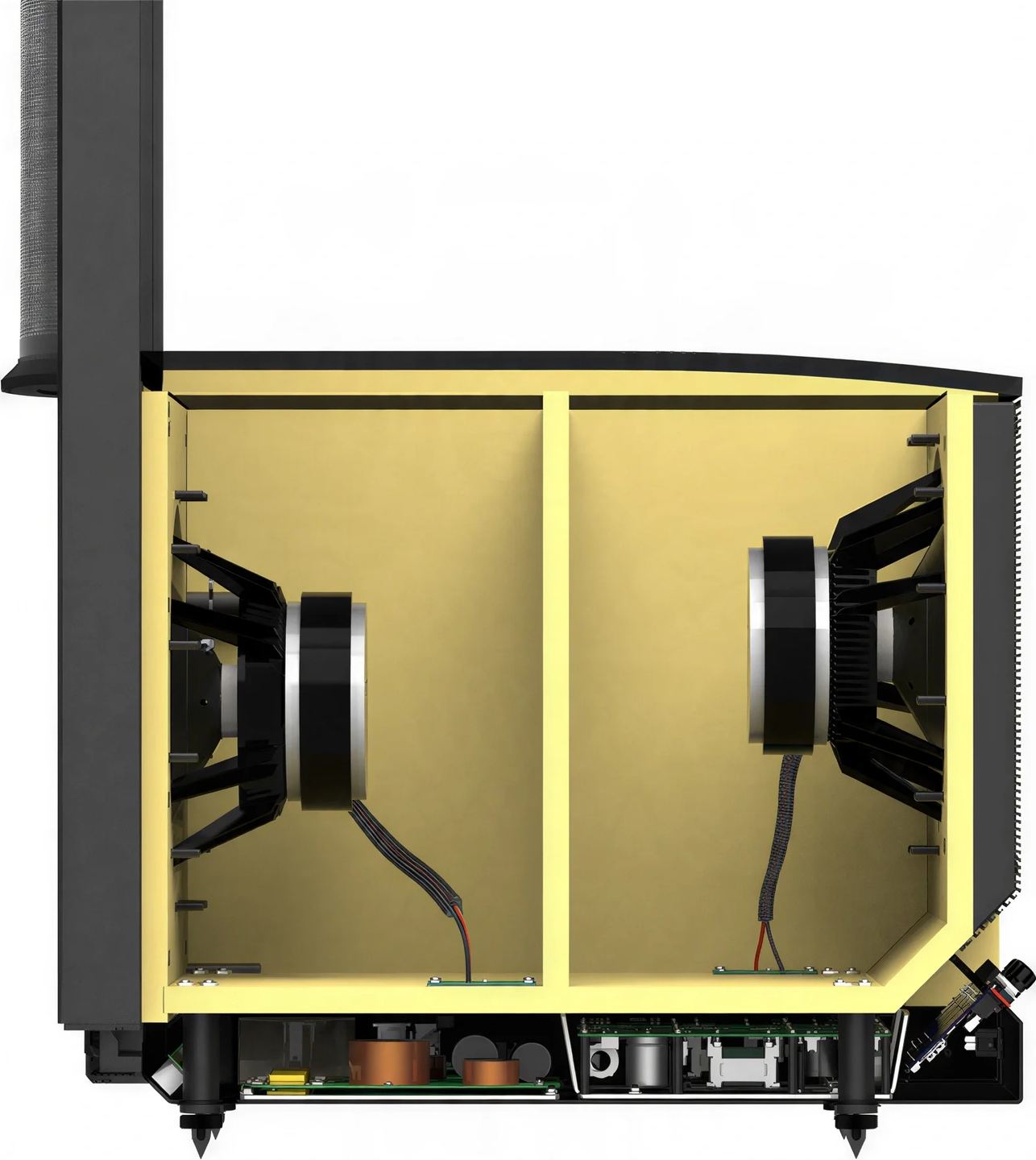
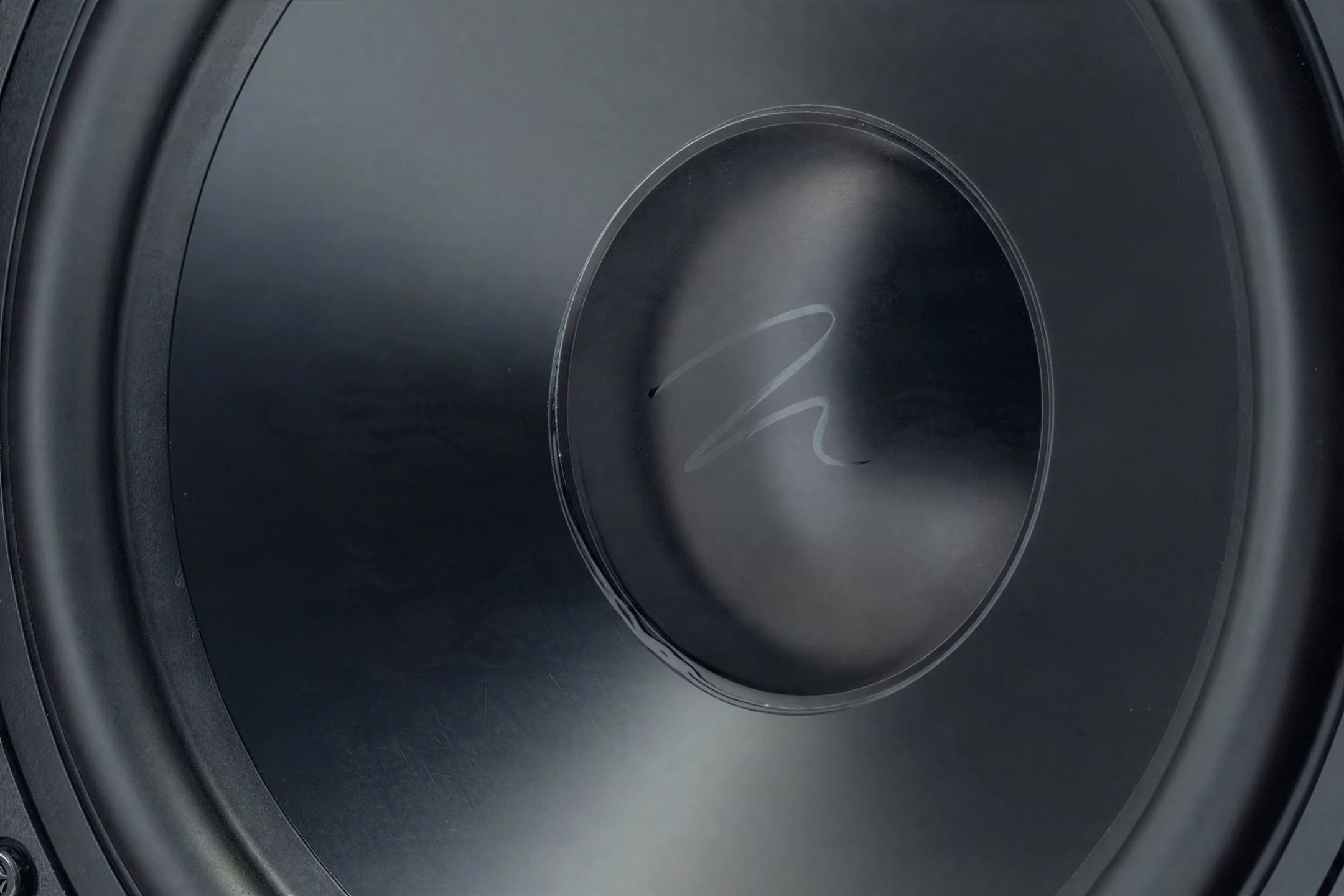
Below 380 Hz, two 20 cm aluminium-cone drivers housed in the base take over. One radiates forwards, the other backwards. Their opposing movements cancel each other out mechanically, greatly reducing cabinet vibrations between 34 and 100 Hz. The baskets are cast, and the long-throw motor assemblies allow substantial diaphragm excursion. The internal chamber is asymmetrical, a shape chosen to limit resonances. A rear-facing flared slot port extends the response down to 34 Hz at ±3 dB.
The AirFrame Blade frame, made from extruded aircraft-grade aluminium alloy, connects the panel to the cabinet. It keeps the panel rigid and isolates it from vibrations in the base, while its tapered arrowhead shape extends the lines of the cabinet. The speaker measures 152 cm high, 26.4 cm wide and 64.6 cm deep, and weighs 35.4 kg. The cabinet is available in high-gloss black, walnut and dark cherry.
A Vojtko crossover and a demanding load for the amplifier
The passive crossover splits the signal at 380 Hz using MartinLogan’s proprietary Vojtko topology. It is hand-assembled with air-core inductors, low-resistance laminated-core inductors and polyester capacitors. It also includes an audio transformer specially wound for the panel, which steps up the voltage from the amplifier to the level required by the stators.
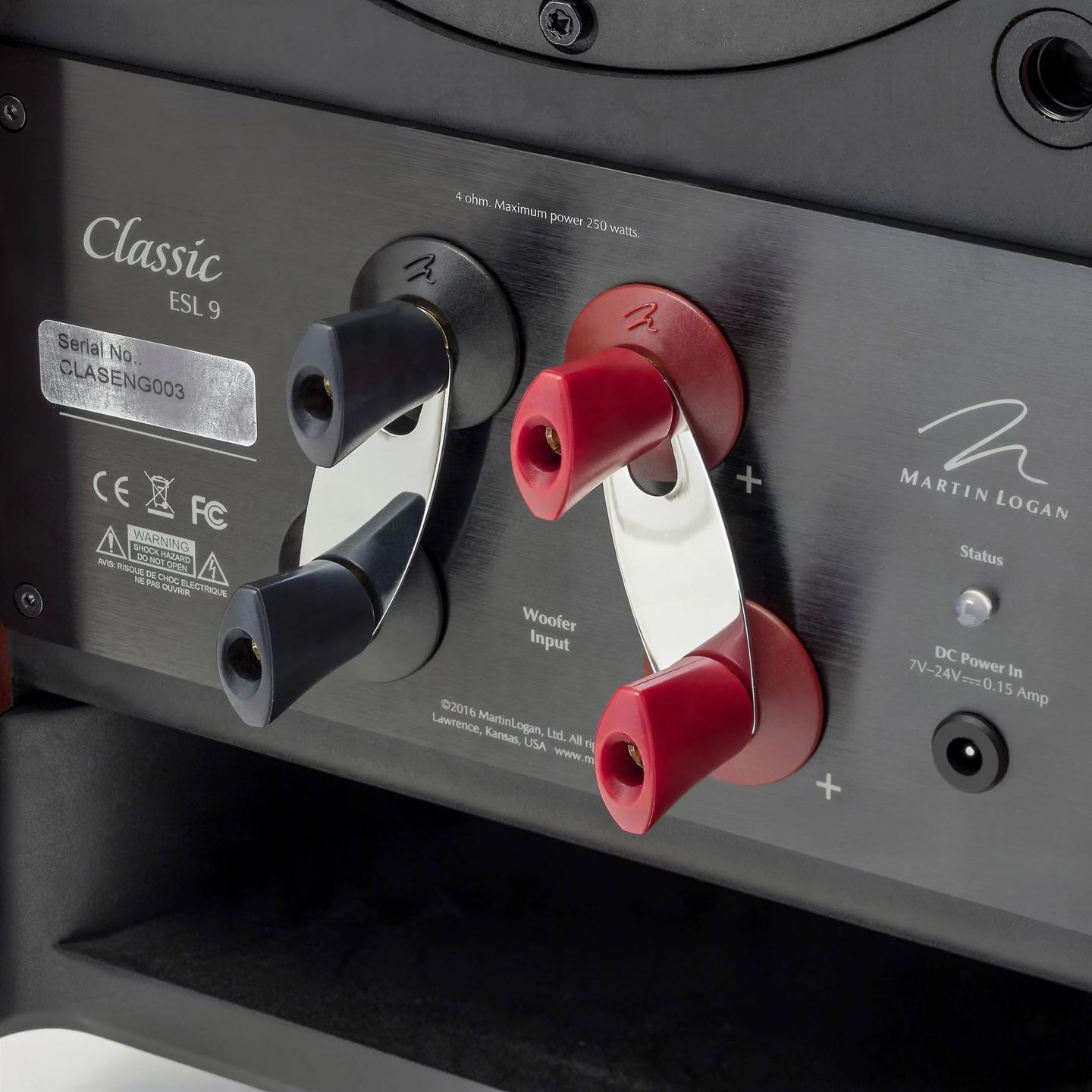
With a sensitivity of 90 dB (2.83 V/1 m), the speaker does not need enormous power to play loudly. It is the impedance that requires attention. Rated at 4 ohms, it drops to 0.8 ohms around 20 kHz, because the panel behaves electrically like a capacitor. The recommended amplifier power range is 20 to 400 W per channel, but the power rating matters less than the amplifier’s ability to remain stable into a very low impedance and deliver current in the treble. There are two pairs of tool-free 5-way binding posts, one pair for the panel and one for the woofers. Jumpers connect them for single-wiring.
Technical specifications
Acoustic performance
- Frequency response: 34 to 23000 Hz ± 3 dB
- Sensitivity: 90 dB / 2.83 V / m
- Crossover frequency: 380 Hz
- Dispersion
- Horizontal: 30°
- Vertical: 112 cm line source
Amplification and impedance
- Recommended amplifier power: 20 to 400 W per channel
- Impedance: 4 Ω, from 0.8 to 20 kHz
- Compatible with 4, 6 or 8 Ω amplifiers
Drivers
- High-frequency driver: XStat™ CLS™ electrostatic transducer
- Panel dimensions: 112 × 23 cm
- Radiating area: 2576 cm²
- Low-frequency drivers: two 20.3 cm woofers
- Cast basket, long excursion, aluminum cone
- Extended pole piece motor
- Non-resonant asymmetric chamber enclosure
Crossover components
- Custom-wound audio transformer
- Air-core inductors
- Low DC resistance (DCR) laminated steel-core inductors
- Polyester capacitors
Connections
- Signal inputs: custom 5-way binding posts, bi-wire compatible, tool-free tightening
Power consumption
- Maximum: 2 W per channel
- Standby: < 1 W per channel
Dimensions and weight
- Dimensions: 152 × 26.4 × 64.6 cm
- Weight: 35.4 kg
Additional information
- Specifications are subject to change without notice
Frequently asked questions
Why does a passive speaker need to be plugged into the mains?
The panel needs a constant bias voltage for the diaphragm to respond to the signal. Without power, it remains silent. A small low-voltage DC power supply provides this voltage, instead of a standard mains lead. Power consumption is low: a maximum of 2 W per speaker and less than 1 W in standby. You simply need a power socket near each speaker.
How do I bi-amp the Classic ESL 9?
The two pairs of binding posts allow for two configurations once the jumpers are removed. In vertical bi-amping, each speaker has its own stereo amplifier: one channel powers the panel, the other the woofers. In horizontal bi-amping, one stereo amplifier powers both panels and a second powers the four woofers, allowing you to choose a model that handles low impedances well for the panels. In both cases, the passive crossover remains in use. The amplifiers must have the same gain, otherwise the balance between the bass and the rest of the frequency range changes.
Should you add a subwoofer for music?
A response extending down to 34 Hz covers the lowest note of a double bass or a four-string electric bass (41 Hz). A subwoofer only offers a real benefit for lower registers, such as those of an organ or certain electronic music, or in a large room. It must then be carefully adjusted to avoid weighing down the bass from the aluminium woofers, which were chosen for their speed.
Can it be integrated into a home theater setup?
Yes, as front left and right speakers connected to a home theater amplifier that can handle a 4-ohm load. The LFE channel in movies (low-frequency effects) requires a separate subwoofer, as the speaker has no dedicated input. An electrostatic center speaker from the same brand maintains consistent timbre across the front speakers, which matters for voices moving across the screen.
How can I adjust the bass if there’s no control on the speaker?
The speaker has neither a bass control nor digital processing. The only adjustment is placement. The rear woofer and port face the wall: moving the cabinet closer to the wall, while keeping at least 20 cm away, increases the bass level. Moving it further away produces tighter bass. It is best to experiment in small steps of a few centimetres, moving both speakers by the same distance.
How does it differ from the Impression ESL 11A in the same series?
The Impression ESL 11A has a wider, 11-inch (approximately 28 cm) XStat panel, and its two 20 cm woofers are active. They are powered by 275 W amplifiers, controlled by a 24-bit Vojtko digital processor and corrected by the ARC (Anthem Room Correction) calibration system, and extend down to 29 Hz. The Classic ESL 9 is the only fully passive floorstanding speaker in the Masterpiece series. It has no room correction in the bass, but it has no electronics to configure and connects directly to the amplifier.
- Eco-contribution included in the sale price.