

How to Choose the Right Speaker Cable: Practical Guide and Recommendations
5 September 2025
Contents
Often relegated to the status of a secondary accessory, the speaker cable is nonetheless an essential link in any Hi-Fi setup. Between excessive marketing claims and the categorical assertions of skeptics, it can be difficult to find your way. This article offers a technical and pragmatic approach to understanding the real characteristics of speaker cables and making informed choices, without falling into the extremes of the audiophile debate.
The essential role of the cable in your system
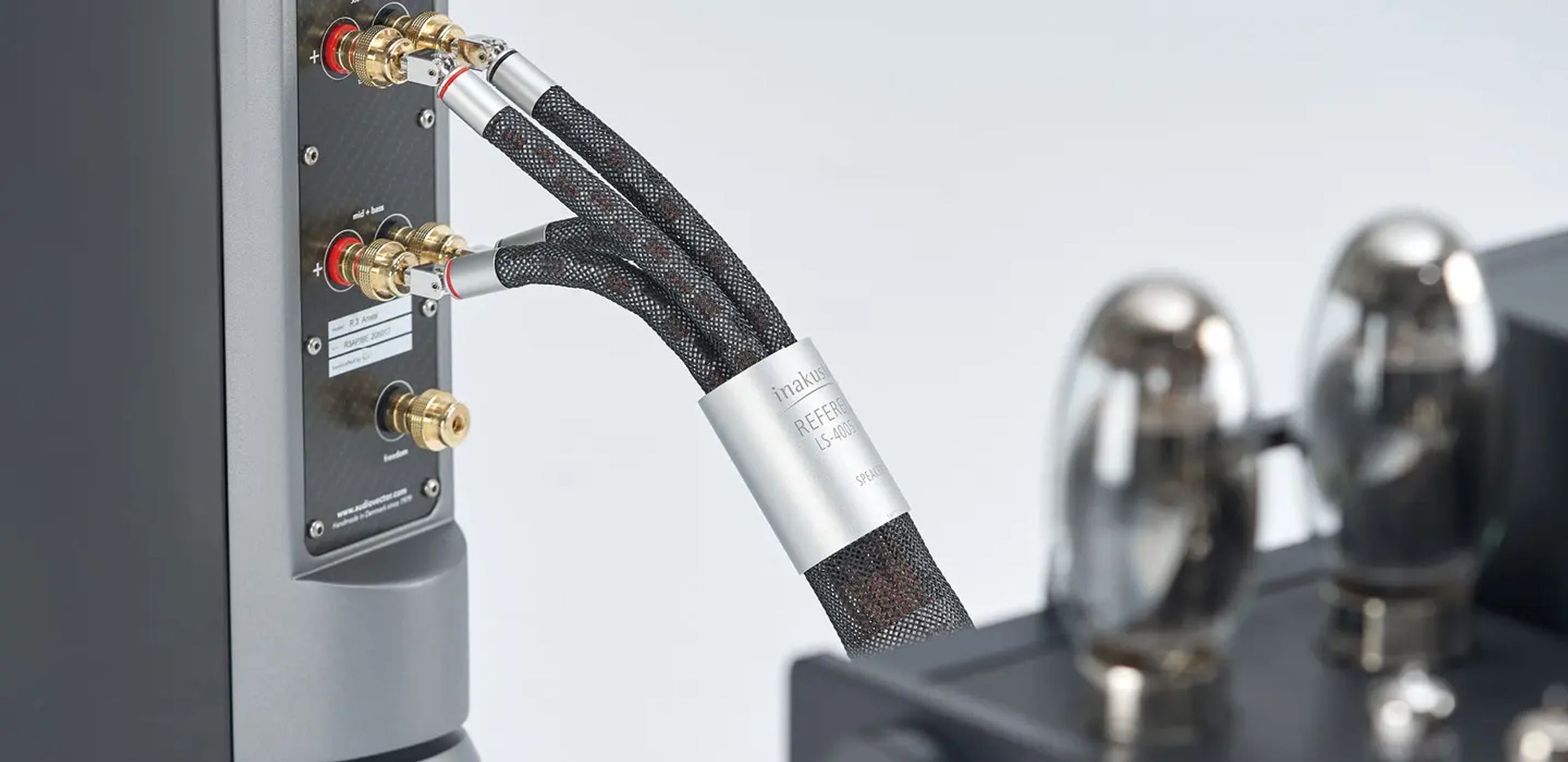
A speaker cable carries the amplified signal from your amplifier to the speakers. Contrary to popular belief, it can never improve the signal, only minimize its degradation. Think of it as a bridge between two banks: the stronger and better sized it is, the better it performs its function.
This energy transfer is not insignificant. We are talking about currents that can reach several amps during musical peaks, across the entire frequency range from 20 Hz to 20 kHz. Each frequency must be transmitted with the same efficiency, which presents specific technical challenges that we will explore.
→ Browse pre-terminated speaker cables
Cross-section: the fundamental criterion
The choice of cable cross-section directly determines its ability to transmit the signal without significant losses. An insufficient cross-section increases resistance, causing a voltage drop that results in a loss of dynamics and precision, particularly in the bass range.
For a conventional home installation, here are the recommended cross-sections according to the distance and impedance of your speakers. For 8-ohm speakers (the most common case), choose a 1.5 mm² cable up to 3 metres, 2.5 mm² between 3 and 10 metres, and 4 mm² beyond that. These values ensure losses below 0.5 dB, which are imperceptible when listening.
Do not hesitate to slightly oversize: a cable larger than necessary causes no problem, whereas an undersized cable audibly degrades performance. For a stereo setup with speakers 4-5 metres from the amplifier, a 2.5 mm² OFC copper cable is an excellent standard.
→ Compare speaker cables by the metre
Materials and their real impact
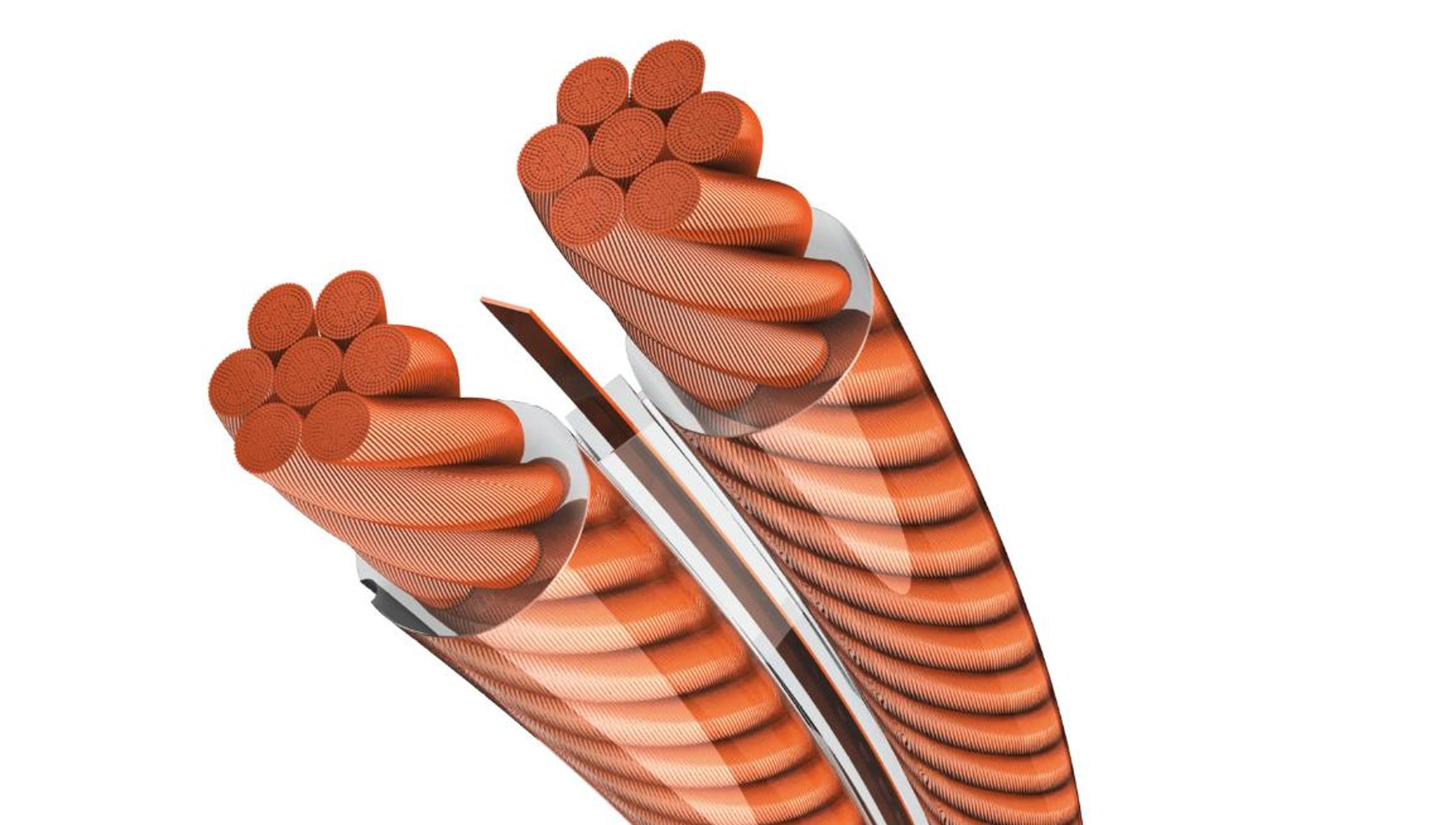
Copper remains the reference material for audio cables, offering the best performance-to-price ratio. OFC (Oxygen Free Copper), free of impurities, has slightly higher conductivity than standard copper. Although the improvement remains marginal over short distances, the small additional cost generally justifies this choice.
Silver, with conductivity 6% higher than copper, provides better definition in the high and low frequencies, which can improve the rendering of certain systems, for example with a recessed tweeter. Conversely, this can make the sound too bright with a high-efficiency tweeter. Silver-plated or solid silver cables are therefore a choice to be adapted according to the specific characteristics of your system.
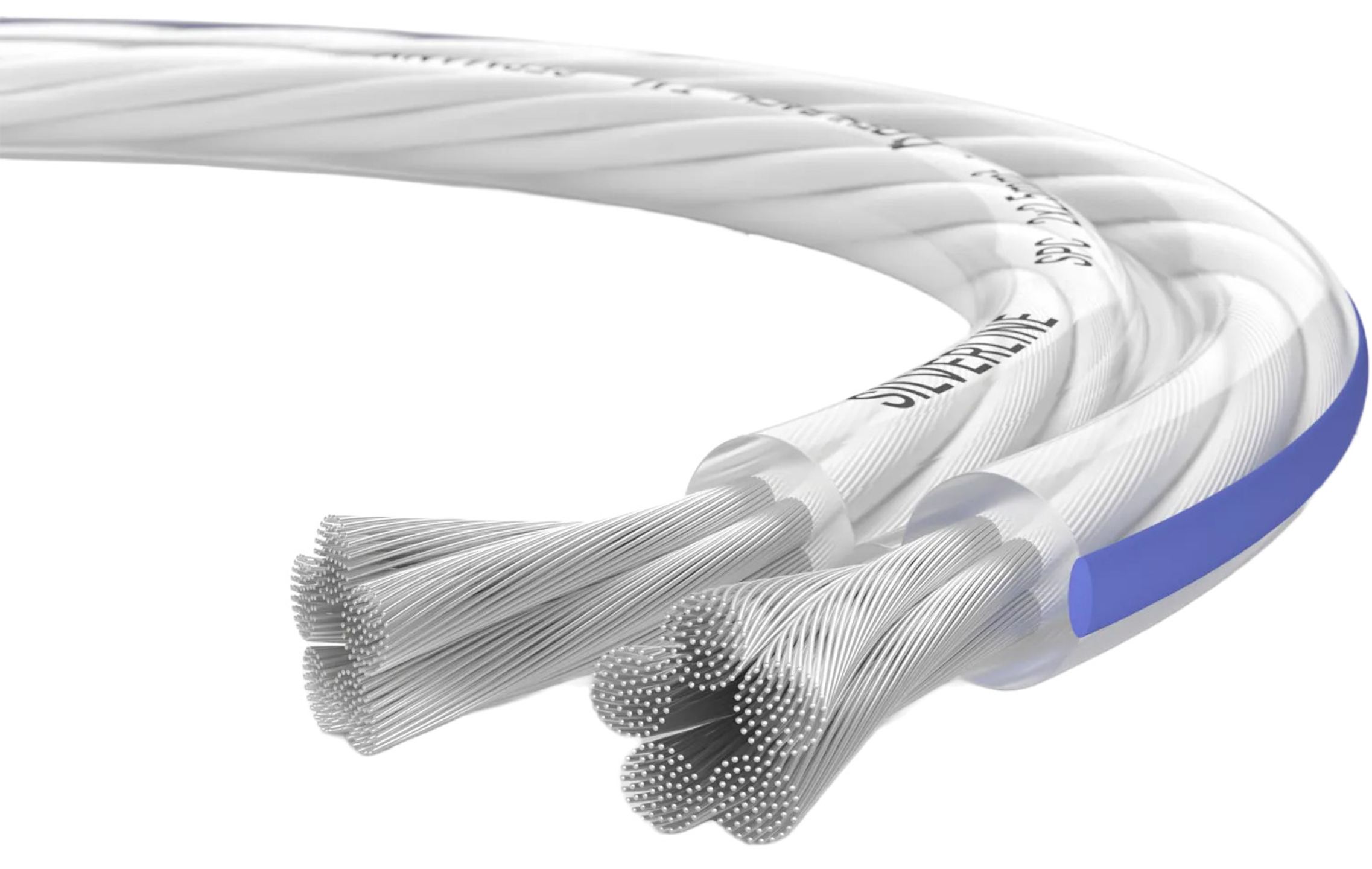
The insulation also plays its part, mainly in terms of cable capacitance. Standard PVC is perfectly suitable for most uses. High-performance insulation such as Teflon or polyethylene only provides measurable improvements in very specific cases, generally outside the home environment.
Connectors and connections
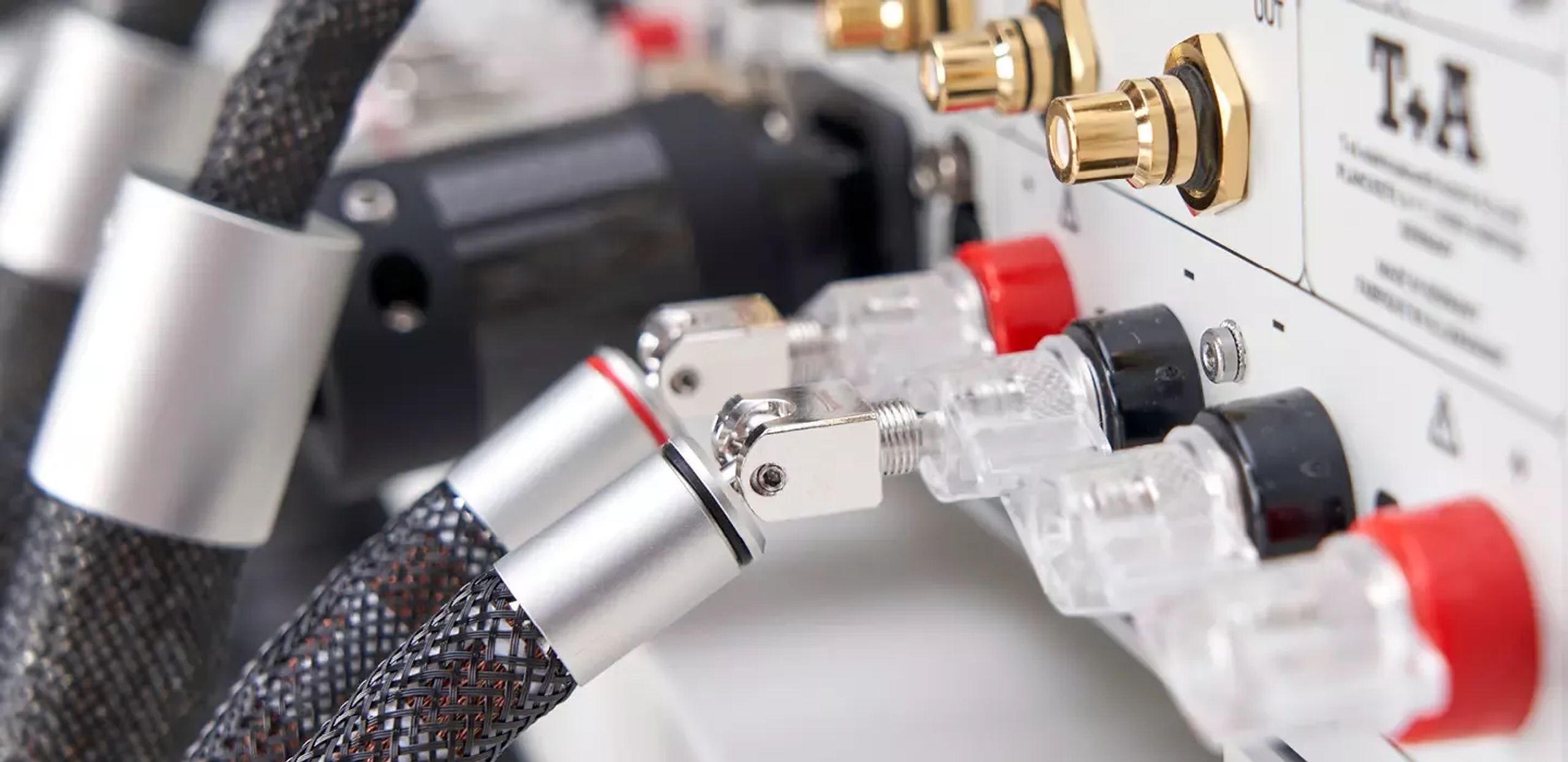
The quality of the connection to the terminals directly influences signal transmission. Three main options are available to you, each with its advantages.
Bare wire tightened directly in the terminals theoretically offers the best electrical contact. Simple and free, it nevertheless requires regular maintenance because copper oxidizes over time. Retightening every six months maintains an optimal connection.
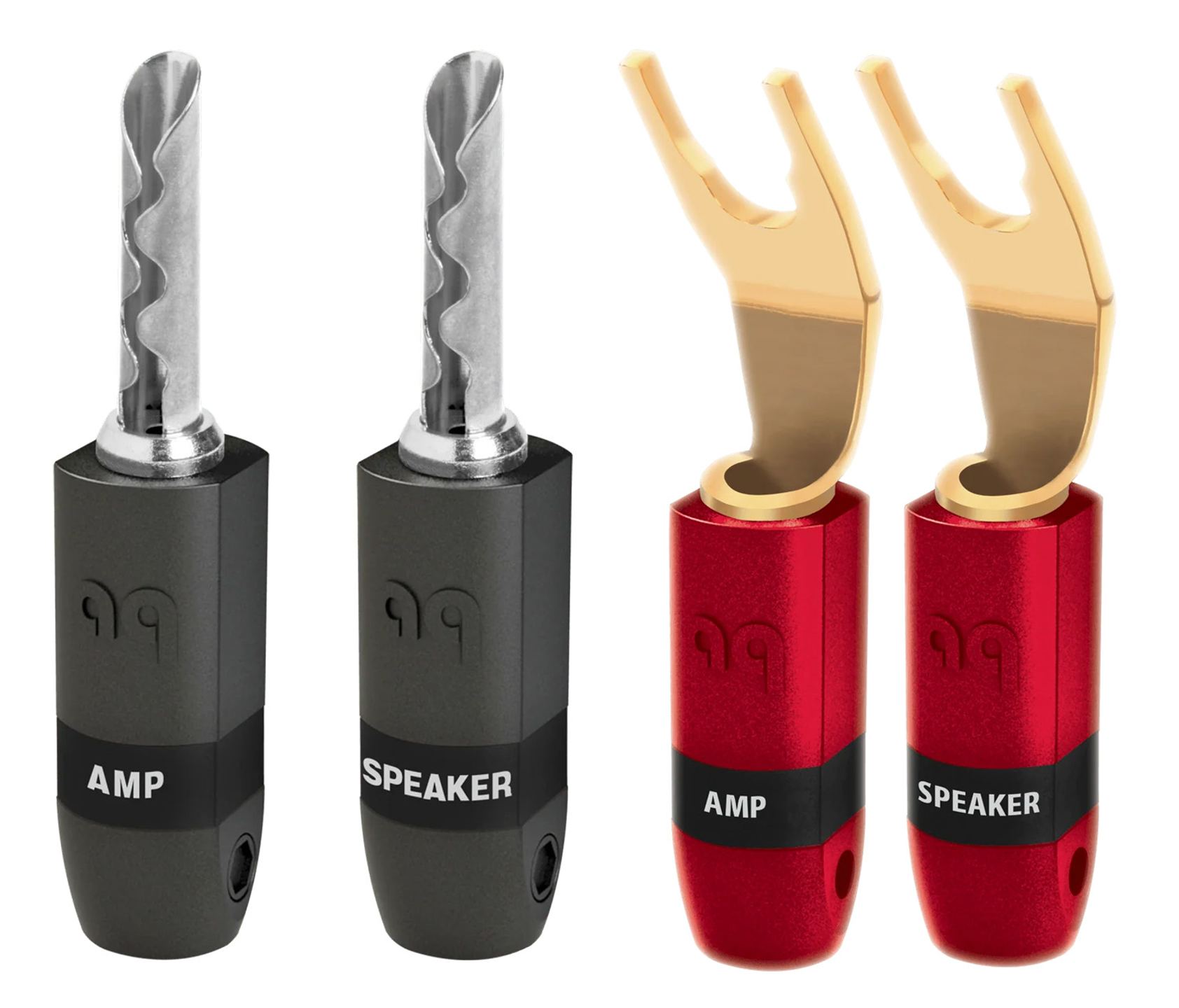
Banana plugs provide convenience and quick connection, ideal if you regularly reconfigure your system. Spade connectors offer maximum contact surface and are perfectly suited to permanent installations. In all cases, choose quality connectors with good plating (gold or rhodium) and careful crimping.
The golden rule remains simple: good bare wire is better than a poor connector. If you opt for connectors, invest in quality; allow 30 to 60 euros to properly equip a pair of cables.
Advanced electrical phenomena
Cable inductance and capacitance create filtering effects that can, in some cases, become audible. Inductance acts like a natural low-pass filter, potentially attenuating the highest frequencies. Over 10 metres of standard cable, this attenuation remains below 0.5 dB at 20 kHz, however, which is negligible for most listeners.
Capacitance, on the other hand, can in rare cases destabilize certain amplifiers, particularly models without negative feedback. Most modern amplifiers include protection against this phenomenon. If you own a vintage amplifier or a minimalist audiophile model, avoid cables with very high capacitance (above 300 pF/m).
The skin effect, often cited in marketing arguments, remains negligible at audio frequencies. At 20 kHz, the penetration depth in copper reaches 0.66 mm; conventional stranded cables, made up of much finer strands, therefore do not suffer from this phenomenon.
Home theater configuration and bi-amplification
A home theater system has specific constraints. The front and center channels, which carry most of the information, deserve cables with a generous cross-section (2.5 to 4 mm²). Surround speakers, often farther away but less heavily used, can make do with 1.5 to 2.5 mm² depending on the distance.
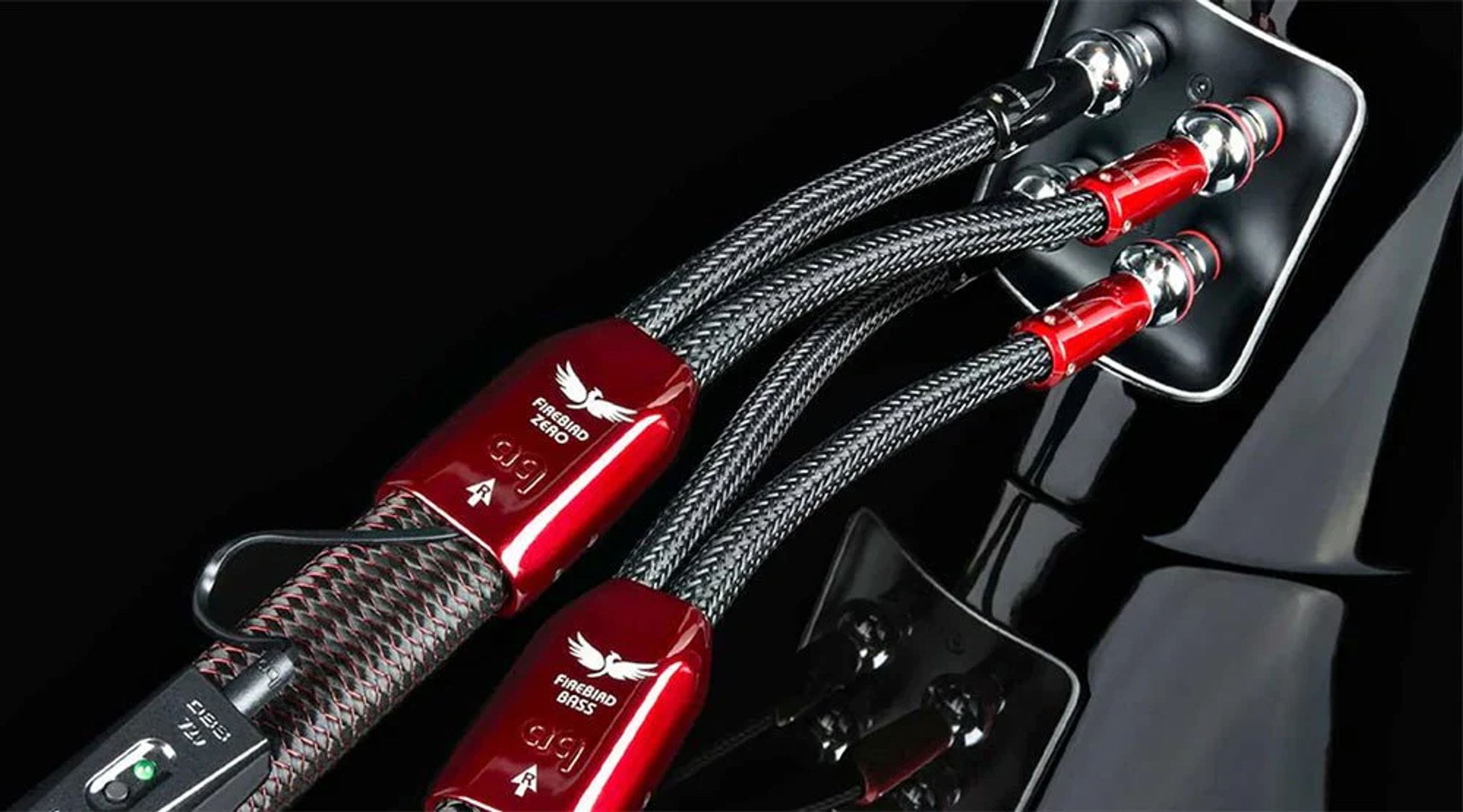
If your speakers allow bi-wiring or bi-amplification, these configurations can provide subtle improvements. Bi-wiring simply doubles the cables between the amplifier and speakers, slightly reducing overall resistance. Bi-amplification, which is more complex, uses several amplification channels per speaker and can significantly improve control and dynamics, particularly in the bass range.
Smart budget balance
A simple principle guides rational investment: devote between 5 and 10% of your system’s total budget to cables. For a 2000-euro system, 100 to 200 euros for cables represents a relevant balance. Beyond that, improvements become marginal or even nonexistent.
A reasonably priced quality cable—OFC copper, appropriate cross-section, careful construction—costs between 5 and 15 euros per metre. This is more than enough to fully exploit the potential of the vast majority of systems.
Keep the real priorities in mind: your room acoustics and speaker placement influence sound far more than any cable. Optimal speaker positioning can improve your listening experience by 30 to 50%, whereas the best cable in the world will at best provide only a few percent.
Installation and best practices
Careful installation ensures optimal long-term performance. Strictly observe polarity; a reversal considerably degrades the stereo image and partially cancels out low frequencies. Use cables with clear markings (coloured jacket, lettering) to avoid any mistakes.
Keep speaker cables away from sources of electromagnetic interference. A gap of 30 centimetres from power cables is generally sufficient. Avoid winding excess cable into a tight coil, as this would increase inductance. Prefer loose loops or an S-shaped run.
For fixed installations, mechanically protect cables in walkways. Conduits or cable trunking also make subsequent modifications easier. Periodically check the tightness of connections, particularly if you use bare wire.
Conclusion
A good speaker cable can provide an improvement, but this effect remains subtle and becomes truly noticeable only after properly choosing and positioning the speakers, amplifier, and sources. It is essential to match cable quality to the overall level of the system: there is no point in investing in a very high-end cable for a modest setup. Moving up in cable quality naturally accompanies upgrades to the rest of the system, for a balanced and coherent result.
Frequently asked questions
What is the difference between an OFC cable and a standard copper cable?
OFC (oxygen-free copper), also known as oxygen-free copper, is melted under strict conditions to minimize the presence of oxygen, which can cause microbubbles and oxidation that may affect the cable’s electrical properties. Conductivity is slightly higher with OFC, but the difference remains marginal over typical domestic distances. Its copper purity exceeds 99.95%, giving the material unrivalled electrical conductivity of over 100% IACS (International Annealed Copper Standard). The modest additional cost generally justifies this choice for a quality Hi-Fi installation.
Do speaker cables really need to be broken in?
Cable burn-in remains a debated topic among audiophiles. To get the most out of it, we recommend keeping the new setup for at least two weeks. Noticeable improvements generally appear after several hours of use.
Do the cables need to be the same length on both sides?
No, a difference of up to 40% between the two cables (for example, 7 m and 10 m) is not audible. The electrical signal travels at a speed close to that of light in copper (270,000 km/s), so there is no issue with time delay. The only exception is certain amplifiers that use the cable as an integral part of the circuit and require identical lengths (see the manual). However, for potential resale and installation flexibility, cables of the same length remain preferable if your budget allows.
What is the maximum distance for a speaker cable?
Before a cable’s length noticeably degrades the sound, it needs to reach around 15 meters with a reasonably good-quality cable. Beyond 10 meters, use at least 4 mm² cable. For distances over 20 meters, choose 6 mm² cable or consider a remote amplification solution. Losses become significant when the cable resistance exceeds 5% of the speaker’s impedance. In home theater systems, surround speakers can easily use 15–20 meters of 2.5 mm² cable without audible degradation.
Can standard electrical cable be used for Hi-Fi speakers?
Standard electrical cable is designed to transmit a 50 Hz power signal. Its inherent capacitance is not optimized. It is technically possible to use it over short distances and at modest power levels, but dedicated speaker cable offers better electrical characteristics (optimized inductance and capacitance). For a serious Hi-Fi installation, invest in suitable OFC audio cable; the price difference remains modest for a genuine performance gain.
Can different brands or types of cables be mixed?
Technically, yes, but for optimal sonic consistency, it is best to use the same cables throughout. If you need to mix, prioritize using the same cables for the left/right channels in stereo, and reserve variations for front/rear differences in home theater. In bi-wiring, some people deliberately use different cables: thick-gauge copper for bass, and thinner silver-plated cable for treble. This approach remains controversial, and the gains are marginal compared with two good identical cables.
Popular products
You may also like to read
 What cable gauge should I choose for my speakers?Tutorials and practical guides
 When to Install a Power Conditioner for Your Hi-Fi Equipment?Comparisons and buying guides
 New Furutech Origin Power NCF (R) Power CablesHi-fi and home cinema news
 ISOTEK: the importance of power qualityConcepts and technologies
 Wireworld Series 10: A Range of Cables Enhanced with Technological InnovationsHi-fi and home cinema news
 Optimize your audio system with Inakustik Referencz cablesComparisons and buying guides


