

The complete guide to choosing the right gaming headset
16 October 2025
Contents
A gaming headset can cost anything from around thirty euros to nearly 1,000 euros, and almost all promise the same thing on the box: precise sound, a clear microphone and comfort for long evenings. The real differences lie in less obvious details, such as how the headset connects to the console, the shape of its earcups, its weight or how it handles spatial audio. This guide goes through these criteria one by one, explaining technical terms along the way, so that your choice is based on actual use rather than packaging claims.
→ Explore the gaming headsets available on the site
Weight and ear cushions determine comfort
Over a three- or four-hour session, a few dozen grams and unevenly distributed pressure are enough to make a headset uncomfortable to wear. At around 300 grams, most people soon forget they are wearing one, and that is roughly the weight of the Beyerdynamic MMX 300 PRO, at 314 grams without its cable. Heavier models are not necessarily less comfortable, provided the weight rests on a wide headband rather than on a single point at the top of the head. This is the approach taken by the Audeze Maxwell 2, whose large planar drivers add weight and which distributes the load through a wider, ventilated strap beneath the headband.
The ear cushions matter as much as the weight. Memory foam gradually moulds to the shape of the face and improves the seal around the ear. A faux leather covering provides better isolation and slightly boosts bass, because air remains trapped inside the earcup, but it gets hot quickly in summer. Velour lets the skin breathe at the cost of slightly less isolation. Beyerdynamic fits its MMX headsets with velour ear cushions and recesses the headband cushion around the fontanelle, the most sensitive area at the top of the head. Over the headset’s lifespan, the ability to replace these wear parts also matters: ear cushions, headband cushions and cables can be ordered separately from Beyerdynamic, and the Maxwell 2’s ear cushions attach magnetically.
Glasses wearers should pay attention to clamping force. A headset that stays securely in place without pressing the arms of your glasses against your temples can be identified within a few minutes of trying it on, far more reliably than by reading a specification sheet.
Wired, 2.4 GHz or Bluetooth: three different connections
A wired headset plugged into a 3.5 mm jack receives a signal already converted to analogue by the source device, whether that is the controller, console or PC motherboard. Quality therefore depends partly on this circuitry, which can be very basic in a controller. A USB headset, by contrast, has its own digital-to-analogue converter (DAC, the component that turns the digital stream into an audible electrical signal) and its own amplifier, making its sound consistent regardless of the machine. A cable remains the simplest connection: no battery, no delay, no interference.
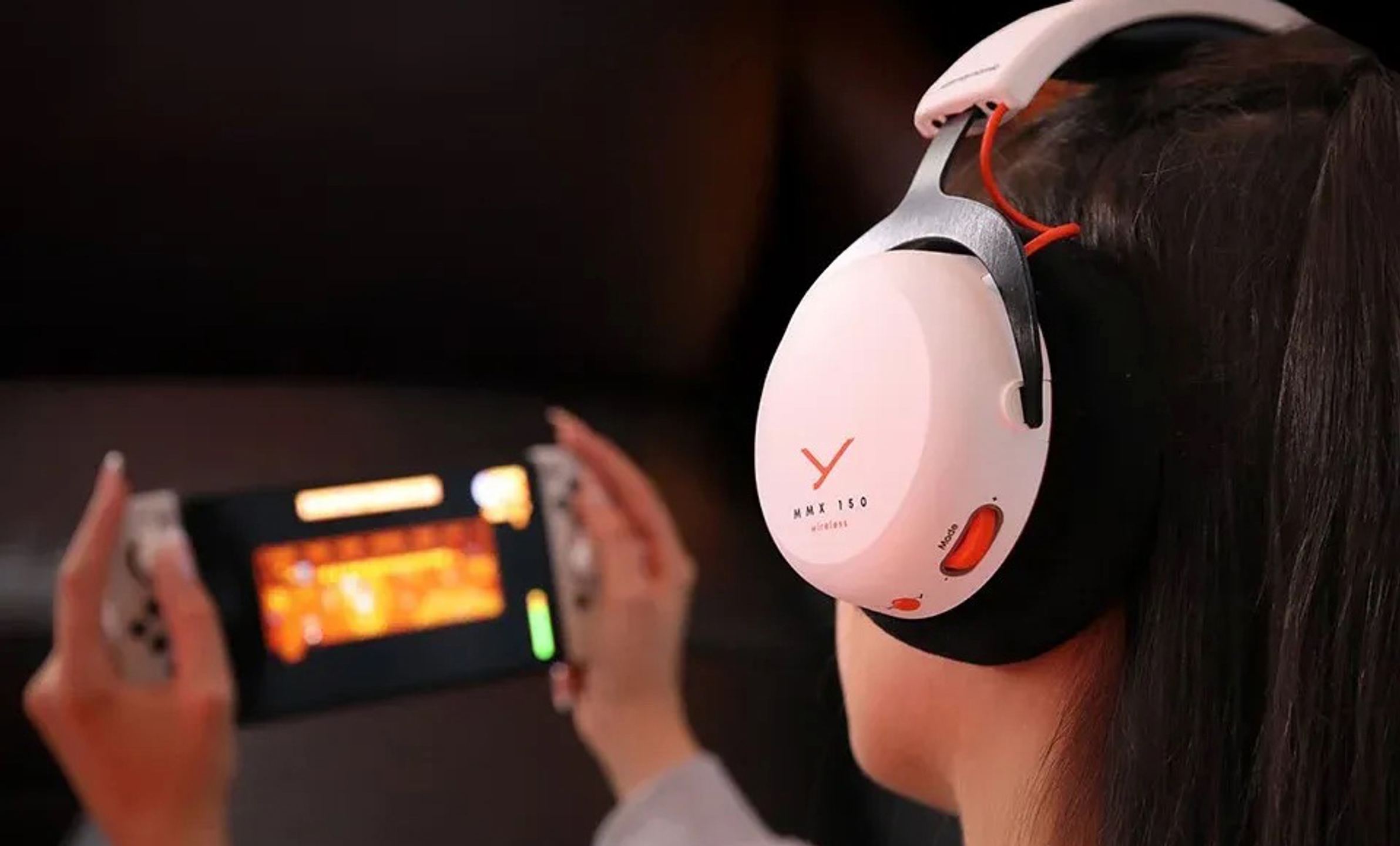
Wireless falls into two categories that should not be confused. A 2.4 GHz connection uses a small USB transmitter (the dongle) supplied with the headset and achieves latency as low as 20 to 30 milliseconds, a delay that is imperceptible between picture and sound. Classic Bluetooth using SBC, the basic codec understood by all devices, typically runs between 150 and 250 milliseconds: enough to put a gunshot out of sync with its sound, which is distracting in action games. Low-latency modes bring this figure down to around 40 milliseconds, and Bluetooth LE Audio with its LC3 codec is starting to appear on recent headsets, such as the Maxwell 2. Most high-end wireless models now combine both: the dongle for the console or PC, Bluetooth for the phone.
Battery life is the trade-off with wireless, and it varies greatly from one model to another, even within the same range. Audeze claims more than 80 hours for the Maxwell 2 at moderate volume, thanks to a 1,800 mAh battery, with a 20-minute charge restoring around 24 hours of listening; the Maxwell 2 ANC version, which also powers its noise cancellation, drops to around 40 hours. USB-C charging that lets you keep playing while charging does far more to limit interruptions than a large advertised capacity.
Each console has its own connection rules
The PC accepts everything: jack, USB, 2.4 GHz dongle and Bluetooth. It is also the platform where manufacturers’ software provides access to the equaliser and profiles.
The PS5 does not transmit game audio over Bluetooth. A headset connects via the DualSense controller’s jack socket, USB, a compatible 2.4 GHz dongle or PlayStation Link, Sony’s wireless protocol reserved for its own headsets and earphones. The console’s 3D audio, called Tempest 3D AudioTech, is processed by the PS5 itself and works with any stereo headset connected via USB or to the controller: there is no need for a “3D-compatible” model to enjoy it.
The Xbox does not support Bluetooth audio either. Wireless headsets must incorporate the proprietary Xbox Wireless connection licensed by Microsoft, which explains why some manufacturers offer two separate versions of the same headset: the Maxwell 2 comes in PlayStation and Xbox versions, and only the latter connects directly to an Xbox. Otherwise, the controller’s jack socket remains available. Spatial audio is handled by Windows Sonic, which is free, or Dolby Atmos for Headphones, paid for through the Dolby Access app (the licence is included with the Xbox version of the Maxwell 2).
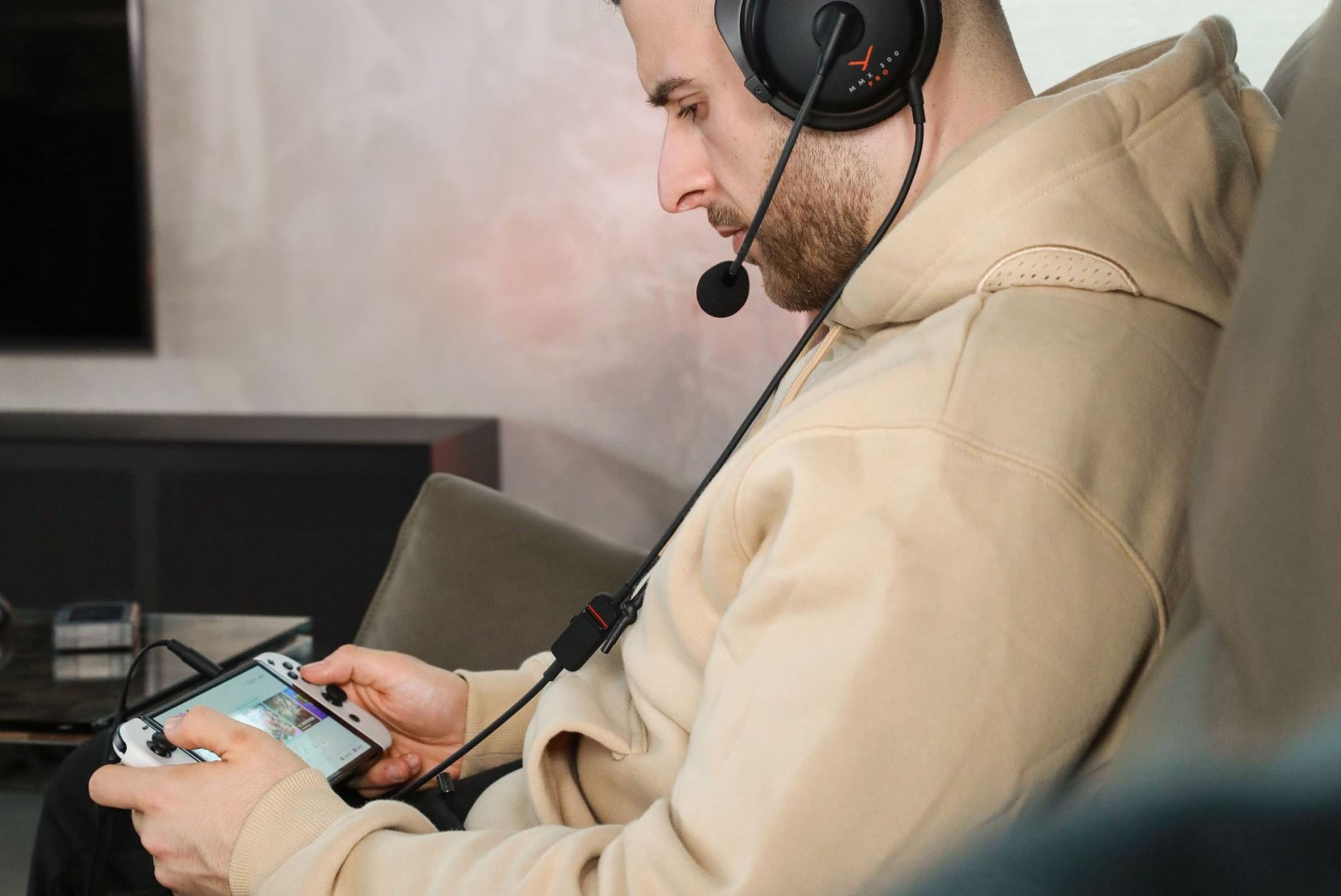
The Switch and Switch 2 support Bluetooth headsets, but only one at a time and without the microphone: Bluetooth voice chat does not work on them. To play online with voice chat, you need to use the console’s jack socket, a USB headset or a USB-C dongle, which plugs directly into the console in handheld mode or into the dock.
Dynamic or planar magnetic drivers
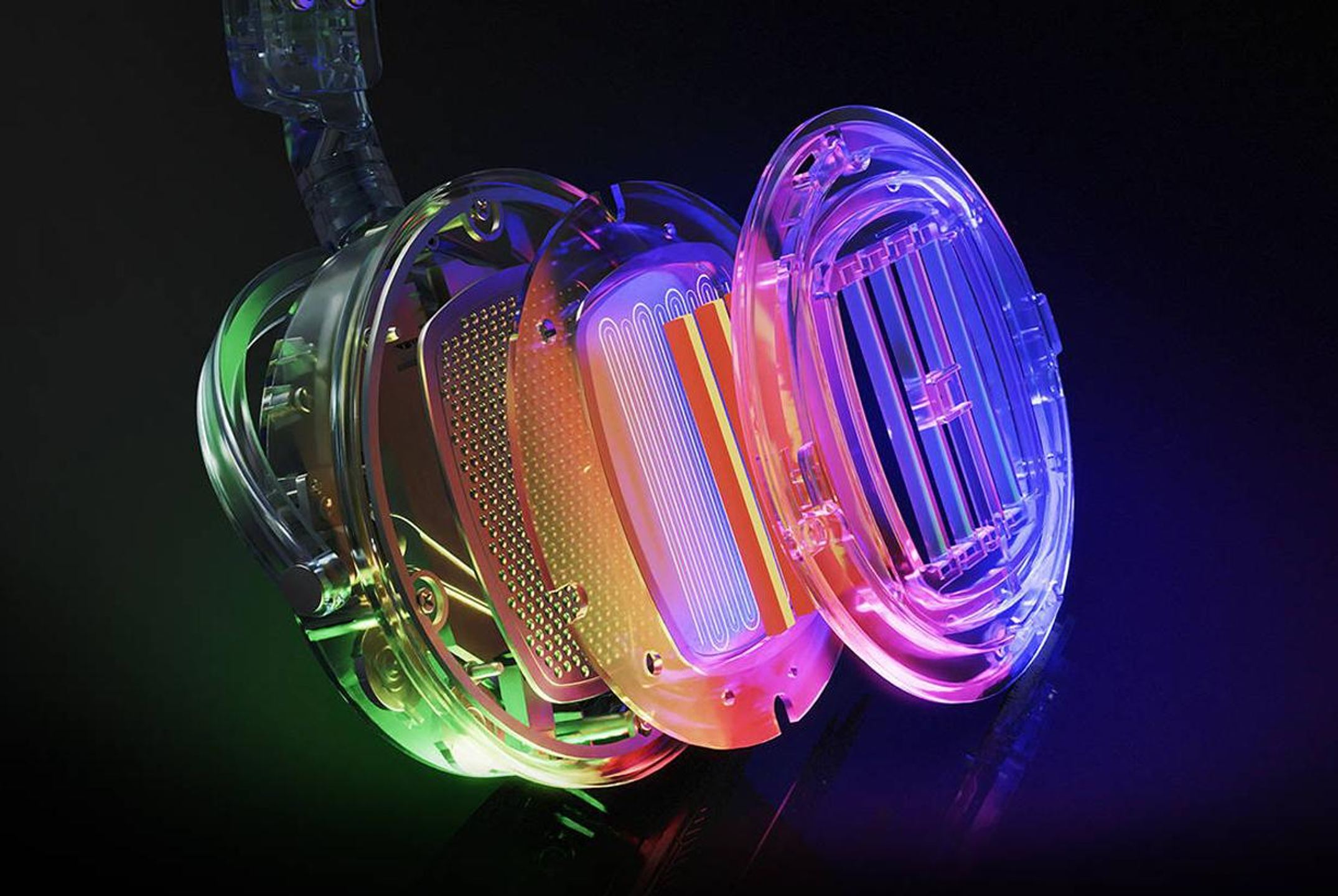
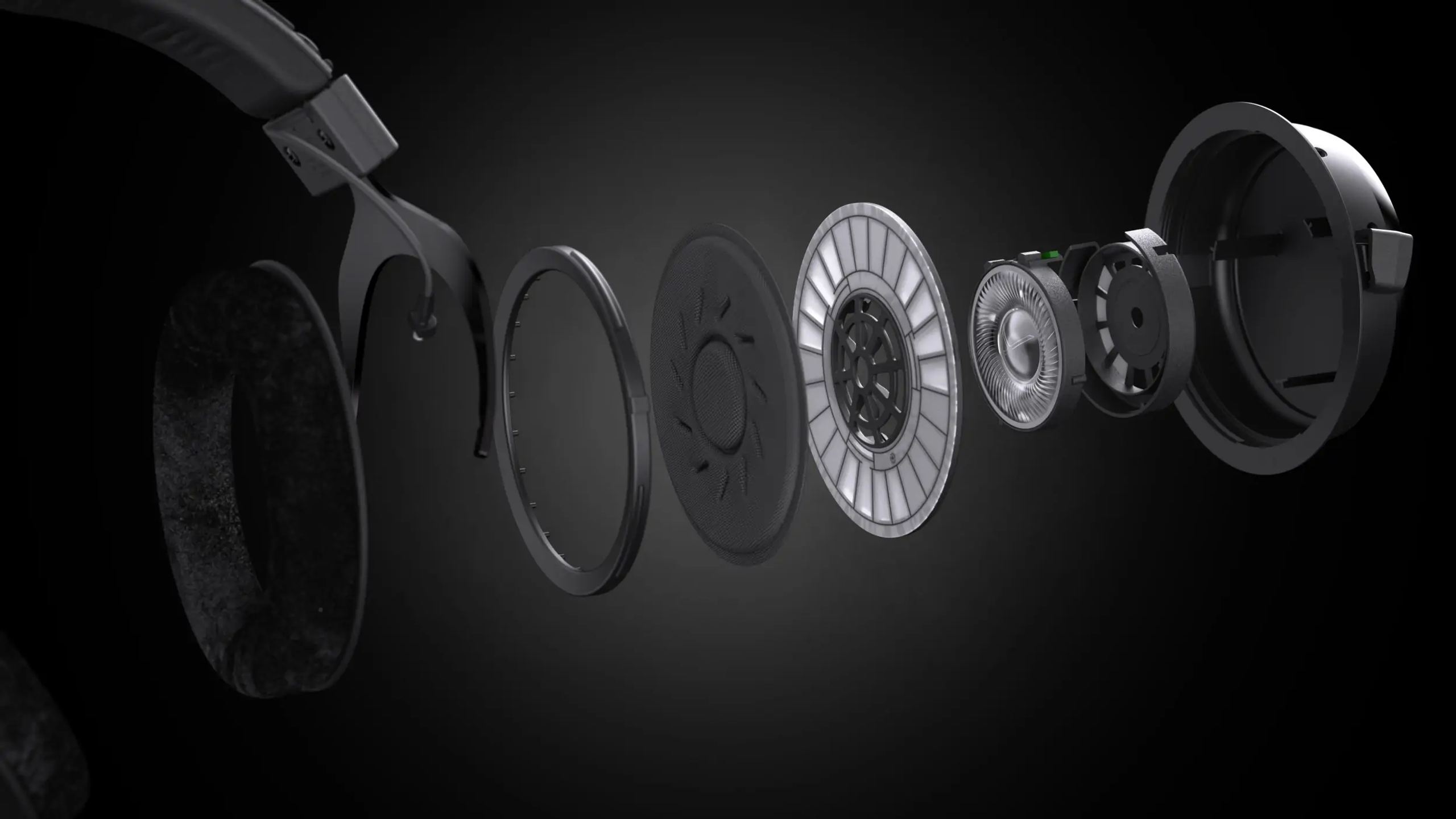
The driver is the part that converts the electrical signal into sound, the equivalent of a driver in a loudspeaker. The vast majority of gaming headsets use 40 to 50 mm dynamic drivers: a dome-shaped diaphragm connected to a coil that moves within a magnet’s field. This proven technology offers good efficiency and controlled costs, while diaphragm materials (cellulose, carbon composites, metallised films) aim to combine lightness and rigidity to follow the brief attacks of a gunshot or impact. Beyerdynamic fits its MMX headsets with the STELLAR.45, the same 45 mm driver used in its studio headphones.
A planar magnetic driver works differently. A very thin diaphragm, with an etched conductive circuit running across it, is stretched between rows of magnets and moves as a single unit across its entire surface, rather than being pushed from its centre. Distortion, meaning the alterations the driver adds to the signal, remains very low: Audeze claims less than 0.1% at 100 dB for the Maxwell 2, with a frequency response of 10 Hz to 50 kHz. These 90 mm planar drivers reproduce textures and very low-level details with a clarity rarely found in a gaming headset, benefiting soundtrack music as much as distant footsteps. The downside is weight and power consumption: a planar driver requires more current than a dynamic driver, and it is the Maxwell 2’s large battery, not its driver technology, that explains its battery life.
Closed-back or open-back depending on the room you play in
A closed-back headset has sealed earcups behind the drivers. It isolates outside noise, lets little sound escape to those around you and naturally reinforces bass thanks to the enclosed volume of air. It is the logical choice in a shared living room, a bedroom where someone is sleeping or beside a PC with noisy fans.
An open-back headset, by contrast, leaves the rear of the drivers exposed to the air behind a grille. The sound feels less confined inside your head and the soundstage widens, helping you locate an opponent, but everything you listen to can be heard in the room, and ambient noise passes through unfiltered. Beyerdynamic offers precisely this choice with two sibling headsets: the closed-back MMX 300 PRO and the open-back MMX 330 PRO share the same STELLAR.45 driver, the same 48-ohm impedance and an almost identical weight (318 grams for the open-back model). The decision is therefore not about quality, but about the gaming environment: someone playing alone in a quiet room will gain a more airy sound with the 330, while someone in a shared living room will be better served by the 300.
→ Understanding headphone impedance
Spatial audio is calculated, not plugged in
A headset’s “virtual 7.1” or “3D” sound does not come from eight speakers hidden in the earcups: two drivers are enough, and digital signal processing recreates the impression of sources positioned around you. This calculation relies on an HRTF (head-related transfer function), a model of how our brain locates a sound: a slight difference in arrival time between the two ears, a difference in volume, and the changes in timbre caused by the shape of the outer ear when sounds come from the front, behind or above.
This processing can take place in three locations: in the console (Tempest on PS5), in the operating system (Windows Sonic, Dolby Atmos for Headphones or DTS Headphone:X on PC and Xbox) or in the headset itself and its software. Recent games, developed with audio engines such as Wwise or FMOD, transmit the position of each sound, providing much more reliable positioning than a stereo mix widened after the fact. Two precautions are necessary. Generic HRTFs do not suit everyone’s ears, and the same setting can sound striking to one player and vague to another. Stacking two processing systems, for example the headset’s virtual surround on top of Tempest or Dolby Atmos, often blurs positioning rather than improving it: it is best to enable only one.
The microphone and communication settings
The microphone is what separates a gaming headset from hi-fi headphones, and its quality is judged first by its pickup pattern. A cardioid microphone mainly captures what is in front of it, the mouth, and much less sound from the sides and rear, such as a keyboard or television. Beyerdynamic equips its MMX headsets with a 13 mm electret condenser capsule of this type, supplied with a pop filter that softens plosives. Recent wireless models add digital filtering: the Maxwell 2 combines two beamforming microphones, which electronically focus on the voice, and AI noise reduction processing.
Three settings make a real difference in everyday use. A microphone mute button that is easy to find by feel prevents awkward silences during team games. Sidetone, which feeds a little of your own voice back into the headset, prevents you from speaking too loudly when your ears are isolated. Finally, a detachable or retractable microphone lets you keep the headset on while on the train or at the office without looking like a switchboard operator.
Active noise cancellation and software
Active noise cancellation (ANC) uses microphones placed on the earcups to measure ambient noise, then generates an inverse signal to cancel it out. It mainly works on low, continuous noises, such as the hum of a PC, air conditioning or a train. On the Maxwell 2 ANC, Audeze claims up to 35 dB of attenuation. On headsets that offer it, an ambient mode does the opposite and lets voices in the room through, useful for answering someone without removing the headset. Noise cancellation costs battery life, and some players dislike the sensation of total isolation, making an easily accessible switch worthwhile.
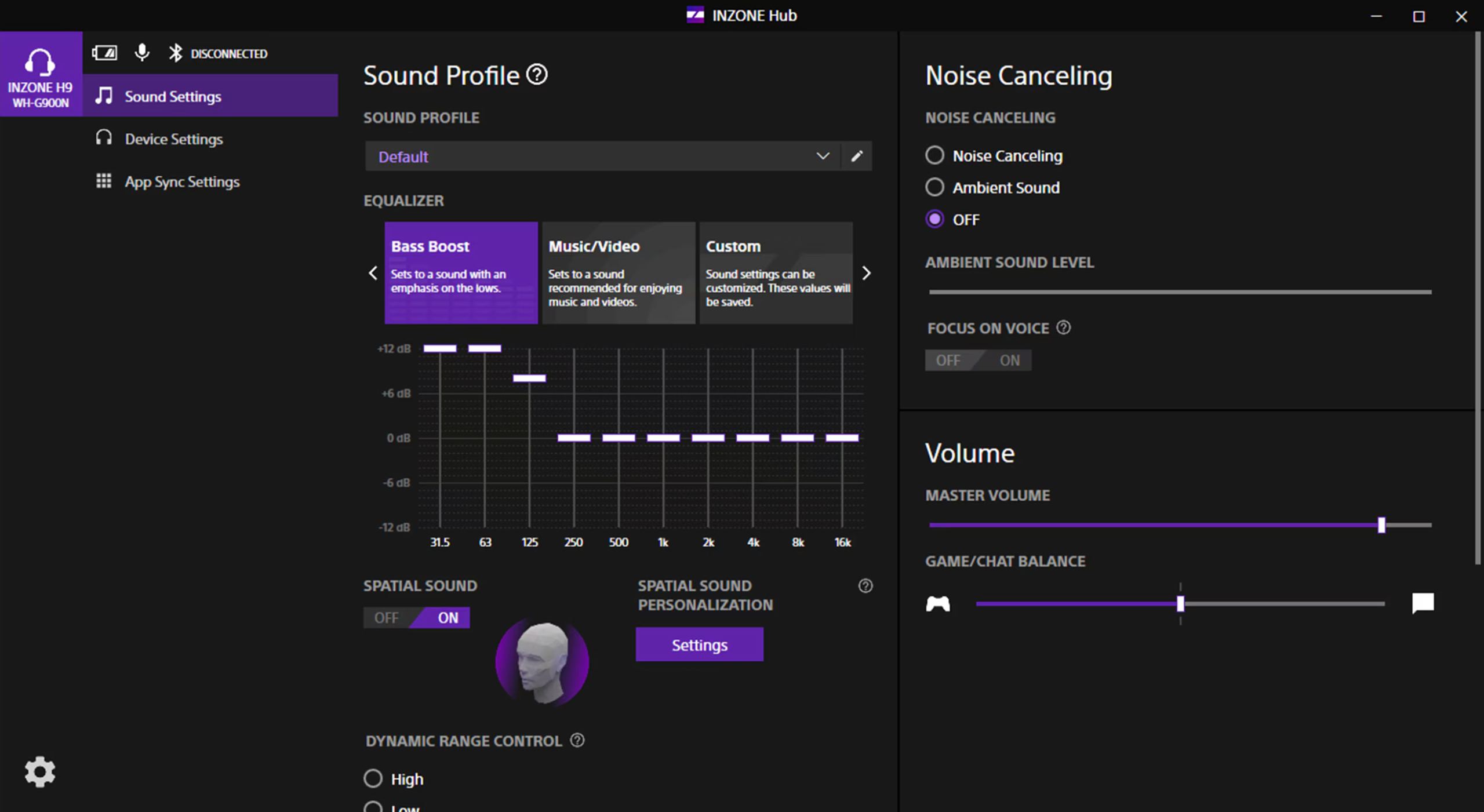
On PC and Xbox, game/chat balance separately adjusts the volume of the game and teammates, a control often provided as a dial on the earcup. Manufacturers’ apps, such as the Audeze app, provide access to the equaliser, per-game profiles, microphone settings and sidetone. These tools mainly work on PC and mobile; on consoles, settings are generally limited to what the headset’s controls allow.
Price brackets and what they include
Most of the market sits below 150 euros: functional headsets, often made of plastic, with standard dynamic drivers and sometimes a 2.4 GHz connection. Differences here mainly come down to comfort and microphone quality, two things to check before anything else.
Between 150 and 350 euros, more durable materials, replaceable parts and drivers borrowed from studio equipment start to appear. The MMX 300 PRO and MMX 330 PRO, at around 300 euros, are representative wired models in this category.
Above that, you pay for driver technology and versatility. The Audeze Maxwell 2 brings planar magnetic technology to gaming with exceptional battery life, its ANC version adds noise cancellation, and the Audeze LCD-GX sits at the top of the range.
Matching a headset to the way you play
A competitive PC player in a quiet room gets the most out of a lightweight, open-back wired headset, which adds no delay and provides a wide soundstage for locating opponents: this is the MMX 330 PRO’s territory. In a shared living room or on a console, the same player will instead turn to the closed-back MMX 300 PRO, which keeps its sound to itself. Someone who spends long hours playing atmospheric games, switches wirelessly from console to phone and also listens to music through their headset will appreciate the Maxwell 2, provided they choose the version matching their console, PlayStation or Xbox; the ANC version is the clear choice if the room is noisy or the headset is also used on public transport, at the cost of halving battery life.
For a streamer or content creator, the built-in microphone remains a compromise: a separate desktop microphone is still the best solution for recorded voice, with the headset then handling listening duties. In any case, a few minutes of wear are enough to reveal excessive clamping force or a poorly balanced headband, and the headphone bar at our Compiègne showroom lets you compare several models on your own head before deciding.


You may also like to read
 How to connect a Bluetooth headset to a TV?Tutorials and practical guides
 Sony NW-WM1ZM3 and NW-WM1AM3: what are the differences between the two Walkman models?Hi-fi and home cinema news
 Can a projector really replace a TV for everyday use?Comparisons and buying guides
 What are the best OLED TVs in 2026?Comparisons and buying guides
 LG G6 or Sony Bravia 8 II: which TV should you choose in 2026?Comparisons and buying guides
 Sony BRAVIA Theatre: up to €500 off wireless home cinema systemsOffers & promotions


