

Bluesound Node 2025 vs WiiM Pro Plus: which streamer should you choose?
January 04, 2026
Contents
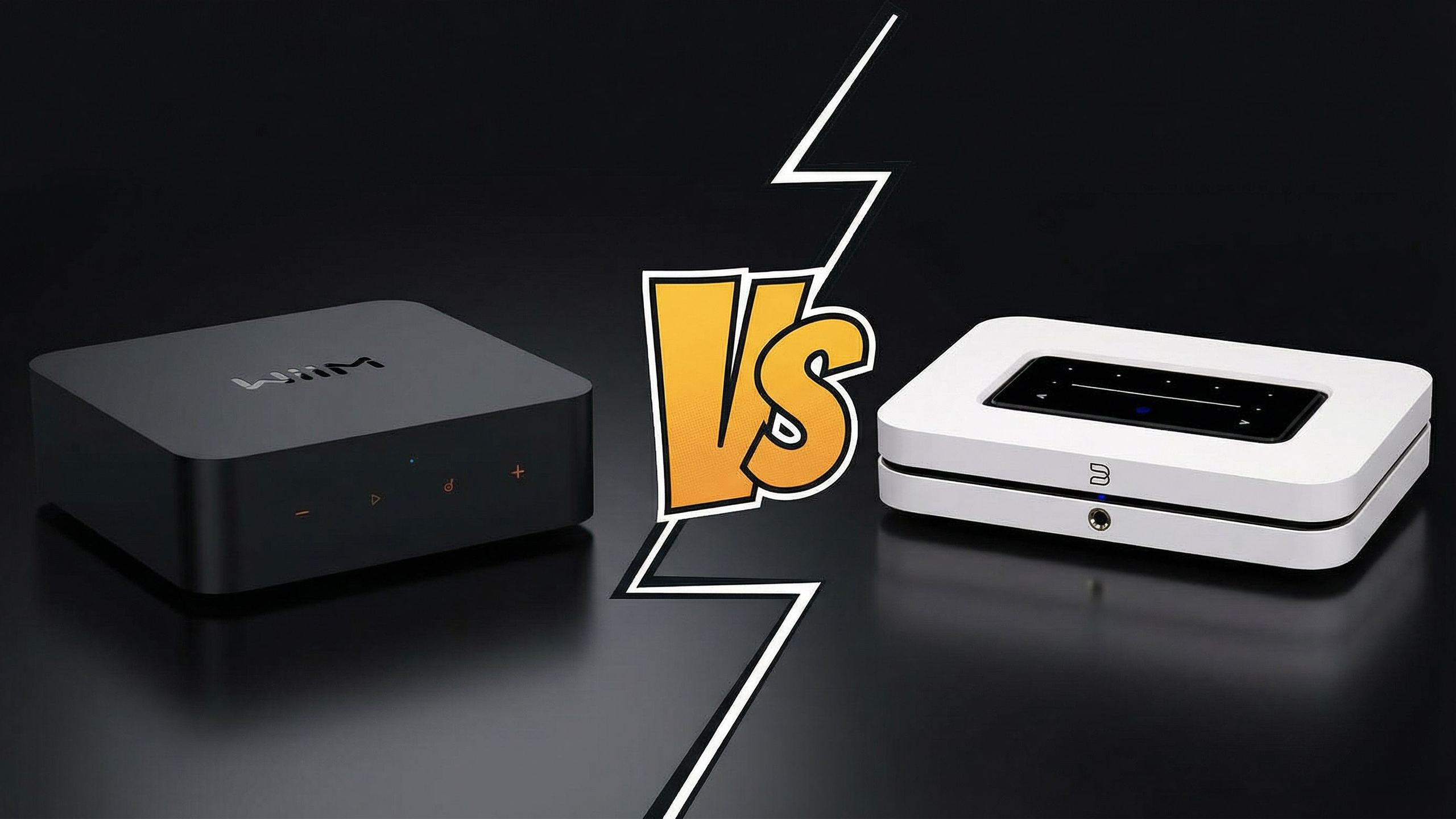
For under €600, two streamers dominate discussions on audio forums: the Bluesound Node 2025 and the WiiM Pro +. The former builds on a decade of experience in high-end multiroom, while the latter shook up the market in 2023 with a price-to-performance ratio that’s hard to ignore. Two philosophies, two prices, but the same goal: to turn a traditional hi-fi system into a connected setup.

The price gap
The WiiM Pro + sells for around €249. The Bluesound Node 2025 is priced at €599. This more than twofold difference immediately raises the question: what exactly are you paying for with the Node?
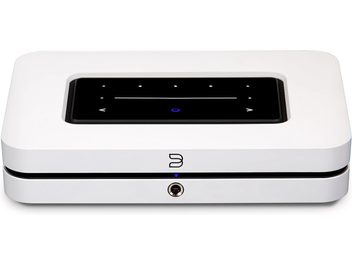
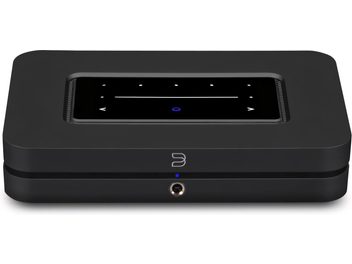
The difference lies less in raw features – both devices cover the essentials of modern streaming – than in integration and finish choices. The Node offers a more refined build, a proven multiroom ecosystem (BluOS supports up to 64 zones), a genuine headphone amplifier, and home-cinema-oriented features such as an HDMI eARC input with Dolby Digital decoding.
→ Discover all network players
Digital-to-analog conversion: two approaches
The Node 2025 features an ESS SABRE ES9039Q2M DAC, inheriting Hyperstream IV technology. Bluesound has redesigned the entire audio circuit to limit jitter and interference, with an optimized power stage. The 1.8 GHz Quad-Core ARM Cortex A53 processor ensures a smooth user experience.
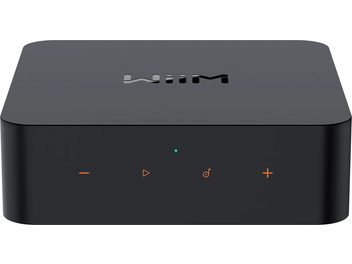
The WiiM Pro Plus uses an AKM AK4493SEQ chip from the Velvet Sound family. The stated specs speak for themselves: 120 dB signal-to-noise ratio and -110 dB THD+N (i.e. 0.00032%). These figures put the small unit on par with converters sold at much higher prices.
On the ESS side, the ES9039Q2M also boasts a 120 dB SNR and relies on an architecture optimized for jitter reduction. Both chips sit at the top of their respective manufacturers’ line-ups. The difference comes more from implementation – power supply quality, PCB routing, choice of surrounding components – than from the chip itself.
Connectivity and flexibility
Both devices share a common base: optical, coaxial, and RCA inputs/outputs, WiFi and Bluetooth, Gigabit Ethernet.
The Node 2025 stands out with several significant additions:
- An HDMI eARC input with Dolby Digital decoding for TV integration
- A THX AAA-78 headphone amplifier on a 6.35 mm jack (230 mW into 32 Ω, 0.1% distortion)
- A dedicated subwoofer output with crossover management
- A USB-A port for local file playback
- Bidirectional Bluetooth 5.2 aptX Adaptive (receive and transmit)
→ Discover the Bluesound Node 2025 network player
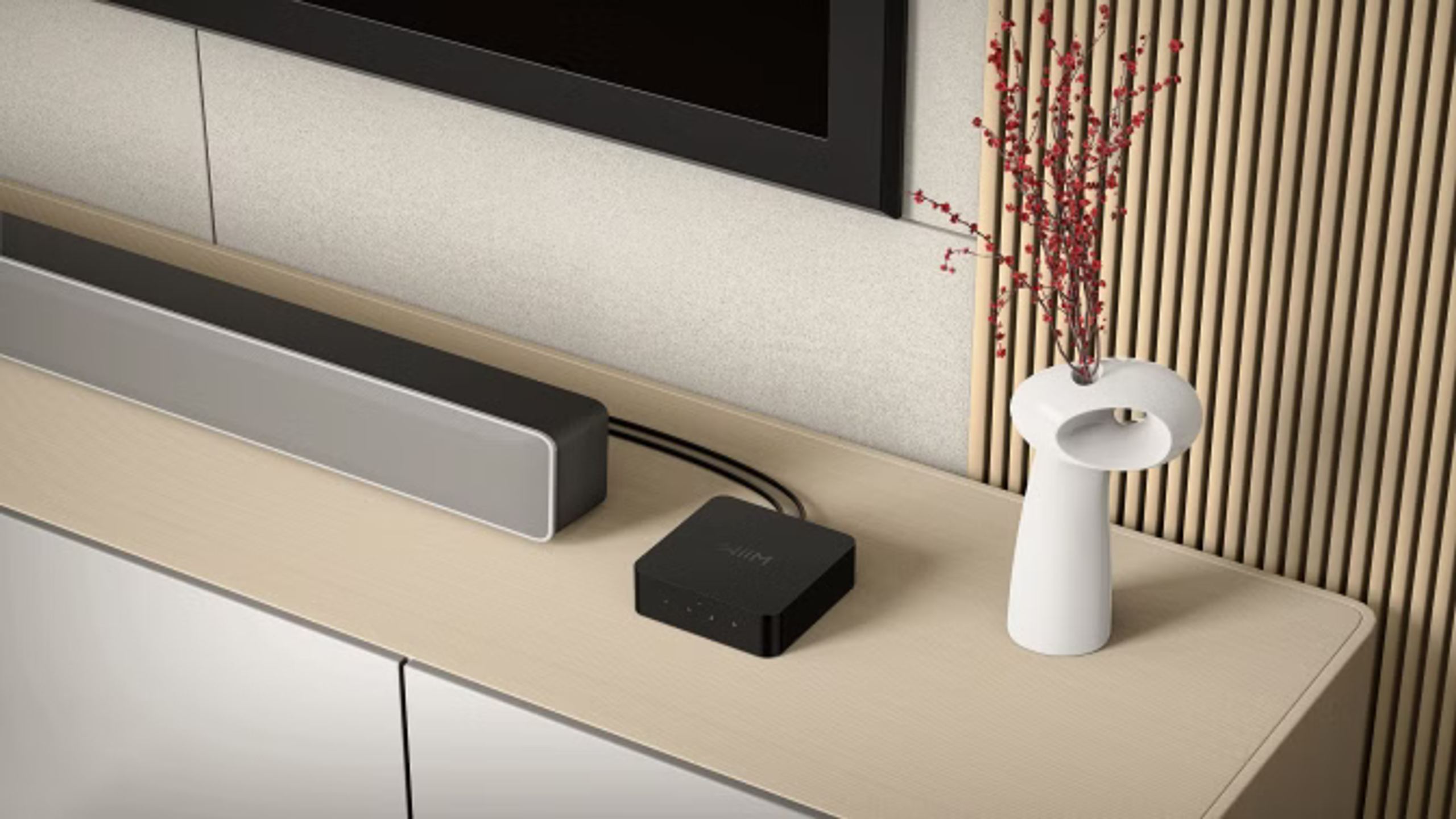
The WiiM Pro Plus counters with:
- Chromecast Audio compatibility (absent on the Node)
- An RCA line input with built-in ADC, handy for digitizing a turntable or CD player
- A 12V trigger for automatic amplifier power-on
- A significantly more accessible price
→ Discover the WiiM PRO + network player
The room correction question
This is arguably the most significant point of divergence. The WiiM Pro Plus includes a free room correction function called RoomFit. It uses the smartphone’s microphone to analyze acoustics and automatically apply correction via the built-in parametric EQ. The process takes a few minutes and, while it doesn’t match a professional system, it often helps reduce low-frequency issues caused by typical home acoustics.
The Node 2025 is compatible with Dirac Live, a renowned correction solution, but it’s paid: between €100 and €200 depending on the version (Limited or Full), plus the calibration kit with dedicated microphone sold separately by Bluesound. Dirac’s correction quality generally surpasses WiiM’s RoomFit, with more sophisticated phase and time-alignment processing. But the total cost (streamer + license + mic) then exceeds €800.
Apps and ecosystems
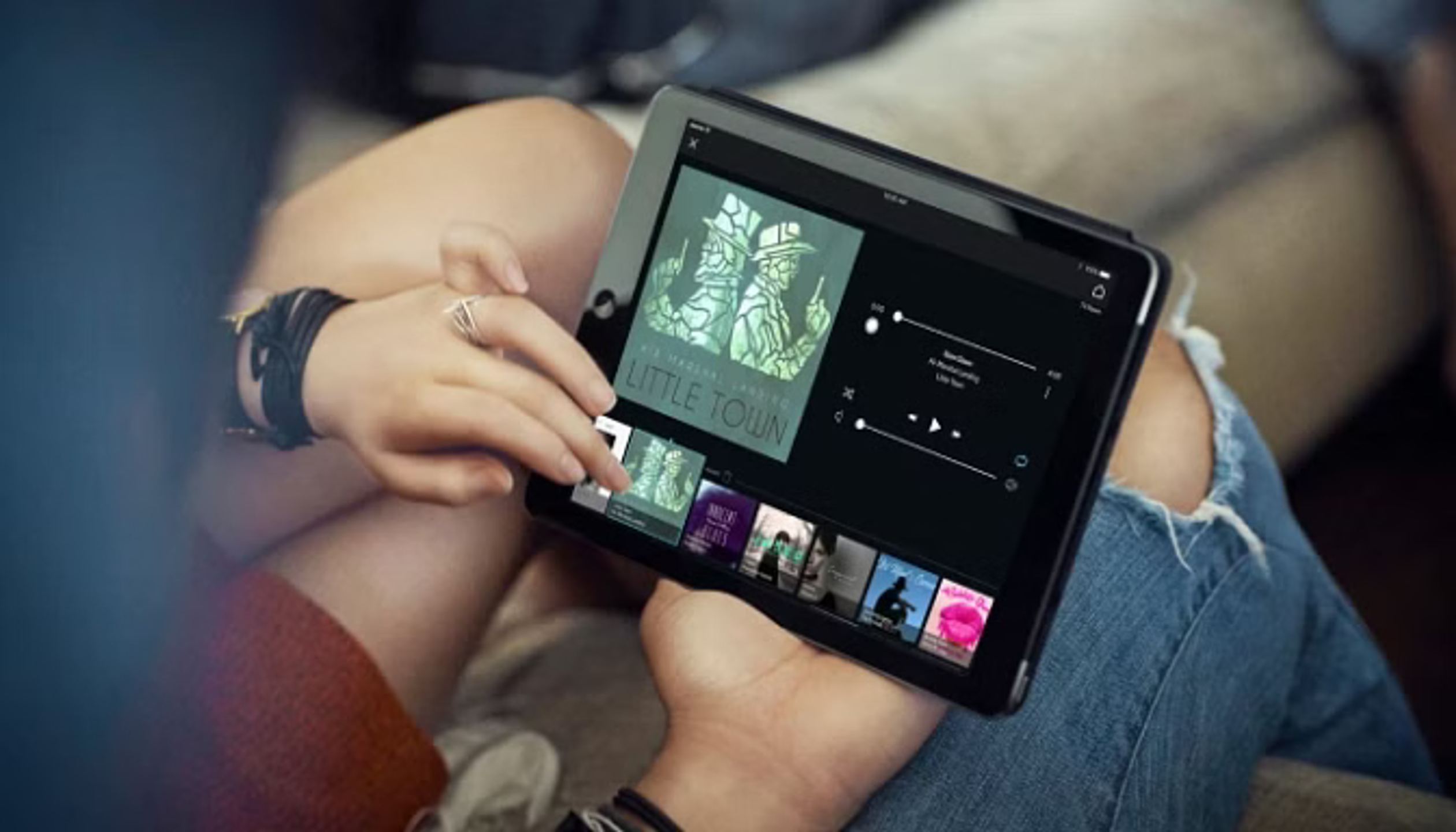
BluOS, the Node’s software platform, benefits from years of development and integration with other brands (NAD, Dali, Roksan, Cyrus). The app runs on iOS, Android, Windows, and macOS. It provides access to over 23 streaming services (Qobuz, Tidal, Spotify, Amazon Music, Deezer) and internet radio. Stability is generally solid, though some users report occasional detection issues at startup – often linked to conflicts with phone VPN or Bluetooth.
The newer WiiM Home app has matured significantly. It offers a 10-band graphic EQ, a parametric EQ, and the room correction mentioned above. The interface is responsive and streaming service integration is comprehensive. WiiM has also built a strong reputation for responsive tech support and frequent firmware updates.
Both streamers are Roon Ready certified and support AirPlay 2, Spotify Connect, and Tidal Connect.
Formats and resolutions
The Node 2025 handles files up to 24-bit/192 kHz in PCM, decodes MQA, and supports DSD256. The WiiM Pro Plus theoretically accepts streams up to 32-bit/768 kHz and DSD512, but these extreme resolutions remain rare in real-world use.
On digital outputs (optical or coaxial), both devices deliver a bit-perfect signal. Those who already own a quality external DAC can use either one as a network transport, making the internal converter a secondary consideration.
The headphone amplifier: a clear advantage for the Node
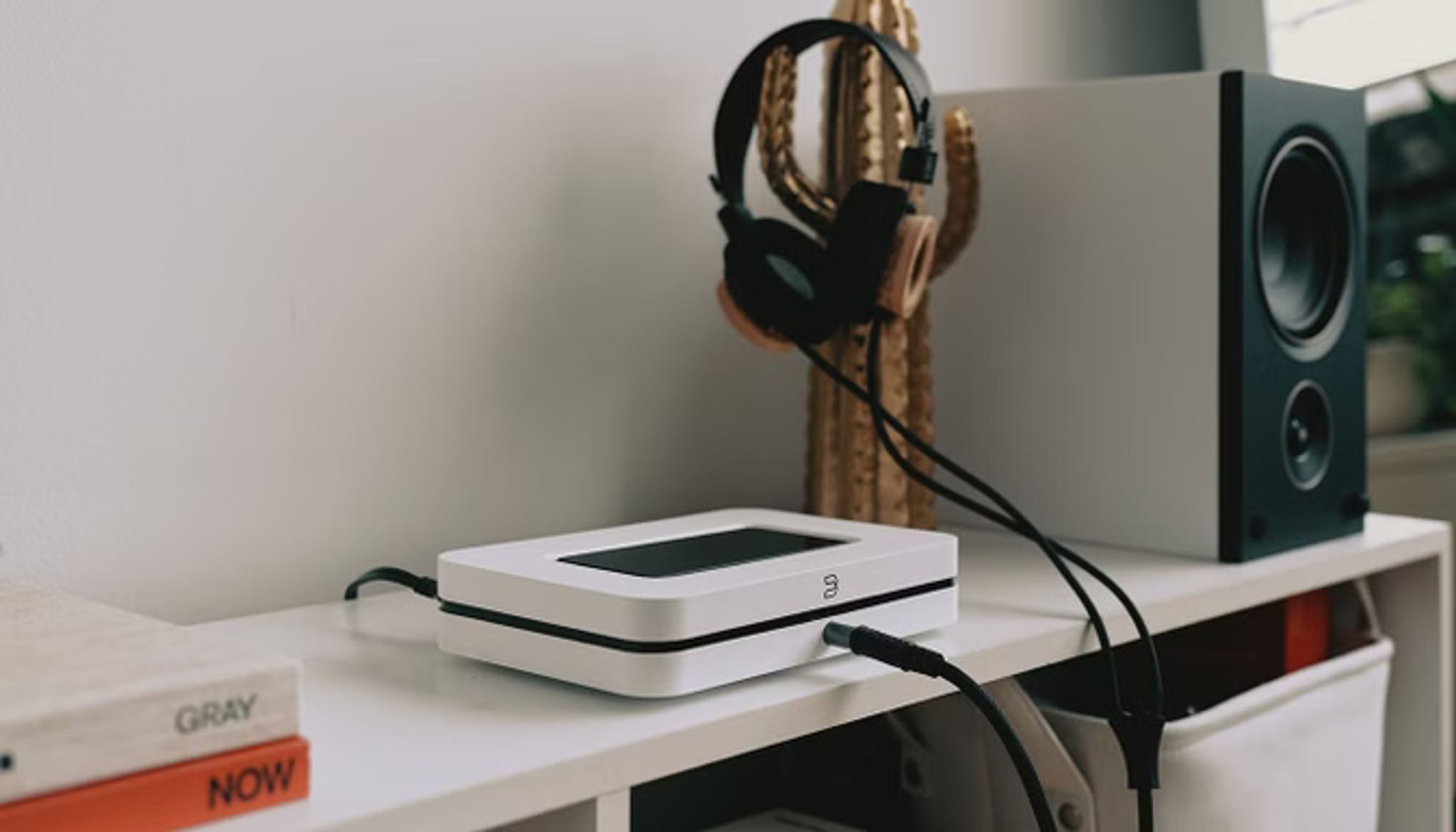
The Node 2025 includes a THX AAA-78 certified headphone amplifier with a 6.35 mm jack output. This section delivers 230 mW into 32 Ω and 53 mW into 250 Ω, with a stated distortion of 0.1%. This is enough to drive most audiophile headphones properly without an external amplifier.
The WiiM Pro Plus has no headphone output. For that feature, you need to look at the WiiM Ultra (€399), which also adds a color display and XLR outputs.
When to choose one over the other
The WiiM Pro Plus stands out as the rational entry point into hi-fi streaming. At €249, it offers measured performance that rivals much more expensive devices, free room correction, and a full-featured app. For anyone looking to modernize an existing system or explore streaming without a major financial commitment, it’s a very hard option to argue against.
The Bluesound Node 2025 makes sense in specific contexts: home-cinema integration via HDMI eARC and Dolby Digital, the need for a quality headphone amplifier (the THX AAA-78 is no gimmick), a desire to join the established BluOS multiroom ecosystem, or a preference for Dirac Live correction despite its extra cost. Its build quality and mature software also reassure those planning for long-term use.
The question of the internal DAC becomes secondary if you intend to use an external converter. In that case, both devices are equally capable as digital transports, and the price difference clearly tilts the balance towards the WiiM.
Ultimately, the WiiM Pro Plus has democratized access to quality streaming. The Bluesound Node 2025 remains a safe bet for those seeking deeper integration, a true headphone section, and a mature multiroom ecosystem – provided you’re willing to allocate the corresponding budget.


You may also like to read
 Bluesound PULSE SUB: the wireless subwoofer that completes the PULSE CINEMA rangeHi-fi and home cinema news
 Connected speaker or amplifier and speaker system: how to choose?Comparisons and buying guides
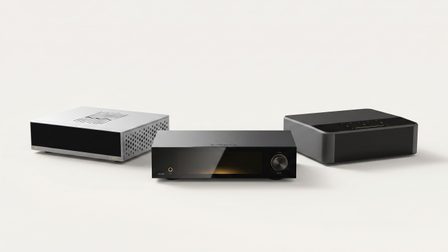 Network player, streamer or transport: what are the differences?Comparisons and buying guides
 Alexa+ arrives in France: Amazon entrusts French to Mistral and slips AI into PrimeHi-fi and home cinema news
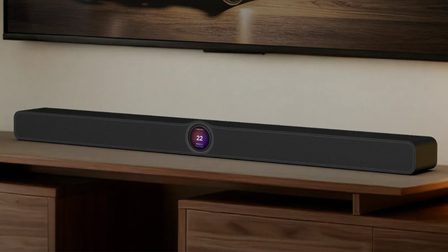 WiiM Bar: a Dolby Atmos 3.0.2 soundbar that challenges the Sonos BeamHi-fi and home cinema news
 Dali Vega: how does this all-in-one speaker compare to a real hi-fi setup?Hi-fi and home cinema news