

Network player, streamer or transport: what are the differences?
July 21, 2026
Contents
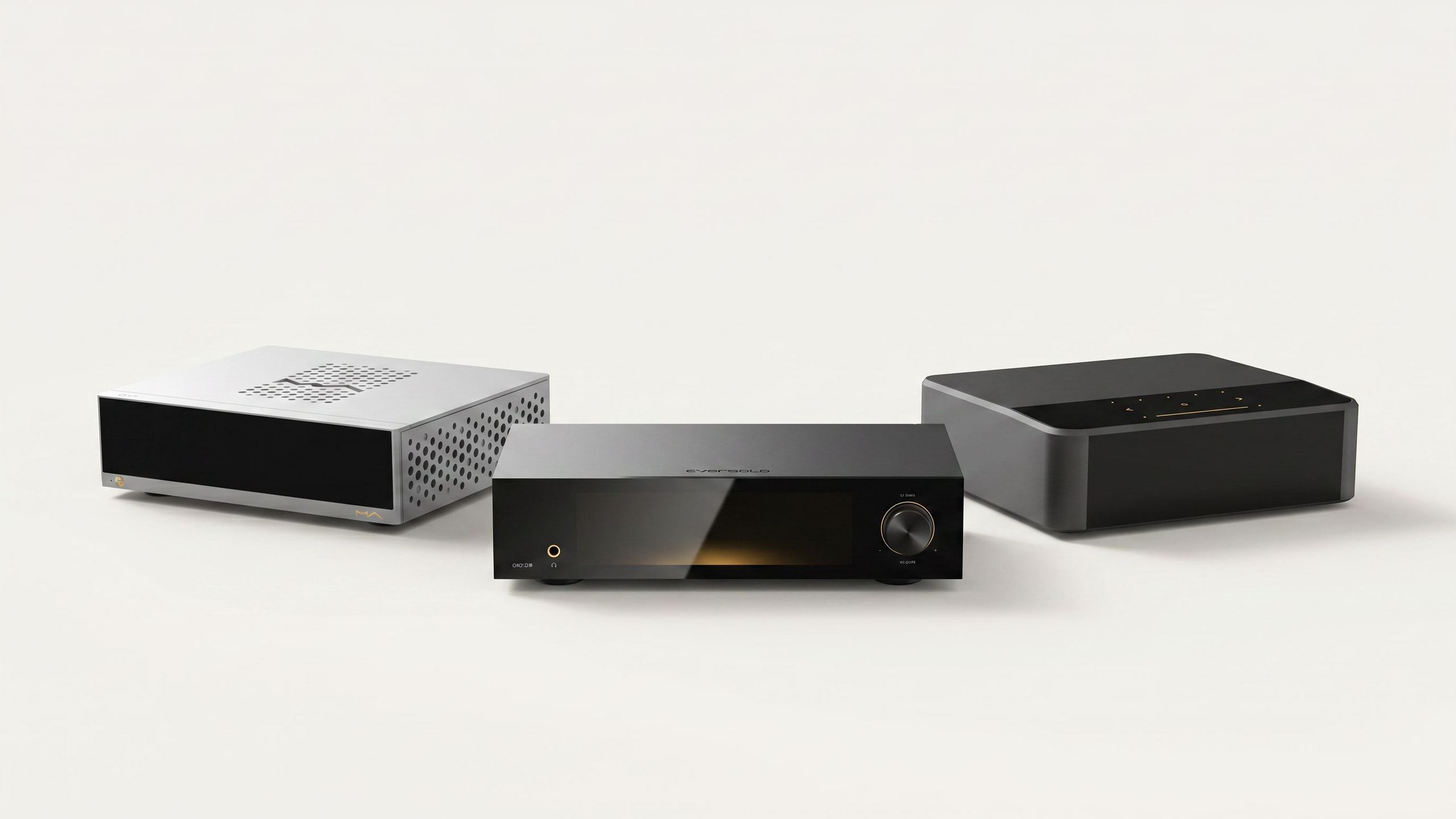
Three words keep appearing on product pages and in discussions to refer to boxes that look alike, connect to the network and play digital music. Manufacturers often use them interchangeably, which blurs the distinctions when it comes time to choose. Yet the distinction comes down to a single component: the digital-to-analog converter. Knowing whether or not it is inside the box resolves most misunderstandings.
A technical foundation common to all three
Before separating them, it is important to see what they share. Each connects to your home network, via Ethernet or Wi-Fi, and retrieves music wherever it is located: a Qobuz, Tidal, Deezer or Spotify subscription, web radio stations, or your files stored on a computer, NAS or USB drive. Each is controlled from an app on a smartphone or tablet, which replaces the remote control and acts as a window onto your library. In this respect, a network player, streamer and transport do the same job: retrieve a digital stream and prepare it for the rest of the system. The question that sets them apart comes afterward, once the stream has been retrieved: what happens to the signal at the output of the box?
The converter, the dividing line
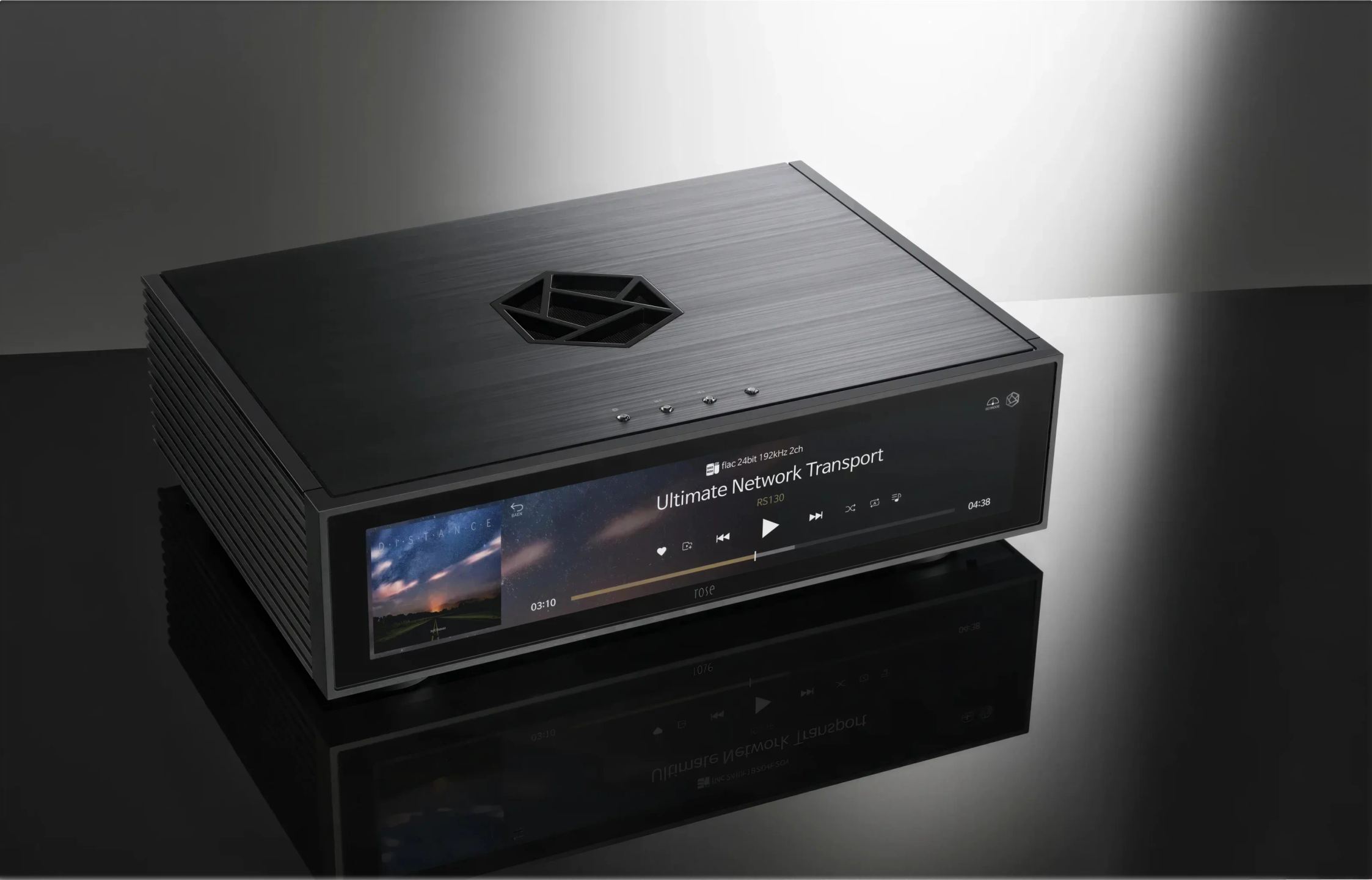
A music file, or a streaming feed, is a sequence of numbers. A speaker or pair of headphones, on the other hand, needs an analog signal, an electrical voltage that varies over time. Between the two, the digital-to-analog converter, or DAC in English, translates the numbers into voltage. Without it, no sound comes out, regardless of the quality of everything else.
The presence of this converter inside the box, or its absence, determines the category. A device with its own DAC outputs an analog signal, ready to connect to an amplifier or active speakers. A device without one outputs a digital signal, which must be sent to a DAC located further along the chain. The rest—the connectivity, supported formats and app—partly follows from this choice.
The network player, a complete source
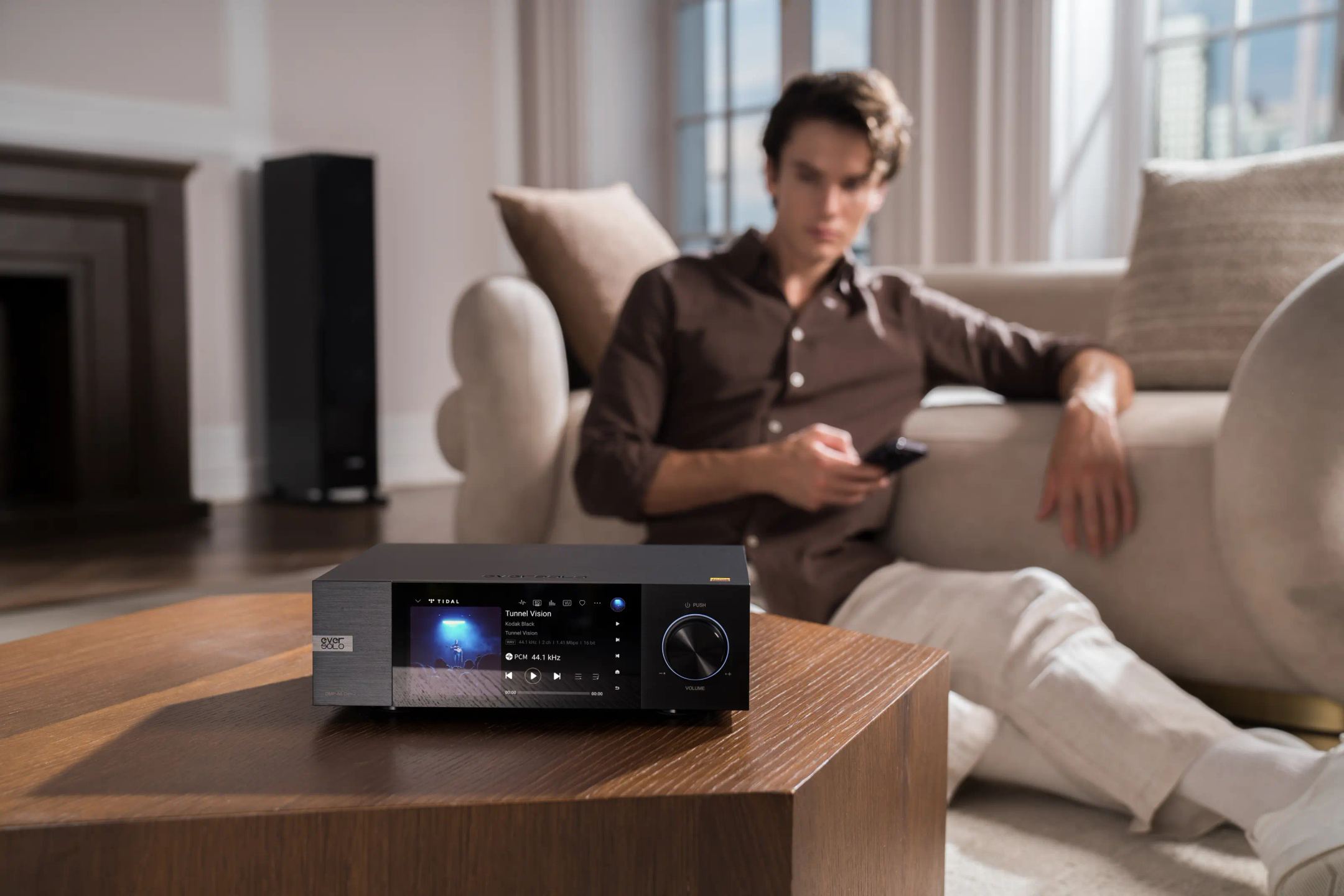
The network player combines the two functions in a single chassis: the network section that retrieves the stream, and the converter that makes it audible. Its outputs include analog connectors, most often RCA, sometimes balanced XLR, which connect directly to the line input of an amplifier. The connection is similar to that of a CD player: one source, one analog cable, and you are ready to go.
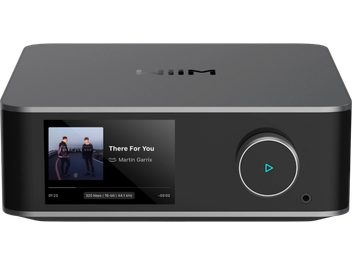
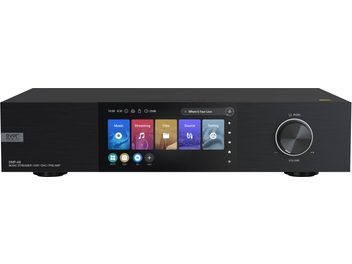
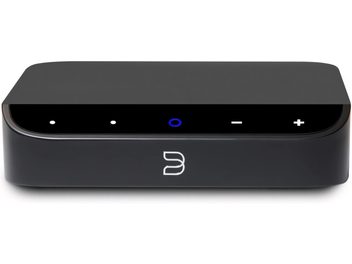
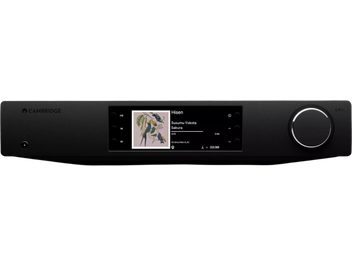
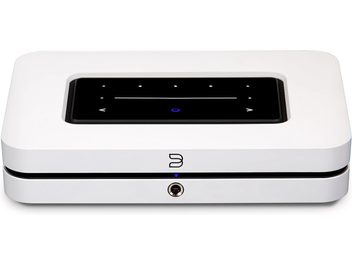
This is the most populated category on the market. The WiiM Pro Plus at around 249 euros, the Cambridge Audio MXN10 at around 390 euros, the Cambridge Audio CXN100 and the Eversolo DMP-A6 Gen 2 at around 890 euros, the Bluesound Node Icon at around 1,050 euros: all include their own converter and are self-sufficient for feeding an amplifier. Some go further and add volume control, allowing them to drive active speakers directly without a preamplifier. Others also include an amplification stage, becoming a complete system in a single box.
The streamer, a bridge without conversion
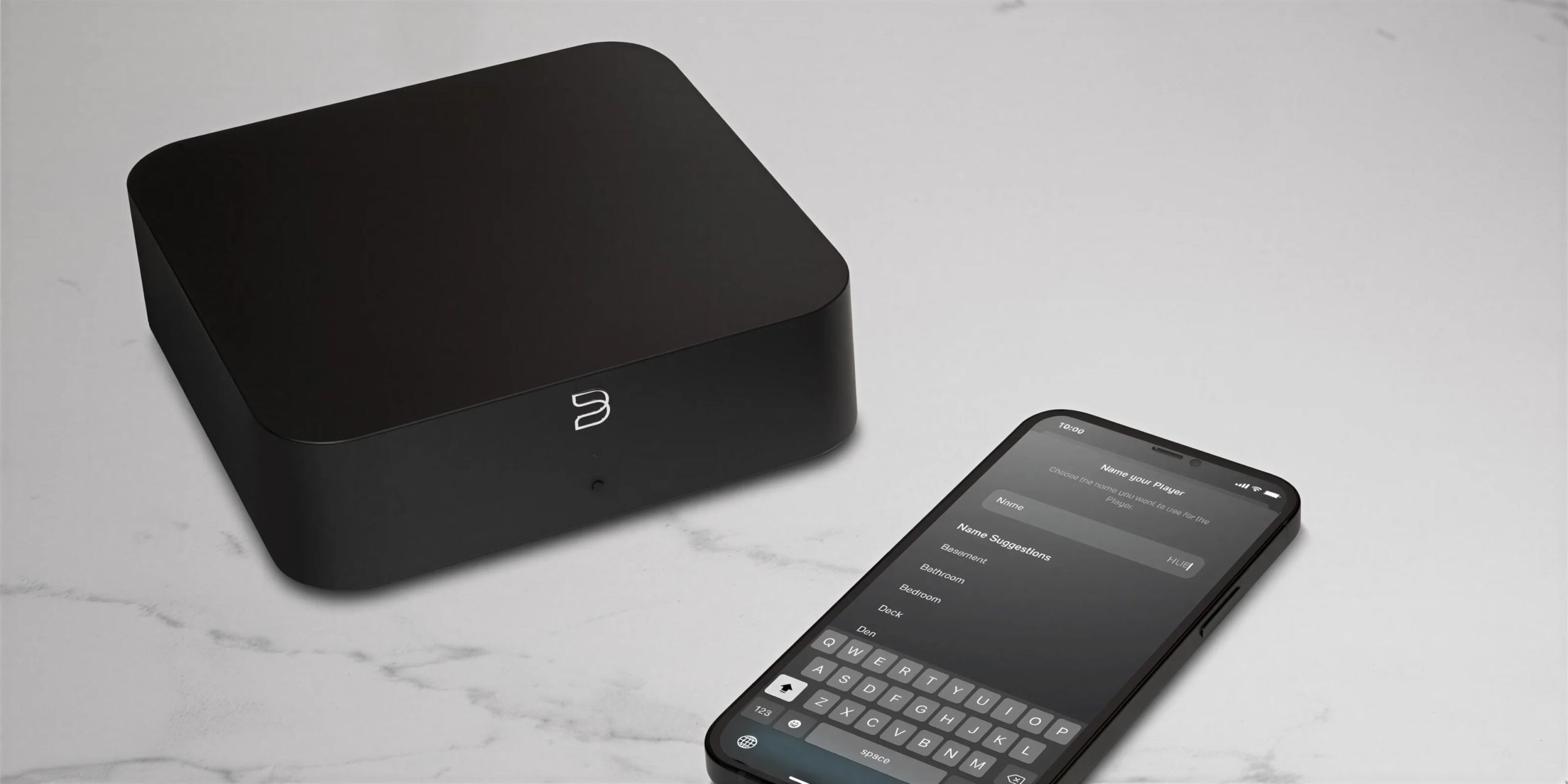
The streamer, in the strict sense, stops one step earlier. It receives the network stream, formats it, then sends it digitally to an external converter, without ever converting it itself. Its outputs are digital: USB, coaxial S/PDIF, optical Toslink, sometimes I2S or AES/EBU on high-end models. Connected on its own, it remains silent; it needs a downstream DAC to produce any sound at all.
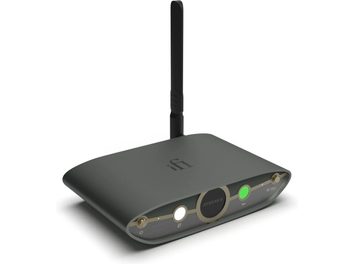
The benefit of this approach is modularity. If you already own a good converter, or have a specific one in mind, a streamer saves you from paying a second time for a chip you do not want. The iFi ZEN Stream 3, at 399 euros, illustrates this logic well: two USB outputs, one coaxial output, no analog connectors, and a single mission—sending a clean stream to the DAC of your choice. Higher up the range, brands such as Auralic, Aurender, Lumin and Métronome offer similar network bridges, with prices rising quickly as power supplies, clocks and noise isolation are refined.
The word transport and its CD origins
The term transport does not come from streaming. In the disc era, a CD transport referred to the mechanism that read the disc and extracted its data without converting it: the converter was housed in a separate box, connected by a digital cable. Separating playback from conversion made it possible to optimize each function independently and upgrade one without changing the other.
This logic continued with network audio. A streamer without a DAC plays the same role as a CD transport: it delivers data to be converted without handling the conversion itself. Hence the terms “network transport” or “streamer transport,” which refer to the same reality as a streamer in the strict sense. Dedicated CD transports still exist for those who value their discs and wish to pair them with a separately chosen converter.
When the boundaries blur
In practice, the categories overlap, which explains the vagueness of the terminology. Many network players also have digital outputs: nothing prevents you from ignoring their internal converter and using them as simple transports to a DAC considered better. An entry-level WiiM, with its optical output, is often used as an inexpensive bridge ahead of a converter that costs far more than it does.
The word streamer adds to the confusion. In everyday language, and on many product pages, it refers equally to a box with a DAC and one without. A WiiM Ultra or an Eversolo is sold as a streamer even though it includes its own converter; the iFi ZEN Stream, meanwhile, is a streamer that does not. The word alone says nothing reliable: the real question remains whether or not there are analog outputs.
| Type | Built-in converter | Output signal | Direct connection to an amplifier |
|---|---|---|---|
| Network player | yes | analog, and often digital too | yes |
| Streamer, or network transport | no | digital only | no, a DAC is required |
| CD transport | no | digital only | no, a DAC is required |
Choosing based on the equipment already in place
The right choice depends primarily on what you already own. If you are starting with a conventional amplifier without a digital input and do not want to stack boxes, a network player with its built-in converter provides the simplest result: one source, one cable, music. This is the most common case, and the reason for this category’s success.
If you already own a converter that satisfies you, or an amplifier with a good built-in DAC, a streamer without conversion avoids duplication and lets you keep the component you like. The approach requires one more box and a digital cable, but it cleanly separates functions and makes future upgrades easier.
One often underestimated point remains: a streamer or transport, even without a converter, is not neutral. A digital stream with poor timing, polluted by the device’s electrical noise, reaches the DAC degraded. Serious manufacturers pay close attention to power supply design and signal timing to deliver data as cleanly as possible. Transport quality matters, as the long history of CD transports had already shown.
Popular products
You may also like to read
 What Is a DAC and Why Do You Need One?Tutorials and practical guides
 Beyerdynamic Aventho Y: 90 h of battery life, but compromises on codecs and ANCHi-fi and home cinema news
 Making Your Headphones and Earbuds Last: Essential Maintenance TipsTutorials and practical guides
 Hisense UR8S vs UR9S: which RGB Mini LED TV should you choose in 2026?Comparisons and buying guides
 Wattson Audio Madison Phono: RIAA equalization goes digitalHi-fi and home cinema news
 How to choose an amplifier based on your speakers, room and intended use?Comparisons and buying guides