

Contents
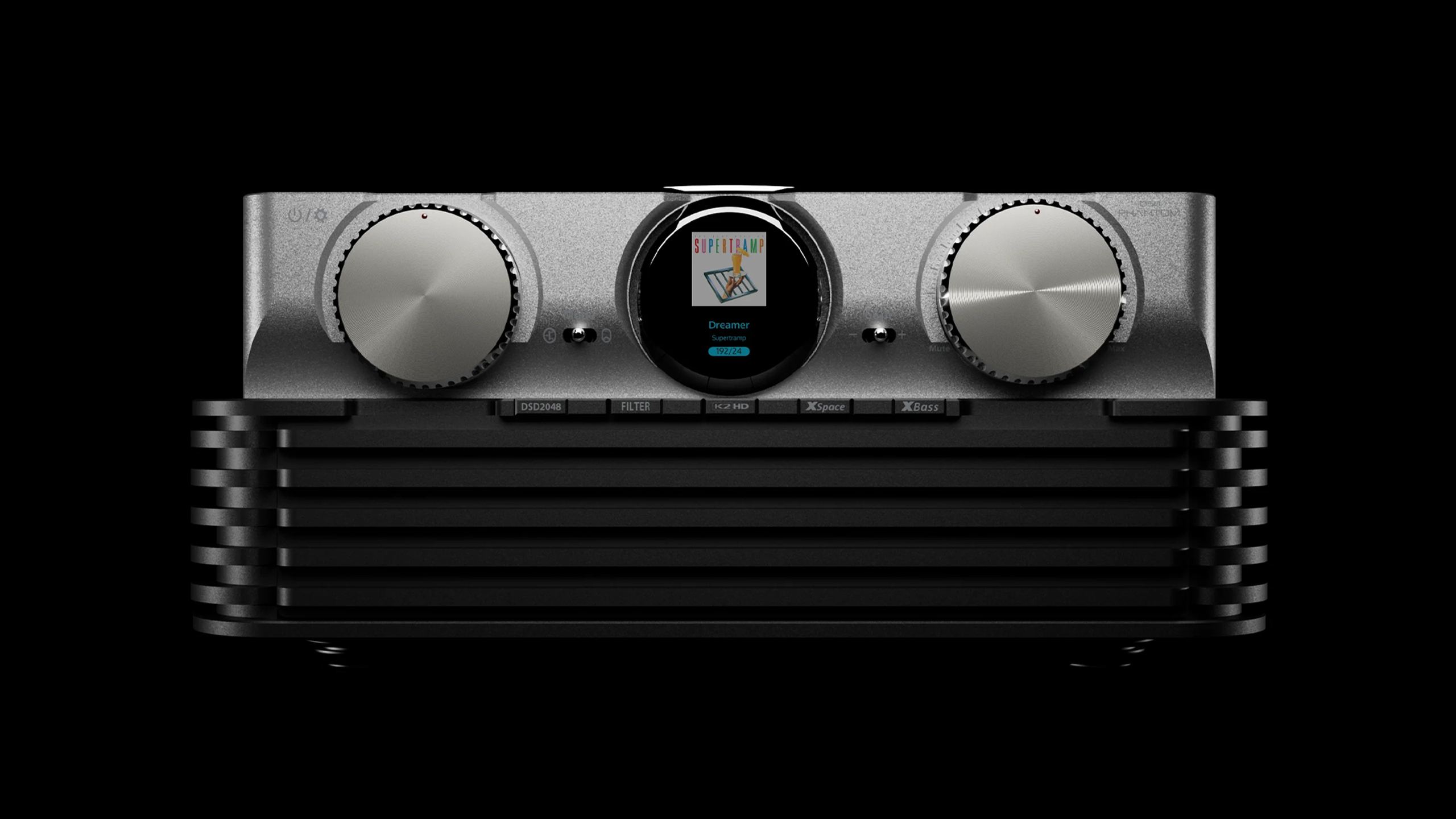
Four Burr-Brown chips, an FPGA capable of remastering to DSD2048, NOS General Electric tubes from the 1950s, and nearly 8 watts of class A headphone power. The iDSD Phantom packs into a single chassis everything iFi Audio has learned from a decade of audio development, with a price of €4,695 that reflects this ambition.
A completely rethought architecture
The Phantom is not a simple evolution of the Pro iDSD Signature. Colin Farch, iFi’s chief engineer, describes the approach adopted for this new model: every stage was re-examined, measured, and optimized to achieve the targeted performance. The output stage now offers 67% higher current capability than the previous model, with revised voltage settings to reduce distortion while increasing dynamic headroom.
At the heart of the converter, four Burr-Brown DSD1793 chips run in an interleaved configuration. This architecture, inspired by AMR’s work on the legendary Philips TDA1541A, uses 256 conversion elements per channel. DSD signals are routed directly to the DAC without digital filtering, while PCM streams go through selectable filters depending on listener preference.

DSD2048: the Chrysopoeia FPGA pushes the limits
One of the Phantom’s technical hallmarks lies in its Chrysopoeia FPGA engine, capable of remastering any audio file to DSD2048. At this sampling rate, the 1-bit stream is sampled about 90 million times per second, pushing quantization noise far beyond the audible spectrum.
The process goes beyond simple upsampling. The FPGA applies proprietary jitter-reduction algorithms before conversion, ensuring a stable, precise signal at the DAC inputs. In Normal mode, native DSD files are passed straight through to the DAC. In Remastered mode, each chip can handle up to DSD1024, enabling native decoding of DSD512, DSD1024, or DSD2048 files.
JVCKENWOOD’s K2HD technology
The Phantom incorporates K2HD technology, the result of a collaboration with JVCKENWOOD and engineers at Japan’s Victor Studio. This technology emerged from a practical observation: when transferring analog tapes to CD, studio engineers noticed a loss of presence despite the digital files being technically identical.
K2HD operates in the time domain rather than the frequency domain. The algorithm reconstructs harmonics beyond 22 kHz, those frequencies removed by the CD format’s upper playback limit. The Phantom’s K2 parameters have been specifically calibrated by JVCKENWOOD for iFi, with two available modes: K2, which preserves the file’s original resolution, and K2HD, which optionally upsamples to 192 kHz/24-bit.
Three amplifiers in a single chassis
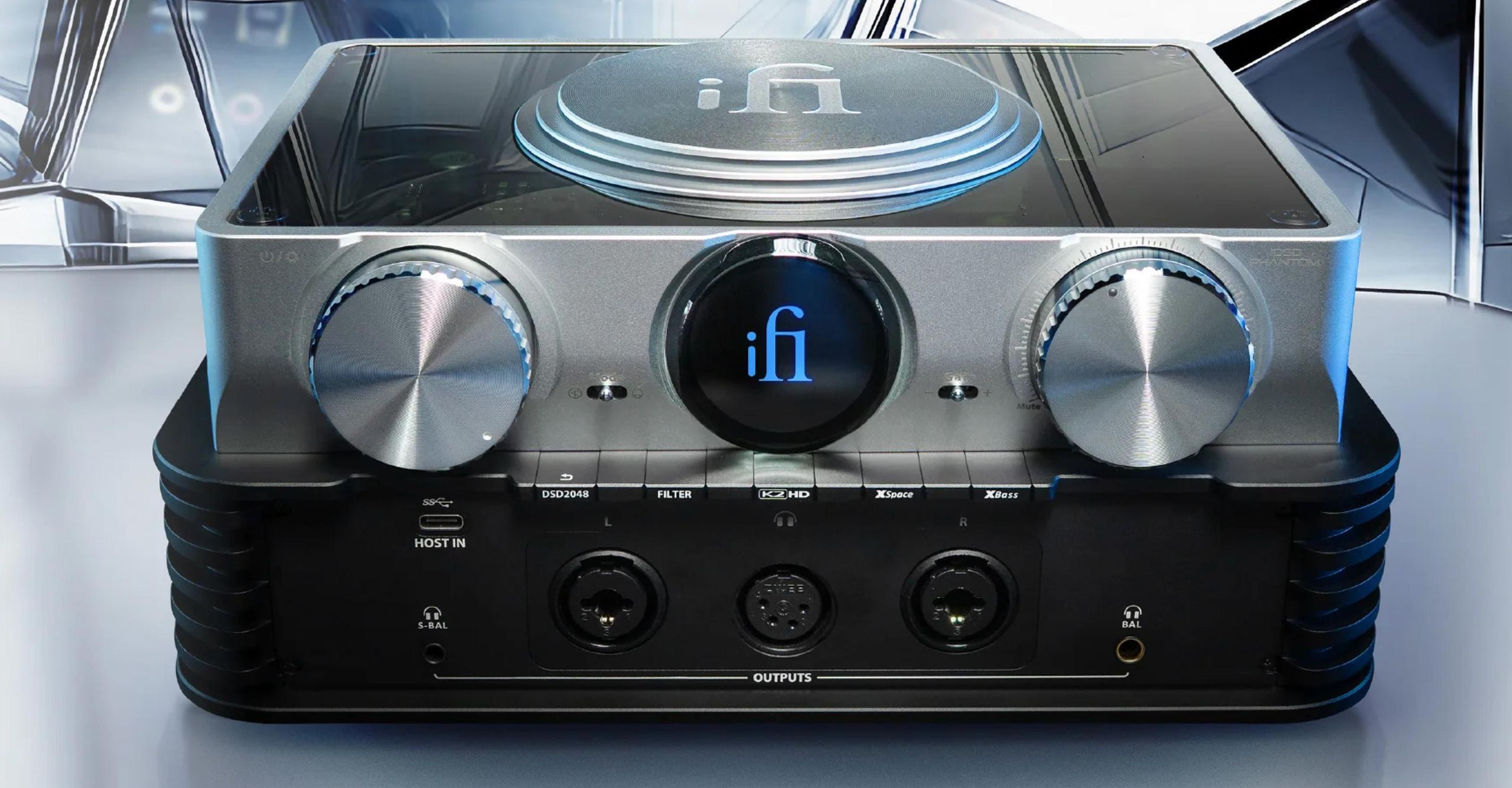
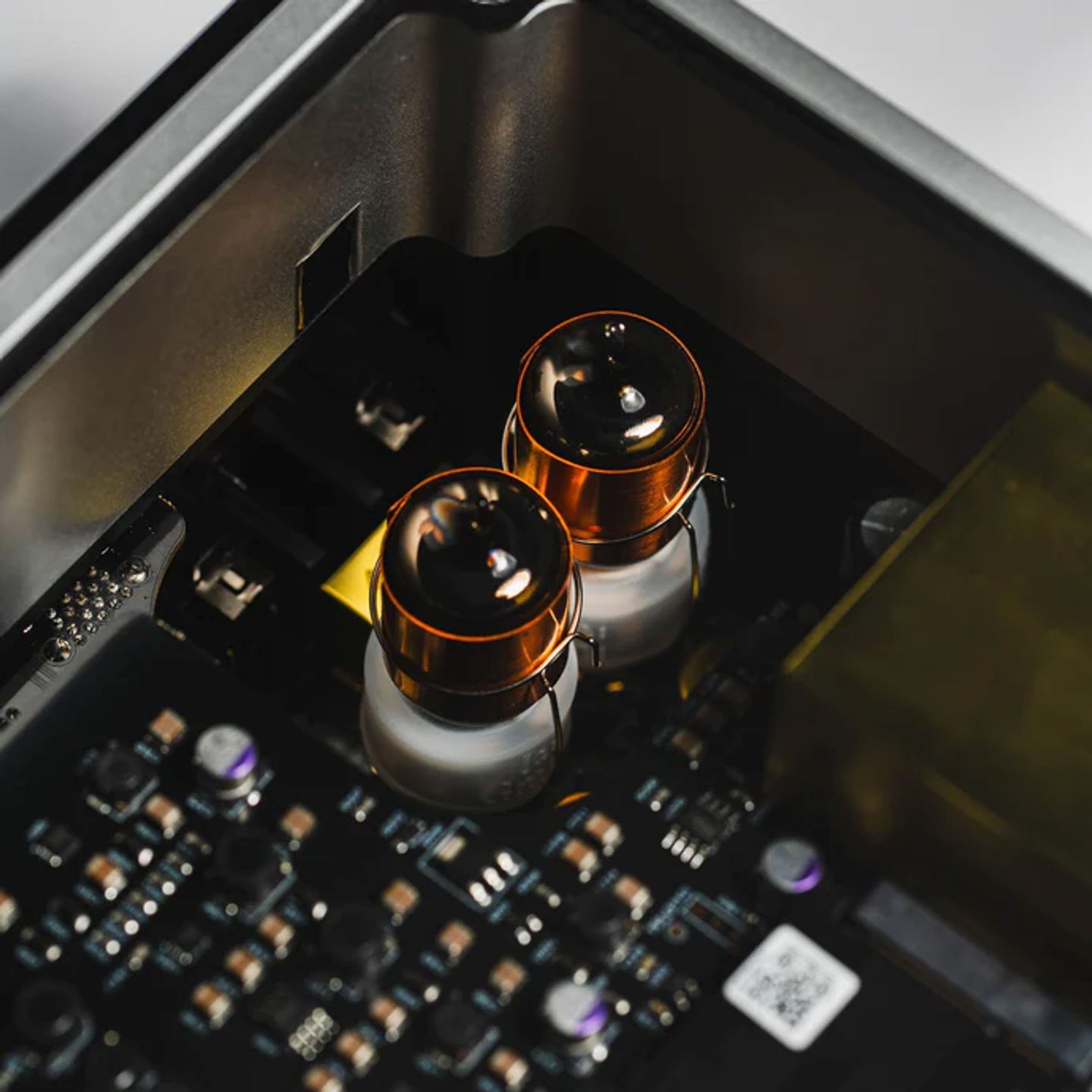
The Phantom offers three output topologies that can be switched in real time, built around two distinct amplification stages. Solid-State mode uses discrete JFETs in a dual-mono configuration, favoring precision and low distortion. Tube mode calls on hand-matched NOS GE5670 valves, delivering a smoother, more relaxed presentation. Tube+ mode reduces loop gain to boost the second harmonic by +6 dB, pushing tube coloration toward a more vintage signature.
The headphone output stage delivers 4,676 mW RMS and 7,747 mW peak, enough to drive current-hungry planar headphones. Electrostatic headphones remain out of reach, however: they require dedicated energizers, a function handled by the iCAN Phantom in the iFi range.
Network streaming and connectivity
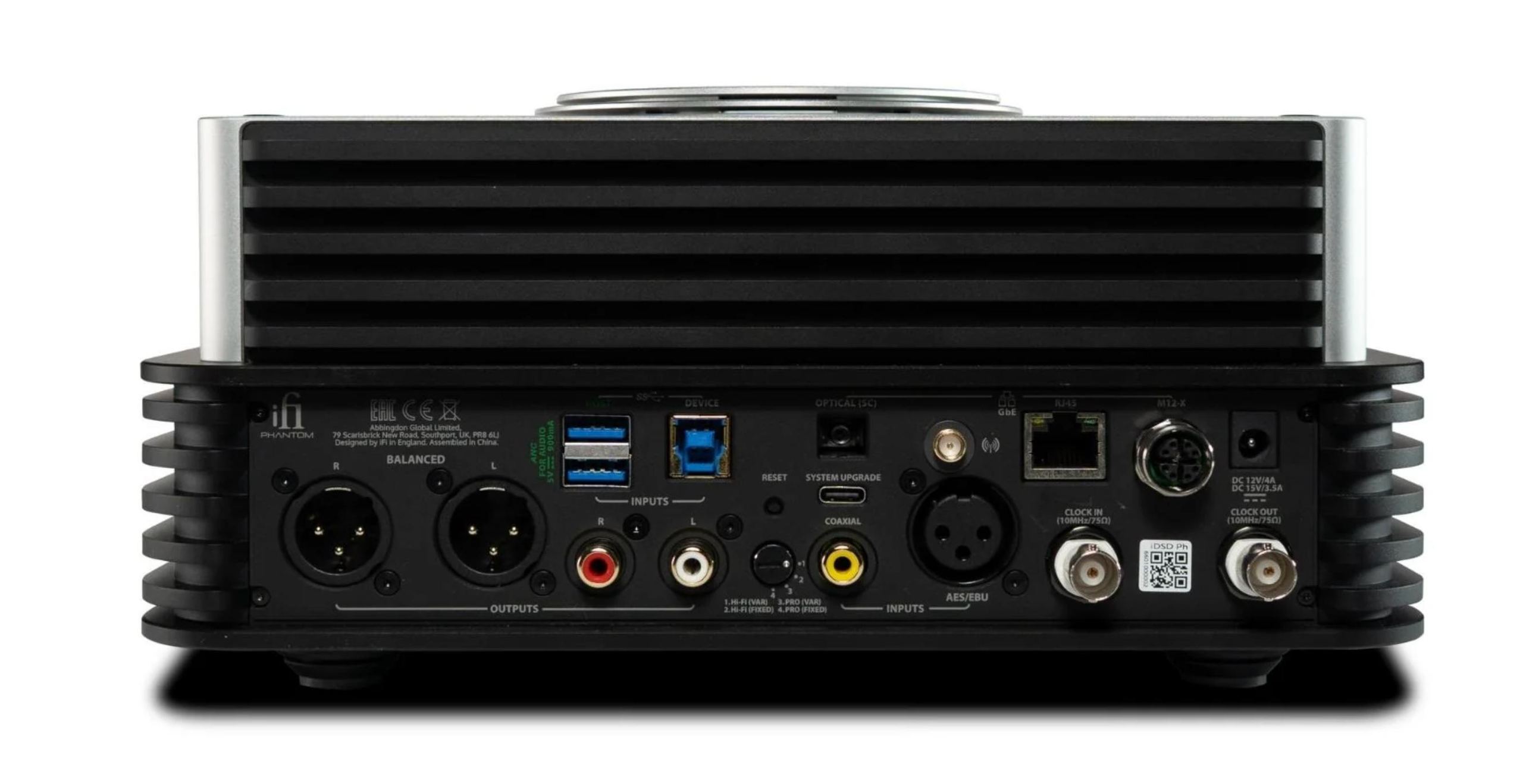
The streaming engine has been completely overhauled. The Phantom supports Qobuz Connect, TIDAL Connect, Spotify Connect, and AirPlay 2, with native support up to 768 kHz PCM and DSD512. Files stored on external USB hard drives or NAS servers are accessible from the entire home network via the iFi Nexis app, which now supports Wi-Fi pairing.
To preserve signal integrity, the Ethernet, S/PDIF, and AES/EBU inputs benefit from galvanic isolation. This electrical separation blocks interference while letting audio data through. The Phantom also offers Exclusive modes that disable unused system processes during playback, reducing potential noise sources.
XBass Pro and XSpace Pro: analog corrections
Bass processing is handled by XBass Pro, a fully analog shelving equalizer with three settings (10, 20, and 40 Hz). This stage corrects the lack of low end typical of open-back headphones without affecting the midrange. The choice of frequency allows you to tailor the correction to the headphones in use and personal preferences.
XSpace Pro broadens the soundstage at three widths (30°, 60°, and 90°). Unlike classic crossfeed circuits such as Bauer or Meier, XSpace is based on research conducted by the Ministry of Radio and Television of East Berlin on compatibility between headphone listening and speaker listening. The result aims to recreate a sense of depth close to that of a pair of speakers.
Digital filters and customization
Once the output topology has been chosen and the analog corrections applied, several digital filters allow you to fine-tune the temporal behavior of the signal. Bit-Perfect and Bit-Perfect+ provide unaltered playback, as close as possible to the original recording. GTO, a proprietary filter, upsamples to 352.8/384 kHz with minimal ringing. Transient Aligned offers balanced filtering focused on reducing high-frequency noise. Apodising upsamples to 705.6/768 kHz with more ringing for a smoother presentation.
A clearly positioned price point
At €4,695, the iDSD Phantom sits well above the Pro iDSD Signature, which remains in the lineup at around €3,250. This price may come as a surprise from a brand known for affordable devices, but the calculation makes sense if you consider the combined cost of a DAC, a network streamer, and a reference headphone amplifier purchased separately.
The Phantom is designed for stationary use, where it becomes the centerpiece of a headphone listening system. Its two-tone, two-tier design with a color OLED display and glass window over the tubes underlines its role as a main component rather than an intermediate link. The unit is available now from iFi Audio and authorized retailers.