Franky
very nice bass sound
Comment from September 29, 2026 — Experience from September 18, 2026
Automatically translated — Show original (Dutch)
heel mooie bass klank
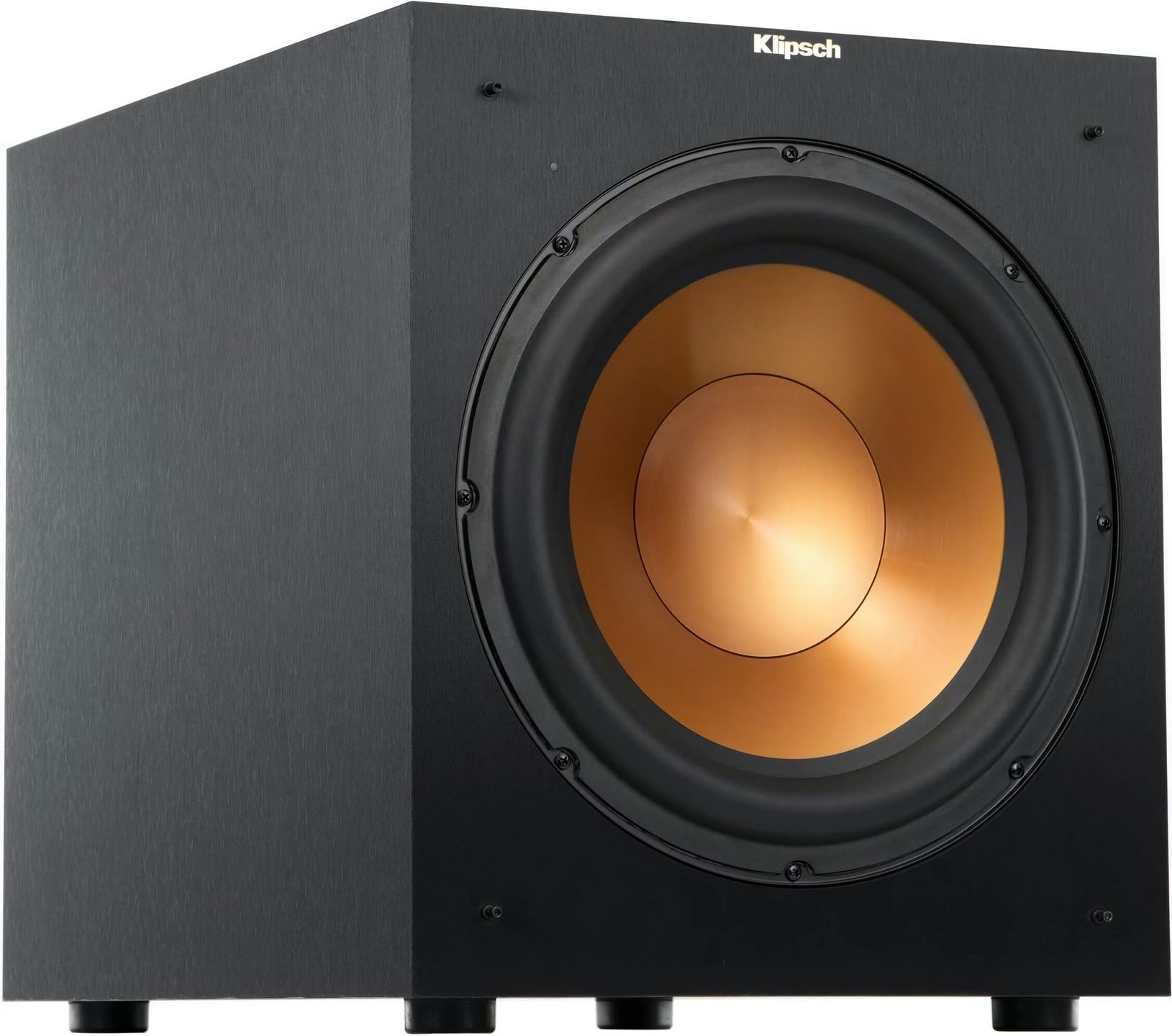
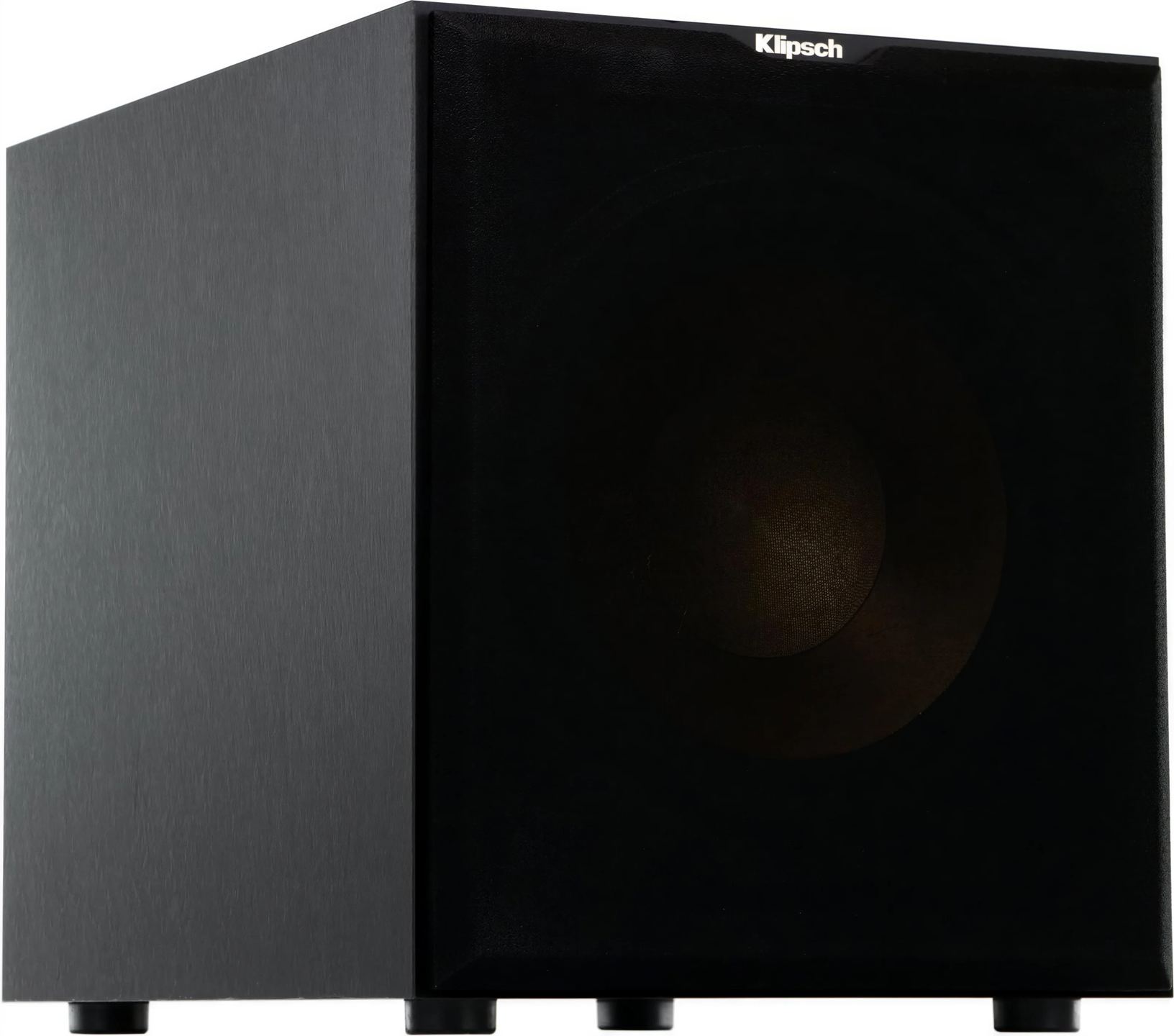
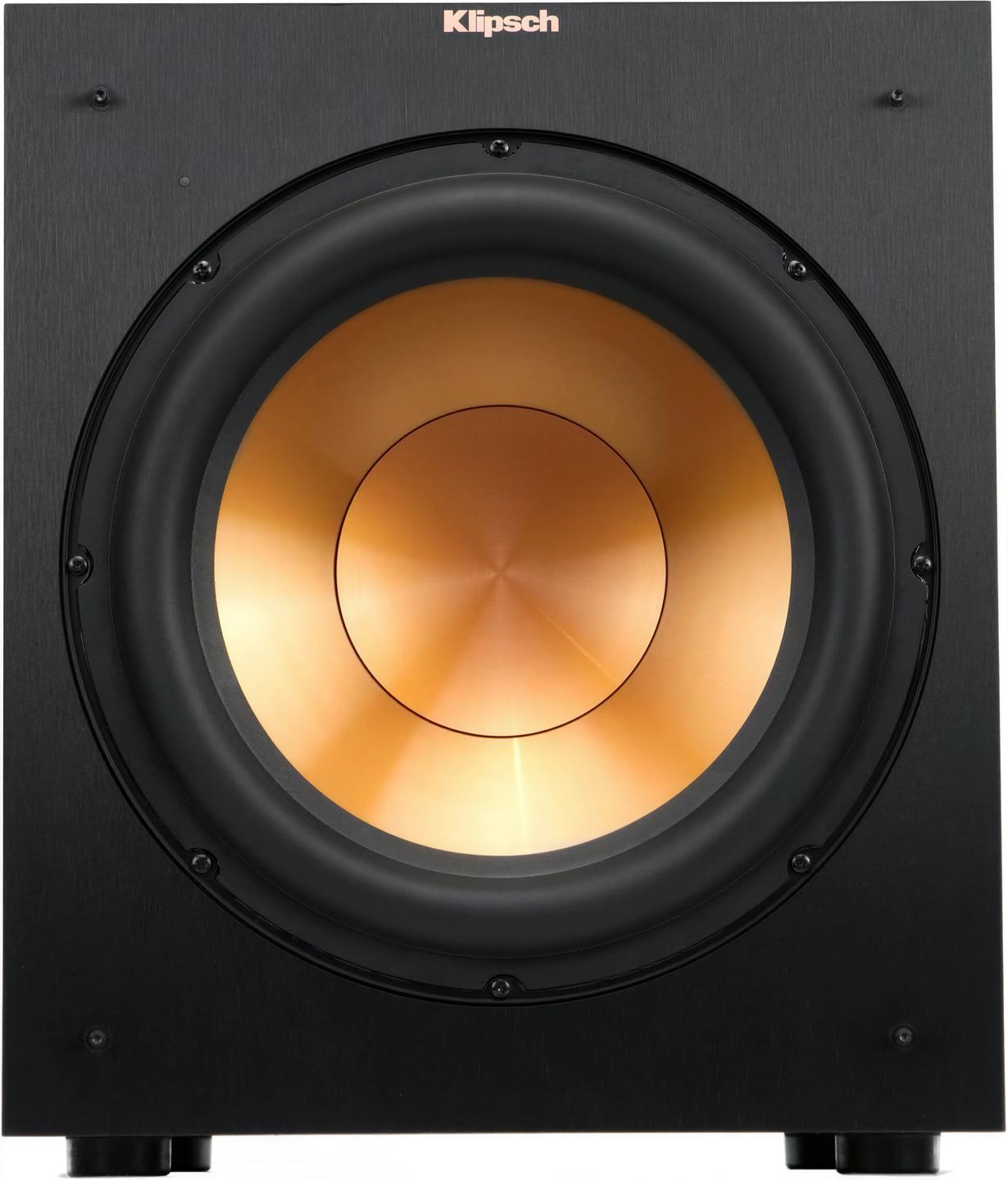
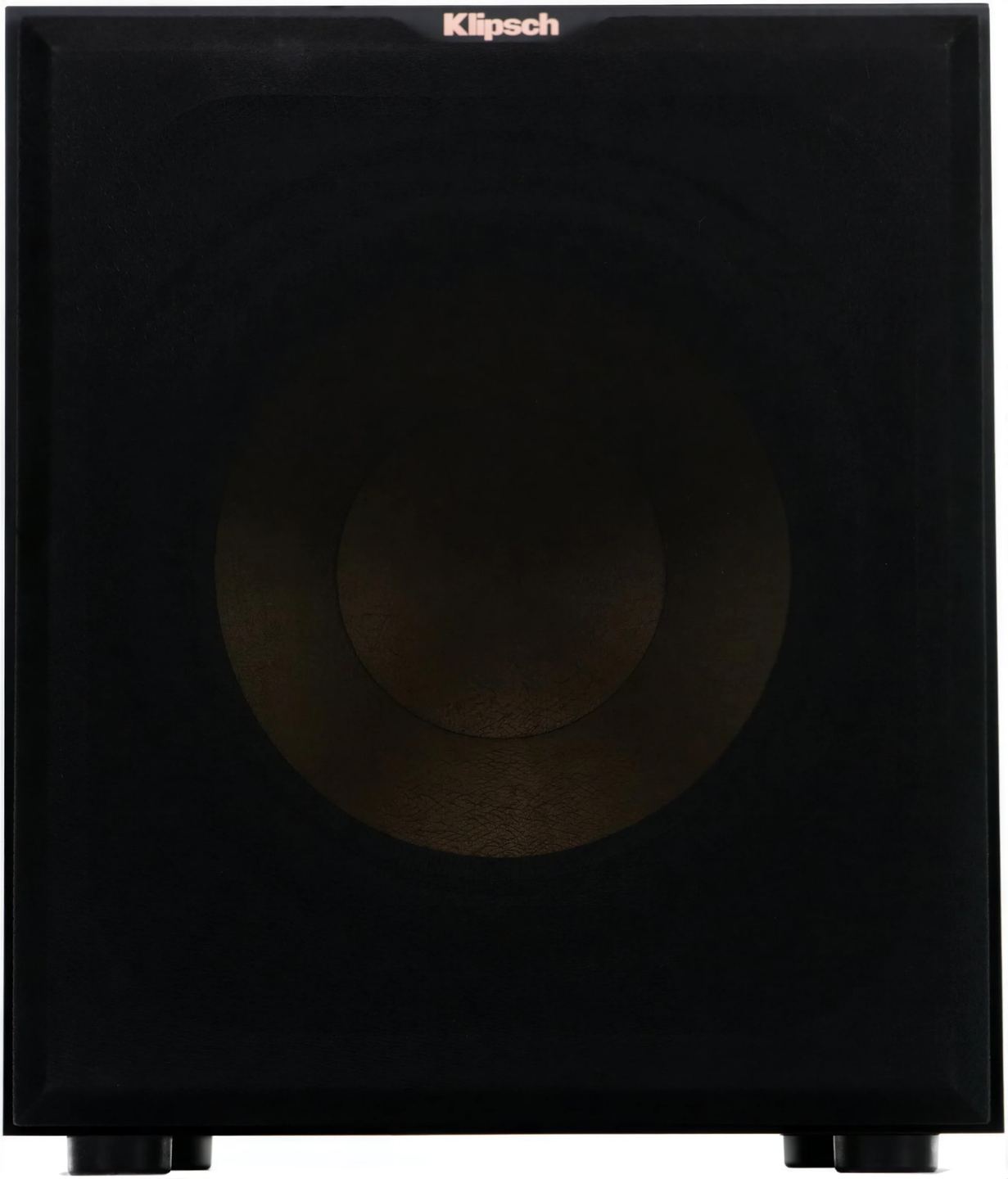

A subwoofer is judged first by its ability to stay unobtrusive when the music does not call for it, then to make the room shake when the movie demands it. Klipsch handles this dual role with a 30 cm driver, a rear port, and 200 watts of digital amplification. The Reference series here favors efficiency and simple adjustment rather than an accumulation of features. Three knobs on the back, a copper-colored cone on the front.
Remove the fabric grille and the copper-colored diaphragm appears. The shade is a Klipsch trademark, but the material matters more: it is injection-molded graphite, designated by the acronym IMG. This material combines low mass and high rigidity, two qualities that rarely go together. On a 30 cm transducer that must move large amounts of air with every cycle, the diaphragm tends to deform under strain, which muddies the bass and adds distortion. A stiffer cone behaves more like a piston and follows the signal more closely.
The driver radiates forward, with an unobstructed front baffle. This choice makes placement easier: the diaphragm does not need floor space in front of it as on a down-firing subwoofer, and the cabinet can slide up against a piece of furniture without choking its output.
The built-in amplification delivers 200 W RMS and 400 W peak, with high efficiency according to Klipsch, which describes it as fully digital. Maximum output reaches 116 dB, enough to fill a large living room without saturating from the first effects of an action movie.
Extension goes down to 29 Hz within 3 dB, a figure achieved thanks to the bass-reflex design. The circular rear port is flared along its entire length to reduce air turbulence, a source of audible chuffing when airflow becomes significant. This type of loading has its trade-off: below the tuning frequency, output drops quickly, faster than on a sealed subwoofer. The stated 29 Hz covers the bulk of instruments and the majority of soundtrack effects, but the deepest infrasonic frequencies, the ones you feel more than hear, remain out of reach.
The rear panel groups together volume, a variable low-pass filter from 40 to 120 Hz, and a two-position phase switch, 0° or 180°. The low-pass determines from which frequency the subwoofer takes over from the main speakers. Floorstanding speakers that naturally reach low call for a low crossover, around 50 or 60 Hz; compact speakers work better with a higher crossover point. The phase switch corrects cases where the subwoofer and the speakers end up out of phase at the crossover frequency, which hollows out the bass instead of reinforcing it.
No acoustic correction processor, no app, no automatic measurement. Adjustment is done by ear, or with a sound level meter for those who want objectivity. Power-on offers automatic signal detection or manual forcing, with standby after a period without music.
At 355 mm wide, 406 mm high, and 470 mm deep for 15 kg, the R-12SW remains manageable by one person. The MDF enclosure features a black brushed polymer veneer, a scratch-resistant finish that does not try to imitate wood.
The rear port imposes a placement constraint: it needs a few dozen centimeters of air behind it to breathe. Pressed up against a wall, the subwoofer loses cleanliness and gains port noise. A room corner increases output by several decibels through wall coupling, at the risk of exciting room modes and producing overpowering bass on certain notes. Moving the subwoofer by a few dozen centimeters often changes more things than any electronic adjustment.
Connectivity is limited to a stereo line input on RCA jacks, compatible with the LFE output of audio-video amplifiers. A simple cable connects the receiver’s subwoofer output to one of the two jacks; a Y-adapter feeds both if preferred. An LED on the front indicates operating status.
This simplicity has a limit. There is no high-level input on binding posts, which rules out direct connection to the speaker outputs of an integrated amplifier without a preamp output. On a stereo system, you therefore need a pre-out, or a fixed-level recording output with the precautions that implies.
Franky
very nice bass sound
Comment from September 29, 2026 — Experience from September 18, 2026