Bernard
Cable fully deserves these 5 stars, with impeccable craftsmanship.
Comment from 1 December 2020 — Experience from 9 November 2020
Automatically translated — Show original (French)
Câble mérite ces 5 étoiles largement, finitions impeccables.

A global reference, What Hifi? is one of the most comprehensive magazines covering Home Cinema and Hifi. The "5 stars" award distinguishes the highest quality products, according to this British magazine.
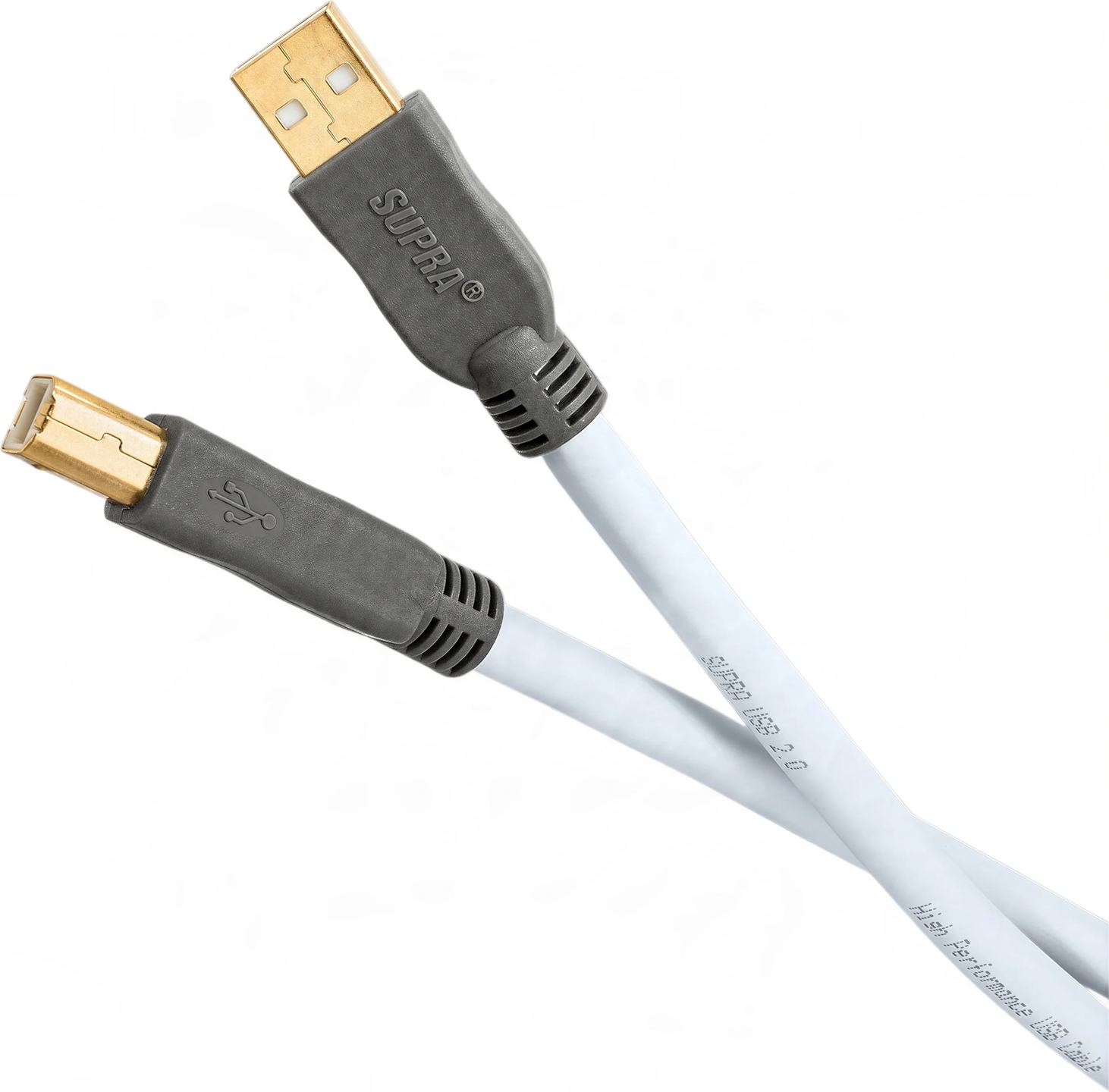
Between a computer or a network player and a digital-to-analog converter (DAC), the USB connection carries two things: music, divided into data packets, and a 5-volt power supply. This Supra cable connects the USB-A port on computers and streamers to the square USB-B port found on the back of most DACs. It is made in Sweden, with the 90-ohm impedance specified by the USB standard and tinned copper conductors grouped into shielded pairs.
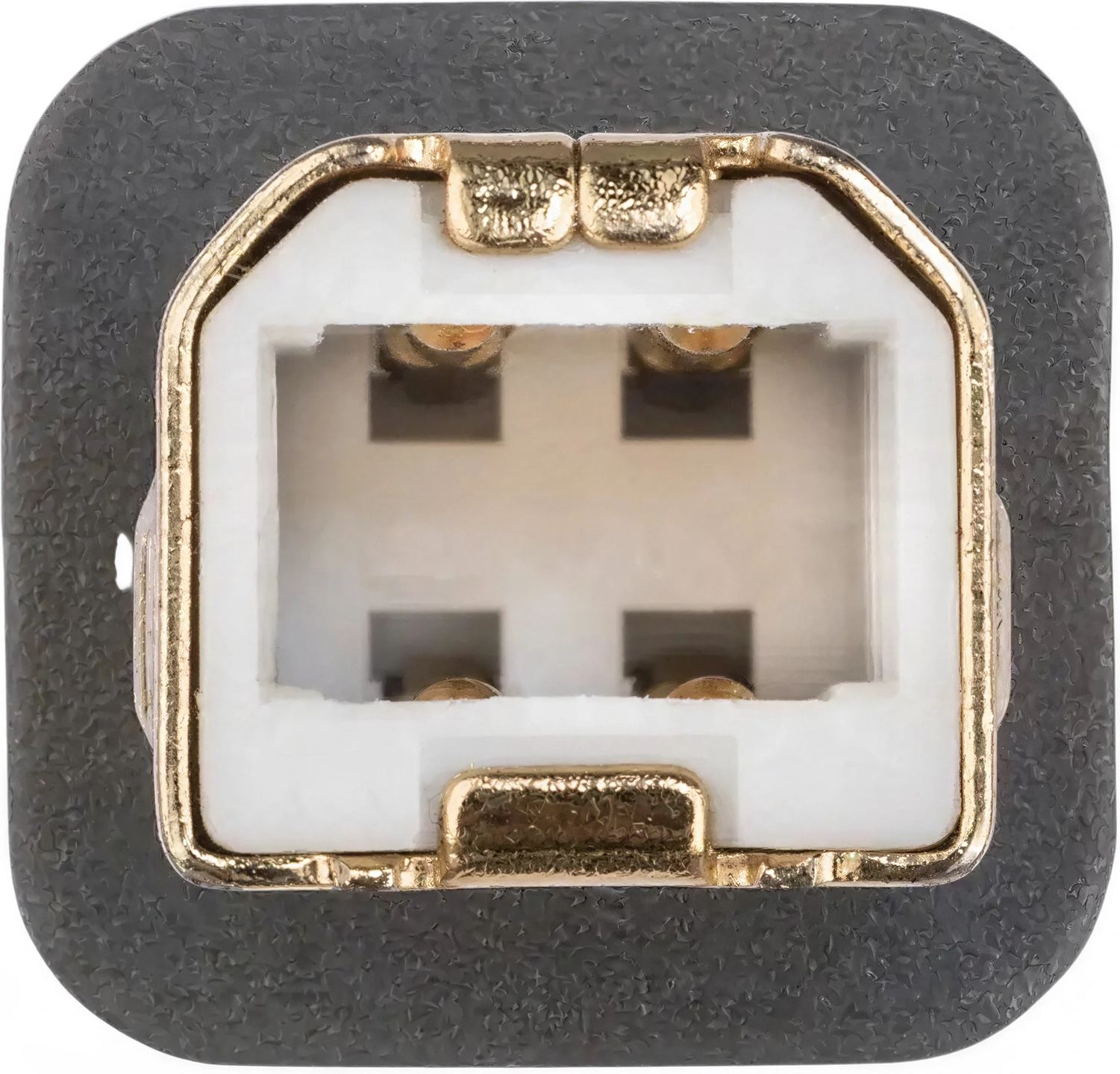
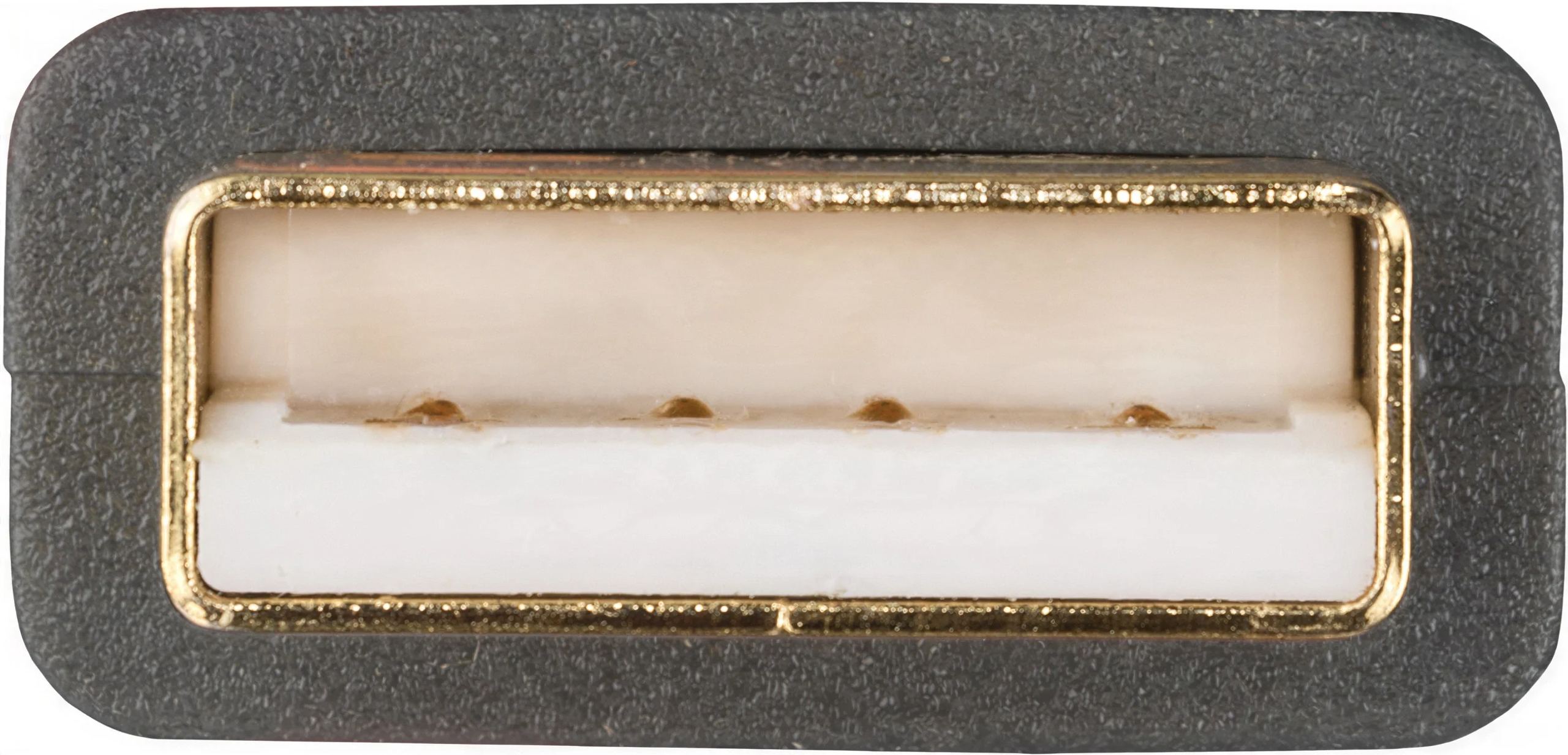
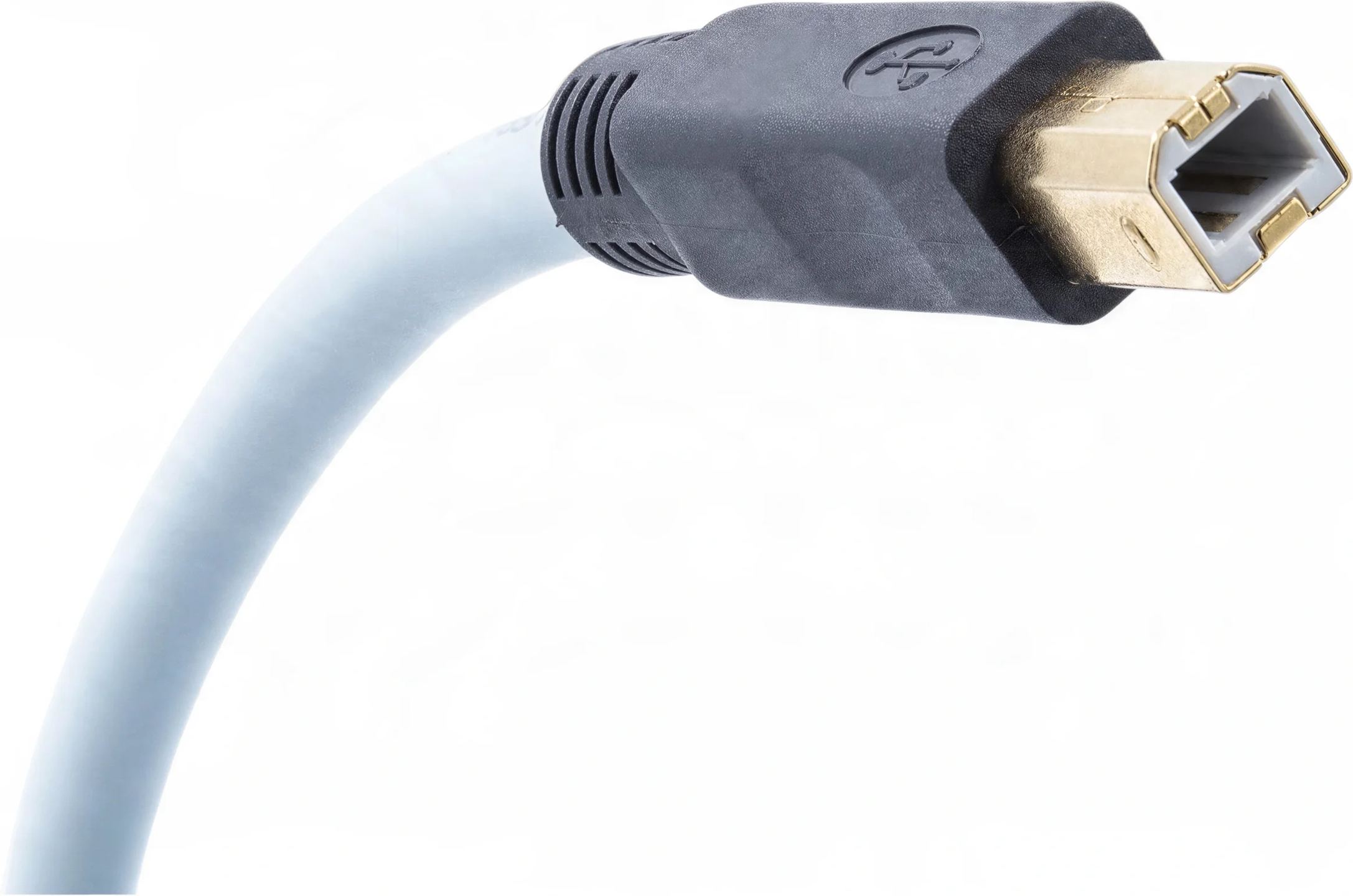
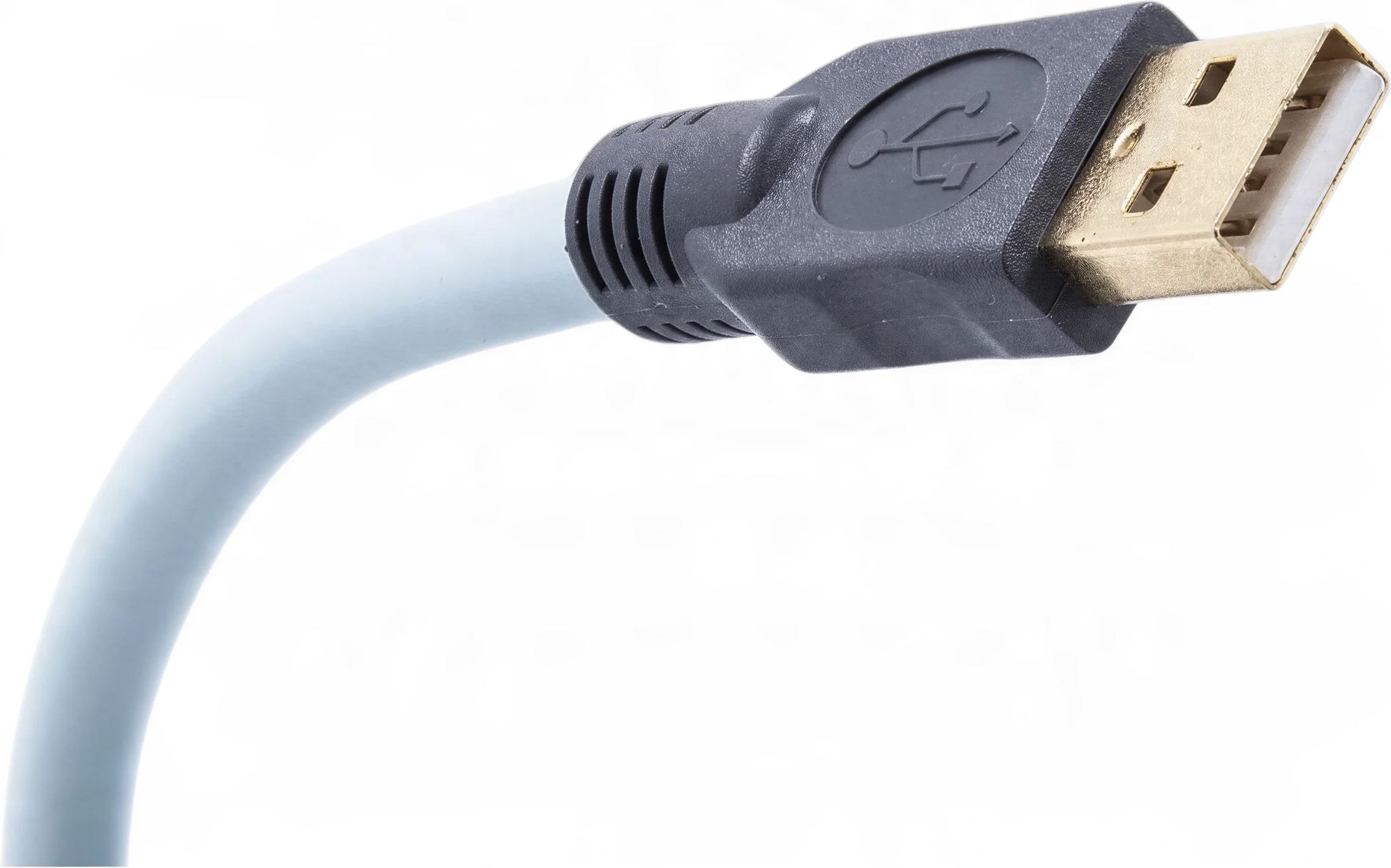
The USB-A plug connects to the source: a computer, a music server, a network player or a media player. The taller, almost square USB-B plug connects to the device receiving the signal. It is found on home audio DACs, integrated amplifiers equipped with a converter and many recording audio interfaces. Outside hi-fi, it is also used on printers and scanners. Both plugs are straight, in line with the cable, so the B plug protrudes a few centimeters from the back of the device. The jacket is moderately flexible: it allows a broad curve, but a tight bend right where the cable leaves the plug will eventually fatigue the conductors.
The two wires carrying data (D+ and D−) form a differential pair. The receiver does not read each wire separately; it reads the voltage difference between the two. Interference picked up equally by both wires is therefore largely canceled out. The USB 2.0 standard specifies a characteristic impedance of 90 ohms for this pair, and Supra meets this value. If the cable’s impedance does not match that of the transmitting and receiving circuits, part of the signal is reflected at the ends. These reflections distort the pulses, can cause read errors and then force the transmitter to resend packets. With the correct impedance, these retransmissions become rare and jitter (small variations in pulse timing) remains limited. The cable reaches 480 Mbit/s, the maximum data rate of high-speed USB 2.0. Its capacitance is 52 pF per meter. The signal travels through it at 0.66 times the speed of light, or about two-thirds: this speed depends on the insulation surrounding the conductors.
Each conductor consists of 19 strands of oxygen-free copper (OFC), each 0.127 mm in diameter, giving a cross-sectional area of 0.24 mm², or 23 AWG. A thin layer of tin coats the copper and protects it from oxidation, which tarnishes bare metal over time. The conductors are twisted into pairs, and each pair has its own shielding. The data pair and the power pair therefore do not interfere with each other. The shielding consists of a double layer of aluminum foil on a polyester film (aluminized PET). Unlike a braid, foil wraps all the way around the conductors without leaving gaps. The round PVC outer jacket bears the marking “SUPRA USB 2.0”, the words Made in Sweden and a printed marker every meter.
In addition to data, a USB connection carries a voltage of 5 volts. Some devices use it as their sole power source: this is the case for portable DACs and small headphone DAC/amplifiers. The cable supports up to 1.5 A, or 7.5 W. However, the current actually available depends on the source’s port: a standard USB 2.0 port supplies 500 mA, and some charging ports provide more. The resistance of 72 ohms per kilometer, or 0.072 ohms per meter of conductor, limits the voltage drop between the source and the device. A bus-powered DAC thus receives a voltage that remains close to 5 volts. DACs with their own mains power supply use this 5-volt supply only to detect the connection, if at all.
Supra is the cable brand of Jenving Technology, which designs and manufactures its products in Ljungskile, on Sweden’s west coast. The USB 2.0 A to B cable is part of a range that uses the same construction with other plugs. It includes USB-A to Mini B and USB-A to Micro B models, as well as a version with a female USB-A connector that serves as an extension cable.
Music travels over USB in the form of data packets. Most modern DACs operate in asynchronous mode: their own clock sets the pace of conversion, not the cable or computer. The cable must therefore deliver the packets without errors. It must also limit the electrical interference it could carry to the DAC via the 5-volt supply or ground. That is what the 90-ohm impedance, individually shielded pairs and double layer of aluminium foil are for here.
Easily. A 32-bit / 384 kHz stereo PCM stream requires around 25 Mbit/s, and a DSD512 stream around 45 Mbit/s. This is well below the 480 Mbit/s of high-speed mode. In fact, almost all audio DACs use USB 2.0, even when playing the most demanding formats.
No. The USB-B inputs on DACs operate at USB 2.0. The USB-B 3.0 plug also has a different shape: it has an additional section on top and does not fit the USB-B 2.0 sockets on audio devices.
Not directly, as Supra’s USB 2.0 range does not have a USB-C plug. You need to add a male USB-C adapter to female USB-A between the computer and the cable’s Type-A plug. The connection remains high-speed USB 2.0, which is suitable for a DAC.
The plugs determine the direction: plug A connects to the source, plug B to the device receiving the signal. Data then flows in both directions. The computer sends the music, and the DAC sends information back: supported formats and, in asynchronous mode, the rate at which it wants to receive packets.
Yes, with any USB 2.0 device equipped with a USB-B port: a printer, a scanner, a recording audio interface, a MIDI master keyboard, a DJ controller or certain hard drive enclosures. The cable also works with older USB 1.1 devices, at their own transfer speeds.
Bernard
Cable fully deserves these 5 stars, with impeccable craftsmanship.
Comment from 1 December 2020 — Experience from 9 November 2020
* Attention ! Un crédit coûte de l'argent et doit être remboursé
Pour un achat de 300 € en 4 fois : acompte de 75 €, puis 3 mensualités de 75 €. Crédit de 225 € au taux débiteur fixe de 0% sur 3 mois. Coût du crédit 0 €. Montant total dû 300 €. TAEG 0%. Le coût du crédit est pris en charge par l'enseigne.
Sous réserve d'acceptation par Alma SAS (almapay.com), société de financement agréée par l'ACPR (code CIB : 17408). RCS Nanterre 839100575. Contact : support@almapay.com