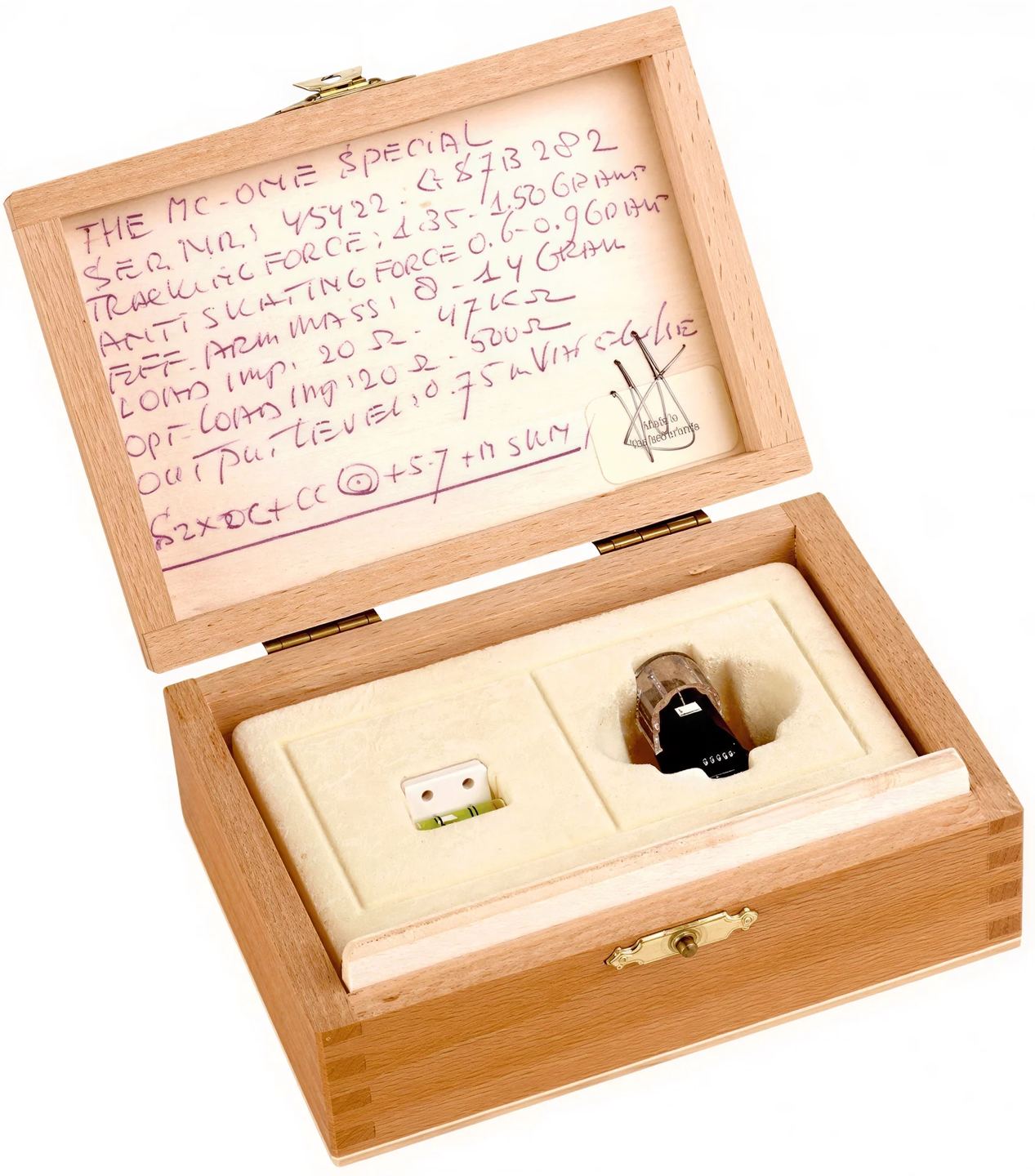
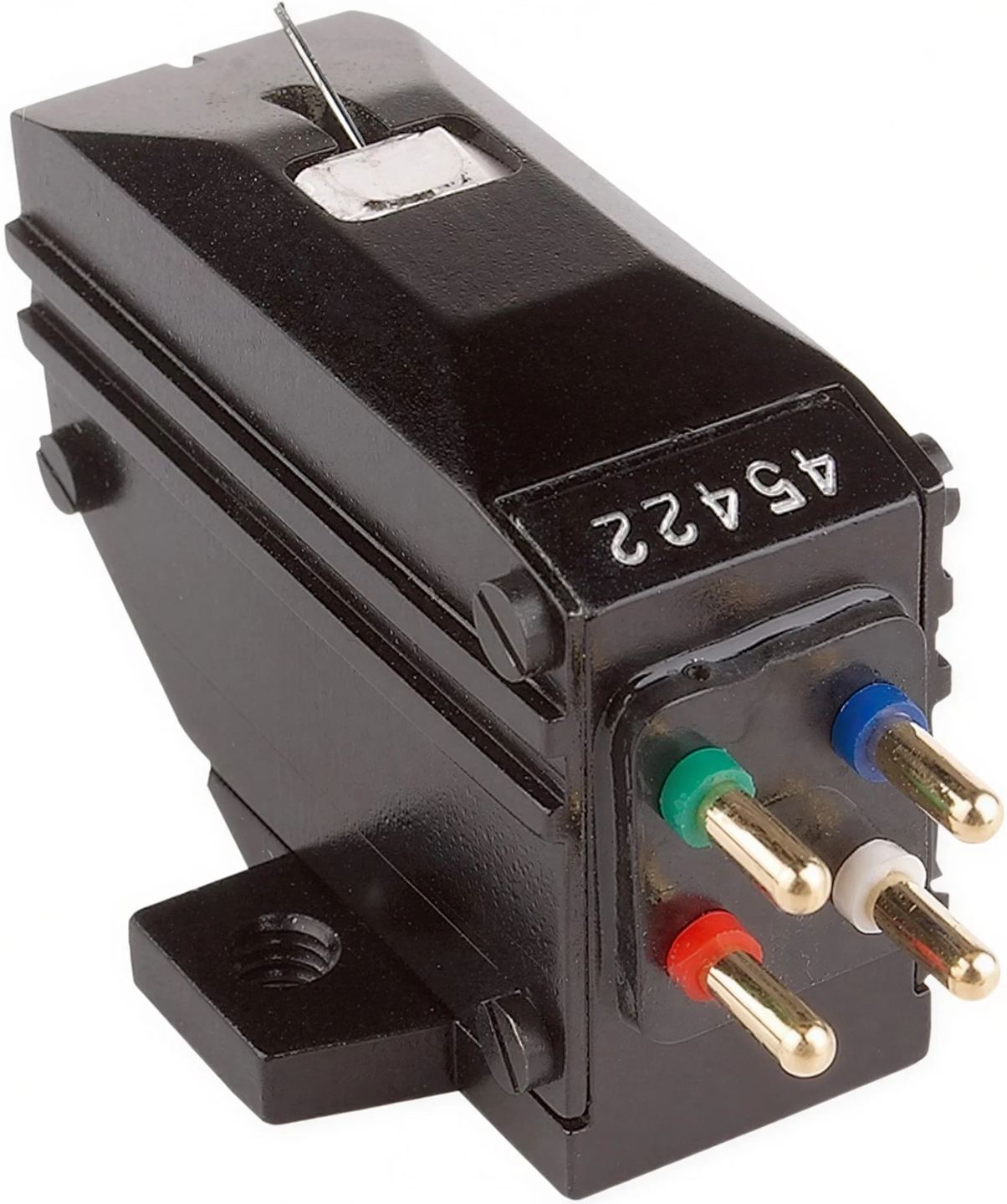
In the Dutch workshop of Van den Hul, some cartridges stand out during testing. This is one of them: a hand-assembled moving-coil cartridge, built from the finest examples of the MC-10 Special, sharing its materials and the stylus designed by the brand’s founder. It requires careful setup and a suitable preamp, but remains easier to integrate than many very low-output cartridges.
A hand-selected and hand-assembled MC-10 Special
The MC-ONE Special is a selected version of the MC-10 Special. The two cartridges share the same technical foundation, and the MC-ONE Special consists of the units chosen during selection. The “Special” designation refers to two improvements over the previous version. The front pole piece is thicker, and a small additional magnet strengthens the magnetic field in which the coils move. These two changes increase resolution and output voltage. Each cartridge is made to order, with a lead time of around two weeks before shipping.
Boron and crystalline silver in the moving assembly
In a moving-coil cartridge, the coils move with the stylus while the magnet remains stationary. The MC-10 Special, and therefore the MC-ONE Special derived from it, carries the stylus on a boron cantilever. This very rigid, very light material transmits groove vibrations without distorting them. The coils are wound with crystalline silver wire and matched to each other. Resistance remains low, at 9 Ω per channel, and channel balance is tightly controlled: the difference between channels remains below 0.5 dB. Separation exceeds 35 dB at 1 kHz and 30 dB at 10 kHz, providing a clear stereo image across the entire spectrum. The equivalent stylus mass does not exceed 0.35 mg. This low inertia helps the assembly track the rapid modulations cut into the groove by high frequencies.
The VDH-I stylus and its line contact
A.J. van den Hul built his reputation on this diamond profile, long before the brand became known for its cables. The VDH-I stylus belongs to the line-contact stylus family. Rather than touching the groove at a small point, like a conical or elliptical stylus, it rests along a narrow, tall line. Its two radii, 3 µm and 85 µm, describe this geometry. The small radius reads the finest undulations, right up to the highest harmonics. The large vertical radius distributes the tracking force over a larger contact area, reducing vinyl wear. The stylus also better maintains its accuracy at the end of a record side, where the groove moves more slowly and distortion increases with simpler profiles. The specified response, from 5 Hz to 50 kHz, extends well beyond the audible range. Tracking ability reaches 70 to 80 µm at 315 Hz.
This profile comes with a trade-off: it requires precise alignment. The vertical tracking angle is set at 22°. Azimuth, tonearm height and overhang must be carefully adjusted so that the contact line follows the groove wall. An alignment protractor and a little patience are necessary; otherwise, the stylus will not deliver its full resolution.
Matching tonearm and preamp
At 8.2 g, the cartridge fits easily onto most headshells. Its compliance is fairly high: the suspension is supple, with a static measurement of 28 µm/mN. Van den Hul therefore recommends a tonearm with a low to medium effective mass, between 8 and 12 g. On a heavy tonearm, the resonance of the tonearm-cartridge combination would fall too low, towards the range of record warps and floor vibrations. The recommended tracking force ranges from 13.5 to 15 mN, or approximately 1.35 to 1.5 g. This is a moderate value for a cartridge in this category.
Electrically, the output voltage of 0.65 mV is low, as with all conventional moving-coil cartridges. However, it remains comfortable compared with models that fall below 0.3 mV. An MC phono input with around 60 dB of gain is sufficient, without resorting to extreme gain levels that increase hiss. The recommended load impedance is 200 Ω. Load capacitance is not critical: the length of the tonearm cable or the choice of preamp has little effect on the frequency response curve.