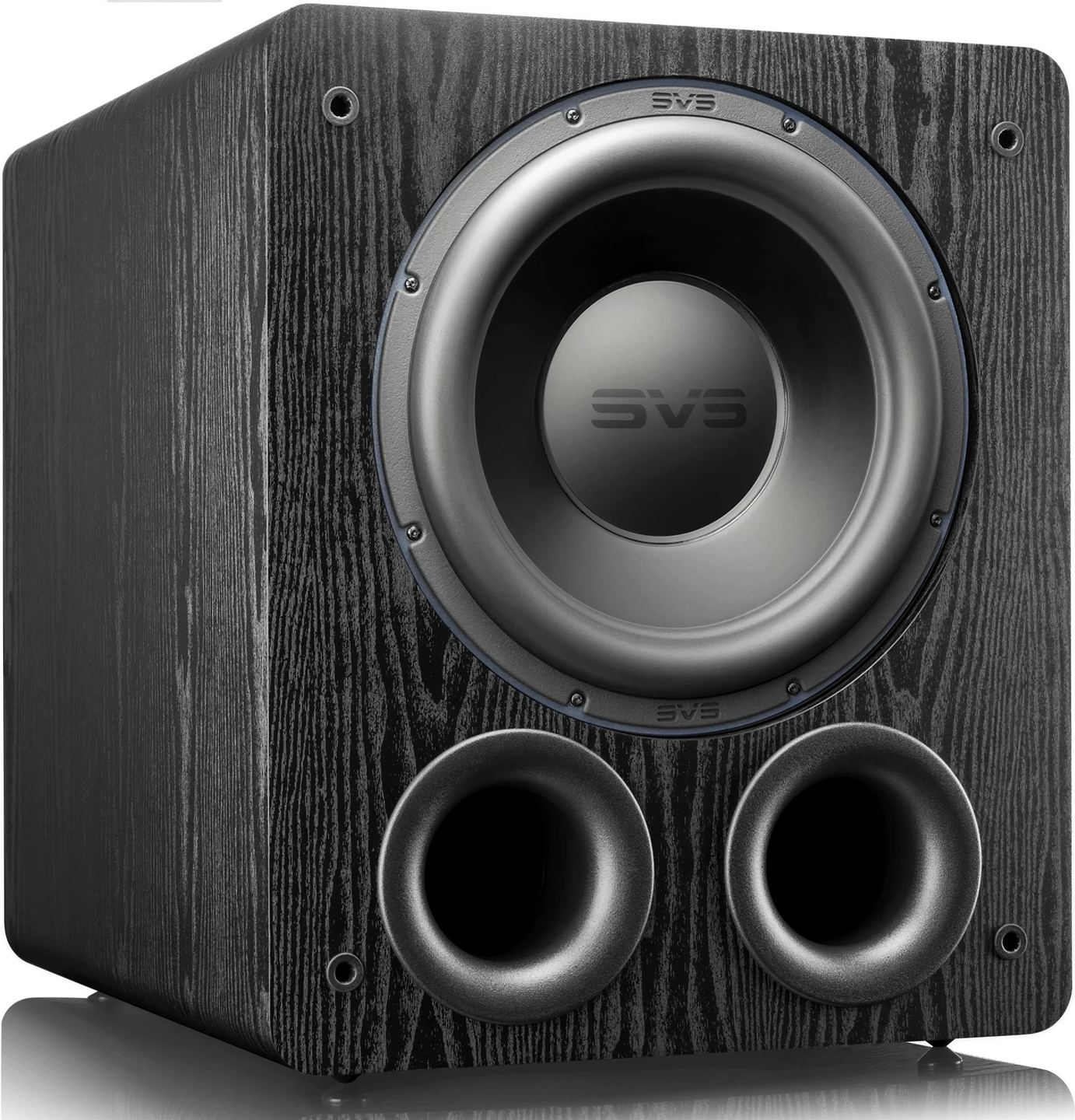
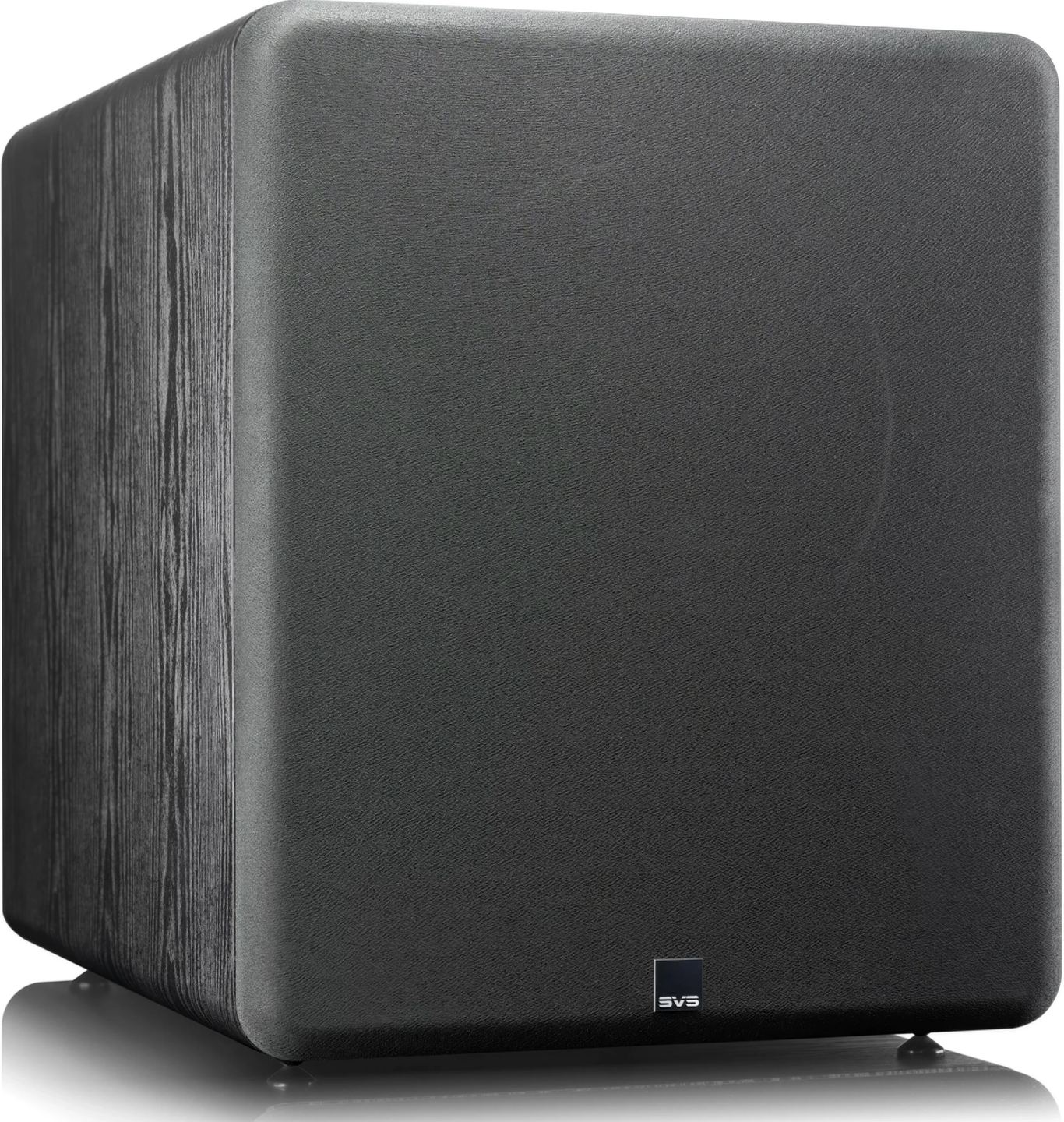
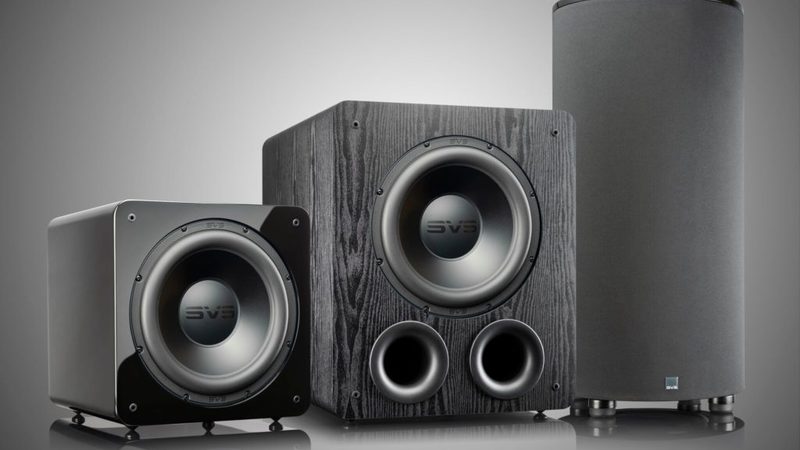
With its two front ports, fully redesigned 30 cm driver, and 550-watt amplifier, the PB-2000 Pro is a complete overhaul of the 2000 series from SVS. This bass-reflex subwoofer incorporates technologies developed for the 16-Ultra, 4000, and 3000 series, and goes down to 16 Hz with extension and control that allow it to fill large rooms without ever seeming to run out of steam.
A driver designed for extreme excursion
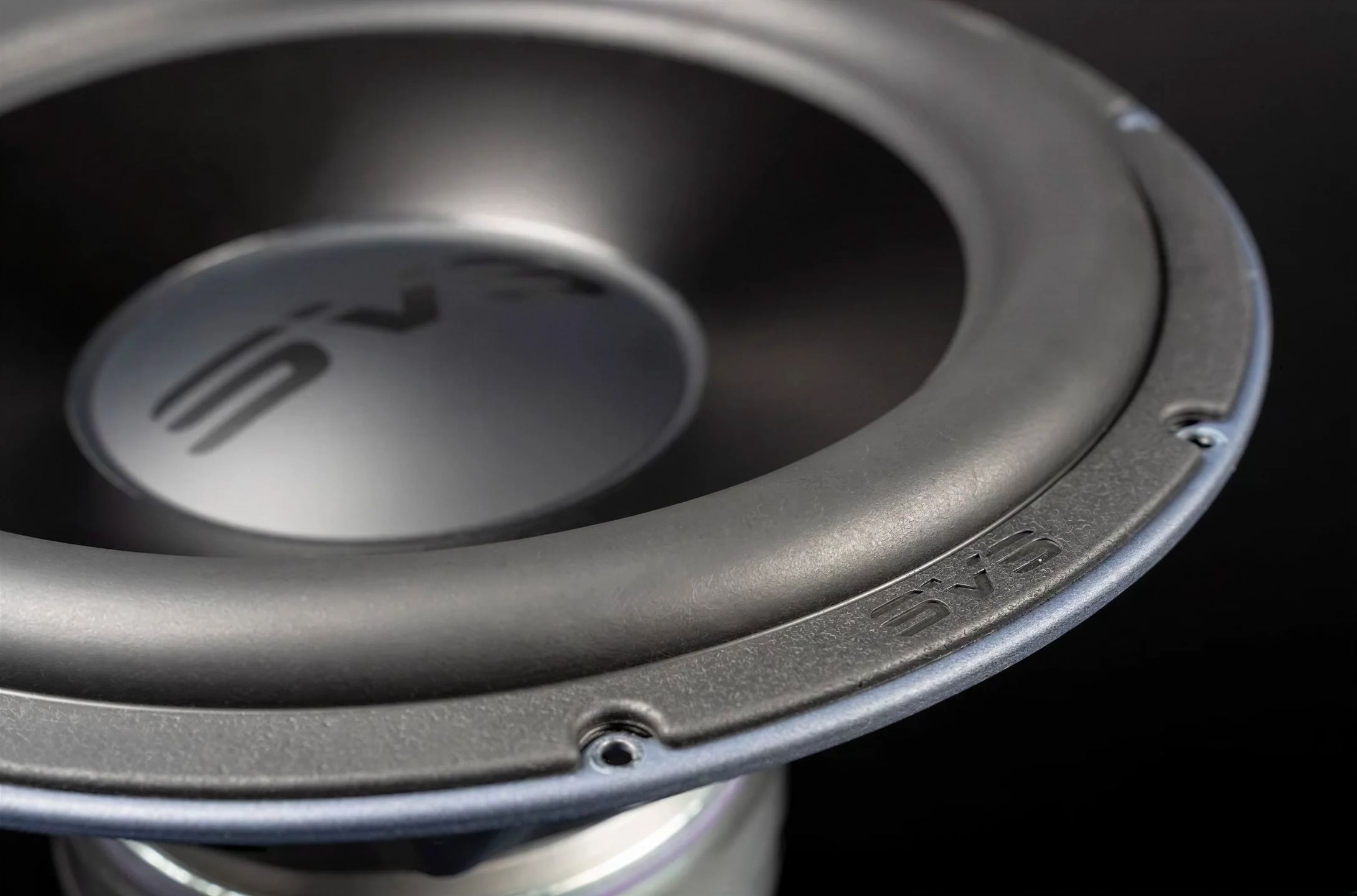
The PB-2000 Pro’s 30 cm driver has very little in common with that of its predecessor. Its vented aluminum cone offers a particularly favorable stiffness-to-mass ratio, allowing it to move large volumes of air while maintaining precise piston-like behavior. The long-throw suspension, injection-molded with a parabolic profile, enables significant excursion without compromising the linearity of movement or the durability of the driver.
The magnetic motor is built around two ferrite toroidal magnets weighing in at over 6.8 kg. This magnetic mass generates the force needed to control the cone during the most extreme excursions. The high-purity copper dual-layer voice coil is wound on a 51 mm polyimide-impregnated fiberglass former, a material chosen for its high thermal conductivity, which helps dissipate heat during prolonged high-demand use.
A Class D amplifier with discrete MOSFETs
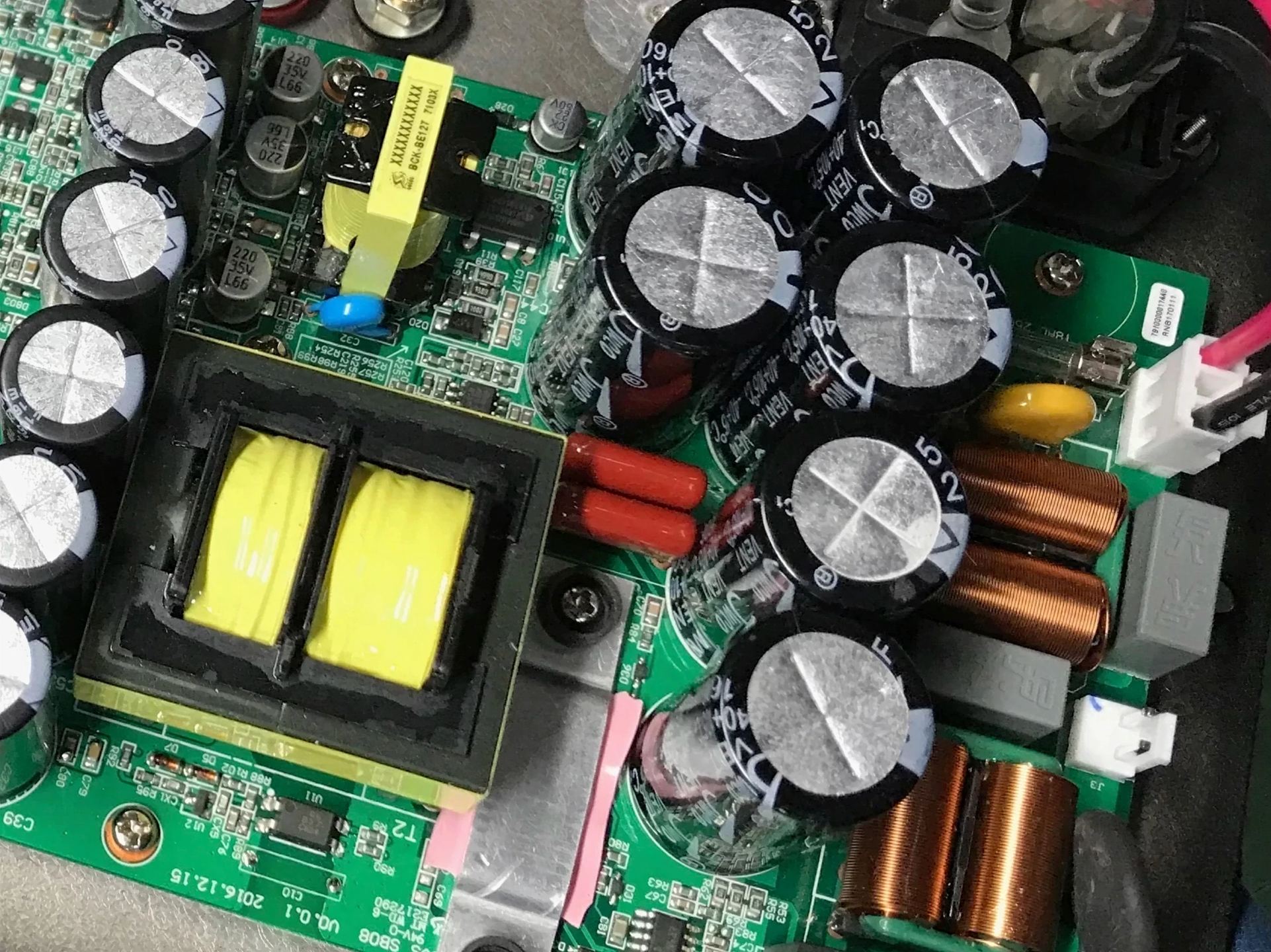
The Sledge STA-550D amplifier delivers 550 watts RMS and up to 1,500 watts peak. Its architecture combines the efficiency of Class D with discrete 25-amp / 600-volt MOSFET transistors, capable of supplying high currents to drive the driver during the most demanding transients. This combination allows the subwoofer to maintain precise control of the cone even at high levels, reducing distortion and preserving bass definition.
Signal processing is handled by an Analog Devices processor running at 50 MHz with 56-bit double-precision filtering, the same architecture used in the brand’s high-end models. This DSP manages not only driver protection, but also all equalization and acoustic correction functions.
Dual-port bass-reflex loading
The thick MDF cabinet features two 76 mm front ports, compared with a single port on the previous model. This dual-port configuration improves airflow and reduces the risk of port noise even at high output levels. The bass-reflex tuning is optimized to maximize extension and efficiency in the infrasonic range.
For those who prefer a tighter response or need to place the subwoofer near a wall, supplied plugs can be used to seal the ports and switch to sealed operation. In this mode, the response starts at 17 Hz instead of 16 Hz, with a slightly tighter group delay that can be better suited to music listening or rooms where the acoustics naturally reinforce low frequencies.
Internal bracing and panel thickness are designed to eliminate unwanted resonances. Acoustic damping lines the inside of the cabinet to avoid coloration. Iso-elastomer feet decouple the subwoofer from the floor, limiting vibration transmission to surrounding structures.
Control via smartphone and rear interface
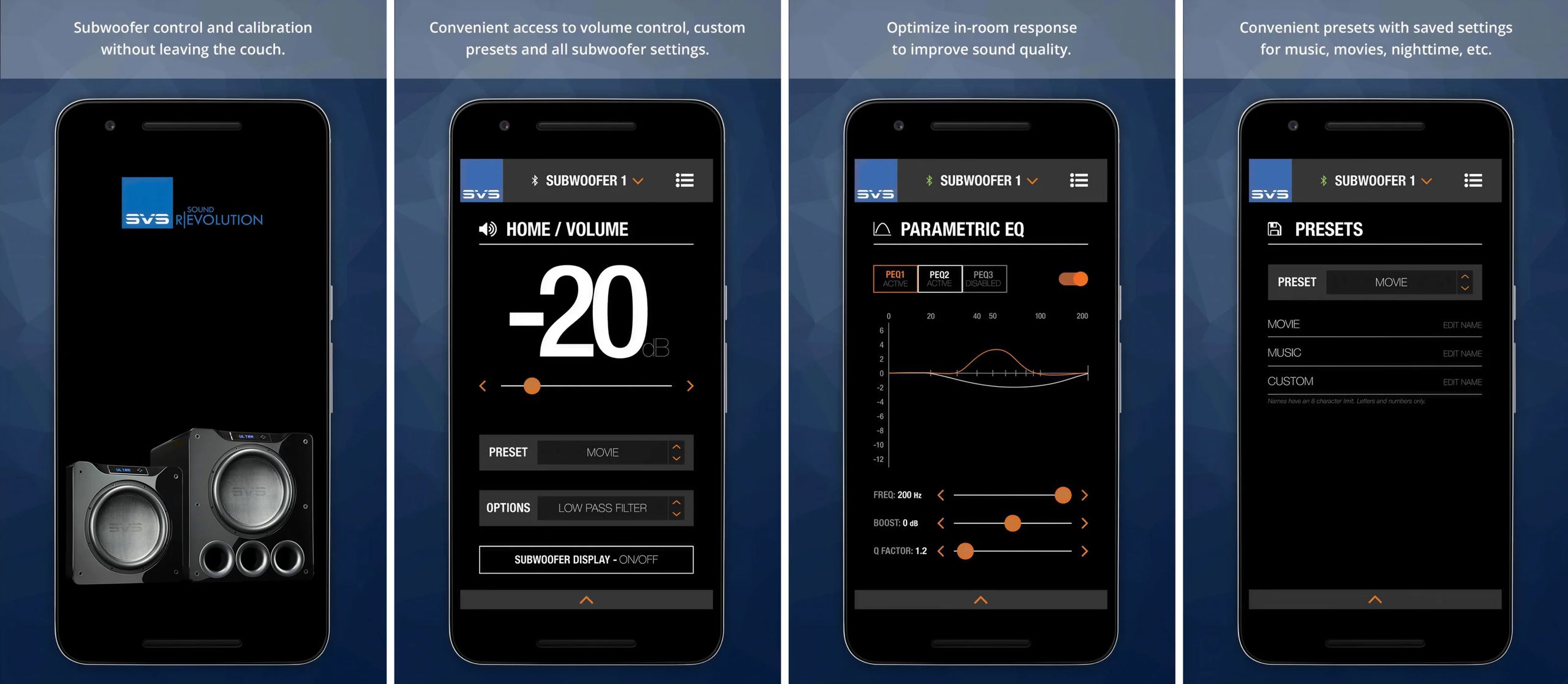
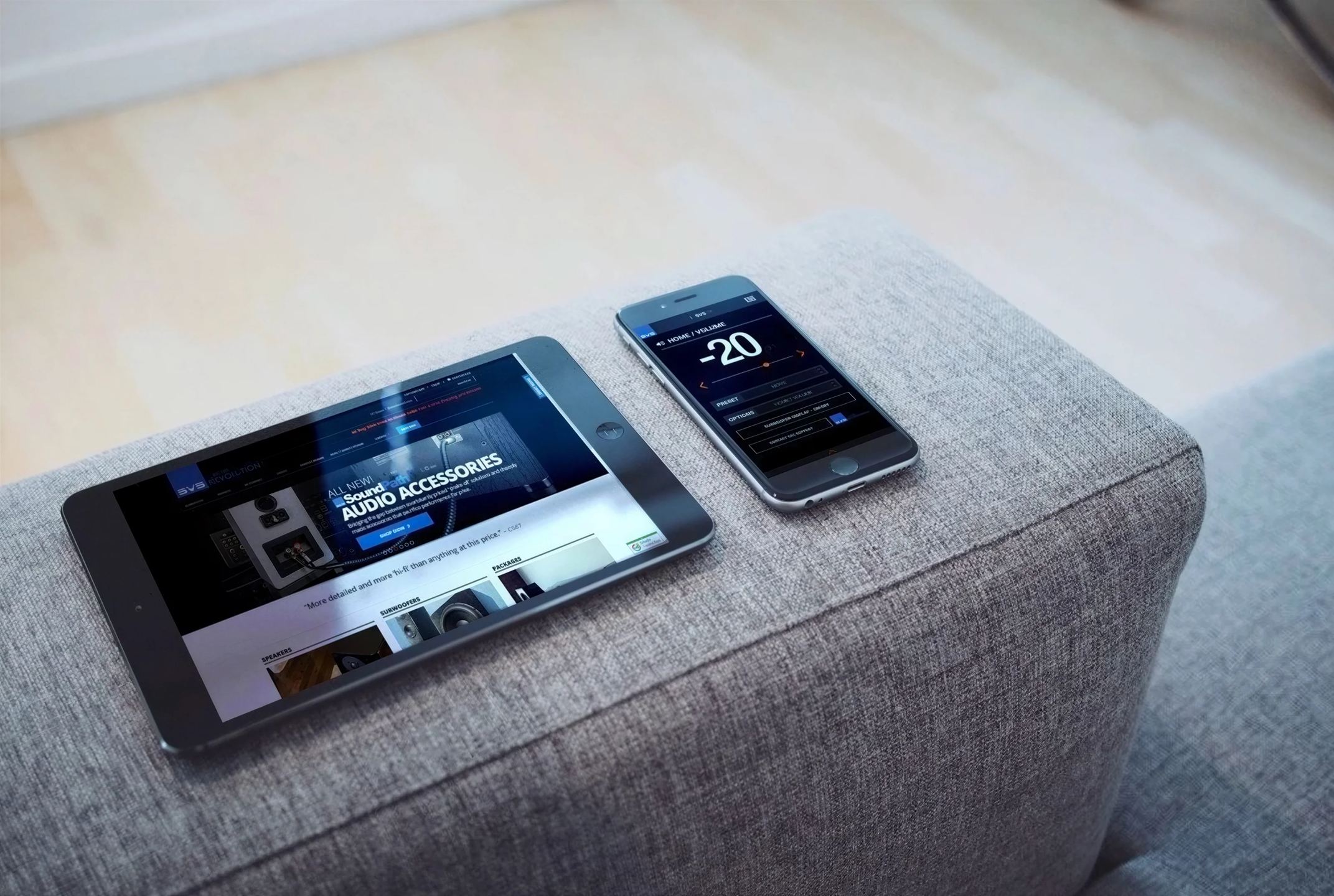
The SVS app, available on iOS and Android, communicates with the subwoofer via Bluetooth and provides access to all DSP parameters. You can adjust volume, low-pass filter cutoff frequency (30 to 200 Hz), phase (0 to 180°), polarity, and room gain compensation. A three-band parametric EQ allows you to correct peaks and dips caused by room acoustics, with adjustable center frequency, gain, and Q factor for each band.
Three user presets store different configurations depending on the content, for example to switch between a cinema-oriented setting and another more suited to music. Bidirectional feedback shows changes in real time on the smartphone screen and on the subwoofer’s rear interface.
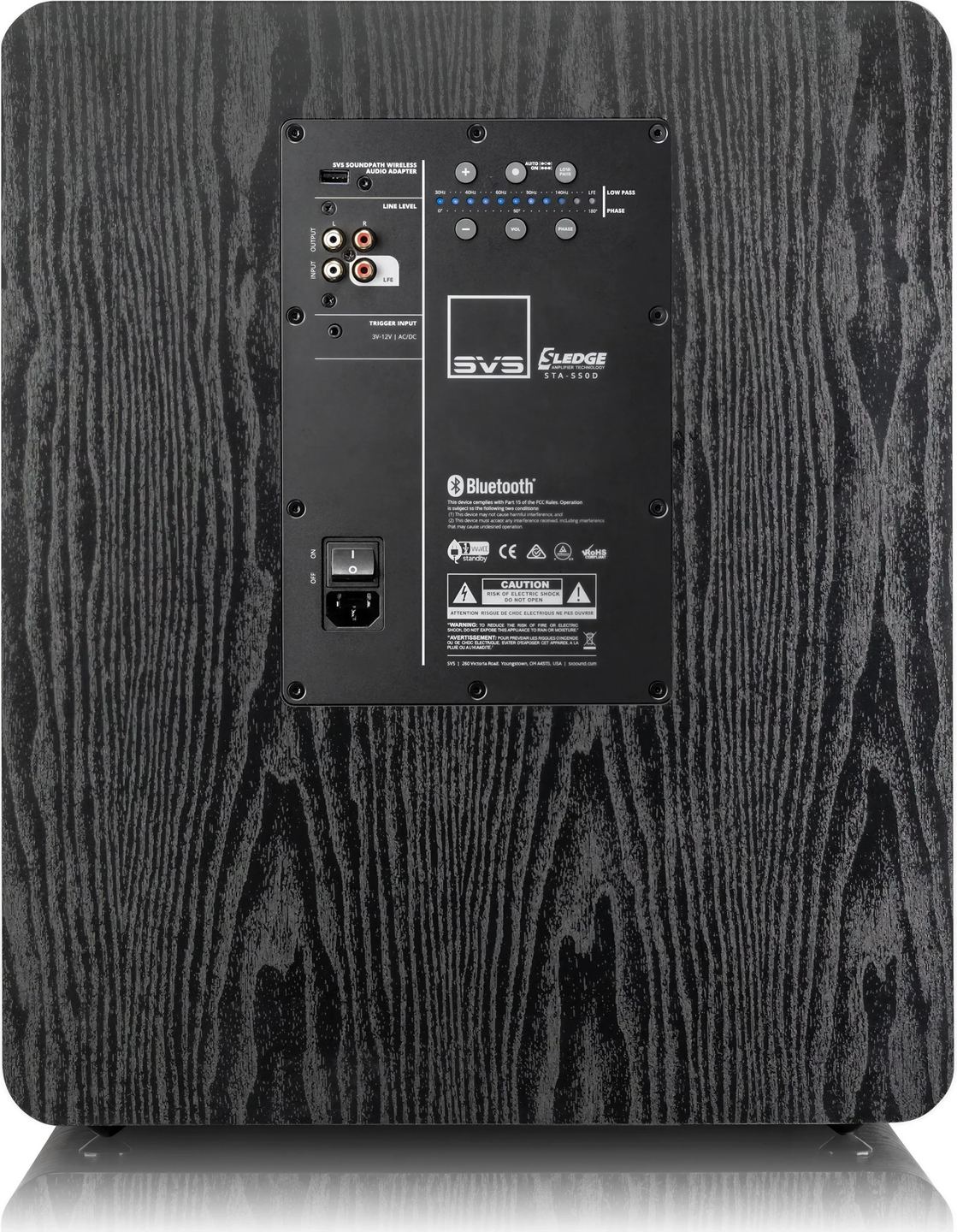
The Intelligent Control Interface (ICI) on the rear panel offers direct access to the main settings via touch buttons and an LED bar. This solution allows quick adjustments without using the app, particularly useful during initial setup.
Connectivity and integration options
The stereo line input on RCA accepts an unbalanced signal with an input impedance of 16 kΩ. The right channel also serves as a mono LFE input for connection to an AV receiver. A line output allows you to daisy-chain a second subwoofer.
The USB port can power the separately sold SoundPath Wireless Audio Adapter, allowing wireless placement of the subwoofer in the room. A 3–12 volt trigger input lets you synchronize power on with an amplifier or processor. Auto-standby engages after ten minutes with no signal, with a residual consumption of 0.5 watts.