Vinyl record cleaning machine
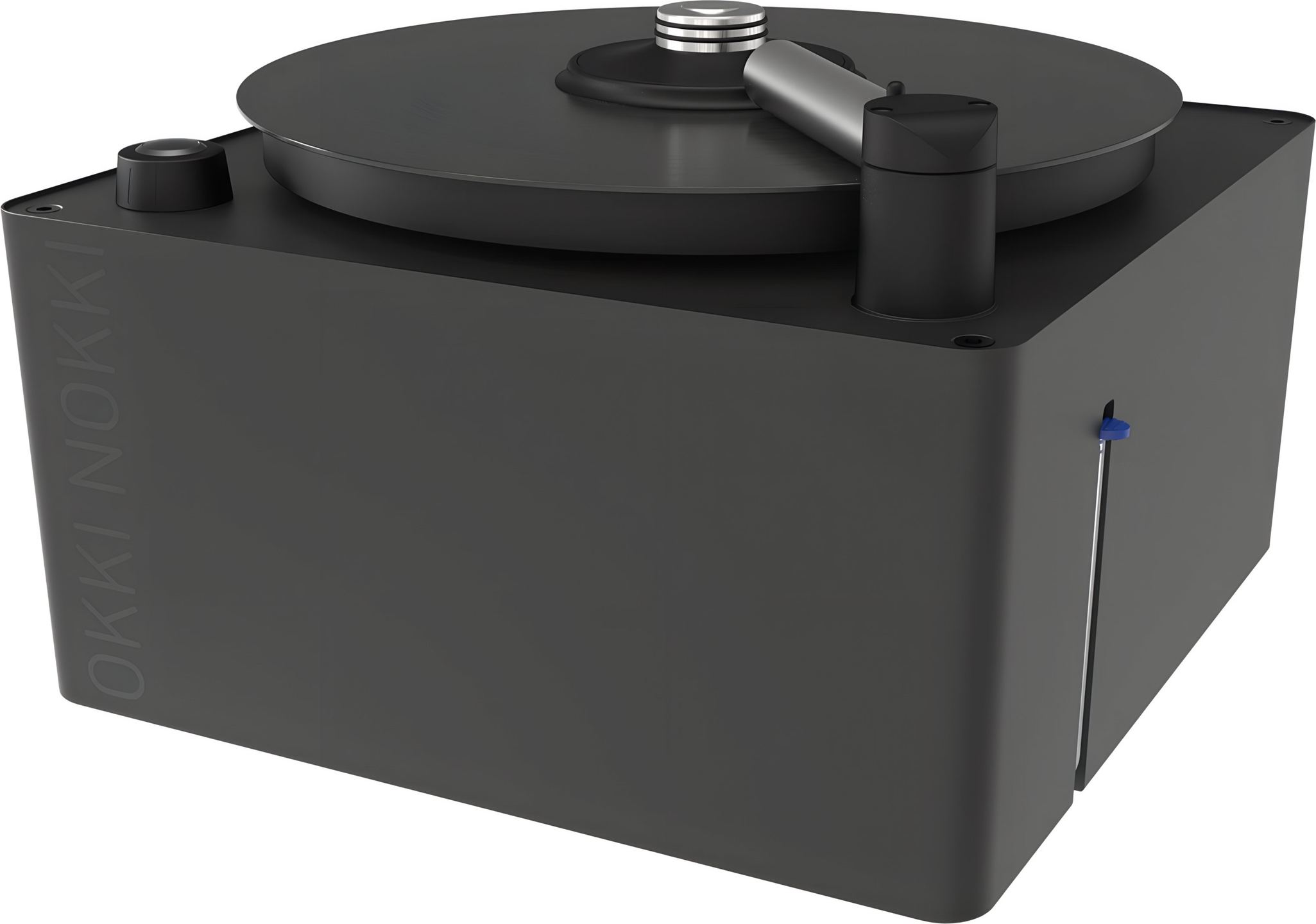
A record cleaned with a dry brush still retains everything the bristles cannot reach at the bottom of the groove: compacted dust, greasy film, pressing residues. A record cleaning machine wets the groove, scrubs it, then vacuums up the dirt-laden liquid. It is this suction that sets it apart from washing by hand. Okki Nokki has been making this type of machine in the Netherlands since 1997, and the One is its third generation.
A third generation redesigned from scratch
The first Okki Nokki, designed by Johan Bezem, had a covered wooden cabinet. The second switched to an aluminium composite housing. The One, released in 2020, was completely redesigned: its ABS plastic shell consists of two double-walled halves. It has fewer moving parts than its predecessors, and the tank is built into the housing. The air and liquid circuit was also revised to prevent leaks. Manufacturing was brought back to the Rotterdam headquarters, under the direction of Sanne Bezem, the founder’s daughter. This is why the machine is sometimes called the One DV, for “Dutch Version”. The brand name comes from a Rotterdam expression meaning “thumbs up”.
Powerful suction that stays quiet
A vacuum cleaning machine often makes as much noise as a household vacuum cleaner, and that noise becomes tiresome when cleaning a stack of records. On the One, the double-walled housing contains acoustic insulation, and the suction turbine sits in its own soundproofed compartment. The airflow has been shaped to reduce turbulence. The result is a more muted, less high-pitched sound that is easier to live with during a long session. If the turbine gets too hot, a thermal cut-out switches it off automatically.
One control for the platter and suction
The entire One is operated using a control on the top. Turn the outer black ring to the right or left to select the platter’s direction of rotation; the central position stops it. The stainless steel push-button in the middle switches the suction on or off. Rotation in both directions is useful during brushing. Work the liquid around for three or four revolutions in one direction, then the same number in the other, so the brush cleans both sides of the groove. Then simply move the arm over the record and switch on the suction: one or two revolutions dry the side. Switch off the suction before stopping the platter, then turn the record over.
Two platters and a clamp that protects the label
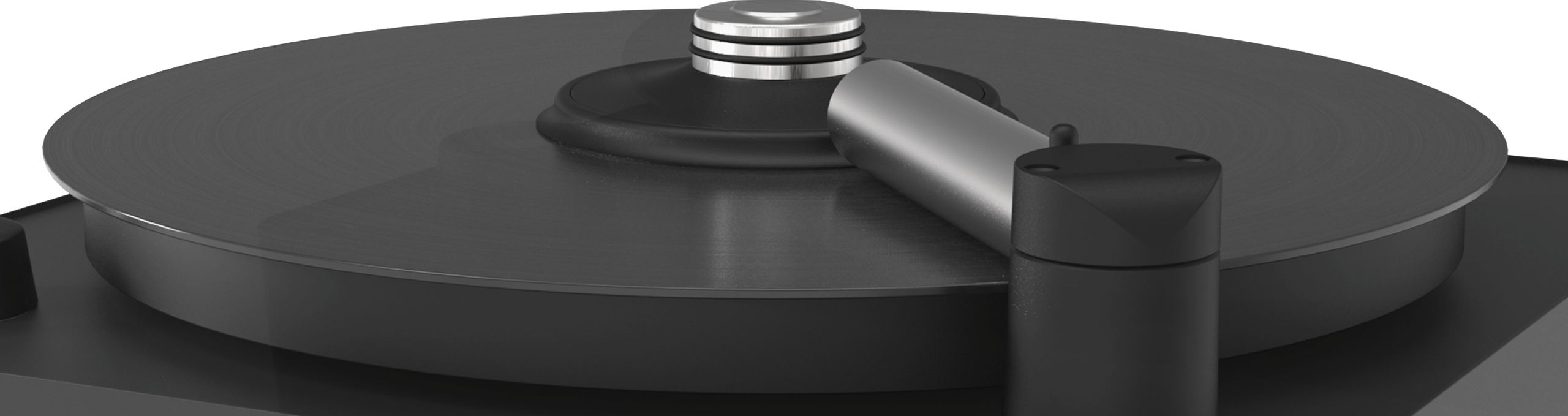
The One comes with two platters. The 30.5 cm platter is fitted as standard. The second, measuring 17.8 cm, is roughly the size of a label. Both accommodate 25 and 30 cm records. The large platter supports the entire record, providing more support and better feel when applying a little pressure while brushing a heavily soiled record. The smaller one is mainly intended for 45 rpm singles. They can be swapped in seconds. The stainless steel clamp screws onto the spindle and covers the entire label. Its label protector clips on and can be removed as needed, and an adapter accommodates singles with large centre holes. Keeping the label dry prevents the paper from warping or staining.
A single suction arm, from 45 rpm singles to 33 rpm LPs
A single suction arm covers all three diameters: 17.8, 25.4 and 30.5 cm. There is therefore nothing to dismantle when switching from a maxi-single to a single. The arm slots into a bearing at the front right and has two positions: rest, slightly set back, and working, above the record and pointing towards the spindle. Its suction slot is bordered by two velvet strips that form a seal against the vinyl. This is the part that requires the most attention. These strips must stay clean and not too wet. Do not leave the arm resting on the record during brushing, and remove it at the end of each session to let it dry flat. The strips can be cleaned with your fingertips or a soft toothbrush, and should be replaced after roughly a hundred records.
Tank, fluid and included accessories
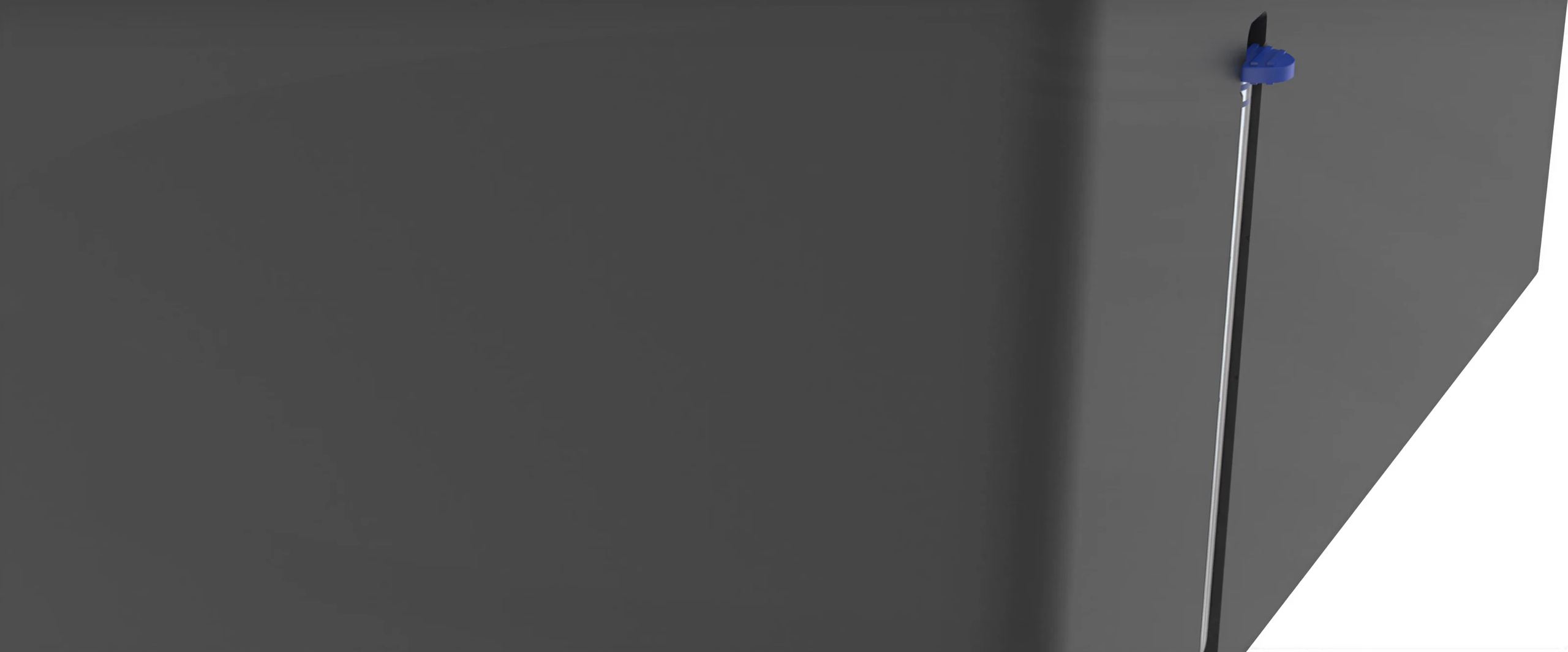
The extracted liquid goes into an internal tank. Its level can be read in the drain hose, stored in a recess on the right-hand side. Empty the tank before the liquid rises above halfway up the hose: unplug the machine, remove the black rubber stopper and let the liquid drain into a bottle. The supplied fluid is a concentrate to be diluted in one litre of distilled or demineralised water. A small applicator bottle is used to dispense it onto the record drop by drop. Two brushes are included: an antistatic goat-hair brush to work the fluid into the grooves, and a microfibre brush. A transparent cover protects the One from dust between sessions.