







Stuart jaime
Nice and perfect sounding amplifier
Comment from 24 October 2026 — Experience from 12 January 2026

A global reference, What Hifi? is one of the most comprehensive magazines covering Home Cinema and Hifi. The "5 stars" award distinguishes the highest quality products, according to this British magazine.
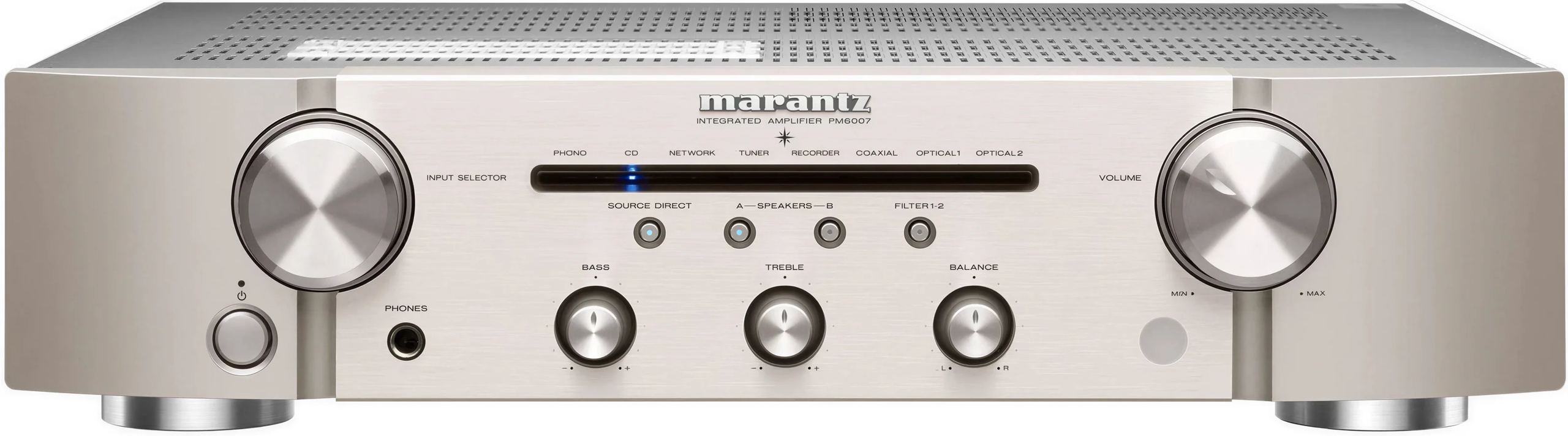
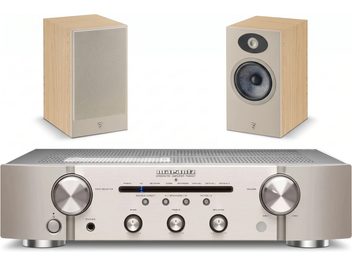
A turntable, a CD player, a TV’s optical output and a pair of speakers: this stereo integrated amplifier handles them all without an additional box. It combines a phono preamplifier for moving magnet cartridges, a digital-to-analogue converter that accepts signals up to 24-bit/192 kHz and 45 watts per channel. It replaces the PM6006 in Marantz’s entry-level stereo range.
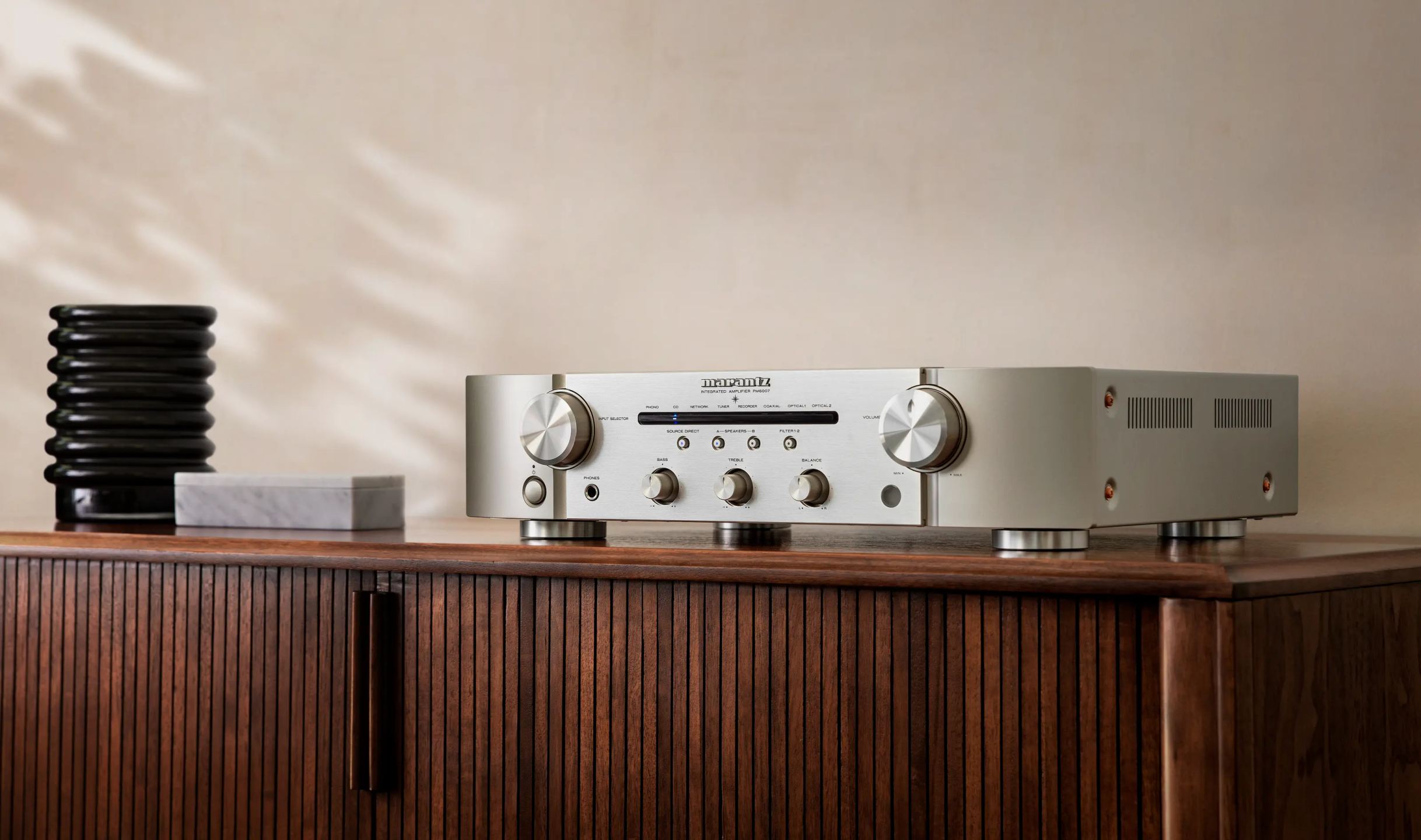
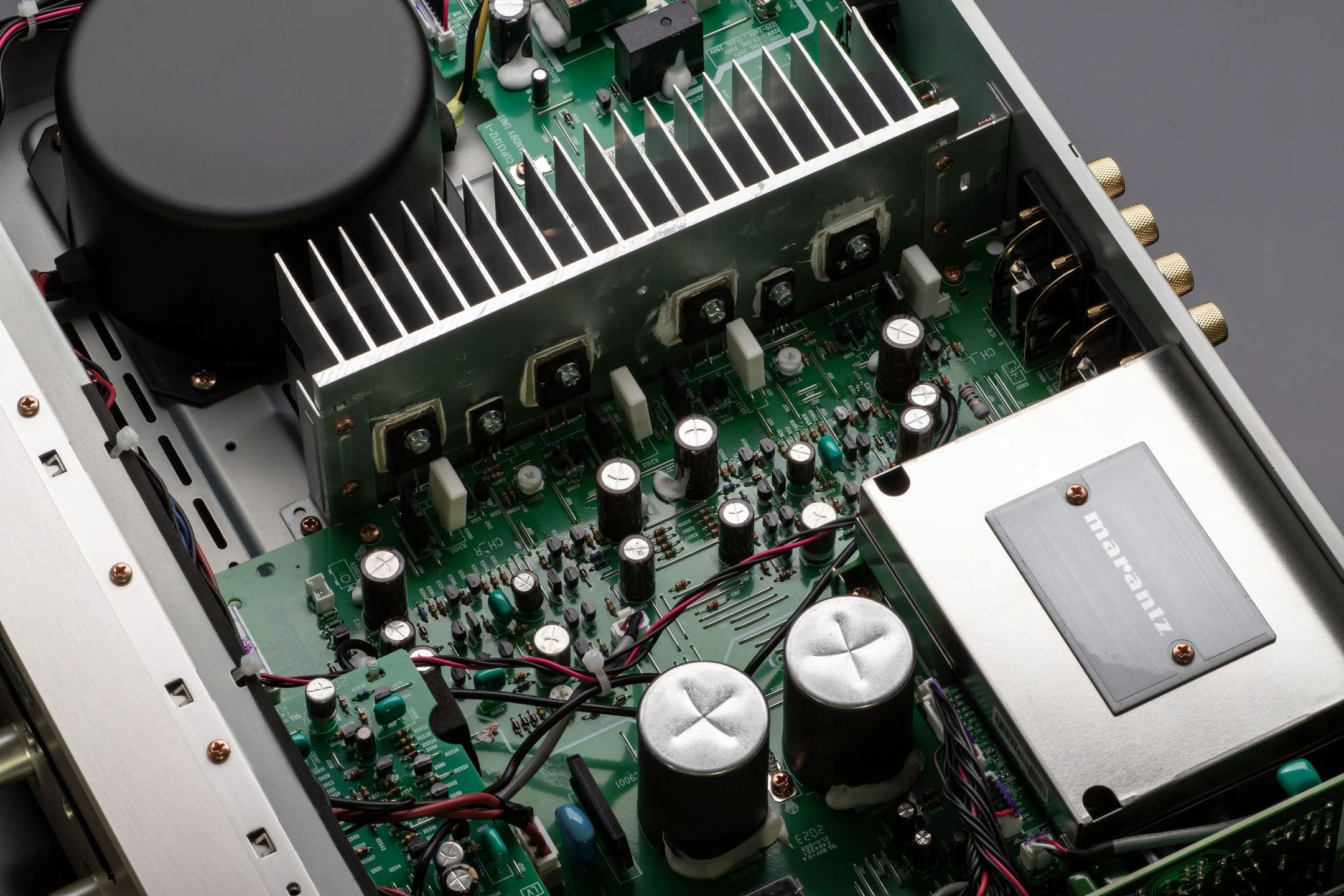
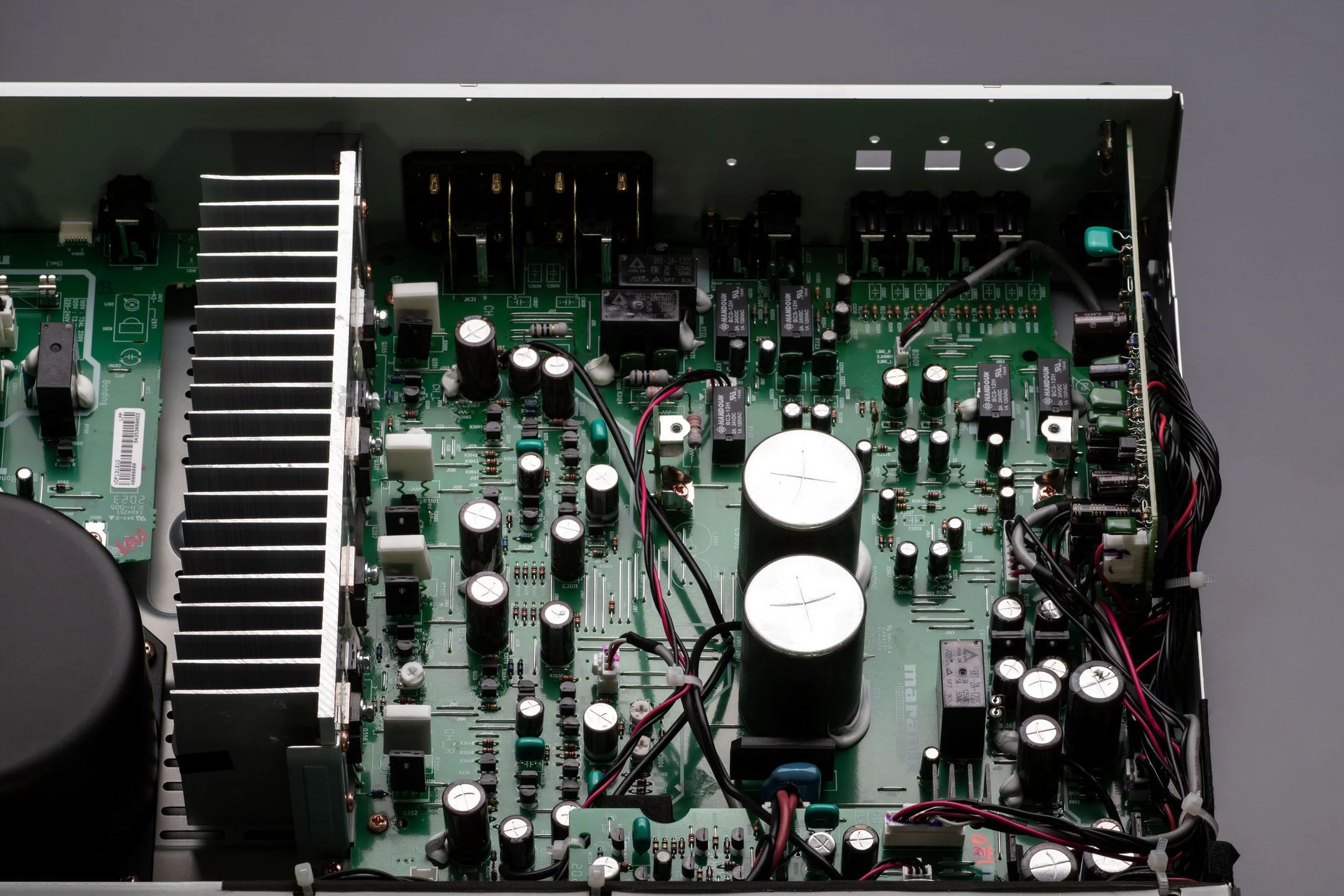
Marantz has long used current feedback in its amplifiers. The principle: the circuit corrects its errors by monitoring current rather than voltage, giving it very wide bandwidth and a fast response to sudden changes in the signal. The PM6007’s frequency response extends from 10 Hz to 70 kHz, well beyond the range of human hearing. The amplification stages use HDAM-SA3 and HDAM-SA2 modules, circuits that Marantz builds with discrete components instead of standard integrated circuits, with short, symmetrical signal paths for the left and right channels. Thermal compensation stabilises the operation of the output stage as the unit warms up.
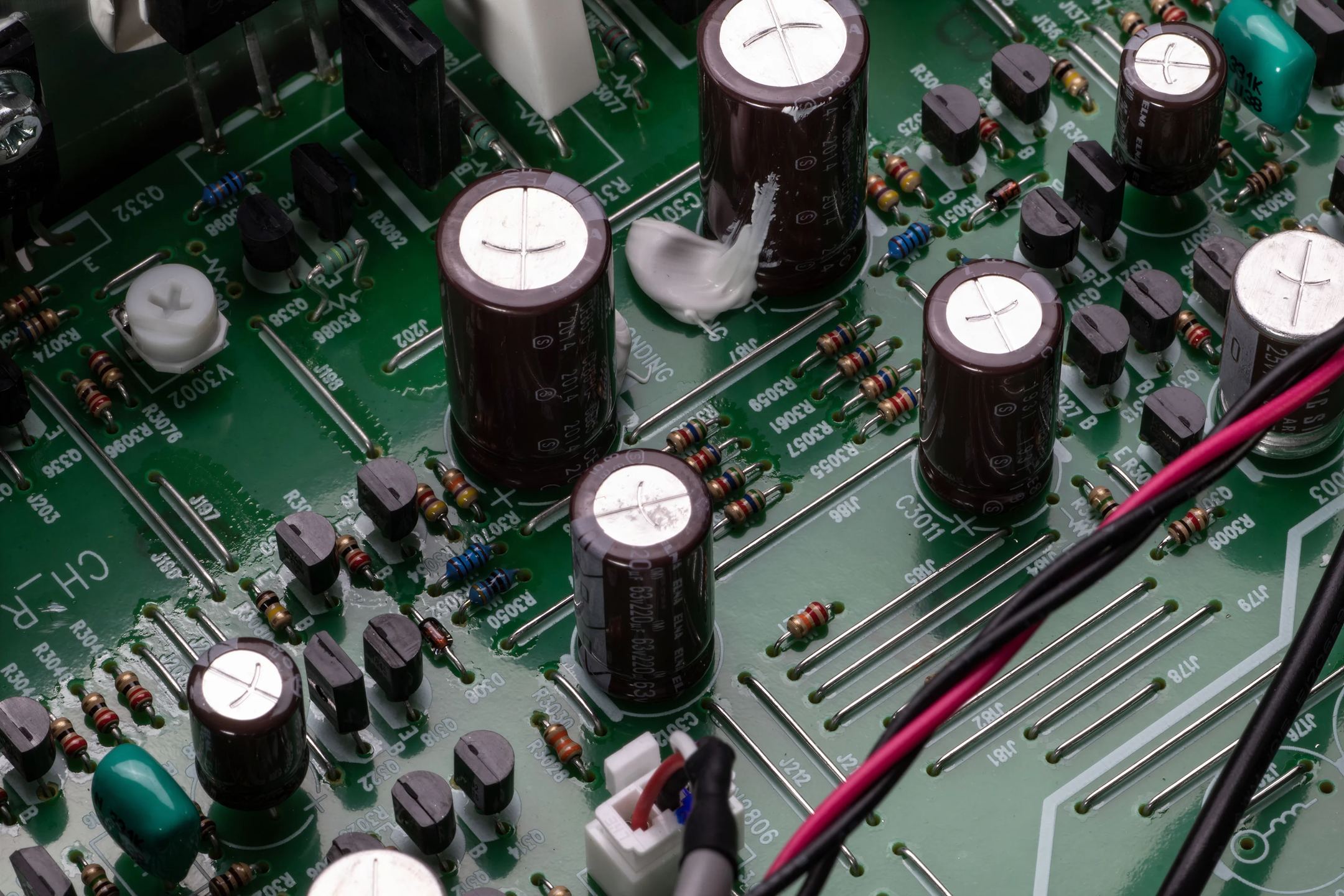
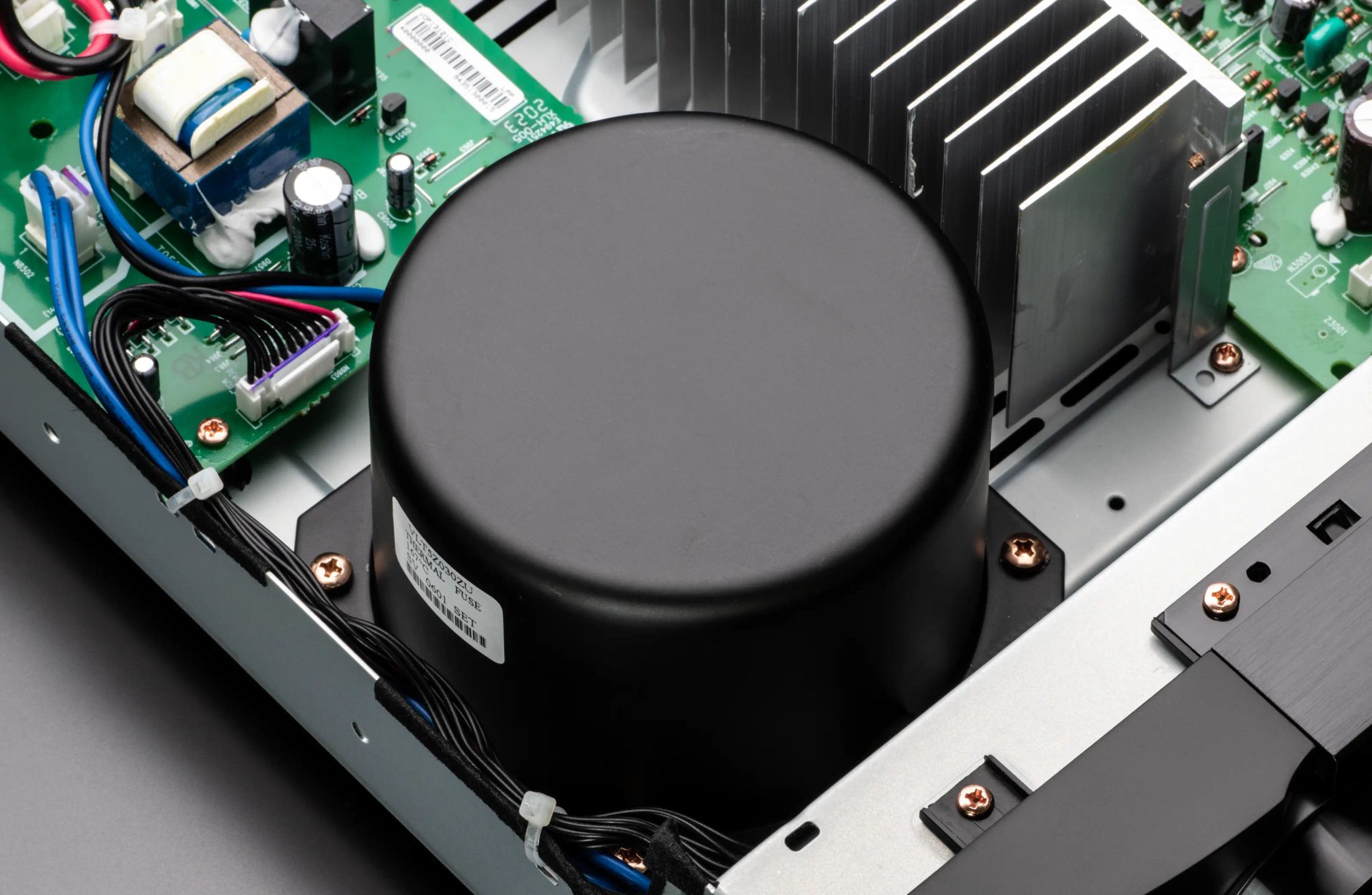
The power supply is based on a toroidal transformer. Its ring shape limits electromagnetic radiation and mechanical vibration, two sources of noise for nearby audio circuits. It is paired with filter capacitors made specifically for this model. Power output reaches 2 × 45 W into 8 ohms and 2 × 60 W into 4 ohms, with a damping factor of 100: this value indicates the amplifier’s ability to control the movement of the speaker cone, particularly in the bass. This reserve is more than sufficient for bookshelf speakers or floorstanding speakers of average sensitivity in a typical-sized living room. For large, low-sensitivity floorstanding speakers in a spacious room, or high-volume listening, it is better to aim for more power.
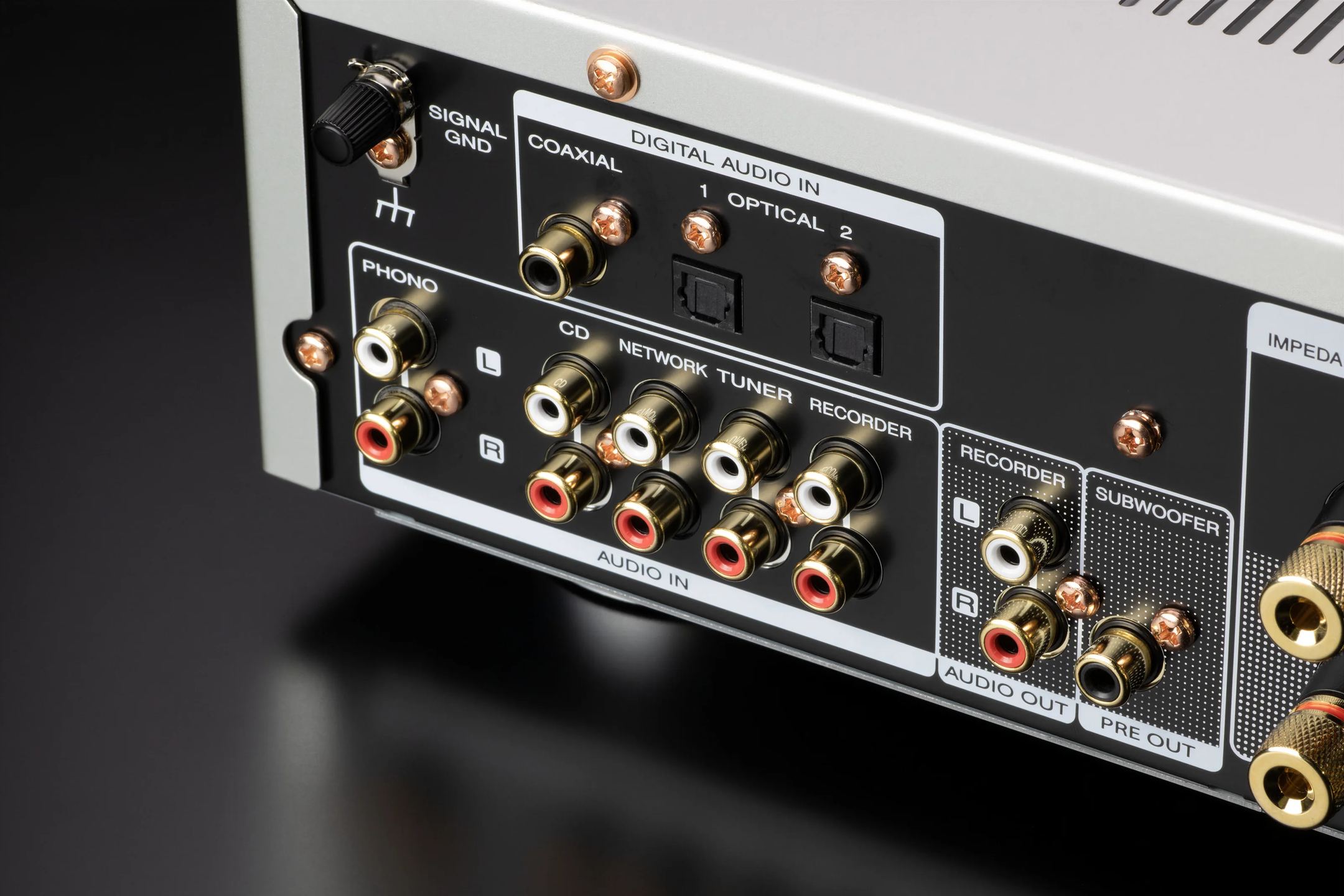
The digital section has two optical inputs and one coaxial input, all connected to an AKM AK4490 DAC that decodes PCM signals up to 24-bit/192 kHz. A CD player without a quality DAC, a games console, a TV set-top box or a network player can therefore use the amplifier for conversion. This digital section is housed in a separate metal enclosure so that its interference does not disturb the analogue circuits.
Two digital filters are available from the front panel for these inputs. They change how the DAC reconstructs the signal in the treble, with subtle differences from one piece of music to another: listeners can choose whichever they prefer.
The built-in phono preamplifier accepts moving magnet (MM) cartridges, the most common type on turntables. Marantz has revised this circuit compared with the PM6006 and now uses a field-effect transistor (FET) at the input: this type of component offers high input impedance and low noise, making it suitable for the very low-level signals from a cartridge. Sensitivity is 2.2 mV with a 47 kΩ load, the standard value for an MM cartridge, and the signal-to-noise ratio reaches 83 dB. A ground terminal on the rear accepts the turntable’s ground wire to prevent hum.
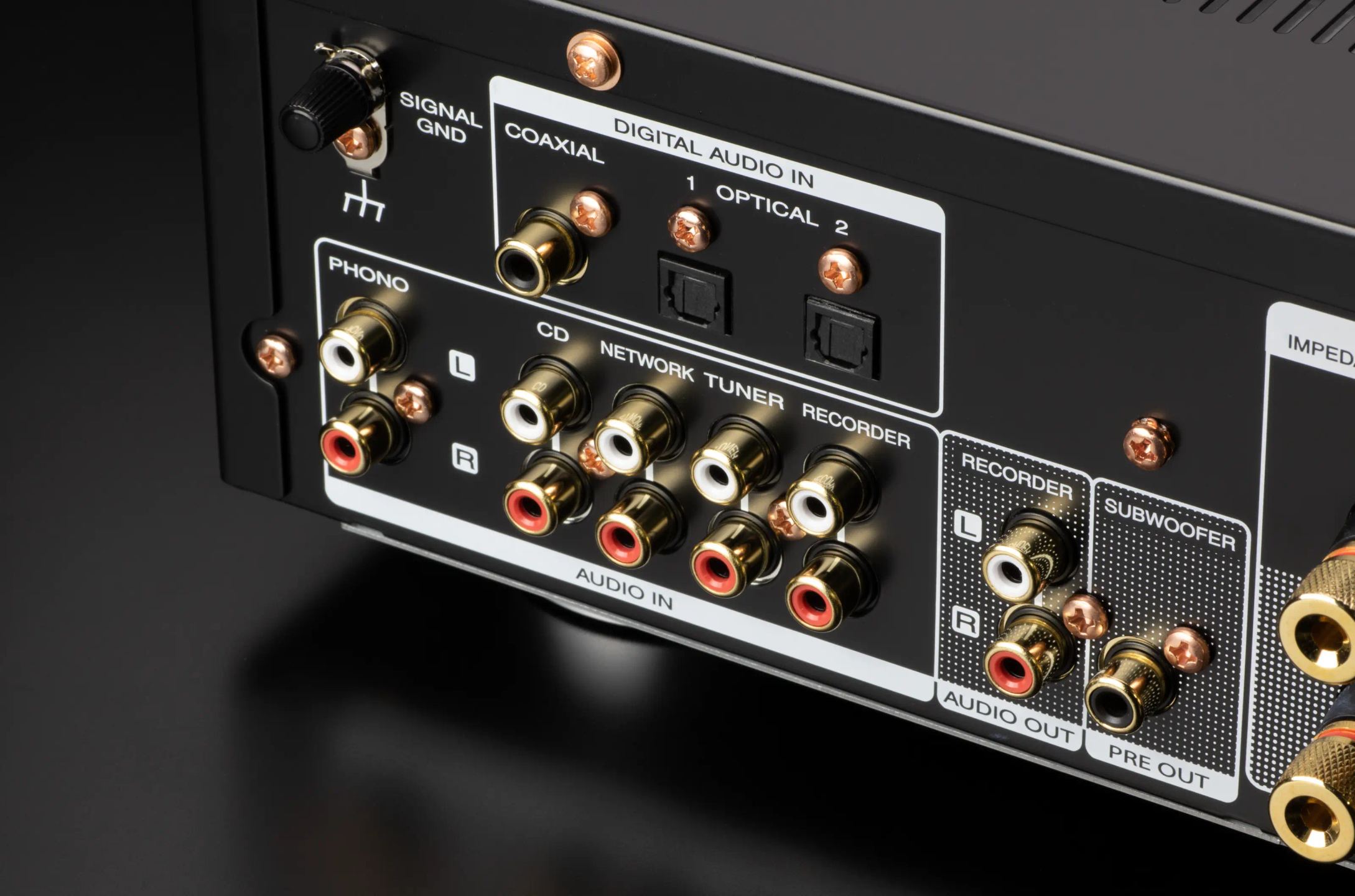
On the rear, four line-level analogue inputs (CD, network player, tuner, recorder) complement the phono input, with a recorder output for a tape deck or digital recorder. A dedicated subwoofer output lets you add an active subwoofer and move to a 2.1 system, useful with bookshelf speakers that have limited bass extension.
The gold-plated screw terminals come in two sets, A and B. You can connect a second pair of speakers in another room and select either pair or both from the front panel, or bi-wire compatible speakers. Headphones connect to a 6.35 mm jack on the front panel, powered by a discrete-component headphone amplifier rather than a simple feed from the speaker output.
The remote control connection (D-Bus) links the PM6007 to a compatible Marantz player, such as the CD6007, to control both devices with a single remote. The remote supplied with the amplifier also handles the basic functions of a CD player from the brand.
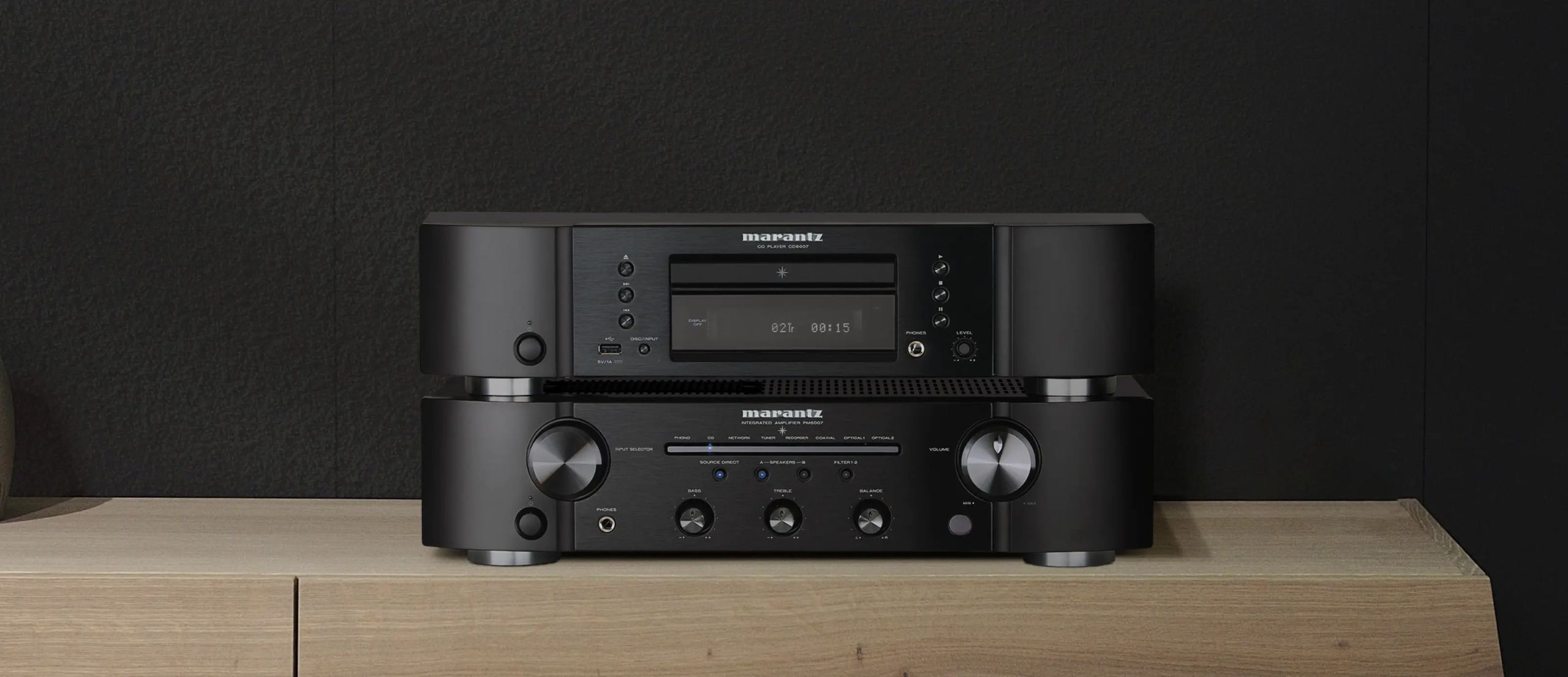
The bass, treble and balance controls compensate for an overly dull-sounding living room, slightly bright speakers or an off-centre listening position. The Source Direct button bypasses these circuits entirely: the signal travels from the input to the power amplification via the shortest path, without adjustment. Many listeners leave this mode enabled and only use the controls for a recording or room that needs them.
At 105 mm high and 9.6 kg, the PM6007 fits into most hi-fi furniture, but its 370 mm depth, plus the cables connected at the rear, requires a shelf at least 42 to 45 cm deep. Power consumption is 155 W in operation and 0.3 W in standby.
Can you connect a turntable fitted with a moving coil (MC) cartridge?
The phono input only accepts MM cartridges. A low-output MC cartridge produces too weak a signal: you will need to add an external MC phono preamplifier, or a step-up transformer, and connect it to a line-level input. High-output MC cartridges, rated at around 2 mV, work directly with the MM input.
Does the PM6007 have Bluetooth, Wi-Fi or a USB input?
No. It does not support Bluetooth, Wi-Fi or AirPlay, and has no USB port for a computer or flash drive. To stream music, connect a network player or Bluetooth receiver to one of the optical or coaxial inputs, or to an analogue input. DSD is not supported, as the optical and coaxial inputs carry PCM.
How do you connect it to a TV?
Use the TV’s optical audio output, set to stereo PCM in its menus. The PM6007 has no HDMI socket: volume is adjusted using the amplifier’s remote control, and it does not switch on automatically with the TV, as it would with HDMI ARC.
Which speakers can you connect?
Speakers rated from 4 to 16 ohms when using a single pair. When using outputs A and B at the same time, each speaker must be rated at least 8 ohms to avoid overloading the output stage.
What distinguishes the PM6007 from the PM6006?
The DAC changes from a Cirrus Logic CS4398 chip to the AKM AK4490, now with a choice of two digital filters for the optical and coaxial inputs. The phono stage has been revised with a FET input, and the amplification uses HDAM-SA3 modules. The stated power output and connectivity remain similar to those of the previous model.
Can it be integrated into a home cinema system as a power amplifier?
The PM6007 has no direct power amplifier input (Power Amp Direct). When connected to the preamp output of a home cinema amplifier, it therefore runs through its own volume control, which must be left at a fixed, marked position: it is possible, but less convenient than with a model equipped with this input.
What is the recorder output for?
It delivers the signal from the selected source at a fixed level, independently of the volume. It is used to digitise records with a recorder or audio interface, or to feed a cassette deck.
Based on reviews from customers who purchased this product, summarised by AI
Stuart jaime
Nice and perfect sounding amplifier
Comment from 24 October 2026 — Experience from 12 January 2026
Jean marc
Despite what I read and the fact that I have no comparison with another amplifier, I find the sound very good
Beautiful highs and well-structured mids.
The addition of the Marantz CD player on the same remote control is a plus.
My only regret is that I cannot connect two pairs of 4-ohm speakers to the dual terminals, which is a shame because I have a pair of Argon 5 speakers, so I don't know whether I should sell them to get 2 pairs of 6- or 8-ohm speakers
This should be indicated before purchase.
I do not regret my purchase; it is an excellent amplifier
Comment from 16 September 2026 — Experience from 12 June 2026
Armando
Marantz is always a guarantee.
Satisfied; it fully reflects the way it is presented.
I recommend it.
Comment from 25 August 2026 — Experience from 14 August 2026
* Caution! Borrowing money costs money.
For a purchase of €300 paid in 4 instalments: a deposit of €75, followed by 3 monthly payments of €75. Credit of €225 at a fixed borrowing rate of 0% over 3 months. Cost of credit: €0. Total amount payable: €300. APR: 0%. The cost of credit is covered by the retailer.
Sous réserve d'acceptation par Alma SAS (almapay.com), société de financement agréée par l'ACPR (code CIB : 17408). RCS Nanterre 839100575. Contact : support@almapay.com