
Loïc
Quality products for an entry-level range.
Comment from 18 March 2026 — Experience from 22 December 2025
Automatically translated — Show original (French)
Produits qualitatifs pour une entrée de gamme.

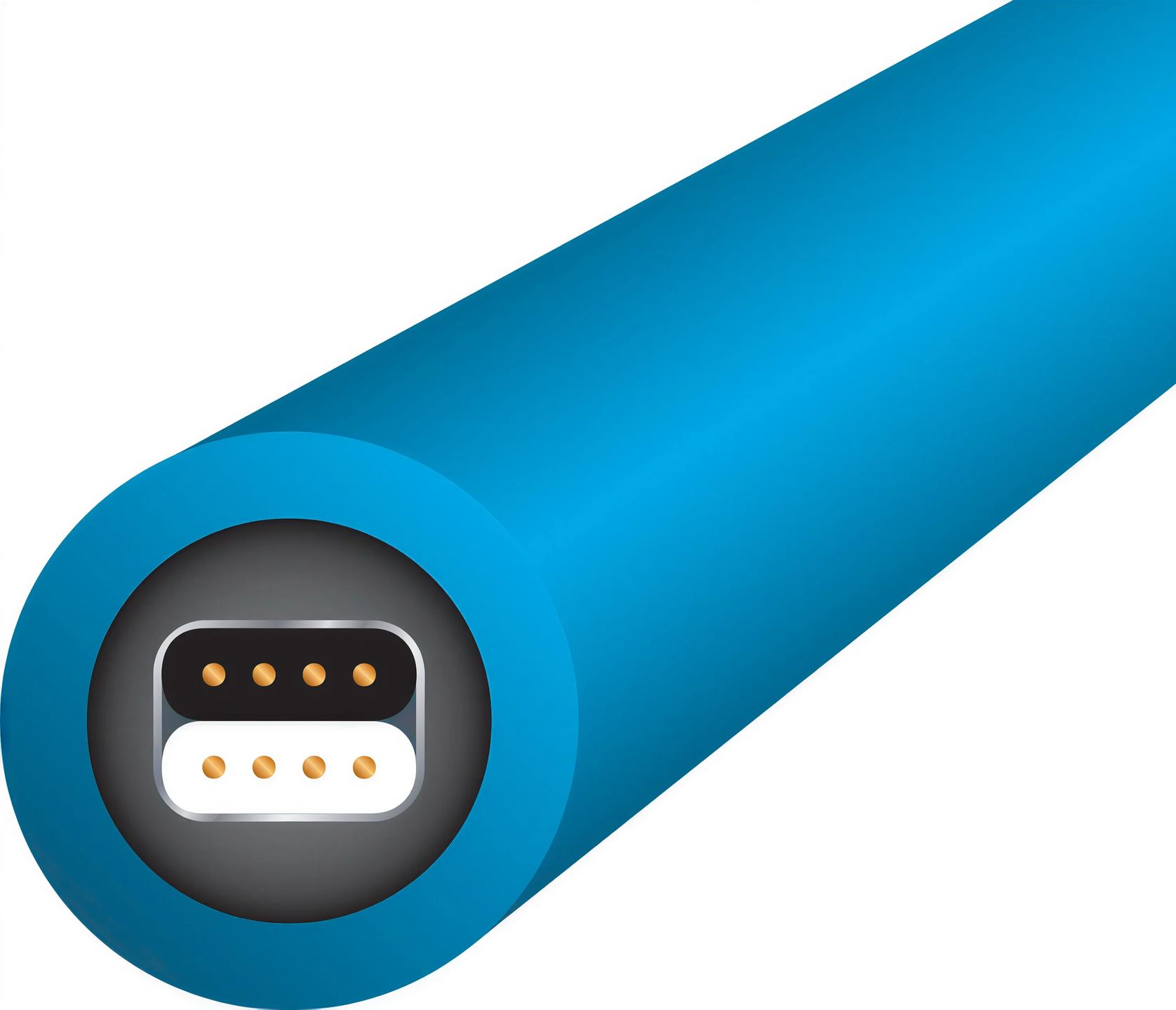
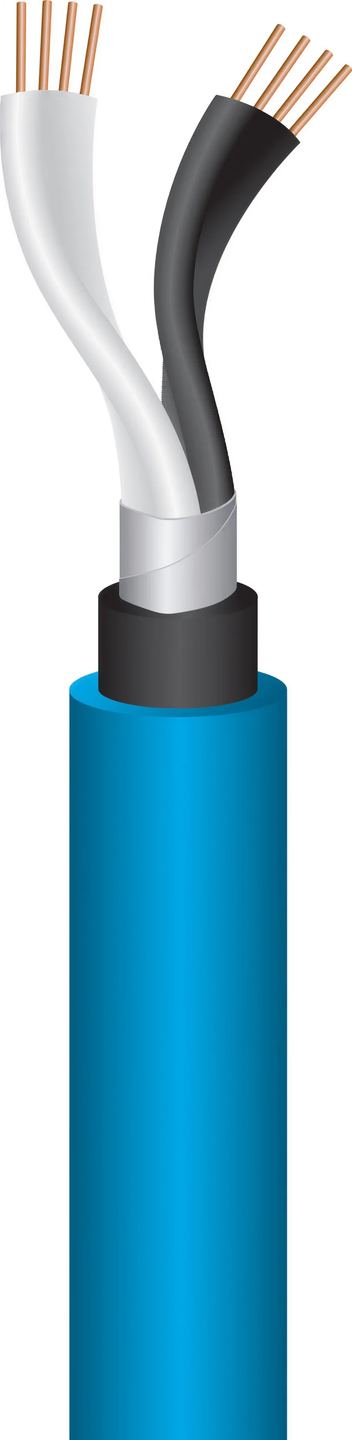


Between a network player sitting on an amplifier, or between a phono preamp and the adjacent line input, fifty centimeters is enough. That half-meter of cable must still avoid degrading a low-level analog signal that is highly sensitive to interference. This RCA pair uses, in an affordable form, the technical solutions the American brand applies to its more ambitious cables. It also offers welcome flexibility in tight spaces.
In most entry-level cables, the copper strands are simply twisted together. This arrangement provides adequate protection against external interference, but it encourages the flow of eddy currents, small stray currents that the signal’s own magnetic field induces in neighboring strands. The DNA Helix (Delineated Neutralizing Array) geometry, protected by two US patents, arranges the eight strands of the Stream’s two conductors in a two-layer twisted structure where they remain parallel to one another. The aim is to reduce these losses and the slight timing shifts they introduce, with more faithful reproduction of detail, timbre and dynamic contrasts. The metal used is high-purity oxygen-free copper, whose low oxygen content limits internal oxidation over the years.
The shielding covers the cable’s entire circumference and protects it from external radiation: power supplies, routers, power cords running behind the cabinet. Shielding, even when complete, has no effect on another source of noise, this time internal: triboelectric noise. It comes from the tiny static electrical charges and discharges that occur where the conductor touches its insulation, due to vibrations, cable movement and the signal’s energy. Wireworld has developed a family of composite insulation materials, Composilex, whose third generation is used in the Stream. This blend of materials aims to achieve lower triboelectric noise than conventional low-loss insulation materials, including Teflon, while maintaining those low losses. The intended benefit concerns harmonic reproduction and the perception of the soundstage.
With 0.16 mm² (25 AWG) per conductor, the Stream remains slim and bends effortlessly. For a line-level signal, which carries a voltage of around one volt and a tiny current, this cross-section poses no limitation: over 50 cm, the cable’s resistance is negligible compared with the devices’ input impedances of several thousand ohms. The flexibility is especially noticeable during installation. The cable places very little strain on the RCA sockets and accommodates a tight bend radius when the amplifier is close to the wall or two devices are stacked in a cabinet recess. The RCA plugs with 24-karat gold-plated contacts resist corrosion and maintain clean contact through repeated connections.
Wireworld was founded in 1992 in Florida by industrial designer David Salz, and the Stream is the entry point to its interconnect cable range. It shares the DNA Helix geometry and Composilex 3 insulation with the higher-end models. Moving up the range, the brand increases the number of strand groups in the DNA Helix geometry and uses higher-purity copper, at the cost of thicker, stiffer cables. The Stream retains the basic structure and a slim profile that makes it easy to fit anywhere.
Is this cable suitable for a coaxial digital connection?
No. A coaxial S/PDIF connection requires a cable with a characteristic impedance of 75 Ω, a value that an analog interconnect cable is not designed to achieve. It may work over a short distance, with a risk of signal reflections and dropouts. Wireworld offers dedicated 75 Ω coaxial cables for this purpose.
Can you connect a turntable with this cable?
Yes, between a separate phono preamp and the amplifier, where the signal is already at line level. Directly at the turntable’s output, it lacks the ground wire connecting the turntable to the preamp: without it, hum often occurs. This section requires a tonearm cable equipped with a ground wire, or the addition of a separate ground wire if the turntable has a dedicated terminal.
Is it sold as a pair?
Yes, the product reference corresponds to a stereo pair: one cable for the left channel and one for the right channel, each measuring 0.5 m.
Can it be used for a subwoofer?
Just one of the two cables is enough to connect a home theater amplifier’s subwoofer output to the LFE input of a subwoofer placed right beside it. Since the subwoofer is rarely 50 cm from the amplifier, Wireworld offers the same construction in the Stream Subwoofer, a mono cable sold individually in longer lengths.
How do you choose the right length?
Measure the distance between the two sockets along the cable’s actual route, then add around ten centimeters so the plugs do not pull on the sockets. The 50 cm length suits two devices stacked or placed side by side. A cable slightly longer than necessary poses no problem, whereas a cable that is too short places mechanical strain on the sockets.
What causes hum that persists after changing the cable?
A low, constant hum most often comes from a ground loop: several interconnected devices are also grounded through different paths (power outlet, TV antenna, router). The interconnect cable is not the cause. Plugging all the devices into the same power strip, disconnecting the antenna cable as a test or disconnecting the devices one by one helps identify the source.
How do you care for the plugs?
Insert the plugs fully, holding their bodies rather than the cable, to ensure firm contact. A dry cloth is enough to clean them; abrasive products damage the gold plating. Occasionally unplugging and reconnecting a connection that has been left in place for a long time refreshes the contact surface.
Loïc
Quality products for an entry-level range.
Comment from 18 March 2026 — Experience from 22 December 2025
Arnaud
Good product. Quality cable
Comment from 12 January 2026 — Experience from 29 December 2025
Kevin
Does the job as it should. No complaints.
Comment from 17 April 2025 — Experience from 5 February 2024


