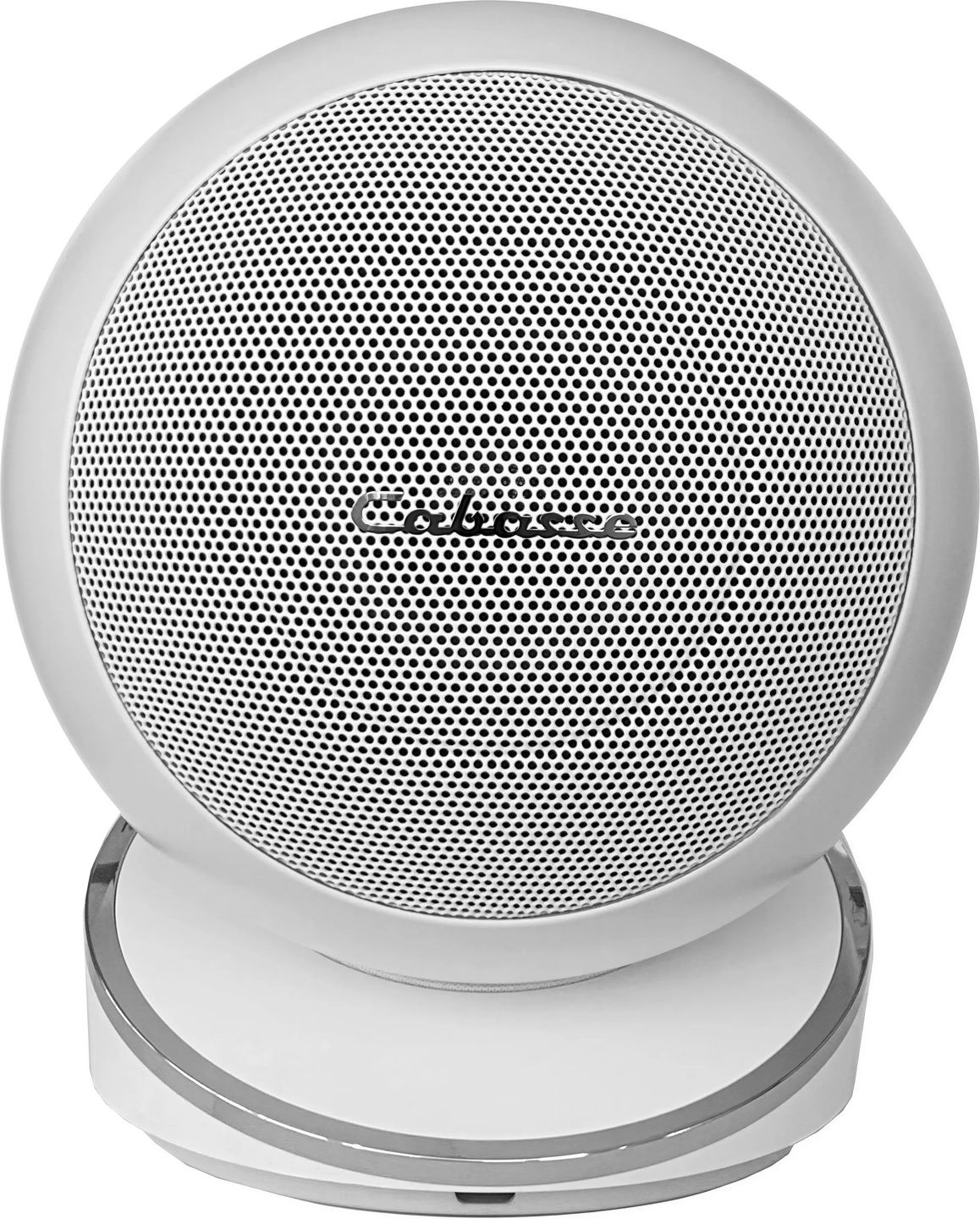
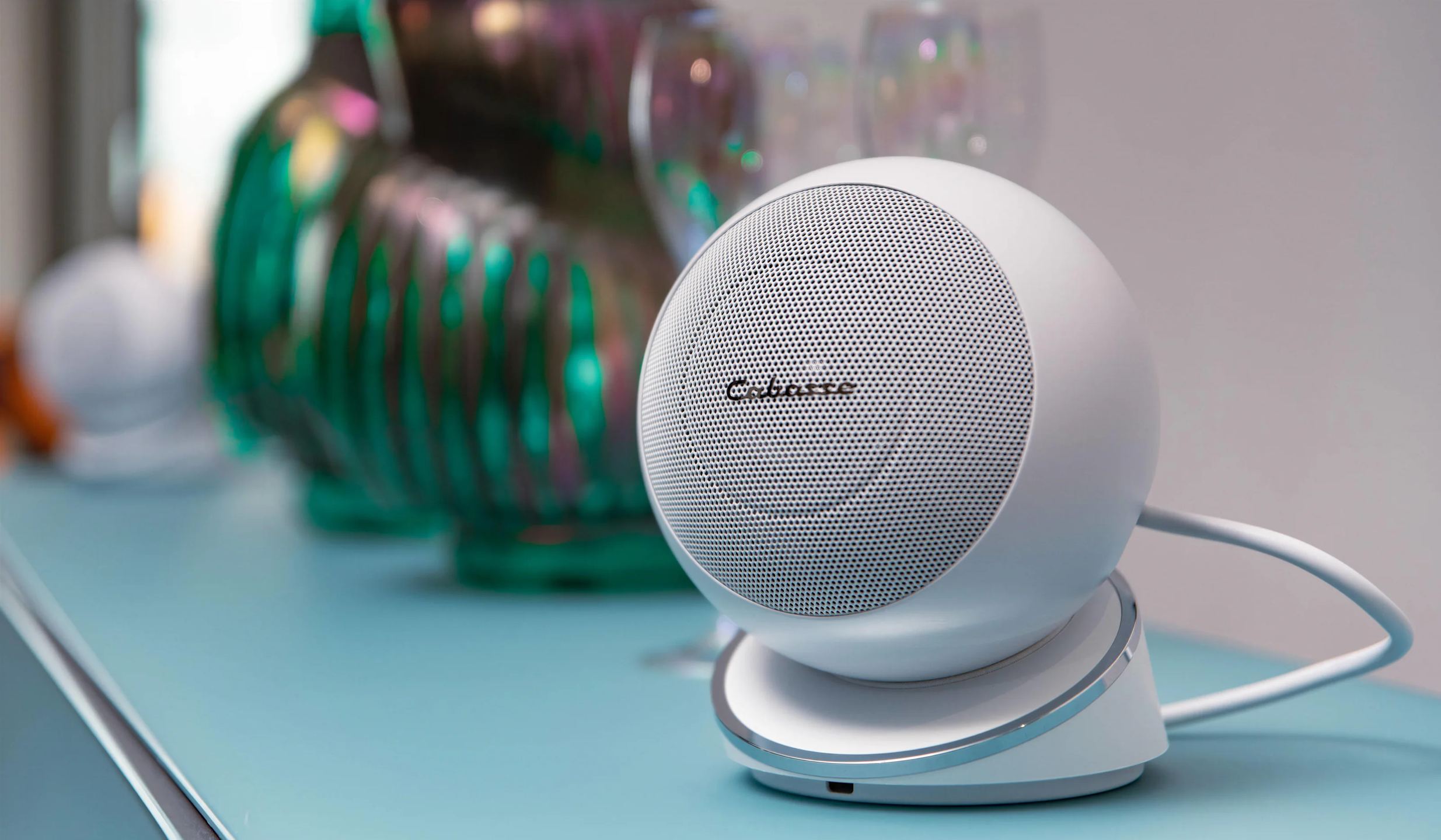
A sixteen-centimetre sphere, a single driver that combines mid-bass and treble on the same axis, and a magnetic base that lets you adjust its orientation with a single movement: the iO3 succeeds the iO2 and carries on the spherical satellite formula from Cabasse. Placed on furniture or mounted on the wall, it fits into a 2.1 stereo system just as easily as a 5.1 or 7.1 home cinema system, always accompanied by a subwoofer that handles the low end of the spectrum.
A coaxial driver that radiates from a single point
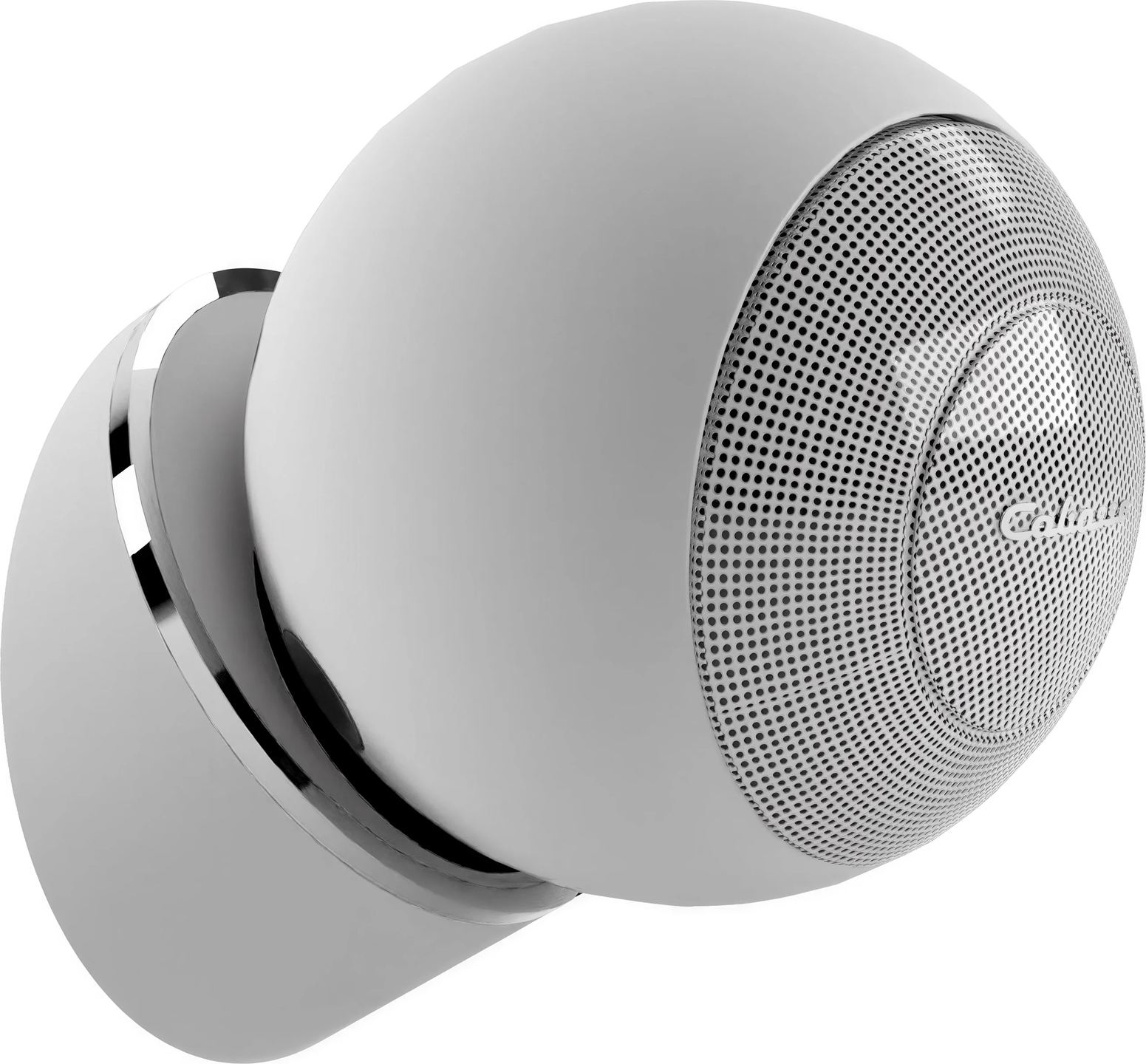
In a conventional two-way speaker, the tweeter and woofer are mounted one above the other on the front baffle: the sound from each starts from a different point, and the two only combine correctly at a certain distance and along a certain axis. The iO3 places the tweeter at the centre of the mid-bass driver, so that all frequencies originate from the same point. Cabasse calls this principle SCS, for spatially coherent source. The brand developed it in 1992 for its triaxial drivers and uses it in its high-end ARTIS range. The benefit is most noticeable in the stability of the sound image: voices and instruments stay in place even when you are not directly facing the speaker, which matters in a living room where listeners are rarely seated in the ideal spot.
The 13 cm mid-bass driver uses a lightweight, rigid Duocell diaphragm. This rigidity limits cone deformation at high volumes, which adds unwanted colouration to the sound. At the centre, a 2.7 cm Kaladex dome tweeter takes over from 2,700 Hz.
A sphere rather than a cabinet with right angles
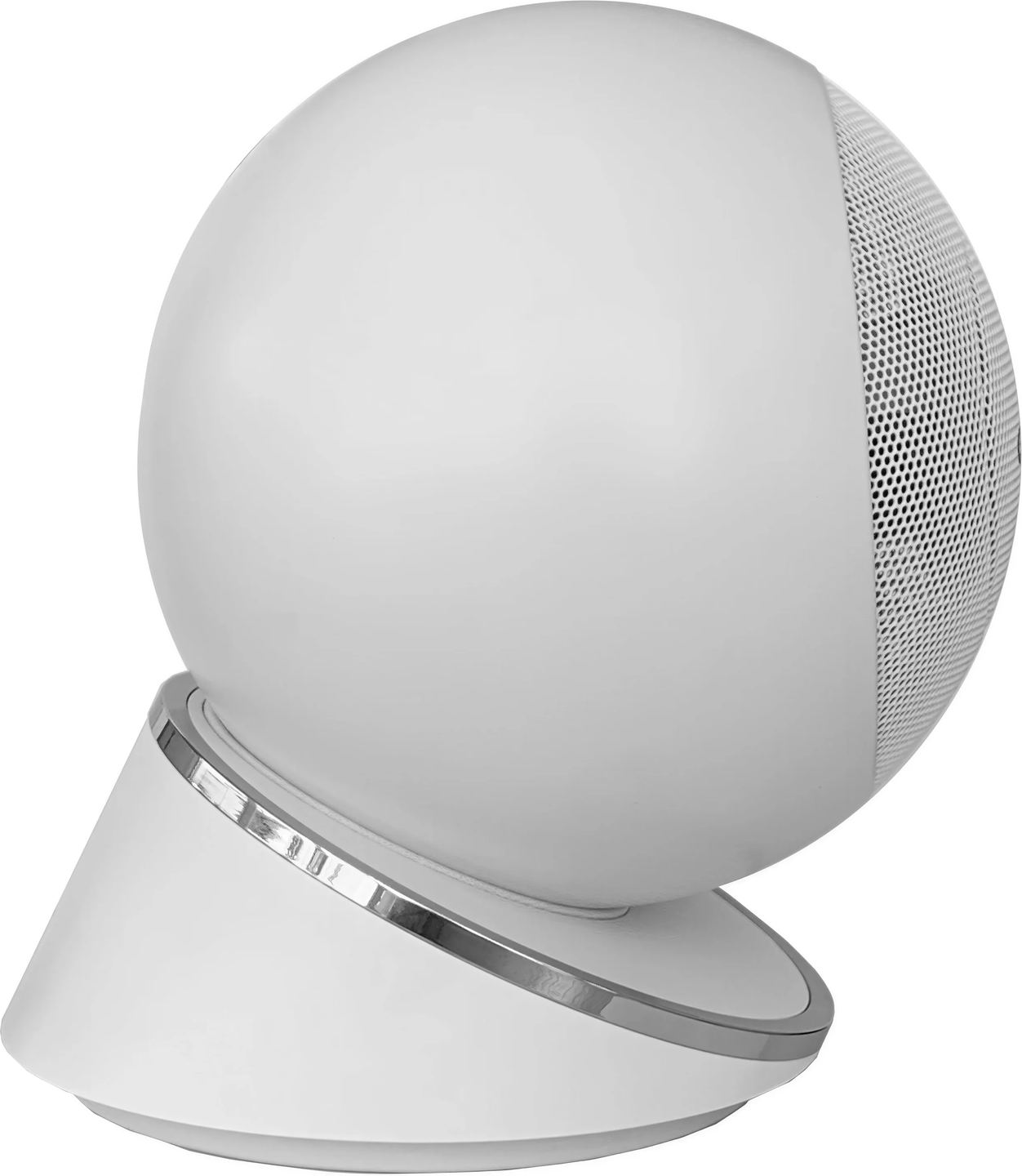
The iO3’s shape has an acoustic purpose. A rectangular cabinet has parallel walls between which the driver’s rear wave bounces and creates resonances, while its sharp edges reflect some of the sound radiated from the front. A sphere has neither opposing walls nor edges: sound propagates more cleanly around the speaker, and the enclosure adds almost no colouration to what the driver produces. A port at the rear of the sphere completes the acoustic loading.
A magnetic base for placement on furniture or wall mounting
The sphere is held on its base simply by magnetic attraction. It can therefore be freely directed towards the listening area without tools, and positioned horizontally or vertically. The same base can sit on a shelf, a TV stand or a television, or be mounted on the wall with a single screw. The binding posts are located in the base, and the cables can exit through the centre or either end: the bottom of the base is reversible and, together with the Cabasse logo, can be turned around to suit the chosen cable route.
Two precautions apply to installation. The base must only be mounted on the wall in the intended orientation, not upside down or on the ceiling, and the rear port must remain clear: the sphere must not rest on it or be pressed against the back of a recess.
A satellite that works in tandem with a subwoofer
The iO3’s frequency response extends from 150 Hz to 22 kHz. Below 150 Hz, the subwoofer takes over, and this division is precisely what makes its compact size possible: a sphere of this size cannot produce deep bass, and it does not have to. In return, the iO3 is never used on its own in hi-fi; the pair of satellites and the subwoofer form a complete system.
This same division makes multichannel systems highly consistent. In 5.1 or 7.1 systems with iO3 speakers on every channel, each channel uses the same driver: a sound moving from front to rear or from the left to the centre retains the same timbre throughout its movement. Cabasse also allows for mixed use, with two large speakers at the front and iO3 speakers for the centre and rear channels.