Sven
top workmanship great sound
Comment from May 17, 2026 — Experience from March 27, 2026
Automatically translated — Show original (German)
top verarbeitung toller Klang

The number 1 in classical music and hi-fi. It is a benchmark in the field of classical music and hi-fi, as well as the distinction it awards to the best devices each year
Reading a disc without giving up the quality of a recent converter remains a balancing act. Gold Note addresses this with a Florentine device that combines a tray-loading transport and a latest-generation AKM converter, while also accepting external digital sources. Control is handled via a touchscreen and a single knob, for direct use from the listening position. Manufacturing is done by hand in Florence.
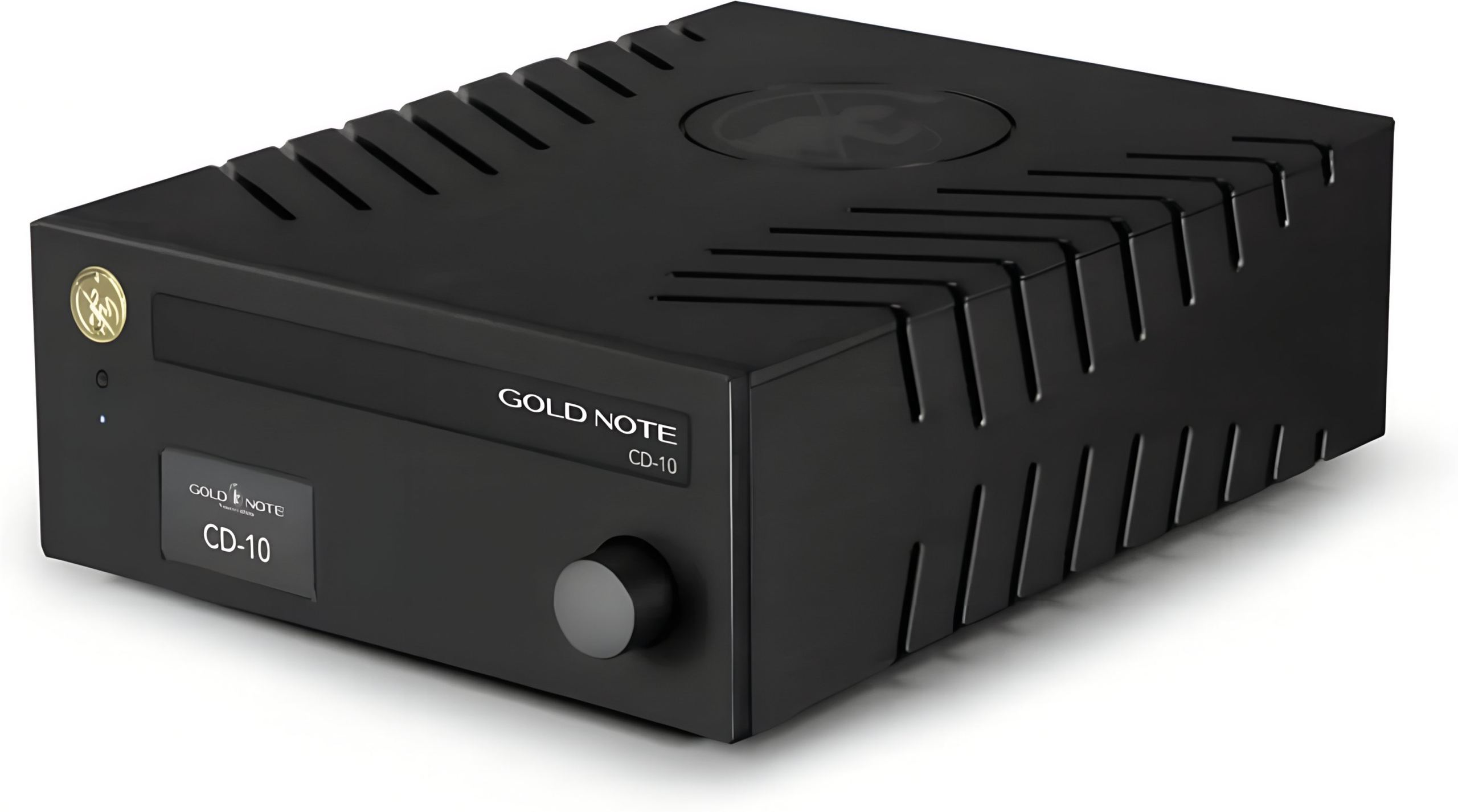
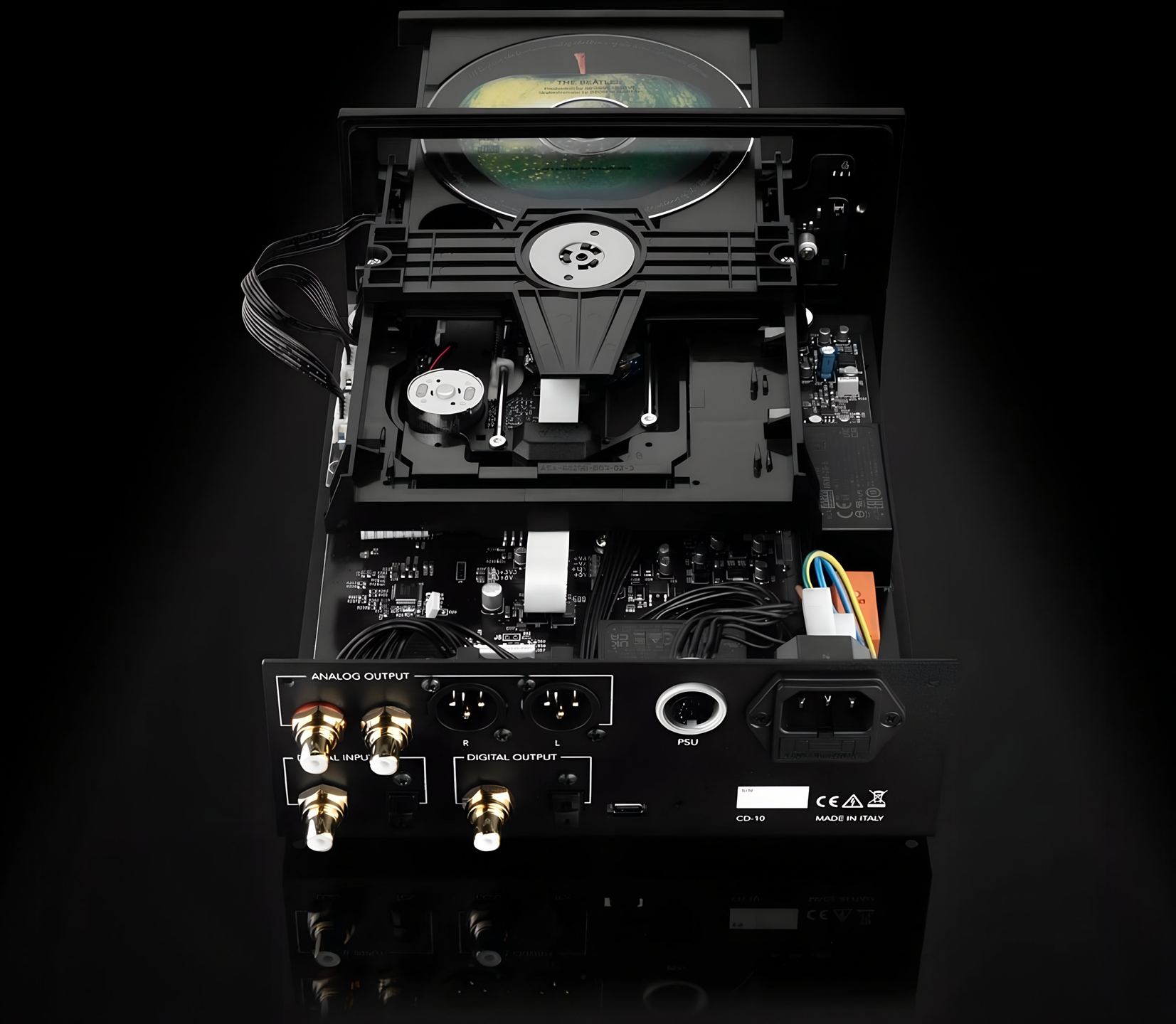
The CD-10 reads Red Book format discs (CD, CD-R, CD-RW) thanks to a tray-loading mechanism by Stream Unlimited (reference SUOS-Hifi), whose speed fluctuation drops to 0.0001%. The read signal then passes through an integrated digital-to-analog converter.
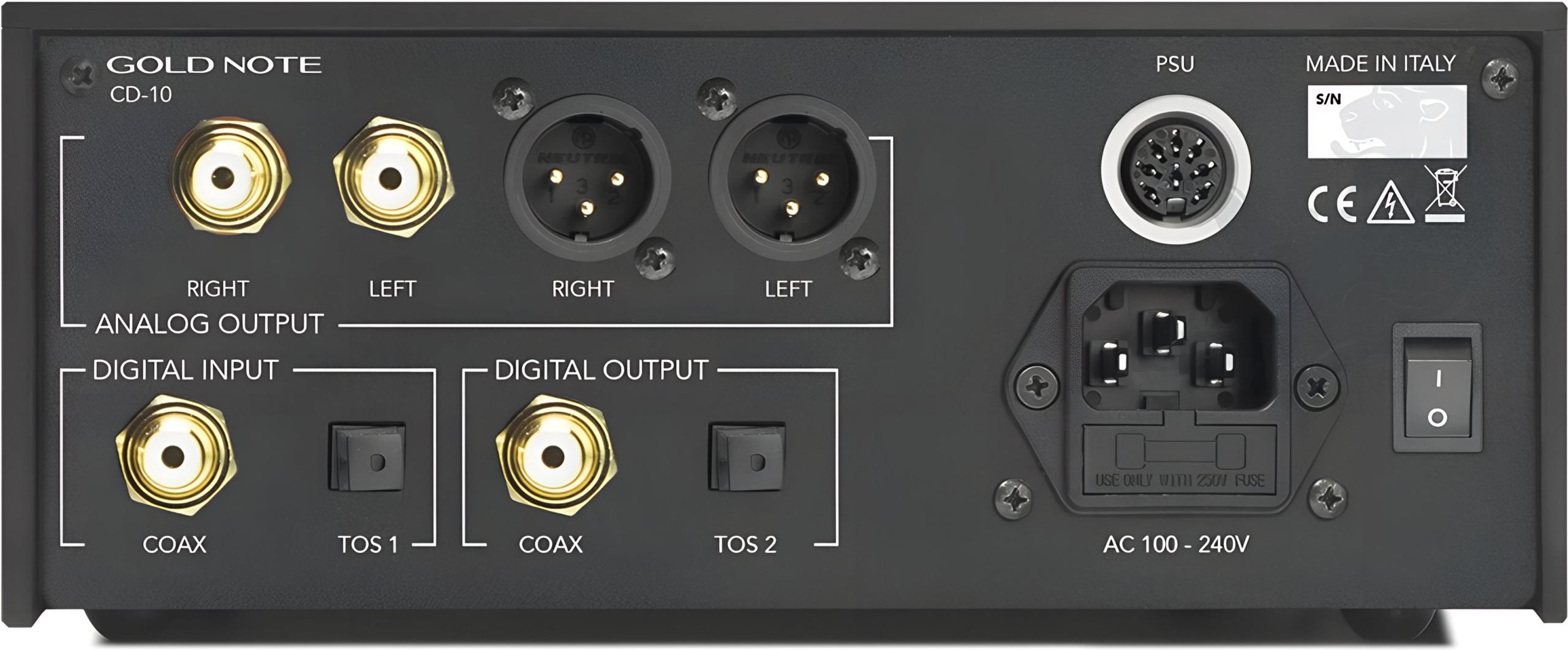
The same converter remains accessible to external sources. Two digital inputs, one coaxial S/PDIF and one optical TOS-Link, accept streams up to 24-bit and 192 kHz. The CD-10 then serves as a converter for a television, a streamer, or a digital transport, with the active input selected from the menu.
At the heart of the CD-10 is an AKM AK4493. The measurements announced by Gold Note place the frequency response between 20 Hz and 20 kHz at ± 0.3 dB, total harmonic distortion at 0.001% maximum, signal-to-noise ratio at 128 dB, and dynamic range at 127 dB. The output impedance is 100 Ω. These figures describe a transport that is quiet and linear enough not to limit a resolving system.
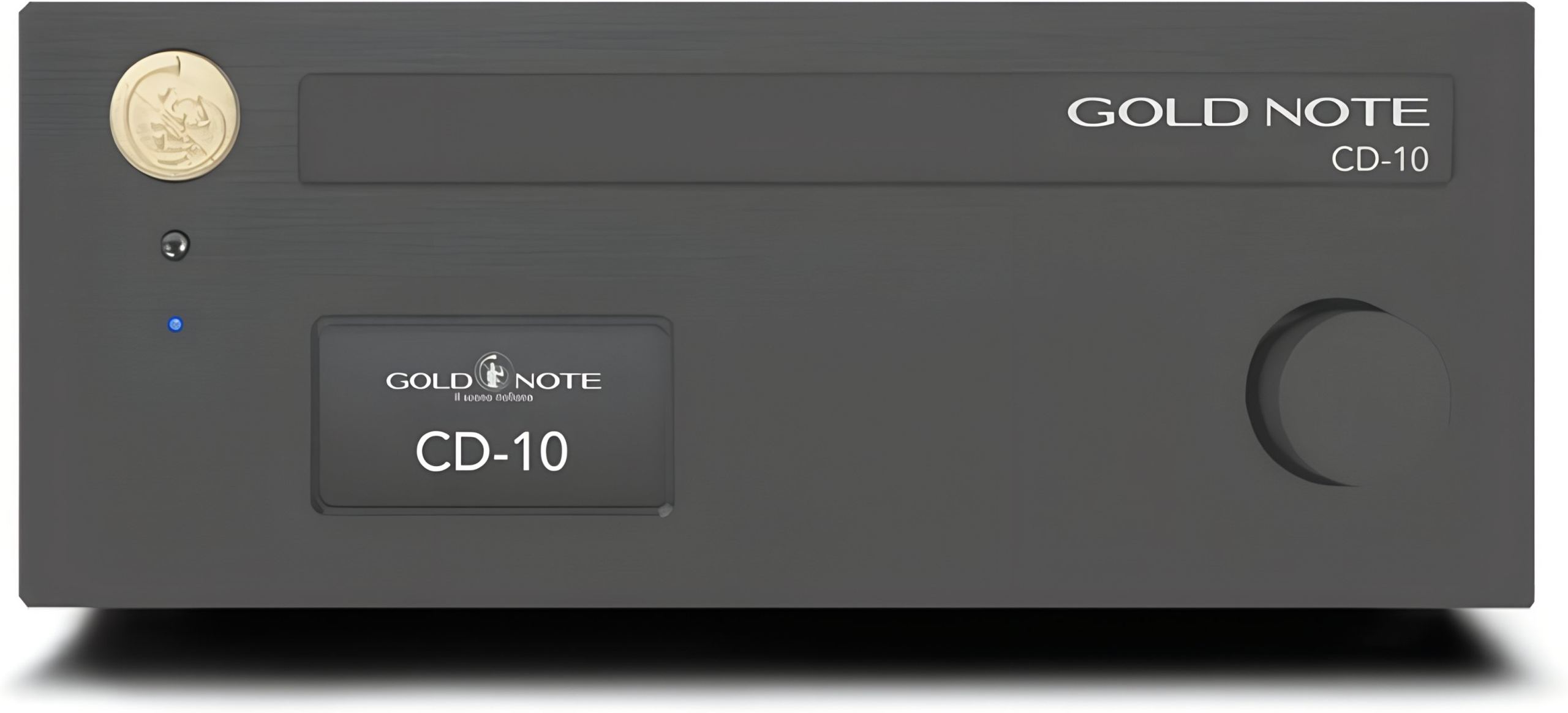
The front of the CD-10 combines a touchscreen and a single-button control, the SKC (Single Knob Control). The screen displays the track number, elapsed time, and current playback mode. Brightness can be set to three levels, high, low, or off, with the display reactivating for three seconds at the slightest press.
On the playback side, the CD-10 offers normal play, shuffle, repeat of the entire disc or a single track, and a programmed list that can contain up to twenty-five tracks. The supplied remote control mirrors these commands from the listening chair.
The CD-10 integrates a digital volume control, which can be enabled or disabled and is left inactive at the factory output. Once activated, it allows a direct connection to a power amplifier, without an intermediate preamplifier. The analog outputs cover both standards, one unbalanced RCA and one balanced XLR, both calibrated at 2 Vrms.
The rear panel clearly distinguishes the three families of connectors. The digital inputs include one coaxial S/PDIF and one optical TOS-Link at 24-bit and 192 kHz. The analog outputs provide the RCA and XLR mentioned above. The digital outputs combine one 75 Ω coaxial S/PDIF and one optical TOS-Link. A USB-C port, dedicated to firmware updates, completes the set.
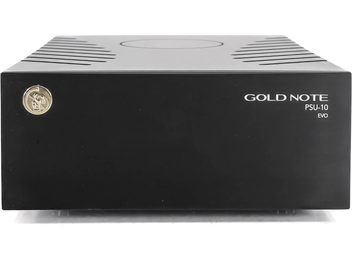
The CD-10 remains compact, 200 mm wide, 80 mm high, 260 mm deep, for 4 kg. Its power consumption tops out at 30 W on a voltage of 100 to 240 V. A front-panel LED indicates its status, red in standby, blue when on, green when operating on the optional external PSU-10 EVO power supply. This separate power supply is intended for those who wish to further improve the quality of the current supplied to the player.
No, the CD-10 is designed to play standard audio CDs, CD-Rs, and CD-RWs. It is not compatible with the SACD format.
Yes, the CD-10 has coaxial and optical digital inputs, allowing it to be used as an external DAC for other compatible digital sources.
The CD-10’s digital volume control is high quality and does not significantly affect sound quality. However, it can be disabled if you prefer to use your amplifier’s volume control.
The PSU-10 EVO external power supply is optional. The CD-10 works perfectly with its internal power supply, but adding the PSU-10 EVO can bring subtle improvements in dynamics and sonic precision for the most demanding listeners.
As with many high-end audio components, the CD-10 can benefit from a break-in period. It is generally recommended to let the unit run for about 100 hours to reach optimal performance.
Sven
top workmanship great sound
Comment from May 17, 2026 — Experience from March 27, 2026
Torsten
Outstanding player. Very good and powerful sound.
Comment from March 04, 2026 — Experience from February 20, 2026
René
As described.
Comment from February 03, 2026 — Experience from July 27, 2025