Each year, dozens of European journalists gather to select the best electronic products of the year. Awarded by a diverse and impartial jury, the EISA (Expert Imaging and Sound Association) awards recognize exceptional products for their performance, design, or ergonomics.
Overview
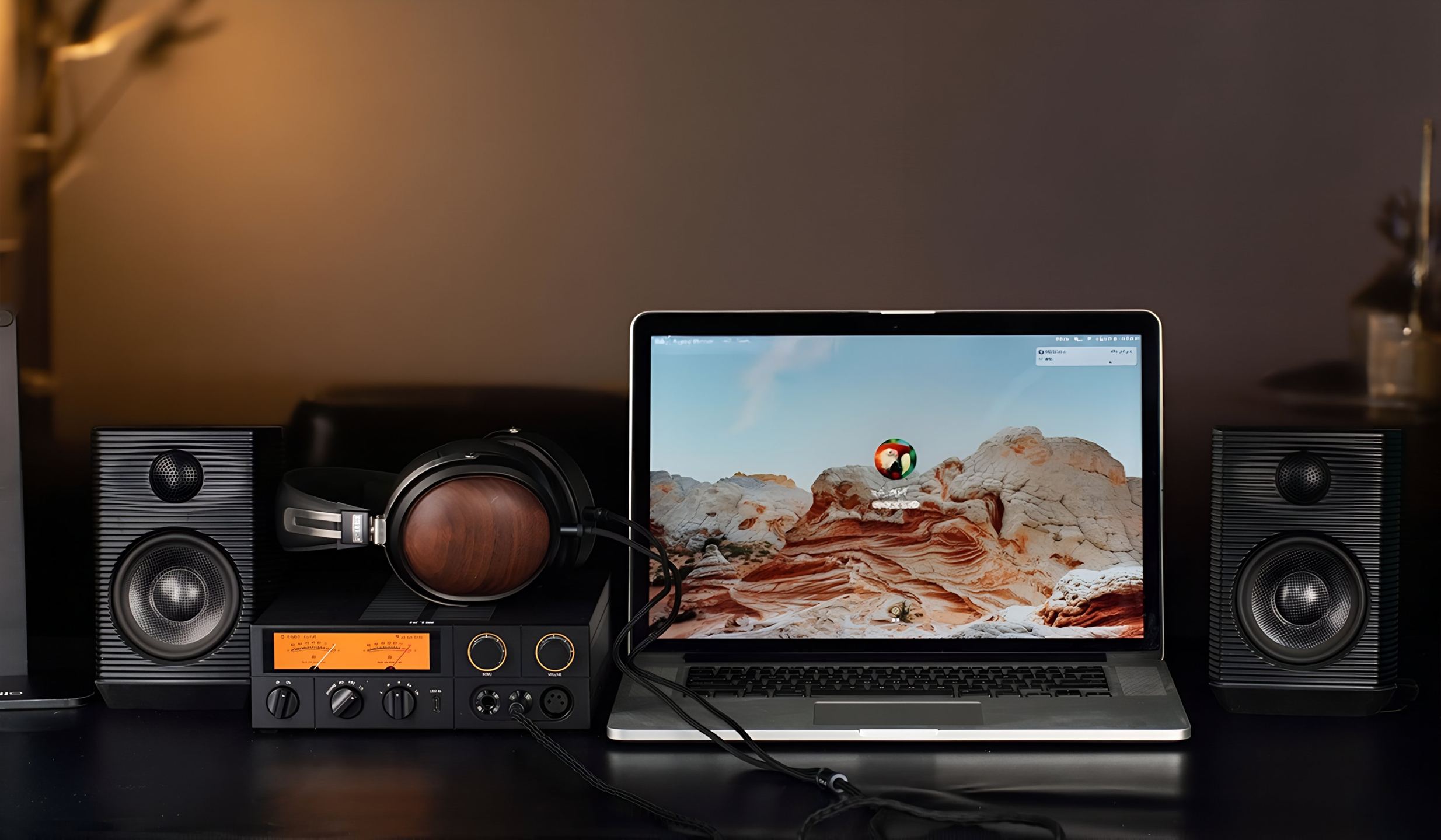
The K17 marks a significant milestone in the evolution of FiiO’s desktop range, combining a next-generation dual AKM DAC architecture with fully discrete amplification and a 31-band parametric equalizer. This desktop unit offers a versatile approach to high-resolution audio processing, capable of serving as a headphone amplifier, digital-to-analog converter, hi-fi preamplifier, or network player.
Neo-vintage design and modern touch interface
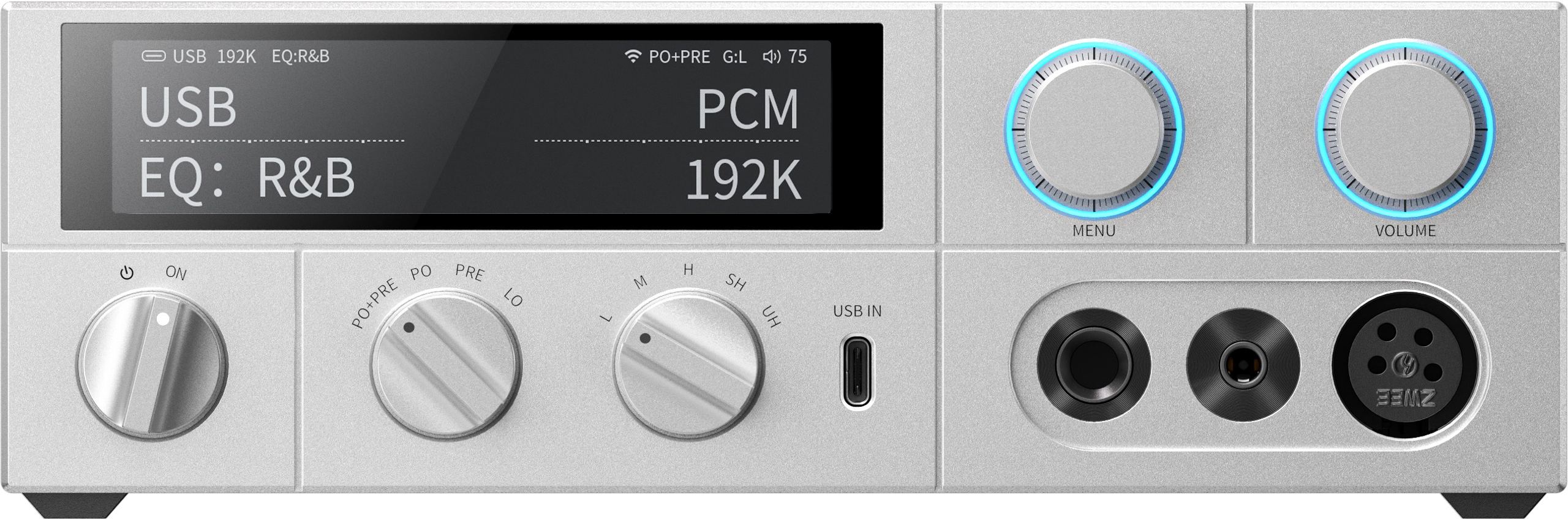
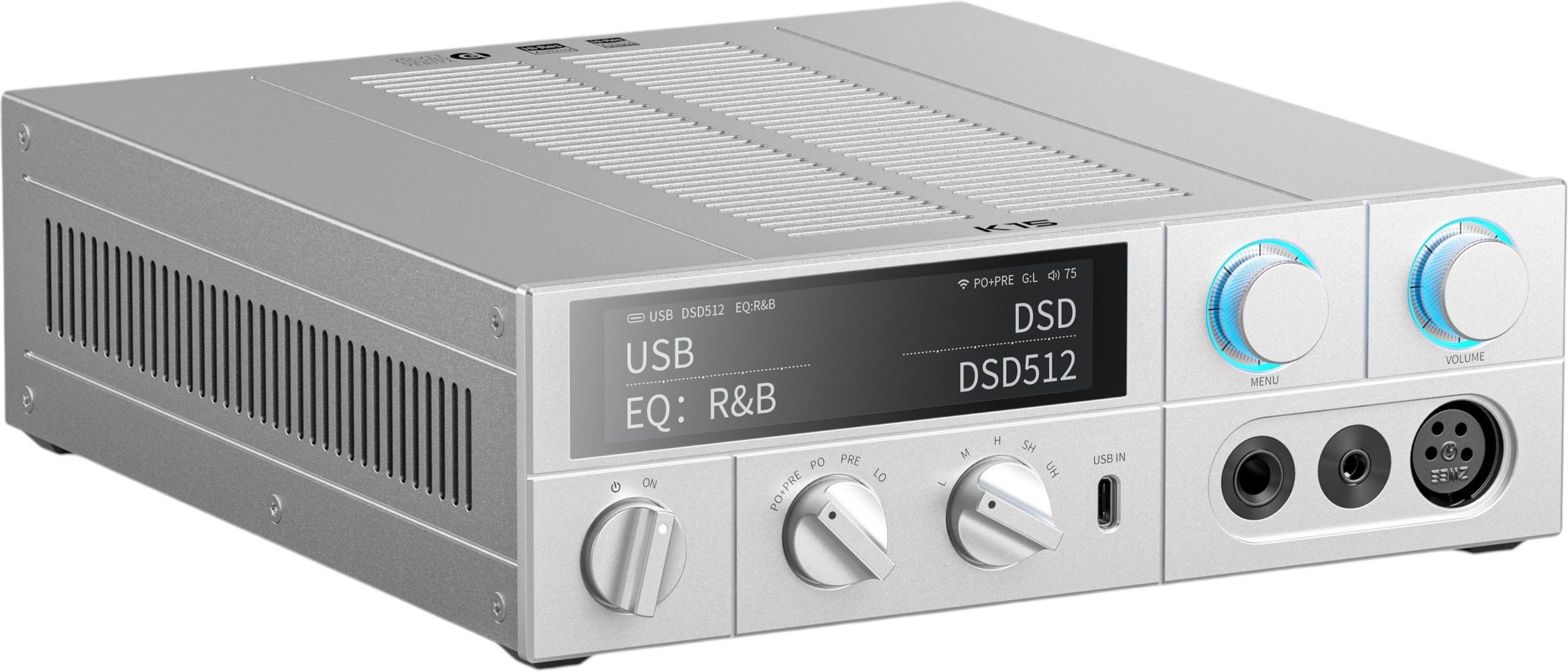
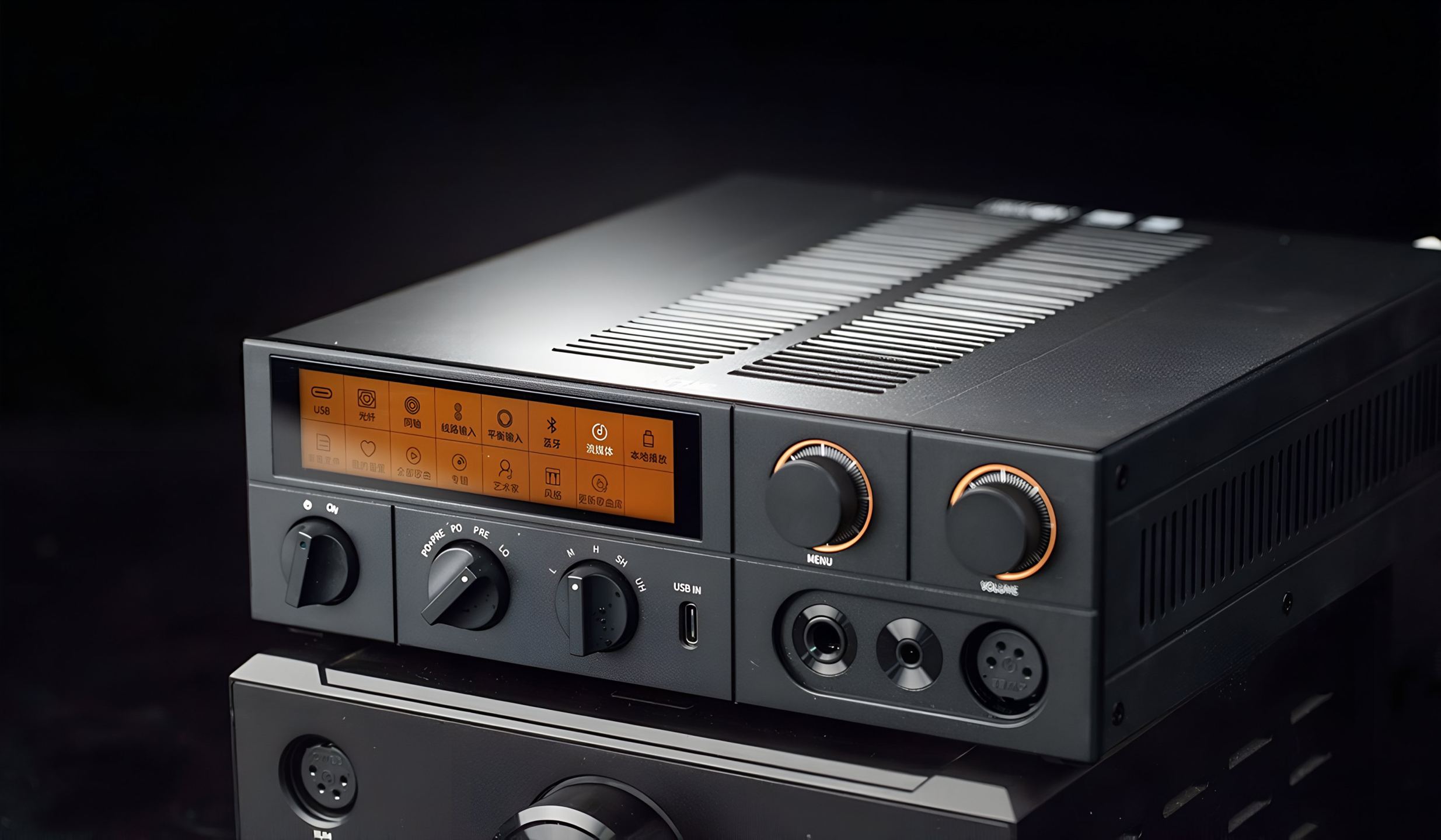
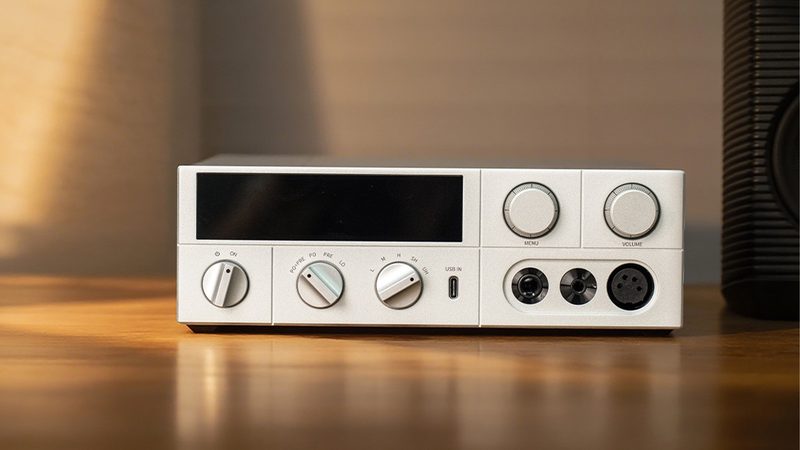
The K17 adopts a distinctive aesthetic blending classic cues with contemporary technologies. Its compact aluminum chassis (24.46 x 21.3 x 6.68 cm, weighing 2.75 kg) features a front panel dotted with metal knobs and physical switches, reminiscent of traditional hi-fi equipment. This retro approach is enhanced by modern touches: the potentiometers are accented with customizable RGB LEDs, while a 3.93-inch color touchscreen sits at the center of the front panel.
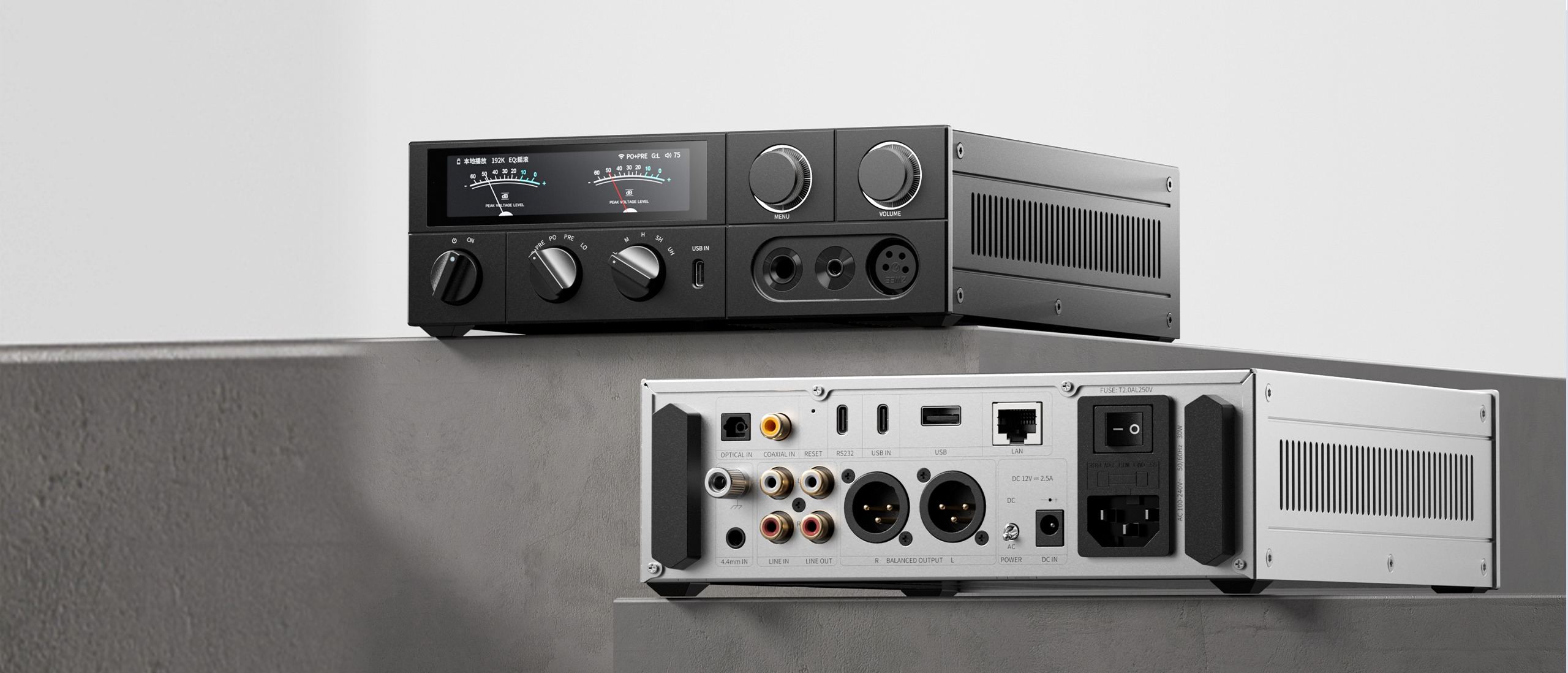
The touch interface displays essential information—active source, audio format, volume level—and can transform into analog VU meters. The five physical rotary knobs provide direct control over main functions, offering a hybrid ergonomics between touch operation and traditional controls. The structured ventilation grille ensures efficient heat dissipation while contributing to the device’s visual identity.
Dual AKM DAC architecture and advanced digital processing
At the heart of the K17, FiiO has implemented a dual DAC configuration based on two AK4499EX chips managed by an AK4191 controller. This architecture separates digital and analog processing to minimize interference, with each channel handled by a dedicated DAC in an 8-channel to 4-channel topology. The DWA ROUTING technology developed by AKM reduces background noise while improving resolution.
The clock management system relies on three Accusilicon femtosecond oscillators—two AS318-L (45.1584MHz and 49.1520MHz) and one AS318-Pro (24.576MHz)—ensuring ultra-low jitter. This temporal precision enables faithful reproduction of audio signals up to 32 bits / 768 kHz in PCM and native DSD512. The main X2000 multi-core processor, supported by an ESP32-S3 SoC, ensures smooth and responsive user interface processing.
Discrete amplification and sophisticated power management
The K17’s amplification stage is based on a fully discrete class AB architecture, using ON Semiconductor MJE243 and MJE253 power transistors. This high-current design delivers considerable power: up to 4000 mW per channel at 32 ohms in balanced mode (4.4 mm and XLR outputs) and 1850 mW in unbalanced mode (6.35 mm output).
The 35W linear power supply, combined with five 4700 μF capacitors, provides a stable and clean current reserve. Each section of the audio circuit benefits from dedicated low-noise TPA7A47/7A33 voltage regulators, ensuring optimal power delivery to each stage. This multi-stage approach with separate digital and analog power supplies helps maintain an exemplary signal-to-noise ratio, reaching 125 dB on the XLR outputs.
Lossless 31-band parametric equalizer
One of the K17’s standout features is its 31-band parametric equalizer (PEQ), a rarity in this type of equipment. Managed by a 360 MHz M21586Q DSP chip capable of 64-bit double-precision floating-point calculations, this equalizer offers surgical control over the response curve without introducing audible distortion.
Unlike traditional graphic equalizers limited to fixed frequencies, the K17’s PEQ allows adjustment of three parameters for each band: center frequency, gain (boost or cut), and Q factor determining the affected bandwidth. This flexibility enables highly precise corrections tailored to the specific characteristics of a headphone or personal preferences. Equalization profiles can be saved and shared, creating a community of users exchanging their optimized settings.
Comprehensive connectivity and network features
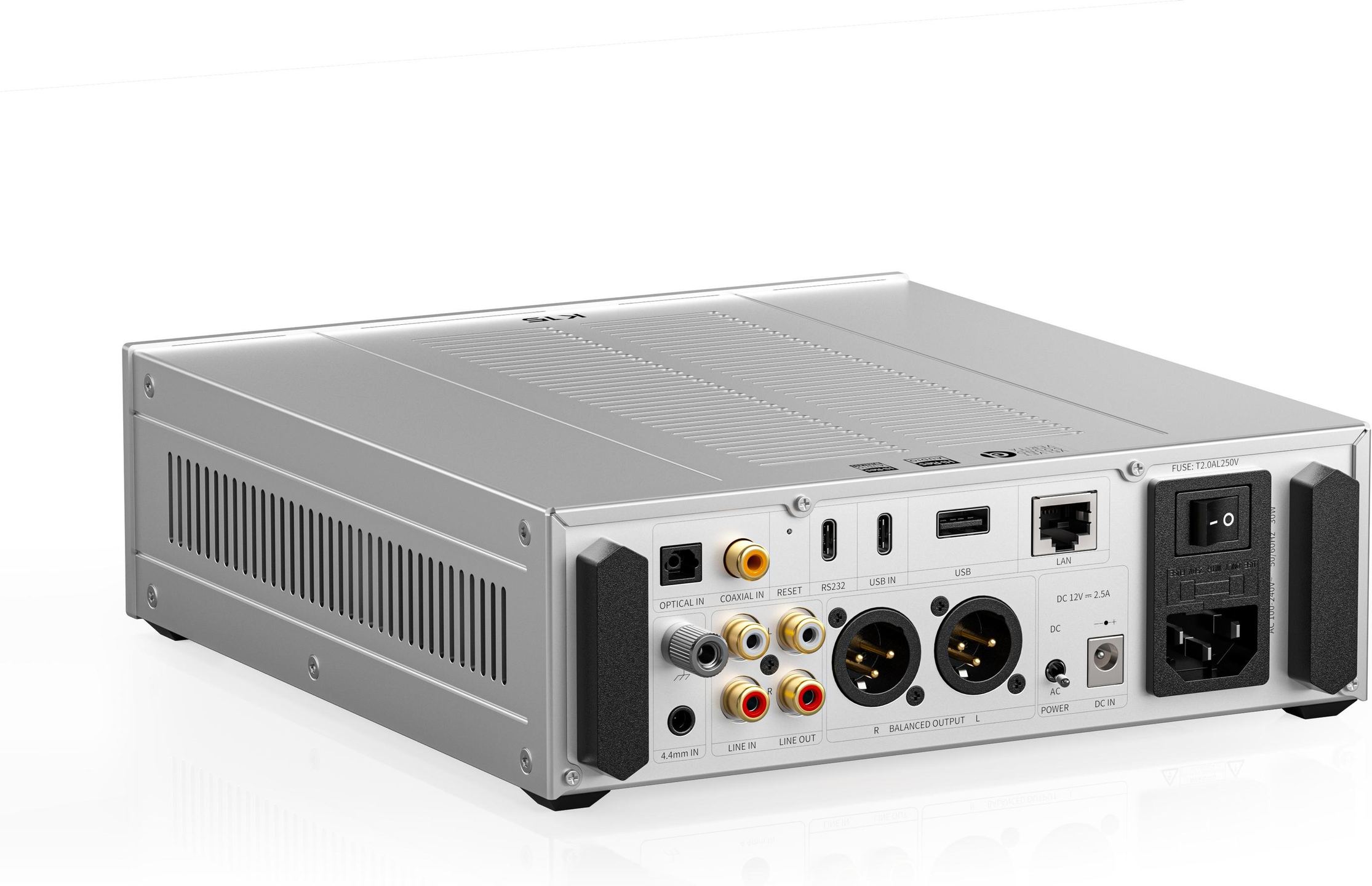
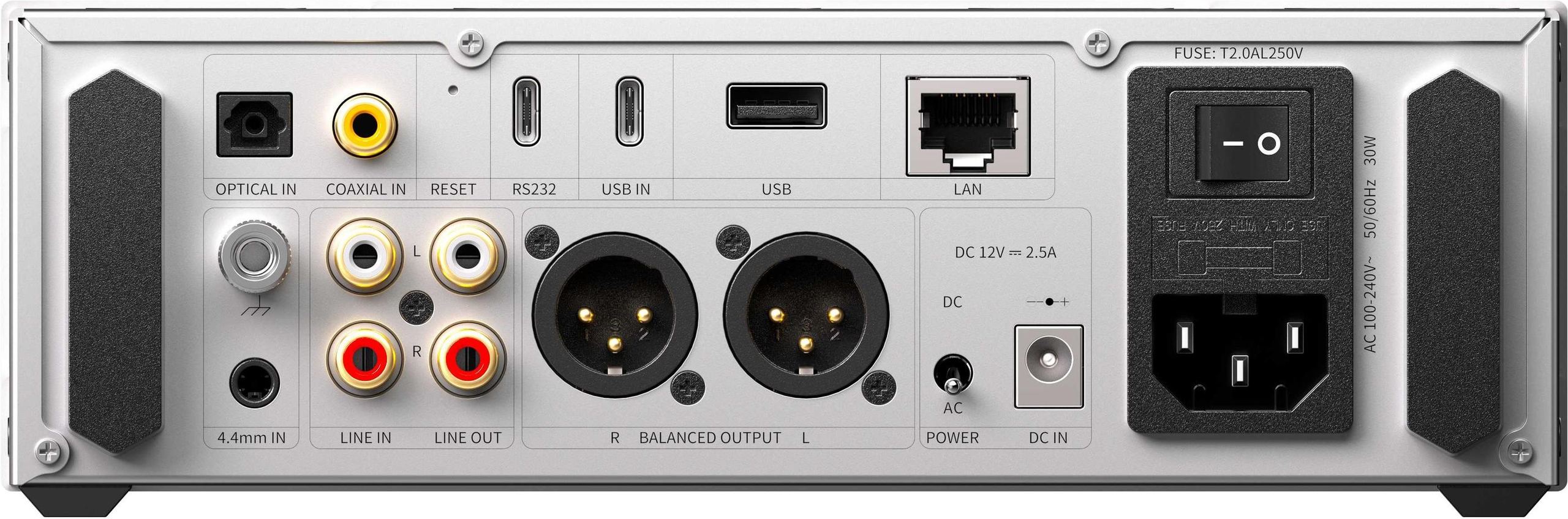
The K17 stands out for its particularly rich connectivity. Inputs include three USB-C ports (one on the front), a USB-A for external storage, optical and coaxial digital inputs, as well as an RCA line-in and a balanced 4.4 mm input. Headphone outputs include a 6.35 mm unbalanced jack, a 4.4 mm balanced jack, and a 4-pin XLR balanced output. For integration into a hi-fi system, RCA and XLR line outputs are available, complemented by optical and coaxial digital outputs.
The network section features Bluetooth 5.1 via a Qualcomm QCC5125 chip supporting LDAC, aptX HD, aptX Adaptive, and aptX Low Latency codecs. Dual-band Wi-Fi and the Ethernet port allow access to files stored on NAS via the FiiO Control app. The K17 is AirPlay 2 compatible and Roon Ready certified, making it easy to integrate into sophisticated multiroom audio ecosystems.
Evolution compared to the K9 Pro
The K17 succeeds the K9 Pro with several substantial improvements. While the K9 Pro used either a single AK4499 DAC (limited edition) or two ES9038 PROs (ESS version), the K17 adopts the newer dual AK4499EX configuration with the AK4191 controller. The K9 Pro’s THX AAA amplification is replaced by a fully discrete architecture offering higher power and a potentially more organic sound signature.
The addition of the 31-band PEQ equalizer is a major difference, as the K9 Pro was limited to preset profiles. The color touchscreen replaces the predecessor’s monochrome display, significantly enhancing the user experience. The included remote control and five gain levels (-24 dB to +12 dB) further increase the K17’s versatility.
Technical Specifications
General Information
Balanced headphone output up to 4000 mW + 4000 mW
Dual DAC AK4499EX + AK4191 for precise and natural sound
31-band lossless equalizer (PEQ): fine-tune your sound like a pro
3.93” touchscreen + 5 rotary buttons for intuitive control
35 W linear power supply + 5 × 4700 μF capacitors for stable current
Connectivity
Inputs
USB: Type-C × 3, USB-A × 1
Optical / coaxial
RCA line-in / 4.4 mm line-in
Bluetooth 5.1: LDAC, aptX HD, aptX Adaptive
Wi-Fi 2.4 G / 5 G
Ethernet
Outputs
3.5 mm / 6.35 mm headphone
Balanced headphone 4.4 mm / XLR4
RCA line-out (unbalanced)
XLR line-out (balanced)
Optical / coaxial
Audio Performance
6.35 mm Headphone Output (USB DAC - ultra high gain)
Power: 1850 mW + 1850 mW @ 32 Ω
THD+N: < 0.0005%
Signal-to-noise ratio: ≥ 124 dB
Balanced Headphone Output (4.4 mm / XLR4)
Power: up to 4000 mW + 4000 mW @ 32 Ω
THD+N: < 0.00049%
Crosstalk: ≥ 119 dB
RCA Line Output
Level: 2.5 Vrms
THD+N: < 0.00053%
SNR: ≥ 121 dB
XLR Line Output
Level: 5 Vrms
THD+N: < 0.00045%
SNR: ≥ 125 dB
Box Contents
FIIO K17
Remote control
Power cable
Headphone adapters
USB cables
Quick start guide
Frequently asked questions
What is the difference between balanced and unbalanced headphone outputs?
+
Balanced outputs (4.4 mm and XLR) use differential signals that reduce interference and crosstalk. They also deliver more power (4000 mW vs. 1850 mW) and generally offer better channel separation. However, headphones must be recabled with compatible connectors to take advantage of this.
How does the 31-band PEQ equalizer work?
+
Each band allows adjustment of the center frequency (from 20 Hz to 20 kHz), gain (+/- 12 dB), and Q factor (affected bandwidth). A high Q targets a narrow range to correct specific resonances, while a low Q affects a wider area for overall tonal adjustments. Settings are made via the touchscreen or the mobile app.
What are the limitations of the network player mode?
+
The K17 plays files from USB devices or DLNA/UPnP servers on the local network via the FiiO Control app. It does not natively support streaming services like Spotify Connect or Tidal Connect, being limited to AirPlay and Roon for integration with these platforms. Supported formats include all high-resolution standards up to DSD512.
Does the K17 decode MQA?
+
Yes, the K17 includes an MQA decoder, allowing playback of Master Quality Authenticated files from Tidal or local files. The screen displays the MQA status and the original sampling rate when playing these files. This feature is in addition to native support for DSD and high-resolution PCM formats.
User reviews
Nicola
The FiiO K17 is a complete product, perhaps even too complete. The various streaming functions added to the already excellent PRE/HEADPHONE AMP section, the analog input, both SE and Balanced (even if via Pentaconn rather than dedicated XLRs), make it a TRUE headphone amplifier that can also be used without its own, albeit excellent (AKM4499EX, basically the best for a sigma-delta), DAC, making it suitable for building a good chain, either as a power amp or at the center of it. The only drawbacks are some “small oversights,” starting with the digital VU Meters, which are basically unusable due to a bug that makes them “schizophrenic” even when they should remain still. The volume knob is also slightly imprecise, and it is a shame that the multimedia buttons on the remote are not routed through the Bluetooth connection. Otherwise, on the headphone/preamp side it is nothing short of impeccable in its completeness, and its price and excellent internal power supply make it suitable for both very low- and very high-impedance headphones, with a virtually nonexistent noise floor and more than decent volume headroom.
Comment from 6 September 2026 — Experience from 7 March 2026
Automatically translated — Show original (Italian)
Il FiiO K17 è un prodotto completo, pure troppo.
Le svariate funzioni di streaming aggiunte al già ottimo comparto PRE/AMP-CUFFIE, l'igresso analogico, sia SE che Bilanciato (anche se tramite pentaconn e non XLR dedicate) nè fa un VERO amplificatore cuffie utilizzabile anche senza il suo, pur eccellente (AKM4499EX, il top per un sigma-delta in pratica) DAC, rendendolo adatto alla creazione di una buona catena, sia come finale che al centro della stessa, l'unico neo sono alcune "piccole sviste", a partire dai VU Meters digitali che risultano fondamente inutilizzabili a causa di un bug che li rende "schizzofrenici" anche quando dovrebbero restare fermi, la manopola del volume poi è leggermente inprecisa ed'è un peccato che i tasti multimediali del telecomando non vengano reinstradati attraverso la connessione bluetooth, per il resto sul versante cuffie/pre è a dir poco ineccepibile nella sua completezza e con il suo prezzo e l'ottima alimentazione interna lo rende adatto tanto a cuffie a bassissima come ad altissima impedenza, noise floor praticamente assente e riserva di volume più che dignitosa.
Eco-contribution of €0.12 included in the sale price.
To better understand our visitors, measure marketing effectiveness and personalise ads, we and our partners use cookies and mobile advertising identifiers on your device. This data makes it possible to display personalised and non-personalised ads and measure their performance. Some cookies, which are technically necessary, are exempt from consent. You can accept those that require your consent, refuse them by clicking “Reject”, or customise your choices via “More options”.
To find out how Google uses the data collected once you have given your consent, see Google’s Business Data Responsibility site (opens in a new window).
You can change or withdraw your consent at any time via the “Cookies” link. Your choices will apply on our site for 12 months.