

PSB Imagine B50 white (pack of 2)


Overview
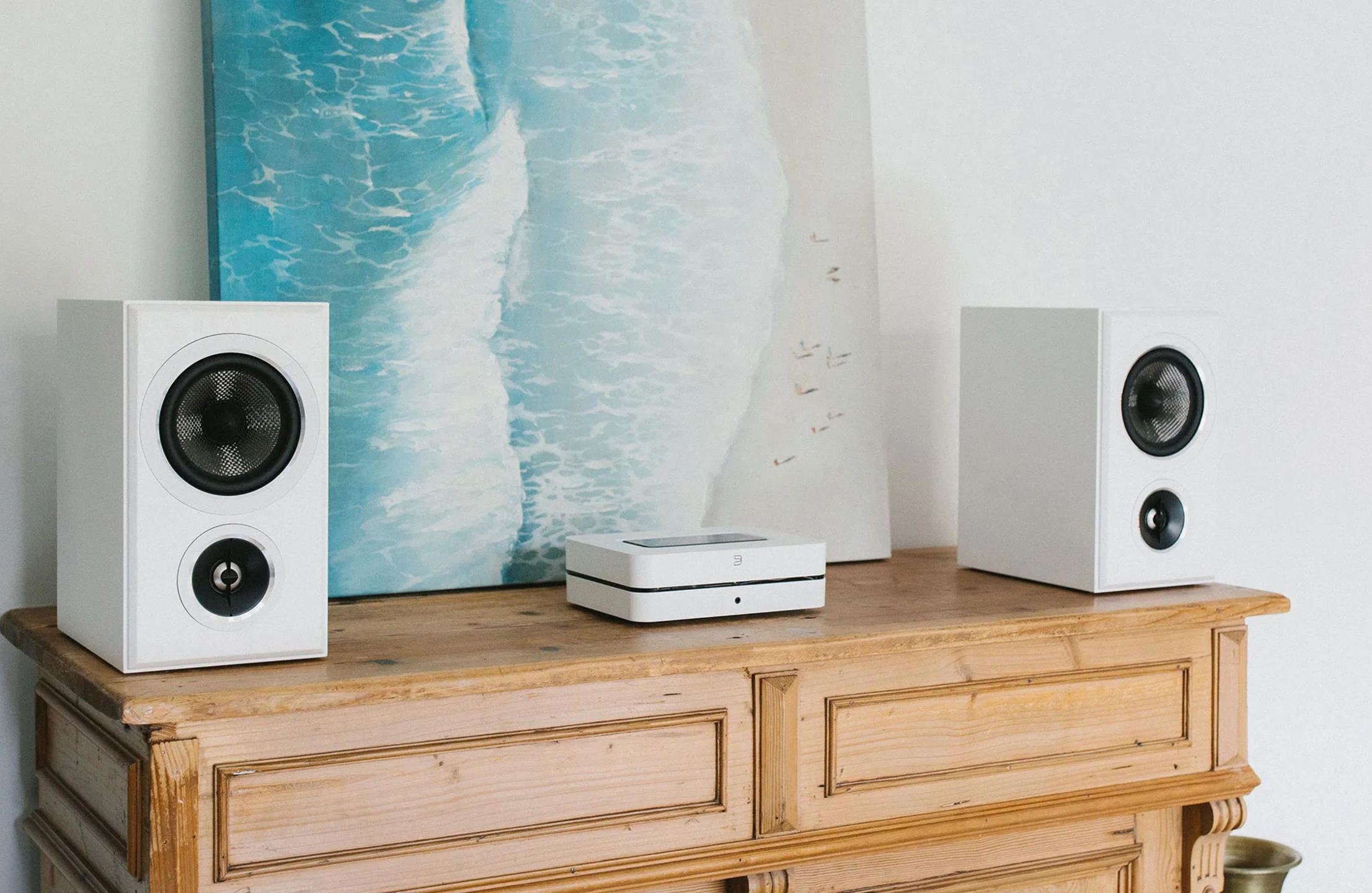
The PSB Imagine B50 are compact bookshelf speakers developed from fifty years of psychoacoustic research led by Paul Barton in the anechoic chambers of Canada’s National Research Council. They are designed to deliver extended sonic performance despite their small footprint.
An acoustic configuration that turns conventions on their head
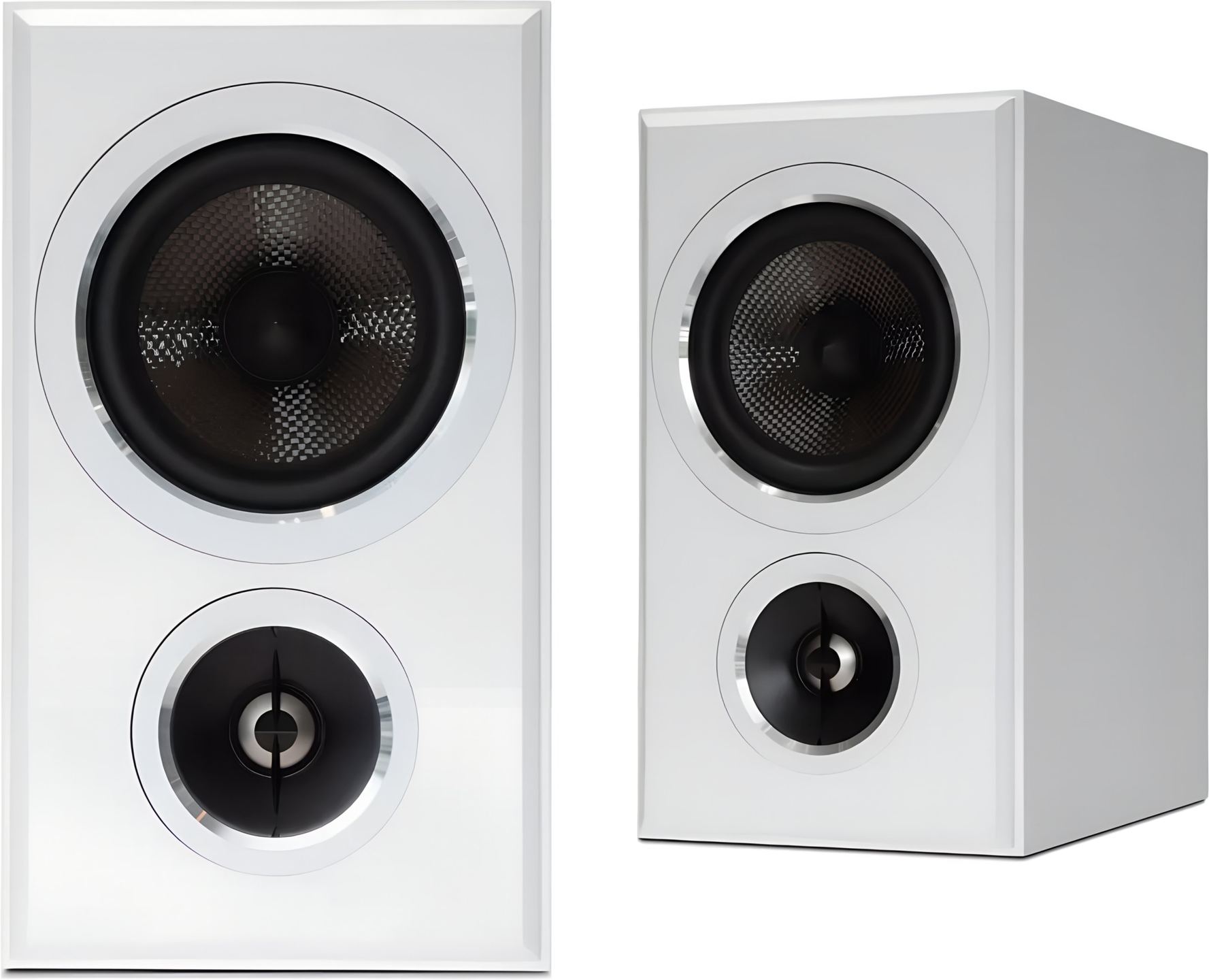
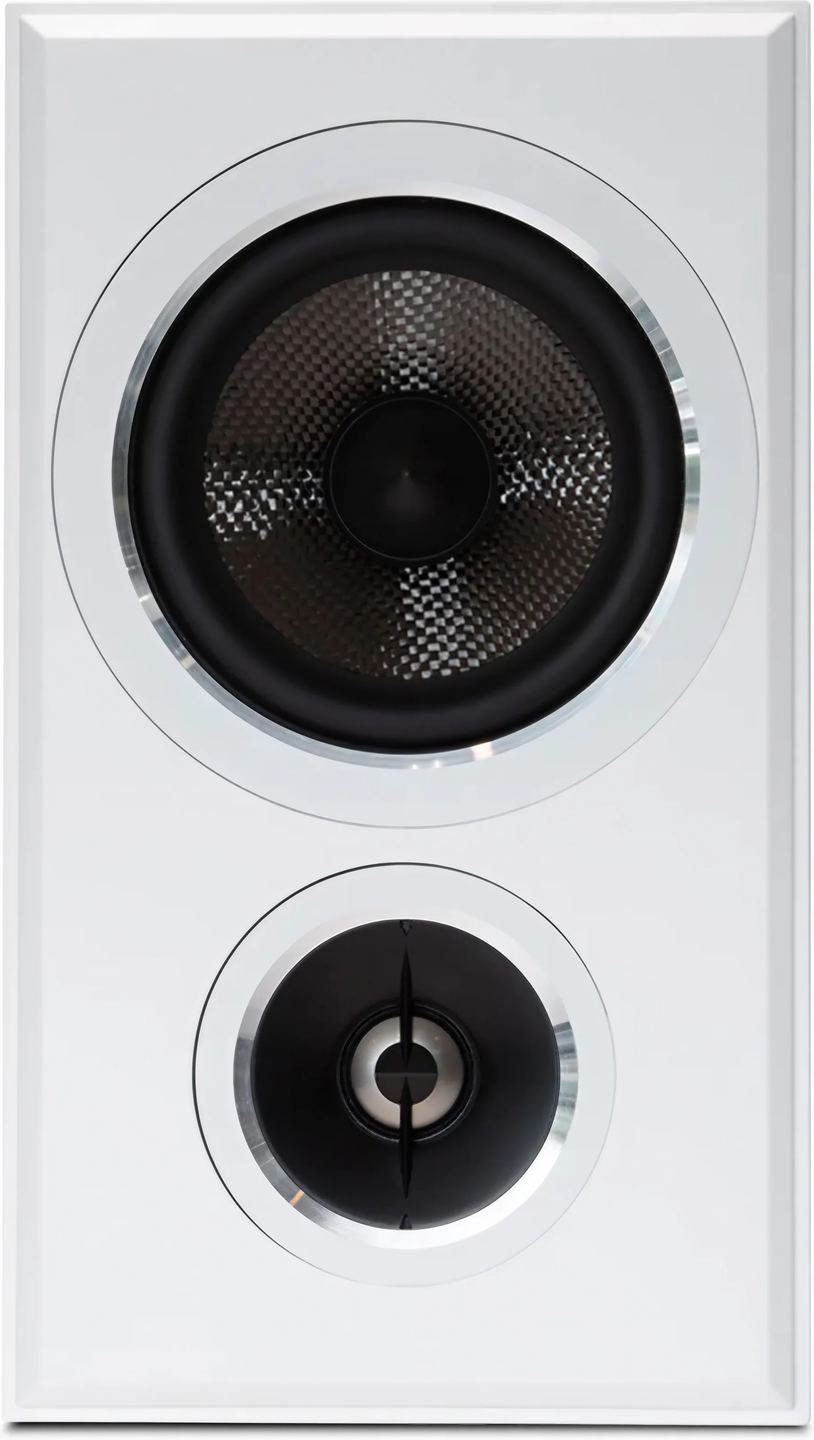
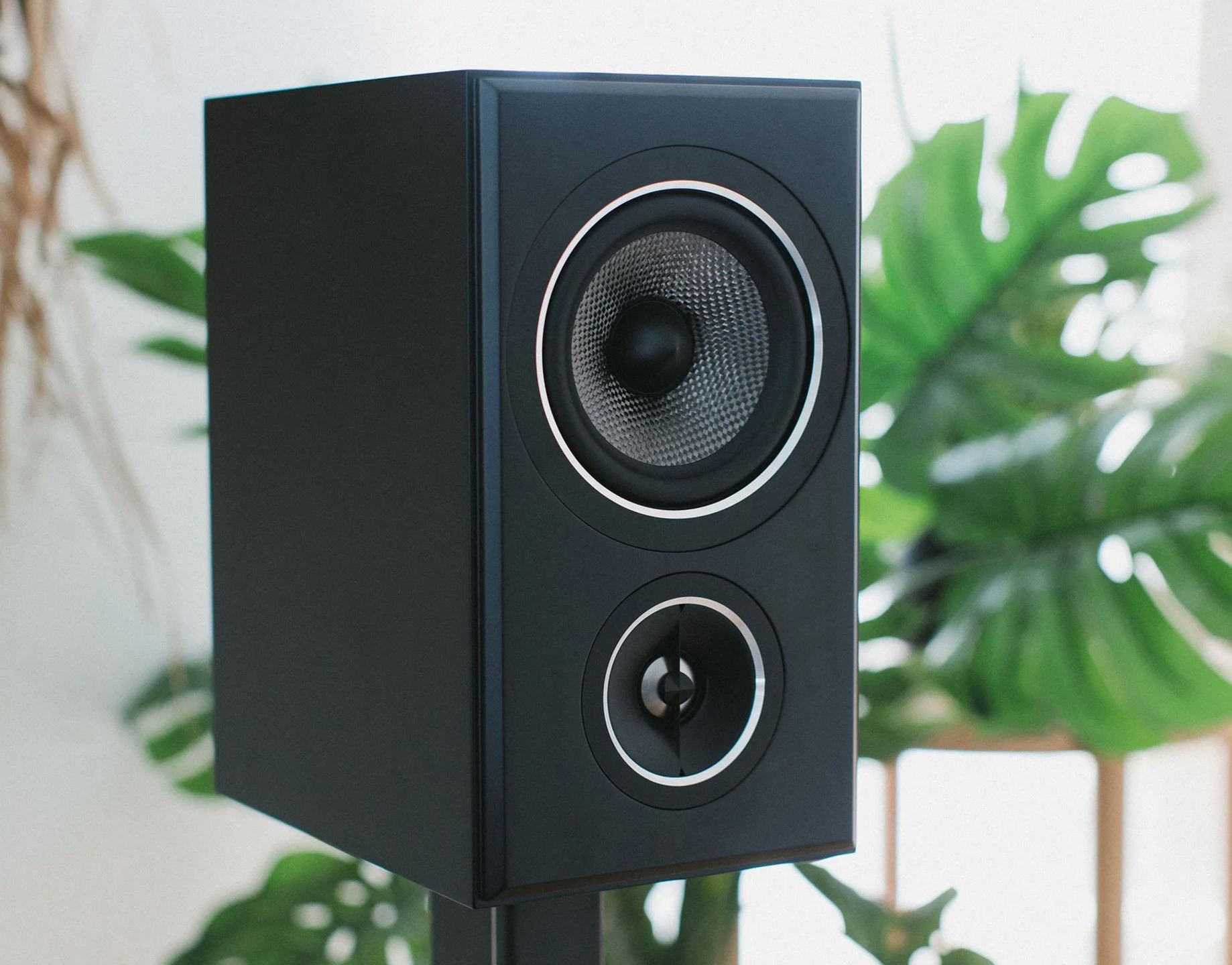
The first thing that stands out with the Imagine B50 is the unusual driver layout: a 133 mm woven carbon-fiber woofer sits above a 25 mm titanium-dome tweeter. This inverted configuration isn’t a mere aesthetic flourish but the result of deep consideration of sound wave propagation. By placing the midbass above the tweeter, Paul Barton tilts the combined phase lobe upward, creating an optimal listening window at ear height for a seated listener on 60 cm stands. This approach ensures remarkable sonic coherence whether you’re in your listening chair or standing in the room.
The woofer’s woven carbon-fiber cone offers exemplary rigidity while keeping mass low, enabling fast, precise transitions in the midbass range. This technology, taken directly from the flagship Synchrony series, gives the B50 an especially striking ability to reveal microdetails. The tweeter, equipped with a high-performance neodymium magnet and ferrofluid cooling, extends its response up to 23 kHz while maintaining controlled dispersion thanks to its carefully contoured waveguide.
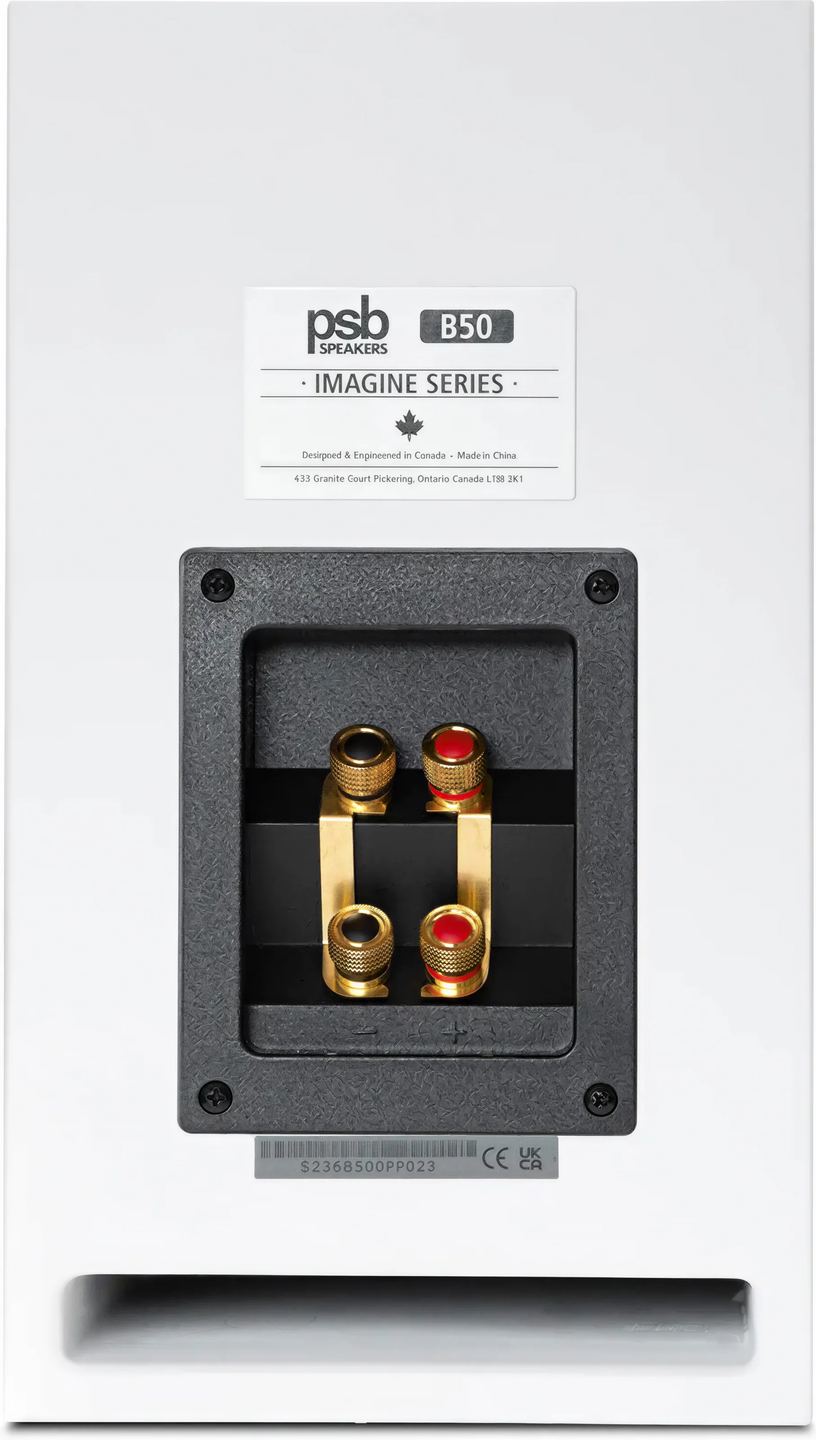
The rear bass-reflex port, executed as a slot rather than a traditional round tube, minimizes air turbulence while allowing bass extension down to 36 Hz at -10 dB—performance that defies expectations for an internal volume of only 7.7 liters.
A sophisticated crossover in service of coherence
The fourth-order Linkwitz-Riley crossover at 2,200 Hz represents the culmination of decades of research into auditory perception. This complex topology, rarely employed in this price range, ensures an imperceptible handoff between the two drivers with a steep 24 dB-per-octave roll-off. Carefully selected components and meticulous circuit layout keep both static and dynamic distortions well below audible thresholds, even at high listening levels.
This rigorous technical approach yields an exemplary linear frequency response: 45 Hz–23 kHz at ±3 dB on-axis, with deviation held to ±1.5 dB between 60 Hz and 20 kHz. More remarkable still, the 30° off-axis response maintains this same tight tolerance between 60 Hz and 10 kHz, ensuring a stable, coherent soundstage across a wide listening area.
Construction: striking a balance between performance and accessibility
The high-density MDF cabinet incorporates strategically placed internal bracing to eliminate unwanted resonances. Thick walls and internal damping create an acoustically inert platform for the drivers. Dual gold-plated binding posts, linked by equally high-quality removable jumpers, allow for bi-wiring or bi-amping in more ambitious setups.
Performance that transcends physical limits
Independent measurements confirm the B50’s exceptional capabilities for their class. Sensitivity of 85 dB in anechoic conditions (87 dB in-room) reflects respectable efficiency despite the compact volume. A nominal impedance of 8 ohms with a 4-ohm minimum makes them compatible with most amplifiers, though quality amplification will fully reveal their dynamic potential.
Power handling of 20 to 150 watts offers a broad operating range, from low-power tube amps to more muscular solid-state electronics. A 150-watt program power rating ensures compression-free reproduction of the most demanding orchestral passages.
Technical Specifications
Audio Performance
- Frequency response
- On-axis at 0° ±3 dB: 45 Hz – 23000 Hz
- On-axis at 0° ±1.5 dB: 60 Hz – 20000 Hz
- Off-axis at 30° ±1.5 dB: 60 Hz – 10000 Hz
- Low-frequency cutoff (-10 dB): 36 Hz
- Sensitivity
- Anechoic chamber: 85 dB
- Listening room: 87 dB
- Impedance
- Nominal: 8 ohms
- Minimum: 4 ohms
- Power handling
- Recommended: 20 – 150 W
- Program: 150 W
Acoustic Design
- Tweeter: 25 mm titanium dome with ferrofluid, neodymium magnet
- Woofer: 133 mm woven carbon fiber cone with rubber surround
- Crossover: 2200 Hz, LR4 filter
- Design type: 2-way, bass reflex, rear slot port
Dimensions and Weight
- Dimensions (W × H × D): 171 × 300 × 251 mm
- Net weight: 5.13 kg per speaker
- Shipping weight: 11.9 kg per pair
Finishes and Connectivity
- Dual 5-way gold-plated binding posts
- Bi-wiring / bi-amping capable
- Gold-plated jumpers
Frequently Asked Questions
What is the ideal distance between B50 speakers for optimal stereo listening?
The B50s work best spaced 2 to 2.5 meters apart, forming an equilateral triangle with the listening position. Their excellent horizontal dispersion provides some flexibility in placement, adapting to your room’s constraints while maintaining a precise, stable stereo image.
Do the B50s absolutely require a subwoofer for satisfying listening?
Unlike most bookshelf speakers of this size, the B50s deliver surprisingly deep, articulate bass down to 45 Hz. In rooms up to 18 m², they can operate on their own for most musical genres. Adding a subwoofer remains relevant for home theater or electronic music enthusiasts seeking the lowest octaves.
How does ferrofluid improve tweeter performance?
Ferrofluid fills the magnetic gap around the voice coil, providing three key benefits: enhanced heat dissipation for better power handling, damping of parasitic resonances for a more linear response, and optimal centering of the coil in the gap to reduce distortion.
What is the main difference between the B50 and the T54/T65 tower models in the Imagine series?
Beyond the naturally greater low-frequency extension of floorstanding speakers, the B50 shares the same tweeter and design philosophy as its larger siblings. The towers incorporate dedicated midrange drivers in a three-way configuration, offering increased dynamics and higher SPL capability for larger rooms.
How were Synchrony series technologies adapted for the B50?
The B50 inherits the neodymium-magnet tweeter design, Linkwitz-Riley crossover topology, and acoustic design principles from the flagship series. Value engineering tailors these technologies with materials optimized for price-to-performance, without compromising core performance.
Do the dual binding posts really justify bi-wiring at this price point?
While bi-wiring remains marginal in this price bracket, PSB provides the option for audiophiles who wish to experiment. Benefits are subtle with standard electronics, but active bi-amping can yield increased transparency and superior control of the midbass.
- Eco-contribution included in the sale price.




