

Pro-Ject Tube Box DS3 B black


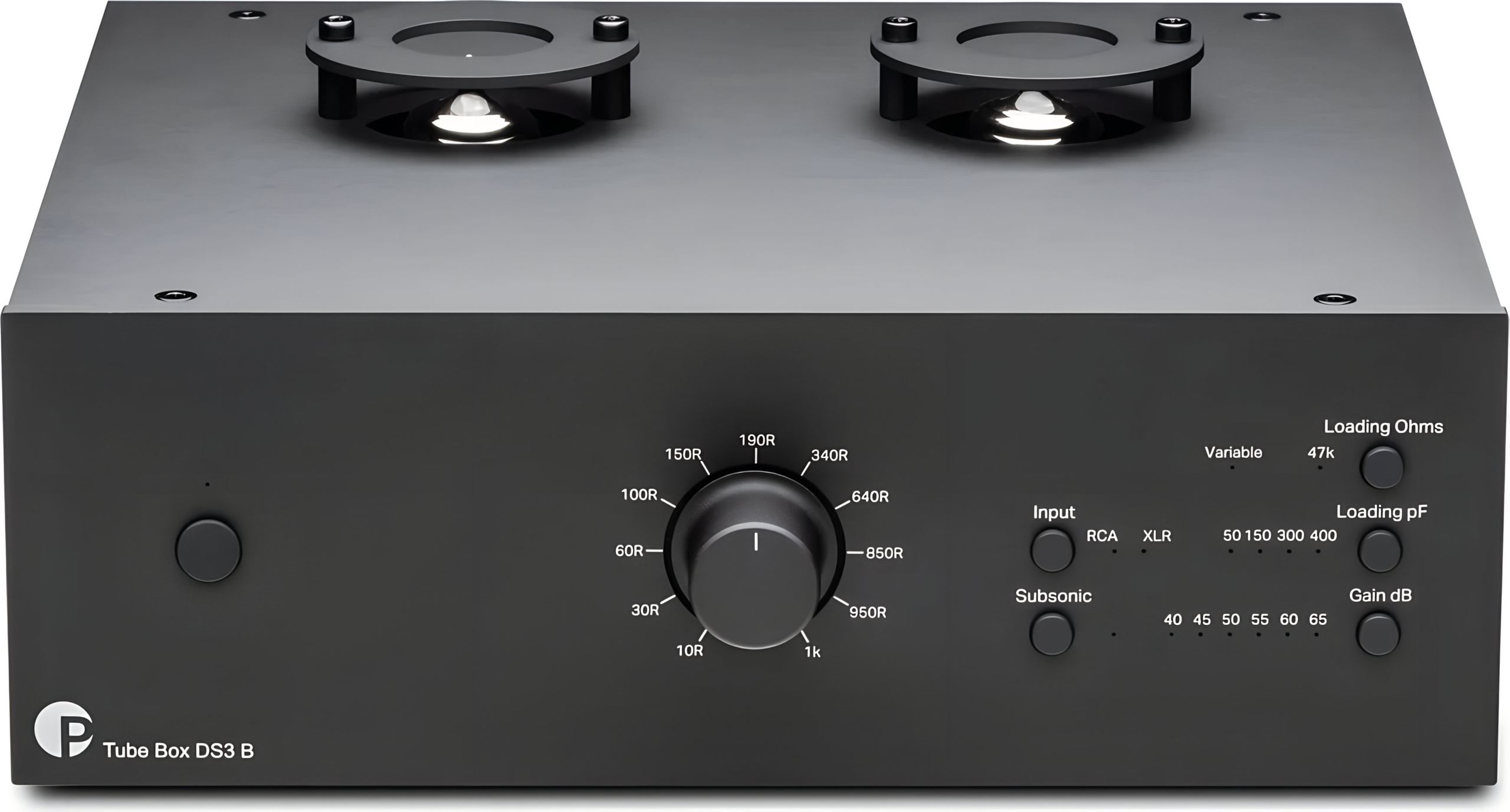
Pro-Ject Tube Box DS3 B: balanced tube phono preamp
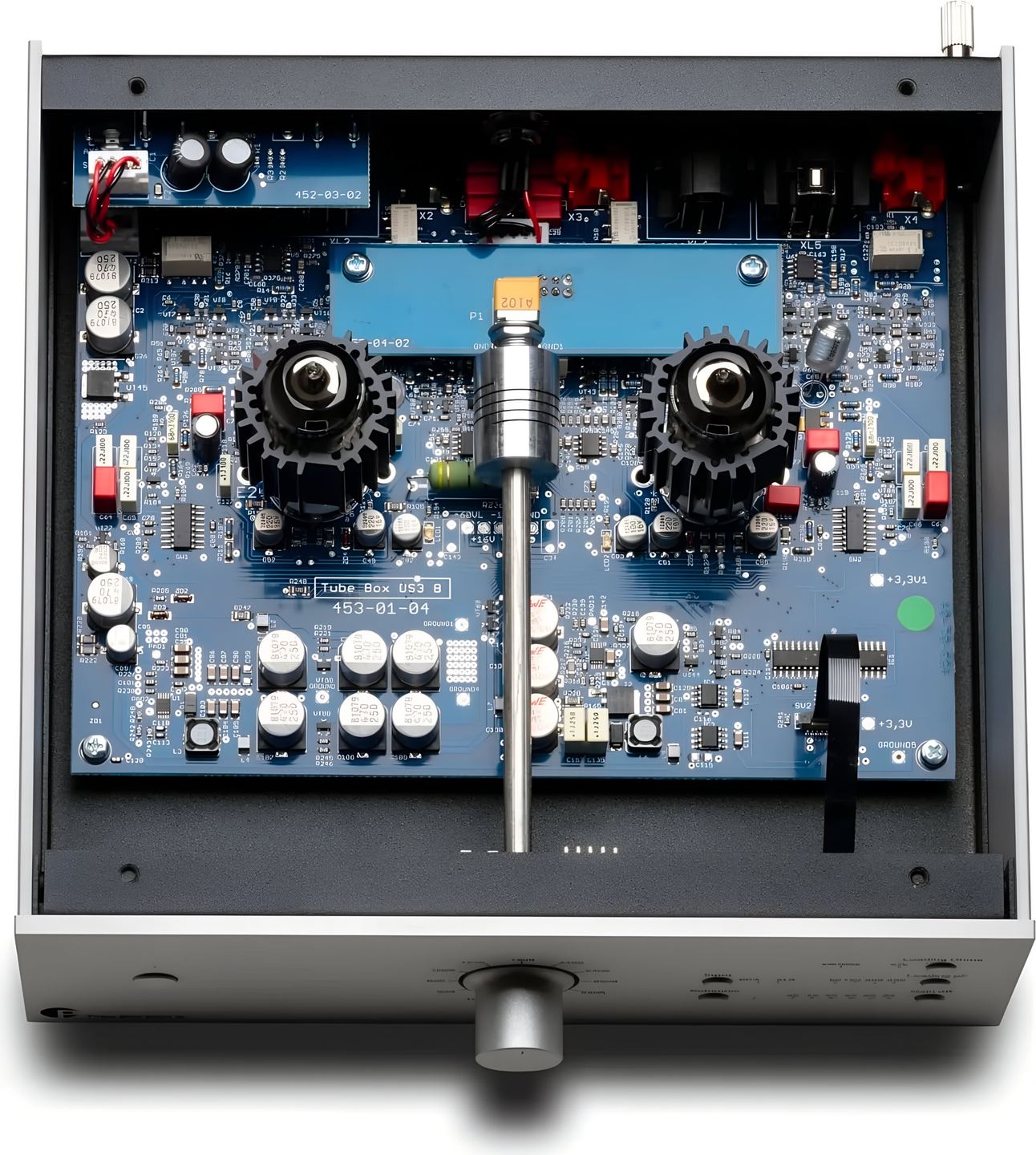
Tubes and balanced connections in the same enclosure: that’s the promise of the Tube Box DS3 B, the first phono preamp in the Tube Box series to offer XLR inputs and outputs. The circuit, designed by Dr. Sykora, combines two E88CC tubes with a dual mono architecture. This evolution of the range incorporates features previously reserved for the more expensive RS models, while retaining the European hand-assembly that has made Pro-Ject so renowned.
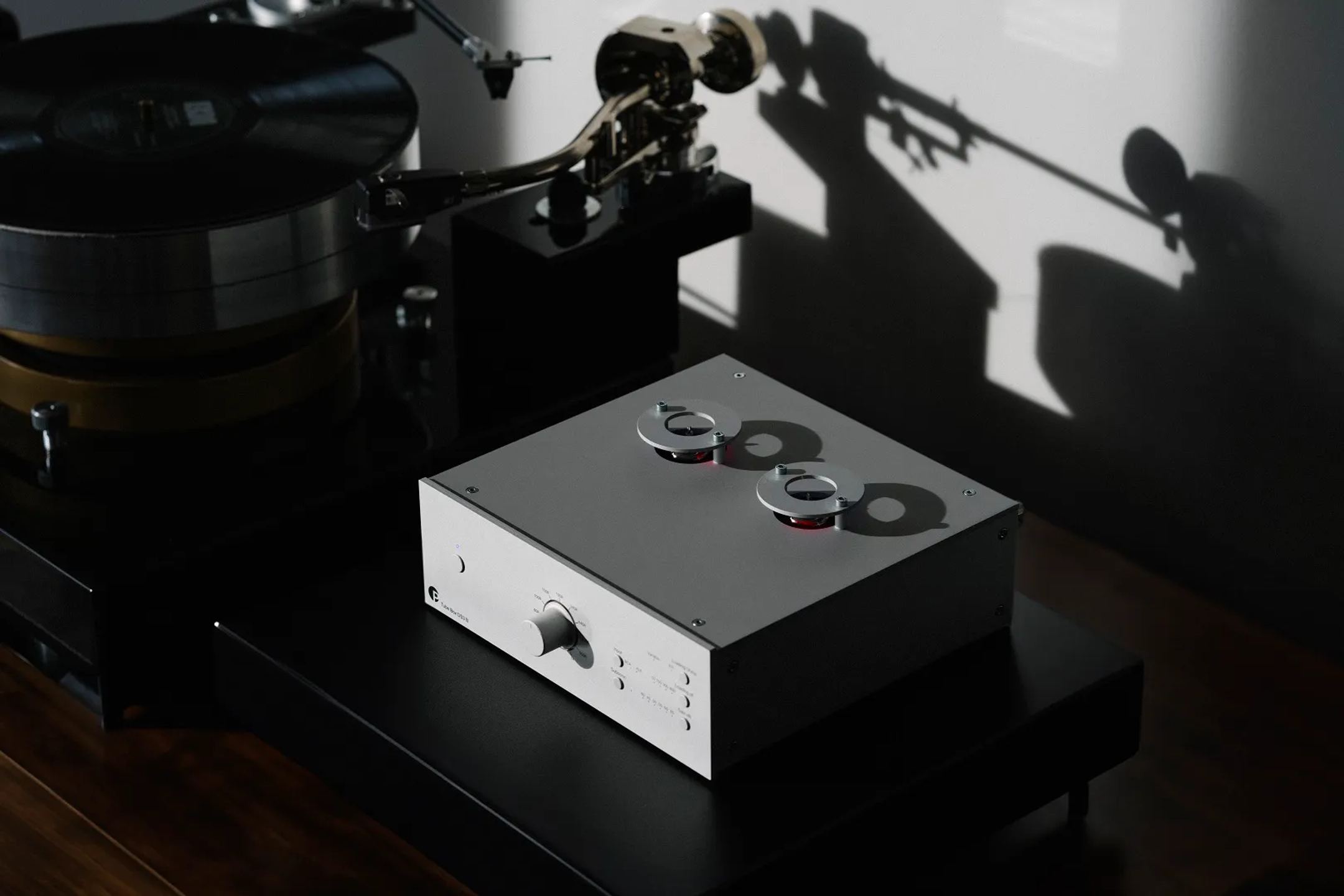
Continuously adjustable impedance during listening
Most phono preamps force you through a tedious ritual to adjust the load impedance: remove the cover, fiddle with tiny DIP switches, reassemble, listen, start over. The Tube Box DS3 B does away with this constraint. A central potentiometer lets you change impedance continuously from 10 to 1000 ohms, without interrupting playback.
This feature, introduced by Pro-Ject, turns adjustment into an active listening process. You can start from a low value and gradually increase it until you find the sweet spot for your MC cartridge. The manual suggests using the cartridge manufacturer’s recommendations as a starting point, but nothing stops you from exploring. The impact on tonal balance is instantly audible.
Balanced connections and dual turntable input
The phono preamp accepts two turntables simultaneously. Each input has its own settings memory: gain, impedance, capacitance. Switching from one to the other only requires a press on the front selector. The parameters of each configuration are restored automatically.
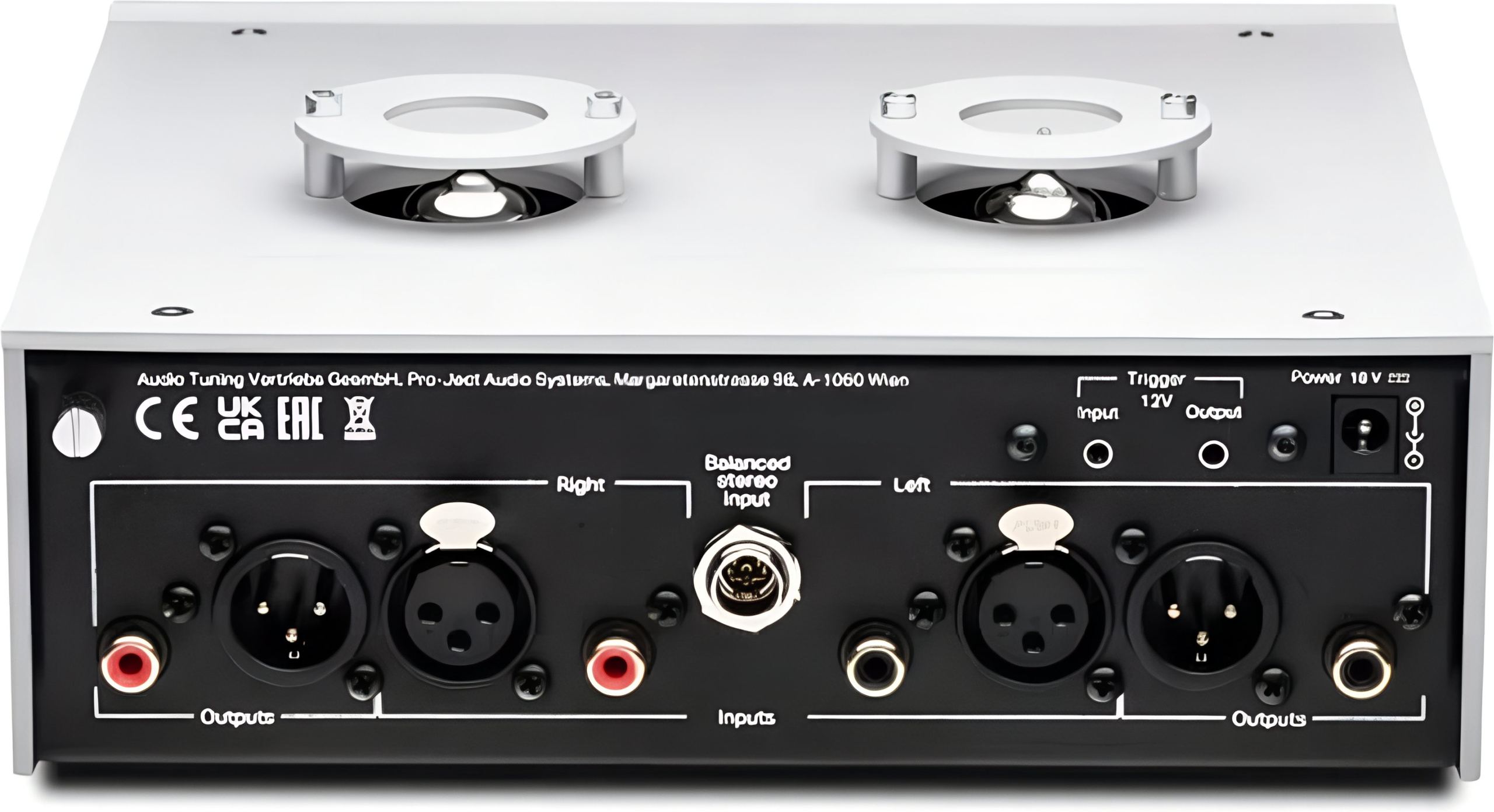
This dual input makes perfect sense given the variety of available connections. The 5-pin mini-XLR input is suitable for Pro-Ject turntables fitted with arms compatible with True Balanced Connection. The stereo XLR input accepts standard balanced cables. The RCA input remains available for conventional unbalanced setups. MC cartridges benefit most from balanced connection, since their construction naturally makes them balanced transducers. MM cartridges, due to their internal wiring, cannot fully exploit this mode.
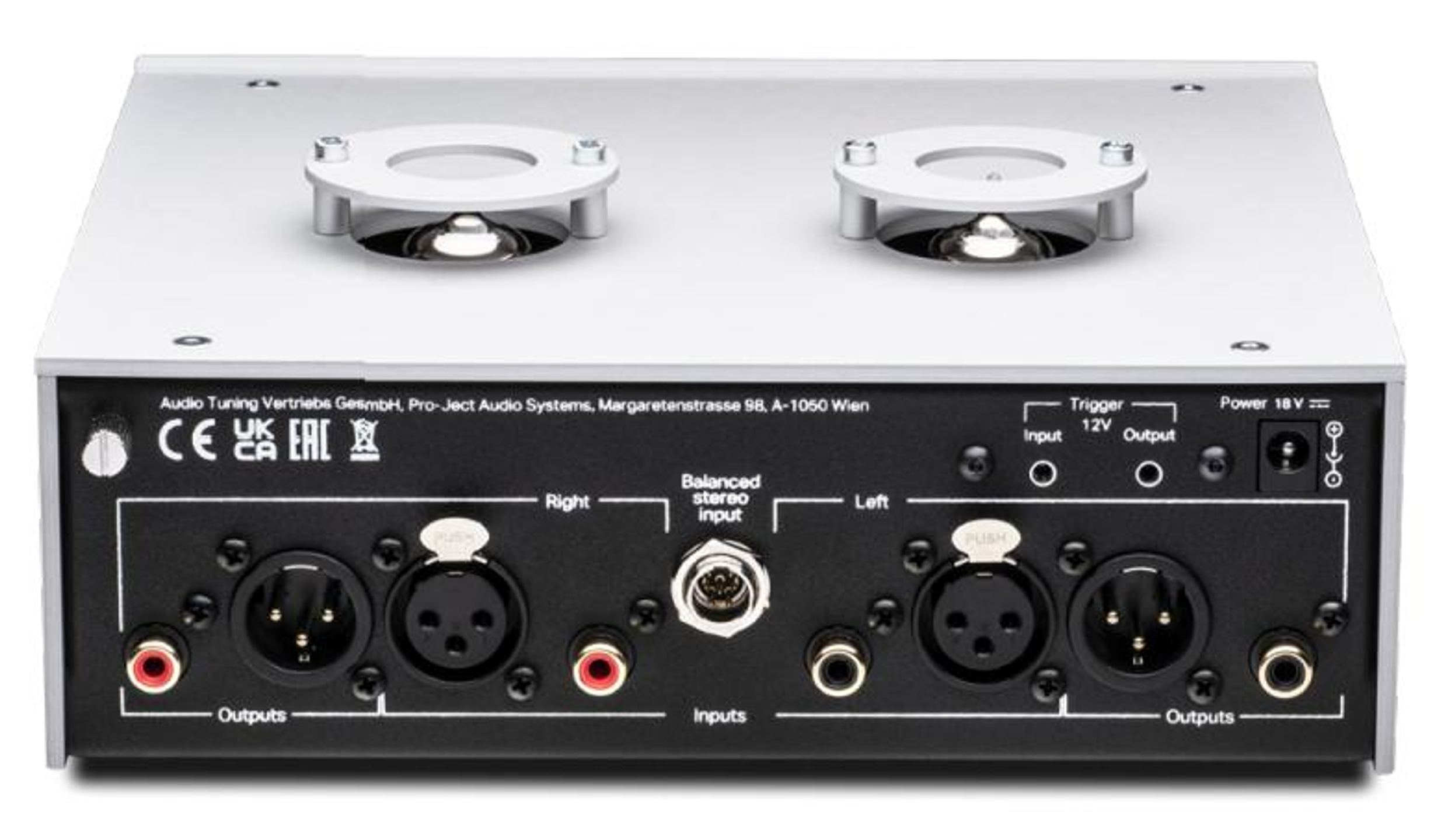
E88CC tubes: the tube phono stage
The two E88CC tubes (6922 equivalent) handle the input and gain stages of this phono preamp. This tube type, designed for demanding RF and audio applications, is distinguished by particularly low noise. The stock tubes are Tungsram NOS. They can be replaced by other E88CC/6922/7308 references, and some users report audible differences between brands.
The hybrid architecture combines these tubes with a passive, discrete RIAA equalization. Polypropylene capacitors are used throughout the entire circuit, including the output stage.
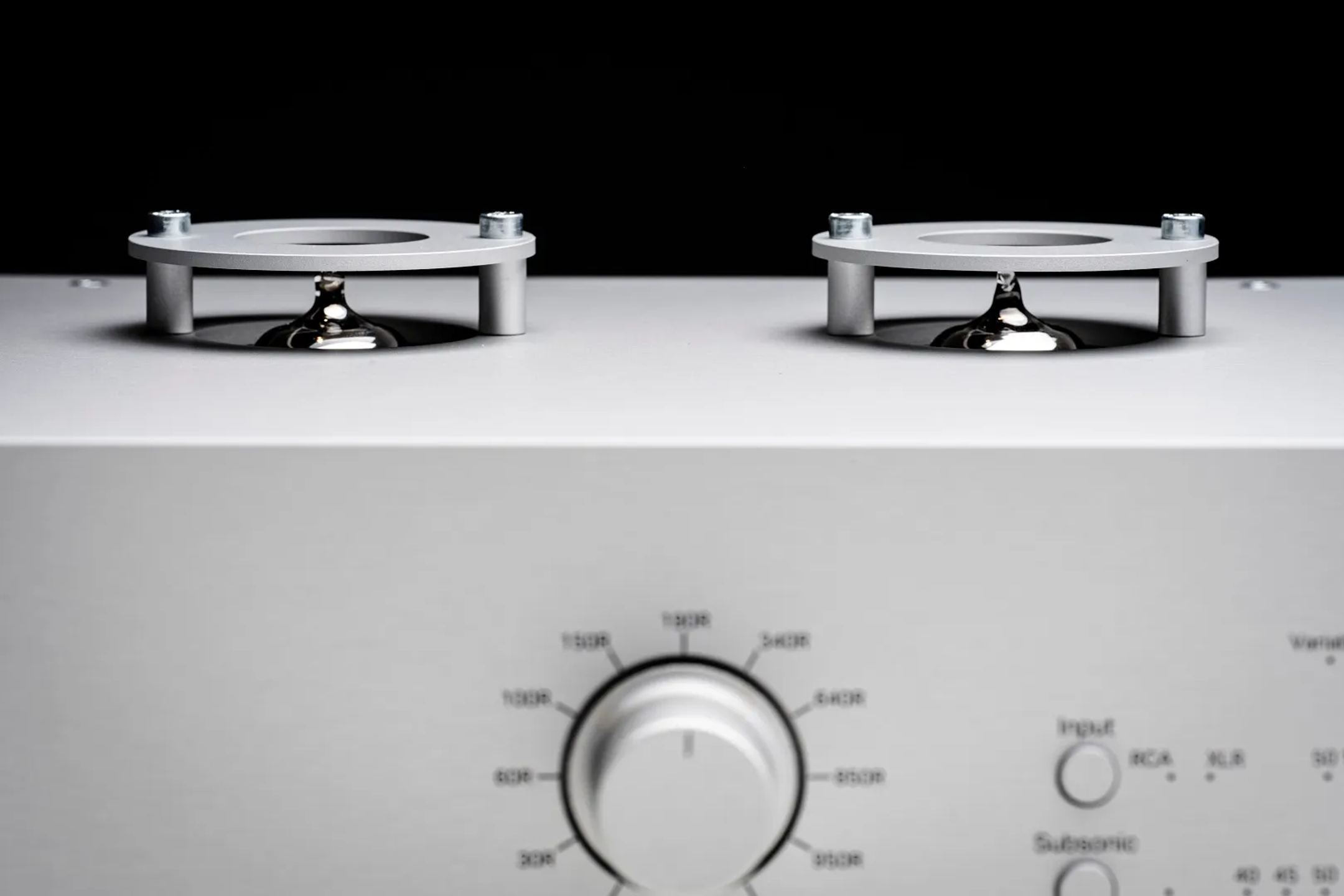
Front-panel-accessible settings
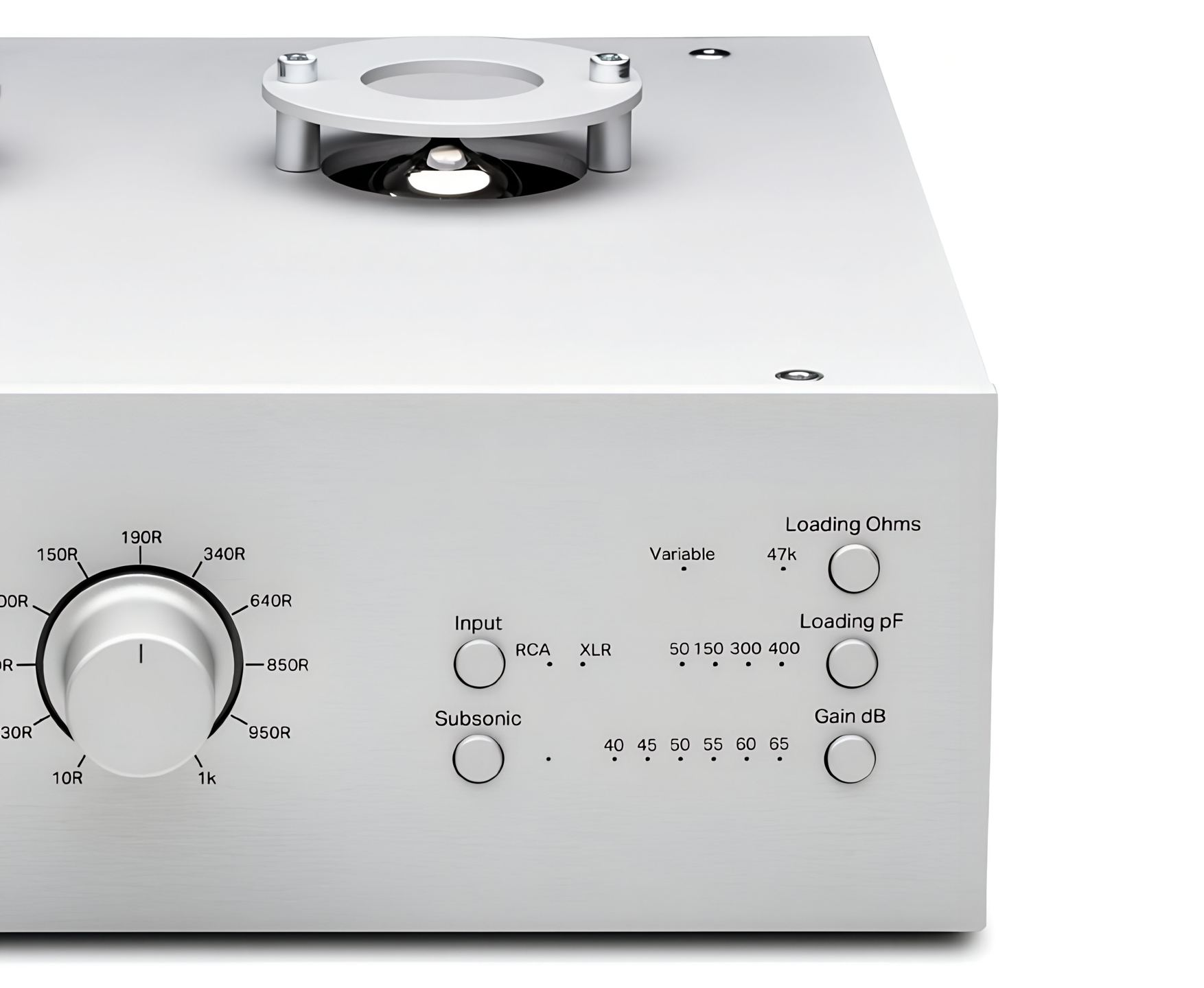
All parameters are controlled from the front panel. The buttons are small, a compromise dictated by the compact format (206 × 70 × 194 mm). Gain ranges from 40 to 65 dB in 5 dB steps. On the XLR output, a 6 dB bonus is added automatically.
Capacitance can be set to four values: 50, 150, 300 or 400 pF. The low 50 pF value helps compensate for cables with high capacitance. For MM cartridges, the fixed 47 kOhm impedance is activated automatically.
A subsonic filter cuts at 20 Hz with an 18 dB per octave slope. It removes infrasonic frequencies caused by warped turntables or records, easing the load on the amplifier and speakers.
Construction and power supply
The aluminum chassis shields the circuits from electromagnetic interference. The external 18 V power supply keeps stray fields away from the enclosure. For further improvement, the optional linear Power Box DS2 Sources power supply can replace the supplied wall adapter.
12 V trigger inputs and outputs (2.5 mm jacks) allow power-on synchronization with other Pro-Ject units or a compatible amplifier. On power-up, the unit observes a warm-up delay of about 30 seconds before becoming operational.
Magnetically attached wooden side panels are sold separately to customize the look. The enclosure is available in black or silver.
Technical specifications
Tube stage
- Tubes: 2 × E88CC / 6922
- E88CC tube characteristics:
- Very low background noise
- Excellent operating stability
- Deep, controlled bass reproduction
- Warm and detailed treble reproduction
- All stages, including the tube output and polypropylene capacitors, are of audiophile quality
Compatibility and features
- Compatible with moving magnet (MM) and moving coil (MC) cartridges
- Simultaneous connection of two turntables
- Available finishes: black or silver
- Optional wooden side panels with magnetic mounting available
Design and manufacturing
- Aluminum chassis providing optimal protection against electromagnetic interference
- Dual mono architecture for perfect channel separation
- Hand-assembled in Europe
Settings and adjustments
- Adjustable gain: 40, 45, 50, 55, 60, 65 dB (+ 6 dB additional via XLR connection)
- Precise level adjustment for perfect integration into any high-fidelity system
- Independent memory of settings for each input
- Input impedance: 10 – 1000 ohms (continuously adjustable via potentiometer), 47 kilohms (fixed)
- Pro-Ject exclusive: continuous adjustment of load impedance even during playback
- Perfect optimization of matching with your phono cartridge
- Immediate listening to the sonic impact of each setting
- Input capacitance: 50, 150, 300, 400 pF
- All settings are directly accessible on the front panel
Audio performance
- Output voltage: 500 mV at 1 kHz (with 40 dB gain)
- Signal-to-noise ratio: > 87 dBV (A-weighted)
- Total harmonic distortion: < 0.03%
- RIAA curve accuracy: ± 0.5 dB (20 Hz – 20 kHz)
- Subsonic filter: 20 Hz with 18 dB per octave slope
- Balanced transmission via XLR and 5-pin mini-XLR connections:
- Drastic reduction of noise and electromagnetic interference
- Precise extraction of the musical signal
- Optimal performance in modern, electrically noisy environments
Connectivity
- Inputs:
- 1 × 5-pin mini-XLR
- 1 × stereo XLR
- 1 × RCA phono
- Outputs:
- 1 × stereo XLR
- 1 × RCA
Power supply
- External adapter: 18 V / 1000 mA
- Maximum consumption: 750 mA
- Standby consumption: < 0.5 W
- Compatible with optional Power Box DS2 Sources linear power supply
Dimensions and weight
- Dimensions (width × height × depth): 206 × 70 × 194 mm
- Weight: 1.56 kg (without power supply unit)
Frequently Asked Questions
What’s the difference between balanced and unbalanced connection on a phono preamp?
Balanced XLR connection reduces interference picked up by the cables, a clear advantage in environments with strong electromagnetic noise. The benefit depends on cable length and surroundings. Over short, well-shielded RCA runs, the difference can be subtle. In setups where cables run close to power supplies or Wi‑Fi, the improvement in noise floor becomes noticeable.
Which cartridges are compatible with True Balanced mode?
MC cartridges fully exploit balanced connection thanks to their floating coil. MM cartridges, where one side of the coil is tied to ground, can’t provide a fully balanced signal. Pro-Ject offers the Pick-It PRO Balanced, an MM specifically wired for this mode.
Can the tubes of the Pro-Ject Tube Box DS3 B be changed?
Yes. Any E88CC, 6922, 6DJ8, or 7308 tube is electrically suitable. Sonic characteristics vary according to manufacturer and production era. NOS (New Old Stock) tubes from brands like Mullard, Amperex, or Siemens are highly sought after, but care must be taken to verify authenticity.
Does the Power Box DS2 Sources linear power supply improve the sound?
The supplied adapter works properly, and the internal circuits already filter the power. The Power Box DS2 Sources further lowers the noise floor and can add a bit more stability to bass reproduction. It’s an upgrade, not a necessity.
Why does the Tube Box DS3 B take 30 seconds to start up?
This warm-up time protects the tubes and stabilizes voltages. The sound only reaches its best after a few additional minutes, as with any tube-based device. Leaving the unit on for long periods is not recommended due to tube wear.
How do you set input impedance for an MC cartridge?
Starting from the value recommended by the manufacturer is the safest method. Without this information, begin at 100 ohms for a low-output MC or 470 ohms for a medium-output MC. Turning the potentiometer while listening lets you fine-tune: impedance that’s too low will dull the highs, while too high can make the sound aggressive. The ideal point is where the tonal balance sounds just right.
- Eco-contribution of €2.58 included in the sale price.
- GTIN / EAN: 9120129860284