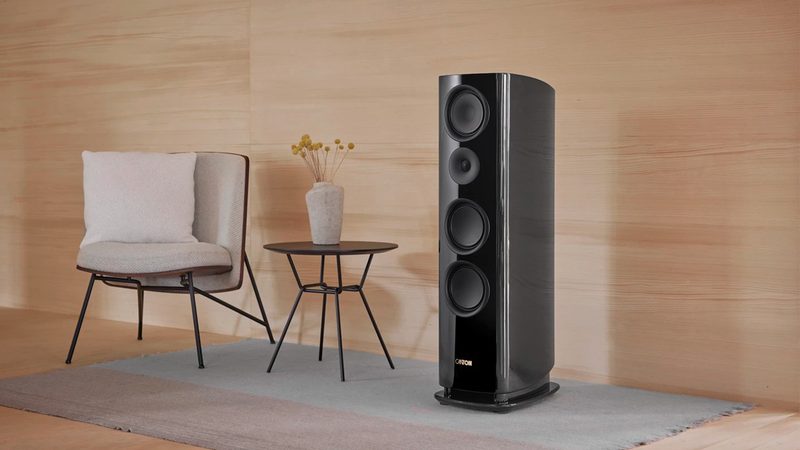
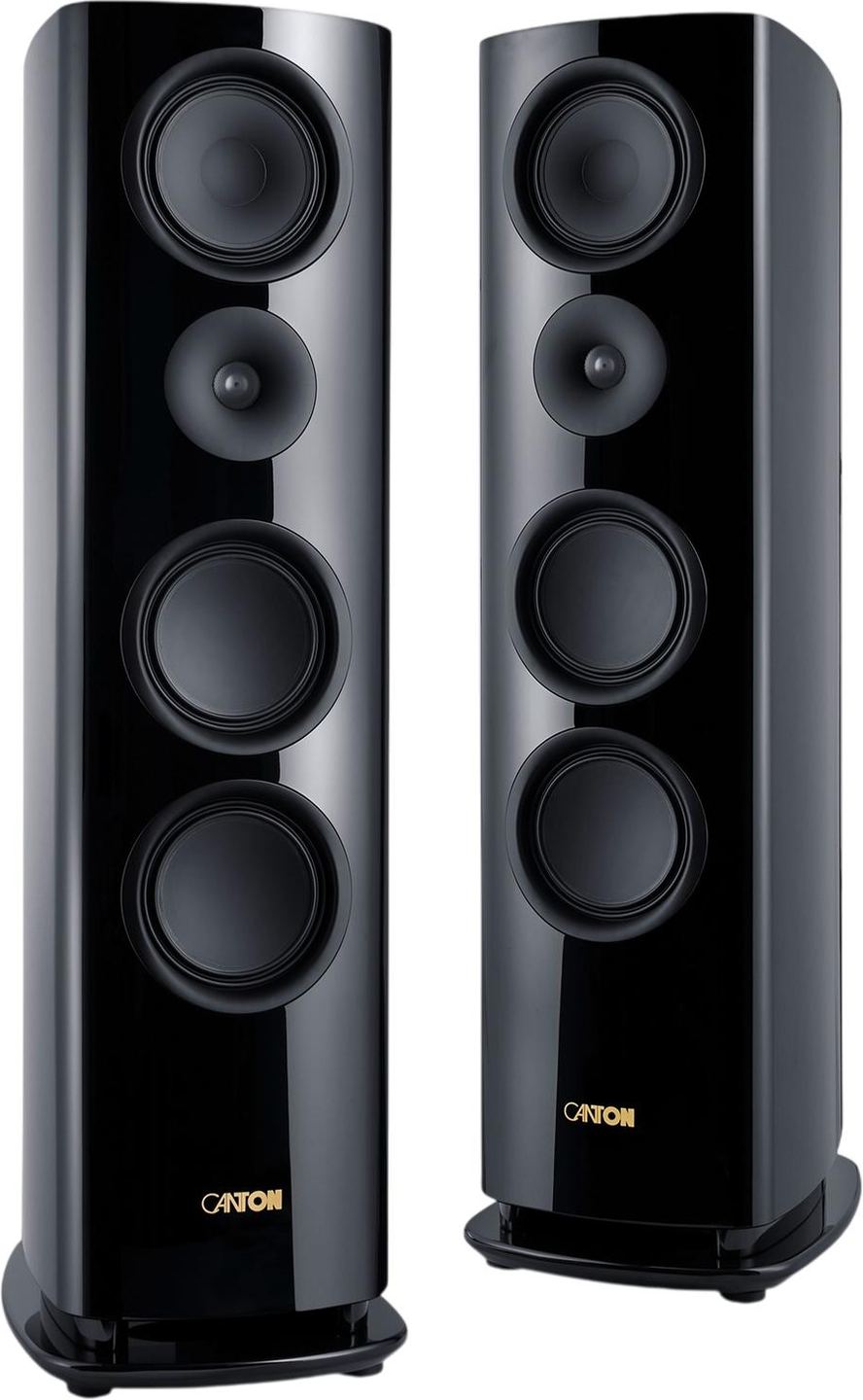
Canton Reference 5 GS black lacquer (pack of 2)


Overview
With the Reference series launched in 2023, Canton laid the foundations for its new premium range manufactured in Germany. The Reference 5 GS takes this 3-way floorstanding model and improves it on several technical points: a diamond-coated DLC tweeter inherited from the Reference Alpha series, a reconfigured crossover with selected Mundorf capacitors, and the addition of the Room Compensation system to fine-tune the sound according to the room’s acoustics. “GS” refers to Günther Seitz, founder of the brand, who oversaw the development of this version.
A DLC tweeter borrowed from the flagship
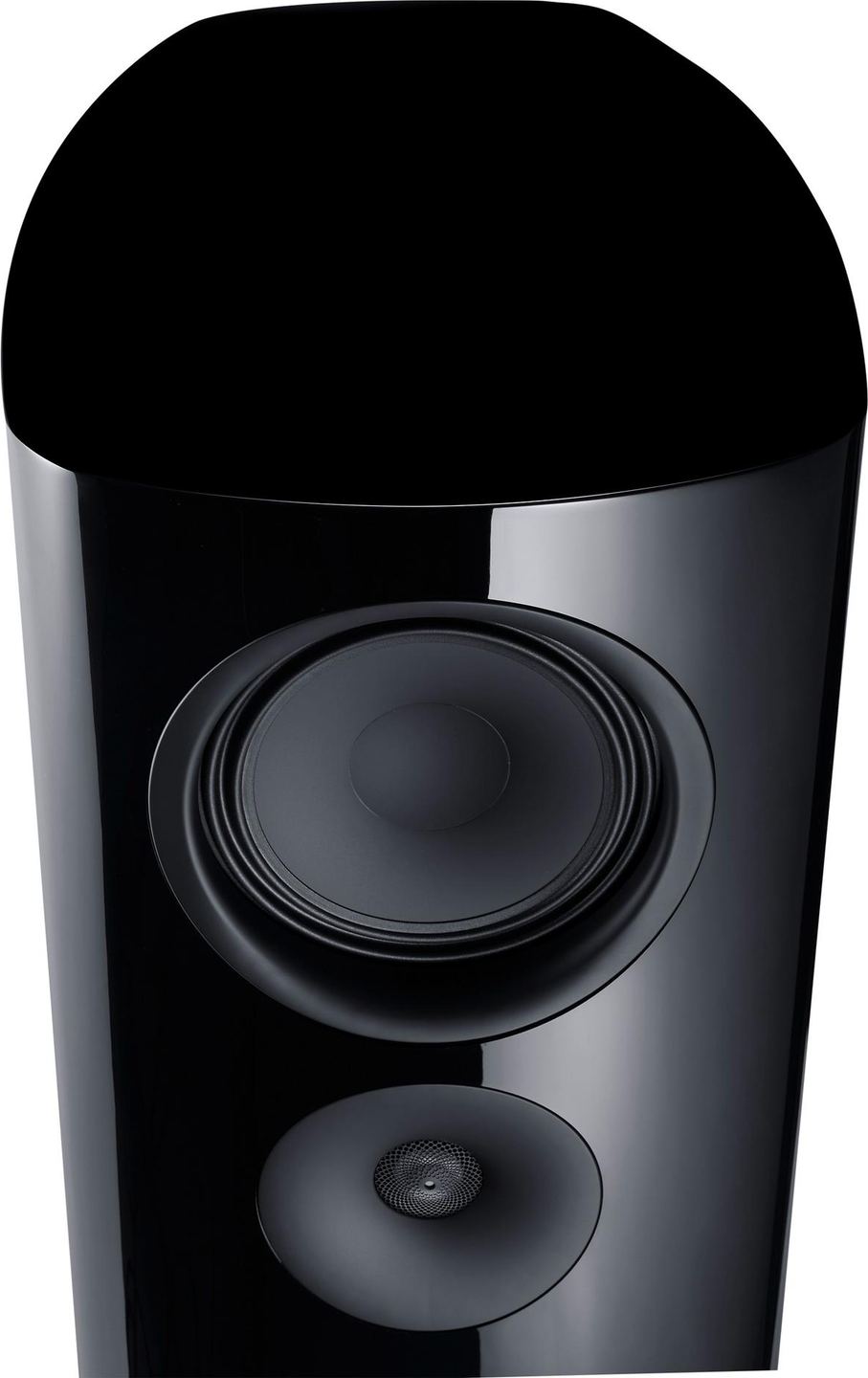
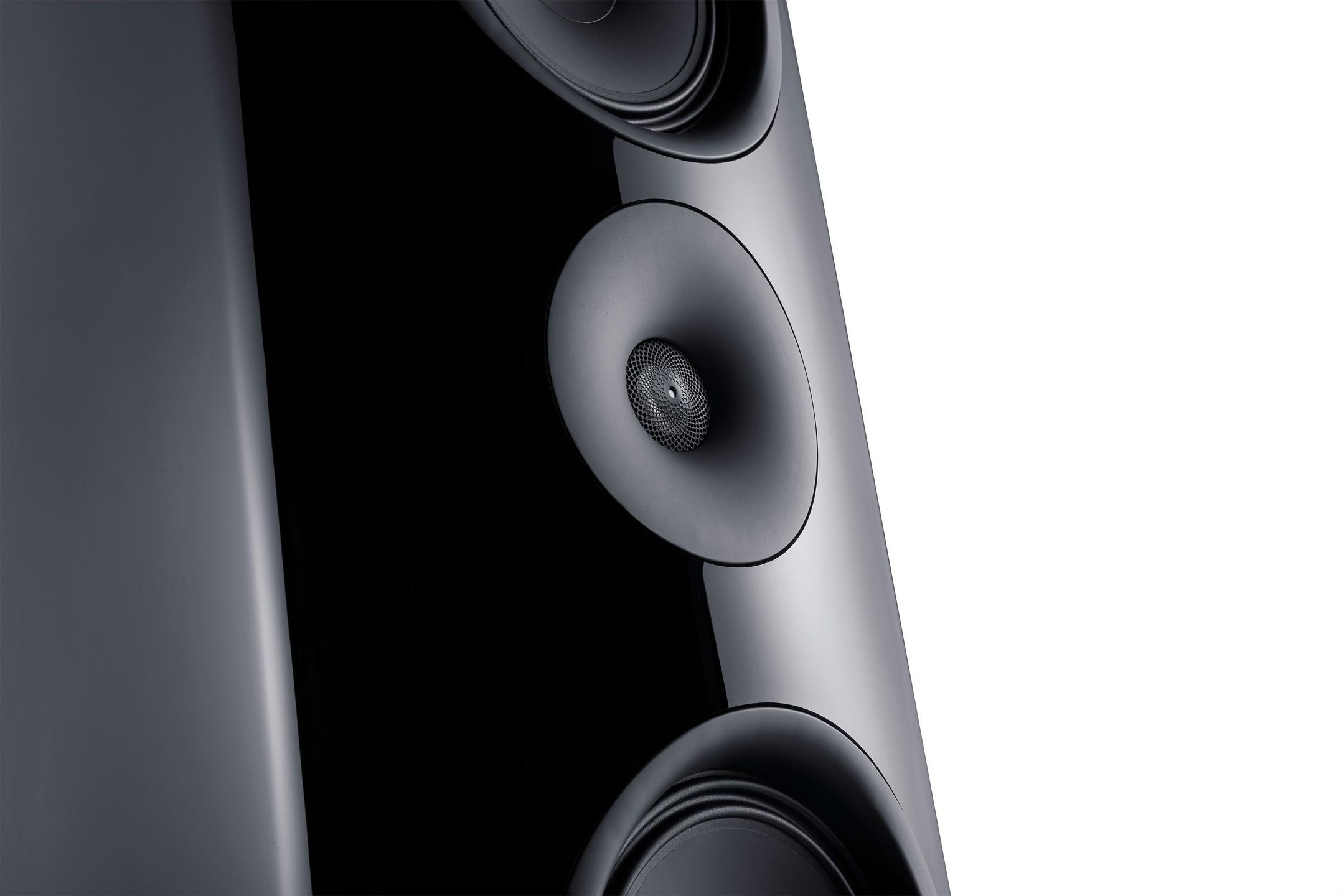
The main evolution compared with the standard Reference 5 lies in the tweeter. Canton here abandons the BC dome in aluminum oxide ceramic in favor of a 25 mm DLC (Diamond-Like Carbon) dome coated with a thin layer of diamond-structured carbon. This material combines low mass and high rigidity: the diaphragm extends very high in frequency (up to a claimed 40 kHz) without breakup modes coloring the signal.
The tweeter is topped with a waveguide that serves a dual purpose. On the one hand, it controls horizontal and vertical dispersion in the transition zone with the midrange, around 3000 Hz. On the other hand, it forms a cushion of air in front of the dome, acting as a mechanical damper that limits unwanted resonances. Canton developed this system for the Reference Alpha series; the Reference 5 GS directly benefits from it.
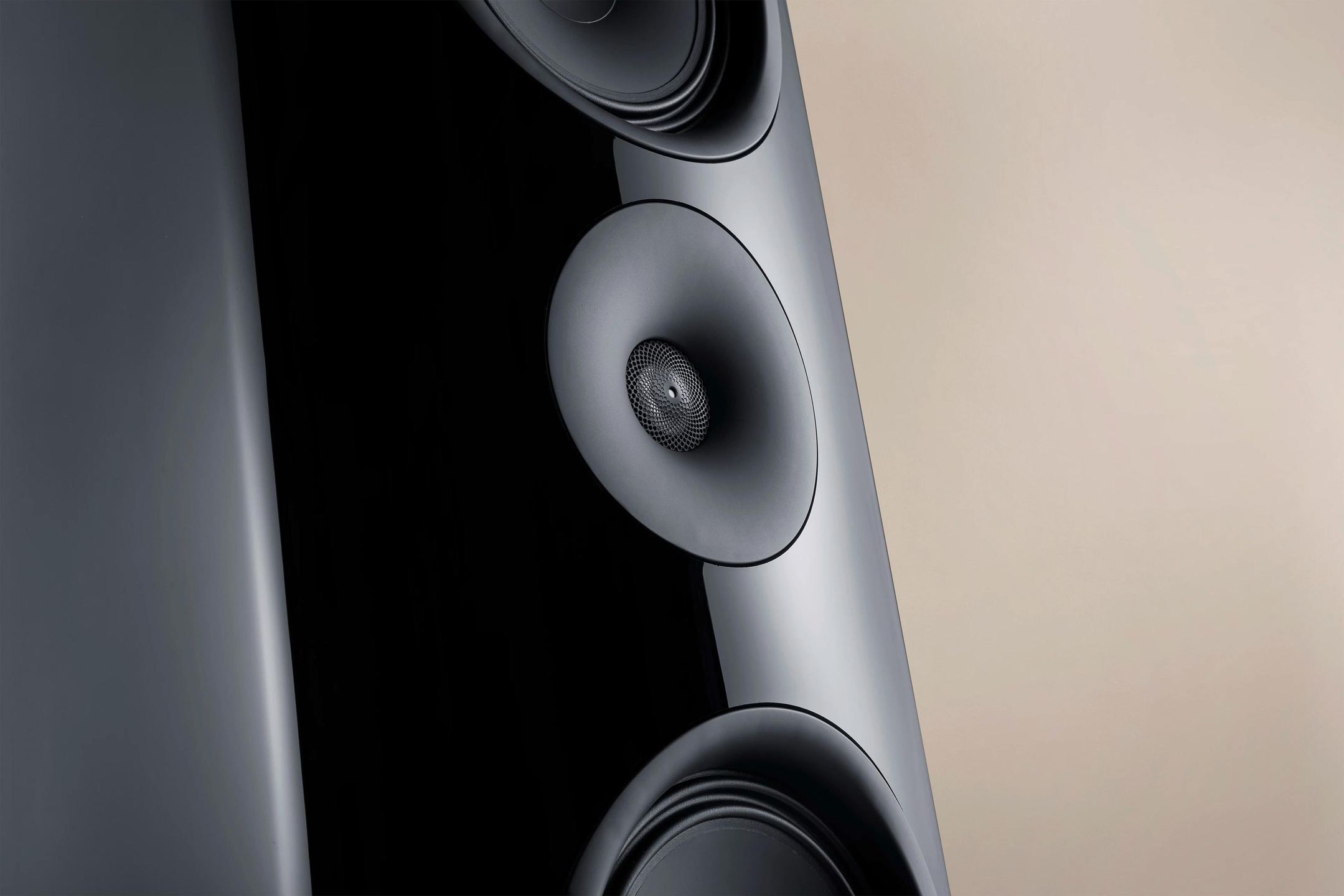
BCT cones: when aluminum becomes ceramic
The two 174 mm woofers and the midrange of the same diameter share a BCT (Black Ceramic Tungsten) cone. The manufacturing process starts with an aluminum cone, about 25% of whose molecular structure is converted into ceramic through electrochemical oxidation. Tungsten particles and other metals are then deposited on this surface. The result combines the light weight of aluminum, the rigidity of ceramic, and the damping properties provided by tungsten.
Canton has used this technology since 2015 and has refined it over successive generations. On the Reference 5 GS, the three-fold concentric “Wave Surround” suspensions ensure symmetrical cone behavior, even at large excursions. The drivers operate in separate chambers within the cabinet, which prevents acoustic interaction between frequency bands.
A redesigned passive crossover with Mundorf components
Canton has completely redesigned the crossover of the Reference 5 GS. The capacitors are MKP models supplied by Mundorf, a German manufacturer whose components are used in many high-end speakers. These polypropylene film capacitors offer low losses and good long-term stability.
The crossover points are set at 170 Hz between bass and midrange, then at 3000 Hz between midrange and tweeter. The midrange therefore covers a wide band, limiting the number of transitions in the range where the ear is most sensitive. The crossover incorporates a system Canton calls “Displacement Control”: a high-pass network calibrated to limit excessive woofer excursion in the infrasonic range, allowing lower frequency extension without overdriving the drivers.
Room Compensation: tailoring the sound to the room
The Reference 5 GS inherits the RC (Room Compensation) system already present on other models in the range. On the rear terminal plate, two sets of jumpers allow separate adjustment of the midrange and tweeter levels, in 1.5 dB steps above or below the neutral setting.
This offers a double benefit. In a very reverberant room, you can slightly reduce the treble to avoid an overly bright sound. Conversely, if the speaker is close to an absorbing wall, a small boost compensates for the loss of energy. This setting is nothing like an equalizer: it acts at the source, within the passive crossover, without adding active components that could degrade the signal.
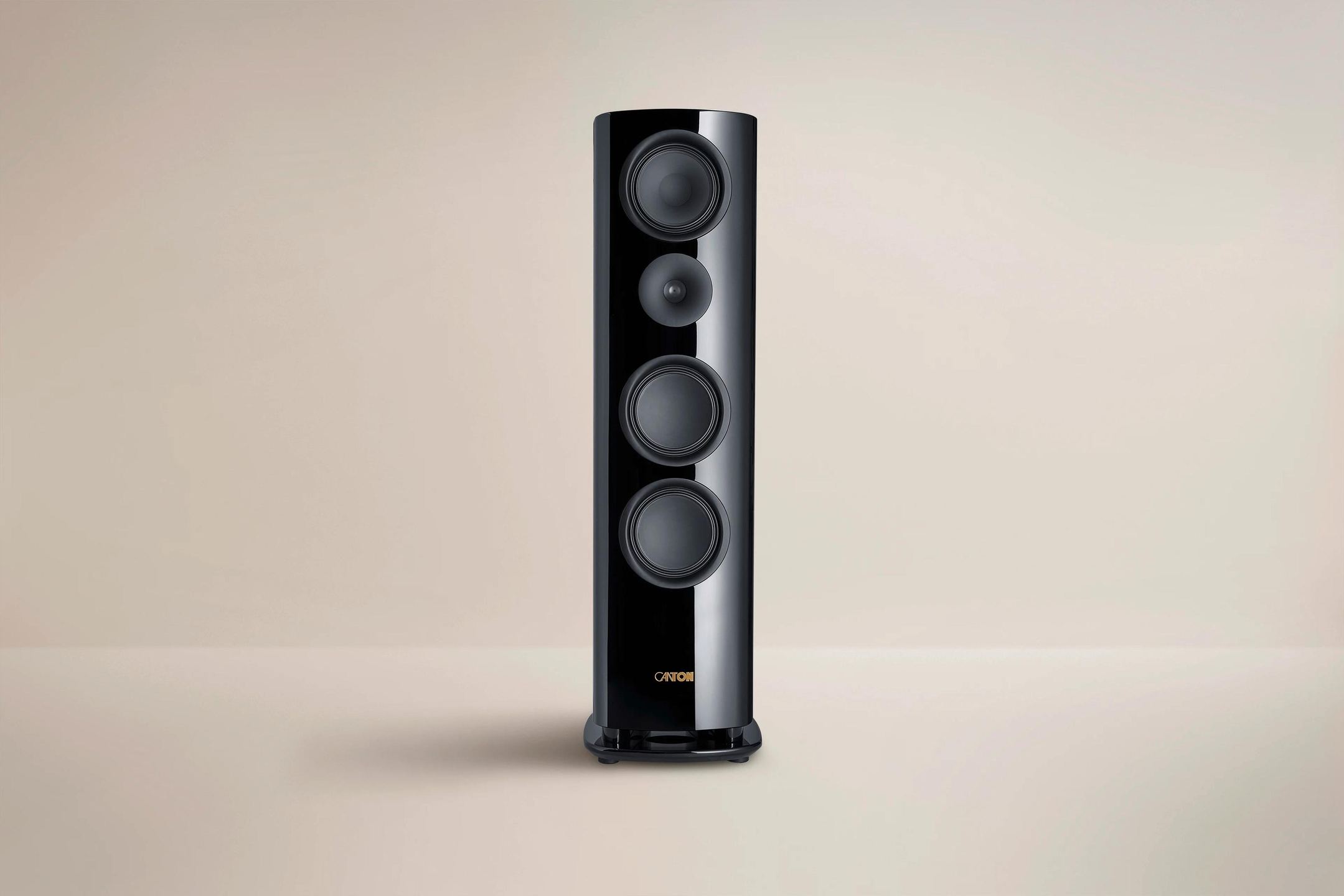
Bass-Guide: bass vented towards the floor
On this floorstander, Canton uses its “Bass-Guide” bass-reflex loading, in which the port exits beneath the speaker rather than at the front or rear. Low-frequency energy is radiated 360° from the base, reducing interaction with the rear wall. In practice, the speaker better tolerates relatively close placement to the back wall without the bass becoming overpowering.
The claimed low-frequency response extends down to 21 Hz, a low figure for a floorstander of this size. The 88 dB sensitivity and nominal 4-ohm impedance call for an amplifier capable of delivering current. A well-designed integrated amplifier from around 100 watts per channel upwards is suitable, but the speaker really reveals its potential with more powerful electronics.
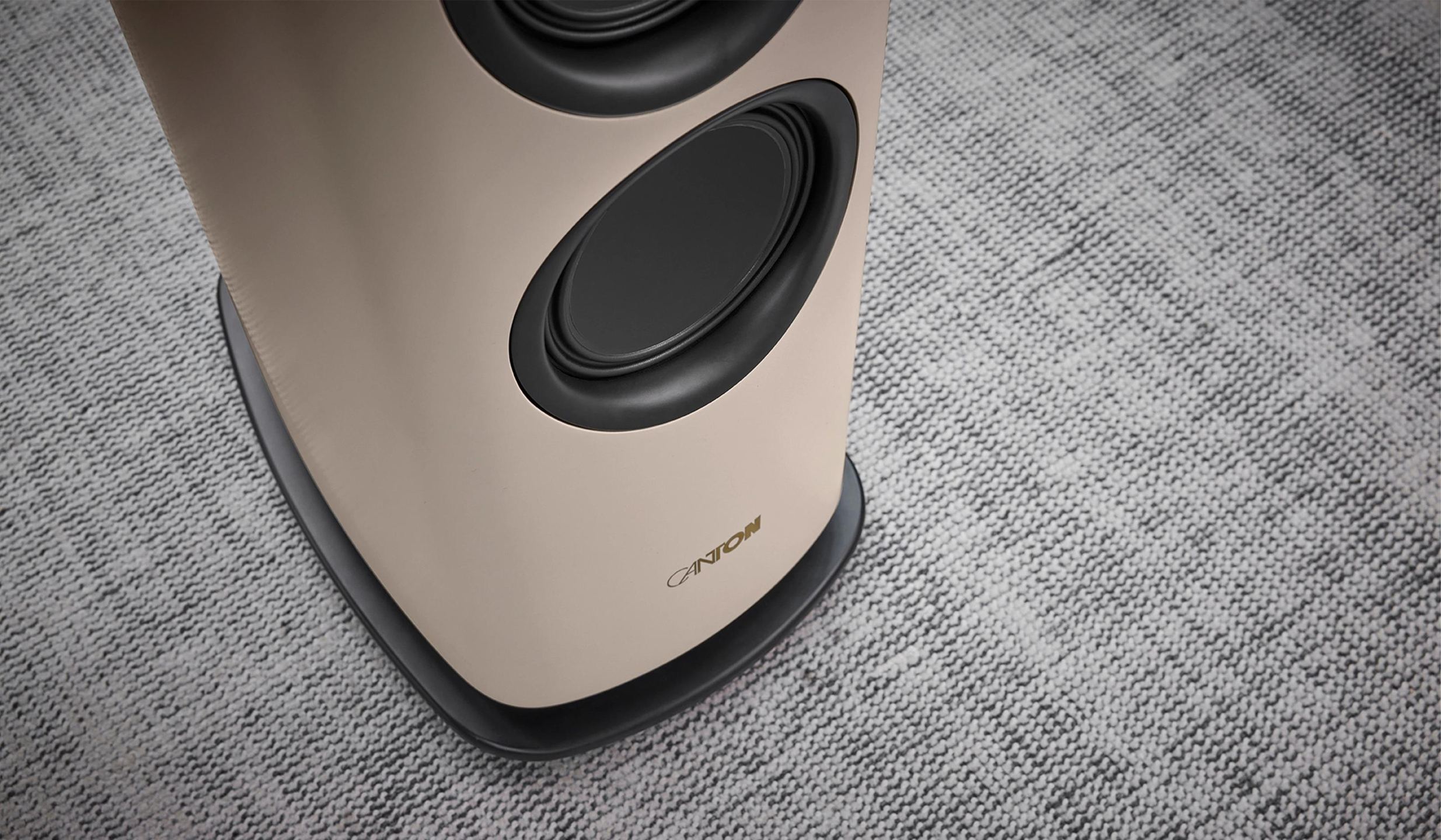
Curved cabinetry and German manufacturing
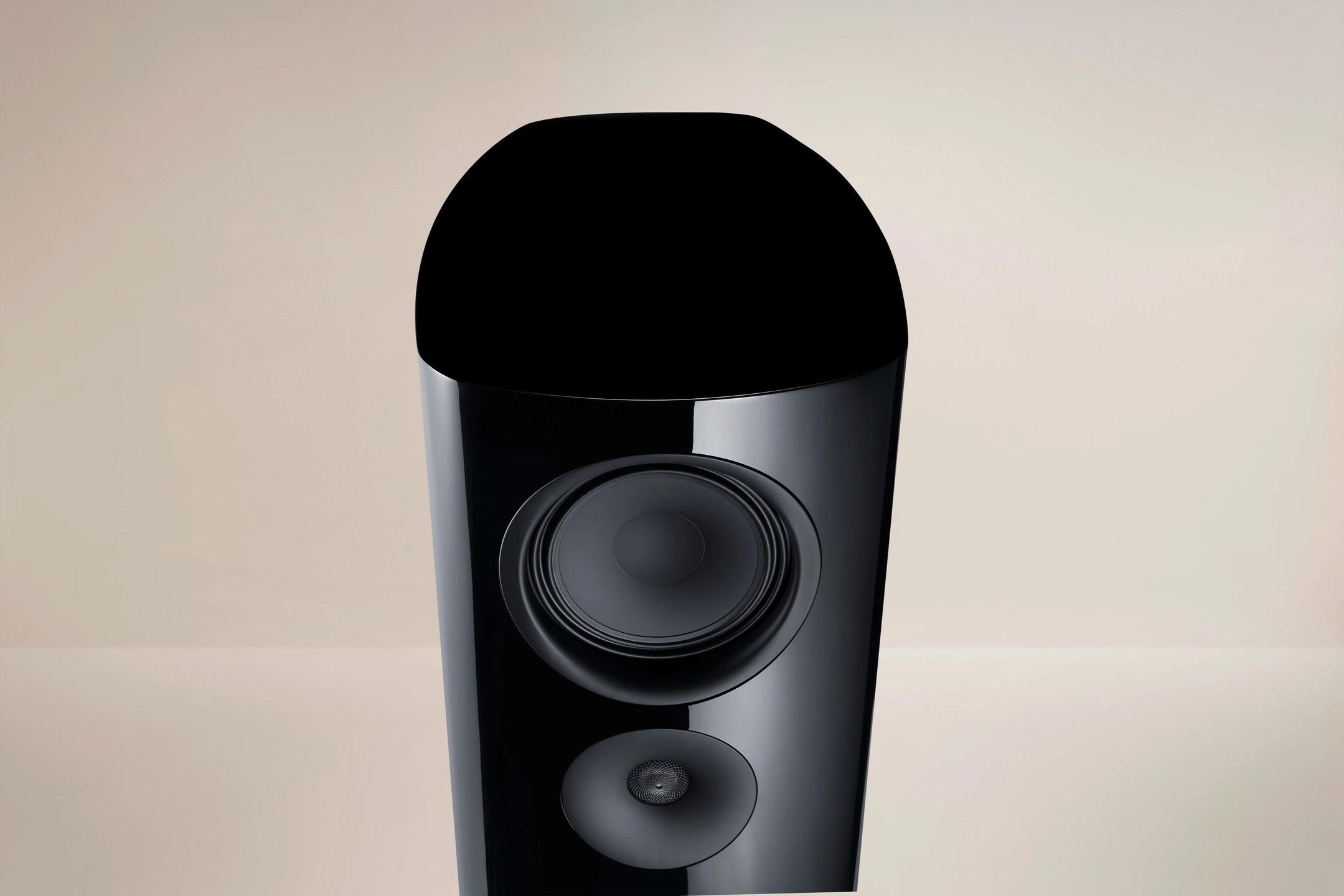
The cabinet of the Reference 5 GS moves away from the traditional rectangular box. The thick front baffle is milled on a 5-axis CNC machine to obtain a curved profile that reduces edge diffraction. The sides and top feature continuous curves with no sharp edges. This complex geometry requires a multilayer construction based on laminated wood panels, reinforced and braced from the inside.
The decoupled metal plinth rests on machined feet with a PVD finish. It ensures the stability of the 36 kg cabinet and contributes to mechanical isolation. The acoustically neutral fabric grille attaches magnetically, with no visible fixings.
Canton manufactures the Reference series in its factory in Weilrod, Hesse. Each speaker undergoes individual quality control: measurement of the frequency response, verification of connections, and visual inspection. A hand-signed certificate accompanies the product, and the manufacturer’s warranty extends to ten years.
WBT terminals and bi-amping
The rear terminal plate houses gold-plated WBT nextgen binding posts, doubled to allow bi-wiring or bi-amping. In the latter case, one amplifier drives the bass while another handles the midrange and treble, each operating in its optimal range.
For conventional single-wiring, Canton supplies gold-plated copper jumpers. These quality links avoid the bottleneck sometimes caused by the low-grade straps often supplied with other speakers.
Operating conditions and placement
The Reference 5 GS is 102 cm high including the base, 30 cm wide, and 46 cm deep. Its weight of 36 kg per speaker remains manageable for one person, although it is better to be two for the initial setup.
The speaker benefits from having some space in front of it: one meter or more from the rear wall gives the best soundstage results. The Bass-Guide system, however, allows for compromises if the room layout requires it. In a living room of 20 to 35 m², the floorstander can perform at its best; beyond that, the Reference 3 or Reference 1 models are more appropriate.
The 4-ohm impedance, which dips even lower at certain parts of the spectrum, requires an amplifier stable with low-impedance loads. Recent quality amplifiers handle this constraint without difficulty, but small entry-level integrated amps may struggle.
Documentation
Technical specifications
Acoustic characteristics
- Type: 3-way floorstanding speaker with bass-reflex loading
- Frequency response: 21 Hz – 40 kHz
- Crossover frequencies: 170 Hz / 3000 Hz
- Nominal impedance: 4 ohms
- Sensitivity: 88 dB (2.83 V / 1 m)
Drivers
- 2 × 174 mm woofers with BCT (Black Ceramic Tungsten) cone
- 1 × 174 mm midrange with BCT cone
- 1 × 25 mm tweeter with DLC (Diamond-Like Carbon) dome and optimized waveguide
Power handling
- Nominal: 200 W
- Musical: 370 W
Technologies and design
- BCT (Black Ceramic Tungsten) cones: ceramic-tungsten cone technology offering an excellent stiffness-to-mass ratio for precise, fast, and distortion-free reproduction
- DLC tweeter with acoustic lens: extremely rigid and lightweight DLC diamond dome transducer, combined with a waveguide that optimizes dispersion and high-frequency accuracy
- Audiophile-grade crossover: high-precision passive crossover using carefully selected Mundorf components to ensure faithful and transparent reproduction
- Optimized multi-layer cabinet: reinforced structure with internal bracing optimized by computer simulation to reduce unwanted resonances and improve tonal neutrality
- Optimized Bass-Guide loading: even distribution of low frequencies, allowing better integration into the room and greater placement flexibility
- Cabinet with profiled curves: rounded shape promoting even dispersion and reducing acoustic diffraction
- Isolating base with CNC-machined PVD feet: decoupled plinth with high-precision feet ensuring stability and mechanical isolation
- Magnetic acoustic grille: acoustically neutral fabric cover with invisible magnetic mounting
Connectivity
- High-end WBT nextgen™ terminal
- Compatible with bi-wiring / bi-amping
- Optimal signal transmission
- Low-loss, high-conductivity connectors
Dimensions and weight
- Dimensions with base
- Width: 30 cm
- Height: 102 cm
- Depth: 46 cm
- Dimensions without base
- Width: 27 cm
- Depth: 43 cm
- Weight: 36 kg
Frequently Asked Questions
What finishes are available for the Reference 5 GS?
Canton offers four options: piano black lacquer, satin white, walnut, and the “Sand” color (matte pinkish beige) introduced with this GS edition. Walnut and piano black provide a classic look, while Sand and satin white blend easily into contemporary interiors.
What is the difference between the Reference 5 and the Reference 5 GS?
Three elements distinguish the GS edition: the diamond-coated DLC tweeter (versus a BC tweeter on the standard version), the reconfigured crossover with Mundorf capacitors, and the presence of the Room Compensation system to adjust midrange and treble. The Sand finish is exclusive to the GS.
Do I need a powerful amplifier to drive this speaker?
The 4-ohm impedance and 88 dB sensitivity call for an amplifier capable of delivering current without sagging. An integrated amplifier providing 80 to 150 W per channel into 4 ohms is suitable for normal home use. To fully exploit the speaker’s dynamics at high volume, power amps or a high-end integrated offer extra control.
Does the Room Compensation system replace acoustic treatment of the room?
No. The ±1.5 dB adjustment on midrange and treble corrects minor imbalances related to placement or local acoustics. It does not compensate for excessive reverberation, strong room modes, or unsuitable furnishings. Basic acoustic treatment (rugs, curtains, absorptive panels) is still recommended in many setups.
- Eco-contribution included in the sale price.
- Manufacturer reference: 04620
- GTIN / EAN: 4010243046204