Skip to content
HomeCineSolutionsFrance
EN
Quote
Contact
Account
Basket
€999
Available on order
Fast delivery: on 5 December 2026
Notify me when it's back in stock
FreeValue €59
Taga Harmony ETPC-TS 1.2 m black mains power cable, Schuko plug to IEC C13 connector, thick sheath
Taga Harmony ETPC-TS 1.2m
Protect your product
+€99
Extended warranty to 5 years +
Accidental damage cover for 3 years

Echo MKII Vibe Feliks Audio: OTL tube headphone amplifier

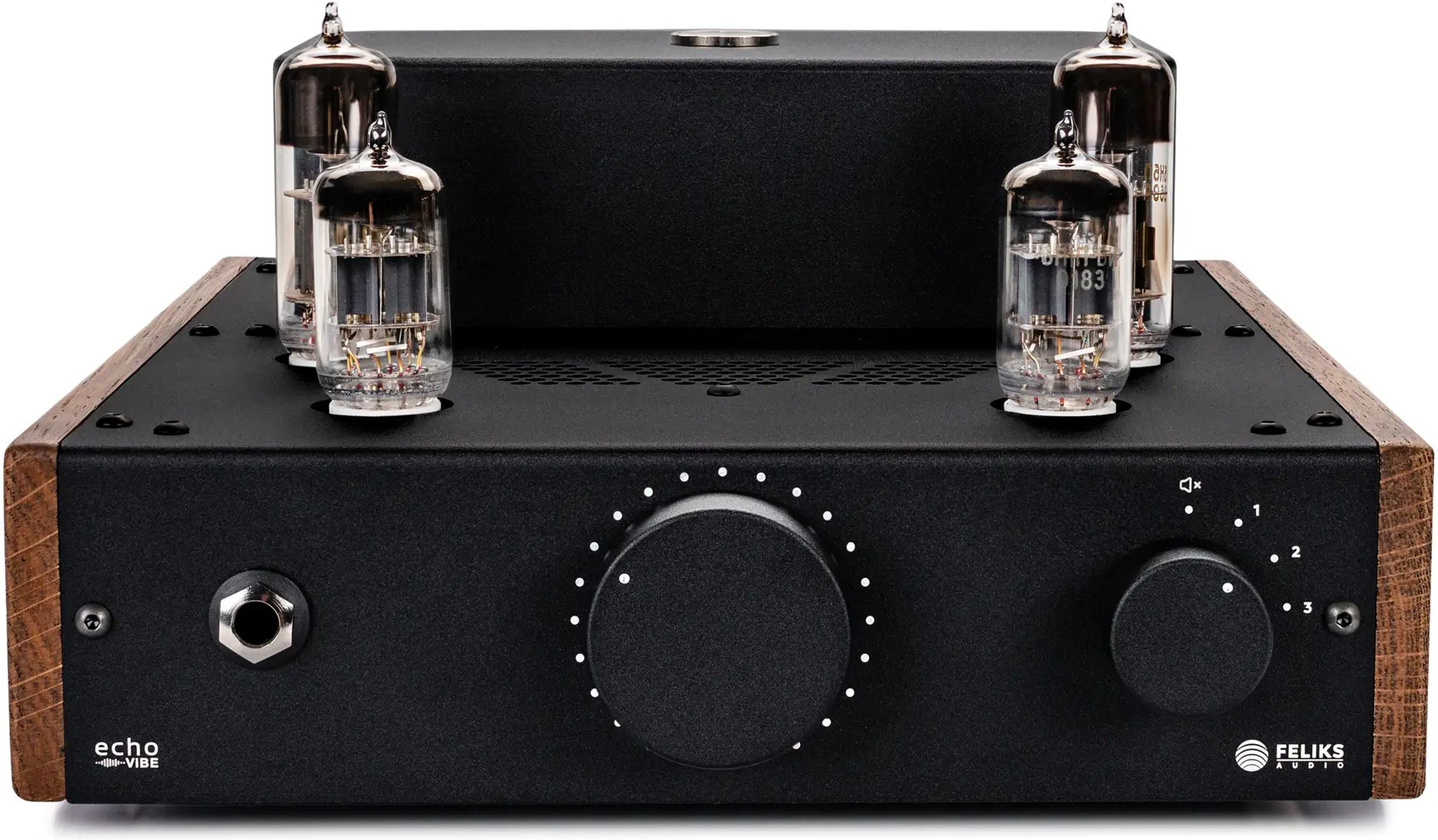
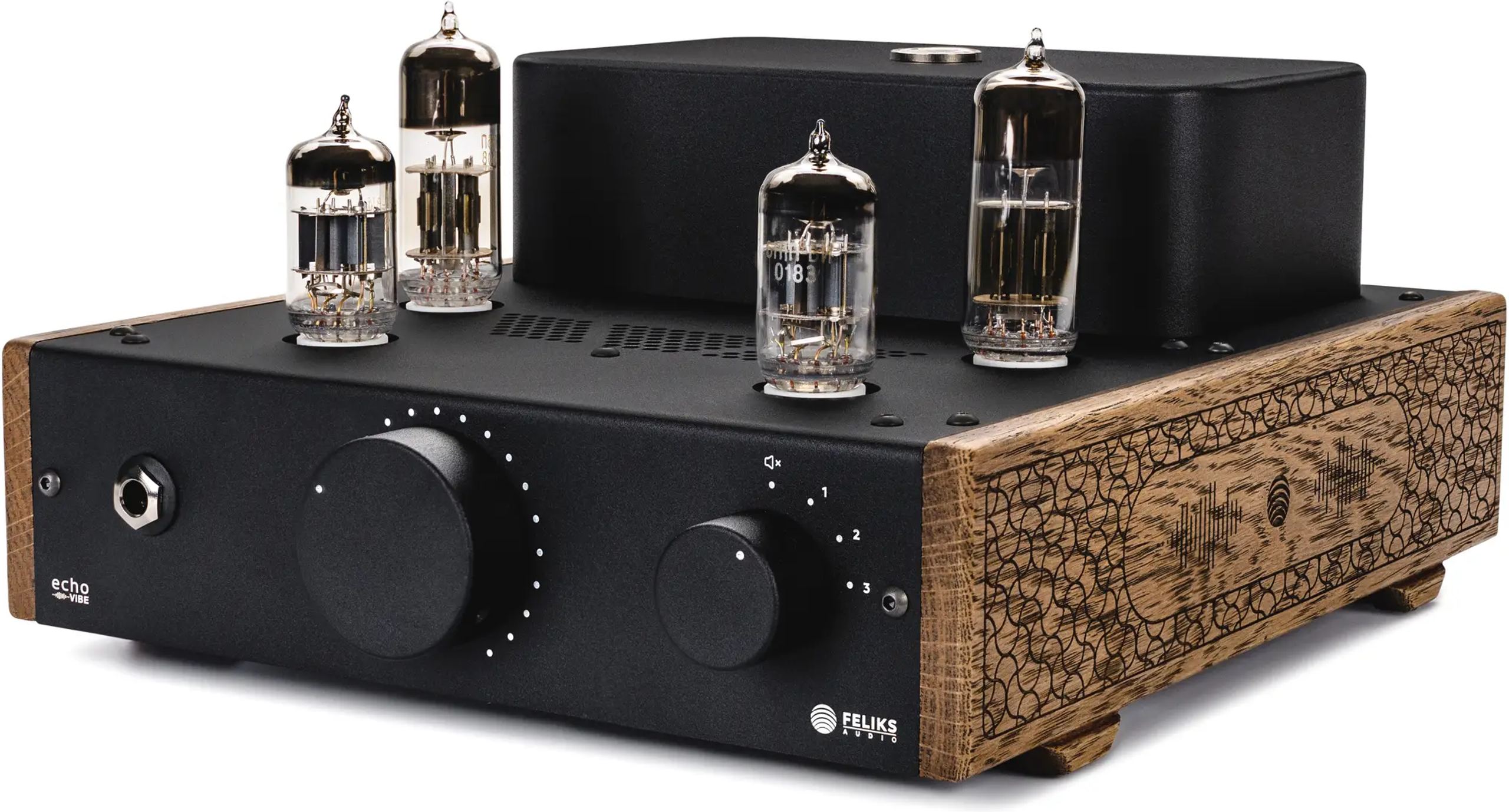
Fresh from the Polish workshop in Lubliniec, this Vibe version takes the Echo MKII’s OTL design and reworks three specific points: a new transformer cover with improved shielding against interference, revised capacitors for greater precision in the upper part of the spectrum, and CNC-engraved solid oak side panels. A targeted update to a tube amplifier already appreciated for its warm rendering with high-impedance headphones.

Differences from the Echo MKII

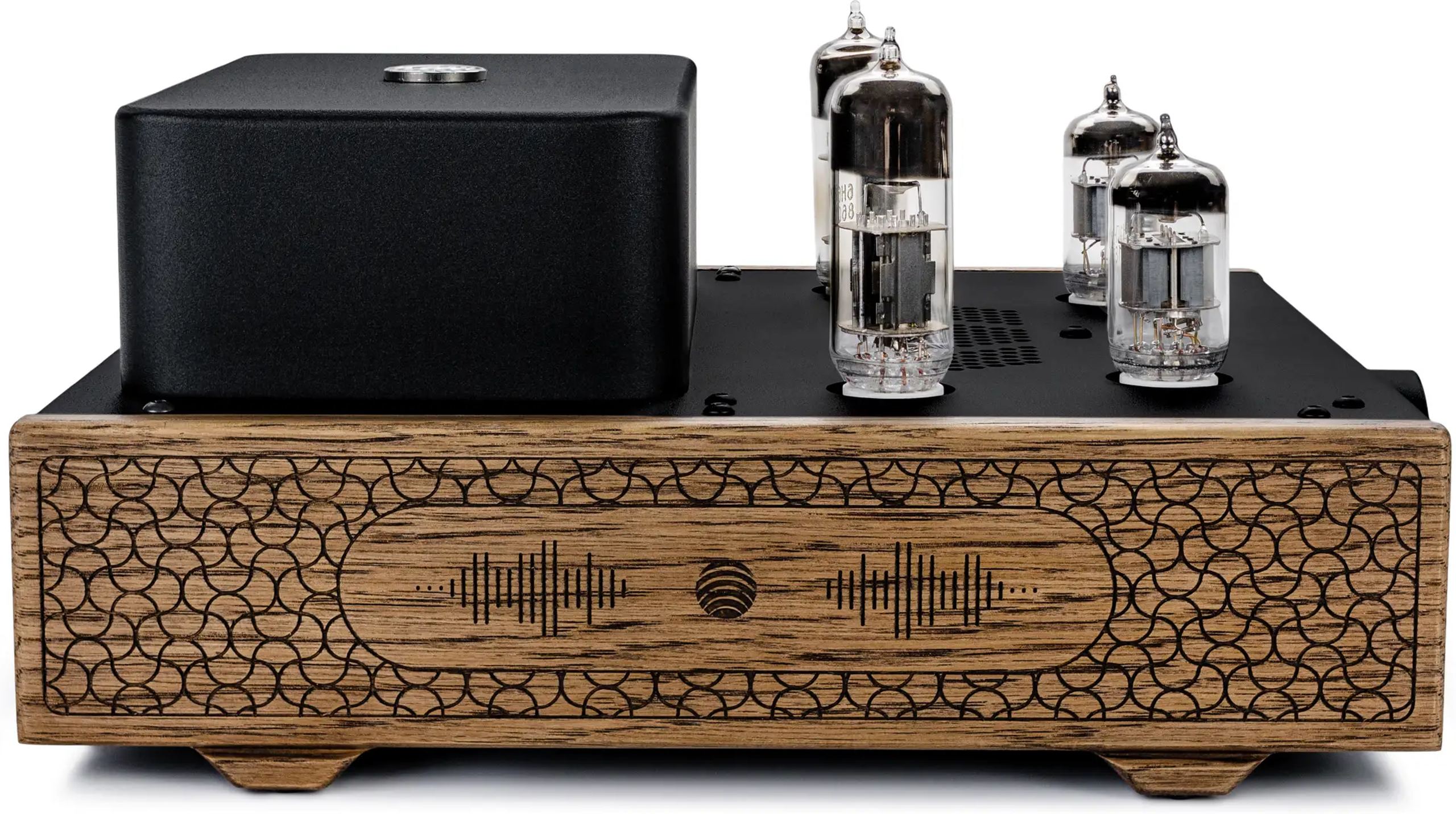
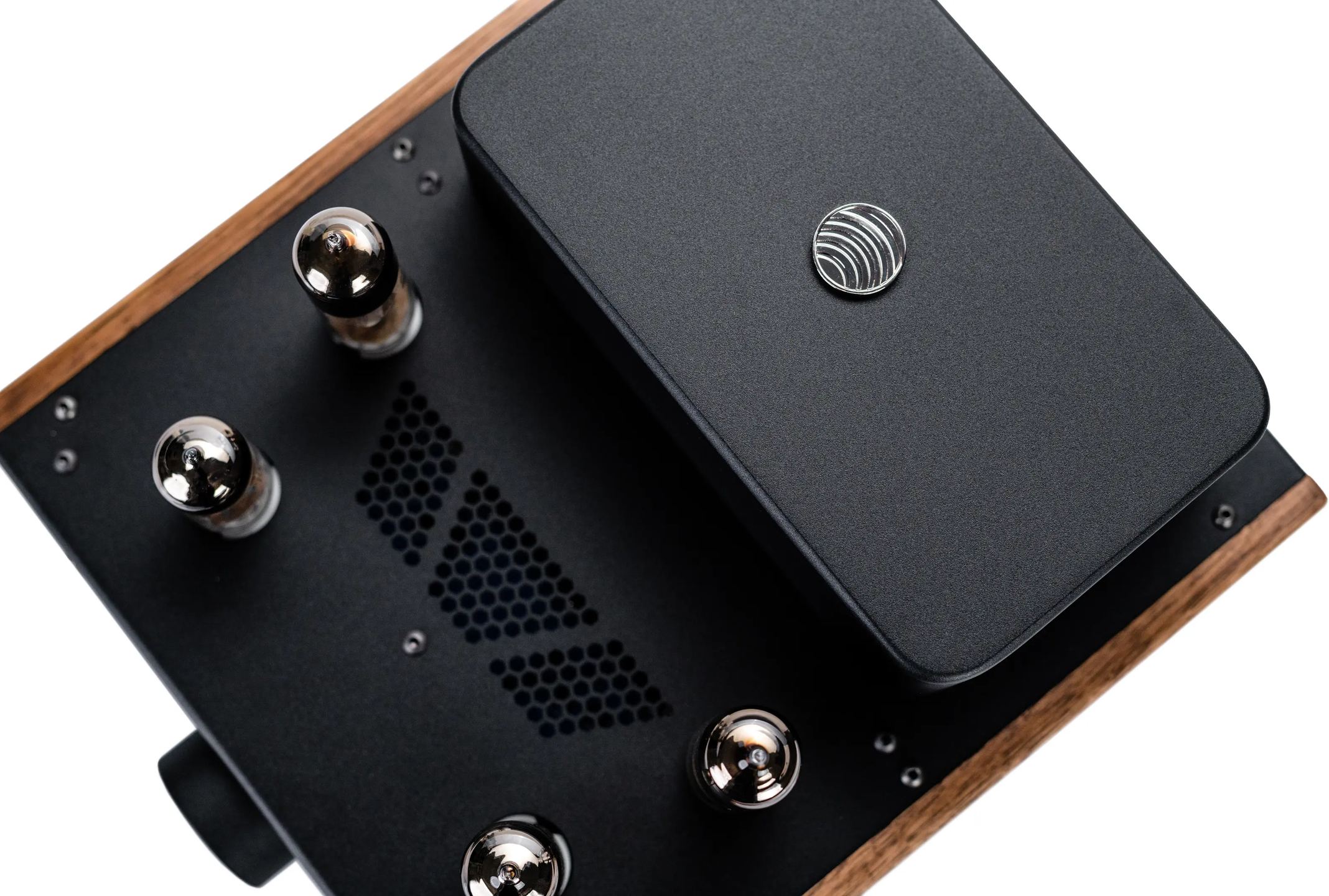
The relationship with the previous model is openly claimed: same OTL topology (Output Transformerless, without an output transformer), same tube set in a 2 × 6N6P configuration for power and 2 × 6N1P for input, same 380 mW output power. The developments focus on three areas. The rectangular cover over the toroidal transformer provides better electromagnetic shielding, which lowers background noise. The output capacitors have been replaced with higher-quality components, a choice aimed at better treble definition and more dynamics. The solid oak side panels feature CNC engraving and incorporate matching feet, whereas the Echo MKII made do with more understated cheeks.

OTL topology and tube stage

The Output Transformerless principle consists of removing the usual output transformer from tube amplifiers, driving the headphones directly from the power tubes. This approach shortens the signal path but imposes a constraint: it works best with high-impedance headphones, with the target optimum ranging from 80 to 600 ohms. The pair of 6N6P tubes provides the voltage gain, relayed by the 6N1P tubes that deliver the final 20 dB of amplification. The tubes supplied as standard are NOS (New Old Stock), mounted on ceramic sockets with gold-plated pins. The manufacturer lists several equivalents for tube rolling: E88CC, 6N23P, 6DJ8 or 6922 on the input stage, 6N6Pi on the power stage. Bias is automatic, and no manual adjustment is required after changing tubes.

Steel chassis and solid oak side panels

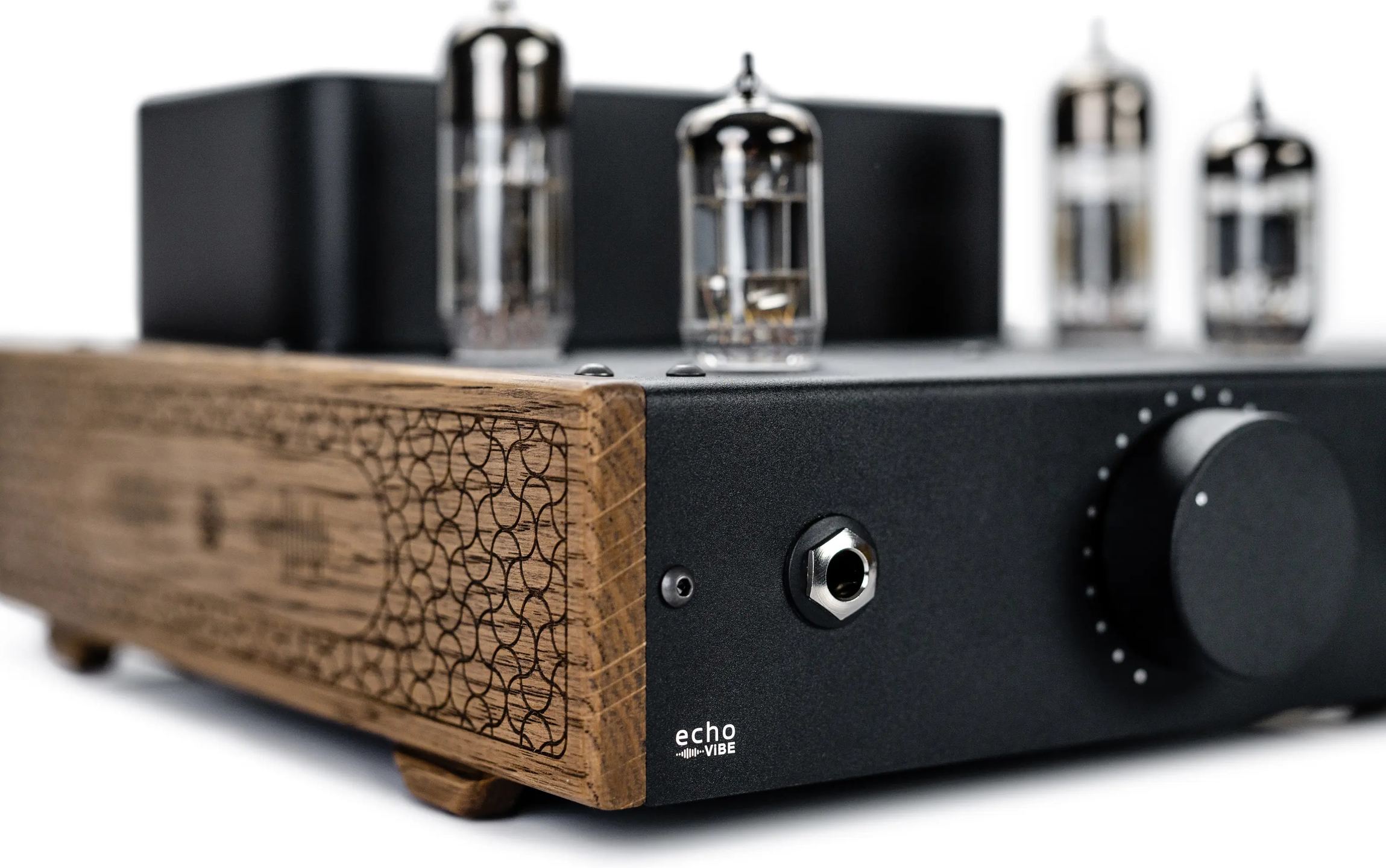
The structure remains a sheet steel chassis, mounted on four rubber feet that isolate the device from unwanted vibrations. The transformer cover, now rectangular and more enveloping, changes the unit’s silhouette and improves control of electromagnetic radiation. The solid oak side panels, CNC-engraved, extend the vintage aesthetic of the Echo range while incorporating angled supports that slightly raise the front panel. The ALPS RK27 volume potentiometer replaces the Blue Velvet used on the Echo Classic, with revised travel for finer level control. Manufacturing remains entirely manual, carried out in Lubliniec, Poland, and the manufacturer’s warranty is extended to three years on the device (six months on the original tubes).

Front panel, connectivity, and automation

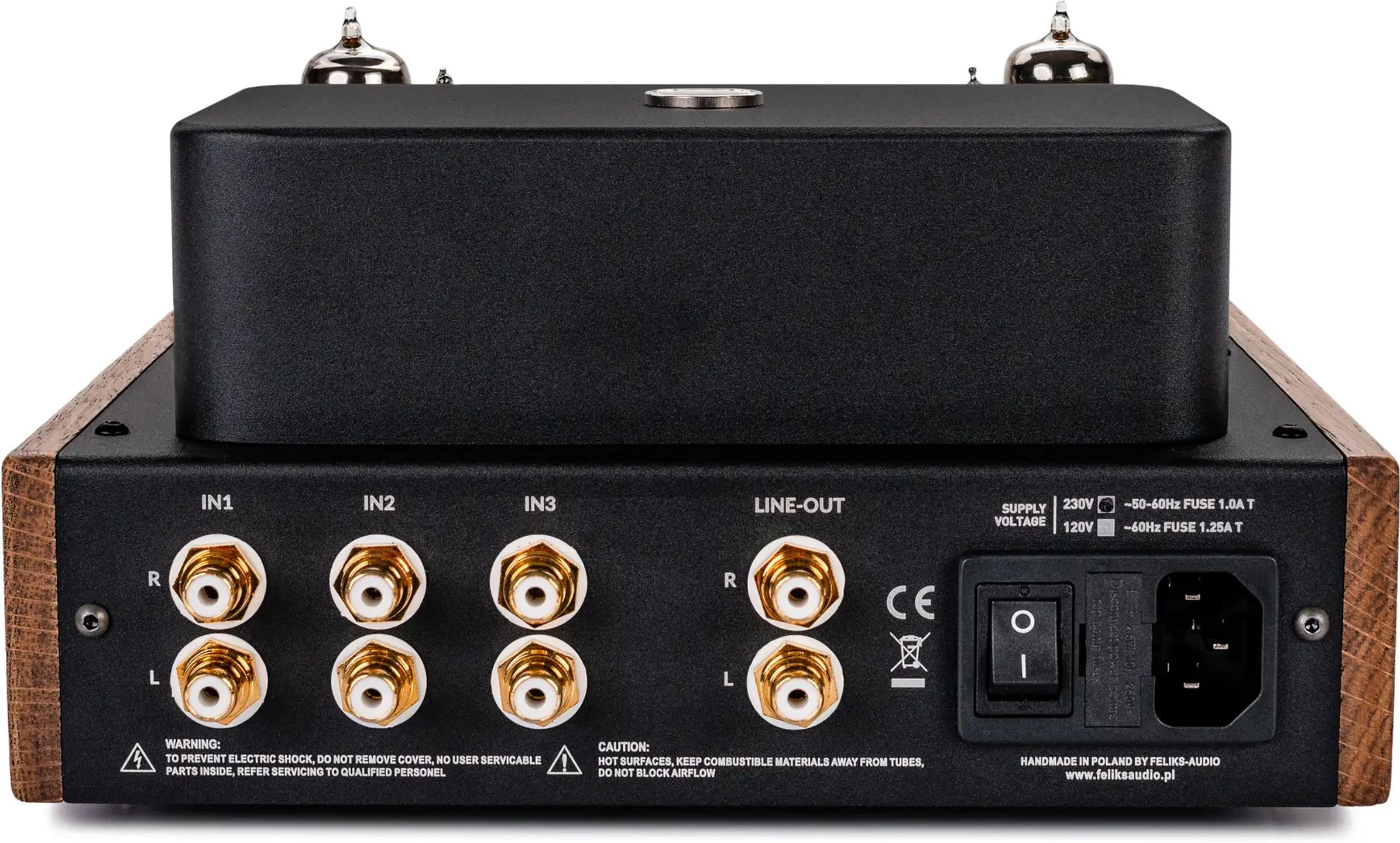
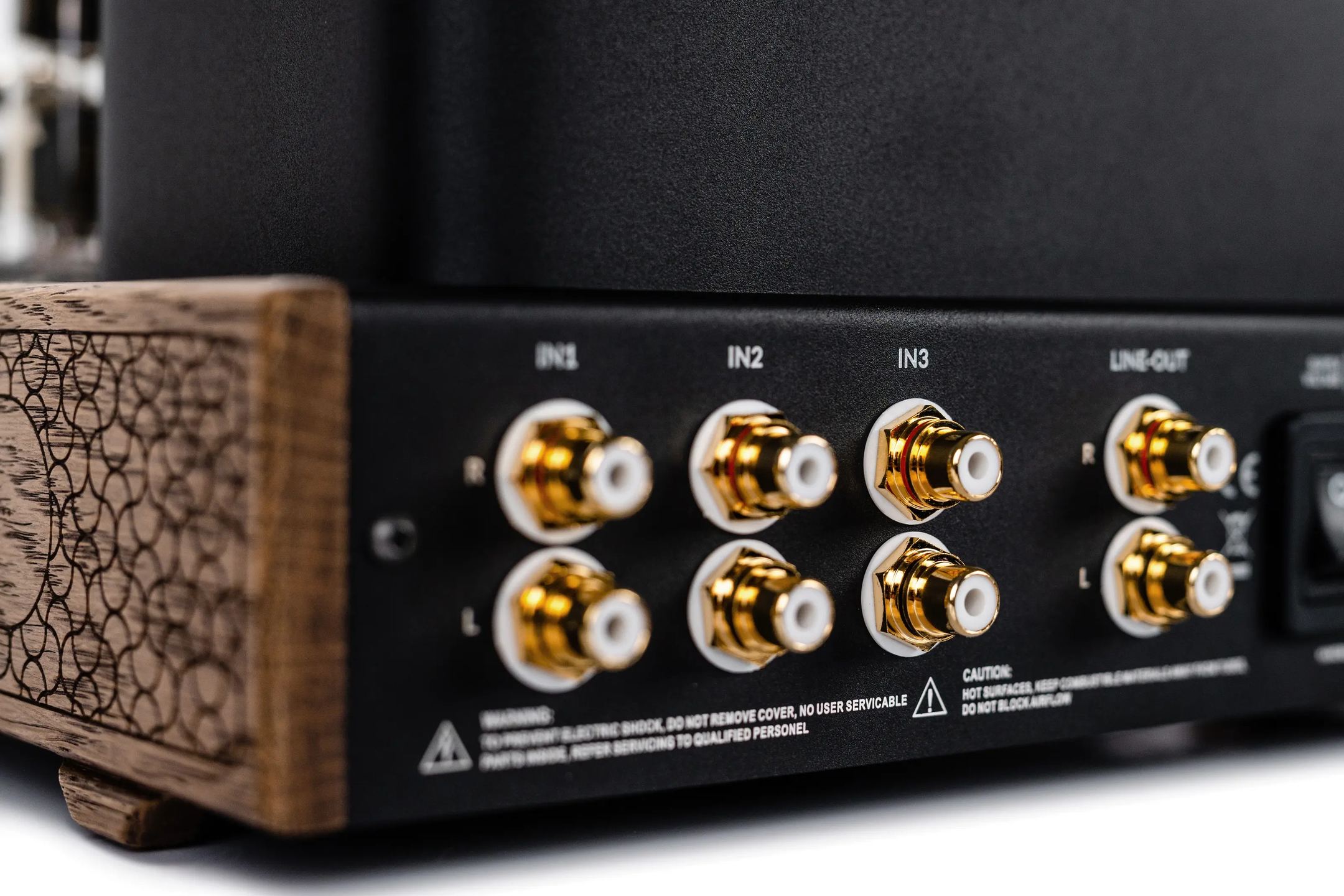
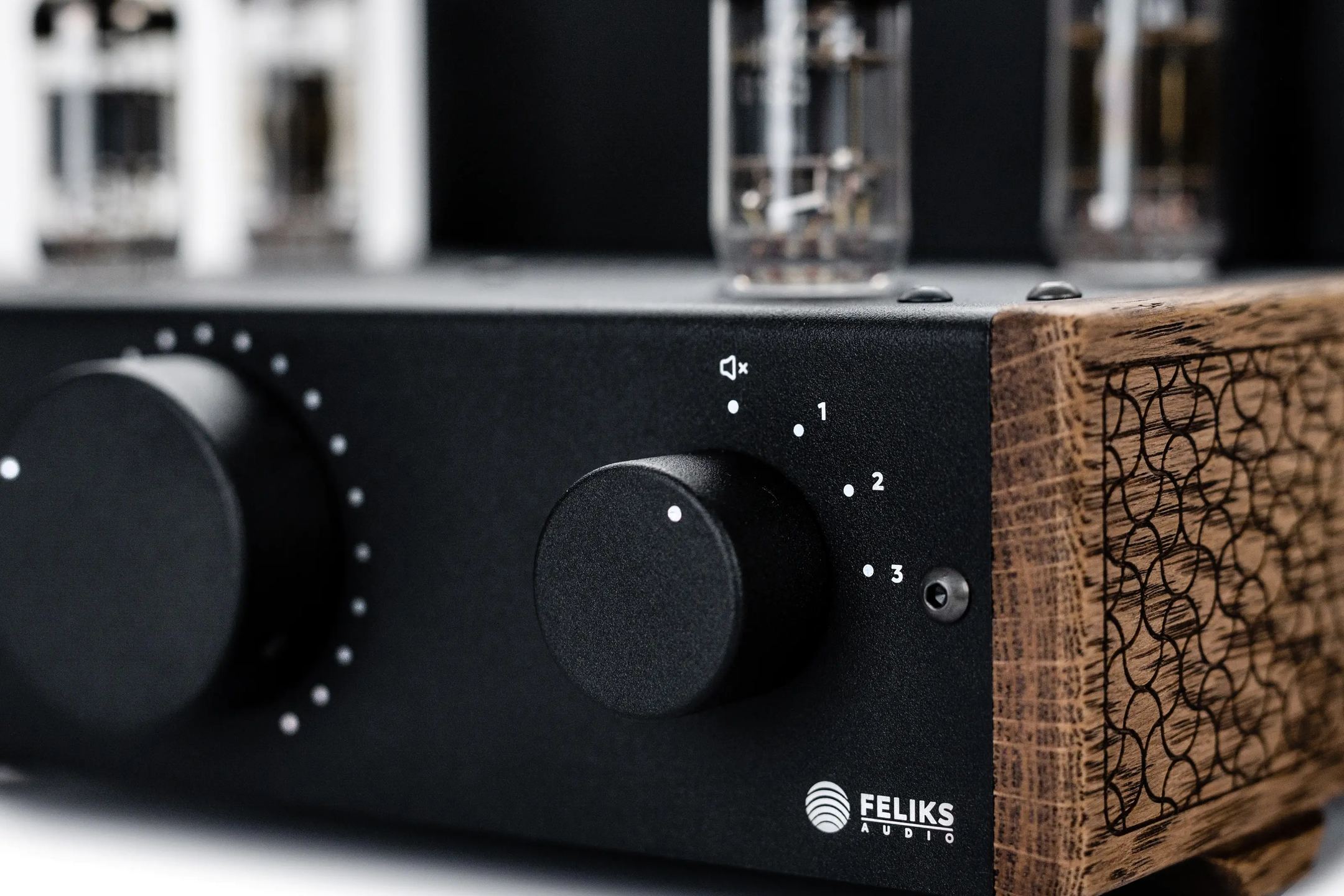
The front panel groups together a 6.35 mm jack socket for headphones, a three-position rotary source selector with Mute function, and a large central volume potentiometer. At the rear, three stereo RCA inputs simultaneously accommodate a DAC, a turntable (via an external phono preamp), and a third line-level source. An RCA pre-out completes the connectivity. Protection circuits on the input and output eliminate unwanted noise during power-up and shutdown. A “preamp safe” mode secures use as a preamplifier. The manufacturer recommends a warm-up time of fifteen minutes before listening, and 30 cm of clearance above the unit for tube ventilation.

Supported headphones

The target optimum covers the 80 to 600 ohm range, which includes most high-impedance dynamic headphones on the market: Sennheiser HD600, HD650, HD660S and HD800S, the Beyerdynamic range in 250 or 600 ohms, ZMF Auteur, Auteur Classic or Atrium models. Low-impedance orthodynamic headphones such as Audeze LCDs or certain Hifiman planars can be connected but fall outside the operating range of an OTL topology, and less sensitive models may lack dynamic headroom. For anyone hesitating between several headphones, the Echo MKII Vibe paired with 300-ohm headphones (Sennheiser HD600 or HD650, for example) remains the combination most faithful to the spirit of the product.

Built-in preamplifier function

Aside from headphone amplification, the RCA line output allows the Echo MKII Vibe to be used as a tube preamplifier in a two-channel system. The pre-out signal is taken just after the tube input stage, which gives the line output the sonic character of the 6N1P tubes. The unit can therefore drive a transistor or tube power amplifier, or a pair of active speakers, while retaining the three inputs switchable from the front panel. This flexibility covers hi-fi use in addition to headphones, without requiring a complex hardware setup.

Technical Specifications

Amplification

  • Type: OTL (Output Transformerless) tube headphone amplifier with preamplifier output
  • Power tubes: 2 × 6N6P (original NOS)
  • Driver tubes: 2 × 6N1P (original NOS)
  • Compatible alternative tubes (driver): E88CC, 6N23P, 6DJ8, 6922
  • Compatible alternative tubes (power): 6N6Pi
  • Tube sockets: ceramic, gold-plated pins
  • Biasing: automatic (auto-bias)
  • Power supply: stabilized toroidal transformer, electronic hum suppression, delay of anode voltages

Performance

  • Frequency response: 15 Hz to 45 kHz (±3 dB)
  • Output power: 380 mW
  • Gain: 20 dB
  • Total harmonic distortion (THD): 0.4% (300 Ω, 20 mW)
  • Input impedance: 100 kΩ
  • Recommended headphone impedance: 80 to 600 Ω

Connectivity

  • Headphone output: 1 × 6.35 mm jack (front panel)
  • Line inputs: 3 × stereo RCA (switchable from the front panel)
  • Line output: 1 × stereo RCA (preamplifier mode)
  • Functions: rotary source selector, Mute function, preamp safe mode, input and output protections

Settings and automation

  • Volume potentiometer: ALPS RK27
  • Start-up: no manual bias adjustment required after tube replacement
  • Daily warm-up time: approximately 15 minutes
  • Burn-in period: 30 to 50 hours to achieve the intended sound signature

Mains power supply

  • Voltage: 230 V (50/60 Hz)
  • Fuse: 1.25 A
  • Power cable: included

Construction and finish

  • Chassis: steel sheet, anti-vibration rubber feet
  • Side panels: solid oak, CNC engraving, matching wooden feet
  • Transformer cover: rectangular, reinforced electromagnetic shielding
  • Origin: handcrafted in Lubliniec, Poland

Dimensions and weight

  • Dimensions (without tubes): 265 × 220 × 115 mm (W × D × H)
  • Weight: 3.5 kg

Conditions of use

  • Operating ambient temperature: 15 to 30 °C
  • Maximum continuous use time: 8 hours, followed by 1 hour of rest
  • Waiting time after switching off before tube replacement: minimum 15 minutes

Box contents

  • Echo MKII Vibe amplifier
  • 1 pair of 6N1P NOS driver tubes
  • 1 pair of 6N6P NOS power tubes
  • Power cable
  • User manual
  • Warranty card

Warranty

  • Device: 3 years (Feliks Audio extended warranty)
  • Original tubes: 6 months

Frequently asked questions

Which headphones work well with an OTL amplifier?

High-impedance dynamic headphones are the best match for OTL topology. Feliks Audio cites an optimal range of 80 to 600 ohms, covering the Sennheiser HD600, HD650, HD800S, Beyerdynamic models in 250 or 600 ohms, or 300-ohm ZMF models. Low-impedance orthodynamic headphones remain compatible but will not get the best from a transformerless output stage, especially if their sensitivity is low.

Which tubes can be installed as replacements?

The Echo MKII Vibe accepts several equivalents for tube rolling. On the input stage, the original 6N1P tubes can give way to E88CC, 6N23P, 6DJ8 or 6922, which share the same pinout and offer slightly different sonic signatures. On the power stage, the 6N6Pi directly replaces the 6N6P. Since bias is automatic, no adjustment is needed after replacement. Soviet or European NOS tubes are among the most sought-after references for this type of amplification.

Is a burn-in period needed before appreciating the sonic signature?

Yes. The manufacturer indicates that optimal sound quality is reached after 30 to 50 hours of use, during which the components, especially the capacitors and tubes, stabilize. This burn-in period takes place under normal use, with no special precautions. On a daily basis, a warm-up time of fifteen minutes after power-on is enough to reach the tubes’ thermal balance and recover the intended signature.

Is tube bias adjustment manual?

No. The Echo MKII Vibe uses an automatic bias circuit. Once the tubes are installed or replaced, the amplifier sets its own operating point, with no internal potentiometer to handle and no multimeter to connect. This is a practical point for trying several pairs of tubes without advanced technical expertise. The warm-up time still needs to be observed, around fifteen minutes, to reach the tubes’ thermal stability and stable sonic rendering.

Can it be used as a preamplifier in a hi-fi system?

Yes. The RCA line output takes the signal after the tube input stage, making it a full-fledged preamplifier output with gentle coloration. It can feed a transistor or tube power amplifier, a mono block, or active speakers. The front-panel source selector remains active in this mode, and a dedicated circuit avoids startup noise. The Echo MKII Vibe therefore takes on a dual role, headphone amplifier and preamp, with no manual switching required.

How many sources can be connected at the same time?

Three stereo sources can remain connected simultaneously to the RCA inputs located at the rear. The rotary selector on the front panel switches between them without unplugging anything. This setup accommodates, for example, a DAC, a turntable (via an external phono preamp), and a network or CD player connected to the unit. Only one source is played at a time, but switching from one to another is done without interrupting the power supply, and the Mute function cuts the output to avoid any audible popping.

User reviews

Jean-Louis

I had to give up my main audiophile system, the fruit of a passion spanning more than fifty years, and turn to headphone listening. As I have always been a tube lover, I naturally looked for a headphone amplifier based on this technology and chose this one.

It is hand-built, rather attractive, and well designed, which is no surprise from a manufacturer focused on the high end that knows its craft particularly well.

This type of OTL amplifier will perform at its best with dynamic headphones with a fairly high impedance, ideally between 300 and 600 ohms, although it can accommodate models starting at 60 ohms and even lower, as well as some easy-to-drive planar headphones; this is how it will deliver the finest sound it is truly capable of.

I therefore ordered a pair of headphones from JM Audio (John Massaria), the JM Audio XTC2 Burl Megaverse Référence with an impedance of 520 ohms, and the result is absolutely sumptuous!

Provided that the choice of accompanying headphones is carefully considered, I can only highly recommend this OTL tube amplifier for your future headphones.
At this modest price, it is a marvel!

Reviewed on 7 November 2026 — Experience from 27 October 2026

Automatically translated — Show original (French)
J'ai dû renoncer à mon système audiophile principal, fruit d'une passion de plus de cinquante ans, et me tourner vers une écoute au casque. Comme je suis un amoureux des tubes depuis toujours, j'ai donc tout naturellement recherché un amplificateur casque issue de cette technologie et j'ai choisi celui-ci.

Il est construit manuellement, plutôt joli, bien conçu, ce qui n'est pas surprenant de la part d'un constructeur orienté haut de gamme et qui connaît particulièrement bien son affaire.

Ce type d'amplificateur OTL donnera le meilleur avec un casque dynamique d'une résistance plutôt élevée, idéalement située entre 300 et 600 ohms, même s'il s'accommode de modèles à partir de 60 ohms et même moins et quelques casques de technologie planar faciles à piloter, c'est ainsi qu'il délivrera la quintessence sonore dont il est vraiment capable.

J'ai donc commandé un casque chez JM Audio (John Massaria), le JM Audio XTC2 Burl Megaverse Référence présentant une résistance de 520 ohms, et le résultat est absolument somptueux !

Dans la mesure où le choix du casque qui l'accompagne est mûrement réfléchi, je ne peux que conseiller vivement cet amplificateur à tube OTL avec votre futur casque.
A ce tarif contenu, c'est une merveille !
  • Eco-contribution included in the sale price.
  • Manufacturer reference: FELIKS-ECHO2-VIBE
  • GTIN / EAN: 5905274868064
HomeCineSolutions
Loading